

P0422 on 2016-2022 Honda Pilot: Catalyst Efficiency Causes and Fixes
For a 2016-2017 Honda Pilot, code P0422 is very likely caused by a software issue or faulty fuel injectors, a problem covered by Honda's warranty extension (TSB 20-100) for 10 years/150,000 miles. Before replacing the expensive catalytic converter, have a dealer check your VIN for the software update and injector replacement eligibility, as this is a widely documented issue.
- For a 2016-2017 Pilot, your first step for a P0422 code should be contacting a Honda dealer to check for eligibility under the warranty extension from TSB 20-100.
- Do not replace the catalytic converter—an extremely expensive part—until the software/injector issue, oxygen sensors, and exhaust leaks have been definitively ruled out.
- The code indicates an emissions system problem that will cause you to fail a smog check. While the vehicle is safe to drive in the short term, the underlying issue should be addressed to prevent potential long-term damage.
- If other codes for misfires (P030x) or air-fuel ratio (P219x) are present, it strongly points to the fuel injector issue covered by the TSB.
What's Unique About the 2016-2022 Honda Pilot
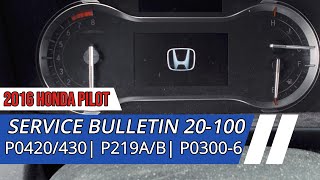
For 2016-2017 Pilots specifically, this code is frequently not due to a failed catalytic converter. Honda identified that the original PCM software can misinterpret sensor data and falsely trigger a P0420 (the more common code for the same fault) or P0422. Additionally, issues with contaminated fuel injectors can cause air-fuel ratio imbalances that also lead to this code. Because of this, Honda issued Service Bulletin 20-100 and a warranty extension 🎬 Watch: How to diagnose codes under Service Bulletin 20-100, making a trip to the dealer for a software update and VIN check the most logical and critical first step.
Symptoms You May Notice
- Check Engine Light is on
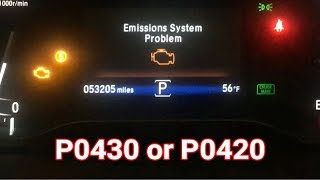
- "Emission System Problem" message on the dashboard
- Possible failure to pass an emissions/smog test
- In rare cases, a slight decrease in fuel economy
- If the converter is severely clogged, you may experience reduced engine power or hesitation.
- Replacing the catalytic converter without first checking for eligibility under Honda's TSB 20-100 for the software/injector issue.
- Replacing oxygen sensors when the actual problem is a failing catalytic converter or an exhaust leak.
- Replacing the catalytic converter when the root cause is an unaddressed engine issue (like the TSB-related injector problem) that will quickly damage the new converter.
Most Likely Causes
- PCM Software Error / Faulty Fuel Injectors (2016-2017 models) 🔴 High Probability Honda issued TSB 20-100 acknowledging that the PCM software can misinterpret sensor data, and that fuel injectors can become clogged from manufacturing debris, leading to false catalyst efficiency codes. This is a widely discussed issue in owner forums.
How to confirm: A Honda dealership must check your vehicle's VIN for eligibility against TSB 20-100. They will use the Honda Diagnostic System (i-HDS) to check the current software version and perform tests if necessary. An owner cannot confirm this without dealer involvement.
Typical fix: The dealer will update the PCM software. If misfire codes (P030x) or air-fuel ratio codes (P219A/B) are also present, they will also replace all six fuel injectors under the warranty extension.
Est. part cost: $0 (if covered by warranty extension) - Failing Catalytic Converter 🟡 Medium Probability → Shop Catalytic Converter Catalytic converters are wear items that degrade over time, typically after 100,000+ miles. Their failure can be accelerated by unresolved engine issues like misfires or burning oil, which was a known issue on some previous generation J-series engines.
How to confirm: After ruling out all other causes, a technician can use a scan tool to graph the upstream and downstream O2 sensor data. A healthy converter shows a steady downstream sensor voltage, while a failing one shows the downstream sensor mimicking the upstream sensor's rapid switching. An exhaust backpressure test can also check for a clog.
Typical fix: Replacement of the Bank 1 catalytic converter. This is an expensive repair, so thorough diagnosis is critical.
Est. part cost: $1700-$2200 (OEM) - Faulty Downstream Oxygen (O2) Sensor ⚪ Low Probability → Shop Oxygen Sensor O2 sensors can become slow or biased with age, sending incorrect data to the PCM that mimics a failing converter. It's a common misdiagnosis to replace the converter when only the sensor is bad.
How to confirm: A technician can test the sensor's response time and voltage output with a scan tool. A lazy or non-responsive sensor should be replaced. A DIY test involves swapping the Bank 1 and Bank 2 downstream sensors to see if the code follows to P0432.
Typical fix: Replace the Bank 1, Sensor 2 (downstream) oxygen sensor.
Est. part cost: $50-$150 - Exhaust System Leak ⚪ Low Probability Any leak between the engine and the rear O2 sensor can allow oxygen to enter the exhaust, skewing the sensor's readings and tricking the PCM into setting a P0422 code.
How to confirm: A visual inspection may reveal rusted pipes or broken gaskets. A smoke test, where smoke is forced into the exhaust system, is the most effective way to pinpoint small leaks.
Typical fix: Repair the leak by replacing the damaged gasket or welding the cracked component.
Est. part cost: $20-$200
Rare But Worth Checking
- Failing PCV Valve: A stuck-open Positive Crankcase Ventilation (PCV) valve on a J35 engine can increase oil consumption. This oil can contaminate the catalytic converter over time, leading to catalyst efficiency codes like P0420 or P0422. While more prevalent on older J-series engines, it's a cheap and easy part to check.
Diagnosis Steps
- Check for TSB and Warranty Extension: If you have a 2016-2017 Pilot (or other nearby model years), the absolute first step is to contact a Honda dealer with your VIN. Inquire about Service Bulletin 20-100 and the associated warranty extension for the PCM software update and potential fuel injector replacement. This may resolve the issue at no cost. Do not skip this step.
- Scan for Other Codes: Use an OBD-II scanner to check for any other codes. Pay close attention to misfires (P030x) or air-fuel ratio (P219x), as these strongly suggest the TSB-related injector issue.
- Inspect for Exhaust Leaks: Visually inspect the exhaust system from the engine down to the rear O2 sensor for any signs of cracks, rust, or broken gaskets. A professional smoke test is the best way to confirm a leak.
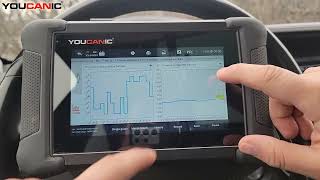
- Analyze Oxygen Sensor Data: 🎬 See how to diagnose a bad converter using O2 sensor live data Using a scan tool with live data capability, graph the voltage of the upstream (Bank 1, Sensor 1) and downstream (Bank 1, Sensor 2) O2 sensors. A healthy, warm converter will show rapid up-and-down switching on the upstream sensor (approx. 0.1V-0.9V) and a relatively steady, flat line from the downstream sensor (typically above 0.6V). If the downstream sensor mirrors the upstream, the converter is likely not working.
- Test the Oxygen Sensors: Before condemning the converter, test the downstream O2 sensor to ensure it is responsive and not sending false data. A lazy sensor can mimic a bad converter. Swapping the Bank 1 and Bank 2 downstream sensors is a viable DIY diagnostic step.
- Confirm Catalytic Converter Failure: Only after ruling out software issues, fuel injectors, exhaust leaks, and faulty sensors should the catalytic converter be condemned and replaced.
Parts You'll Likely Need
- Fuel Injector Kit
(OEM #06160-RLV-305)— For 2016-2017 models, clogged fuel injectors are a primary cause identified by Honda in TSB 20-100, leading to catalyst efficiency codes. Replacement is often done alongside a PCM software update and is mandatory if certain codes are present.
Trusted brands: Honda (OEM)
OEM price range: $600-$800 (for a set of 6)
Aftermarket price range: $300-$500 (for a set) - Bank 1 Catalytic Converter
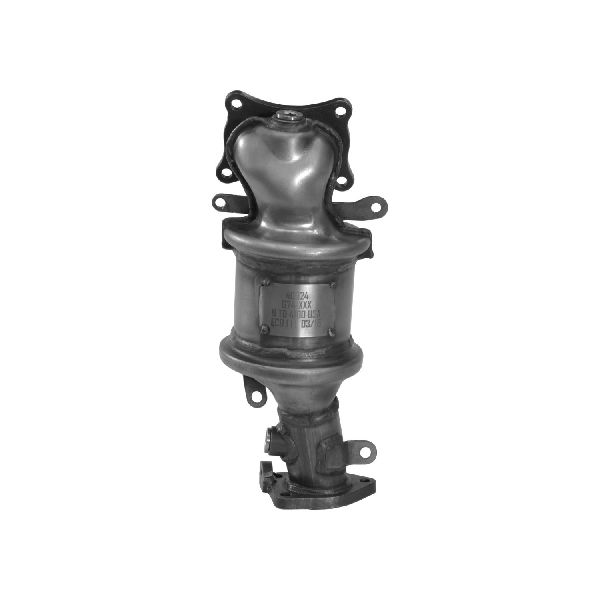
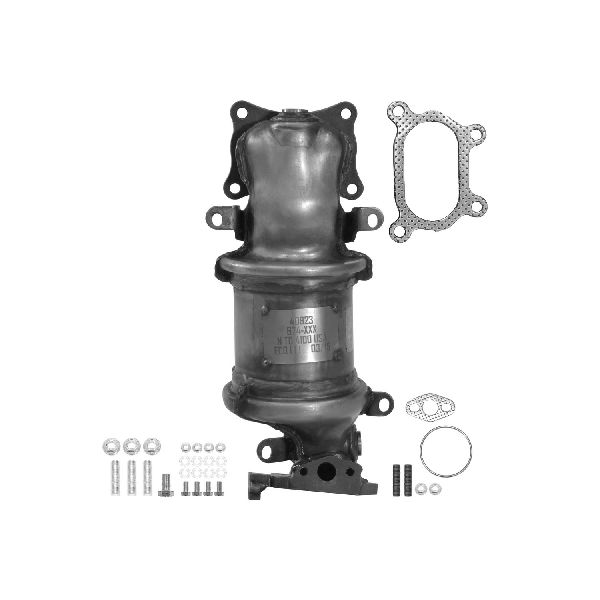
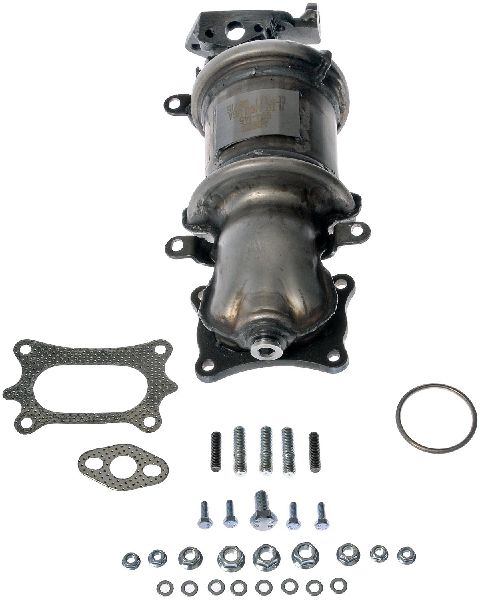
(OEM #18180-RN0-A20 (Front/Primary), 18150-5J6-A10 (Rear/Secondary))— If the converter has genuinely failed after all other causes are ruled out, it will need replacement. Bank 1 is the rear bank, closer to the firewall. Note: There are multiple converters.
Trusted brands: Honda (OEM), MagnaFlow, AP Exhaust
OEM price range: $1700-$2200
Aftermarket price range: $400-$900 - Bank 1 Downstream Oxygen Sensor (Sensor 2)
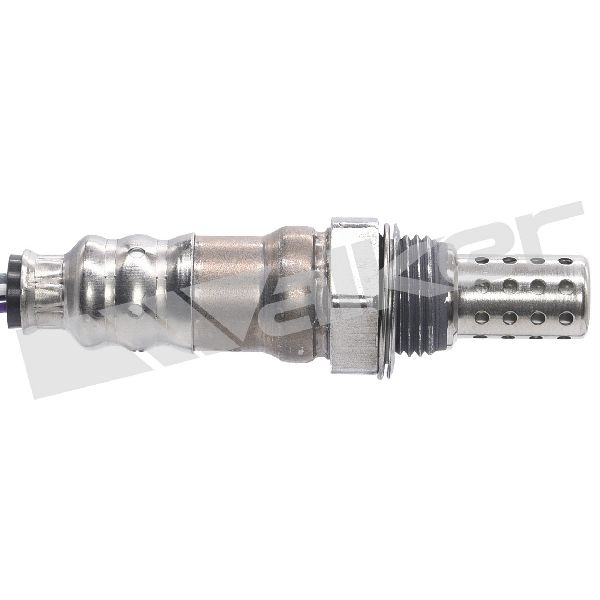
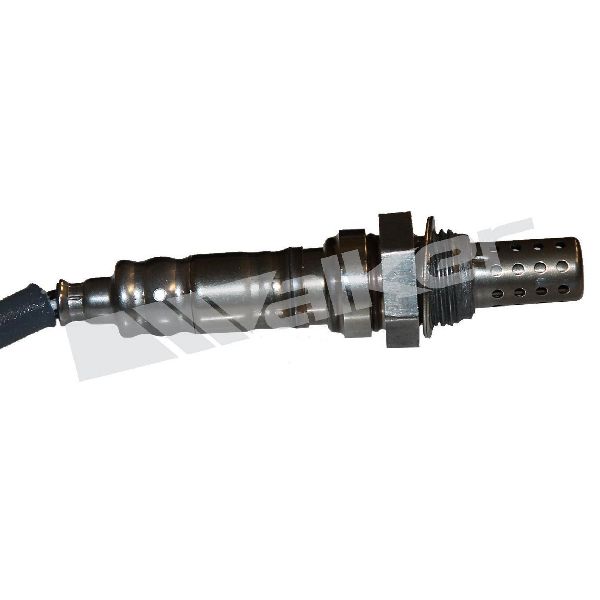
(OEM #36532-5J2-A51)— A faulty or 'lazy' downstream O2 sensor can send incorrect data, falsely triggering a P0422 code. It is a common point of misdiagnosis but is a relatively inexpensive part to replace compared to a converter.
Trusted brands: Denso (OEM supplier), Bosch, Walker
OEM price range: $100-$180
Aftermarket price range: $50-$120
Related Codes That Often Appear With This One
- P0430 — This is the identical code but for Bank 2 (the front bank). If both P0420 and P0430 appear, it strongly points to a systemic issue like the fuel injector problem described in TSB 20-100 or contaminated fuel.
- P0300-P0306 — These are misfire codes. An engine misfire allows unburnt fuel to enter the exhaust, which can overheat and destroy the catalytic converter. TSB 20-100 for the Pilot specifically links these codes to the fuel injector issue.
- P219A / P219B — These codes indicate an air-fuel ratio imbalance. They are also specifically mentioned in TSB 20-100 as being directly related to the faulty fuel injector problem on this vehicle.
Technical Service Bulletins (TSBs) & Recalls
- 20-100 — Warranty Extension: MIL Comes On with DTC P0420/P0430, P030x, and/or P219A/B (With Software Update) — Addresses an issue where the PCM misinterprets sensor data, falsely triggering catalyst codes, and/or where fuel injectors are clogged by debris. Extends the warranty to 10 years/150,000 miles. The fix involves a PCM software update and, if certain misfire or A/F ratio codes are present, replacement of all six fuel injectors.
- 21-010 — Warranty Extension: MIL Comes On with DTC P0300-P0306, P219A, or P219B — Similar to 20-100 but applies to different model years (including some 2017-2019 Pilots) and specifically covers fuel injector replacement *without* a mandatory PCM software update.
Platform-Specific Known Issues
- TSB 20-100 / Warranty Extension: This is the most critical issue for 2016-2017 Pilots. The original PCM software and a bad batch of fuel injectors are known to cause false P0422/P0420 codes. Honda extended the warranty to cover the software update and injector replacement to 10 years or 150,000 miles. A dealer visit is mandatory to check VIN eligibility.
Mechanic-Grade Diagnostic Values
- Fuel Pressure (Low-Pressure System) — expected: 57-64 psi (390-440 kPa) at idle.. Failure: Pressure significantly below this range can cause lean conditions, while pressure above can indicate a faulty regulator. Both can damage the catalytic converter over time.
- Short-Term Fuel Trim (STFT) & Long-Term Fuel Trim (LTFT) — expected: Ideally within +/- 8% at idle and steady cruise. The combined total (STFT + LTFT) should not exceed +/- 10%.. Failure: Consistently positive trims (>+10%) suggest a vacuum leak or weak fuel delivery. Consistently negative trims (<-10%) suggest leaking injectors or a faulty fuel pressure regulator. The injector issue related to TSB 20-100 would likely cause significant fuel trim imbalances.
- Downstream O2 Sensor (Bank 1, Sensor 2) Voltage — expected: A relatively steady voltage between 0.6V and 0.8V on a fully warmed-up, healthy catalytic converter at steady RPM.. Failure: Voltage that rapidly switches between 0.1V and 0.9V, mimicking the upstream sensor's activity, indicates the catalyst is no longer storing oxygen and has failed.
Hidden / Shadow Codes Worth Checking
- Mode $06 Data: Catalyst Monitor: Honda vehicles use the generic OBD-II Mode $06 to store the results of non-continuous monitor tests, including the catalyst efficiency test. This is not a 'code' but raw test data. A technician can view the test value and compare it to the manufacturer's maximum allowed threshold. This allows a mechanic to see if the catalyst is performing marginally and close to failing, even before the P0422 code is set. (see via A professional scan tool with Mode $06 capability is required. The catalyst test is often listed under Test ID (TID) $01 and Component ID (CID) $01.)
Scan Tool Commands That Help
- Honda i-HDS (Honda Diagnostic System): ECU Reprogramming — This function is required to perform the software update specified in TSB 20-100. A generic J2534 pass-thru device with a software subscription can also perform this.
- Honda i-HDS (Honda Diagnostic System): Cylinder AF Test — This is a bidirectional test that can help diagnose air-fuel ratio imbalances in individual cylinders. It is extremely useful for confirming if a specific fuel injector is malfunctioning, which is the root cause of the TSB-related P0422 issues.
Wiring & Ground Locations
- Main Chassis Ground — On the driver's side of the engine bay, the main negative battery cable connects to a ground point on the chassis frame rail, often near the strut tower. This area is frequently painted from the factory.. A poor main ground connection due to paint or corrosion can create voltage offsets and unstable sensor readings throughout the vehicle. Some owners have improved sensor stability by sanding the paint at this location to ensure a bare-metal connection.
- Engine/Transmission Ground Straps — There are typically multiple braided ground straps connecting the engine block and transmission case directly to the vehicle's chassis.. The PCM and its sensors (including O2 sensors) use the engine block as a ground reference. If these straps are corroded, loose, or broken, the sensor signals can become noisy or biased, leading to false diagnostic codes like P0422.
Real Owner Repair Stories
- Common narrative from Piloteers.org owner forums (2016-2017 Honda Pilot, typically between 60,000 and 120,000 miles) — Check Engine Light with "Emission System Problem" message. Codes P0422 and/or P0430 are present, sometimes accompanied by misfire (P030x) or A/F imbalance codes (P219A/B). No noticeable drivability issues.
❌ Tried (didn't work) Replacing the downstream O2 sensors., Using fuel additives or 'catalytic converter cleaner'., Clearing the code, only for it to return within a few hundred miles.
✅ What actually fixed it The owner took the vehicle to a Honda dealer who confirmed the VIN was covered under the warranty extension for TSB 20-100. The dealer performed the PCM software update and replaced all six fuel injectors. The P0422 code did not return after the repair, which was covered by Honda.
"I Checked Everything" — The Actual Cause
- On the 2016-2017 Pilot, it is very common for a technician to perform an exhaust smoke test and find no leaks, and to graph the O2 sensors and see data suggesting a bad catalytic converter. However, the actual root cause is not a leak or a bad converter, but the fuel injector and software issue described in TSB 20-100. The faulty injectors create an air/fuel mixture problem that the PCM misinterprets as low catalyst efficiency. This is the number one 'red herring' for this code on this vehicle.
OEM Part Supersession History
06160-RLV-A01 (Speculated early PN)→06160-RLV-305— The -305 part number is the specified replacement kit associated with correcting the issues described in TSB 20-100 and related service actions. It is considered the definitive revised part.
Heads up: Using individual, non-kit injectors or older stock may re-introduce the original problem. Honda dealers often require a VIN when ordering the 06160-RLV-305 kit to ensure it is the correct application for the warranty extension work.
Model Year Variations Within This Range
- 2016-2017: These model years are the primary focus of Honda's Technical Service Bulletin 20-100 and the associated 10-year/150,000-mile warranty extension for faulty fuel injectors and PCM software causing false P0422/P0430 codes.
- 2019-2022: The 2019 model year received a facelift and a revised 9-speed transmission tuning, but the core J35Y6 engine and its primary emissions components (catalytic converters, sensors) remained the same as prior years. While the injector TSB is most famous for 2016-17 models, related issues can still occur on later years, but are not part of the same specific warranty extension.
Diagnostic Flowchart
Other Known Issues on This Vehicle
Issues unrelated to this code that are worth knowing about as an owner of this generation:
- ZF 9-Speed Automatic Transmission Problems 🔴 High — Common in earlier models (2016-2018), less so in later years. Issues include hard/jerky shifting, hesitation, and premature failure. (Ref: Multiple software update TSBs issued (e.g., 23-023). A class-action lawsuit was filed regarding these issues.)
- 6-Speed Automatic Transmission Torque Converter Judder 🟠 Medium — Affects 6-speed models, typically felt as a shudder between 20-60 mph. (Ref: TSB 23-078 extends the warranty for the torque converter on some models. The common fix is a repeated transmission fluid flush or torque converter replacement.)
- Fuel Injector Failure (P030x, P219A/B) 🔴 High — Very common on 2016-2019 models, leading to misfires and catalyst codes. Caused by internal debris. (Ref: TSB 20-100, TSB 21-010; Warranty extended to 10 years/150,000 miles for affected VINs.)
- Connecting Rod Bearing Failure 🔴 High — Affects certain 2016-2019 models due to a manufacturing defect. Can lead to catastrophic engine failure. (Ref: Recall NHTSA #23V751000 (Honda Recall N70, P71). Dealer inspects and repairs/replaces engine components.)
- Infotainment System Glitches (Popping/Cracking Speakers, Blank Screen) 🟡 Low — Widespread issue causing audio problems and screen failures. Related to a faulty MOST bus network connector. (Ref: TSB 23-047; Warranty on the MOST bus connectors was extended.)
- Hood Latch Failure 🔴 High — The hood latch striker can separate, allowing the hood to open while driving. (Ref: Recall NHTSA #21V932000.)
Used vs. New Parts: Buying Guide for This Vehicle
When a used part is the smart pick: A used OEM catalytic converter is the only used part that makes sense for this repair. It can be a cost-effective alternative to a new OEM unit if sourced carefully. All other related parts (O2 sensors, fuel injectors) should be purchased new.
Donor-vehicle mileage cap: roughly under 80000 miles for the part to have meaningful remaining life.
What to inspect on the donor part:
- Source from a vehicle with a clear history of a rear-end collision to ensure the engine and exhaust were not the cause of the vehicle being salvaged.
- Visually inspect the converter's honeycomb structure from the inlet; it should be intact, with no signs of melting, clogging, or heavy sooting.
- Ask for the VIN of the donor vehicle to verify its mileage and check for any reported emissions issues.
OEM-only on this vehicle (don't cheap out):
- Catalytic Converter: Honda's catalyst efficiency monitoring is very sensitive. Many aftermarket converters use less precious metal loading and will fail to keep the Check Engine Light off, sometimes within a few months, even if they are 'direct-fit'.
- Fuel Injectors: Given the known TSB and manufacturing issues, only the updated OEM injector kit (06160-RLV-305) should be used to guarantee a fix.
Aftermarket brands forum-validated for this vehicle:
- Denso (for Oxygen Sensors)
- NGK / NTK (for Oxygen Sensors)
Brands owners have reported issues with on this vehicle:
- Unbranded or 'white-box' catalytic converters from online marketplaces are extremely likely to fail prematurely and cause the P0422 code to return.
Real Owner Stories
Aggregated from forums and TSBs cited above. Mileages and costs reflect what owners reported in those sources.
2017 Honda Pilot 3.5L V6
Symptoms: Emissions system error P0420/P0430 appeared on the dashboard.
What fixed it: The dealer performed a PCM software update and replaced the fuel injectors as per the warranty extension.
Source hint: Reddit r/hondapilot thread titled '2017 Honda Pilot emissions system error P0420'
2016 Honda Pilot 3.5L V6
Symptoms: Check engine light on with fuel injector bulletin issues.
What fixed it: Fuel injector replacement under Bulletin 20-100.
Source hint: Reddit r/Honda thread titled '2016 honda pilot fuel injector bulletin 20100'
2017 Honda Pilot Touring 3.5L V6
Symptoms: Emissions light on with codes P0420 and P0430.
What fixed it: Addressed via TSB 20-100 which involves checking for software updates and potential injector issues.
Source hint: Piloteers.org thread titled '2017 honda pilot touring emissions light p0420 p0430'
Related OBD-II Codes
Frequently Asked Questions
Does TSB 20-100 apply to my 2016-2017 Honda Pilot?
Is there a warranty extension for the 'Emission System Problem' message on my Pilot?
Can I fix the P0422 code on my Pilot by just updating the software?
Will my 2016 Honda Pilot fail an emissions test because of this code?
Should I replace my catalytic converter immediately if I see P0422?
Does the fuel injector issue affect other Honda vehicles with the 3.5L V6?
Helpful Videos
We Have This Part in Stock


The information in this article is provided for general reference and educational purposes only. Vehicle specifications, procedures, and part compatibility can vary by production date, trim level, and region. Always consult your vehicle's factory service manual and verify part numbers before purchasing or performing repairs. Safety-critical components such as airbags, seat belts, and braking systems should be installed by a qualified professional.
- Honda Pilot:
- 🧭 Diagnostic Flowchart
- 🎬 Helpful Videos
- 🛍️ Shop This Part
- What's Unique About the 2016-2022 Honda Pilot
- Symptoms You May Notice
- Most Likely Causes
- Rare But Worth Checking
- Diagnosis Steps
- Parts You'll Likely Need
- Related Codes That Often Appear With This One
- Technical Service Bulletins (TSBs) & Recalls
- Platform-Specific Known Issues
- Mechanic-Grade Diagnostic Values
- Hidden / Shadow Codes Worth Checking
- Scan Tool Commands That Help
- Wiring & Ground Locations
- Real Owner Repair Stories
- "I Checked Everything" — The Actual Cause
- OEM Part Supersession History
- Model Year Variations Within This Range
- Other Known Issues on This Vehicle
- Used vs. New Parts: Buying Guide for This Vehicle
- Real Owner Stories
- 2017 Honda Pilot 3.5L V6
- 2016 Honda Pilot 3.5L V6
- 2017 Honda Pilot Touring 3.5L V6
- Related OBD-II Codes
- Frequently Asked Questions
- 🎟️ Get 5% Off