

P0422 on 2013-2018 Hyundai Santa Fe: Main Catalyst Causes and Fixes
On a 2013-2018 Santa Fe with a Theta II engine, P0422 almost always means the catalytic converter has failed because the engine is burning excessive oil. Before replacing the expensive converter, you MUST perform an oil consumption test. The underlying engine issue may be covered by a class-action lawsuit warranty extension.
- If you have code P0422 on a 2013-2018 Santa Fe Sport, your immediate priority is to check your engine oil level.
- This code is a strong indicator of the infamous Theta II engine oil consumption problem.
- Do NOT replace the catalytic converter or O2 sensors until you have confirmed the engine is not burning oil.
- Contact a Hyundai dealer immediately to check your VIN for warranty extensions related to engine issues. You may be eligible for a new engine.
- Document everything. Keep records of oil top-offs, mileage, and all communication with your mechanic and the dealership.
What's Unique About the 2013-2018 Hyundai Santa Fe
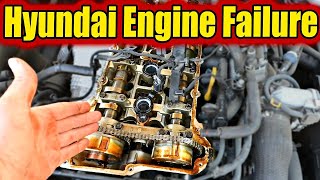
For this specific Santa Fe, P0422 is a major red flag for a much deeper problem. The Theta II engine is infamous for excessive oil consumption and premature failure. Investigations and lawsuits revealed that manufacturing issues, specifically metal shavings left over from the crankshaft milling process, could block oil passages. This leads to accelerated wear of the connecting rod bearings and piston rings, causing excessive oil to be burned. This burning oil contaminates and destroys the catalytic converter, making the P0422 code a symptom of a potential engine problem, not just a failed emissions part. Simply replacing the converter without addressing the oil burning will result in the new part failing very quickly. Due to widespread issues, Hyundai has faced class-action lawsuits and issued extended warranties that may cover engine repairs or replacement.
Generation note: The 2013-2018 year range covers the third generation (DM) of the Hyundai Santa Fe. The 2.0L Turbo and 2.4L GDI engines were equipped in the 5-passenger 'Santa Fe Sport' model. The larger 7-passenger 'Santa Fe' (sometimes called Santa Fe XL in Canada) used a V6 engine and is not covered by this guide.
Symptoms You May Notice
- Check Engine Light is on
- Noticeable drop in engine oil level between oil changes
- Blue or white smoke from the exhaust, especially on startup or acceleration
- Reduced engine power and sluggish acceleration
- Failing an emissions test
- A sulfur or 'rotten egg' smell from the exhaust
- Engine knocking or rattling noises, which could indicate severe internal wear
- Replacing only the catalytic converter without checking for oil consumption. The new converter will fail.
- Replacing the downstream oxygen sensor because it is 'lazy'. The sensor is often accurately reporting the failure of the catalyst.
- Assuming the code is a minor emissions issue without checking the engine oil level immediately.
- Paying for a new engine or catalytic converter without first checking VIN for warranty extensions with a Hyundai dealer.
Most Likely Causes
- Failed Catalytic Converter Due to Excessive Oil Consumption 🔴 High Probability → Shop Catalytic Converter The Theta II GDI engine has a known design and manufacturing defect where carbon buildup and/or internal wear from debris causes piston oil control rings to stick or fail. This allows oil to enter the combustion chamber, burn, and then contaminate the precious metals inside the catalytic converter, rendering it useless.
How to confirm: Perform an official oil consumption test. This involves a dealership documenting the oil level, having you drive 1,000 miles, and then re-measuring. Hyundai considers consumption of more than 1 quart per 1,000 miles to be excessive and grounds for further action under TSB 23-EM-008H. Also, check for a low oil pressure light, which may flicker during braking or turns when the oil level is critically low.
Typical fix: First, address the engine issue. This may involve a multi-step combustion chamber cleaning procedure (per TSB 23-EM-007H) 🎬 See: Hyundai GDI oil consumption fixes explained, a 'piston soak' to free the rings, or a complete engine short block or long block replacement. Many of these repairs may be covered under warranty extensions resulting from the class-action settlement. Only after the oil consumption is fixed should the catalytic converter be replaced.
Est. part cost: $0-$8000+
Rare But Worth Checking
- Failed Oxygen (O2) Sensors: → Shop Oxygen Sensor A faulty downstream O2 sensor can incorrectly report a bad converter. However, on this platform, it's far more likely the sensor is correctly reporting a converter that has been destroyed by oil. Replacing the sensor alone is a common misdiagnosis and waste of money.
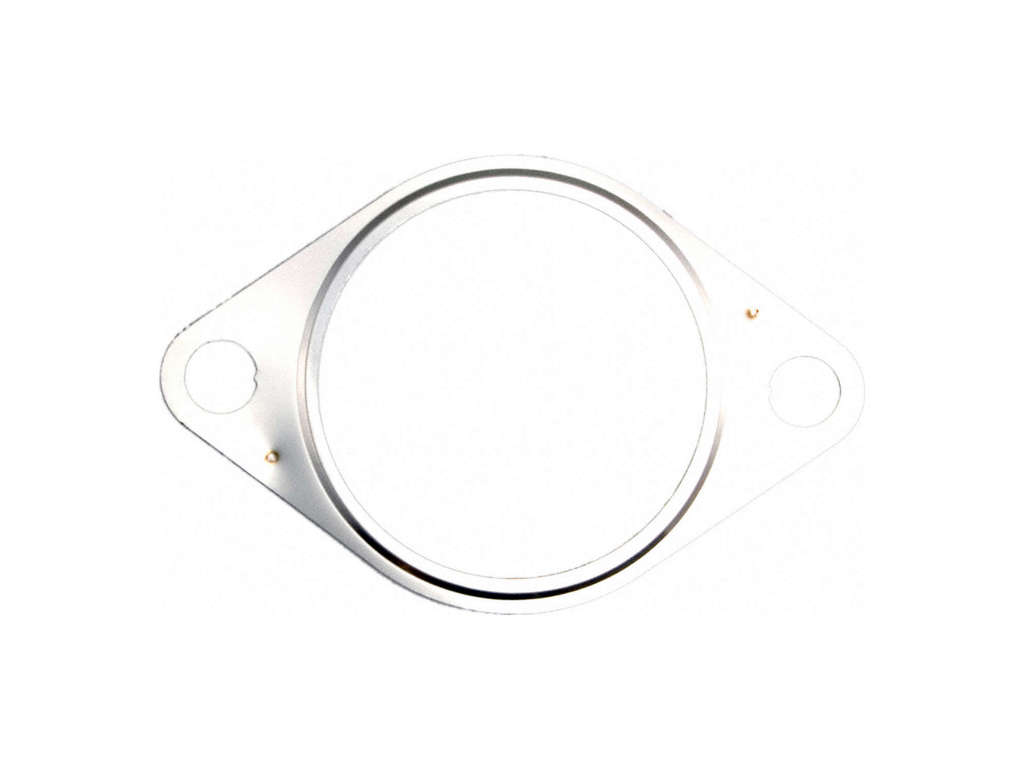
- Exhaust Leak: A leak in the exhaust system between the upstream and downstream O2 sensors can allow outside air to enter, skewing the sensor readings and triggering the code. A smoke test can identify such leaks. Common leak points are the manifold gaskets or flex pipe.
- Engine Misfires: An engine that is misfiring for other reasons (e.g., bad spark plugs or ignition coils) will dump raw, unburned fuel into the exhaust, which can rapidly overheat and destroy the catalytic converter. This would typically be accompanied by misfire codes (P0300-P0304).
- Fuel System/EVAP Leaks: While less common for this specific code on the Santa Fe, manufacturer records for other Hyundai models like the Elantra (NHTSA ODI #10457133) show that disconnected pipes from the fuel tank conveying vapors can trigger a P0422, indicating a leak in the EVAP system.
Diagnosis Steps
- Check the engine oil level immediately. If it is low, top it off and note the amount added.
- Scan for any other accompanying trouble codes, especially P1326 or P030x.
- Contact a Hyundai dealership with your VIN. Inquire about open recalls, Service Campaign 953 (KSDS update), and the status of your Lifetime Engine Warranty (TXXI). This is the most critical step.
- If the dealer confirms eligibility, initiate an official oil consumption test per TSB 23-EM-008H. This requires the dealer to perform an oil change, seal the system, and have you return after 1,000 miles for measurement.
- Document everything. Take photos of the odometer and dipstick before and after the test period. Keep all service records.
- If oil consumption is confirmed to be high (>1qt/1000mi), pursue engine repair/replacement through the dealership under any applicable warranties. Be persistent. The first step will likely be a chemical combustion chamber cleaning per TSB 23-EM-007H.
- If oil consumption is normal, proceed with standard catalyst diagnostics: inspect for exhaust leaks (smoke test), and test the upstream and downstream oxygen sensors using a scan tool with live data graphing.
- Only after confirming the engine is healthy and other causes are ruled out, replace the catalytic converter.
Parts You'll Likely Need
- Engine Assembly — The root cause is often a faulty engine burning excessive oil. In many cases, Hyundai has covered full or partial costs for a replacement engine under warranty extensions.
Trusted brands: Hyundai OE
OEM price range: $4000-$8000
Aftermarket price range: $3000-$6000 - Manifold Catalytic Converter (2.4L)
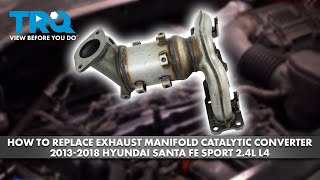
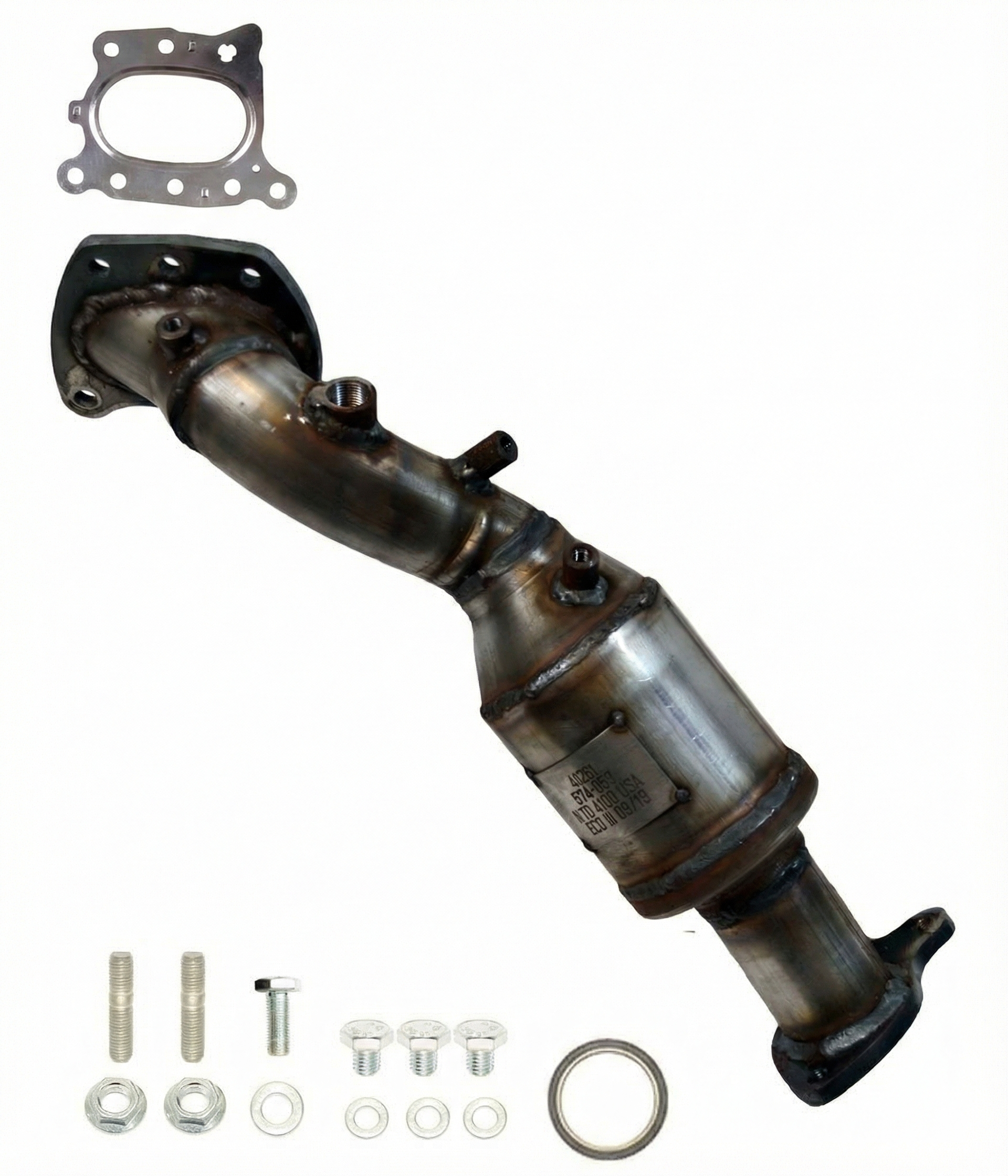
(OEM #28510-2GCA0 (2017-18), 28510-2G455 (2013-16))🎬 Watch: How to replace the 2.4L manifold catalytic converter — This is the part that fails and triggers the code, but it is the victim of the engine's oil consumption. It must be replaced AFTER the engine issue is resolved.
Trusted brands: Hyundai OE, Walker, MagnaFlow, Davico
OEM price range: $1200-$1800
Aftermarket price range: $400-$900 - Manifold Catalytic Converter (2.0L Turbo)
(OEM #28600-4Z600 (2017-18), 28510-2G485 (2017-18))— This is the part that fails and triggers the code, but it is the victim of the engine's oil consumption. It must be replaced AFTER the engine issue is resolved.
Trusted brands: Hyundai OE, Walker, AP Exhaust
OEM price range: $1500-$2200
Aftermarket price range: $500-$1100
Related Codes That Often Appear With This One
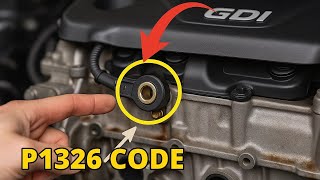
- P1326 — This code is for the Knock Sensor Detection System (KSDS) and is famously linked to the connecting rod bearing failures in Theta II engines. 🎬 Watch: Understanding the P1326 knock sensor code If you see P1326 with P0422, engine failure may be imminent and is the root cause of the catalyst failure.
- P0300-P0304 — These are random or cylinder-specific misfire codes. Misfires dump raw fuel into the exhaust, which quickly destroys the catalytic converter.
- P0011, P0014 — These codes relate to camshaft position timing. Sludged or low oil can cause the CVVT phasers to malfunction, leading to these codes alongside the primary oil consumption issue.
Technical Service Bulletins (TSBs) & Recalls
- 23-EM-008H: Outlines the official procedure for diagnosing and repairing engine oil consumption.
- 23-EM-007H: The companion TSB that details the procedure for combustion chamber cleaning, which is a required step by 23-EM-008H before further repairs are authorized.
- Recall 162 / Campaign 953: These campaigns relate to the Knock Sensor Detection System (KSDS) software update, which is a prerequisite for eligibility for the lifetime engine warranty.
Platform-Specific Known Issues
- Widespread excessive oil consumption on Theta II engines, leading to contaminated catalytic converters and premature engine failure.
- Hyundai has multiple class-action lawsuits and warranty extensions related to this issue. Owners may be eligible for a free engine inspection, oil consumption test, and potential engine replacement.
- Hyundai TSB 23-EM-008H provides official guidelines for dealerships to inspect and diagnose engine oil consumption concerns.
- A companion TSB, 23-EM-007H, details the mandatory combustion chamber cleaning procedure that is often the first step of the oil consumption repair process.
Mechanic-Grade Diagnostic Values
- Upstream O2 Sensor (Bank 1 Sensor 1) Voltage — expected: Rapidly fluctuating waveform between approximately 0.1V and 0.9V at warm idle.. Failure: A slow, lazy, or flat-lined voltage reading indicates a failed sensor.
- Downstream O2 Sensor (Bank 1 Sensor 2) Voltage — expected: Relatively stable voltage, typically holding steady between 0.6V and 0.8V on a warm, healthy engine.. Failure: Voltage that fluctuates rapidly, mirroring the upstream sensor's pattern. This indicates the catalyst is not cleaning the exhaust.
- Short-Term Fuel Trim (STFT) and Long-Term Fuel Trim (LTFT) — expected: Ideally, the sum of STFT and LTFT should be within ±10% at idle and steady RPM.. Failure: Consistently high positive trims (>10%) suggest a vacuum leak or under-reporting MAF sensor. Consistently high negative trims (< -10%) suggest leaking injectors or other issues causing a rich condition, which can damage the converter.
- O2 Sensor Heater Circuit Power — expected: 12V at the O2 sensor connector (often an orange wire) with the ignition on.. Failure: No voltage indicates a blown fuse (check 'SENSOR 1' fuse) or a wiring issue between the fuse box and the sensor.
Hidden / Shadow Codes Worth Checking
- P1326: This is not a hidden code, but its presence with P0422 is a critical diagnostic clue. It's for the Knock Sensor Detection System (KSDS) and is triggered when the system detects vibration patterns consistent with excessive connecting rod bearing wear. It essentially confirms the engine is in the process of failing, which is the root cause of the oil consumption that destroys the catalytic converter. (see via Standard OBD-II scanner. If this code is present, the vehicle may enter a limp mode, limiting RPM.)
Scan Tool Commands That Help
- Hyundai GDS (Global Diagnostic System): ECM Neutral Mode & Key Teaching — This function is required after replacing the Engine Control Module (ECM), which may be necessary if a replacement engine is installed. It allows the new ECM to be paired with the vehicle's immobilizer or smart key system.
- Any OBD-II Scanner: Hyundai Drive Cycle Procedure — After replacing the catalytic converter and/or O2 sensors, the emissions monitors in the ECM must be set to 'Ready' status to confirm the fix and pass an emissions test. A specific drive cycle involving periods of idling, steady-speed driving (50-55 mph for 5+ minutes), and coasting is required to run the catalyst monitor test.
Wiring & Ground Locations
- Upstream O2 Sensor (B1S1) Connector Pins (2017 2.4L) — On the front of the exhaust manifold, visible from the top of the engine bay.. Provides specific pins on the PCM connector for testing continuity. Pin 83: Sensor Voltage (V_IP), Pin 84: Sensor Ground (V_G). A common failure is the harness melting on the exhaust, causing a short.
- Downstream O2 Sensor (B1S2) Connector Pins (2017 2.4L) — Located on the exhaust pipe after the catalytic converter, under the vehicle.. Provides specific pins on the PCM connector for testing. Pin 57: Sensor Signal, Pin 58: Sensor Ground. Testing here can differentiate a bad sensor from a wiring problem.
- Engine/Chassis Grounds (General) — While diagrams for the exact year are scarce, Hyundai typically uses main ground points on the inner fender panels in the engine bay (G05, G06), behind the kick panels inside the cabin (G07, G08), and directly on the engine/transmission housing (GHG01, GHG02).. A poor ground for the ECM or the O2 sensor heater circuit can cause erratic sensor readings, potentially mimicking a catalyst failure. Verifying clean, tight ground connections is a crucial step in any electrical diagnosis.
Real Owner Repair Stories
- Synthesized from numerous threads on hyundai-forums.com and r/Hyundai (2013-2018 Hyundai Santa Fe Sport, 2.4L or 2.0T engine. Mileage often between 60,000 and 120,000 miles.) — Check Engine Light with code P0422. Owner then notices the engine is consuming a significant amount of oil (e.g., 1-2 quarts every 1,000 miles). Sometimes accompanied by P1326 and engine knocking.
❌ Tried (didn't work) Replacing the downstream O2 sensor., Using a fuel system or catalytic converter cleaner additive., Replacing just the catalytic converter (the P0422 code returned within a few thousand miles).
✅ What actually fixed it The definitive fix was addressing the engine's oil consumption. This involved taking the vehicle to a Hyundai dealer, performing a formal oil consumption test, and having the engine short block or long block replaced under the extended lifetime warranty provided as part of the Theta II class-action lawsuit settlement. After the engine was replaced, the catalytic converter was also replaced (often at the same time), permanently resolving the P0422 code.
OEM Part Supersession History
28510-2G455→N/A - Year Specific Part— This is the manifold catalytic converter for the 2.4L engine on 2013-2016 models.
Heads up: This part is not compatible with 2017-2018 models, which use a different part number due to the mid-cycle refresh.28510-2GCA0→N/A - Year Specific Part— This is the manifold catalytic converter for the 2.4L engine on 2017-2018 models. [Pass 2 Data]
Heads up: This part is not compatible with 2013-2016 models.
Model Year Variations Within This Range
- 2017-2018: The Santa Fe Sport received a mid-cycle refresh for the 2017 model year. While the fundamental Theta II engine issues remain the same, this refresh resulted in different part numbers for major components like the catalytic converter. The 2.4L engine's horsepower was also slightly reduced from 190 hp to 185 hp. Always verify the part number with the vehicle's VIN.
Diagnostic Flowchart
Other Known Issues on This Vehicle
Issues unrelated to this code that are worth knowing about as an owner of this generation:
- Catastrophic Engine Failure (Rod Bearing Wear) 🔴 High — Widespread across all model years with Theta II engines, can occur at any mileage but often cited between 60k-120k miles. Caused by manufacturing debris blocking oil passages. (Ref: Hyundai Recall 162, Campaign 953 (KSDS Update), Lifetime Engine Warranty (TXXI))
- Peeling Exterior Paint (Especially White) 🟠 Medium — Very common, especially on white-painted vehicles. Peeling can start after just a few years. (Ref: Warranty Extension Z05 (10 years/unlimited miles for specific colors))
- Starter Motor Failure 🟠 Medium — Common complaint, often presenting as a clicking sound with no crank, or intermittent starting. Can occur around 80k-120k miles.
- Hesitation or Jerking from Automatic Transmission 🟠 Medium — Reported by many owners, can be caused by low/degraded fluid, faulty solenoids, or internal wear.
- Turbocharger Wastegate Actuator Failure (2.0T) 🟠 Medium — Specific to the 2.0L Turbo engine, causes lack of power and poor acceleration. Code P2562 is often present.
- Crankshaft Position Sensor Failure 🔴 High — Can cause random engine stalling while driving, or a crank-no-start condition.
Used vs. New Parts: Buying Guide for This Vehicle
When a used part is the smart pick: A used engine assembly from a reputable salvage yard can be a cost-effective solution IF the original engine is out of warranty and confirmed to be the cause of oil consumption. It is critical to get a donor engine with documented history and low mileage.
Donor-vehicle mileage cap: roughly under 75000 miles for the part to have meaningful remaining life.
What to inspect on the donor part:
- Obtain the VIN of the donor vehicle and check its history for completion of the Knock Sensor Detection System (KSDS) recall.
- Ask for compression test numbers if possible.
- Inspect for external oil leaks, sludge under the oil cap, and any signs of overheating.
- Prioritize donors from rear-end collisions, as this suggests the engine was running well at the time of the accident.
OEM-only on this vehicle (don't cheap out):
- Engine Assembly: While used is an option, a new OEM short/long block from Hyundai is the only guaranteed way to get an engine with the revised components that address the original manufacturing flaws.
- Catalytic Converter: It is STRONGLY advised to avoid used catalytic converters. They were almost certainly removed from a vehicle with the same oil-burning issue and will be contaminated and ineffective.
Aftermarket brands forum-validated for this vehicle:
- Catalytic Converter: MagnaFlow and Walker are frequently cited as reputable aftermarket brands that produce direct-fit and EPA-compliant converters. Choosing their 'OEM Grade' or 'Direct-Fit' options is recommended over cheaper 'Universal' parts to ensure the check engine light stays off.
Brands owners have reported issues with on this vehicle:
- Unbranded, low-cost 'universal' catalytic converters found on sites like eBay or Amazon. These often lack the required amount of precious metals and will fail to meet the ECM's efficiency threshold, causing the P0422 code to return quickly.
Real Owner Stories
Aggregated from forums and TSBs cited above. Mileages and costs reflect what owners reported in those sources.
2013-2018 Hyundai Santa Fe Theta II — ~90000 miles
Symptoms: Severe oil consumption, blue or white smoke from the exhaust, and a Check Engine Light for P0422.
What fixed it: The process involved a multi-step combustion chamber cleaning (TSB 23-EM-007H) followed by an official oil consumption test (TSB 23-EM-008H), eventually leading to an engine replacement under the lifetime warranty.
Source hint: r/HyundaiSantaFe / r/Hyundai forum threads
Documented NHTSA Reports
NHTSA ODI #10457133
Reported Issue: An owner reported that pipes from the fuel tank conveying vapors disconnected from the EVAP canister, triggering a P0422 check engine light. This was described as a leak in the EVAP system that prevented the vehicle from passing state inspection.
Related OBD-II Codes
Frequently Asked Questions
How does TSB 23-EM-008H affect my P0422 diagnosis on my Santa Fe?
Will Hyundai pay for my catalytic converter replacement under the class-action settlement?
What is the 'piston soak' mentioned in TSB 23-EM-007H?
Does my 2013-2018 Santa Fe need the KSDS update to keep its engine warranty?
My oil light flickers when I brake; is this related to my P0422 code?
Can I just replace the catalytic converter to fix P0422?
Helpful Videos

Used OEM Parts in Stock
New Aftermarket Parts Available


The information in this article is provided for general reference and educational purposes only. Vehicle specifications, procedures, and part compatibility can vary by production date, trim level, and region. Always consult your vehicle's factory service manual and verify part numbers before purchasing or performing repairs. Safety-critical components such as airbags, seat belts, and braking systems should be installed by a qualified professional.
- Hyundai Santa Fe:
- 🧭 Diagnostic Flowchart
- 🎬 Helpful Videos
- 🛍️ Shop This Part
- What's Unique About the 2013-2018 Hyundai Santa Fe
- Symptoms You May Notice
- Most Likely Causes
- Rare But Worth Checking
- Diagnosis Steps
- Parts You'll Likely Need
- Related Codes That Often Appear With This One
- Technical Service Bulletins (TSBs) & Recalls
- Platform-Specific Known Issues
- Mechanic-Grade Diagnostic Values
- Hidden / Shadow Codes Worth Checking
- Scan Tool Commands That Help
- Wiring & Ground Locations
- Real Owner Repair Stories
- OEM Part Supersession History
- Model Year Variations Within This Range
- Other Known Issues on This Vehicle
- Used vs. New Parts: Buying Guide for This Vehicle
- Real Owner Stories
- 2013-2018 Hyundai Santa Fe Theta II — ~90000 miles
- Documented NHTSA Reports
- NHTSA ODI #10457133
- Related OBD-II Codes
- Frequently Asked Questions
- 🎟️ Get 5% Off