

P0426 on 2011-2015 Kia Optima 2.4L: Catalyst Temperature Sensor Causes and Fixes
On a 2011-2015 Kia Optima, code P0426 is almost always caused by a failing upstream oxygen sensor (Bank 1, Sensor 1), not a dedicated temperature sensor. Expect to pay $60-$120 for an aftermarket sensor or $150-$250 for an OEM part. It's a common DIY fix with a difficulty of 2/5. However, be aware of the Theta II engine's known oil consumption issues, which can foul sensors and damage the catalytic converter, leading to this code as a secondary symptom.
- P0426 on your Optima points to a problem with the upstream oxygen (O2) sensor, not a separate temperature sensor.
- The most likely fix is replacing the Bank 1, Sensor 1 oxygen sensor, located on the exhaust manifold before the catalytic converter.
- CRITICAL: This code is often a symptom of the Theta II engine's known oil consumption problem. Check your oil level and service history before replacing parts.
- Before buying parts, check the sensor's wiring and connector for obvious damage like melting or corrosion.
- Use a scan tool to watch the O2 sensor's live data; a healthy sensor's voltage will fluctuate rapidly. A 'lazy' or stuck sensor needs replacement.
- Do not replace the expensive catalytic converter unless it is confirmed to be damaged, which is possible if the engine has been consuming oil.
What's Unique About the 2011-2015 Kia Optima
For the 2.4L Theta II engine in this generation of Optima, P0426 is often a direct result of the engine's systemic, well-documented problems. While the code points to the upstream O2 sensor, the root cause can be the engine's tendency for high oil consumption due to connecting rod bearing wear. This oil consumption can foul the O2 sensor, causing it to fail, or it can lead to the destruction of the catalytic converter itself, which in turn causes erratic readings from the sensor. Therefore, it is critical to check for oil consumption or other engine-related codes (like P1326) before simply replacing the O2 sensor. The confusion for many owners is the code's name; they search for a 'catalyst temperature sensor' that doesn't exist on this vehicle.
Symptoms You May Notice
- Check Engine Light is on
- Reduced fuel economy
- Sluggish or hesitant acceleration
- Failing a vehicle emissions test
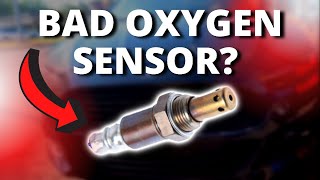
- Rough or uneven idle 🎬 Watch: Learn more about bad oxygen sensor symptoms
- Engine may enter 'limp mode' (reduced power), especially if other codes like P1326 are present
- Replacing the catalytic converter first. The code P0426 points to a problem with the sensor *monitoring* the catalyst, not necessarily the catalyst itself. The sensor is a far more common and cheaper failure point. However, on this engine, the catalytic converter can be the ultimate victim of oil consumption, so its health should be considered.
- Replacing the downstream (Sensor 2) oxygen sensor. This code specifically relates to the upstream sensor (Sensor 1) that the ECU uses to infer catalyst temperature.
- Searching for a non-existent 'Catalyst Temperature Sensor'. On this vehicle, the function is performed by the upstream O2 sensor.
- Ignoring underlying engine problems. Simply replacing the O2 sensor without checking for high oil consumption may result in the new sensor failing prematurely. The P0426 code could be a symptom of the larger Theta II engine problem.
Most Likely Causes
- Faulty Upstream Oxygen Sensor (Bank 1, Sensor 1) 🔴 High Probability → Shop Oxygen Sensor Oxygen sensors are wear-and-tear items exposed to extreme heat and exhaust gases. On the Theta II engine, they are also highly susceptible to contamination from excessive oil consumption, which is a known issue that can cause premature failure.
How to confirm: Use a scan tool to monitor the live data for the Bank 1 Sensor 1 O2 sensor. A healthy sensor's voltage should fluctuate rapidly between roughly 0.1V and 0.9V. A sensor that is stuck at a certain voltage, is slow to respond ('lazy'), or has erratic readings is faulty.
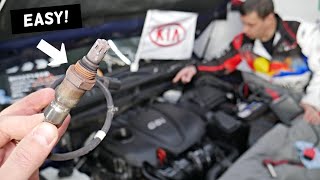
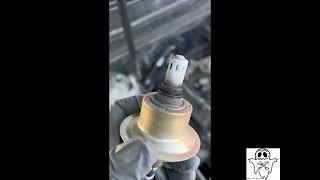
Typical fix: Replace the upstream oxygen sensor. On the 2.4L engine, Bank 1 is the only bank, and Sensor 1 is the sensor located on the exhaust manifold before the catalytic converter. An oxygen sensor socket is recommended for removal. 🎬 See this step-by-step O2 sensor replacement walkthrough
Est. part cost: $60-$250 - Damaged Wiring or Connector 🟡 Medium Probability The wiring harness for the O2 sensor is located near the hot exhaust manifold and can become brittle, melt, or corroded over time, leading to shorts or open circuits.
How to confirm: Visually inspect the entire wiring harness from the O2 sensor back to the engine. Look for any signs of melting, chafing, corrosion in the connector, or breaks in the wires. Use a multimeter to check for continuity and proper voltage/ground at the connector to rule out a circuit fault.
Typical fix: Repair the damaged section of the wiring harness or clean/replace the connector. Ensure the repaired harness is properly secured away from hot exhaust components.
Est. part cost: $5-$50 - Exhaust Leak ⚪ Low Probability Exhaust manifold gaskets and flex pipes can degrade and fail over time, causing leaks. An exhaust leak before the O2 sensor will introduce extra air, causing incorrect sensor readings.
How to confirm: Listen for a ticking or hissing sound from the engine bay or under the car, especially when the engine is cold. You can also use a smoke machine to pressurize the exhaust and look for visible smoke escaping from cracks or bad gaskets before the O2 sensor.
Typical fix: Replace the leaking exhaust manifold gasket or repair the section of exhaust pipe that is leaking.
Est. part cost: $20-$200
Rare But Worth Checking
- Failing Catalytic Converter: → Shop Catalytic Converter While this code points to a sensor, a clogged or failing catalytic converter can cause erratic readings. On this specific vehicle, converter failure is often a consequence of the known engine issues (oil consumption, connecting rod bearing failure) that lead to contamination. If the engine is consuming oil, the converter may be damaged. This is usually a last resort after ruling out the sensor and wiring.
- Powertrain Control Module (PCM) Fault: → Shop Engine Control Module (ECM) This is extremely rare. An internal PCM fault or outdated software could cause this code. Check with a Kia dealer for any available ECU updates (like TSB SC340 for emissions logic) before considering PCM replacement. The PCM should only be replaced after all other possibilities have been exhausted.
Diagnosis Steps
- Read the codes: Use an OBD-II scanner to confirm P0426 is present and check for any other codes, especially P1326 or P0420. Note any freeze-frame data.
- Check Engine Oil Level & Consumption: Given the known issues with the Theta II engine, the first step is to check the oil level. If it is low, top it off and monitor for excessive consumption. This is a critical contextual clue.
- Visual Inspection: Carefully inspect the upstream oxygen sensor (Bank 1, Sensor 1) on the exhaust manifold. Check its wiring harness and connector for any signs of melting, burning, corrosion, or physical damage.
- Check for Exhaust Leaks: Start the engine when it's cold and listen for any ticking or hissing sounds near the exhaust manifold, which would indicate a leak introducing unmetered air.
- Analyze Live Data: Use a scan tool with live data capability. Observe the voltage reading for the 'O2 Sensor Bank 1 Sensor 1'. A healthy sensor will show voltage fluctuating rapidly and consistently between about 0.1 and 0.9 volts. If the voltage is stuck, flat, or very slow to change, the sensor has likely failed.
- Test the Sensor Circuit: If the sensor signal looks okay but the code persists, use a multimeter to check for proper voltage and ground at the sensor connector to rule out a wiring issue between the sensor and the ECU.
- Replace the Sensor: If the sensor is confirmed to be faulty via live data or testing, replace it. An O2 sensor socket is highly recommended.
- Check for TSBs/Recalls: Contact a Kia dealer with your VIN to see if any campaigns, such as the Knock Sensor Detection System (KSDS) update or engine warranty extension, apply to your vehicle.
- Clear Codes and Test Drive: After any repairs, clear the trouble codes and perform a test drive to ensure the code does not return.
Parts You'll Likely Need
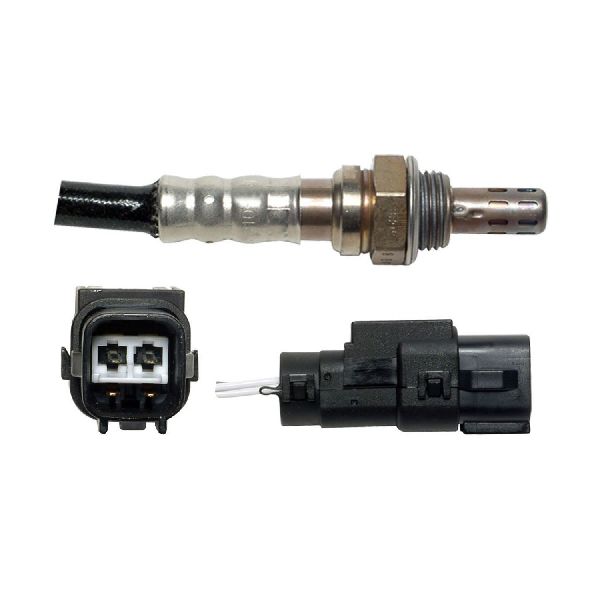
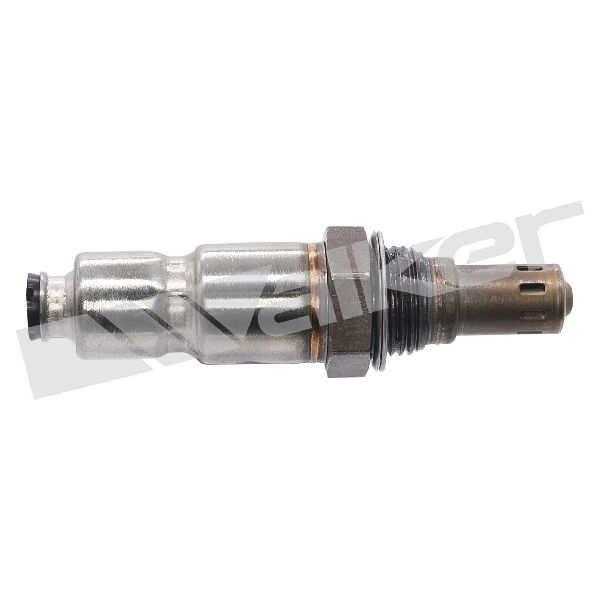
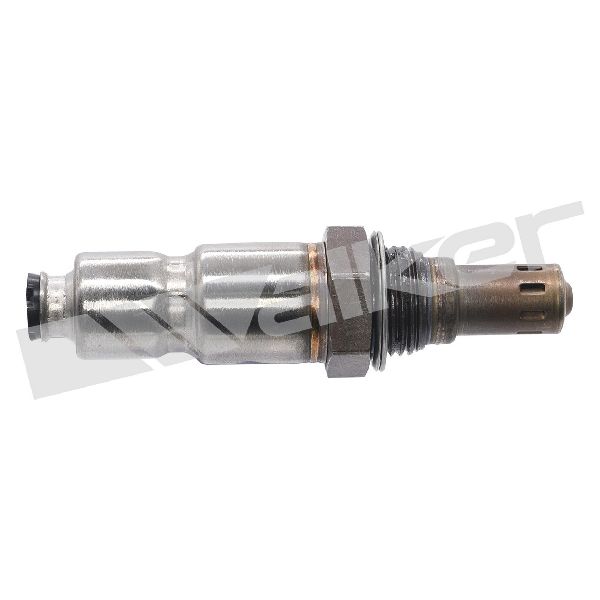
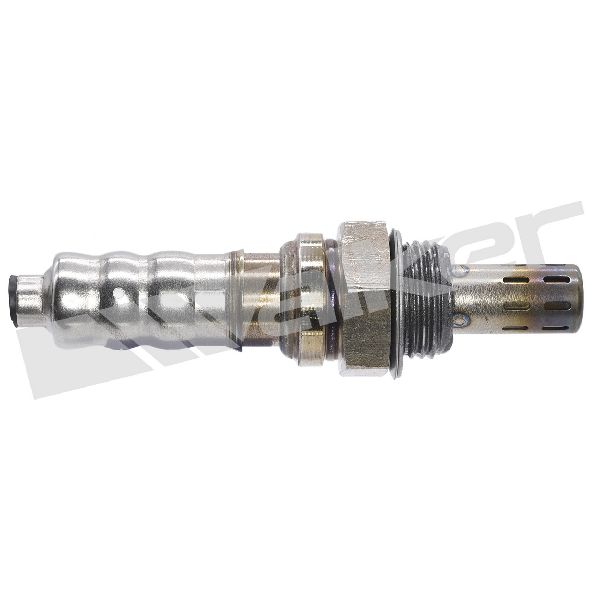
- Upstream Oxygen Sensor (Air/Fuel Ratio Sensor)
(OEM #39210-2G150)— This sensor is the most common cause for P0426 as it provides the direct input that the ECU uses to trigger this code. It is a wear item and is also susceptible to oil fouling on this engine.
Trusted brands: Denso, Bosch, NGK/NTK, Genuine Kia/Hyundai
OEM price range: $150-$250
Aftermarket price range: $60-$120
Related Codes That Often Appear With This One
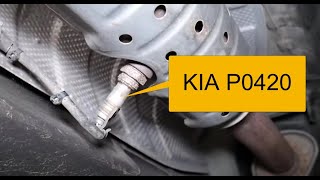
- P0420 (Catalyst System Efficiency Below Threshold Bank 1): Often appears alongside or after P0426, indicating the catalytic converter itself is failing, which can be a result of the same oil consumption issues. 🎬 Watch: How to diagnose and fix code P0420
- P1326 (Knock Sensor Detection System): This is a critical code indicating the engine has detected vibrations consistent with connecting rod bearing wear, a primary failure of the Theta II engine. If this code is present, the vehicle will likely be in 'limp mode' and requires immediate dealer attention under the engine settlement warranty.
Technical Service Bulletins (TSBs) & Recalls
- SC147: Recall for premature connecting rod bearing wear, a root cause of oil consumption that can lead to P0426.
- PI1802: Product Improvement Campaign for the Knock Sensor Detection System (KSDS) software update, which is designed to detect the bearing wear that causes engine failure.
- SC340: Service campaign to update ECM logic for emissions standards on 2.4L Theta II engines, which could potentially affect how this code is triggered.
Platform-Specific Known Issues
- Connection to Theta II Engine Failures: P0426 can be an early symptom of the catastrophic engine failure common to this engine. Excessive oil consumption from failing rod bearings can foul the O2 sensor or destroy the catalytic converter. If you have this code, especially with high mileage or oil consumption, you must investigate your vehicle's eligibility for the class-action lawsuit settlement which provides a lifetime warranty for the engine short block. The presence of code P1326 is a definitive sign of this issue.
- Owner Experience: Dealer Visit for Engine Failure Leading to Cat Replacement: A Reddit user with a 2011
Mechanic-Grade Diagnostic Values
- Upstream O2 Sensor Heater Circuit Resistance — expected: 5 to 10 ohms. Failure: An open loop (infinite resistance) or a reading significantly outside the expected range indicates a failed internal heater element.
- Oxygen Sensor Installation Torque — expected: 30 - 35 lb-ft (45 - 49 N.m). Failure: Under-torquing can cause exhaust leaks, leading to false codes. Over-torquing can damage the sensor threads or the exhaust manifold.
Scan Tool Commands That Help
- Kia GDS (Global Diagnostic System): Resetting Adaptive Values — After replacing the oxygen sensor, this function should be used to clear the old learned fuel trim and sensor performance values from the ECU. This is found under the 'Vehicle Software Management' or 'Special Function' menu and helps the ECU adapt to the new sensor correctly.
Wiring & Ground Locations
- SENSOR 1 Fuse — In the main engine compartment fuse box, identified on the fuse diagram.. This 15-amp fuse provides power to the oxygen sensor's heater circuit. If this fuse is blown, the sensor cannot heat up to its operational temperature quickly, which can cause performance range codes like P0426, especially during cold starts.
- Primary Engine Ground — Main ground strap runs from the negative battery terminal to the chassis, and from the chassis to the engine block or transmission case.. A poor engine ground can cause erratic voltage signals from various sensors, including the oxygen sensor. A voltage drop test between the engine block and negative battery terminal should read close to 0V.
OEM Part Supersession History
39210-2G150→N/A— N/A
Heads up: While 39210-2G150 is the commonly cited part number, part number 39210-2G100 is also frequently listed by OEM parts suppliers as the correct upstream (Front/Upper) oxygen sensor for the 2011-2015 Kia Optima 2.4L. Verify with a dealer using your VIN, but both may be applicable.
Model Year Variations Within This Range
- 2011-2015: In California-emissions states, some Optima models received a Super Ultra Low Emissions Vehicle (SULEV) rating. These vehicles have a slightly lower power output (192 hp vs 200 hp), which may be due to different ECU software calibrations or minor catalytic converter differences. This could potentially affect how the ECU monitors for codes like P0426, though the root causes remain the same.
Diagnostic Flowchart
Other Known Issues on This Vehicle
Issues unrelated to this code that are worth knowing about as an owner of this generation:
- Catastrophic Engine Failure (Connecting Rod Bearing Wear) 🔴 High — Widespread across 2011-2019 models with 2.0L & 2.4L Theta II GDI engines. Can occur at various mileages, often without warning. (Ref: Recall SC147; Class-Action Lawsuit Settlement providing a lifetime engine warranty (kiaenginesettlement.com).)
- Excessive Oil Consumption 🔴 High — Very common. A primary symptom of the underlying connecting rod bearing wear. Owners may notice low oil levels between changes, leading to engine damage if not monitored. (Ref: Related to the engine failure settlement. Dealers may perform an oil consumption test to validate an engine replacement claim.)
- Knock Sensor Detection System (KSDS) Activation 🔴 High — Common. The KSDS is a software update (PI1802/SC179) designed to detect bearing failure. When triggered, it sets code P1326 and puts the car in limp mode. (Ref: PI1802, SC179)
- Hydraulic Electronic Control Unit (HECU) Fire Risk 🔴 High — Affects many 2011-2015 models. An electrical short in the HECU can cause a fire while parked or driving. (Ref: NHTSA Recall 20V519000. Kia advises parking outdoors and away from structures until the recall is performed.)
- Cracked Low Pressure Fuel Hose 🟠 Medium — Affects 2013-2014 models. The fuel hose can deteriorate from engine heat, causing a fuel leak. (Ref: NHTSA Recall 18V363000.)
Used vs. New Parts: Buying Guide for This Vehicle
When a used part is the smart pick: For this repair, using a used part is generally not recommended. The primary failure part is the oxygen sensor, which is a relatively inexpensive wear-and-tear electronic component. The risk of a used sensor failing shortly after installation outweighs the small cost savings.
Donor-vehicle mileage cap: roughly under 30000 miles for the part to have meaningful remaining life.
What to inspect on the donor part:
- If considering a used catalytic converter, ensure the donor vehicle was not involved in a front-end collision.
- Check the donor vehicle's history for any indication of oil consumption or engine failure, as this would likely have damaged the converter.
- Inspect the O2 sensor threads and wiring on any used part to ensure they are not damaged or stripped.
OEM-only on this vehicle (don't cheap out):
- Catalytic Converter: While aftermarket converters are available, many owners report issues with them failing to meet the ECU's strict efficiency monitoring, leading to a P0420 code shortly after installation. Given the known sensitivity of the Kia ECU, a genuine Kia converter is the safest, albeit most expensive, option.
Aftermarket brands forum-validated for this vehicle:
- NTK/NGK
- Denso
- Bosch
Brands owners have reported issues with on this vehicle:
- Avoid unbranded, no-name 'white box' sensors from online marketplaces. These often have high failure rates and may not meet the precise specifications required by the ECU, causing the code to return.
Real Owner Stories
Aggregated from forums and TSBs cited above. Mileages and costs reflect what owners reported in those sources.
2011 Kia Optima LX 2.4L GDI
Symptoms: The owner was receiving a free engine replacement under warranty due to the Theta II defect, but the dealer recommended also replacing the catalytic converter.
What fixed it: The dealer recommended catalytic converter replacement due to damage likely caused by the engine failure.
Cost: $2,000-$2,000
Source hint: Reddit r/MechanicAdvice - '2011 Kia Optima LX Catalytic Converter Replacement?'
2015 Kia Optima 2.4L GDI
Symptoms: Vehicle went into limp mode (reduced power) with multiple warning lights.
What fixed it: The owner reported a combination of codes P1326, P0014, and P0420, which are linked to the core engine bearing issue and subsequent catalyst/emissions failure.
Source hint: Reddit r/AskMechanics - '2015 Kia Optima went into limp mode'
Related OBD-II Codes
Frequently Asked Questions
Is the P0426 code on my 2011-2015 Kia Optima covered under the engine settlement warranty?
Could the Knock Sensor Detection System (KSDS) update affect how my car handles this code?
My dealer recommended a $2,000 catalytic converter replacement along with my free engine warranty repair; is this common?
Does Service Campaign SC340 apply to the P0426 code on my 2.4L Theta II engine?
Can I just replace the Upstream Oxygen Sensor to fix P0426 on my Optima?
Helpful Videos
We Have This Part in Stock



The information in this article is provided for general reference and educational purposes only. Vehicle specifications, procedures, and part compatibility can vary by production date, trim level, and region. Always consult your vehicle's factory service manual and verify part numbers before purchasing or performing repairs. Safety-critical components such as airbags, seat belts, and braking systems should be installed by a qualified professional.
- Kia Optima:
- 🧭 Diagnostic Flowchart
- 🎬 Helpful Videos
- 🛍️ Shop This Part
- What's Unique About the 2011-2015 Kia Optima
- Symptoms You May Notice
- Most Likely Causes
- Rare But Worth Checking
- Diagnosis Steps
- Parts You'll Likely Need
- Related Codes That Often Appear With This One
- Technical Service Bulletins (TSBs) & Recalls
- Platform-Specific Known Issues
- Mechanic-Grade Diagnostic Values
- Scan Tool Commands That Help
- Wiring & Ground Locations
- OEM Part Supersession History
- Model Year Variations Within This Range
- Other Known Issues on This Vehicle
- Used vs. New Parts: Buying Guide for This Vehicle
- Real Owner Stories
- 2011 Kia Optima LX 2.4L GDI
- 2015 Kia Optima 2.4L GDI
- Related OBD-II Codes
- Frequently Asked Questions
- 🎟️ Get 5% Off