

P0430 on 2009-2012 Audi A4 3.2L V6: Catalyst Efficiency Causes and Fixes
P0430 on the Audi A4 3.2L V6 almost always indicates a failing catalytic converter on Bank 2 (driver's side). While an oxygen sensor or exhaust leak is possible, the converter itself is the most likely culprit. This is often a secondary failure caused by underlying engine issues like carbon buildup or misfires common to the FSI engine. Expect a high repair cost, often over $1,500-$2,000 at a shop.
- P0430 on your Audi A4 3.2L means the driver's side catalytic converter is very likely failing.
- Do not replace the oxygen sensors unless they are proven to be faulty through specific tests. This is a common and expensive mistake.
- Before replacing the expensive catalytic converter, ensure there are no underlying engine issues like misfires or exhaust leaks, as these can destroy a new converter.
- This repair is costly and difficult for a DIYer due to tight access and rusted bolts. A professional diagnosis is recommended to confirm the failure before purchasing parts.
What's Unique About the 2009-2016 Audi A4
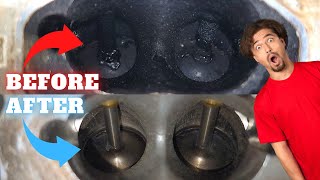
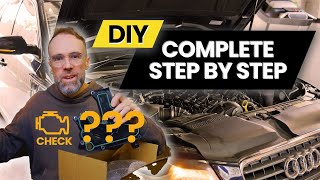
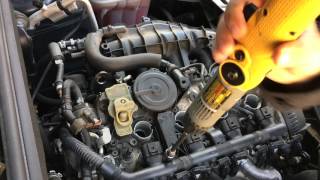
While P0430 is a universal code, on the B8 Audi A4 with the 3.2L FSI V6, it's often the final symptom of another underlying issue. This direct-injection engine is well-documented to be prone to significant carbon buildup on intake valves. This buildup, along with potential issues with ignition coils and fuel injectors, can create a rich running condition or misfires. Over thousands of miles, this dumps unburned fuel into the exhaust, which overheats and destroys the precious metals inside the catalytic converter, leading to its eventual failure and the P0430 code. Therefore, simply replacing the converter without checking for and addressing upstream engine problems 🎬 Watch: How to perform walnut blasting carbon cleaning on this engine. (especially carbon buildup) may result in the new converter failing prematurely.
Generation note: The specified 2009-2016 range covers the Audi A4 B8 and B8.5 generations. However, the 3.2L V6 CALA engine was primarily offered in the pre-facelift B8 models in North America, specifically the 2009 model year, before being phased out in favor of the 2.0T and 3.0T engines.
Symptoms You May Notice
- Check Engine Light is on.
- Vehicle fails to pass an emissions test.
- Reduced fuel economy.
- Sluggish acceleration or lack of power, especially if the converter is becoming clogged.
- A sulfur or 'rotten egg' smell from the exhaust.
- Rattling noise from the exhaust if the internal catalyst matrix has broken apart.
- Replacing the oxygen sensors immediately. It's a common mistake. A functioning O2 sensor is required to accurately diagnose a failing catalytic converter. If there are no O2 sensor-specific codes, the sensors are likely doing their job of reporting the bad converter.
- Using 'O2 spacers' or 'non-foulers'. These devices pull the downstream O2 sensor out of the direct exhaust stream to trick the ECU and clear the code. This is an illegal modification that does not fix the underlying problem, will cause an automatic emissions test failure on visual inspection, and simply masks a failing converter.
Most Likely Causes
- Failing Bank 2 Catalytic Converter 🔴 High Probability → Shop Catalytic Converter Catalytic converters on the 3.2L FSI engine are susceptible to damage from upstream engine problems like misfires, rich fuel conditions from leaky injectors, or excessive carbon buildup, which are known issues for this platform. High mileage also contributes to natural degradation.
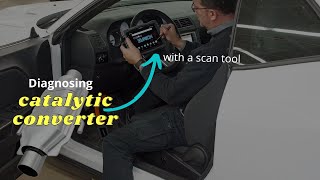
How to confirm: A professional diagnosis involves using a scan tool (like VCDS) 🎬 See how to run a catalytic converter test using VCDS. to graph the upstream and downstream O2 sensor readings. The downstream sensor reading should be relatively stable; if it mimics the rapid switching of the upstream sensor, the converter is not working. An exhaust backpressure test can also confirm a clog. A physical inspection after removal may show a melted or collapsed internal honeycomb structure.
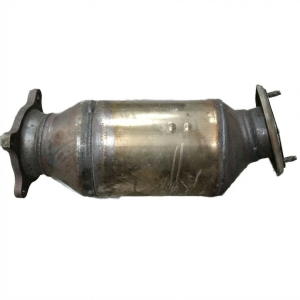
Typical fix: Replace the Bank 2 (driver's side) catalytic converter. This is an integrated assembly with the downpipe. It is critical to solve any misfire or carbon buildup issues first.
Est. part cost: $800-$2200 - Failing Downstream (Post-Cat) Oxygen Sensor ⚪ Low Probability → Shop Oxygen Sensor Oxygen sensors can fail over time, but they are often misdiagnosed as the cause of a P0430 code. A bad O2 sensor is more likely to set its own specific circuit or heater code. Owners on forums frequently report that replacing the O2 sensor alone does not fix the P0430 code.
How to confirm: Test the sensor's heater circuit and voltage output with a multimeter or advanced scan tool. The most definitive test is to swap the Bank 1 and Bank 2 downstream sensors; if the code switches to P0420 (Bank 1), the sensor is bad.
Typical fix: Replace the Bank 2, Sensor 2 (downstream) oxygen sensor.
Est. part cost: $80-$200 - Exhaust Leak ⚪ Low Probability Corrosion or loose flange bolts can cause leaks in the exhaust system, particularly at the flex pipe sections. Gaskets can also fail over time.
How to confirm: Perform a visual inspection for soot trails or cracks around the exhaust manifold, downpipe, and catalytic converter. A smoke test is the most effective way to find small leaks. The leak must be located between the upstream and downstream O2 sensors to allow unmetered oxygen to enter and trigger this code.
Typical fix: Replace the leaking gasket or tighten flange bolts. In some cases, a cracked flex pipe may need to be welded or the entire downpipe assembly replaced.
Est. part cost: $20-$200 for gaskets/bolts, much higher if welding/replacement is needed.
Rare But Worth Checking
- Engine Misfires or Rich Fuel Mixture: This is a critical root cause, not a direct one. Unburned fuel from misfires (due to bad spark plugs, ignition coils) or a rich condition (leaky injectors, excessive carbon buildup) will destroy the catalytic converter. If you replace the converter without fixing the engine issue, the new one will fail quickly. Always check for other codes like P0300-P0306 (misfires) or fuel trim codes (P0172/P0175) and address them first.
- ECU Software Calibration: In some older Audi models, the ECU's threshold for triggering P0420/P0430 was too sensitive. Dealers could perform a software flash to update the parameters. While less common for the B8 platform, it's worth inquiring about with a dealer if all hardware checks out perfectly, especially if the vehicle has very low mileage.
Diagnosis Steps
- Check for Other Codes: Use an OBD-II scanner (VCDS is preferred for VW/Audi) to read all stored codes. Any codes for misfires (P030x), fuel system issues (P017x), or oxygen sensor circuits must be diagnosed and repaired first.
- Inspect for Exhaust Leaks: Visually inspect the exhaust system from the engine to the rear O2 sensor on Bank 2 (driver's side). Look for black soot, listen for hissing sounds, and feel for escaping air (when the exhaust is cool). A professional smoke test is the most reliable method to find leaks between the two O2 sensors.
- Analyze Oxygen Sensor Data: → Shop Oxygen Sensor Using a scan tool that can graph live data, bring the engine to operating temperature and hold it at a steady 2500 RPM. Observe the voltage of the upstream (Sensor 1) and downstream (Sensor 2) oxygen sensors for Bank 2. The upstream sensor should fluctuate rapidly between ~0.1V and ~0.9V. The downstream sensor should show a much slower, steadier voltage (typically >0.5V). If the downstream sensor's graph mirrors the upstream sensor's rapid switching, the catalytic converter has failed and is not storing oxygen.
- Check for Upstream Mechanical Issues: Given the 3.2L FSI's known issues, investigate root causes. Check fuel trim values for signs of a rich condition. A borescope inspection of the intake valves can reveal the extent of carbon buildup. Addressing this is crucial before cat replacement.
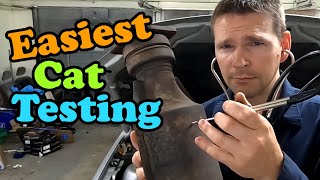
- Confirm the Catalytic Converter is the Fault: → Shop Catalytic Converter If all other tests pass and the O2 sensor data confirms low efficiency, the catalytic converter is the confirmed point of failure. Before ordering an expensive replacement, some mechanics may perform a temperature check using an infrared thermometer, comparing the inlet and outlet pipe temperatures of the converter (the outlet should be significantly hotter on a working cat).
Parts You'll Likely Need
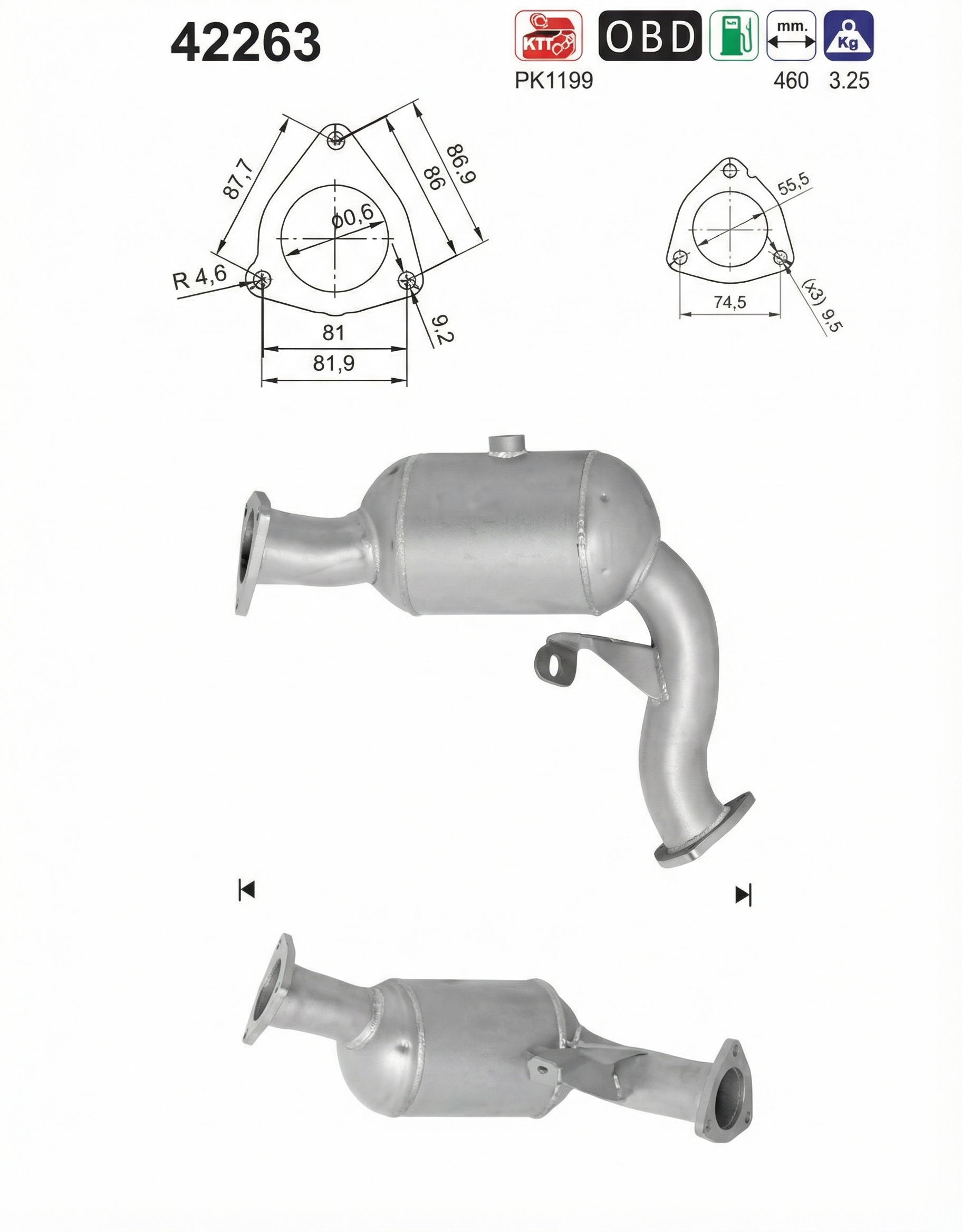
- Bank 2 Catalytic Converter / Downpipe Assembly
(OEM #8K0254252X (or similar variants, verify by VIN))— This is the most common failure item for a P0430 code that has been properly diagnosed. It is typically sold as a single unit including the downpipe.
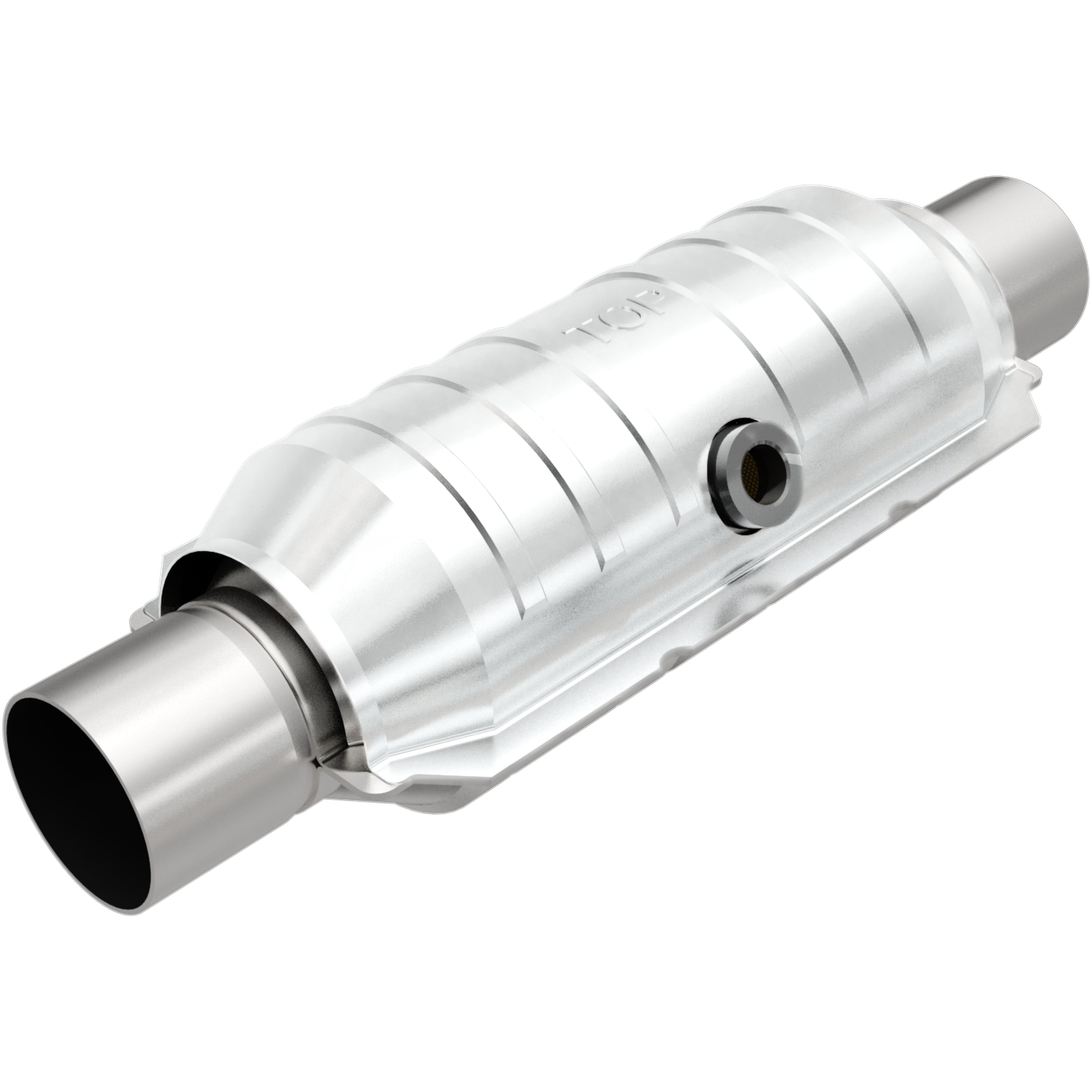
Trusted brands: Audi Genuine Parts, MagnaFlow, Bosal, Walker Exhaust
OEM price range: $1800-$2500
Aftermarket price range: $800-$1500 - Downstream Oxygen Sensor (Bank 2, Sensor 2)
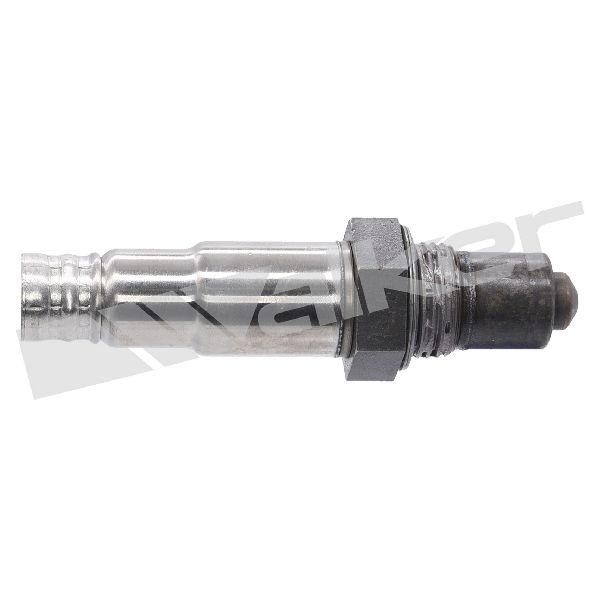
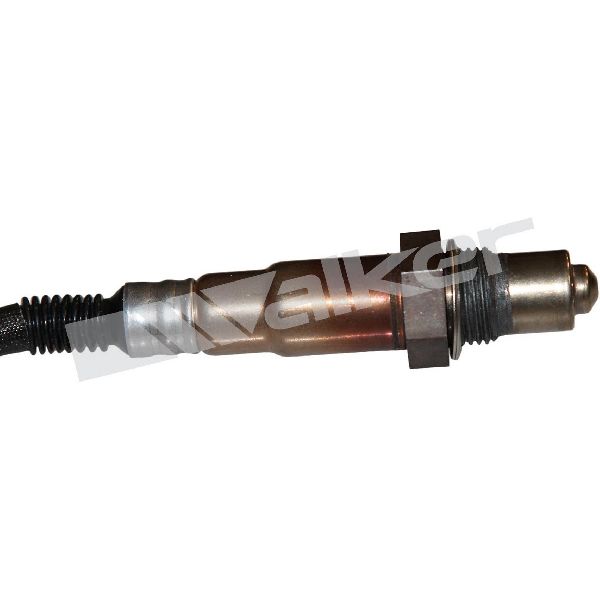
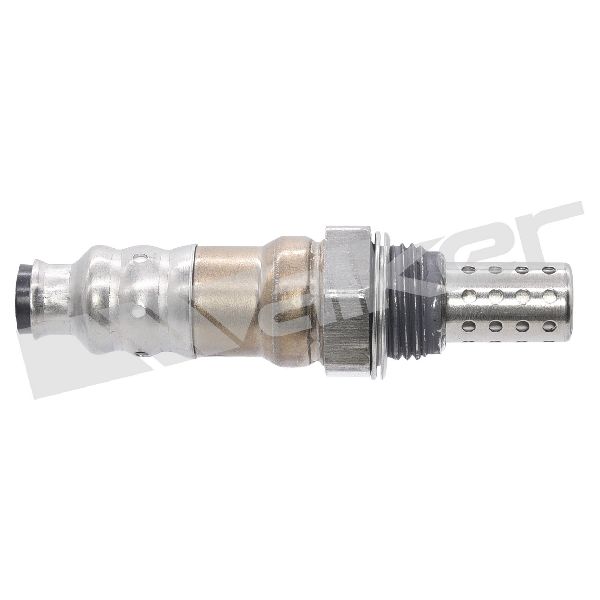
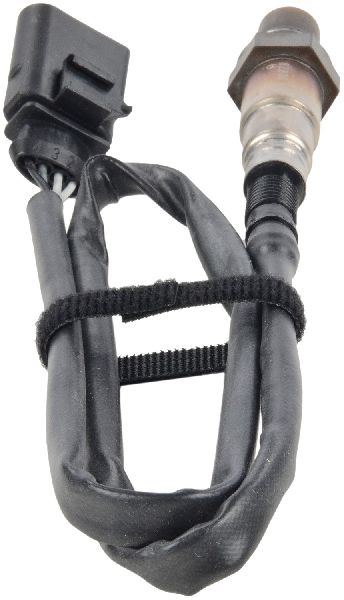
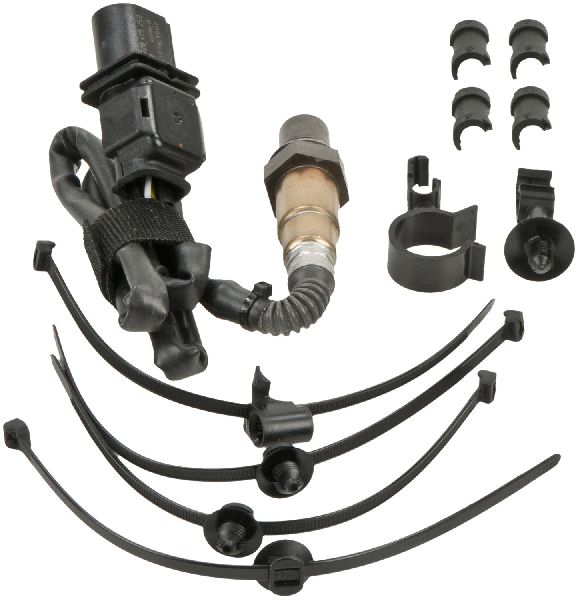
(OEM #8R0906262D)— This is the secondary cause and is often replaced as a preventative measure during a catalytic converter job, or if it is the confirmed point of failure. Its wiring harness connector is often a different color or shape from the upstream sensor.
Related Codes That Often Appear With This One
- P0420 — This is the same efficiency code but for Bank 1 (passenger side). Seeing both P0420 and P0430 together strongly suggests a systemic issue like contaminated fuel, a persistent rich/lean condition affecting the whole engine, or simply that both converters have reached the end of their life at similar mileage.
- P0300, P0304, P0305, P0306 — These are misfire codes for random misfires or specific cylinders on Bank 2 (4, 5, and 6). An active misfire will dump raw fuel into the exhaust, quickly overheating and destroying the catalytic converter. The misfire must be fixed before replacing the converter.
- P0175 — This code means 'System Too Rich (Bank 2)'. It indicates the engine is running with too much fuel and not enough air on the driver's side bank. This condition is a primary killer of catalytic converters and must be diagnosed and repaired first. Causes could include a leaky fuel injector or faulty upstream O2 sensor.
- P052E — This code for 'PCV Valve Malfunction' can be a root cause of P0430. A faulty PCV system can cause unmetered air leaks and allow excessive oil vapor into the intake, altering fuel trims and ultimately contaminating and destroying the catalytic converter over time.
Technical Service Bulletins (TSBs) & Recalls
- While no specific TSB for P0430 on the CALA engine was found, Audi has issued TSBs for similar issues on other engines, such as TSB 24-08-53 for P0420/P0430 codes on other models, which sometimes involved an ECU software update to widen the catalyst efficiency monitoring threshold. It is always worth checking with a dealer for the latest applicable TSBs by VIN.
Platform-Specific Known Issues
- Carbon Buildup as a Primary Contributor: Owners on forums like AudiWorld and Audizine repeatedly link P0420/P0430 codes on FSI engines to severe carbon buildup on the intake valves. One user on an AudiWorld forum noted that after getting a P0430 code, a borescope inspection revealed heavy carbon deposits. While a carbon cleaning service (walnut blasting) is expensive (often $600-$1000), it is considered a necessary prerequisite to replacing the catalytic converter to ensure the new part is not quickly damaged by a continued rich-running condition.
- High Failure Rate of Aftermarket Converters: Multiple forum threads contain stories of owners who installed cheaper, aftermarket catalytic converters only to have the P0430 code return within a few months to a year. This is often because aftermarket units may have a lower loading of precious metals (platinum, palladium, rhodium) and cannot meet the strict efficiency monitoring of the Audi ECU. For this reason, many experienced owners and shops recommend using OEM or high-quality, OEM-equivalent brands like Bosal or MagnaFlow that are specifically certified for the vehicle.
Mechanic-Grade Diagnostic Values
- High-Pressure Fuel Pump (HPFP) Pressure at Idle (~800 RPM) — expected: ~125 bar. Failure: Pressure dropping below 50 bar under high-load conditions can trigger fuel-related codes (like P0087) that lead to cat failure.
- High-Pressure Fuel Pump (HPFP) Pressure under load (~3,000 RPM) — expected: Should hold steady around 175 bar.. Failure: Significant drops or inability to reach target pressure indicates a failing HPFP.
- Low-Pressure Fuel System Pressure — expected: 3.5 to 4.5 bar (50 to 65 PSI).. Failure: Pressure below this range indicates a failing in-tank fuel pump or clogged filter, which can create lean conditions.
- Ground Path Voltage Drop (Alternator case to Battery negative post) — expected: No more than 0.2 volts with engine running.. Failure: Readings above 0.4 volts indicate high resistance in the main ground circuit, which can cause myriad electrical issues.
- Engine-to-Chassis Ground Strap Voltage Drop — expected: Less than 0.15 volts at idle.. Failure: Higher readings point to a degraded ground strap, a common failure point from heat and vibration that can affect sensor readings.
- Catalyst Temperature (VCDS Freeze Frame Data) — expected: Operating temperatures can reach ~715°C under load.. Failure: An inlet temperature that is significantly hotter than the outlet temperature can indicate a clogged converter.
Scan Tool Commands That Help
- VCDS (VAG-COM): Engine -> Measuring Blocks -> Group 042 — This is the primary function for live-testing catalyst efficiency. It allows you to graph the upstream and downstream O2 sensor voltages simultaneously to see if the downstream sensor is mimicking the upstream, which indicates a failed catalyst.
- VCDS (VAG-COM) or similar professional scanner: Clear All DTCs / ECU Adaptation Reset — After replacing an oxygen sensor, it is critical to clear the stored fault codes to allow the ECU to relearn and adapt to the new sensor's readings.
Wiring & Ground Locations
- Engine Ground Strap (G105) — Connects the engine block to the firewall.. This is a common failure point due to constant heat and vibration. A degraded ground can cause incorrect readings from engine sensors, including O2 sensors, potentially leading to misdiagnosis.
- G26 — Located on the left side of the engine compartment, under the power steering reservoir.. This ground point serves multiple components in the engine bay; corrosion here can lead to erratic sensor behavior.
- G32 — Located behind the left kick panel inside the passenger compartment.. A critical interior ground point. While less likely to affect O2 sensors directly, poor grounding here can cause issues with the ECU or instrument cluster.
- O2 Sensor Connectors — The upstream (pre-cat) and downstream (post-cat) sensor connectors are located on the firewall and transmission tunnel area. They are often different colors for identification.. Corrosion or damage to these connectors or the wiring harness can mimic a failed sensor or catalyst. The upstream sensor on this engine is a 5-wire wideband (LSU 4.9 type), while the rear is a simpler 4-wire sensor.
Real Owner Repair Stories
- Audizine Forum, referenced by AudiWorld user SMac770 (Audi A4 B8 (2.0T, but principle applies)) — Persistent P0420 (Bank 1 equivalent of P0430) code.
❌ Tried (didn't work) Initial diagnosis focused on exhaust leaks and O2 sensors.
✅ What actually fixed it The root cause was a crack in the PCV (Positive Crankcase Ventilation) unit, causing an unmetered air leak. Replacing the PCV resolved the catalyst efficiency code. - AudiWorld Forums user NotoriousGLU (2013 Audi A8 3.0T (similar TFSI V-engine architecture), 193,025 km) — P0430 code for Bank 2 catalyst efficiency.
❌ Tried (didn't work) User was trying to determine if it was the O2 sensor or the catalytic converter.
✅ What actually fixed it The diagnostic scan (VCDS) showed a second code, P052E (PCV Valve Malfunction), stored along with the P0430. This provides strong evidence that the failing PCV system was the root cause that likely damaged the catalytic converter, a crucial insight for a correct repair.
"I Checked Everything" — The Actual Cause
- In a documented case for the B8 platform, a persistent catalyst code (P0420) was not caused by an exhaust leak that a smoke test would find. The actual cause was a cracked PCV valve, which introduced unmetered air into the intake manifold. This altered the air-fuel ratio and engine combustion, leading the ECU to incorrectly flag the catalytic converter for inefficiency.
Model Year Variations Within This Range
- 2009: The 3.2L V6 CALA engine was primarily available in the 2009 model year for the North American A4 before being replaced by other engines. This makes it a relatively low-volume engine for this specific chassis, and some parts may be less common than those for the 2.0T.
Diagnostic Flowchart
Other Known Issues on This Vehicle
Issues unrelated to this code that are worth knowing about as an owner of this generation:
- Timing Chain Tensioner Wear 🔴 High — Common over 80,000 miles. Characterized by a brief 'rattle' on cold startup. Failure is catastrophic. (Ref: No recall, but updated parts are available. Repair is engine-out and very expensive ($4k+).)
- Intake Valve Carbon Buildup 🟠 Medium — A universal issue for this FSI engine. Significant buildup can occur by 60,000-80,000 miles, causing misfires, hesitation, and contributing to P0430. (Ref: No recall. The standard fix is manual (walnut shell) cleaning of the intake valves.)
- Water Pump Failure 🟠 Medium — The water pump, often with a plastic impeller, is a common failure point, leading to coolant leaks and overheating. Typically fails between 60,000 and 100,000 miles. (Ref: No recall. Aftermarket all-metal pumps are a popular and recommended upgrade.)
- PCV Valve Failure 🟡 Low — The PCV (oil separator) can fail, leading to excessive oil consumption, rough idle, and oil leaks. It's a relatively common and inexpensive fix.
Used vs. New Parts: Buying Guide for This Vehicle
When a used part is the smart pick: A used OEM catalytic converter can be a cost-effective option if it comes from a verified low-mileage vehicle that was not in a front-end collision and has no record of engine issues. The failure of this part is often secondary, so a used part from a healthy donor car can have significant life left.
Donor-vehicle mileage cap: roughly under 80000 miles for the part to have meaningful remaining life.
What to inspect on the donor part:
- Verify the donor vehicle's VIN to confirm it did not have recurring CEL issues or codes like P030x (misfires) or P017x (fuel trim).
- Inspect the converter's honeycomb structure from both ends with a bright light. It should be intact, with no signs of melting, clogging, or broken pieces.
- Check for heavy rust or damage to the flanges and flex pipe, as this can indicate a shorter remaining lifespan.
OEM-only on this vehicle (don't cheap out):
- Catalytic Converter: While aftermarket options exist, forum consensus for related Audi engines suggests that many aftermarket cats, especially high-flow performance models, may fail prematurely or struggle to keep the check engine light off without ECU tuning. For a reliable, long-term fix that passes emissions, OEM is the safest bet.
Aftermarket brands forum-validated for this vehicle:
- For OEM-style replacement catalytic converters: MagnaFlow, Walker Exhaust.
- For Oxygen Sensors: Bosch, NTK, or Denso are the trusted OEM suppliers.
Brands owners have reported issues with on this vehicle:
- Unbranded, ultra-low-cost catalytic converters from online marketplaces often use insufficient catalyst material and will fail to meet the ECU's efficiency threshold, causing the P0430 code to return quickly.
Real Owner Stories
Aggregated from forums and TSBs cited above. Mileages and costs reflect what owners reported in those sources.
2009 Audi A4 3.2L V6 — 176000 miles
Symptoms: Vehicle threw both P0420 and P0430 codes simultaneously.
What fixed it: Replacement of the catalytic converters, as other users confirmed the cats are guaranteed to be burned out at that high mileage.
Source hint: AudiWorld Forums - Multiple threads confirm P0430 points to the Bank 2 (driver's side) cat and that O2 sensors are rarely the sole cause.
2009-2016 Audi A4 3.2L V6
Symptoms: Check Engine Light with P0430; a borescope inspection revealed heavy carbon deposits on the intake valves.
What fixed it: Carbon cleaning service (walnut blasting) followed by catalytic converter replacement to ensure the new part was not damaged by a rich-running condition.
Cost: $600-$1000
Source hint: AudiWorld and Audizine forum threads regarding carbon buildup as a primary contributor
2009-2016 Audi A4 3.2L V6
Symptoms: P0430 code returned within a few months to a year after a previous repair.
What fixed it: Replacing a cheap aftermarket catalytic converter with an OEM or high-quality equivalent (Bosal/MagnaFlow) that meets strict ECU efficiency monitoring.
Source hint: Multiple forum threads regarding High Failure Rate of Aftermarket Converters
Related OBD-II Codes
Frequently Asked Questions
Is there a TSB for the P0430 code on my 3.2L CALA engine?
Can I just replace the O2 sensors to fix P0430 on my Audi A4?
How much does it cost to fix the carbon buildup issue linked to this code?
Which side of the engine is Bank 2 on the Audi 3.2L V6?
Should I use an aftermarket catalytic converter for my A4?
Could an exhaust leak be causing my P0430 code?
Helpful Videos

Used OEM Parts in Stock
New Aftermarket Parts Available


The information in this article is provided for general reference and educational purposes only. Vehicle specifications, procedures, and part compatibility can vary by production date, trim level, and region. Always consult your vehicle's factory service manual and verify part numbers before purchasing or performing repairs. Safety-critical components such as airbags, seat belts, and braking systems should be installed by a qualified professional.
- Audi A4:
- 🧭 Diagnostic Flowchart
- 🎬 Helpful Videos
- 🛍️ Shop This Part
- What's Unique About the 2009-2016 Audi A4
- Symptoms You May Notice
- Most Likely Causes
- Rare But Worth Checking
- Diagnosis Steps
- Parts You'll Likely Need
- Related Codes That Often Appear With This One
- Technical Service Bulletins (TSBs) & Recalls
- Platform-Specific Known Issues
- Mechanic-Grade Diagnostic Values
- Scan Tool Commands That Help
- Wiring & Ground Locations
- Real Owner Repair Stories
- "I Checked Everything" — The Actual Cause
- Model Year Variations Within This Range
- Other Known Issues on This Vehicle
- Used vs. New Parts: Buying Guide for This Vehicle
- Real Owner Stories
- 2009 Audi A4 3.2L V6 — 176000 miles
- 2009-2016 Audi A4 3.2L V6
- 2009-2016 Audi A4 3.2L V6
- Related OBD-II Codes
- Frequently Asked Questions
- 🎟️ Get 5% Off