

P0430 on 2008-2016 Audi A5 3.2L V6: Catalyst Efficiency Causes and Fixes
P0430 on an Audi A5 3.2L V6 almost always means the Bank 2 catalytic converter is failing. While an O2 sensor or exhaust leak is possible, the most common fix is replacing the converter itself, which can be a costly repair. Underlying issues like carbon buildup on intake valves, a known problem for this engine, can be a contributing factor.
- P0430 on your Audi A5 points to a failing catalytic converter on Bank 2 (driver's side).
- Before buying an expensive new converter, rule out a bad downstream O2 sensor by swapping it with the one from Bank 1.
- Always check for and resolve any engine misfire codes (P030x) or exhaust leaks before replacing the catalytic converter, as they are often the root cause of the failure.
- This repair can be expensive, with OEM catalytic converters costing over $1500, plus several hours of labor.
What's Unique About the 2008-2016 Audi A5
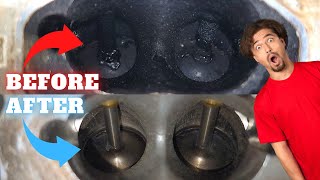
The Audi A5 from this era with the 3.2L FSI (CALA) engine is generally robust, but like many direct-injection engines, it is highly susceptible to carbon buildup on intake valves. 🎬 Watch: How to perform a carbon cleaning on this engine This buildup occurs because fuel is injected directly into the cylinder, so it never washes over and cleans the intake valves. Severe carbon buildup can lead to incomplete combustion, misfires, or a rough idle, which over time can send unburnt fuel into the exhaust, overheating and damaging the catalytic converters. While the code points to the converter, underlying issues like misfires or even a sensitive ECU software interpretation can be factors. Some owners on forums have discussed ECU reflashes as a potential fix for catalyst efficiency codes on older Audis, though this is less common than a hardware failure.
Generation note: The 2008-2016 range primarily covers the first generation of the Audi A5 (Type 8T/8F), which is part of the Audi B8 platform. The 3.2L V6 CALA engine was offered in the earlier part of this generation, roughly from 2008 to 2012, before being replaced by other engine options like the 2.0T and 3.0T. The information here is specific to the models equipped with the 3.2L CALA V6.
Symptoms You May Notice
- Check Engine Light is on
- Failure to pass an emissions test
- Reduced engine power or sluggish acceleration
- A sulfur or 'rotten egg' smell from the exhaust
- Rough idle or engine hesitation
- Replacing the oxygen sensor without proper diagnosis. Many people replace the O2 sensor first because it's cheaper, but forum discussions and mechanic advice suggest the catalytic converter is the more frequent culprit for a P0430 code. Swapping sensors between banks is a key diagnostic step to avoid this.
- Replacing the catalytic converter without addressing the root cause. If the converter failed due to misfires from carbon buildup or a faulty injector, the new converter will also fail prematurely.
Most Likely Causes
- Failing Catalytic Converter 🔴 High Probability → Shop Catalytic Converter Catalytic converters have a finite lifespan and degrade over time. Higher mileage and underlying engine issues like misfires, oil consumption, or excessive carbon buildup can accelerate this process, making it the most common cause for this code. Forum discussions for Audis with this code frequently conclude with converter replacement.
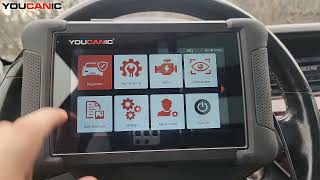
How to confirm: Use a scan tool to graph the voltage of the upstream and downstream O2 sensors for Bank 2. 🎬 See how to check O2 sensor live data with a scanner The upstream sensor should fluctuate rapidly, while a healthy converter's downstream sensor will show a much slower, steadier voltage. If the downstream sensor is switching rapidly like the upstream one, the converter has failed. An infrared thermometer can also be used; the outlet of the converter should be significantly hotter than the inlet.
Typical fix: Replace the Bank 2 (driver's side) catalytic converter.
Est. part cost: $800-$2000+ - Faulty Downstream Oxygen (O2) Sensor 🟡 Medium Probability → Shop Oxygen Sensor O2 sensors can become lazy or biased with age, sending incorrect data to the ECU. This can trick the computer into thinking the converter is bad when it's actually the sensor that's failing. Given the age of these vehicles, sensor failure is a common maintenance item.
How to confirm: The best way is to swap the downstream O2 sensors between Bank 1 and Bank 2. They are often identical parts. Clear the codes and drive the vehicle. If the trouble code changes to P0420 (Bank 1), the O2 sensor is faulty. If P0430 returns, the sensor is likely good and the converter is the issue.
Typical fix: Replace the Bank 2 downstream oxygen sensor. The OEM part is often made by Bosch. 🎬 Watch: DIY oxygen sensor replacement for the 3.2L engine
Est. part cost: $70-$180 - Exhaust System Leak ⚪ Low Probability Rust and corrosion can cause leaks at gaskets or flex pipes. A leak between the upstream and downstream O2 sensors can draw in outside air, disrupting the downstream sensor's readings and triggering the code. Flex pipes are a known potential leak point that can cause this code.
How to confirm: Visually inspect the exhaust system from the engine to the rear O2 sensor for any signs of black soot, cracks, or holes. A smoke test is the most effective method, where smoke is forced into the exhaust system to reveal the location of any leaks.
Typical fix: Replace the leaking gasket or repair the damaged section of the exhaust pipe.
Est. part cost: $20-$150
Rare But Worth Checking
- Engine Misfires or Fuel Mixture Issues: Persistent misfires (P030x codes) or rich/lean conditions (P017x codes) can destroy a new catalytic converter quickly. These root causes must be addressed before replacing the converter. On the 3.2L FSI, check for issues like bad spark plugs, ignition coils, leaking fuel injectors, or significant carbon buildup on intake valves.
- ECU Software: On some vehicles, manufacturers release software updates (TSBs) to adjust the sensitivity of the catalyst monitoring system. While no specific TSB for the A5 3.2L P0430 was found, it's a known possibility for this code on other Audi/VW models, as discussed in owner forums. A dealer or specialist shop can check for available updates.
Diagnosis Steps
- Scan for all DTCs. If any misfire (P030x), fuel trim (P017x), or O2 sensor heater circuit codes are present, diagnose and fix them first. These are often the root cause.
- Visually inspect the Bank 2 (driver's side) exhaust system for any obvious leaks, cracks, or damage, especially between the two O2 sensors.
- With a capable scan tool (like VCDS for VW/Audi), observe the live data stream for the Bank 2 upstream (Sensor 1) and downstream (Sensor 2) O2 sensors with the engine at operating temperature.
- Confirm the upstream sensor is switching rapidly between ~0.1V and ~0.9V. The downstream sensor's voltage should be relatively stable and high (e.g., >0.6V).
- If the downstream sensor is fluctuating in a similar pattern to the upstream sensor, the catalytic converter is not functioning correctly and is the likely cause.
- If the downstream sensor's reading is flat, low, or erratic, the sensor itself may be faulty. Swap the Bank 1 and Bank 2 downstream sensors to confirm. If the code follows the sensor to Bank 1 (P0420), replace the sensor.
- If no definitive conclusion can be made from sensor data, perform a temperature test using an infrared thermometer. The converter's outlet should be at least 100°F (38°C) hotter than its inlet.
- Check for excessive carbon buildup on intake valves, a known issue with the 3.2L FSI engine, as this can cause misfires that lead to catalyst failure.
Parts You'll Likely Need
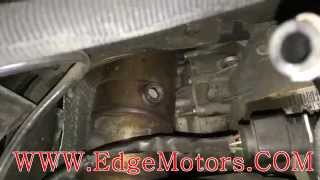
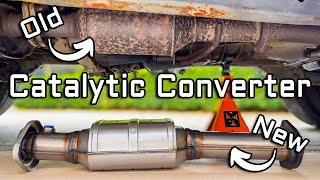
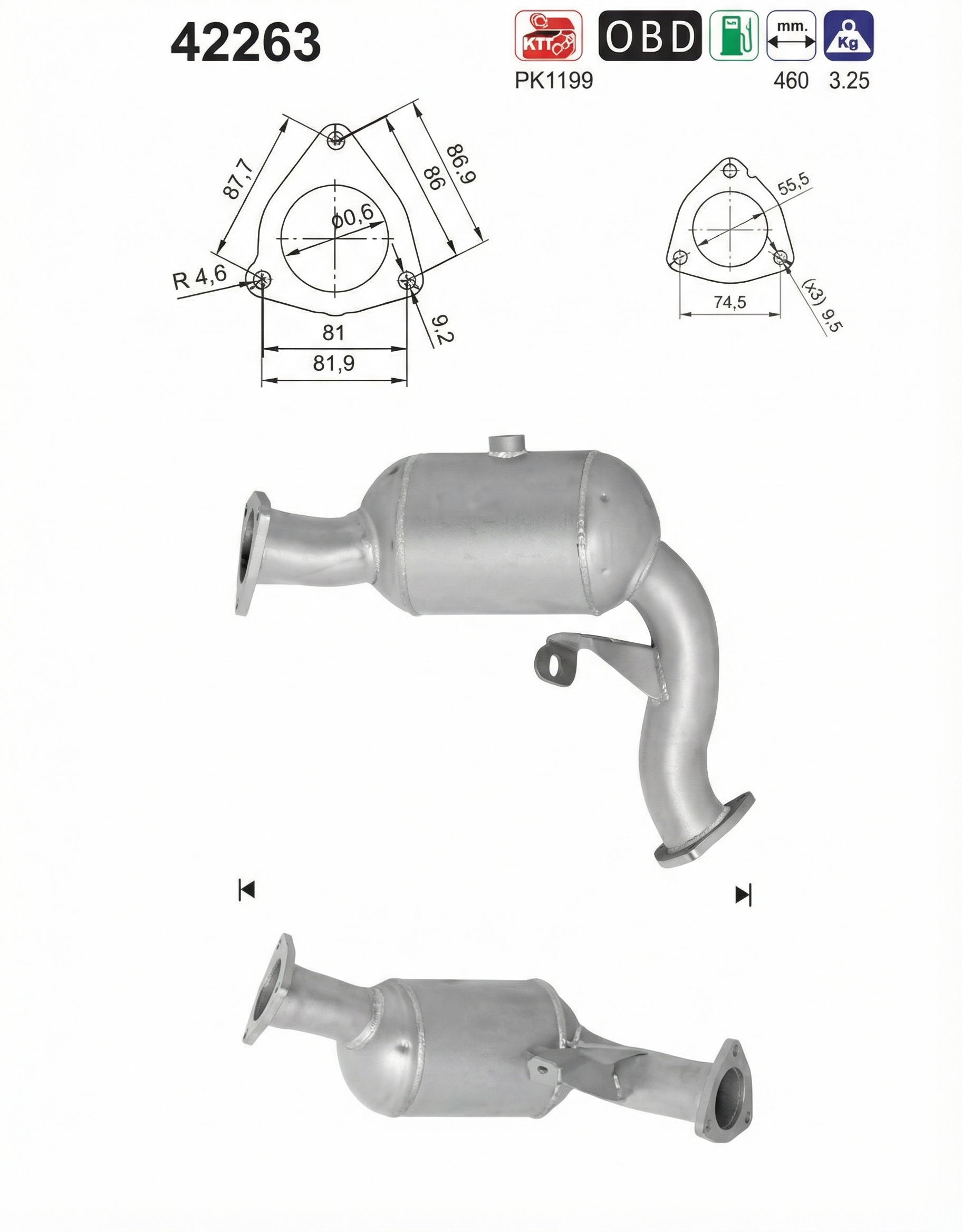
- Bank 2 Catalytic Converter
(OEM #8K0254200FX, 8K0254200KX)— This is the most common failure part for a P0430 code, indicating the catalyst material has degraded and is no longer efficient.
Trusted brands: Audi Genuine Parts, MagnaFlow, Bosal, Walker Exhaust
OEM price range: $1500-$2500+
Aftermarket price range: $700-$1500 - Bank 2 Downstream Oxygen Sensor
(OEM #06E906265Q)— A faulty sensor can send incorrect readings, falsely triggering the P0430 code. It's a common diagnostic step and a potential fix.
Trusted brands: Bosch, NGK/NTK, Denso
OEM price range: $150-$250
Aftermarket price range: $70-$180 - Exhaust Gaskets — These should always be replaced when the catalytic converter or other exhaust components are removed to ensure a leak-free seal.
Trusted brands: Victor Reinz, Elring
OEM price range: $15-$40
Aftermarket price range: $10-$25
Related Codes That Often Appear With This One
- P0420 — This is the equivalent code for Bank 1 (passenger side). Seeing both P0420 and P0430 could indicate a systemic issue like contaminated fuel, severe carbon buildup affecting all cylinders, or simply that both converters have reached the end of their service life.
- P0300, P0302, P0304, P0306 — These are misfire codes for Bank 2 cylinders (2, 4, 6). Unburnt fuel from misfires can overheat and damage the catalytic converter, making the misfire the root cause of the P0430 code.
- P0175 — This code indicates 'System Too Rich (Bank 2)'. A rich fuel mixture, potentially from a leaking fuel injector, can also lead to catalytic converter damage over time.
Platform-Specific Known Issues
- The 3.2L FSI engine is known for carbon buildup on the intake valves, which can cause misfires that lead to premature catalytic converter failure. This service is often recommended every 40,000-60,000 miles and involves walnut shell blasting the intake ports.
Mechanic-Grade Diagnostic Values
- O2 Sensor Heater Circuit Resistance — expected: 8-12 Ohms (some sources say 4-20 Ohms is acceptable). Failure: An infinite reading (Open Loop/OL) or a reading far outside the expected range indicates a failed heater element within the sensor.
- VCDS Live Data - Bank 2 Catalyst Diagnosis — expected: In Measuring Value Block 042 (or similar), the upstream O2 sensor (B2S1) should show rapidly fluctuating voltage, while the downstream sensor (B2S2) should show a relatively steady, high voltage.. Failure: If the downstream sensor's voltage graph mimics the rapid fluctuations of the upstream sensor, it indicates the catalyst is not storing oxygen and has failed.
Scan Tool Commands That Help
- VCDS (VAG-COM): Catalyst Readiness Test (Basic Settings) — After a repair (like replacing a cat or O2 sensor) or clearing codes, you can use this function to force the ECU to run the internal tests required to set the catalyst monitor to 'Ready' for an emissions inspection. This avoids having to drive for days. Look for tests in Basic Settings groups like 044, 046, or functions like 'Automatic test sequence'.
- VCDS (VAG-COM): View Measuring Blocks 030-049 — These blocks are crucial for diagnosing catalyst and O2 sensor issues. Block 042 is often cited for direct catalyst performance comparison. Block 044 can be used to check the aging of the Bank 2 Sensor 2. Block 036 shows the operational readiness of the post-cat O2 sensor. These allow a technician to see raw data on sensor voltage, temperatures, and test status.
Wiring & Ground Locations
- Bank 2 O2 Sensor Connectors — The connectors for the Bank 2 (driver's side) O2 sensors are typically located on or near the firewall on the driver's side of the engine bay. The wiring runs down the engine block. Access may require removing the airbox or, for the downstream sensor, accessing from underneath or through the driver's side wheel well.. Wiring can be damaged by heat or chafing, causing erratic sensor signals that mimic a failed sensor or catalyst. Inspecting the harness and ensuring a clean, secure connection at the connector is a critical diagnostic step before replacing parts.
Real Owner Repair Stories
- AudiWorld Forums (Audi (model not specified, but relevant to P0420/P0430)) — Intermittent P0420 (Bank 1 catalyst efficiency) code.
❌ Tried (didn't work) Initial diagnosis pointed towards replacing parts.
✅ What actually fixed it The issue was resolved by getting an ECU software update (reflash) at the dealership. A TSB was available for this issue, and a technician stated it fixes the problem in about 75% of cases.
"I Checked Everything" — The Actual Cause
- In some cases, a P0430 code can be triggered by a cracked exhaust flex pipe. A standard smoke test at low pressure might not reveal the leak, as it may only open up under the heat and vibration of the running engine. This can be misdiagnosed as a bad catalytic converter because the leak draws in air and disrupts the downstream O2 sensor reading.
When the Usual Fixes Don't Work
- While the catalytic converter is the most common failure, a significant number of owners have fixed P0430/P0420 codes with an ECU software update from an Audi dealer. One forum member noted a technician claimed a reflash fixes the issue 75% of the time for certain model years where the monitoring parameters were too sensitive. This suggests that before undertaking a costly converter replacement, checking for available Technical Service Bulletins (TSBs) related to catalyst efficiency is a worthwhile step.
OEM Part Supersession History
8K0254200FX→8K0254200KX— This is a common supersession for the Bank 2 catalytic converter. Reasons are typically minor revisions for manufacturing efficiency, material changes, or slight design improvements.
Diagnostic Flowchart
Other Known Issues on This Vehicle
Issues unrelated to this code that are worth knowing about as an owner of this generation:
- Intake Valve Carbon Buildup 🔴 High — Considered inevitable. Performance degradation can be noticed as early as 20,000 miles, with cleaning recommended every 40,000-60,000 miles to prevent misfires and power loss.
- Timing Chain Tensioner Wear 🔴 High — A common issue on higher-mileage 3.2L FSI engines. The primary symptom is a metallic rattle on cold starts. Failure can be catastrophic, leading to engine damage. Inspection is recommended if rattling is heard. Some owners on Reddit suggest checking camshaft phase adaptation values with VCDS to gauge chain stretch.
- Oil Consumption 🟠 Medium — Some owners report increased oil consumption as the vehicle ages, which can be exacerbated by PCV system issues or piston ring wear. This can also contribute to faster catalytic converter degradation.
- Leaking Gaskets 🟡 Low — As the engine ages, gaskets for the valve covers and oil filter housing are known to become brittle and leak. This is a common maintenance item on vehicles over 100,000 miles.
Used vs. New Parts: Buying Guide for This Vehicle
When a used part is the smart pick: A used OEM catalytic converter from a low-mileage, rear-ended donor car can be a cost-effective option. Given the high price of new OEM units and the reported short lifespan of some cheaper aftermarket alternatives on sensitive European cars, a good used unit is often a better value than a non-CARB compliant aftermarket part.
Donor-vehicle mileage cap: roughly under 80000 miles for the part to have meaningful remaining life.
What to inspect on the donor part:
- Verify the part number on the converter body matches your required OEM number (e.g., 8K0254200FX/KX).
- Inspect the honeycomb substrate from both ends with a flashlight. It should be intact, with no signs of melting, crumbling, or large black soot deposits.
- Check the donor vehicle's history if possible to ensure it wasn't scrapped due to engine failure (like oil burning) that could have contaminated the converter.
- Ensure the flex pipe (if integrated) is not frayed and the flanges are not excessively rusted or damaged.
OEM-only on this vehicle (don't cheap out):
- Catalytic Converter: Many mechanics and forum users report that cheaper, non-OEM-grade aftermarket converters may fail to meet the strict efficiency monitoring of the Audi ECU, causing the P0430 code to return within a year, even if they pass an initial emissions test.
Aftermarket brands forum-validated for this vehicle:
- O2 Sensors: Bosch (often the OEM supplier), NTK, and Denso are consistently recommended for reliable performance.
- Catalytic Converters: If going aftermarket, brands like MagnaFlow and Walker are the most trusted in the industry, but it's recommended to use their OEM-grade or CARB-compliant versions for better longevity and compatibility.
Brands owners have reported issues with on this vehicle:
- Unbranded, exceptionally cheap 'universal' catalytic converters found on sites like eBay or Amazon. These often lack the necessary precious metal loading to satisfy the ECU's efficiency test for more than a short period.
Real Owner Stories
Aggregated from forums and TSBs cited above. Mileages and costs reflect what owners reported in those sources.
Audi A5 3.2L V6 — ~50000 miles
Symptoms: The engine experienced performance degradation and power loss due to carbon buildup on the intake valves, which can lead to misfires and catalyst failure.
What fixed it: Walnut shell blasting the intake ports to remove carbon buildup.
Source hint: BobIsTheOilGuy specifically about the 3.2L FSI's carbon buildup problem.
Audi A6 3.2L V6 (C6 platform)
Symptoms: Catalyst system efficiency below threshold on Bank 2.
What fixed it: Replacing the catalytic converters after other diagnostic attempts failed.
Source hint: Audizine thread detailing a user's successful fix, which involved replacing converters after other attempts failed.
Audi A5 3.2L V6
Symptoms: Metallic rattle on cold starts and potential timing issues.
What fixed it: Checking camshaft phase adaptation values with VCDS to gauge chain stretch and inspecting timing chain tensioners.
Source hint: Reddit thread discussing timing chain wear on a 3.2 FSI
Related OBD-II Codes
Frequently Asked Questions
Is the P0430 code on my Audi A5 3.2L related to the common carbon buildup issue?
Can I just replace the O2 sensor on Bank 2 to fix this?
I hear a metallic rattle on cold starts along with the Check Engine Light; are these related?
Which side of the engine is Bank 2 on the Audi A5 3.2L V6?
Should I buy a cheap aftermarket catalytic converter or a used OEM one?
What specific scan tool is recommended for diagnosing P0430 on this Audi?
Helpful Videos
We Have This Part in Stock

The information in this article is provided for general reference and educational purposes only. Vehicle specifications, procedures, and part compatibility can vary by production date, trim level, and region. Always consult your vehicle's factory service manual and verify part numbers before purchasing or performing repairs. Safety-critical components such as airbags, seat belts, and braking systems should be installed by a qualified professional.
- Audi A5:
- 🧭 Diagnostic Flowchart
- 🎬 Helpful Videos
- 🛍️ Shop This Part
- What's Unique About the 2008-2016 Audi A5
- Symptoms You May Notice
- Most Likely Causes
- Rare But Worth Checking
- Diagnosis Steps
- Parts You'll Likely Need
- Related Codes That Often Appear With This One
- Platform-Specific Known Issues
- Mechanic-Grade Diagnostic Values
- Scan Tool Commands That Help
- Wiring & Ground Locations
- Real Owner Repair Stories
- "I Checked Everything" — The Actual Cause
- When the Usual Fixes Don't Work
- OEM Part Supersession History
- Other Known Issues on This Vehicle
- Used vs. New Parts: Buying Guide for This Vehicle
- Real Owner Stories
- Audi A5 3.2L V6 — ~50000 miles
- Audi A6 3.2L V6 (C6 platform)
- Audi A5 3.2L V6
- Related OBD-II Codes
- Frequently Asked Questions
- 🎟️ Get 5% Off