

P0430 on 2007-2015 Audi Q7 4.2L V8: Catalyst Efficiency Causes and Fixes
P0430 on a 2007-2015 Audi Q7 4.2L V8 indicates a failing catalytic converter on the driver's side (Bank 2). Before replacing the expensive converter, thoroughly check for exhaust leaks (especially the flex pipe) and test the oxygen sensors, as these are common, cheaper failure points that can set a false code. Also consider underlying engine issues like misfires or fuel system problems that can destroy a new converter.
- P0430 means the catalytic converter on the driver's side (Bank 2) is not working efficiently.
- Before assuming the expensive catalytic converter has failed, always check for exhaust leaks, especially the flex pipes, as this is a common issue on the Q7.
- Test the oxygen sensors using a scan tool's live data function to ensure they are reading correctly before replacing them.
- If other codes for misfires or the fuel system are present, they must be fixed first to prevent damaging a new catalytic converter.
What's Unique About the 2007-2015 Audi Q7
For the first-generation Audi Q7 (Typ 4L), now aging, the P0430 code is frequently a straightforward, albeit expensive, failure of the original catalytic converter due to high mileage. However, a notable weak point on this platform is the exhaust flex pipes, which can crack and leak. Such a leak introduces oxygen into the exhaust stream, which can fool the oxygen sensors and trigger a false P0430 code. Owners should be diligent about ruling out exhaust leaks before condemning a catalytic converter. The 4.2L BAR engine is also a Fuel Stratified Injection (FSI) engine, a type of direct injection known for carbon buildup on intake valves, which can affect engine performance and indirectly contribute to conditions that harm the catalytic converter over time.
Symptoms You May Notice
- Check Engine Light is on.
- Vehicle fails an emissions test.
- Reduced engine power or sluggish acceleration, especially if the converter is clogged.
- A sulfur or "rotten egg" smell from the exhaust.
- A rattling noise from underneath the car if the converter's internal ceramic honeycomb structure has broken apart.
- Hesitation or rough idle if underlying issues like misfires or carbon buildup are present.
- Replacing the catalytic converter without first checking for exhaust leaks. A small leak can trigger the code and is much cheaper to fix.
- Replacing oxygen sensors without testing them. While O2 sensors can fail, they are often correctly reporting a problem with the catalyst. Replacing a good sensor will not fix the code.
- Ignoring underlying engine problems. Replacing a failed converter without fixing the misfire or rich fuel condition that destroyed it will only result in the new converter failing prematurely.
Most Likely Causes
- Failed Catalytic Converter 🔴 High Probability → Shop Catalytic Converter As these vehicles are now over a decade old and often have high mileage, the precious metals inside the original converters simply wear out from age, losing their chemical reactivity. Contamination from burning oil or coolant, or damage from unburnt fuel due to misfires, also leads to failure.
How to confirm: After confirming no exhaust leaks or sensor faults, use a scan tool to monitor live O2 sensor data. If the downstream sensor's voltage reading fluctuates rapidly, mirroring the upstream sensor, the converter is not working. A temperature check using an infrared thermometer showing little to no increase (should be at least 100°F hotter at outlet) from the converter's inlet to its outlet also indicates failure.
Typical fix: Replace the Bank 2 (driver's side) catalytic converter assembly.
Est. part cost: $700-$2500+ - Exhaust System Leak 🟡 Medium Probability The flexible sections (flex pipes) of the exhaust system are a known failure point on the Q7. They can crack with age and vibration, causing leaks before the downstream O2 sensor. This unmetered oxygen entering the exhaust fools the sensor into reporting poor catalyst efficiency.
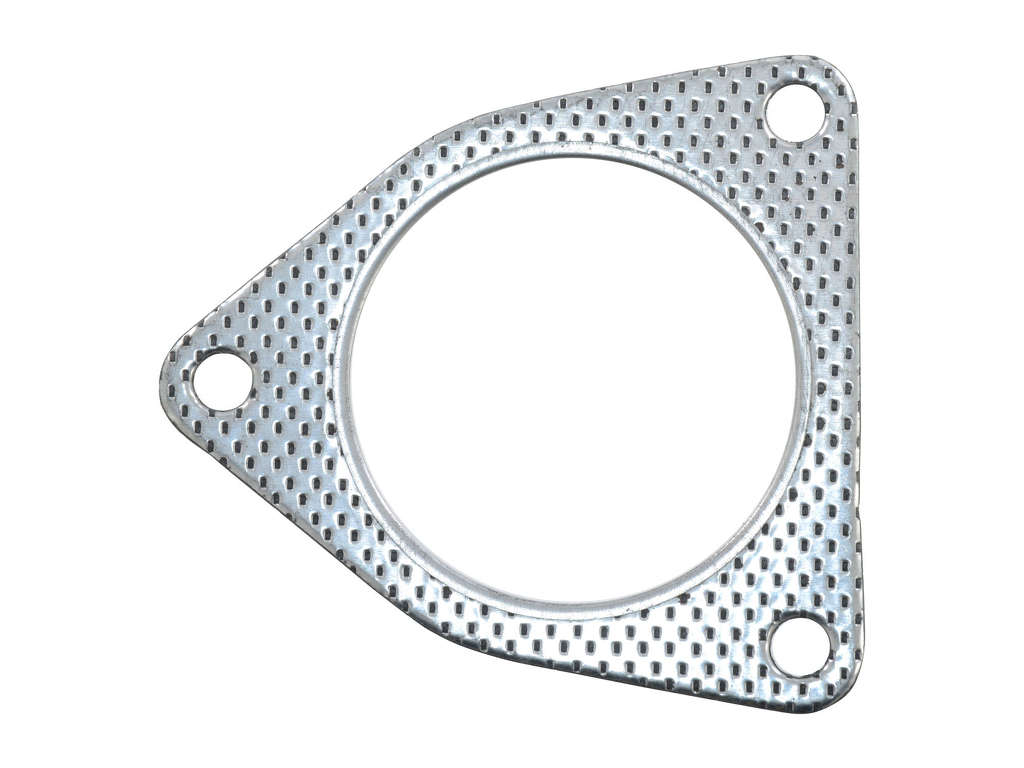
How to confirm: Perform a visual inspection of the entire exhaust system from the engine to the rear of the car. Look for black soot marks, cracks, or holes, especially around gaskets and the woven metal flex pipes. A smoke test is the most effective way to find small, hard-to-see leaks. 🎬 Watch: This walkthrough shows how to find leaks and replace injectors.
Typical fix: Repair the leak. This may involve replacing a gasket, welding a crack, or cutting out and welding in a new flex pipe section.
Est. part cost: $50-$400 - Faulty Downstream Oxygen Sensor (Bank 2, Sensor 2) 🟡 Medium Probability → Shop Oxygen Sensor
How to confirm: Monitor the sensor's voltage on a scan tool. A healthy downstream sensor on a warm, running engine should show a relatively stable voltage (typically above 0.5V). If the sensor is lazy, stuck at a certain voltage, or shows erratic readings unrelated to engine conditions, it is likely faulty. Swapping the Bank 1 and Bank 2 downstream sensors and seeing if the fault code changes to P0420 is another effective diagnostic step.
Typical fix: Replace the Bank 2 downstream oxygen sensor. The sensor is also referred to by its VAG identifier, G131.
Est. part cost: $80-$250 - Engine Misfires or Fuel Mixture Issues ⚪ Low Probability
How to confirm: Check for other trouble codes related to misfires (P0300-P0308), fuel trim (P0171, P0174), or other sensors (e.g., MAF, MAP). Address these codes first, as they indicate the root cause of what likely damaged the catalytic converter. Raw fuel from misfires can superheat and melt the catalyst substrate.
Typical fix: Fix the underlying problem, which could be worn spark plugs, bad ignition coils, leaking fuel injectors, or a vacuum leak. The catalytic converter may also need replacement if it has been permanently damaged by the underlying condition.
Est. part cost: $100-$800+
Rare But Worth Checking
- Software issues: In some cases on related VAG platforms, an ECM software update was required to change the sensitivity of the catalyst monitoring. While not a common documented issue for this specific Q7/engine, it's a possibility.
- Contaminated Fuel: Use of leaded fuel (highly unlikely) or fuel with improper additives can permanently poison the catalytic converter.
Diagnosis Steps
- Read all trouble codes from the ECM using an OBD-II scanner. If any misfire, fuel system, or oxygen sensor heater codes are present, diagnose and repair them before proceeding with P0430 diagnostics.
- Perform a thorough visual inspection of the Bank 2 exhaust system. Look for signs of leaks (soot, cracks) at the exhaust manifold gasket, flex pipe, and all flange connections. A professional smoke test is the most reliable method.
- With the engine fully warmed up, use a scan tool to observe the live data stream for the Bank 2 oxygen sensors (Upstream/Sensor 1 and Downstream/Sensor 2).
- At a steady 2,500 RPM, the upstream sensor (Sensor 1) should show a rapidly fluctuating voltage (a sine wave) between ~0.1V and ~0.9V. The downstream sensor (Sensor 2) should show a steady, relatively flat voltage, typically above 0.5V.
- If the downstream sensor's voltage reading is mirroring the upstream sensor's fluctuations, the catalytic converter has failed and is not storing oxygen. This confirms the need for replacement.
- If the downstream sensor's reading is flat but seems biased (e.g., stuck at 0.1V or 0.9V) or does not respond to changes in engine conditions, the sensor itself may be faulty.
- Use an infrared thermometer to check temperatures. The pipe exiting the catalytic converter should be significantly hotter (at least 100°F / 38°C) than the pipe entering it. If not, the catalyst is not functioning.
- Only after ruling out exhaust leaks and faulty sensors should the catalytic converter be condemned.
Parts You'll Likely Need
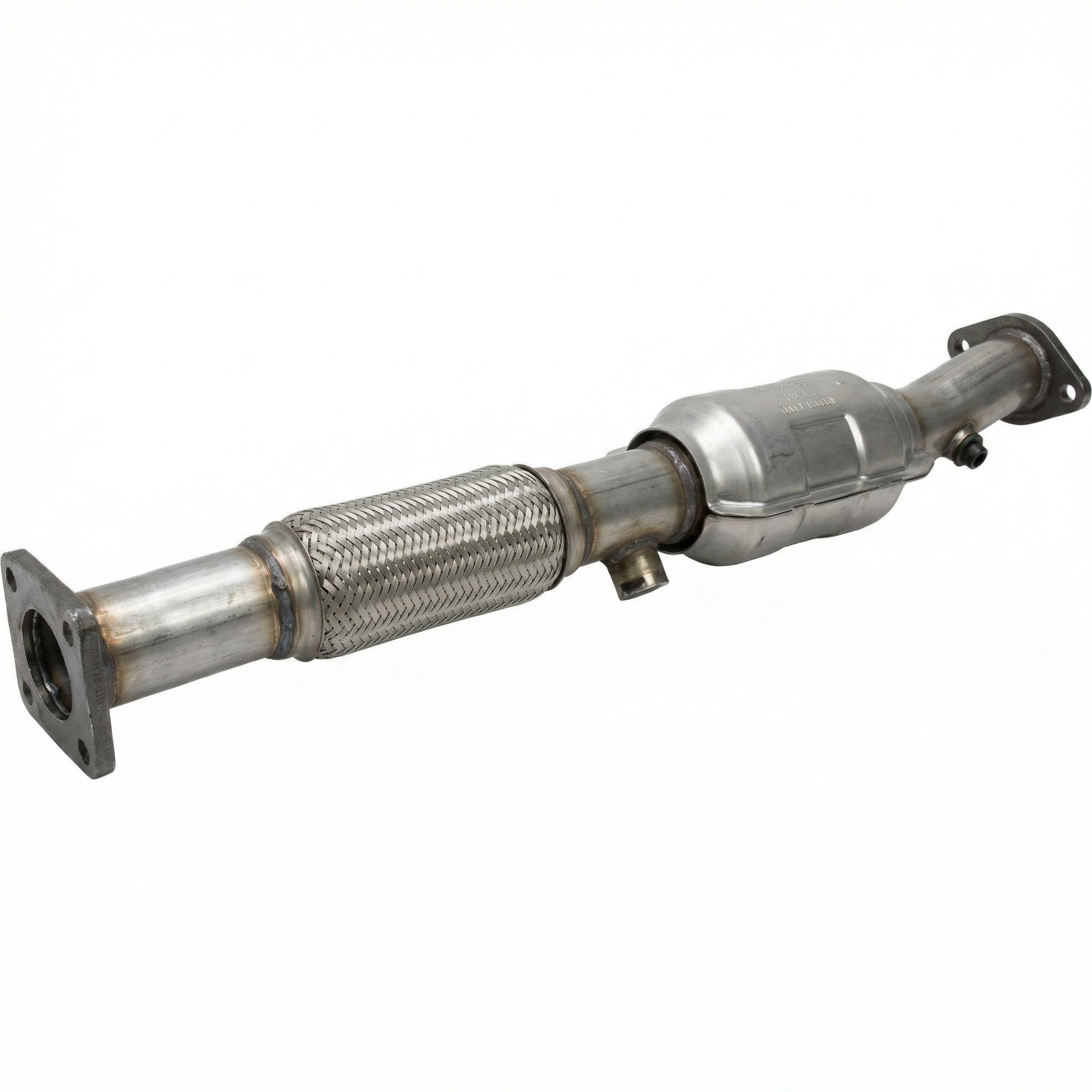
- Bank 2 Catalytic Converter
(OEM #7L8254400N (or similar variant; often part of a larger assembly))— This is the most common direct cause for the P0430 code, typically due to age-related failure or damage from other engine issues.
Trusted brands: Audi (OEM), Bosal, Walker Exhaust, MagnaFlow
OEM price range: $1800-$2800+
Aftermarket price range: $700-$1600 - Downstream Oxygen Sensor (Bank 2, Sensor 2)
(OEM #1K0-998-262-T (or superseding part number))— This sensor is responsible for monitoring the converter's efficiency. If it becomes slow or fails, it can provide false data to the ECM, triggering the P0430 code.
Trusted brands: Bosch (often the OEM supplier), Denso, NTK
OEM price range: $150-$250
Aftermarket price range: $80-$150 - Exhaust Flex Pipe Repair Kit — The flex pipes are a common source of exhaust leaks on the Q7, which can cause a false P0430 code. These are typically cut and welded in for repair.
Trusted brands: Walker Exhaust, AP Exhaust, Various universal kits
OEM price range: N/A (typically an aftermarket repair)
Aftermarket price range: $50-$200
Related Codes That Often Appear With This One
- P0420 — P0420 is the identical code but for Bank 1 (passenger side). Seeing both codes together often points to a systemic issue like a major exhaust leak affecting both banks, contaminated fuel, or simply that both converters have reached the end of their service life at the same time.
- P0300-P0308 — These are misfire codes (P0300 for random, P0301-P0308 for specific cylinders). An engine misfire allows unburnt fuel to enter the exhaust, where it can superheat and melt the internal structure of the catalytic converter, causing it to fail.
- P0171/P0174 — These are 'System Too Lean' codes for Bank 1 and Bank 2. A vacuum leak or fuel delivery issue causing a lean condition can prompt the ECM to over-richen the mixture, potentially damaging the converter over time.
Platform-Specific Known Issues
- Failure of the exhaust flex pipes is a frequently reported issue on Audi Q7 forums, leading to leaks that trigger catalyst efficiency codes like P0430 and P0420.
- A user on AudiWorld Forums with a 2009 Q7 4.2L reported success in resolving P0420/P0430 codes by replacing the catalytic converters after verifying no leaks were present. This highlights that at high mileage, the converters are a primary failure point.
- Carbon buildup on the intake valves is a known issue for the FSI BAR engine. While not a direct cause of P0430, severe buildup can lead to poor combustion, misfires, and a rich fuel condition that can damage the catalytic converters over time.
Mechanic-Grade Diagnostic Values
- High-Pressure Fuel System (FSI) — expected: 25 to over 100 bar, depending on engine load.. Failure: Pressure that remains low (e.g., 6-7 bar) and does not increase with engine RPM can indicate a failing high-pressure fuel pump (HPFP), leading to fuel mixture issues that can damage the converter.
- Low-Pressure Fuel System — expected: Approximately 6.0 bar (87 psi).. Failure: Significantly lower pressure indicates a problem with the in-tank fuel pump or filter, which can starve the high-pressure pump.
- O2 Sensor Heater Resistance (cold engine) — expected: Typically 5-15 Ohms between the two heater circuit pins (often same-colored wires) on the sensor's connector.. Failure: An open circuit (infinite resistance) or very high resistance indicates a failed heater element, which will prevent the sensor from reaching operating temperature quickly, affecting its readings.
- VCDS Catalyst Efficiency Test (Bank 2) — expected: In Measuring Block 046, the test result should eventually show 'Cat B2 OK'.. Failure: If the test repeatedly results in 'Test ON' but never 'Cat B2 OK', or fails, it points towards a bad converter, assuming no exhaust leaks.
- VCDS Fuel Trims (Block 032) — expected: At idle and under load, the additive and multiplicative trim values should be within +/- 10%, ideally closer to 0%.. Failure: Consistently high positive values (e.g., > +10%) indicate the engine is compensating for a vacuum leak. High negative values (e.g., < -10%) indicate a rich condition (e.g., leaking injector) that can damage the converter.
Scan Tool Commands That Help
- VCDS (VAG-COM) / OBDeleven: Engine -> Measuring Blocks -> Group 034, 036, 046 — Use these blocks to check catalyst efficiency. Group 034 shows upstream and downstream O2 sensor voltages for Bank 1. Group 036 shows the same for Bank 2. Group 046 runs the catalyst readiness test and shows the result ('Cat B1/B2 OK' or 'Not OK'). This is the definitive software test for catalyst function after warming up the engine.
- VCDS (VAG-COM) / OBDeleven: Engine -> Measuring Blocks -> Group 032 — Use this to check long-term fuel trims. If values are significantly off (e.g., > +/-10%), it indicates an underlying fuel/air mixture problem that must be fixed before replacing a catalytic converter, otherwise the new one will also fail.
- VCDS (VAG-COM) / OBDeleven: Engine -> Basic Settings -> Group 046 — This function manually initiates the catalyst efficiency test. It requires holding the engine at a specific RPM (as instructed on screen) after the catalyst has reached operating temperature (>400°C) to force the ECU to run its internal check.
Wiring & Ground Locations
- Bank 2 O2 Sensor Connectors — The connectors for both upstream and downstream O2 sensors for both banks are often grouped together in the plenum chamber (under the plastic cover at the back of the engine bay, near the firewall). On the 4.2L, the Bank 2 (driver's side) connectors are sometimes distinguished by color.. A corroded or damaged connector can mimic a failed sensor. Before replacing a sensor, it's critical to inspect these connectors for moisture, corrosion, or pushed-out pins.
- Ground Point 640 — Located in the engine compartment on the left (driver's side) longitudinal member.. This is a primary engine ground connection. A poor ground here can cause erratic behavior from multiple sensors, including O2 sensors and the ECM itself, leading to false codes.
- Ground Point 45 — Located behind the center of the instrument panel.. This is an interior ground point that can affect the instrument cluster and communication with the ECM. While less likely to be the primary cause, a bad ground here can complicate diagnostics.
- Engine-to-Chassis Ground Strap — Typically a braided cable located at the bottom of the engine on the passenger side (Bank 1 side), connecting the engine block to the vehicle's frame.. Although on the opposite bank, degradation of the main engine ground can create electrical potential differences across the engine block, causing strange sensor readings for both banks. It's a common wear item that can lead to a host of electrical gremlins.
Real Owner Repair Stories
- AudiWorld Forums (2009 Audi Q7 3.6L (Note: not the 4.2L, but the P0420/P0430 codes and flex pipe issue are common to both)) — Check Engine Light with P0420 and P0430 codes appeared after having broken flex pipes repaired at a muffler shop.
❌ Tried (didn't work) Having a muffler shop cut out the old flex pipes and weld in new ones.
✅ What actually fixed it The user suspected the repair itself was faulty, likely with a small leak or an improperly sized flex pipe that changed exhaust dynamics enough to trigger the codes. The resolution implies that a second, more precise repair or replacement of the entire downpipe assembly is needed to fix the codes permanently.
Model Year Variations Within This Range
- 2007-2010: The 4.2L V8 FSI 'BAR' engine was only offered in the Q7 during these years. For the 2010 model year, the Q7 received a facelift with new bumpers, lights, and an updated MMI system, but the BAR engine powertrain remained the same.
- 2011-2015: Starting in 2011, the 4.2L V8 was replaced by a 3.0L Supercharged V6 TFSI engine. Therefore, P0430 causes and parts for these later years are completely different from the 4.2L V8 models.
Diagnostic Flowchart
Other Known Issues on This Vehicle
Issues unrelated to this code that are worth knowing about as an owner of this generation:
- Intake Valve Carbon Buildup 🔴 High — Common on all FSI (direct injection) engines, including the BAR V8. Becomes problematic after 60,000-80,000 miles. Symptoms include rough idle, misfires, and loss of power.
- Timing Chain Tensioner Rattle on Cold Start 🟠 Medium — A brief rattle for 1-2 seconds on cold start is common as oil pressure builds. While often considered 'normal' by some, it indicates wear in the tensioners. Failure to hold pressure can worsen over time, though catastrophic failure on the BAR engine is less common than on other Audi V8s.
- Oil Leaks from Gaskets/Seals 🟠 Medium — Common on high-mileage vehicles. The oil filter housing gasket, located in the 'V' of the engine, and valve cover gaskets are frequent leak points.
- Intake Manifold Runner Flap Issues 🟡 Low — The plastic components of the intake manifold runner control system can wear or break, leading to fault codes (P2008, P2011) and potential performance issues.
- Air Suspension Faults 🟠 Medium — On models equipped with adaptive air suspension, the compressor can wear out or air struts can develop leaks, causing the vehicle to sag and display a warning light.
Used vs. New Parts: Buying Guide for This Vehicle
When a used part is the smart pick: A used OEM catalytic converter from a low-mileage, rear-ended donor vehicle can be a cost-effective option. Given the high cost of new OEM cats and the often poor performance of aftermarket units on this platform, a good used OEM part is often a better choice than a new aftermarket one.
Donor-vehicle mileage cap: roughly under 80000 miles for the part to have meaningful remaining life.
What to inspect on the donor part:
- Verify the donor vehicle's mileage and ensure it's below the threshold.
- Inspect the part for any signs of physical damage, heavy rust, or previous repairs (welds).
- Shake the converter vigorously. Any rattling indicates the internal honeycomb substrate has broken apart, and the part is useless.
- Look through the honeycomb with a bright light. It should be intact with no signs of melting, clogging, or being coated in oil/soot.
OEM-only on this vehicle (don't cheap out):
- Catalytic Converter: Many aftermarket converters for this V8 FSI engine do not have enough precious metal loading to satisfy the sensitive Audi ECU, leading to the P0430 code returning within a few months. While expensive, OEM or a high-quality OEM-grade brand is strongly recommended to fix the problem once.
Aftermarket brands forum-validated for this vehicle:
- O2 Sensors: Bosch (often the OEM supplier), NTK, and Denso are widely trusted brands for oxygen sensors.
- Catalytic Converters: MagnaFlow and Bosal are reputable aftermarket brands, but it is critical to purchase their 'OEM Grade' or 'CARB Compliant' versions, not the cheapest federal-spec option, to have the best chance of success.
Brands owners have reported issues with on this vehicle:
- Unbranded, 'no-name' catalytic converters from online marketplaces are almost guaranteed to fail and cause the P0430 code to return quickly.
Real Owner Stories
Aggregated from forums and TSBs cited above. Mileages and costs reflect what owners reported in those sources.
2009 Audi Q7 4.2L V8 — ~125000 miles
Symptoms: The owner experienced P0420 and P0430 codes at high mileage. After verifying there were no exhaust leaks, the vehicle required hardware replacement.
What fixed it: Replacing the catalytic converters resolved the efficiency codes.
Source hint: AudiWorld Forums - Multiple threads corroborate that P0430 is a catalyst efficiency code for Bank 2... One user with a 2009 4.2L confirmed replacing the cats solved his P0420/P0430 issues.
Related OBD-II Codes
Frequently Asked Questions
Which side of my Audi Q7 4.2L V8 is Bank 2 for the P0430 code?
I have a rattling noise under my 2008 Q7 along with the P0430 code. What does this mean?
Could the common flex pipe issues on the Q7 cause a P0430 code?
Does carbon buildup on my BAR engine's intake valves affect the catalytic converters?
Can I just swap the oxygen sensors to see if the sensor is the problem?
What temperature difference should I see across the Q7's catalytic converter if it's working?
Helpful Videos
Used OEM Parts in Stock
New Aftermarket Parts Available

The information in this article is provided for general reference and educational purposes only. Vehicle specifications, procedures, and part compatibility can vary by production date, trim level, and region. Always consult your vehicle's factory service manual and verify part numbers before purchasing or performing repairs. Safety-critical components such as airbags, seat belts, and braking systems should be installed by a qualified professional.
- Audi Q7:
- 🧭 Diagnostic Flowchart
- 🎬 Helpful Videos
- 🛍️ Shop This Part
- What's Unique About the 2007-2015 Audi Q7
- Symptoms You May Notice
- Most Likely Causes
- Rare But Worth Checking
- Diagnosis Steps
- Parts You'll Likely Need
- Related Codes That Often Appear With This One
- Platform-Specific Known Issues
- Mechanic-Grade Diagnostic Values
- Scan Tool Commands That Help
- Wiring & Ground Locations
- Real Owner Repair Stories
- Model Year Variations Within This Range
- Other Known Issues on This Vehicle
- Used vs. New Parts: Buying Guide for This Vehicle
- Real Owner Stories
- 2009 Audi Q7 4.2L V8 — ~125000 miles
- Related OBD-II Codes
- Frequently Asked Questions
- 🎟️ Get 5% Off