

P0430 on 2016-2019 Cadillac CTS: Catalyst Efficiency Causes and Fixes for Bank 2
P0430 on a 2016-2019 Cadillac CTS means the catalytic converter on Bank 2 isn't working efficiently. Before replacing the expensive converter, check for exhaust leaks and faulty oxygen sensors. Crucially, a GM Technical Service Bulletin (TSB #16-NA-111) points to a poorly sealed air filter box as a potential root cause, which is a simple and cheap first check that can prevent misdiagnosis.
- P0430 indicates an inefficiency in the Bank 2 catalytic converter, which is on the side of the engine opposite cylinder #1.
- For this specific Cadillac CTS, your FIRST check should be the air filter and its housing for a perfect seal, as per GM TSB #16NA111.
- Do not replace the catalytic converter without first testing the oxygen sensors and inspecting for exhaust leaks.
- Any engine misfires or other fuel-related trouble codes must be resolved before addressing the P0430 to avoid damaging a new converter.
- This code applies to the V6 and V8 engine models, not the 2.0L 4-cylinder, which only has one bank and would throw a P0420 instead.
What's Unique About the 2016-2019 Cadillac CTS
For this generation of Cadillac CTS with a V6 or V8 engine, there is a unique and well-documented issue that can trigger a P0430 code. General Motors issued a Technical Service Bulletin (TSB #16-NA-111) advising technicians to inspect the air filter box and its seal. An improper seal can allow unmetered air, sand, and debris to enter the engine, which can damage the O2 sensors and even block the catalytic converter. This makes inspecting the air intake system a critical, money-saving first step that is specific to this platform and its relatives.
Diagnostic Flowchart
Tap your situation to follow the diagnostic path that matches what you're seeing on this vehicle.
Symptoms You May Notice
- Check Engine Light is on
- Vehicle may fail an emissions test
- Reduced engine performance or acceleration
- Slight decrease in fuel economy
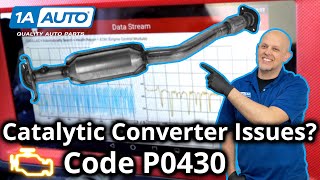
- Possible rotten egg or sulfur smell from the exhaust, indicating the converter is not processing sulfur correctly 🎬 Watch: A quick overview of P0430 symptoms and common fixes.
- Louder than usual exhaust noise if the code is caused by an exhaust leak
- Immediately replacing the catalytic converter without first checking for air intake leaks (per TSB #16-NA-111), exhaust leaks, or testing the oxygen sensors. The converter is the most expensive part, and replacing it won't fix the code if the root cause is something else.
Most Likely Causes
- Air Box / Air Filter Seal Leak 🔴 High Probability → Shop Air Cleaner Assembly A specific GM Technical Service Bulletin (#16-NA-111) was issued for this problem on these vehicles, making it a known issue and a crucial first check. The TSB notes that debris bypassing the filter can damage the O2 sensor and block the converter.
How to confirm: Visually inspect the air filter housing for proper closure and ensure the seal is intact and correctly seated. Check that all clips or screws are secure and look for dirt/debris trails past the filter seal inside the housing and intake tube.
Typical fix: Reseat the air filter and housing cover correctly. Replace the air filter if dirty or damaged. Replace the air filter housing or its seal if it is warped or damaged.
Est. part cost: $15-$50 for a new air filter, more if the housing is needed. - Faulty Downstream Oxygen (O2) Sensor (Bank 2, Sensor 2) 🟡 Medium Probability → Shop Oxygen Sensor O2 sensors are wear items and can fail over time, providing incorrect data to the ECM. Debris from a leaking airbox can also damage the sensor element.
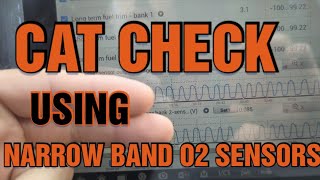
How to confirm: Use a scan tool to monitor the live data from the Bank 2 downstream O2 sensor. A healthy sensor on a warm engine at steady RPM should show a relatively stable voltage (typically above 0.5V 🎬 See how to use a scan tool to check sensor data.). If it's fluctuating rapidly like the upstream sensor or is stuck at a certain voltage, it is likely faulty. Swapping the Bank 1 and Bank 2 downstream sensors and seeing if the code changes to P0420 is another effective diagnostic step.
Typical fix: Replace the Bank 2, Sensor 2 oxygen sensor.
Est. part cost: $50-$150 - Failing or Degraded Catalytic Converter (Bank 2) 🟡 Medium Probability → Shop Catalytic Converter Catalytic converters can fail from age, or be damaged by underlying engine problems like misfires or burning oil, which cause unburnt fuel to enter the exhaust and overheat the converter. They can also be contaminated by debris from the known airbox issue.
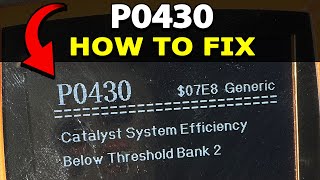
How to confirm: After confirming O2 sensors are working and there are no intake/exhaust leaks, an infrared thermometer can be used to check the inlet and outlet temperatures of the converter. The outlet should be at least 100°F hotter than the inlet 🎬 Watch this walkthrough on diagnosing converter efficiency issues.. If the downstream O2 sensor voltage graph mirrors the upstream sensor's graph, the converter is not storing oxygen and has failed.
Typical fix: Replace the Bank 2 catalytic converter. This should only be done after all other potential causes are ruled out.
Est. part cost: $600-$1500+ - Exhaust System Leaks ⚪ Low Probability
How to confirm: Visually inspect the exhaust system from the engine to the catalytic converter for cracks or loose connections, especially at gaskets and flanges. A professional smoke test is the most effective way to find small leaks that can draw in oxygen and fool the O2 sensor.
Typical fix: Repair the leak by replacing the gasket or damaged exhaust pipe section.
Est. part cost: $20-$200
Rare But Worth Checking
- Engine Misfires or Fuel Mixture Issues: If you have other codes like P0300-P0308 (misfires) or P0171/P0174 (lean conditions), these must be fixed first. An unresolved misfire will send unburnt fuel into the exhaust, quickly destroying a new catalytic converter.
- Faulty Upstream Oxygen (O2) Sensor (Bank 2, Sensor 1): → Shop Oxygen Sensor A failing upstream sensor can send incorrect data to the ECM, causing an improper air-fuel mixture that can affect the converter's efficiency and eventually damage it.
- High Sulfur Fuel: While less common with modern gasoline, high sulfur content can temporarily coat the catalyst materials and reduce efficiency, triggering a P0430. Some manufacturers have procedures to 'de-sulfate' the converters with specific driving cycles.
Diagnosis Steps
- Check for other diagnostic trouble codes. Address any misfire, fuel system, or other sensor codes before diagnosing P0430.
- Crucial Step for this vehicle: Thoroughly inspect the air filter box, the air filter itself, and the housing seal for any gaps, damage, or improper fitment, as per GM TSB #16-NA-111. Look for any signs of debris bypassing the filter.
- Inspect the exhaust system for any leaks, paying close attention to the exhaust manifold gaskets and the flanges before and after the Bank 2 catalytic converter. A smoke test is the most reliable method.
- Use a scan tool to observe the live voltage data for the Bank 2 upstream (Sensor 1) and downstream (Sensor 2) oxygen sensors. The upstream sensor's voltage should fluctuate rapidly between approximately 0.1V and 0.9V. The downstream sensor's voltage should remain relatively steady and high (e.g., >0.6V).
- If the downstream O2 sensor's voltage is fluctuating in a similar pattern to the upstream sensor, the catalytic converter is likely faulty.
- If the downstream O2 sensor's voltage is stuck high, low, or is slow to respond, the sensor itself is the most likely culprit. Consider swapping it with the Bank 1 downstream sensor to see if the fault follows the sensor (code changes to P0420).
- If sensors and exhaust integrity are confirmed to be good, use an infrared thermometer on the catalytic converter. With the engine fully warm, the outlet pipe should be at least 100°F hotter than the inlet pipe. If not, the converter is not working.
- If all other tests pass, the catalytic converter is the most probable cause of the code.
Parts You'll Likely Need
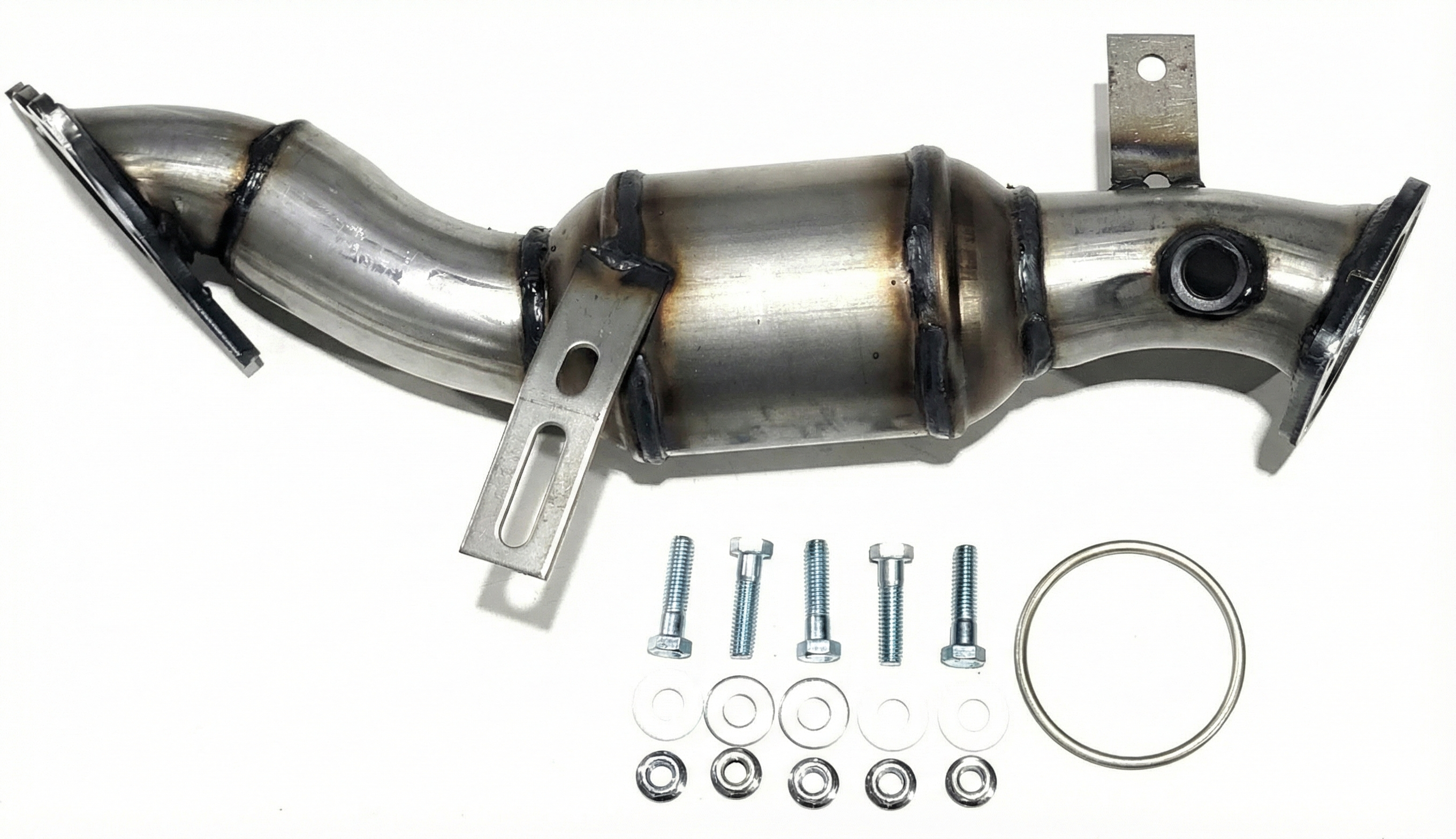
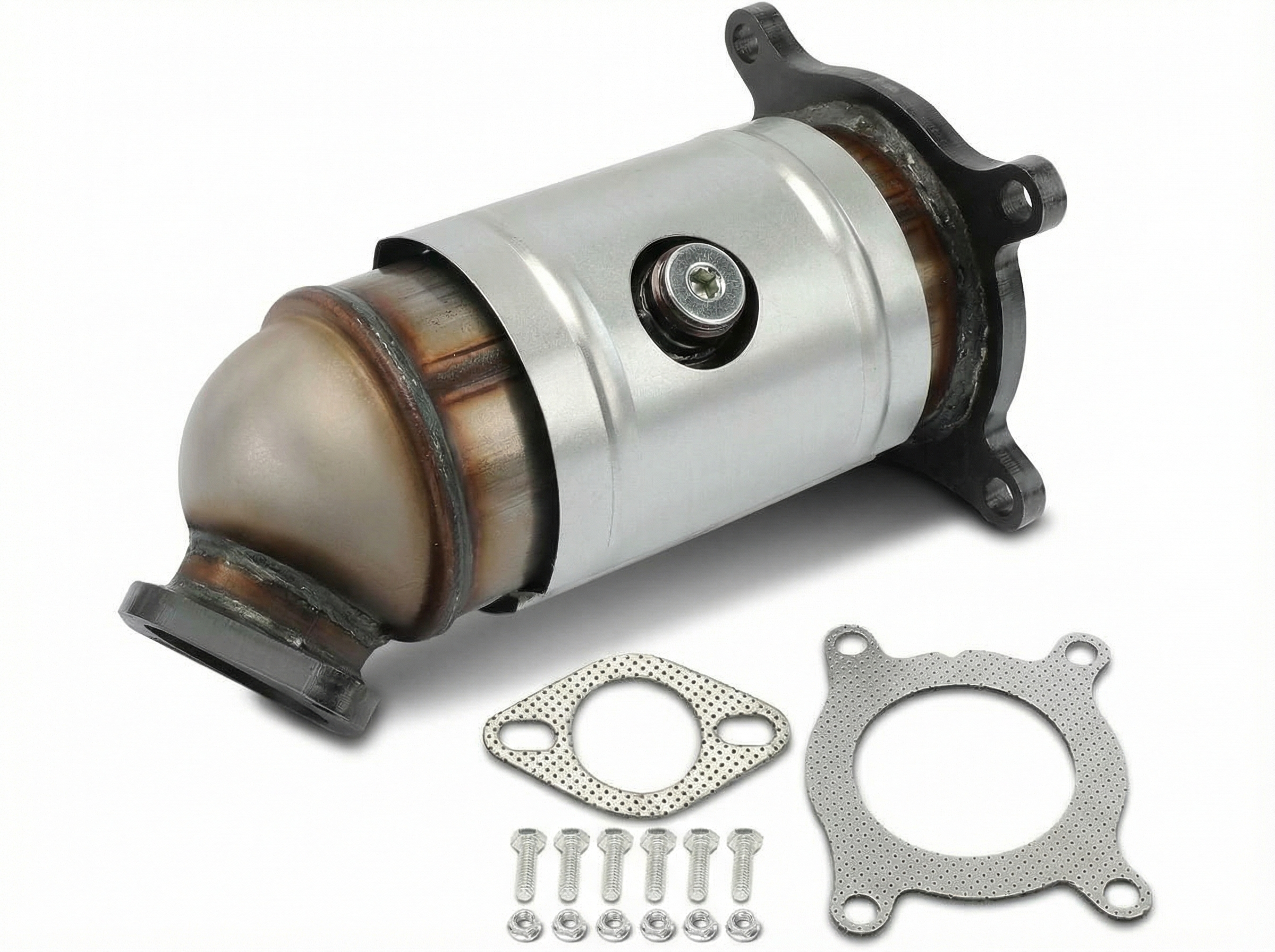
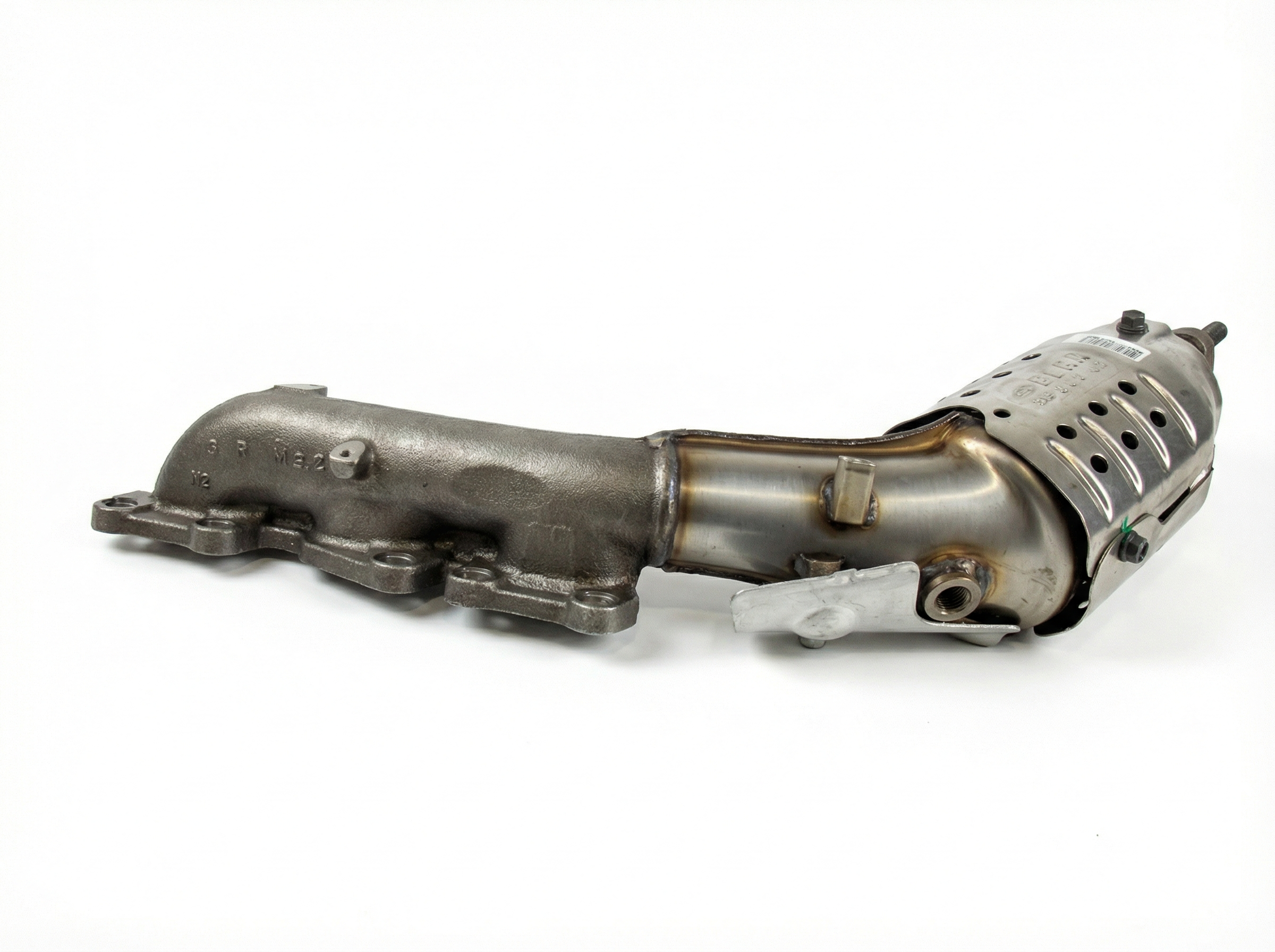
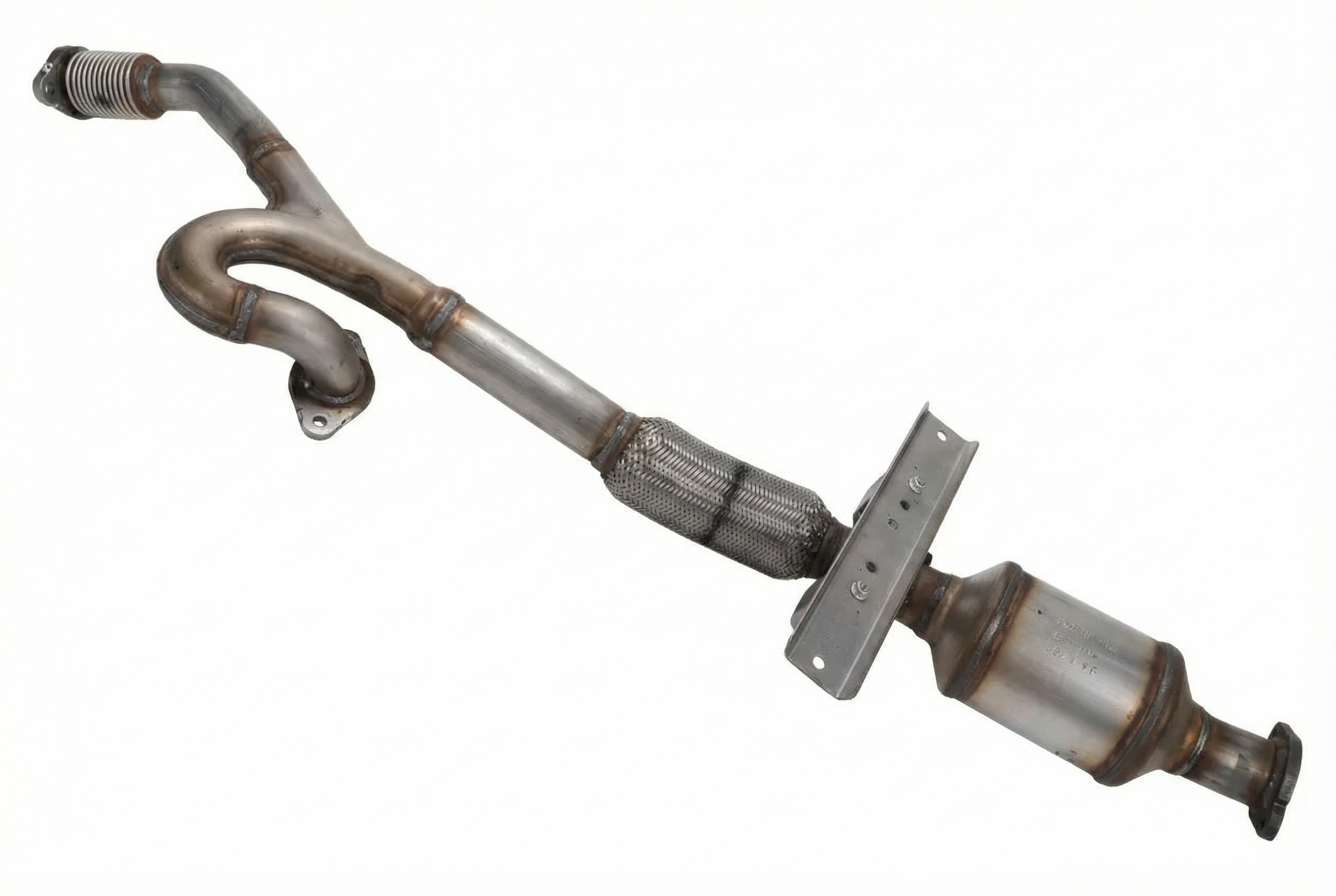
- Catalytic Converter (Bank 2)
(OEM #Varies by engine. Example for 3.6L LGX may be GM 23377258 (part of Y-pipe assembly). Always verify with VIN.)— This is the component directly identified by the code as failing, though it should only be replaced after other causes are ruled out.
Trusted brands: ACDelco (GM Genuine), Walker Exhaust, MagnaFlow
OEM price range: $800-$1500+
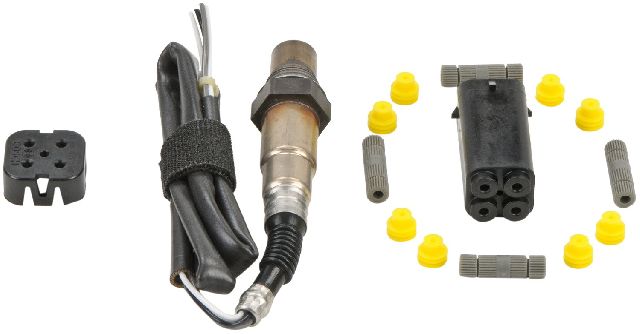
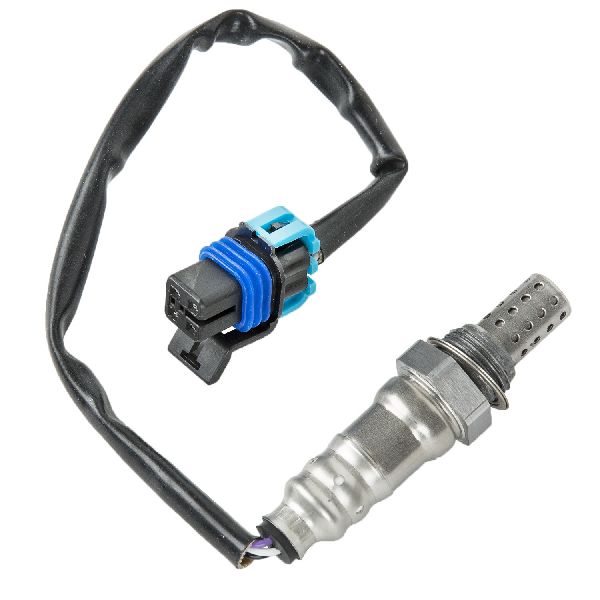
Aftermarket price range: $500-$900 - Downstream Oxygen Sensor (Bank 2, Sensor 2)
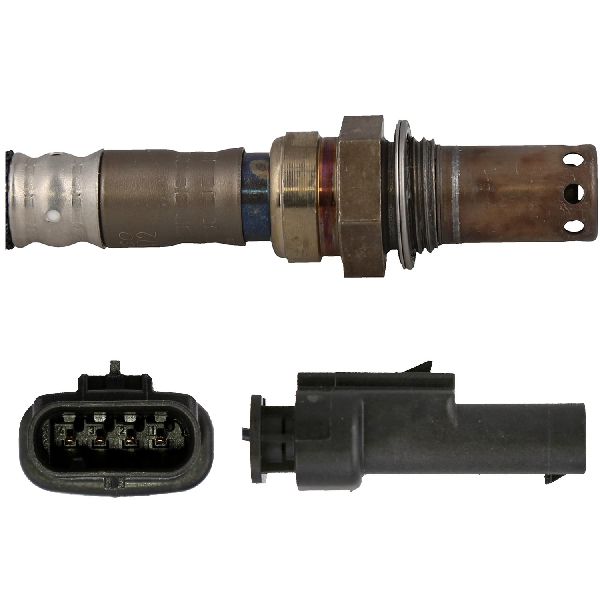
(OEM #ACDelco 12664594 (Verify with VIN))— This sensor provides the reading that triggers the code. It can fail and send incorrect data, leading to a misdiagnosis of the converter. It can also be damaged by debris from a leaking airbox.
Trusted brands: ACDelco, Denso, Bosch
OEM price range: $100-$180
Aftermarket price range: $50-$100 - Engine Air Filter
(OEM #ACDelco A3178C (for 3.6L LGX))— An old, clogged, or improperly installed air filter can contribute to the airbox sealing issue described in TSB #16-NA-111.
Trusted brands: ACDelco, WIX, Fram, K&N
OEM price range: $25-$40
Aftermarket price range: $15-$30
Related Codes That Often Appear With This One
- P0420 — This is the identical 'Catalyst System Efficiency' code but for Bank 1. Seeing both P0420 and P0430 together strongly points to a systemic issue like the airbox leak (as noted in TSB #16-NA-111), a fuel delivery problem, or simply that both converters are aging.
- P0300-P0308 — These are misfire codes. A misfire allows unburnt fuel to enter the exhaust, which can overheat and damage the catalytic converter, leading to a P0430 code.
- P0171, P0174 — These codes indicate a lean fuel condition on Bank 1 and Bank 2, respectively. An unmetered air leak, such as from the airbox issue, is a common cause for these codes to appear alongside P0420/P0430.
Technical Service Bulletins (TSBs) & Recalls
- Bulletin #16-NA-111: This informational bulletin provides diagnostic/inspection information for the air box and air filter seal to correct a MIL and DTCs P0420 and P0430. It warns that debris bypassing the filter can damage the HO2S sensor and block the catalytic converter.
- Bulletin #20-NA-065: A related bulletin that provides advanced diagnostic strategies for finding small intake and exhaust leaks using smoke machines or ultrasonic testers when fuel trim or O2 sensor codes (including P0420/P0430) are present.
Platform-Specific Known Issues
- TSB #16-NA-111: A known issue where an improperly sealed air filter housing allows unmetered air, sand, and debris into the intake. This can directly damage the O2 sensor element or even clog the catalytic converter, causing the ECM to set P0420 or P0430 codes. This should be the first item to check.
Mechanic-Grade Diagnostic Values
- Mass Airflow (MAF) Sensor Reading at Idle — expected: Approximately 3.5 to 5.0 grams/second (g/s) for a 3.6L V6 at normal operating temperature.. Failure: Readings significantly outside this range can indicate unmetered air leaks (including the TSB-noted airbox leak) or a faulty MAF sensor, affecting the air/fuel mixture and catalyst efficiency.
- Fuel Injector Coil Resistance (Direct Injection Models) — expected: Approximately 1.5 to 1.6 Ohms when tested with a multimeter.. Failure: A reading outside this range suggests a faulty injector coil, which can cause fuel mixture problems that damage the catalytic converter.
- O2 Sensor Heater Circuit Resistance — expected: Typically between 4-20 Ohms, but consult the service manual for the exact specification for your sensor.. Failure: An open circuit (infinite resistance) or a short (near-zero resistance) indicates a failed heater element. A slow-to-heat sensor can cause incorrect readings during warm-up and contribute to catalyst efficiency codes.
- Mode $06 Catalyst Monitor Test — expected: The test value should be below the maximum threshold set by the manufacturer.. Failure: If the test value for TID $81 (Catalyst Monitor Bank 2) exceeds the CID $0C maximum limit, it confirms the ECM's diagnosis of low efficiency. This data can be used to verify a failed converter after other causes are ruled out.
Scan Tool Commands That Help
- GM GDS2 / Professional Scan Tool: Fuel Injector Balance Test — Use this when a rich or lean condition is suspected alongside the P0430. A leaking injector can foul the catalytic converter. This test measures the pressure drop for each injector to pinpoint a leaking one, which is a known issue on the 3.6L LGX engine.
- GM GDS2 / Professional Scan Tool: Catalyst System Test / Catalyst Monitor Drive Cycle — This is a guided diagnostic function that runs the engine through specific RPM and load conditions to actively test the catalytic converter's oxygen storage capacity, providing a definitive pass/fail result more quickly than normal driving.
- GM GDS2 / Professional Scan Tool: Catalyst De-sulfate Procedure — If the vehicle was run on fuel with high sulfur content, the catalyst can become coated, triggering a P0430. This procedure runs the engine at a high temperature for an extended period to burn off sulfur deposits and may resolve the code without part replacement.
Wiring & Ground Locations
- G101 / G102 — G101 is often on the lower front of the engine block; G102 is often at the left rear of the engine.. G101 provides a primary ground for the Engine Control Module (ECM). A poor connection here can cause countless erratic codes, including phantom sensor faults. G102 grounds the ignition coils; a bad ground can lead to weak spark and misfires, which will destroy a catalytic converter.
- G103 / G104 — G103 is often on the cowl, above the brake booster. G104 is often on the right side body rail, near the headlight.. These are major chassis and engine compartment ground points. Corrosion or looseness at these locations can affect various systems, including the ECM and its sensor inputs. Checking major grounds is a critical step when diagnosing complex electronic issues.
- O2 Sensor Heater Wires — On the O2 sensor's own connector pigtail.. A technician's tip for identifying the heater circuit wires is to look for two wires of the same color (e.g., two black wires). The other two different-colored wires are for the sensor signal and ground. This helps in quickly testing the heater element for resistance.
Real Owner Repair Stories
- Reddit r/MechanicAdvice (General vehicle, but principle applies directly.) — Persistent P0420/P0430 code.
❌ Tried (didn't work) Replacing oxygen sensors.
✅ What actually fixed it A master technician advised that if P0420/P0430 is the *only* code present, and there are no exhaust leaks, the catalytic converter has failed. Replacing O2 sensors in this scenario is almost always a waste of money as a bad sensor cannot correctly diagnose a bad cat. - Reddit r/MechanicAdvice (2007 Lexus IS350) — P0430 code returned after replacing the catalytic converter twice.
❌ Tried (didn't work) Replacing the catalytic converter (twice).
✅ What actually fixed it The issue was not resolved in the thread, but a technician explained the diagnostic loop: the shop replaced the part identified by the code (the converter) without diagnosing *why* it failed. The actual cause was likely a poor upstream O2 sensor waveform due to another issue (injectors, leaks, etc.), which destroyed the new converters. The fix requires diagnosing the entire fuel control system, not just the converter. - LS1TECH Forums (2007 Cadillac CTS-V) — Intermittent P0430 code.
✅ What actually fixed it This is an edge-case story, not a fix. The owner reported that after clearing the P0430 code with a scan tool, the car would intermittently fail to start the next day (no crank, no click). This points to a rare underlying ECM problem where the act of clearing the code triggers a separate no-start condition.
"I Checked Everything" — The Actual Cause
- The most critical example for this vehicle is the one noted in TSB #16-NA-111. A technician can run an exhaust smoke test and find zero leaks, leading them to condemn the catalytic converter. However, the actual cause is an improperly sealed *air filter box* allowing sand and debris into the intake. This debris bypasses the engine and contaminates the O2 sensors and catalyst from the inside out, causing the P0430 code.
- The vehicle's fuel could have high sulfur content. All mechanical and electrical checks, including a smoke test, would pass. The catalyst is temporarily 'poisoned' by the sulfur, reducing its efficiency. The fix is not a part replacement but running a specific 'de-sulfate' drive cycle to burn the contaminants off the catalyst.
When the Usual Fixes Don't Work
- While replacing the downstream O2 sensor is a common suggestion, multiple master technicians advise against it as a first step if P0430 is the only code present. The logic is that the O2 sensor is the 'messenger' reporting the problem; if the message is 'low efficiency' and there are no codes for a faulty sensor circuit (e.g., P0137, P0138), the message is likely accurate. Replacing the sensor won't fix the inefficient converter. The exception is if the sensor is damaged by debris from the known airbox issue, which is why inspection is key.
Model Year Variations Within This Range
- 2016-2019: The 2016 model year marked the introduction of the new generation 3.6L V6 engine (RPO: LGX), which replaced the previous LFX V6. This new engine featured a redesigned block, heads with larger valves, and improved fuel economy. While diagnostics for P0430 are similar, part numbers and specific values may differ from the pre-2016 CTS.
Helpful Videos
Used OEM Parts in Stock
New Aftermarket Parts Available


The information in this article is provided for general reference and educational purposes only. Vehicle specifications, procedures, and part compatibility can vary by production date, trim level, and region. Always consult your vehicle's factory service manual and verify part numbers before purchasing or performing repairs. Safety-critical components such as airbags, seat belts, and braking systems should be installed by a qualified professional.
- Cadillac CTS:
- 🧭 Diagnostic Flowchart
- 🎬 Helpful Videos
- 🛍️ Shop This Part
- What's Unique About the 2016-2019 Cadillac CTS
- Symptoms You May Notice
- Most Likely Causes
- Rare But Worth Checking
- Diagnosis Steps
- Parts You'll Likely Need
- Related Codes That Often Appear With This One
- Technical Service Bulletins (TSBs) & Recalls
- Platform-Specific Known Issues
- Mechanic-Grade Diagnostic Values
- Scan Tool Commands That Help
- Wiring & Ground Locations
- Real Owner Repair Stories
- "I Checked Everything" — The Actual Cause
- When the Usual Fixes Don't Work
- Model Year Variations Within This Range
- 🎟️ Get 5% Off