

P0430 on 2013-2018 Cadillac XTS 3.6L: Cracked Converter, O2 Sensor Causes, and Fixes
On the 2013-2018 Cadillac XTS 3.6L, code P0430 is most often caused by a cracked Bank 2 catalytic converter, a known issue documented in GM Technical Service Bulletin (TSB #17-NA-321). Before replacing any parts, inspect the front converter (Bank 2) for cracks near the mounting flange. A replacement OEM converter (GM #84216836) can cost over $1,000, but is the definitive fix.
- For a 2013-2018 Cadillac XTS with code P0430, immediately suspect a cracked Bank 2 (front) catalytic converter.
- Reference GM TSB #17-NA-321 and physically inspect the converter for cracks near the flange before buying any parts.
- Do not automatically replace the O2 sensors; they are less likely to be the root cause than the converter itself on this platform.
- Any engine misfires or fuel system codes must be repaired first to avoid damaging a new catalytic converter.
What's Unique About the 2013-2018 Cadillac XTS
For the Cadillac XTS with the 3.6L LFX V6, a P0430 code has a very specific and well-documented failure pattern. General Motors released Technical Service Bulletin #17-NA-321 (which superseded PIP5419B) because the catalytic converters on these vehicles are highly prone to cracking near the mounting flange. This crack allows outside air to enter the exhaust, which fools the downstream oxygen sensor into sending readings that the ECM misinterprets as a failed converter. This makes a thorough physical inspection of the converter for cracks the most critical first step, often more important than initial sensor testing. This issue does not apply to the XTS V-Sport models with the twin-turbo LF3 engine.
Symptoms You May Notice
- Check Engine Light is on
- Audible exhaust leak, often described as a 'ticking' or 'hissing' sound, especially when the engine is cold, that may quiet down as the metal expands with heat.
- An exhaust or fume smell inside or outside the vehicle.
- Reduced fuel economy
- Sluggish acceleration or poor engine performance, particularly if the converter's internals have broken and created a blockage.
- A sulfur or "rotten egg" smell from t 🎬 See a breakdown of common P0430 symptoms and fixes.he exhaust
- Rattling noises from under the vehicle if the converter's internal structure has broken apart
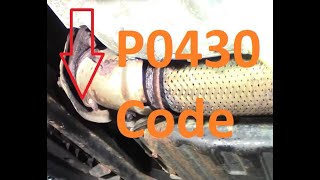
- Replacing the oxygen sensors when the true cause is a cracked catalytic converter. Due to the TSB for this vehicle, the converter itself should be the primary suspect. Technicians note that P0420/P0430 codes are rarely fixed by replacing O2 sensors alone when no other codes are present. 🎬 Watch this before you start: 9 solutions for P0430 codes.
Most Likely Causes
- Cracked or Failed Catalytic Converter (Bank 2) 🔴 High Probability → Shop Catalytic Converter GM Technical Service Bulletin #17-NA-321 was issued specifically for this failure. The converter body is known to develop cracks at the weld near the mounting flange, creating an exhaust leak that triggers the code.
How to confirm: With the engine cool, perform a close visual inspection of the Bank 2 (front) catalytic converter, focusing on the welded area around the outlet flange where it connects to the rest of the exhaust. Look for black soot trails or physical cracks. A smoke test can also reveal leaks. A mechanic's stethoscope can help pinpoint the ticking sound of a leak when the engine is running.
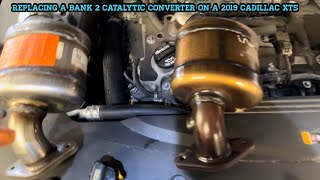
Typical fix: Replace the Bank 2 catalytic converter assembly. The updated OEM part is GM #84216836. 🎬 Watch: Step-by-step guide to replacing the Bank 2 catalytic converter.
Est. part cost: $700-$1400 - Faulty Downstream Oxygen Sensor (Bank 2, Sensor 2) 🟡 Medium Probability → Shop Oxygen Sensor
How to confirm: Use a scan tool to graph the voltage of the upstream and downstream O2 sensors on Bank 2. A healthy downstream sensor should show relatively steady, slow-switching voltage (typically above 0.6V), while the upstream sensor switches rapidly. If the downstream sensor is stuck, not reading, or switching as rapidly as the upstream sensor (and no exhaust leak is present), it has likely failed.
Typical fix: Replace the Bank 2 downstream oxygen sensor. The correct OEM part is often ACDelco #12640453, but always verify with VIN.
Est. part cost: $50-$150 - Exhaust Leak (other than converter crack) ⚪ Low Probability
How to confirm: Listen for hissing or ticking sounds from the exhaust system, especially when the engine is cold. A visual inspection may reveal soot marks at gasket connections, particularly at the manifold-to-converter flange or the converter-to-exhaust pipe flange. A smoke test is the most definitive way to find small leaks.
Typical fix: Replace the leaking gasket or repair the damaged exhaust pipe section.
Est. part cost: $20-$100
Rare But Worth Checking
- Engine Misfire or Fuel System Issue: An unresolved engine misfire (codes P0300-P0306) or a rich/lean fuel condition (codes P0171/P0174) can send unburnt fuel into the exhaust, overheating and destroying the catalytic converter. These issues MUST be fixed before replacing the converter to prevent repeat failure.
- Contaminated Catalytic Converter: → Shop Catalytic Converter The 3.6L LFX engine can be prone to oil consumption, which can contaminate or "poison" the catalytic converter over time, reducing its efficiency. A leaking head gasket allowing coolant into the exhaust can also cause this.
Diagnosis Steps
- Scan for other DTCs. Address any misfire (P030x), fuel system (P017x), or other sensor codes before diagnosing P0430.
- With the engine cold, start the vehicle and listen for an audible exhaust 'tick' or 'hiss' from the front of the engine bay near the radiator.
- Perform a thorough visual inspection of the Bank 2 (front) catalytic converter. Pay close attention to the welded area around the outlet mounting flange for cracks or soot trails, as noted in TSB #17-NA-321.
- Inspect the entire exhaust system from the engine to the tailpipe for any other leaks, damage, or loose connections.
- If no leaks are found, use a scan tool to observe the live data for the Bank 2 upstream and downstream O2 sensors. The upstream sensor should fluctuate rapidly, while the downstream should be relatively stable. If the downstream sensor mimics the upstream, the converter is likely inefficient or an exhaust leak is present.
- If the downstream O2 sensor shows no activity or has erratic voltage, test the sensor and its wiring before condemning the converter.
- If O2 sensors are functioning and no exhaust leaks are found, the catalytic converter is very likely the cause of the problem.
Parts You'll Likely Need
- Bank 2 Catalytic Converter
(OEM #84216836)— This is the most common failure point for P0430 on this specific vehicle, as documented by a GM TSB regarding cracks near the flange.
Trusted brands: ACDelco (GM Genuine), Walker Exhaust, MagnaFlow, Dorman
OEM price range: $900-$1400
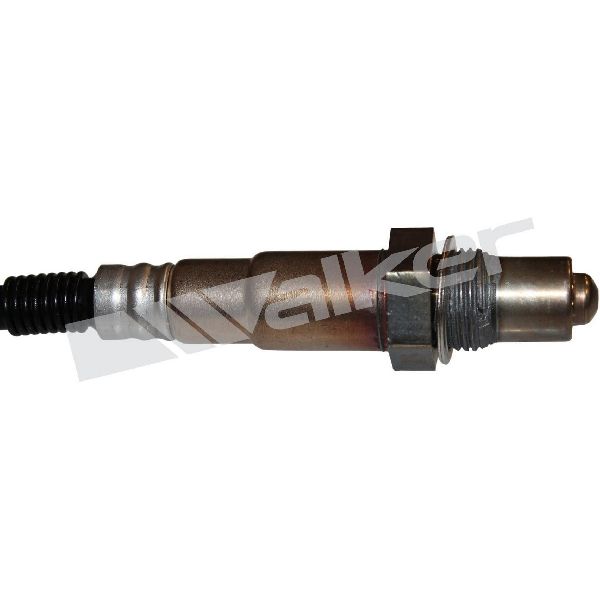
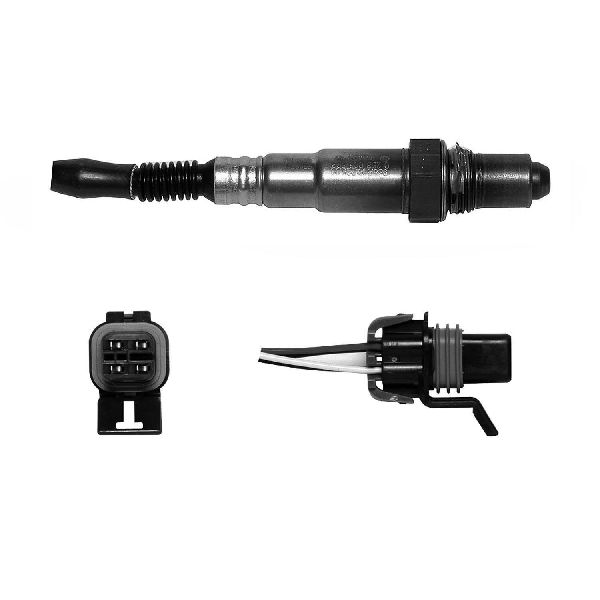
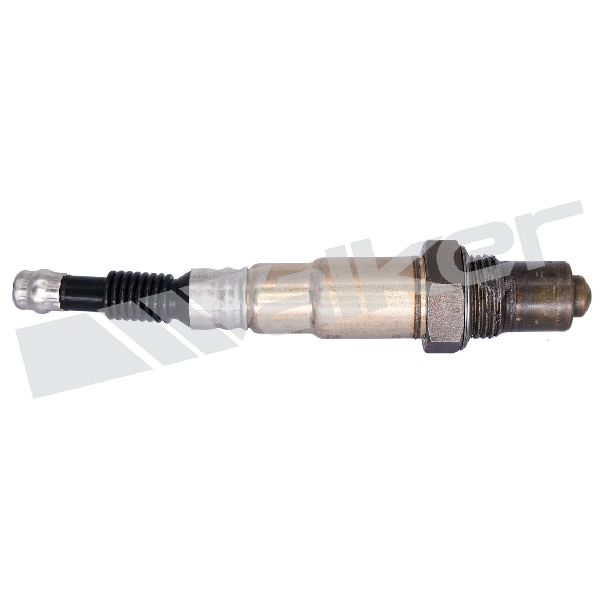
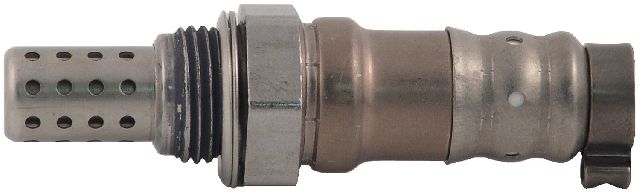
Aftermarket price range: $400-$900 - Bank 2 Downstream Oxygen Sensor
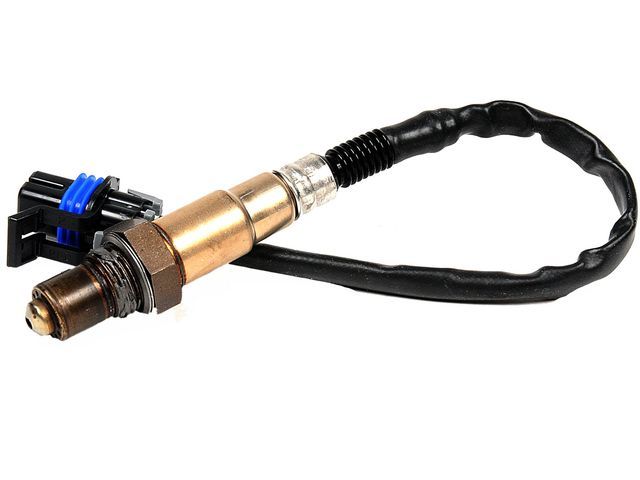
(OEM #12640453)— This sensor is the second most likely cause if the converter is confirmed to be intact and not leaking. It is also often replaced along with the converter as a preventative measure.
Trusted brands: ACDelco, Denso, Bosch
OEM price range: $80-$150
Aftermarket price range: $50-$100
Related Codes That Often Appear With This One
- P0420 — This is the identical code for Bank 1 (rear cylinder bank). The cracked converter issue can happen on either or both banks, so seeing P0420 and P0430 together is common.
- P0300-P0306 — These are misfire codes for specific cylinders (P0301, P0302, etc.) or random misfires (P0300). A misfire is a root cause that can destroy a catalytic converter.
- P0171, P0174 — These codes indicate a lean fuel condition on Bank 1 and Bank 2. An unmetered air leak from a cracked converter flange or a poorly sealed air intake could cause these codes to appear with P0430.
Technical Service Bulletins (TSBs) & Recalls
- 17-NA-321: Documents the tendency for the catalytic converter to crack near the mounting flange, causing P0420/P0430 codes. It applies to the XTS and Chevrolet Impala.
- PIP5419B: The previous version of the TSB, now superseded by 17-NA-321, which described the same issue.
Platform-Specific Known Issues
- GM Technical Service Bulletin #17-NA-321 (superseding PIP5419B) was issued for the 3.6L LFX engine due to a high rate of catalytic converter failure from cracks forming near the mounting flange.
Mechanic-Grade Diagnostic Values
- Downstream O2 Sensor (Bank 2, Sensor 2) Voltage — expected: Relatively stable voltage, fluctuating slowly between 0.6V and 0.8V (600-800mV) on a warm engine at steady RPM.. Failure: Voltage rapidly switches similar to the upstream sensor (e.g., 0.1V-0.9V), or is stuck/unresponsive. This indicates the converter is not storing oxygen.
- Short-Term (STFT) and Long-Term (LTFT) Fuel Trims (Bank 2) — expected: Within +/- 10% at idle and steady cruise.. Failure: Consistently high positive trims (> +10%) can indicate an unmetered air leak, such as the converter flange crack described in TSB 17-NA-321. The ECM adds fuel to compensate for extra oxygen, which can affect the catalyst monitor's calculation.
- Low-Side Fuel Pressure (Key On, Engine Off) — expected: 50-60 PSI (345-414 kPa).. Failure: Pressure significantly outside this range can indicate a fuel delivery problem that could, over time, lead to conditions (rich or lean) that damage the catalytic converter. This is a root-cause check, not a direct test for P0430.
- Catalytic Converter Temperature — expected: Normal operating temperatures are typically between 400°C (750°F) and 870°C (1600°F).. Failure: Temperatures exceeding 870°C (1600°F) can cause the internal substrate to melt or crack, rendering the converter ineffective. This is often caused by an underlying issue like an engine misfire sending unburnt fuel into the exhaust.
Scan Tool Commands That Help
- GM GDS2 / Tech2Win: Catalyst System Test — To force the catalyst efficiency monitor to run under controlled conditions after a repair. This provides a quick pass/fail result to verify the fix without needing to complete a full, lengthy drive cycle.
- GM GDS2 / Professional Scan Tool: Reset Fuel Trim / Catalyst Learned Values — This should be performed after replacing a catalytic converter. It clears the ECM's long-term fuel trim adjustments that were learned based on the old, inefficient converter. This allows the ECM to adapt to the new unit correctly and prevents a potential false P0430 code from re-appearing.
Wiring & Ground Locations
- G103 / G104 — On the 3.6L LFX, G104 is located at the front of the engine. G103 is located on the cowl in the engine compartment, often above the brake booster.. The Engine Control Module (ECM) and its sensors, including the oxygen sensors, rely on clean and tight ground connections. A corroded or loose engine ground can cause erratic or incorrect sensor readings, potentially leading to a false P0430 code or other drivability issues.
- Bank 2 Downstream O2 Sensor Connector — The sensor is located on the exhaust pipe immediately after the front (Bank 2) catalytic converter. The electrical connector is part of the harness leading up from the sensor.. This is the primary sensor for this DTC. The connector and its wiring are exposed to high heat and road debris, making them susceptible to damage, which could cause a P0430 code even if the sensor and converter are good.
- ECM (Engine Control Module) — The ECM is typically located in the engine bay. Its specific location can be confirmed with service information for the exact model year.. All O2 sensor signals are processed by the ECM. While rare, a fault within the ECM itself or its connector pins can cause a false P0430 code. This is usually only considered after all other possibilities have been exhausted.
Real Owner Repair Stories
- Pelican Parts Forum user (2016 Chevrolet Impala 3.6L LFX (platform-mate), 76k miles) — Loud exhaust noise and a Check Engine Light with a P0420/P0430 code.
❌ Tried (didn't work) Initial diagnosis by the dealer.
✅ What actually fixed it The owner identified a crack in the catalytic converter pipe near the flange, consistent with GM TSB 17-NA-321. The post confirms the physical failure and discusses the process of getting it replaced under the federal emissions warranty, which ultimately requires replacing the converter assembly.
OEM Part Supersession History
Unknown (Original production part)→84216836 (Bank 2, Left/Front)— This is the updated service part specified in TSB 17-NA-321 to correct the flange cracking issue.Unknown (Original production part)→20929196 (Bank 1, Right/Rear - for reference)— This is the service part for the Bank 1 converter, which is also prone to the same cracking issue and may set a P0420 code. TSB 17-NA-321 from Nov 2019 lists this as the correct part for the right side. An earlier version of the TSB listed 84216838.
Heads up: Do not confuse with the Bank 2 converter. Bank 1 and Bank 2 converters are not interchangeable.
Model Year Variations Within This Range
- 2013-2018: While the Cadillac XTS received a facelift for the 2018 model year, the LFX 3.6L V6 engine, exhaust system design, and the specific catalytic converter cracking issue described in TSB 17-NA-321 remained consistent across this entire model year range. No significant variations in the cause or fix for P0430 have been documented.
Diagnostic Flowchart
Real Owner Stories
Aggregated from forums and TSBs cited above. Mileages and costs reflect what owners reported in those sources.
2016 Chevrolet Impala (3.6L LFX V6)
Symptoms: Experienced the exact cracked converter issue covered by TSB 17-NA-321.
What fixed it: Replaced the catalytic converter under the federal emissions warranty, though the owner noted the dealer initially refused warranty coverage.
Source hint: PelicanParts.com Forum - Federal Emissions Warranty
2018 Cadillac XTS
Symptoms: Bank 2 catalytic converter failure requiring replacement at the front of the engine bay.
What fixed it: Replaced the Bank 2 catalytic converter. The mechanic noted the job is much easier if you loosen the bottom flange bolts before the top manifold bolts.
Source hint: YouTube - Replacing Bank 2 Catalytic Converter On A 2018 Cadillac XTS (@CertifiedFramework)
Related OBD-II Codes
Frequently Asked Questions
Does TSB 17-NA-321 apply to my 2013-2018 Cadillac XTS?
What is the most common cause of the P0430 code on the 3.6L LFX engine?
How can I tell if my Bank 2 catalytic converter is cracked before replacing it?
What is the correct replacement part number for the Bank 2 catalytic converter on the XTS?
Will my federal emissions warranty cover the cracked catalytic converter mentioned in TSB 17-NA-321?
If the catalytic converter isn't cracked, what else should I check for P0430?
Helpful Videos

Used OEM Parts in Stock
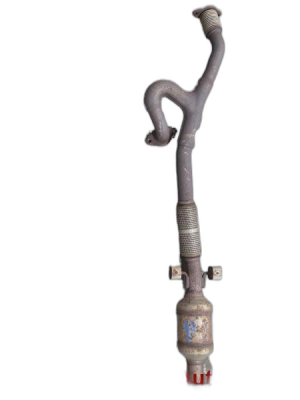
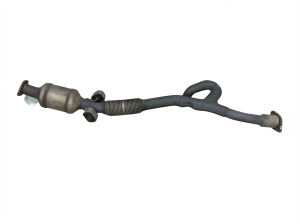
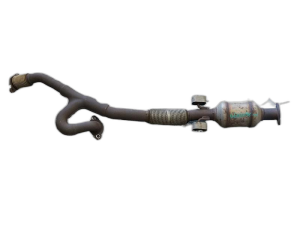
New Aftermarket Parts Available


The information in this article is provided for general reference and educational purposes only. Vehicle specifications, procedures, and part compatibility can vary by production date, trim level, and region. Always consult your vehicle's factory service manual and verify part numbers before purchasing or performing repairs. Safety-critical components such as airbags, seat belts, and braking systems should be installed by a qualified professional.
- Cadillac XTS:
- 🧭 Diagnostic Flowchart
- 🎬 Helpful Videos
- 🛍️ Shop This Part
- What's Unique About the 2013-2018 Cadillac XTS
- Symptoms You May Notice
- Most Likely Causes
- Rare But Worth Checking
- Diagnosis Steps
- Parts You'll Likely Need
- Related Codes That Often Appear With This One
- Technical Service Bulletins (TSBs) & Recalls
- Platform-Specific Known Issues
- Mechanic-Grade Diagnostic Values
- Scan Tool Commands That Help
- Wiring & Ground Locations
- Real Owner Repair Stories
- OEM Part Supersession History
- Model Year Variations Within This Range
- Real Owner Stories
- 2016 Chevrolet Impala (3.6L LFX V6)
- 2018 Cadillac XTS
- Related OBD-II Codes
- Frequently Asked Questions
- 🎟️ Get 5% Off