

P0430 on 2002-2006 Chevrolet Avalanche 1500: Catalyst Efficiency Causes and Fixes
P0430 on a 2002-2006 Avalanche 1500 indicates that the catalytic converter on the passenger side (Bank 2) is no longer working efficiently. The most common cause is a worn-out catalytic converter, but faulty oxygen sensors or, very commonly, exhaust leaks from broken manifold bolts should be ruled out first to avoid a costly misdiagnosis.
- P0430 means the passenger side (Bank 2) catalytic converter is not working efficiently.
- Before buying a new converter, always inspect for exhaust leaks (especially broken manifold bolts) and test the oxygen sensors.
- If you have any engine misfire codes (P030x), you must fix that problem first or you will destroy the new converter.
- On the 2002-2006 Avalanche, Bank 2 is the passenger side.
- This is a common code on higher-mileage vehicles as the emissions components simply wear out.
What's Unique About the 2002-2006 Chevrolet AVALANCHE 1500
The 2002-2006 Avalanche 1500, part of the GMT800 family, is a robust truck, but its emissions components are prone to age-related failure. A very common issue on these GM trucks is the rearmost exhaust manifold bolts breaking, causing a pre-catalyst exhaust leak that introduces oxygen and triggers a false P0430 code. Additionally, a Technical Service Bulletin (TSB), #PIP3119P, notes that the diagnostic test for this code is intentionally disabled for the first hour of engine operation after a new converter is installed to allow for a break-in period and prevent false readings.
Diagnostic Flowchart
Tap your situation to follow the diagnostic path that matches what you're seeing on this vehicle.
Symptoms You May Notice
- Check Engine Light is on
- Vehicle fails emissions testing
- Reduced engine power and acceleration, especially if the converter is clogged
- Rotten egg or sulfur smell from the exhaust
- Rough idle
- Audible ticking or puffing noise from the engine bay, especially when cold, indicating an exhaust leak
- Immediately replacing the catalytic converter without first checking for exhaust leaks or testing the oxygen sensors. Many forum users report that fixing a broken manifold bolt resolved their P0430 code.
- Replacing the downstream O2 sensor when the catalytic converter is actually the failed component. The code often returns after a short period.
- Replacing the upstream (pre-cat) oxygen sensor to fix an efficiency code. The P0430 code is triggered by the downstream (post-cat) sensor's reading, though a faulty upstream sensor can cause fuel trim issues that damage the converter over time.
Most Likely Causes
- Failing Catalytic Converter (Bank 2) 🔴 High Probability → Shop Catalytic Converter After 100,000+ miles, the catalyst materials simply wear out. Also, underlying issues like engine misfires, excessive oil consumption, or coolant leaks can contaminate and destroy the converter.
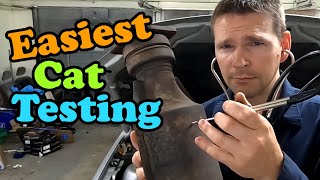
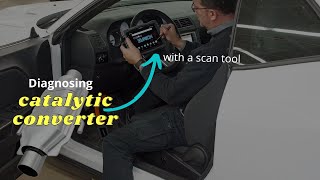
How to confirm: After confirming no exhaust leaks and that O2 sensors are working, use a scan tool to graph sensor data. If the downstream O2 sensor (Bank 2, Sensor 2) voltage fluctuates rapidly, mimicking the upstream sensor (Bank 2, Sensor 1), the converter is bad. A working converter should show a steady downstream voltage above 0.6V (600mV). Another test is to use an infrared thermometer to measure the converter's inlet and outlet pipes; a working converter should be at least 100°F hotter at the outlet.
Typical fix: Replace the Bank 2 (passenger side) catalytic converter. It's often sold as a Y-pipe assembly that includes both converters. Always address the root cause (e.g., misfires, leaks) before replacing the converter to prevent repeat failure.
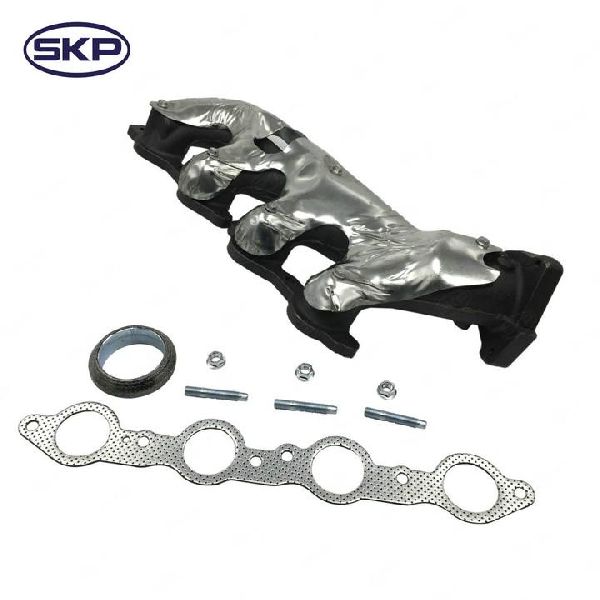
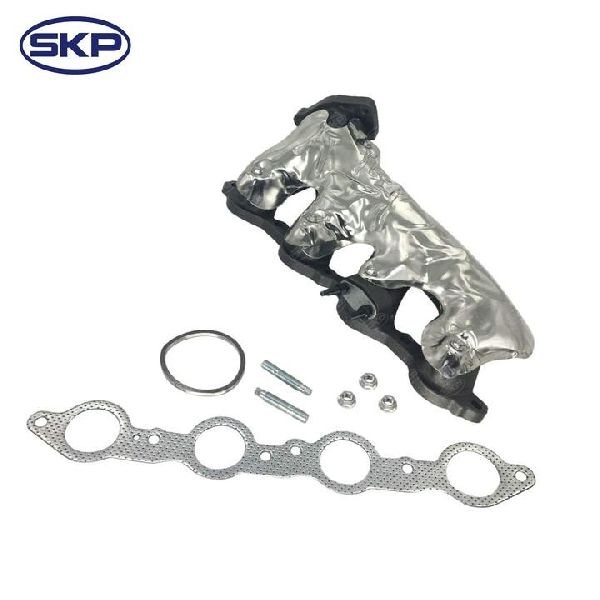
Est. part cost: $250-$700 - Exhaust System Leak 🔴 High Probability The V8 engines in these trucks are notorious for having the rear-most exhaust manifold bolts rust and break off, creating a leak between the cylinder head and manifold. Gaskets at the manifold collector or Y-pipe flanges can also fail with age. This leak allows unmetered oxygen into the exhaust, fooling the O2 sensors.
How to confirm: Visually inspect the exhaust manifolds (especially near the firewall) for black soot trails. Listen for a ticking or puffing noise that is loudest on a cold start and may quiet down as the engine warms up. A smoke machine test is the definitive way to pinpoint the exact location of a leak.
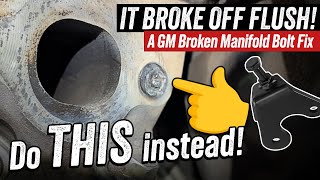
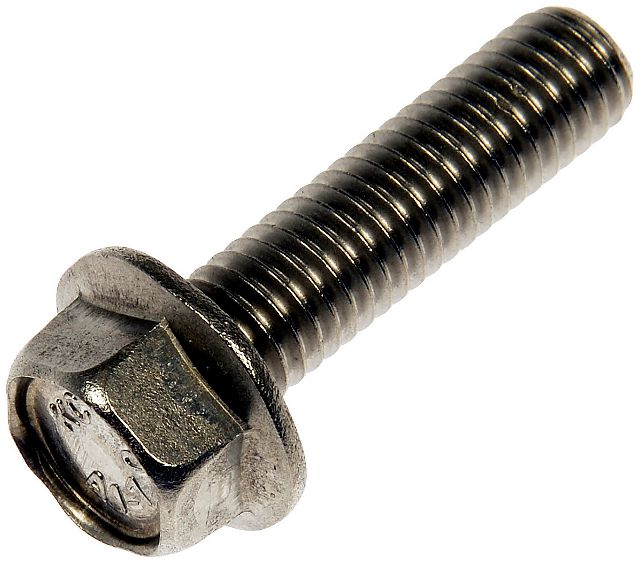
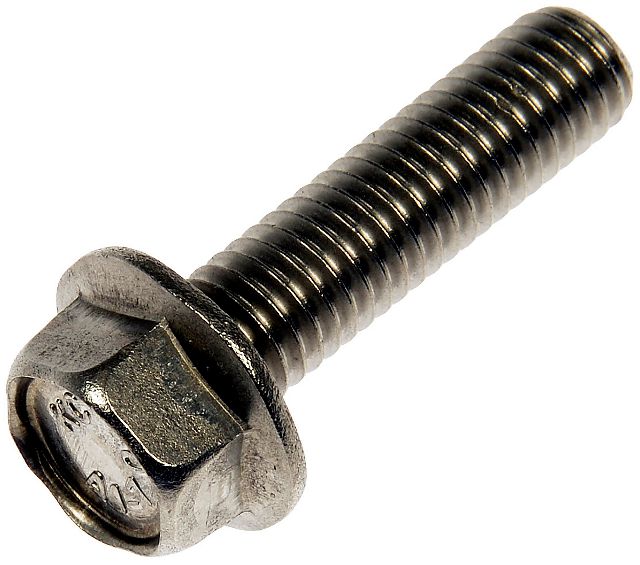
Typical fix: Replace the broken manifold bolts and/or the failed gasket. This can be a difficult job if the bolts are broken flush with the cylinder head. Aftermarket exhaust manifold clamp kits (like Dorman part #917-107) exist as a less invasive repair option.
Est. part cost: $10-$100 - Faulty Oxygen (O2) Sensor(s) 🟡 Medium Probability → Shop Oxygen Sensor Oxygen sensors are wear items and have a finite lifespan. A slow, biased, or lazy downstream (post-cat) sensor can fail to accurately report the converter's status, triggering a false code. Many owners replace sensors only to find the converter was the real issue.
How to confirm: Use a scan tool to observe the sensor's voltage readings. The downstream sensor should show a steady, relatively flat voltage on a healthy system. If it's stuck high, low, or not responding, it's likely faulty. A great DIY test is to swap the downstream sensors (Bank 1 Sensor 2 and Bank 2 Sensor 2). Clear the codes and drive. If the code changes to P0420 (Bank 1), you've confirmed the O2 sensor is the problem.
Typical fix: Replace the downstream oxygen sensor on Bank 2 (passenger side). It is often wise to replace them in pairs (both downstream sensors) or replace the sensor whenever a new converter is installed.
Est. part cost: $40-$90 per sensor
Rare But Worth Checking
- Engine Misfires or Rich/Lean Fuel Condition: If you have other codes like P0300-P0308 (misfires) or P0171/P0174/P0172/P0175 (fuel trim), these must be addressed first. An engine problem can send unburnt fuel into the exhaust, which will quickly destroy a new catalytic converter. Check long-term fuel trims; values consistently over +/- 10% indicate a problem that needs fixing.
- Damaged O2 Sensor Wiring: → Shop Oxygen Sensor Wiring can be damaged by road debris or contact with hot exhaust components, causing a short or open circuit that mimics a bad sensor. Inspect the harness for melting, chafing, or corrosion at the connectors.
Diagnosis Steps
- Check for any other stored trouble codes. Address any misfire, fuel system, or other sensor codes first. This is the most critical step.
- Perform a thorough visual and audible inspection of the entire exhaust system from the engine to the tailpipe, especially when the engine is cold. Look and listen for cracks, rust holes, and black soot marks indicating a leak, paying close attention to the exhaust manifold bolts and flange gaskets.
- Use a scan tool with live data capability. Monitor long-term fuel trims. Values should be within +/- 10%. If they are not, diagnose the fuel system issue first.
- Graph the voltage of all four oxygen sensors at a steady 2000-2500 RPM. The two upstream sensors (B1S1, B2S1) should fluctuate rapidly between approximately 0.1 and 0.9 volts.
- Observe the downstream oxygen sensors (B1S2, B2S2). On a healthy, warm engine, their voltage should be relatively stable and high (e.g., >0.6 volts or 600mV).
- If the Bank 2, Sensor 2 voltage is switching rapidly like the upstream sensor, and there are no exhaust leaks, the catalytic converter has failed.
- If the Bank 2, Sensor 2 voltage is stuck low, high, or is not responding, the sensor itself is likely bad. Perform the 'DIYer-Friendly O2 Sensor Test' by swapping the two downstream sensors to confirm.
- If an infrared thermometer is available, check the converter temperature. The outlet pipe should be at least 100°F hotter than the inlet pipe after the engine is fully warmed up. An inlet that is hotter than the outlet can indicate a clog.
Parts You'll Likely Need
- Catalytic Converter Assembly (Y-Pipe)
(OEM #GM 15223111 (Varies by specific configuration))— This is the most common failure for a P0430 code once cheaper possibilities are ruled out. The internal catalyst material degrades over time.
Trusted brands: Walker, MagnaFlow, AP Exhaust
OEM price range: $800-$1500
Aftermarket price range: $250-$700 - Downstream Oxygen Sensor (Bank 2, Sensor 2)
(OEM #ACDelco 213-4229 (GM 12609457))— This sensor is responsible for monitoring the converter's efficiency. If it becomes slow or fails, it can trigger a false P0430 code.
Trusted brands: ACDelco (Original Equipment), Denso, Bosch
OEM price range: $70-$120
Aftermarket price range: $40-$90 - Exhaust Manifold to Head Gasket
(OEM #Fel-Pro MS 98016 T (Set))— Needed if the code is caused by an exhaust leak at the manifold, which is extremely common on these trucks due to broken bolts.
Trusted brands: Fel-Pro, ACDelco
OEM price range: $20-$40
Aftermarket price range: $10-$25 - Exhaust Manifold Bolt Repair Clamp
(OEM #N/A)— A popular, less-invasive alternative to extracting broken exhaust manifold bolts. It clamps the manifold to the head, sealing the leak.
Related Codes That Often Appear With This One
- P0420 — This is the identical code for Bank 1 (driver's side). It's common for both converters to fail around the same time due to age and mileage, or for both to be flagged if a systemic issue like a large vacuum leak is present.
- P0300-P0308 — These are misfire codes (P0300 for random, P0301-P0308 for specific cylinders). A misfire allows raw fuel to enter the exhaust, which superheats and melts the internal structure of the catalytic converter, directly causing the P0430 code.
- P0171 / P0174 — These codes indicate a lean fuel condition on Bank 1 and Bank 2. A common cause on these trucks is a leaking intake manifold gasket. This condition can alter exhaust temperatures and gas composition, a P0430 reading.
Technical Service Bulletins (TSBs) & Recalls
- PIP3119P: Catalytic Converter Break-In Information To Prevent DTCs P0420 And/Or P0430.
Platform-Specific Known Issues
- Broken Exhaust Manifold Bolts: The rear-most bolts holding the exhaust manifolds to the cylinder heads are prone to breaking, causing an exhaust leak right before the upstream O2 sensor, which can trigger catalyst efficiency codes. This is arguably the most common issue to check for first on a GMT800 truck with a P0420 or P0430.
- Catalytic Converter Theft: The high ground clearance of the Avalanche makes it a target for catalytic converter theft. If you suddenly hear a very loud exhaust noise and get this code, check to see if your converters are still there.
- TSB PIP3119P: A GM Technical Service Bulletin explains that after a new converter is installed, the P0420/P0430 diagnostic test is disabled for the first hour of engine run time to allow the new converter's materials to break in. If the battery was disconnected on a new vehicle, this one-hour timer might be reset, potentially allowing a false code to set. The TSB recommends a specific drive cycle to properly break in a new converter.
Mechanic-Grade Diagnostic Values
- Catalytic Converter Temperature Differential @ 2500 RPM — expected: Outlet ~100°F hotter than inlet. Failure: No temperature difference, or inlet hotter than outlet (indicates a clog).
- Catalytic Converter Temperature Differential @ Idle — expected: Outlet ~30°F hotter than inlet. Failure: No temperature difference or inlet hotter than outlet.
- Downstream O2 Sensor (B2S2) Voltage (Healthy Converter) — expected: Relatively stable voltage, typically above 0.6V (600mV). Failure: Voltage switching rapidly between high and low, mimicking the upstream sensor.
Wiring & Ground Locations
- G101 — Located at the lower front of the engine, on the lower block.. This is a primary ground for the Engine Control Module (ECM) and the Mass Air Flow (MAF) Sensor. A poor connection here can cause erratic sensor readings and incorrect fuel calculations, potentially leading to conditions that damage the catalytic converter or cause false codes.
- G102 — Located at the left rear of the engine.. This ground serves the 8 ignition coils. A faulty ground here can lead to weak spark and incomplete combustion (misfires), which sends raw fuel into the exhaust and can quickly destroy a catalytic converter, leading to a P0430 code.
- G104 — On some models, located on the rear of the passenger side cylinder head, sharing a stud with a ground strap to the frame.. This ground can be tied to the Vehicle Control Module (VCM) and various sensors. It is known to break during other repairs, and while it may not immediately cause a code, inadequate grounding can lead to intermittent and hard-to-diagnose electrical issues affecting the emissions monitoring system.
Real Owner Repair Stories
- YouTube user 'Pri' (1999 Chevrolet Silverado 1500 5.3L (similar GMT800 platform)) — Persistent P0430 code would return after about an hour of driving, preventing the Catalyst and O2 sensor monitors from becoming ready for an emissions inspection.
❌ Tried (didn't work) Clearing the code multiple times.
✅ What actually fixed it Replacing the downstream (post-cat) oxygen sensor on Bank 2. After replacement, the code did not return and all emissions monitors set to 'Ready', allowing the truck to pass inspection. - YouTube channel 'South Main Auto LLC' (Chevrolet Silverado (GMT800 platform)) — Persistent P0420 and P0430 codes after multiple shops replaced parts.
❌ Tried (didn't work) New catalytic converters installed by shop 1, All new (aftermarket) O2 sensors installed by shop 2, New fuel injectors installed by shop 2
✅ What actually fixed it The vehicle had been in an accident and the battery was connected backwards, damaging some wiring. The ultimate fix for the P0420 code was replacing the cheap aftermarket O2 sensor with a quality OEM sensor. The video implies the same issue was present for the P0430 on the other bank. This highlights that low-quality aftermarket sensors can fail to operate correctly and cause false codes even when new.
Model Year Variations Within This Range
- 2003-2006: In 2003, GM began applying a coating to the piston skirts of the 5.3L V8 to reduce the common 'startup knock' noise associated with Gen III engines. This does not directly affect the P0430 code but is a notable production change.
- 2003-2006: Drive-by-wire (DBW) throttle control was introduced, replacing the mechanical throttle cable of earlier models. While not a direct cause of P0430, it represents a significant change in the engine management system.
- 2005-2006: The optional L33 'High-Output' all-aluminum 5.3L V8 became available. While the fundamental emissions components are similar, part numbers for items like exhaust manifolds could differ.
Helpful Videos

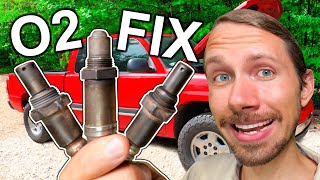
![How to Fix P0430 Error Code in 8 Minutes [7 DIY Methods / Only $5.97]](https://img.youtube.com/vi/KziSvVBjuEc/mqdefault.jpg)
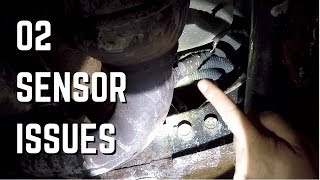
![How to Fix CHEVROLET P0430 Engine Code in 3 Minutes [3 DIY Methods / Only $4.97]](https://img.youtube.com/vi/v773CdVFa7I/mqdefault.jpg)
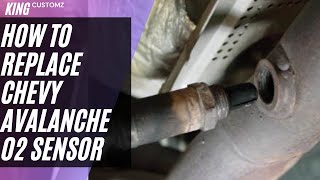
We Have This Part in Stock


The information in this article is provided for general reference and educational purposes only. Vehicle specifications, procedures, and part compatibility can vary by production date, trim level, and region. Always consult your vehicle's factory service manual and verify part numbers before purchasing or performing repairs. Safety-critical components such as airbags, seat belts, and braking systems should be installed by a qualified professional.
- Chevrolet AVALANCHE 1500:
- 🧭 Diagnostic Flowchart
- 🎬 Helpful Videos
- 🛍️ Shop This Part
- What's Unique About the 2002-2006 Chevrolet AVALANCHE 1500
- Symptoms You May Notice
- Most Likely Causes
- Rare But Worth Checking
- Diagnosis Steps
- Parts You'll Likely Need
- Related Codes That Often Appear With This One
- Technical Service Bulletins (TSBs) & Recalls
- Platform-Specific Known Issues
- Mechanic-Grade Diagnostic Values
- Wiring & Ground Locations
- Real Owner Repair Stories
- Model Year Variations Within This Range
- 🎟️ Get 5% Off