

P0430 on 2007-2013 Chevrolet Silverado 1500: Catalyst and Sensor Guide
On a 2007-2013 Silverado, P0430 almost always points to a failing catalytic converter on the passenger side (Bank 2), often caused by underlying issues like oil consumption or exhaust leaks. Before replacing the converter (an aftermarket part can be $200-$900, while an OEM part can be $3,300+), first check for broken exhaust manifold bolts and test the oxygen sensors to avoid a costly misdiagnosis. The root cause is frequently the Active Fuel Management (AFM) system causing oil to foul the conve
- P0430 on this truck means the passenger-side catalytic converter is inefficient, but the converter itself isn't always the root cause.
- Before buying any parts, inspect for broken exhaust manifold bolts (a very common issue) and test the oxygen sensors to rule out cheaper fixes.
- Be aware of the notorious Active Fuel Management (AFM) oil consumption issue on 5.3L/6.0L engines, as it is a primary cause of repeated catalytic converter failure.
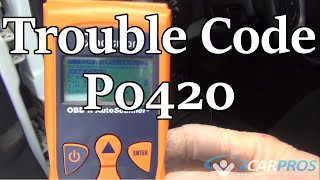
- Use a scan tool to watch live O2 sensor data. This is the most reliable way to confirm if the catalytic converter is truly bad before you spend hundreds of dollars to replace it.
What's Unique About the 2007-2013 Chevrolet Silverado 1500
On this generation of Silverado (GMT900), the P0430 code is frequently a symptom of deeper, well-known platform issues. The 5.3L and 6.0L V8 engines equipped with Active Fuel Management (AFM) are notorious for excessive oil consumption, which contaminates and destroys the catalytic converters over time. GM has released multiple Technical Service Bulletins (TSBs) regarding this, such as TSB 10-06-01-008M. Additionally, the exhaust manifold bolts are prone to breaking, causing leaks that allow oxygen into the exhaust, skewing O2 sensor readings and falsely triggering a P0430 code.
Generation note: The 2007 model year was a transition year. This guide primarily covers the GMT900 platform (2007-2013). The previous generation, the GMT800, was also sold in 2007 as the 'Silverado Classic'. While the causes are similar, part numbers may differ. The issues described, like AFM oil consumption and broken manifold bolts, are most prevalent on the GMT900 models.
Symptoms You May Notice
- Check Engine Light is on.
- Failure to pass an emissions test.
- Reduced engine power and acceleration, especially if the converter is clogged.
- A sulfur or "rotten egg" smell from the exhaust.
- A ticking sound from the engine bay, especially when cold, indicating an exhaust leak from a broken manifold bolt.
- Replacing the oxygen sensor without proper diagnosis. While the sensor can be the cause, it's more often that the sensor is correctly reporting the inefficiency of a failing catalytic converter. Swapping sensors side-to-side is a definitive diagnostic step before buying a new one.
Most Likely Causes
- Failing or Failed Catalytic Converter (Bank 2) 🔴 High Probability → Shop Catalytic Converter Often a secondary failure caused by other issues on this list, particularly oil consumption from the AFM system which poisons the catalyst material. High mileage also contributes to normal wear. Aftermarket converters are known to be hit-or-miss and may not last as long as OEM.
How to confirm: Use a scan tool to graph the voltage of the upstream (B2S1) and downstream (B2S2) oxygen sensors for Bank 2. At a steady 2,000 RPM, the B2S1 sensor should fluctuate rapidly between ~0.1V and ~0.9V. The B2S2 sensor should remain relatively stable and flat around 0.7V-0.8V. If the B2S2 sensor mimics the B2S1, the converter is not working.
Typical fix: Replace the Bank 2 catalytic converter assembly. It is critical to identify and fix the root cause (misfires, oil consumption, etc.) before replacement to prevent destroying the new part. 🎬 Watch this step-by-step catalytic converter replacement walkthrough.
Est. part cost: $200-$3500+ - Exhaust Leak (especially broken manifold bolts) 🔴 High Probability The exhaust manifold bolts on these GM V8s are notorious for breaking due to thermal cycles, especially the rearmost bolt near the firewall. This allows outside air to enter the exhaust, skewing O2 sensor readings and falsely triggering a P0430 code.
How to confirm: Visually inspect the passenger-side exhaust manifold for broken bolt heads. Listen for a distinct 'ticking' noise on a cold start that may quiet down as the engine warms and the metal expands. You may also see black soot trails around the leak.
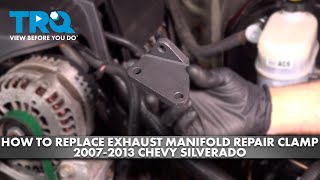
Typical fix: Extract the broken bolt (often M8x1.25) and replace it, along with the exhaust manifold gasket. This can be a difficult job due to the bolt's location and the likelihood of it being seized, often requiring specialized extraction tools. 🎬 Watch: Easy fix for broken exhaust manifold bolts.
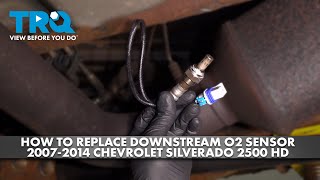
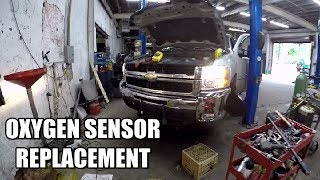
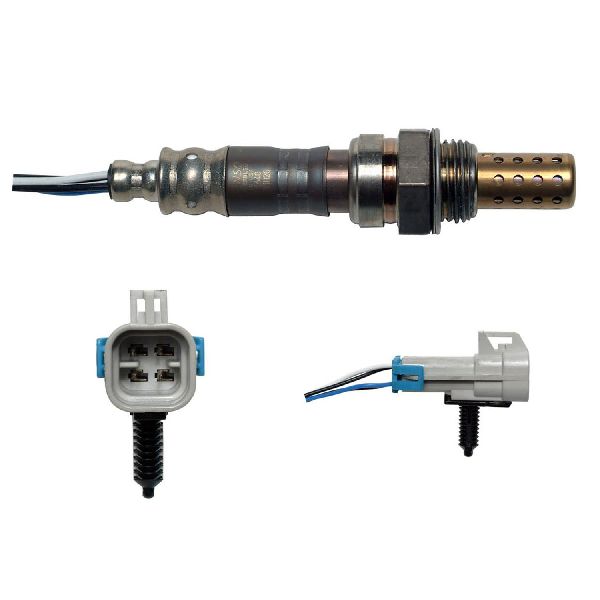
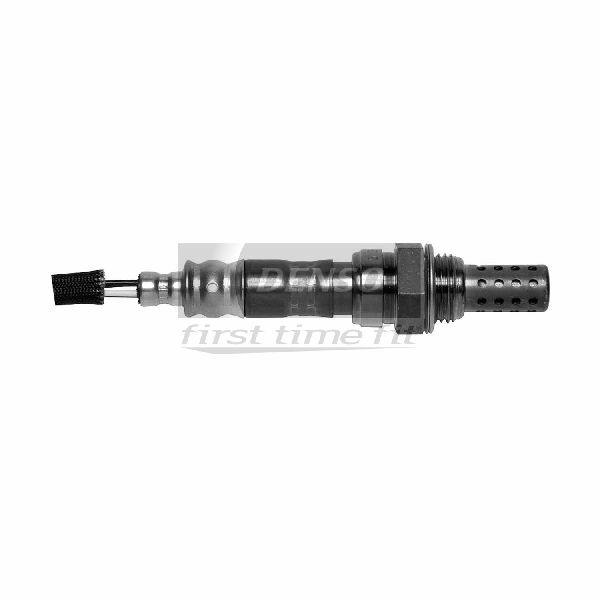
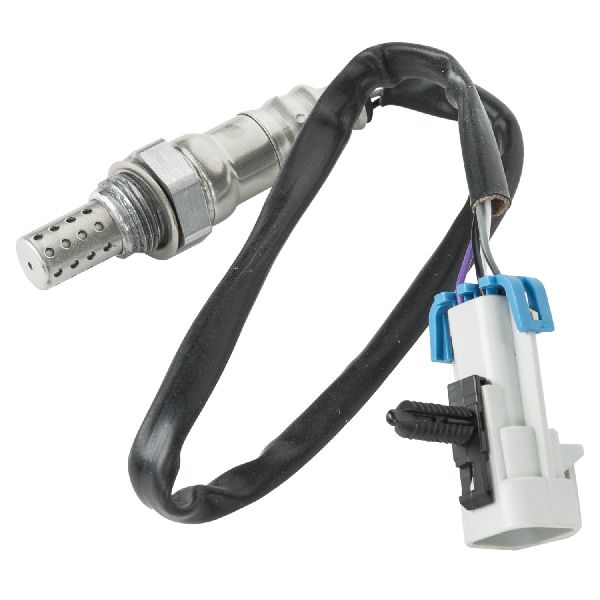
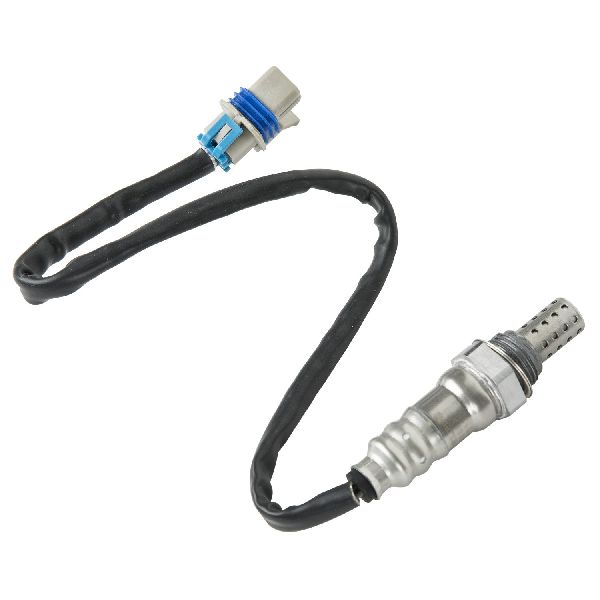
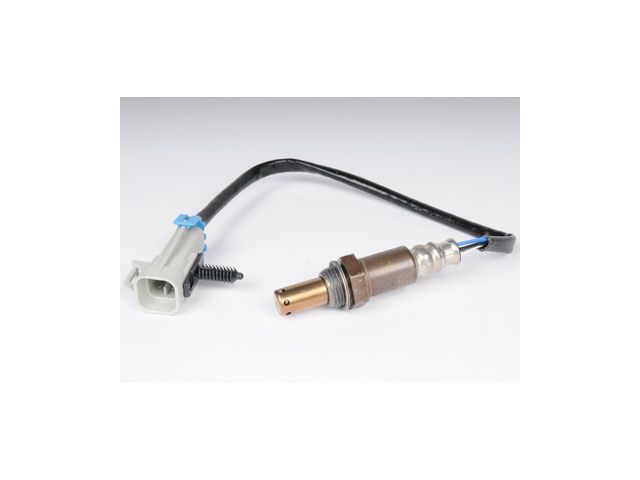
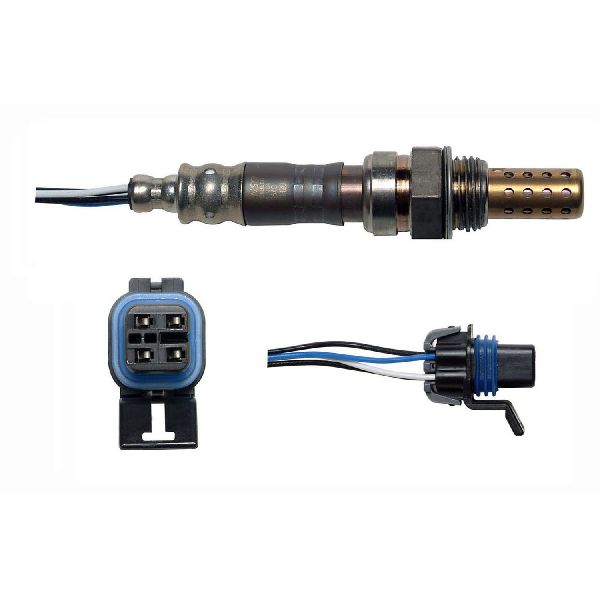
Est. part cost: $20-$150 - Failing Downstream Oxygen (O2) Sensor (Bank 2, Sensor 2) 🟡 Medium Probability → Shop Oxygen Sensor While often replaced unnecessarily, a faulty or slow-to-respond sensor can provide incorrect data to the ECM, triggering the code. They are a common wear item.
How to confirm: The best method is to swap the downstream O2 sensors between Bank 1 and Bank 2. Clear the codes and drive the vehicle. If the code changes to P0420 (Bank 1), the sensor is confirmed bad. You can also test the sensor's internal heater circuit for continuity with a multimeter.
Typical fix: Replace the Bank 2, Sensor 2 oxygen sensor.
Est. part cost: $50-$100 - Excessive Oil Consumption (AFM System) 🟡 Medium Probability The Active Fuel Management (AFM) system in the 5.3L and 6.0L engines is known to cause oil to bypass piston rings or be pulled through the PCV system, leading to consumption. This oil burns in the exhaust and contaminates the catalytic converters, leading to premature failure. GM issued TSB #10-06-01-008M regarding this issue, which outlines fixes like a redesigned valve cover or an AFM oil deflector.
How to confirm: Monitor oil levels closely. A consumption rate of more than 1 quart per 2,000 miles is considered excessive by GM. Look for signs of blue smoke from the exhaust. A definitive diagnosis may require a dealer-performed oil consumption test.
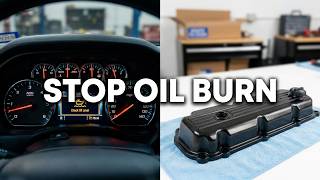
Typical fix: Early intervention includes installing an updated driver-side valve cover and an AFM shield. In severe cases, piston rings must be replaced. Many owners opt to install an AFM Disabler device 🎬 See how to stop Silverado oil consumption permanently. to prevent the system from activating. This is a complex and expensive repair if pistons are involved, often costing $1500-$4000+.
Est. part cost: $1500-$4000+
Rare But Worth Checking
- Improperly Sealing Air Intake Box: Per GM TSB #16-NA-111, a poorly sealing air filter box can allow sand and debris to be ingested by the engine. This abrasive material can damage O2 sensors and physically block the catalytic converter, leading to P0430. The TSB advises inspecting the airbox for a proper seal and checking the intake tube for any signs of dirt past the filter before replacing any parts.
- Engine Misfires or Fuel System Issues: Unaddressed misfire codes (P0300-P0308) or lean/rich conditions (P0171, P0174) will dump raw fuel into the exhaust, which quickly overheats and destroys the catalytic converter. P0430 in this case is a symptom of a more serious engine problem that must be fixed first.
Diagnosis Steps
- Check for other diagnostic trouble codes (DTCs). Address any misfire (P030x), fuel system (P017x), or oil pressure (P0521) codes first, as they are the likely root cause of converter damage.
- Visually inspect the entire exhaust system from the engine to the tailpipe for leaks, paying close attention to the passenger-side exhaust manifold for broken bolts or black soot trails.
- Listen for a ticking noise when the engine is cold, which would indicate an exhaust leak.
- Inspect the air filter box for a tight seal per TSB #16-NA-111. Check the intake tube for any dirt or debris that has bypassed the filter.
- Using a scan tool with live data, monitor the Bank 2 oxygen sensor voltages with the engine held at a steady 2,000-2,500 RPM. The upstream sensor (B2S1) should show a rapidly fluctuating voltage. The downstream sensor (B2S2) should show a steady, relatively flat voltage (typically >0.6V).
- If the B2S2 voltage is fluctuating similarly to B2S1, the catalytic converter has failed or there is an exhaust leak upstream of it.
- If the B2S2 voltage is flat but the code is present, consider swapping the downstream (Sensor 2) O2 sensors from Bank 1 and Bank 2. Clear the codes and drive. If the code returns as P0420, the O2 sensor you moved is faulty.
- Check long term fuel trims. If they are higher than 10%, investigate the cause (like an intake or vacuum leak) before replacing the converter.
- If all other causes are ruled out, the catalytic converter is very likely the culprit.
Parts You'll Likely Need
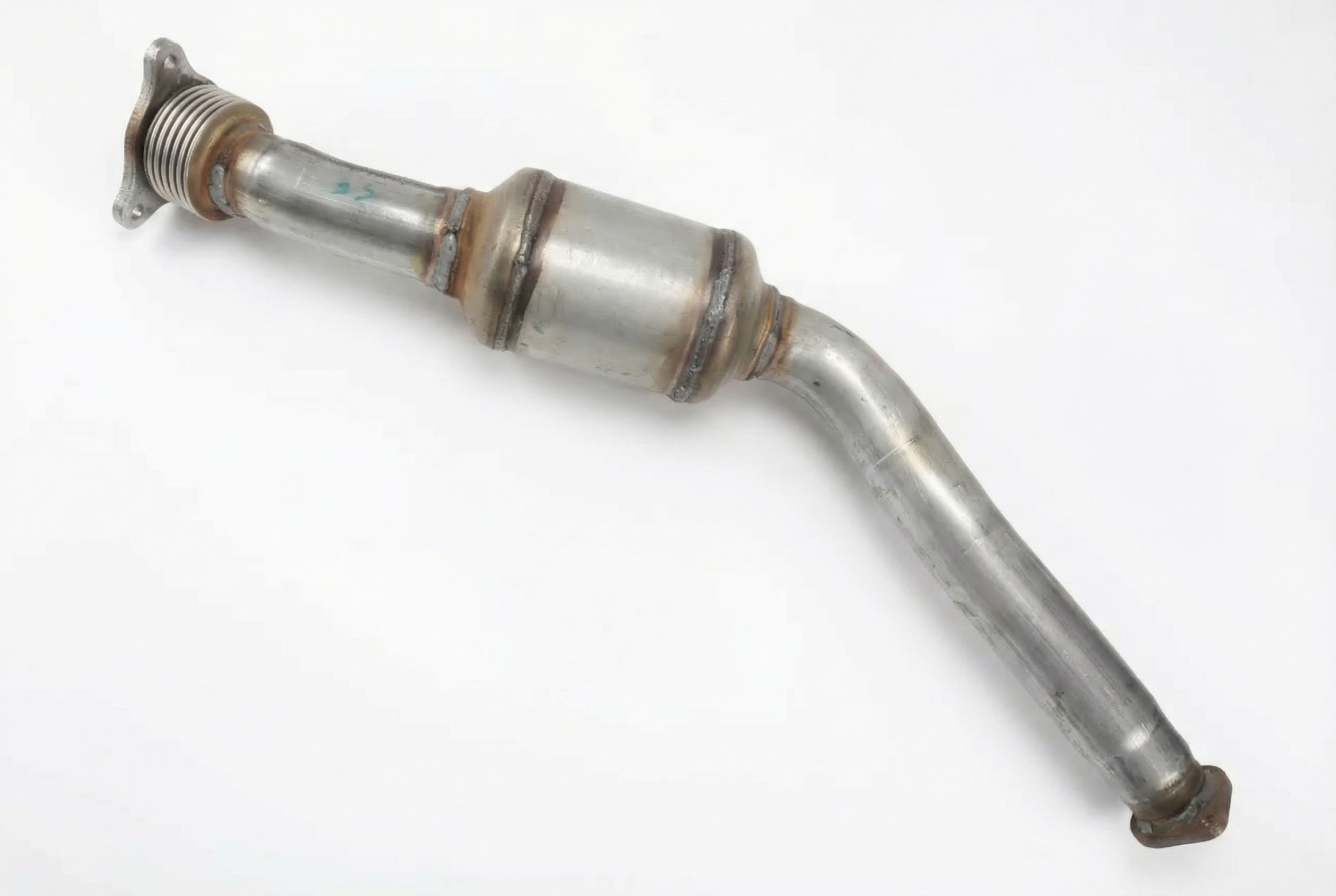
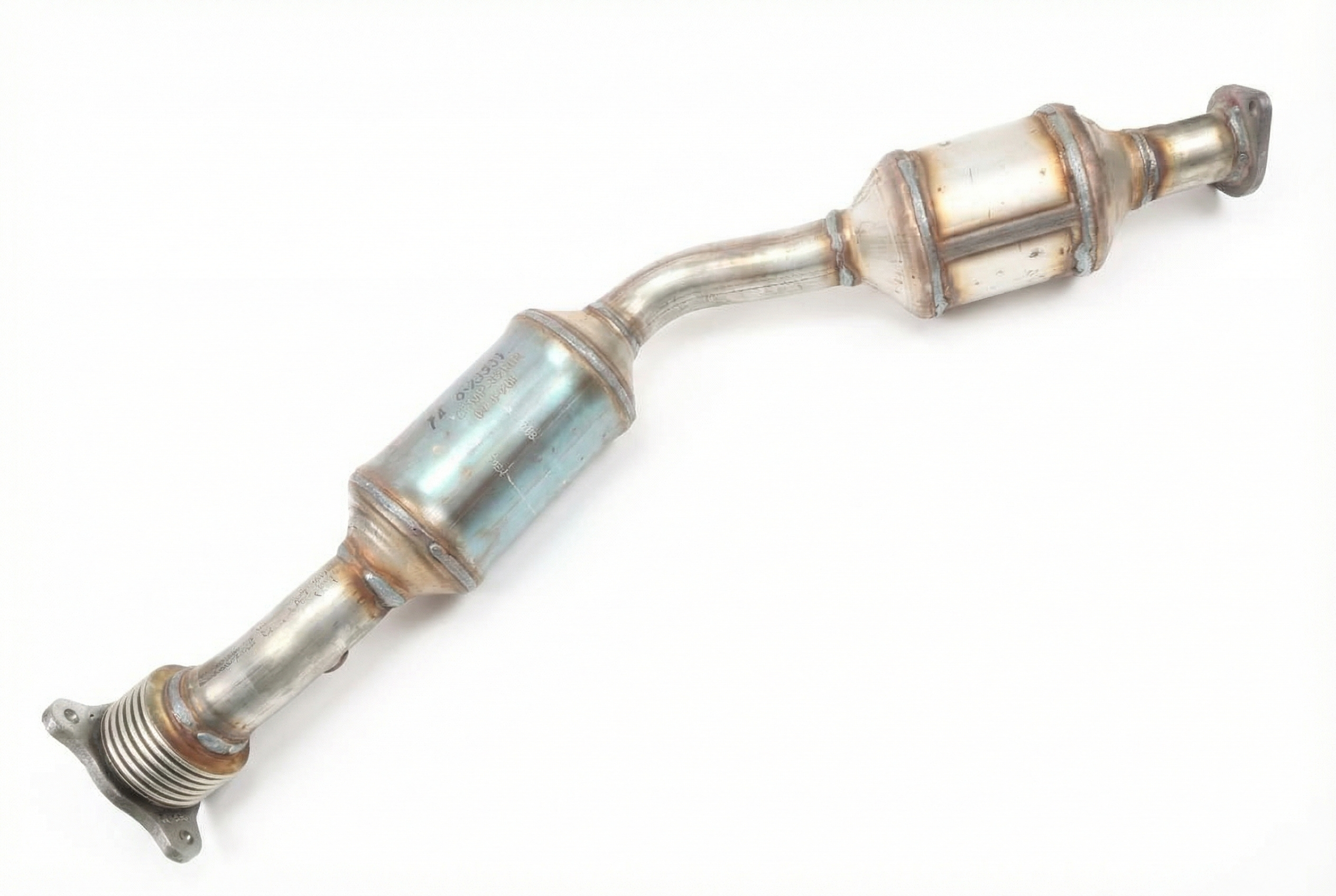
- Catalytic Converter (Bank 2 - Passenger Side)
(OEM #Varies by VIN, e.g., GM 20827332. Aftermarket: Walker, Magnaflow, Davico.)— This is the most common part that fails and triggers the code, though often due to an underlying issue. - Downstream Oxygen Sensor (Bank 2, Sensor 2)
(OEM #ACDelco 213-4229 (supersedes 12609457).)— Sometimes fails and provides incorrect readings, but is more often replaced unnecessarily. Swapping with Bank 1 is the best test. - Exhaust Manifold Bolt & Gasket Kit — Required to fix the very common exhaust leaks caused by broken manifold bolts.
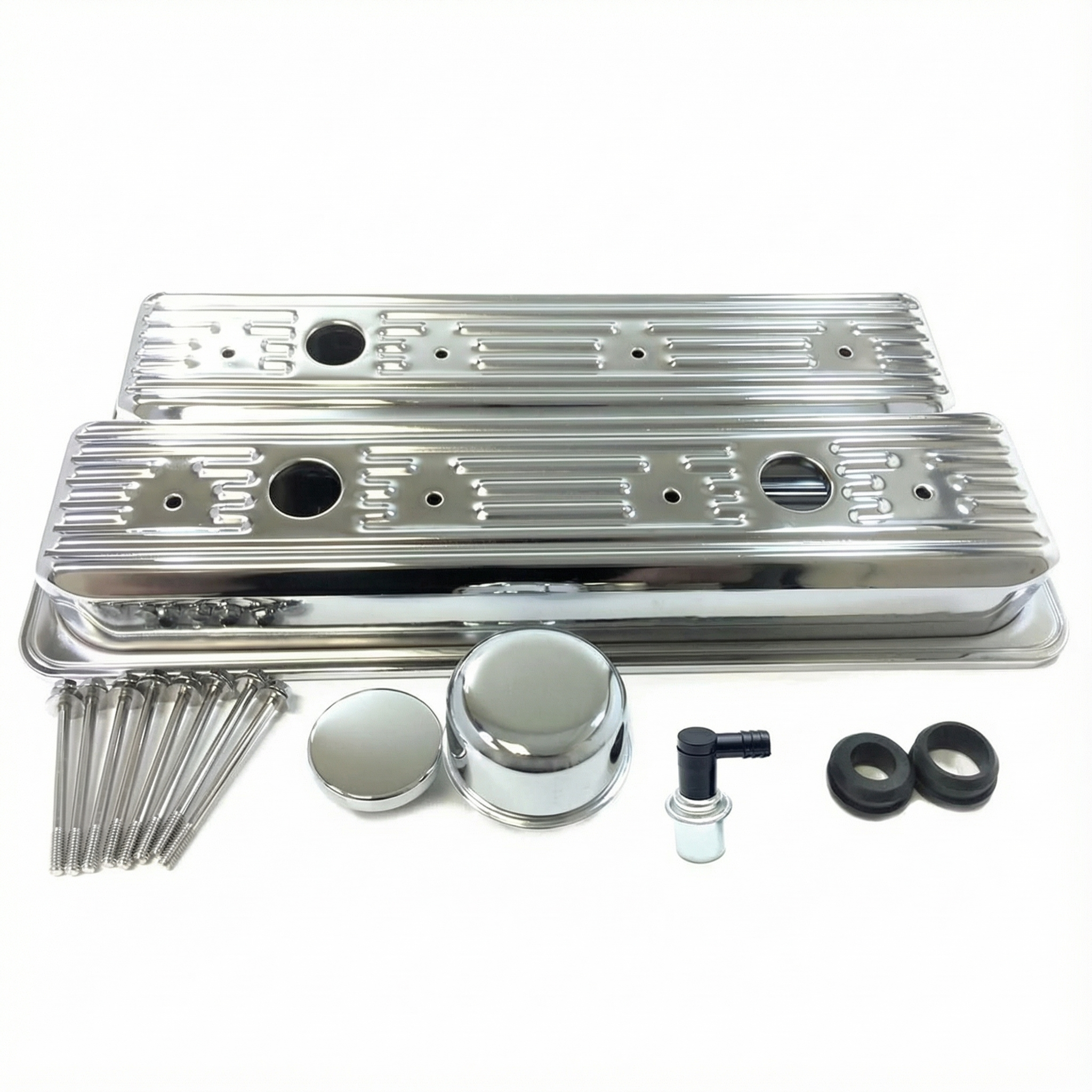
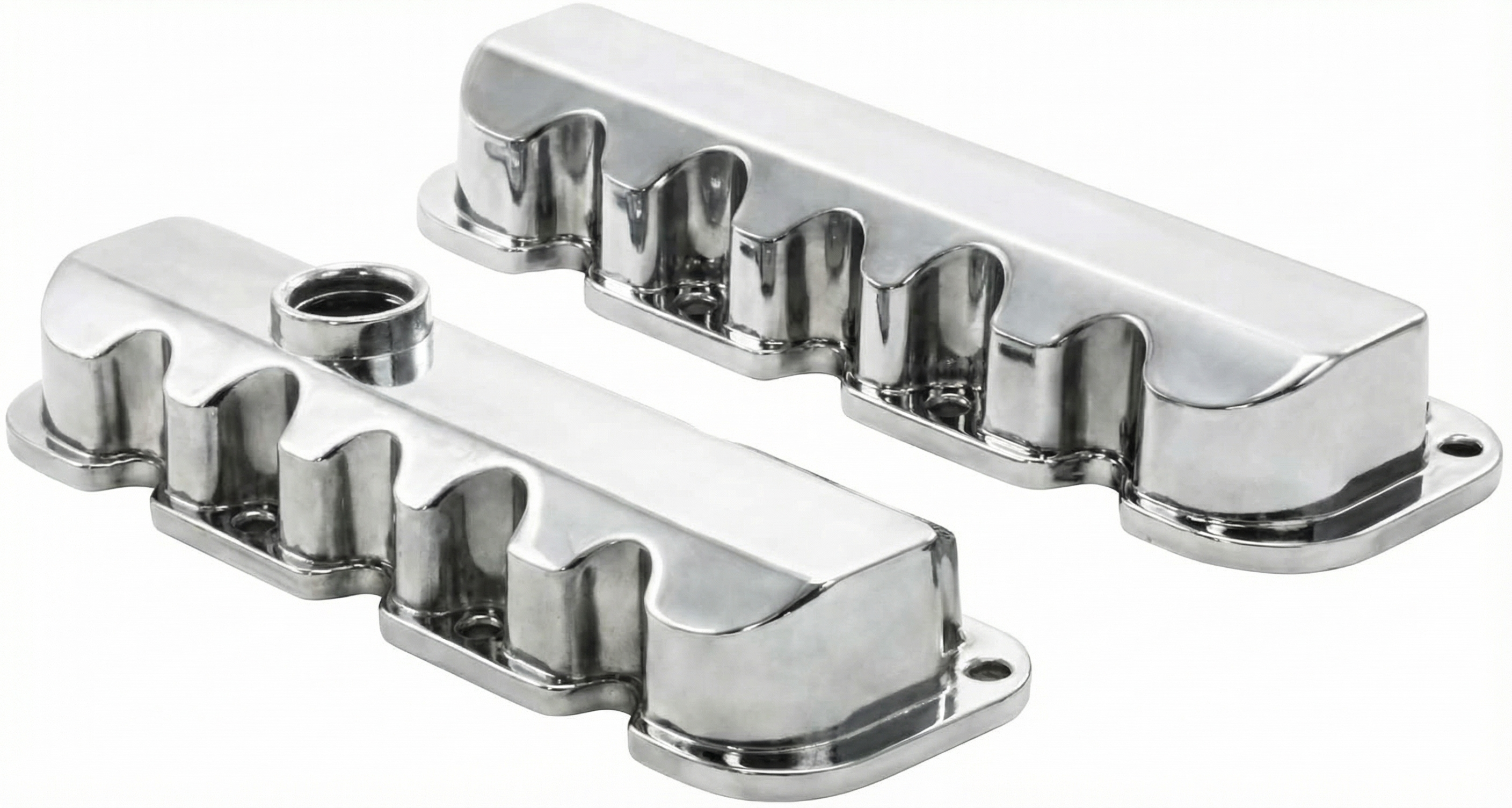
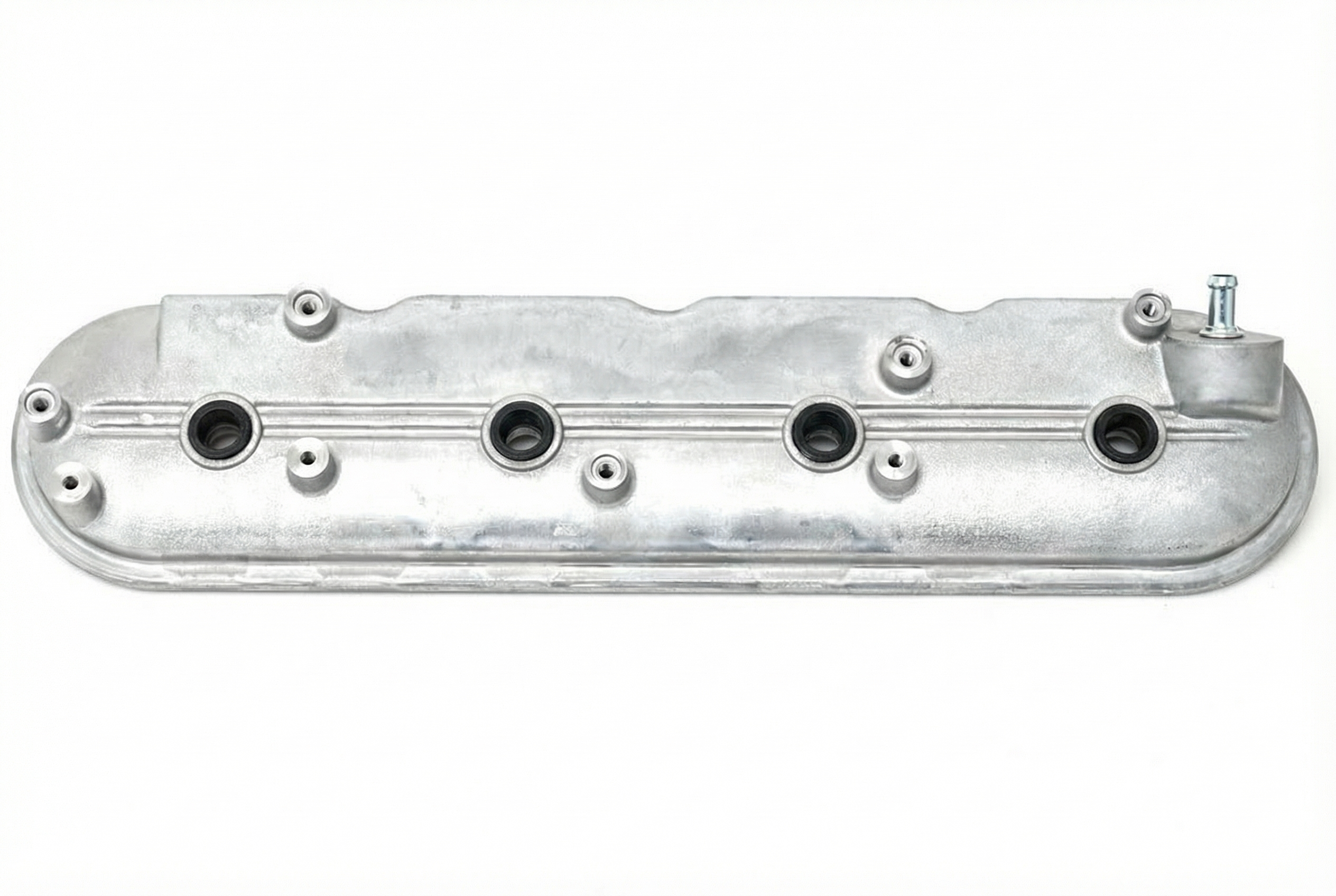
- Driver Side Valve Cover (Updated PCV design)
(OEM #GM 12649458 (example, verify by VIN))— This is a primary fix for the root cause of AFM oil consumption that fouls the catalytic converters.
Related Codes That Often Appear With This One
- P0420 — This is the identical code for Bank 1 (driver's side). If the root cause is systemic, like high mileage or oil consumption from the AFM system, it's common for both converters to fail around the same time.
- P0300-P0308 — These are cylinder misfire codes. An active misfire allows unburned fuel to enter the exhaust, which will destroy the catalytic converter, directly causing P0430. The misfire is the root cause and must be fixed first.
- P0521 — This code for Engine Oil Pressure Sensor Performance can be related to the overall oil consumption and AFM system issues that ultimately lead to catalytic converter failure.
Technical Service Bulletins (TSBs) & Recalls
- TSB #10-06-01-008M: Addresses excessive engine oil consumption on AFM-equipped engines. Recommends fixes like installing an AFM oil deflector, cleaning carbon from cylinders, and potentially installing an updated valve cover.
- TSB #16-NA-111: Provides diagnostic tips for P0420/P0430 caused by a poorly sealing air filter box allowing debris to enter and damage O2 sensors and converters.
- TSB Bulletin #PIP3119P: Notes that some vehicles may have a Malfunction Indicator Lamp on at low mileage with P0420 and/or P0430 stored. Technicians are advised that these efficiency codes are actually disabled for the first hour of operation.
Platform-Specific Known Issues
- Active Fuel Management (AFM) system on 5.3L/6.0L engines can cause excessive oil consumption, which poisons the catalytic converters.
- Exhaust manifold bolts are prone to breaking, especially the rear-most bolt on the passenger side, creating an exhaust leak that is a common cause for a false P0430 code.
Mechanic-Grade Diagnostic Values
- Mode $06 Catalyst Monitor Test (Bank 2) — expected: The raw test value should be below the maximum threshold, which for GM is often a unitless ratio of 0.600-0.700.. Failure: A test value that exceeds the PCM's maximum limit will flag the P0430 code. This data can indicate a converter is marginal even before the CEL is triggered.
- Long-Term Fuel Trim (LTFT) for Bank 2 — expected: Within +/- 10% at idle and steady cruise.. Failure: Consistently high positive values (>+10%) strongly suggest an unmetered air leak, such as from a broken manifold bolt or cracked intake, which must be fixed before replacing the converter.
- O2 Sensor Heater Circuit Resistance — expected: Between 5 and 7 ohms when tested across the two same-colored wires (usually white) on the sensor-side of the connector.. Failure: An open circuit (infinite resistance) or a reading far outside this range indicates a failed heater element, which will cause the sensor to respond slowly and can affect catalyst monitoring.
- O2 Sensor Heater Circuit Voltage — expected: 12V+ on the Pink wire (Pin D) of the vehicle-side harness connector with the ignition on.. Failure: No voltage indicates a blown fuse (check O2B fuse) or a wiring issue between the fuse block and the sensor.
Hidden / Shadow Codes Worth Checking
- Mode $06, Test ID $81, Component ID $11: This is not a DTC but rather raw data from the PCM's internal catalyst efficiency test for Bank 2. It provides a numerical value of the catalyst's performance, which can be compared against a maximum allowable threshold. (see via A professional scan tool or advanced OBD-II reader capable of displaying Mode $06 test results. A value approaching the maximum threshold (e.g., >0.600) indicates the converter is becoming inefficient, even if the P0430 code has not been set yet.)
Scan Tool Commands That Help
- GDS2 / Tech2: Catalyst System Test (Service Bay Test) — This is the most definitive, non-invasive test to confirm a failed converter. It's a bidirectional command that forces the PCM to run the catalyst monitor on demand, providing a clear Pass/Fail result without a lengthy drive cycle. Use this to confirm the converter is bad before ordering a replacement.
- GDS2 / Tech2: AFM Cylinder Deactivation Enable/Disable — If AFM-related oil consumption is suspected as the root cause, a technician can use this command to manually toggle between V8 and V4 modes while graphing O2 sensor data. This can help confirm if oil is being passed during V4 operation, which contaminates the converter.
- GDS2 / Tech2: Reset Fuel Trims — After repairing an exhaust or vacuum leak that caused high fuel trims, this function should be used to clear the learned values. This forces the ECM to relearn fuel strategy immediately with the leak fixed, preventing it from running rich and potentially damaging a new converter.
Wiring & Ground Locations
- G103 — On the front of the passenger side cylinder head.. This is a primary engine ground. A loose or corroded connection here can cause erratic voltage signals from multiple engine sensors, including the Bank 2 oxygen sensors, leading to false codes.
- G104 / G107 — On the rear of the driver's side cylinder head.. These are critical engine grounds. A poor connection can disrupt the reference voltage for the O2 sensors and their heater circuits, causing incorrect readings that could trigger catalyst codes.
- Bank 2 Sensor 2 Connector — Located on the passenger side of the transmission, connected to the main harness running along the frame rail.. The wiring harness for the downstream O2 sensor is susceptible to heat damage from the exhaust or physical damage from road debris. Inspect the harness for chafing or melting, especially if it has been rubbing on the front driveshaft on 4WD models.
- B2S2 Connector Pins — At the 4-pin connector for the downstream passenger-side O2 sensor.. For testing: Pin D (Pink wire) should have 12V+ for the heater circuit, and Pin C (Black wire) is the heater ground. The other two wires are the sensor signal and signal ground. Testing these points directly confirms if the sensor is receiving power.
Real Owner Repair Stories
- Reddit user in r/MechanicAdvice (2007 Silverado 1500, 140k miles) — Initially had a severe driver's side exhaust leak and a P0420 code (Bank 1). Horrible MPG.
❌ Tried (didn't work) Initially ignored the P0420 thinking it was just the leak.
✅ What actually fixed it The user repaired the exhaust leak by replacing the driver's side manifold. The P0420 code cleared, but 25 miles later, BOTH P0420 and P0430 codes appeared. The live data showed both downstream O2 sensors mimicking the upstream sensors. This confirms that running the truck with the original exhaust leak (rich condition) had already damaged both catalytic converters, even though only one code was present at first. - User 'm980' on GM-Trucks.com forum (Silverado 5.3L) — Intermittent P0430 code. The light would turn off on its own after a while, or stay off for a month after clearing.
❌ Tried (didn't work) Replaced the entire catalytic converter/Y-pipe assembly, replaced the Bank 2 O2 sensor, and cleaned the MAF sensor. The intermittent P0430 code still returned.
✅ What actually fixed it The user's story was left unresolved but serves as a critical cautionary tale: even after replacing the most common and expensive components (converter and sensor), the code can persist. This points directly to a less obvious root cause, such as a hairline crack in the manifold, a wiring issue, or a problem with the ECM itself.
"I Checked Everything" — The Actual Cause
- A hairline crack in the passenger-side exhaust manifold that only opens up and leaks when the engine is at full operating temperature. This small, hot leak introduces just enough oxygen to trick the O2 sensors but is frequently missed by a standard smoke test performed on a cold or lukewarm engine.
- A small pinhole leak or crack in the Y-pipe, especially near the flexible joint. This area is post-manifold and can be overlooked during a smoke test focused on the engine bay, but it's still upstream of the rear O2 sensor and can corrupt its readings.
OEM Part Supersession History
GM 12609457→ACDelco 213-4229— Standard part lifecycle update and consolidation by GM.
Heads up: This is for the downstream oxygen sensor. While other brands fit, forums widely report that using the OEM ACDelco or the original manufacturer (Denso) prevents compatibility issues and false codes that can occur with other aftermarket brands.
Model Year Variations Within This Range
- 2010-2013: Engines from 2010 onward (like the LMG and later LC9) incorporated Variable Valve Timing (VVT) in addition to Active Fuel Management (AFM). Pre-2010 engines did not have VVT. This is critical for engine swaps, as installing a non-VVT engine into a VVT truck requires custom tuning to disable VVT in the ECM to prevent codes and running issues.
- 2007-2013 (fix applies to all): GM released an updated driver-side valve cover (e.g., PN 12649458) with a redesigned PCV baffle to combat the excessive oil consumption issue that plagues the AFM engines. Installing this updated cover is a key preventative fix to stop oil from contaminating the catalytic converters.
Diagnostic Flowchart
Other Known Issues on This Vehicle
Issues unrelated to this code that are worth knowing about as an owner of this generation:
- Active Fuel Management (AFM) Lifter Failure 🔴 High — Very common, typically occurs between 80,000 and 150,000 miles. Often preceded by increased oil consumption and a 'ticking' noise. (Ref: Multiple TSBs exist regarding oil consumption (e.g., 10-06-01-008M) which is a contributing factor.)
- Cracked Dashboard 🟡 Low — Extremely common across all GMT900 trucks and SUVs, especially in warmer climates. Cracks typically form around the passenger airbag and instrument cluster bezel. (Ref: No recall was issued; GM has generally treated it as a cosmetic issue not covered under warranty, leading to class-action lawsuits.)
- 4L60-E Transmission Problems 🟠 Medium — Common issues include failure of the 3-4 clutch pack, broken sunshell, and failed shift solenoids, often occurring over 100,000 miles.
- Excessive Oil Consumption 🔴 High — Widespread on 5.3L engines with AFM. Can start as early as 30,000-40,000 miles. Considered the root cause of many P0420/P0430 failures. (Ref: TSB #10-06-01-008M and its revisions address this directly.)
- Steering Shaft Clunk/Noise 🟡 Low — A common complaint is a clunking or popping noise from the intermediate steering shaft. Often a recurring issue even after replacement.
Used vs. New Parts: Buying Guide for This Vehicle
When a used part is the smart pick: For this repair, used parts are generally not recommended for the core components. However, a used exhaust manifold from a low-mileage, non-salt-belt donor vehicle could be a viable option if yours is cracked, as it is a simple cast iron part.
Donor-vehicle mileage cap: roughly under 80000 miles for the part to have meaningful remaining life.
What to inspect on the donor part:
- For an exhaust manifold: Check for any visible hairline cracks, especially around the bolt flanges.
- Ensure all mounting surfaces are flat and not excessively warped.
- Verify it comes from a region with minimal road salt to avoid excessive rust and pitting.
OEM-only on this vehicle (don't cheap out):
- Catalytic Converter: This is the most critical part to buy OEM or high-quality OEM-grade aftermarket. Standard aftermarket converters, especially budget brands, frequently lack the necessary precious metal loading to satisfy the GMT900's sensitive catalyst monitor, leading to the P0430 code returning within a few thousand miles.
Aftermarket brands forum-validated for this vehicle:
- O2 Sensors: Denso is widely reported to be the original manufacturer for ACDelco sensors on this platform. Buying Denso often provides an identical part to OEM at a lower cost.
- Catalytic Converters: If an OEM assembly is not feasible, MagnaFlow and Walker are the most frequently recommended aftermarket brands that have a better chance of working long-term compared to budget options.
Brands owners have reported issues with on this vehicle:
- O2 Sensors: Some forum members have reported persistent issues and codes when using Bosch sensors on these specific GM trucks, which were resolved by switching to ACDelco or Denso.
- Catalytic Converters: Unbranded, low-cost converters sold on platforms like eBay and Amazon are highly likely to fail emissions tests or trigger a P0430 code shortly after installation.
Real Owner Stories
Aggregated from forums and TSBs cited above. Mileages and costs reflect what owners reported in those sources.
2007 Silverado 1500
Symptoms: The owner experienced an exhaust leak and, after fixing it, both P0420 and P0430 codes appeared.
What fixed it: The owner confirmed that fixing the initial exhaust leak revealed that the catalytic converters themselves were actually bad.
Source hint: Reddit r/MechanicAdvice - '2007 Silverado 1500 - P0420 & P0430 Code Troubleshooting'
2007-2013 Silverado 1500 5.3L/6.0L
Symptoms: Excessive oil consumption (more than 1 quart per 2,000 miles) leading to catalyst failure.
What fixed it: Installation of an updated driver-side valve cover and an AFM shield as per TSB #10-06-01-008M.
Source hint: TSB #10-06-01-008M
Related OBD-II Codes
Frequently Asked Questions
Does TSB #10-06-01-008M apply to my 5.3L Silverado's P0430 code?
Why is my Silverado making a ticking sound on cold starts along with the P0430 code?
Can a dirty air filter cause a P0430 code on my 2007-2013 Silverado?
What is the specific ACDelco part number for the downstream O2 sensor on this truck?
Will an AFM Disabler help prevent my catalytic converters from failing again?
Is there a specific GM part number for the catalytic converter assembly?
Helpful Videos
Used OEM Parts in Stock
New Aftermarket Parts Available

The information in this article is provided for general reference and educational purposes only. Vehicle specifications, procedures, and part compatibility can vary by production date, trim level, and region. Always consult your vehicle's factory service manual and verify part numbers before purchasing or performing repairs. Safety-critical components such as airbags, seat belts, and braking systems should be installed by a qualified professional.
- Chevrolet Silverado 1500:
- 🧭 Diagnostic Flowchart
- 🎬 Helpful Videos
- 🛍️ Shop This Part
- What's Unique About the 2007-2013 Chevrolet Silverado 1500
- Symptoms You May Notice
- Most Likely Causes
- Rare But Worth Checking
- Diagnosis Steps
- Parts You'll Likely Need
- Related Codes That Often Appear With This One
- Technical Service Bulletins (TSBs) & Recalls
- Platform-Specific Known Issues
- Mechanic-Grade Diagnostic Values
- Hidden / Shadow Codes Worth Checking
- Scan Tool Commands That Help
- Wiring & Ground Locations
- Real Owner Repair Stories
- "I Checked Everything" — The Actual Cause
- OEM Part Supersession History
- Model Year Variations Within This Range
- Other Known Issues on This Vehicle
- Used vs. New Parts: Buying Guide for This Vehicle
- Real Owner Stories
- 2007 Silverado 1500
- 2007-2013 Silverado 1500 5.3L/6.0L
- Related OBD-II Codes
- Frequently Asked Questions
- 🎟️ Get 5% Off