

P0430 on 2011-2017 Chrysler 200 3.6L: Causes and Fixes for Catalyst Efficiency Bank 2
P0430 on a Chrysler 200 3.6L indicates the Bank 2 (firewall side) catalytic converter is inefficient. While the converter itself is the most common failure, it's crucial to first check for PCM software updates (per TSB 18-102-16), exhaust leaks, and faulty oxygen sensors to avoid a costly misdiagnosis. Critically, this engine has known issues with rocker arms and oil filter housing leaks that can cause misfires or oil contamination, which will destroy a new converter if not addressed first.
- Before replacing any parts for a P0430 code, call a Chrysler dealer with your VIN to check for a PCM software update, especially on 2012-2014 models, per TSB 18-102-16.
- P0430 refers to the catalytic converter on Bank 2, which is the cylinder bank against the firewall on the 3.6L V6.
- Always rule out cheaper fixes first: inspect for exhaust leaks and test the downstream O2 sensor before condemning the expensive catalytic converter.
- If you have any misfire codes (P0300-P0306), you MUST fix the cause of the misfire before replacing the catalytic converter, or the new one will be quickly destroyed.
What's Unique About the 2011-2017 Chrysler 200
The Chrysler 200 with the 3.6L Pentastar engine is subject to a specific Technical Service Bulletin (TSB 18-102-16) that addresses this exact code for 2012-2014 models, suggesting the PCM software may be too sensitive. Ignoring this and immediately replacing hardware is a common mistake. More importantly, the 3.6L Pentastar has well-documented, systemic issues that are often the *root cause* of the P0430. These include failing rocker arms causing misfires (P030x) that destroy the converter, and leaking oil filter housings that can contaminate sensors. A P0430 code on this engine requires a deeper investigation into these known failure points before replacing the catalytic converter.
Generation note: The 2011-2017 range covers two generations of the Chrysler 200: the first (JS) from 2011-2014 and the second (UF) from 2015-2017. Both generations used the 3.6L Pentastar V6. A key TSB (18-102-16) specifically applies to the 2012-2014 models, indicating a known software issue for that generation. However, the underlying mechanical issues like rocker arm failures and oil filter housing leaks are common across the entire 2011-2017 range.
Symptoms You May Notice
- Check Engine Light is on
- Vehicle will fail an emissions test
- Reduced fuel economy
- Sluggish acceleration or lack of power
- Rotten egg or sulfur smell from the exhaust
- Ticking noise from the engine, indicating a possible rocker arm failure which is a root cause
- Immediately replacing the catalytic converter without first checking for PCM software updates, exhaust leaks, or faulty O2 sensors.
- Replacing the catalytic converter without diagnosing and fixing the root cause, such as a P0300 misfire from a bad rocker arm, which will destroy the new converter.
- Replacing the oxygen sensors when the catalytic converter is the part that has actually failed.
Most Likely Causes
- Failed Catalytic Converter (Bank 2) 🔴 High Probability → Shop Catalytic Converter Catalytic converters are often the victim of other engine problems. On the 3.6L Pentastar, the primary killers are misfires from failing rocker arms or a contaminated fuel mixture from other sensor failures. The converter itself eventually fails after being subjected to these conditions.
How to confirm: After confirming O2 sensors, wiring, and the exhaust system are good, and there are NO other engine codes (especially P030x), the converter is the likely culprit. A temperature gun check (outlet should be 100°F+ hotter than inlet) or a professional backpressure test can confirm a clog. The Bank 2 converter is on the firewall side and is more difficult to replace than Bank 1.
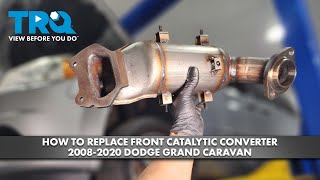
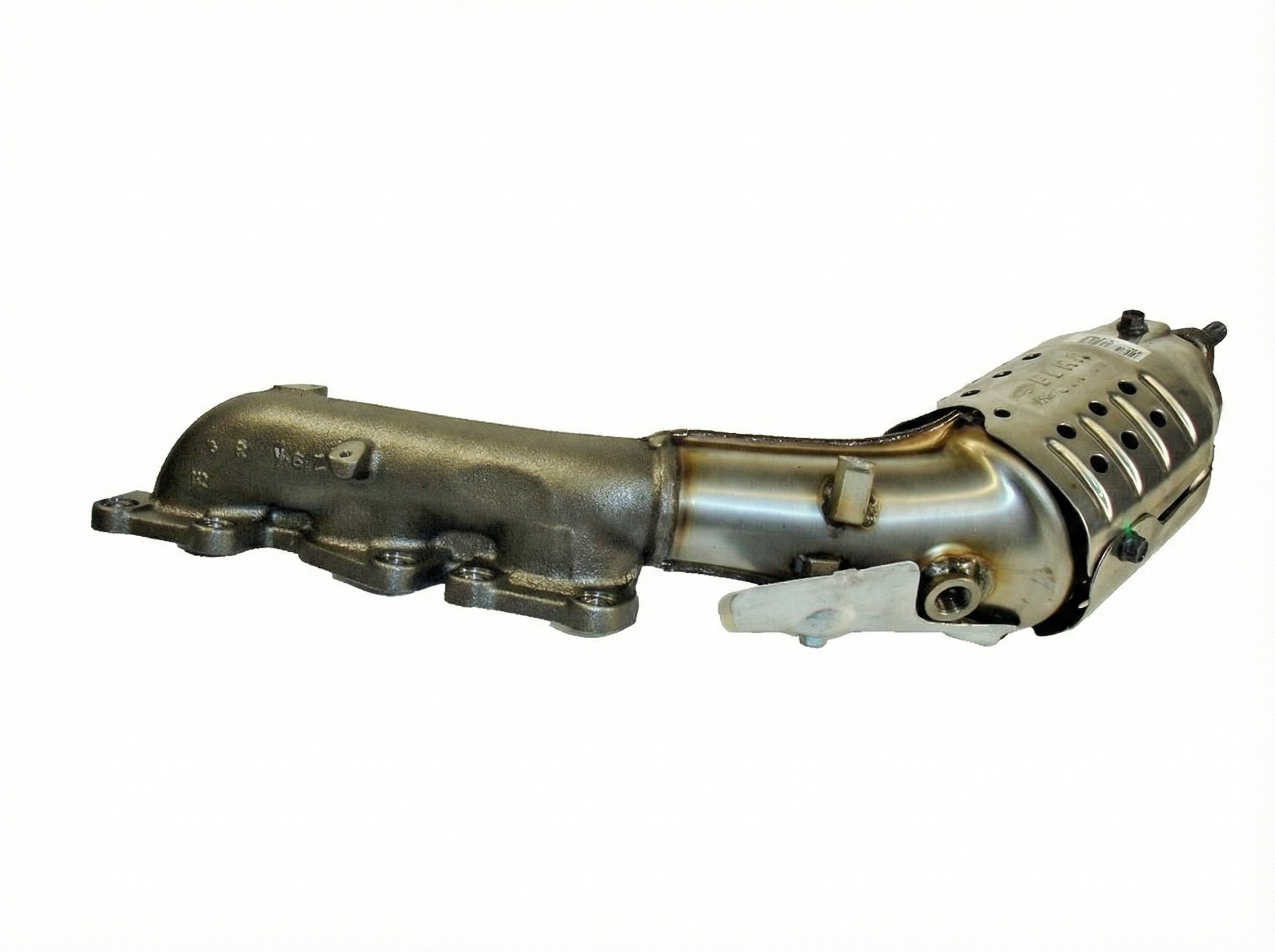
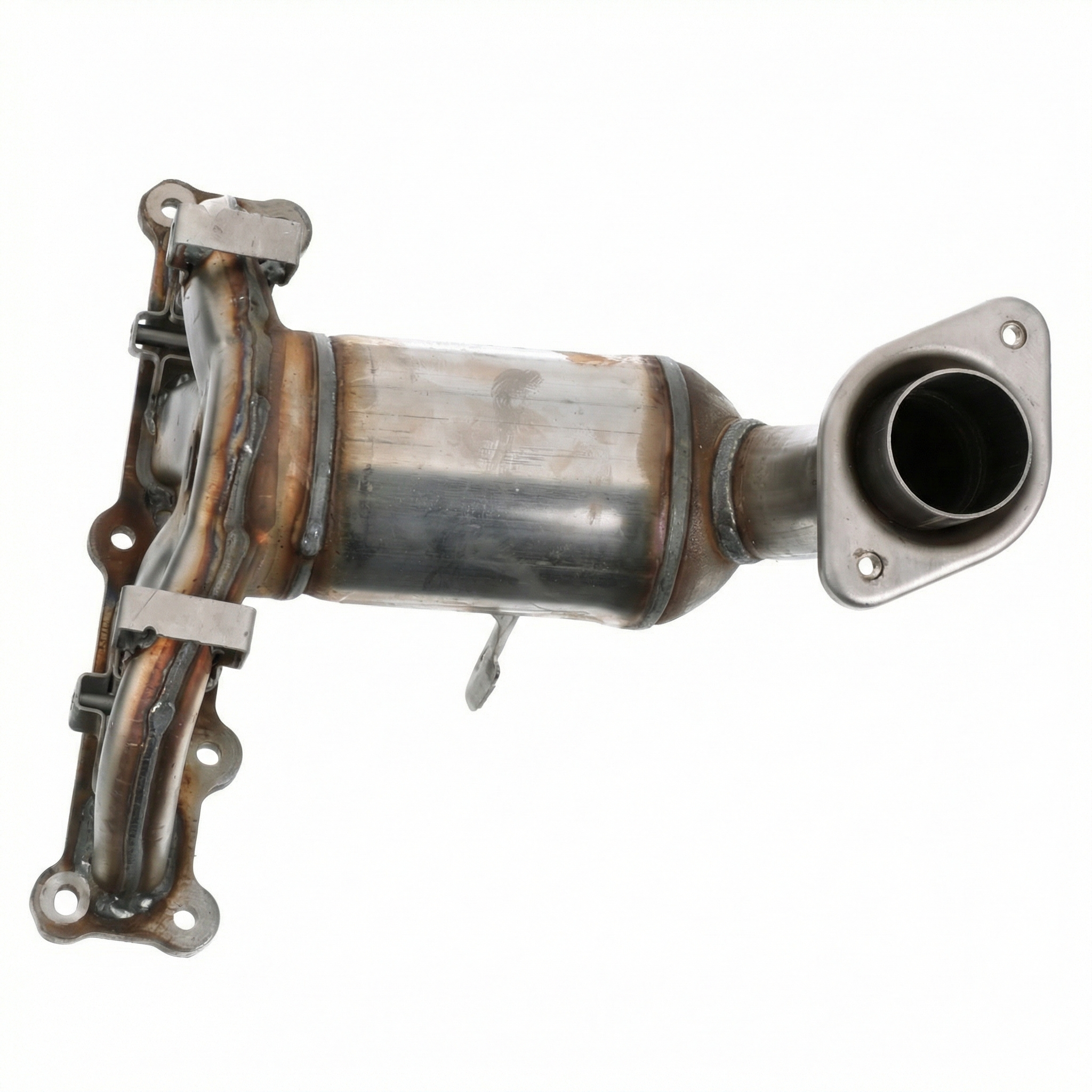
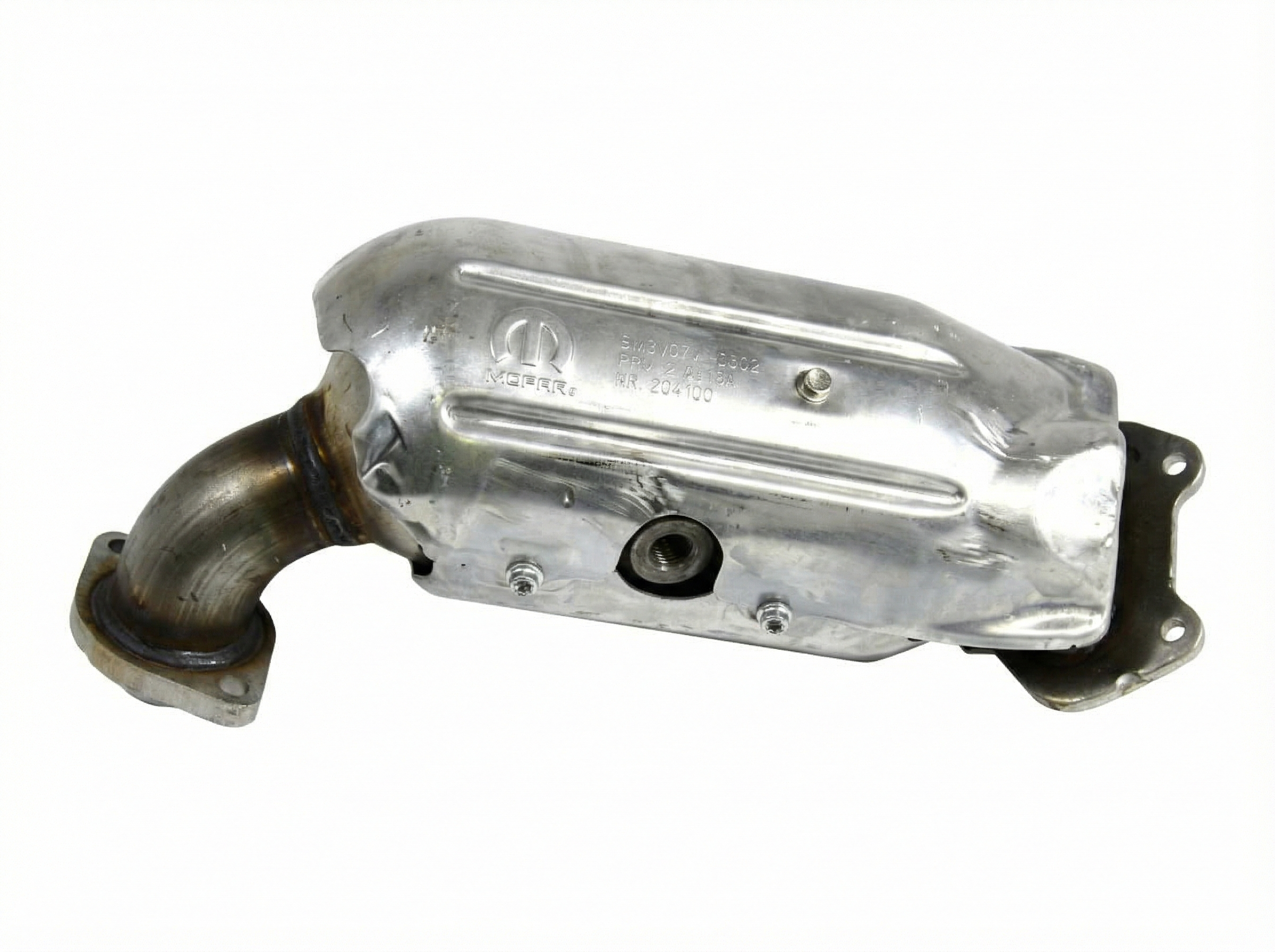
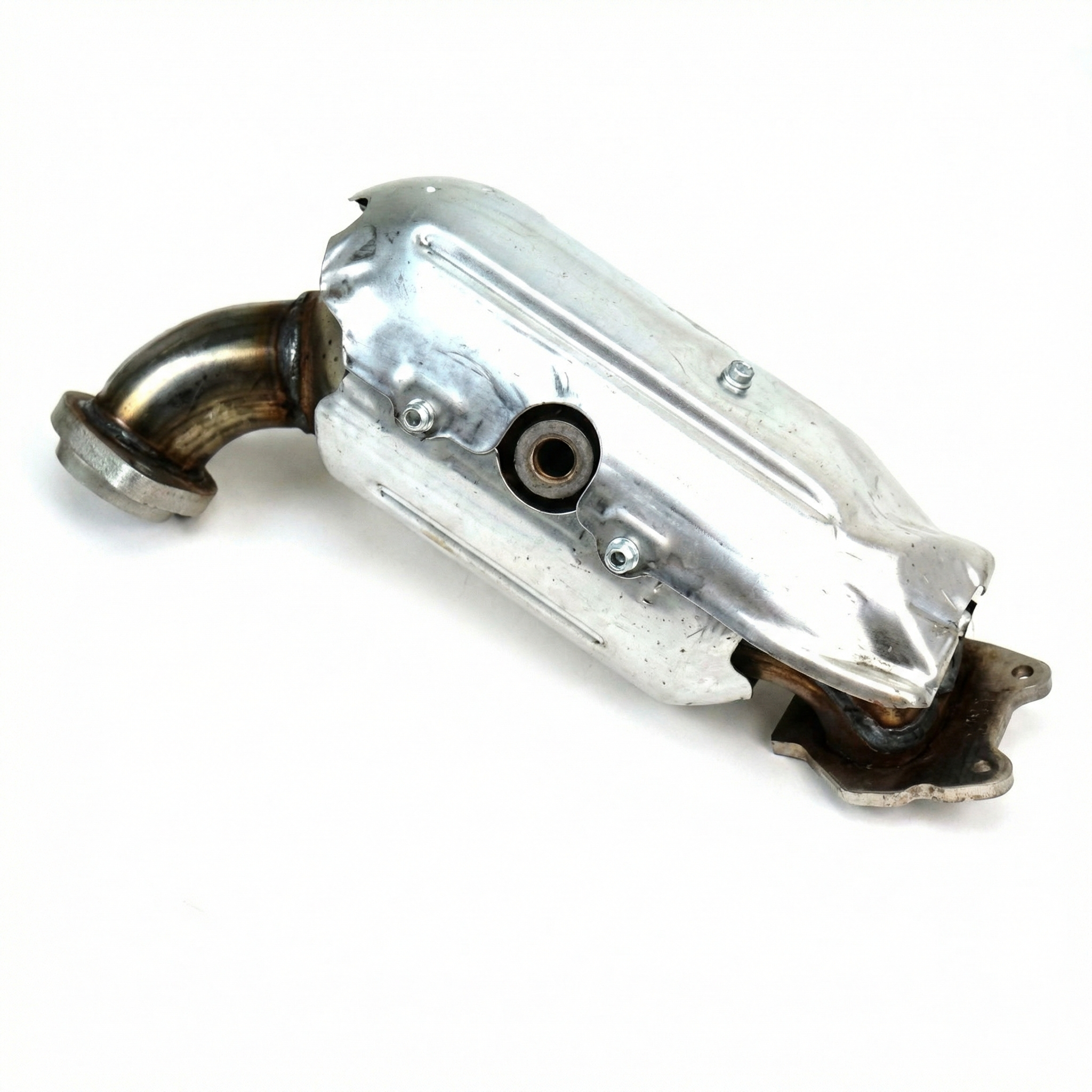
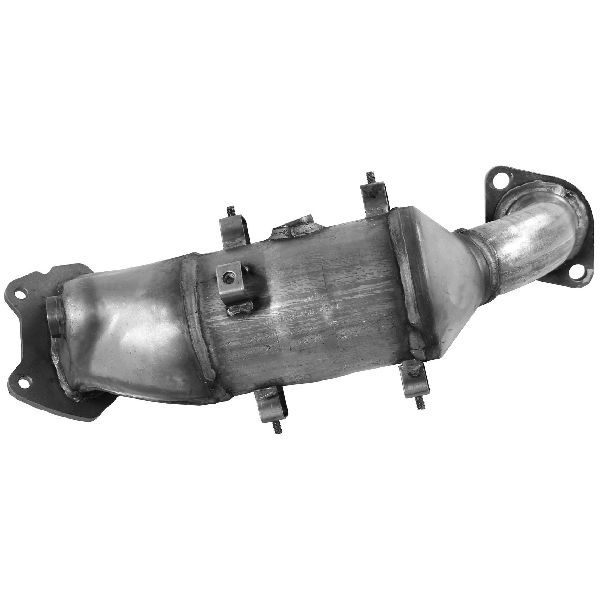
Typical fix: Replace the Bank 2 (firewall side) catalytic converter assembly. The Mopar OEM part number has had many revisions; a common one is 68036150AL. It is critical to use high-quality parts, as cheaper aftermarket units are known to fail quickly.
Est. part cost: $600-$1400 for OEM, $300-$800 for aftermarket. - Faulty Oxygen (O2) Sensor 🟡 Medium Probability → Shop Oxygen Sensor O2 sensors degrade over time and can send slow or inaccurate signals to the PCM, falsely triggering a catalyst code. Additionally, the common oil filter housing leak on the 3.6L can drip oil onto the exhaust and wiring, contaminating the sensors and causing them to fail.
How to confirm: Use a scan tool to graph the voltage of the Bank 2 downstream sensor (B2S2). It should show a relatively steady voltage (around 0.7V-0.8V) on a healthy, warm converter. If it's switching rapidly like the upstream sensor, the converter is likely bad. If the sensor is stuck high, low, or not responding, the sensor itself is likely faulty. Swapping the downstream sensors from Bank 1 and Bank 2 to see if the code changes to P0420 (Bank 1) is a valid diagnostic step.
Typical fix: Replace the Bank 2, Sensor 2 (downstream) oxygen sensor. The Mopar part number is 5149171AA, which has been superseded by 5149171AB.
Est. part cost: $40-$100 - Exhaust System Leak 🟡 Medium Probability Rust and vibration can cause leaks at manifold gaskets, flanges, or the flexible pipe section of the exhaust. This allows oxygen to enter the exhaust stream, which can fool the downstream O2 sensor into thinking the converter isn't working.
How to confirm: Perform a visual inspection for black soot trails or cracks, especially around the manifold bolts and flange gaskets. Listen for hissing or ticking sounds from the exhaust, especially when the engine is cold. A smoke machine test is the most effective way to pinpoint a small leak.
Typical fix: Replace the leaking gasket or damaged pipe section. A muffler shop can often weld a new flex pipe or repair a crack for a reasonable cost.
Est. part cost: $20-$200
Rare But Worth Checking
- PCM Software Update Needed: Chrysler TSB 18-102-16 was released for 2012-2014 models to reprogram the PCM for a variety of codes, including P0430. Always check with a dealer if your VIN has an available update before replacing parts, as a reflash can cost $100-$200, far less than a converter.
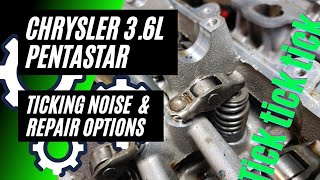
- Engine Misfire (Failing Rocker Arms): This is a critical, vehicle-specific cause. The 3.6L Pentastar is notorious for rocker arm bearing failure, which causes a 'Pentastar Tick' and leads to misfire codes (P0300, P0301-P0306). The unburnt fuel from the misfire will quickly destroy a catalytic converter. If you have a P0430 accompanied by a ticking noise or any P030x codes, the valvetrain issue MUST be repaired first. 🎬 Watch: Identifying and repairing the common Pentastar engine ticking noise.
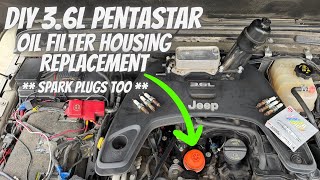
- Leaking Oil Filter Housing: Another extremely common Pentastar issue is a cracked plastic oil filter/cooler housing located in the 'V' of the engine. Leaking oil drips down the back of the engine and onto the transmission and exhaust components, where it can contaminate O2 sensor wiring and connectors, leading to false codes. If you see oil pooled in the engine valley or on top of the transmission bell housing, 🎬 See this walkthrough on replacing a leaking oil filter housing. this is a likely culprit that needs to be fixed.
Diagnosis Steps
- Check for Technical Service Bulletins (TSBs). Call a Chrysler dealer with your VIN to see if TSB 18-102-16 or any other PCM update applies to your vehicle.
- Scan for all other DTCs. If any codes for misfires (P030x), O2 sensors, or fuel trim are present, diagnose and repair them first. A P030x code on this engine strongly suggests a valvetrain problem that must be addressed.
- Inspect for Leaks. Visually inspect the engine valley and the top of the transmission for signs of an oil filter housing leak. Then, inspect the exhaust system for exhaust leaks (soot, hissing sounds). A smoke test is the most reliable method for finding exhaust leaks.
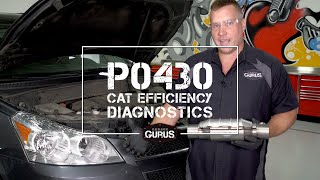
- Analyze O2 sensor data. Using a scan tool with live data graphing, 🎬 Watch: How to perform professional P0430 catalyst efficiency diagnostics. warm up the engine. At a steady 2500 RPM, observe the upstream (B2S1) and downstream (B2S2) oxygen sensors. The upstream sensor should switch rapidly between ~0.1V and ~0.9V. The downstream sensor should hold a steady, high voltage (~0.7V-0.8V). If the downstream sensor is mirroring the upstream sensor's activity, the converter is not working.
- Test the O2 sensors. If the data is inconclusive, consider swapping the Bank 1 and Bank 2 downstream sensors. If the code follows the sensor and becomes P0420, the sensor is bad.
- If all other possibilities are ruled out, especially underlying engine issues, the catalytic converter is faulty.
Parts You'll Likely Need
- Catalytic Converter (Bank 2)
(OEM #68036150AL)— This is the most common direct cause for a P0430 code after all other possibilities (software, sensors, leaks, and engine misfires) have been ruled out. Bank 2 is the firewall side converter. The OEM part number has been superseded many times.
Trusted brands: Mopar (OEM), Walker Exhaust, MagnaFlow, AP Exhaust
OEM price range: $1100-$1450
Aftermarket price range: $300-$800
Related Codes That Often Appear With This One
- P0420 — This is the equivalent code for Bank 1 (radiator side). Seeing both P0420 and P0430 could point to a systemic issue like a PCM software problem, bad fuel, or issues affecting both cylinder banks, like failing rocker arms on both sides.
- P0300-P0306 — These are cylinder misfire codes. A misfire dumps raw fuel into the exhaust, which will quickly destroy the catalytic converter. This is a red flag for the common Pentastar rocker arm failure. The root cause of the misfire must be fixed before replacing the converter.
- P0153 — This code means 'O2 Sensor Circuit Slow Response (Bank 2 Sensor 1)'. This is the upstream sensor for Bank 2. A slow upstream sensor can cause poor fuel control, which can damage the converter over time. This code is also listed in TSB 18-102-16.
Technical Service Bulletins (TSBs) & Recalls
- 18-102-16: For 2012-2014 models, this TSB involves reprogramming the PCM to address MIL illumination for multiple DTCs, including P0430, P0420, misfires, and slow O2 sensor response.
- TSB Bulletin #1810216: A manufacturer service bulletin notes that the PCM may set several codes simultaneously, including P0430, P0420, P0133 (O2 sensor slow response), and P0300 (multiple cylinder misfire), requiring a software update.
Mechanic-Grade Diagnostic Values
- Downstream O2 Sensor (B2S2) Voltage — expected: Relatively stable voltage between 0.65V and 0.8V at steady RPM on a warm engine.. Failure: Voltage rapidly fluctuates similar to the upstream sensor, or is stuck at a specific voltage (e.g., <0.2V or >0.9V).
- Catalytic Converter Temperature Differential — expected: Outlet temperature should be at least 100-150°F hotter than the inlet temperature after the engine is fully warmed up.. Failure: Inlet and outlet temperatures are nearly identical, indicating no chemical reaction is occurring.
- O2 Sensor Circuit Test (Disconnected) — expected: With the sensor connector disconnected, a scan tool should show approximately 5.0 Volts on the signal circuit.. Failure: Voltage is not present, indicating a wiring issue between the PCM and the connector.
- O2 Sensor Circuit Test (Jumpered) — expected: With a jumper wire between the signal and return circuits in the harness connector, scan tool voltage should drop to 2.5 Volts.. Failure: Voltage does not drop, indicating a problem in the signal or return circuit wiring.
Hidden / Shadow Codes Worth Checking
- Mode $06, TID $22, CID $02: This refers to the Catalyst Monitor test results for Bank 2. Before a P0430 code becomes active, the PCM runs this internal test. A failing value here can be an early warning of a marginal catalytic converter. (see via An advanced scan tool capable of displaying Mode $06 test data. The tool will show a test value and a maximum allowable limit. If the value exceeds the limit, the monitor has failed.)
Scan Tool Commands That Help
- wiTECH (Chrysler Dealer Tool) or equivalent: Catalyst Efficiency Test — This is a guided test within the dealer software that prompts the user to hold specific RPMs and loads while the PCM actively monitors sensor data to determine the health of the catalytic converter. It provides a more definitive pass/fail result than just observing live data.
- wiTECH or equivalent: View Misfire History — Before replacing a catalytic converter, it is critical to check for both current and historical misfire counts on all cylinders. Even if no P030x codes are active, a history of misfires on cylinders 2, 4, or 6 points to an underlying engine issue that has likely damaged the Bank 2 converter.
Wiring & Ground Locations
- Bank 2 O2 Sensor Connectors — Bank 2 is the firewall side. The upstream (B2S1) and downstream (B2S2) sensor connectors are located on the back of the engine, often tucked near the firewall and can be difficult to access from above or below.. These connectors are susceptible to contamination from the common 3.6L oil filter housing leak. Oil saturation can compromise the connection and cause incorrect sensor readings, leading to a false P0430 code.
- G105 (Engine Ground) — Typically located on the right side of the engine compartment.. A poor or corroded main engine ground can affect the reference voltage for multiple sensors, including the oxygen sensors. This can cause erratic readings and false codes. Verifying this ground is clean and tight is a crucial electrical diagnostic step.
- Chassis Ground — A primary chassis ground point is located on the left front frame rail, just inside the front bumper.. While less direct than the engine ground, a poor chassis ground can contribute to a host of difficult-to-diagnose electrical issues that could potentially impact PCM operation and sensor readings.
Real Owner Repair Stories
- Reddit user in r/MechanicAdvice (Chrysler 200, 104k miles) — P0420 & P0430 codes appearing intermittently.
❌ Tried (didn't work) Replacing all four oxygen sensors.
✅ What actually fixed it The user was advised by others that the issue was likely not the sensors, but a potential exhaust leak or another underlying issue, and that ruling those out first is more efficient than replacing sensors or converters. The final fix was not posted, but the failure of the O2 sensor replacement is a key diagnostic data point.
OEM Part Supersession History
5149171AA→5149171AB— Standard revision and update by the manufacturer for the downstream oxygen sensor.
Model Year Variations Within This Range
- 2011-2014 (JS Platform): These models used a 6-speed automatic transmission. TSB 18-102-16 specifically applies to 2012-2014 models for a PCM reflash to address P0430 sensitivity.
- 2015-2017 (UF Platform): These models introduced a significant redesign and a new 9-speed automatic transmission. While the 3.6L Pentastar engine is fundamentally the same, the 2015 model year, in particular, had a high number of general complaints regarding the powertrain and electrical systems. An updated version of the 3.6L Pentastar with features like a two-stage variable valve lift (VVL) and cooled EGR was introduced in 2016, which improved efficiency but changed some components like injectors and coils.
Diagnostic Flowchart
Other Known Issues on This Vehicle
Issues unrelated to this code that are worth knowing about as an owner of this generation:
- Cracked Oil Filter Housing / Cooler Assembly 🔴 High — Extremely common, often occurs after 80,000-100,000 miles. The plastic housing becomes brittle and cracks, leaking oil and/or coolant into the engine valley.
- Rocker Arm / Cam Follower Failure ('Pentastar Tick') 🔴 High — Common, particularly on 2011-2014 models but can occur on later years. Needle bearings in the rocker arms fail, causing a ticking noise, misfires (P030x), and eventual camshaft damage. (Ref: Chrysler issued warranty extensions and internal service bulletins (e.g., STAR Case S1309000016) for this issue.)
- Left Cylinder Head Failure (Early Models) 🔴 High — Most prevalent on 2011-2013 models. Excessive wear on valve guides and seats on the left cylinder head (Bank 2) leads to loss of compression and misfires. (Ref: Prompted warranty extension X56 from Chrysler.)
- Transmission Failure / Erratic Shifting (2015-2017 models) 🔴 High — Very common on the second-generation (UF) models equipped with the 9-speed ZF automatic transmission. Complaints include sudden shifts to neutral, jerking, and complete failure. (Ref: Multiple recalls and software updates were issued, but problems persist for many owners.)
- Cooling System Problems 🟠 Medium — Owners report issues with water pumps, thermostats, and clogged radiators over the life of the vehicle.
- Random Deployment of Active Head Restraints 🟠 Medium — Reported across 2011-2017 models. The plastic used in the restraint mechanism can become brittle and break, causing the head restraint to deploy without a collision. (Ref: NHTSA has investigated this issue due to numerous complaints.)
Used vs. New Parts: Buying Guide for This Vehicle
When a used part is the smart pick: For this repair, buying a used part is generally not recommended, especially for the catalytic converter. It is often illegal for salvage yards to sell used converters, and their remaining lifespan is unknown. A used oxygen sensor is also a poor choice as it is a wear item with a finite life.
Donor-vehicle mileage cap: roughly under 50000 miles for the part to have meaningful remaining life.
What to inspect on the donor part:
- If considering a used converter (where legal), it should come from a low-mileage vehicle that was clearly wrecked due to collision, not scrapped for engine failure.
- Inspect the honeycomb structure from both ends; it should be intact, with no signs of melting, clogging, or rattling loose pieces.
- Avoid parts with heavy external rust or corrosion, especially around the welds and flanges.
OEM-only on this vehicle (don't cheap out):
- Catalytic Converter: While expensive, the OEM Mopar converter is the most reliable option. Mechanics and owners widely report that cheap, universal, and even some direct-fit aftermarket converters fail to keep the P0430 code away for long on modern, sensitive vehicles like the Chrysler 200.
Aftermarket brands forum-validated for this vehicle:
- Catalytic Converters: If OEM is not an option, high-quality, EPA-compliant direct-fit converters from brands like MagnaFlow or Walker are the next best choice. Ensure it is not a 'universal' fit, which requires cutting and welding.
- Oxygen Sensors: NTK (a brand of NGK) and Denso are often the original equipment manufacturers for Chrysler and are considered top-tier replacements. Bosch is also a reputable option.
Brands owners have reported issues with on this vehicle:
- Unbranded, low-cost catalytic converters sold on platforms like eBay or Amazon. These often have insufficient precious metal loading and will fail the PCM's efficiency test within a few weeks or months, causing the code to return.
Real Owner Stories
Aggregated from forums and TSBs cited above. Mileages and costs reflect what owners reported in those sources.
2012-2018 Jeep Wrangler (JK) 3.6L V6 — 196000 miles
Symptoms: Owner faced a P0430 code and was looking for ways to avoid a $1,000 converter replacement to pass an emissions test.
What fixed it: The owner attempted electronic tricks which failed, and eventually used a non-recommended workaround of splicing the bad sensor's input from a good sensor's signal.
Cost: $1,000-$1,000
Source hint: JK-Forum.com: P0420 / P0430 code - O2 sensor trick?
2011 Chrysler 200 3.6L V6
Symptoms: Repeatedly leaking oil filter housing with the leak returning only a week after replacement; oil drips down from the engine valley.
What fixed it: Replacing the notorious plastic oil filter housing with an upgraded all-aluminum part to permanently stop the leak that contaminates exhaust components.
Source hint: Reddit r/AskMechanics: 2011 Chrysler 200 oil filter housing leak.
2012-2018 Jeep Wrangler (JK) 3.6L V6 — ~620 miles
Symptoms: Check engine light on for P0430.
What fixed it: Attempted a temporary fix using Cataclean (fuel system additive) and an oil change; the light stayed off for 620 miles but did not resolve the mechanical failure.
Source hint: YouTube: Fixing P0430 On Jeep Wrangler JK (Cataclean + Oil Change)
Related OBD-II Codes
Frequently Asked Questions
Is there a TSB for the P0430 code on my 2012-2014 Chrysler 200?
Which side of the engine is Bank 2 on the Chrysler 200 3.6L?
Can an oil leak cause a P0430 code on my Chrysler 200?
What is the recommended replacement part for the Bank 2 catalytic converter?
What is the specific O2 sensor part number for the Bank 2 downstream sensor?
I hear a ticking noise from my 3.6L engine along with the P0430 code; are they related?
Helpful Videos
Used OEM Parts in Stock
New Aftermarket Parts Available

The information in this article is provided for general reference and educational purposes only. Vehicle specifications, procedures, and part compatibility can vary by production date, trim level, and region. Always consult your vehicle's factory service manual and verify part numbers before purchasing or performing repairs. Safety-critical components such as airbags, seat belts, and braking systems should be installed by a qualified professional.
- Chrysler 200:
- 🧭 Diagnostic Flowchart
- 🎬 Helpful Videos
- 🛍️ Shop This Part
- What's Unique About the 2011-2017 Chrysler 200
- Symptoms You May Notice
- Most Likely Causes
- Rare But Worth Checking
- Diagnosis Steps
- Parts You'll Likely Need
- Related Codes That Often Appear With This One
- Technical Service Bulletins (TSBs) & Recalls
- Mechanic-Grade Diagnostic Values
- Hidden / Shadow Codes Worth Checking
- Scan Tool Commands That Help
- Wiring & Ground Locations
- Real Owner Repair Stories
- OEM Part Supersession History
- Model Year Variations Within This Range
- Other Known Issues on This Vehicle
- Used vs. New Parts: Buying Guide for This Vehicle
- Real Owner Stories
- 2012-2018 Jeep Wrangler (JK) 3.6L V6 — 196000 miles
- 2011 Chrysler 200 3.6L V6
- 2012-2018 Jeep Wrangler (JK) 3.6L V6 — ~620 miles
- Related OBD-II Codes
- Frequently Asked Questions
- 🎟️ Get 5% Off