

P0430 on 2018-2021 Ford Expedition 3.5L: Recall, TSBs, and Fixes for Catalyst Efficiency Bank 2
The P0430 code on a 2018-2021 Expedition means the driver's side catalytic converter is reporting inefficiency. Before any repairs, check if your vehicle is covered by Emission Recall 24E13 for a free software update. Next, consider Ford's TSB 22-2260, which suggests high-sulfur fuel could be the cause, requiring a special driving procedure. Only after ruling out these common, low-cost issues should you investigate faulty oxygen sensors or the expensive catalytic converter itself.
- P0430 on a 2018-2021 Expedition points to an inefficient catalytic converter on the driver's side.
- A Ford Technical Service Bulletin (TSB 21-2381) exists for this exact problem, making a faulty converter the most likely cause.
- Before spending over $1,000 on a new converter, you must rule out cheaper possibilities like a bad O2 sensor or an exhaust leak.
- Always check for and resolve any engine misfire or fuel system codes before replacing the catalytic converter to prevent repeat failure.
- The federal emissions warranty covers catalytic converters for 8 years or 80,000 miles; check if your vehicle is still covered before paying for repairs.
What's Unique About the 2018-2021 Ford Expedition
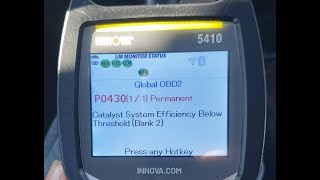
For the 2018-2021 Expedition with the 3.5L EcoBoost, the P0430 code 🎬 Watch: A breakdown of P0420 and P0430 on the EcoBoost engine. is frequently triggered by issues other than a failed converter. Ford issued Emission Recall 24E13 because the factory PCM software can be overly sensitive and falsely report a problem. Additionally, TSB 22-2260 addresses that high-sulfur fuel can temporarily contaminate the catalyst, triggering P0420 or P0430, with the fix being a specific 'de-sulfation' drive cycle, not replacement. These two issues are so common that they should be the first things investigated before any parts are replaced.
Symptoms You May Notice
- Check Engine Light is on
- Vehicle fails emissions testing
- Reduced engine performance or sluggish acceleration (if the converter is clogged)
- A sulfur or 'rotten egg' smell from the exhaust
- Immediately replacing the catalytic converter without first checking for the 24E13 software recall, performing the TSB 22-2260 de-sulfation procedure, or testing the oxygen sensors. This can be a very expensive mistake.
- Replacing an oxygen sensor when the catalytic converter is truly the part that has failed. The O2 sensor is often correctly reporting the failure, not failing itself.
Most Likely Causes
- PCM Software Issue / Fuel Sulfur Contamination Very high Probability This is the most likely and cheapest-to-fix cause. Ford issued Emission Recall 24E13 for the PCM being too sensitive. Ford also released TSB 22-2260 stating P0430 can be caused by high-sulfur fuel, requiring a cleaning procedure instead of replacement.
How to confirm: Check for open recalls on your vehicle using your VIN on the NHTSA or Ford owner website. Contact a Ford dealer to see if the 24E13 recall applies and has been performed. For the fuel issue, a dealer can perform the de-sulfation procedure outlined in TSB 22-2260. 🎬 See how Ford technicians address P0430 codes using TSB procedures.
Typical fix: Have a Ford dealer perform the free software update under recall 24E13. If the code persists, perform the de-sulfation drive cycle as per TSB 22-2260.
Est. part cost: $0 - Failing Catalytic Converter (Bank 2) 🔴 High Probability → Shop Catalytic Converter While software and fuel are common triggers, premature failure of the converter itself is also a known issue, sometimes at relatively low mileage. One owner on the Ford Expedition Forum noted an aftermarket converter failed to resolve the code, while a Ford OEM part worked, suggesting potential fitment or efficiency issues with non-OEM parts.
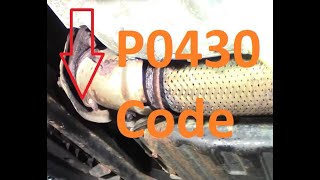
How to confirm: After ruling out software, fuel issues, O2 sensors, and exhaust leaks, use a scan tool to watch O2 sensor graphs. If the downstream sensor (B2S2) voltage mimics the rapid switching of the upstream sensor (B2S1), the converter is not working. Alternatively, use an infrared thermometer to compare the inlet and outlet pipe temperatures of the converter; the outlet should be significantly hotter. 🎬 Watch: A helpful guide on diagnosing catalyst efficiency and common fixes.
Typical fix: Replace the Bank 2 (driver's side) catalytic converter assembly. Using an OEM Motorcraft part is highly recommended.
Est. part cost: $800-$1500 - Faulty Oxygen (O2) Sensor 🟡 Medium Probability → Shop Oxygen Sensor
How to confirm: The easiest way is to swap the downstream (post-cat) O2 sensors between Bank 1 (passenger side) and Bank 2 (driver side). Clear the codes and drive. If the trouble code changes to P0420 (Bank 1), the O2 sensor is faulty. If P0430 returns, the sensor is likely good and the issue lies elsewhere.
Typical fix: Replace the faulty oxygen sensor. The downstream sensor is Bank 2, Sensor 2 (B2S2).
Est. part cost: $50-$120 - Exhaust System Leak ⚪ Low Probability
How to confirm: Visually inspect the exhaust system from the engine to the downstream O2 sensor on the driver's side. Look for cracks in the manifold, broken flange bolts, or failed gaskets. A shop can perform a smoke test to find small leaks.
Typical fix: Repair the leak by replacing the gasket or welding the cracked component.
Est. part cost: $20-$200 - Underlying Engine Issue ⚪ Low Probability Issues like leaking fuel injectors, cylinder misfires, or a damaged turbocharger can destroy a new catalytic converter quickly by sending unburnt fuel or oil into the exhaust.
How to confirm: Scan for other trouble codes. Misfire codes (P0300, P0302, P0304, P0306 for Bank 2) or fuel trim codes (P0172, P0175) must be diagnosed and fixed before replacing the converter. A user on the expeditionforum reported a P0316 (misfire on startup) code was present along with their P0430.
Typical fix: Address the root cause, which could be replacing spark plugs, ignition coils, or fuel injectors.
Est. part cost: $50-$500+
Rare But Worth Checking
- PCM Software Issue: In some cases, the PCM's parameters for monitoring catalyst efficiency can be too sensitive. A dealer can check if a software update is available. NOTE: This has been elevated to a 'very high' probability cause for this vehicle due to Ford Emission Recall 24E13.
Diagnosis Steps
- Check for Recalls: Using your VIN, check the NHTSA or Ford owner's website for open recalls. Specifically, check for Emission Recall 24E13. If it is open, have a Ford dealer perform the free PCM update. This is the most important first step.
- Scan for All Codes: Connect an OBD-II scanner and confirm P0430 is present. Check for any other codes related to misfires, fuel trim, or oxygen sensors. Address these codes FIRST.
- Consider TSB 22-2260: If the vehicle is a 2020-2021 model, be aware that high-sulfur fuel could be the cause. The TSB outlines a specific drive cycle ('de-sulfation') to clean the catalyst. This should be considered before replacing parts.
- Inspect for Exhaust Leaks: Perform a thorough visual inspection of the Bank 2 (driver's side) exhaust system. Look for any signs of cracks, rust, or black soot indicating a leak, especially around the exhaust manifold and converter flanges.
- Analyze Live O2 Sensor Data: Use a scan tool with live data capability. Graph the voltage of the Bank 2 oxygen sensors (B2S1 and B2S2). At operating temperature, B2S1 should fluctuate rapidly between ~0.1V and ~0.9V. A healthy B2S2 should show a much more stable, steady voltage.
- Interpret Sensor Data: If the B2S2 voltage is mirroring the B2S1 voltage, the converter has likely failed. If the B2S2 voltage is stuck high or low and not responding, the sensor itself is the primary suspect.
- Swap O2 Sensors to Confirm: To definitively confirm a bad sensor, swap the downstream sensors from Bank 1 and Bank 2. Clear codes and drive. If the code changes to P0420, you need a new B2S2 sensor. If P0430 returns, the converter is the culprit.
- Check Converter Temperatures: If diagnostic tools are limited, use an infrared temperature gun to measure the pipe temperature immediately before and after the catalytic converter. A working converter should be at least 100°F hotter at the outlet than the inlet.
Parts You'll Likely Need
- Catalytic Converter (Bank 2, Driver Side)
(OEM #JL7Z-5E212-R)— This is the most common hardware failure for a persistent P0430 code after software/fuel issues are ruled out. TSB 22-2260 lists this part number. Forum members strongly recommend using the OEM part for best results.
Trusted brands: Motorcraft (OEM), Walker, MagnaFlow, AP Exhaust
OEM price range: $1000-$1500
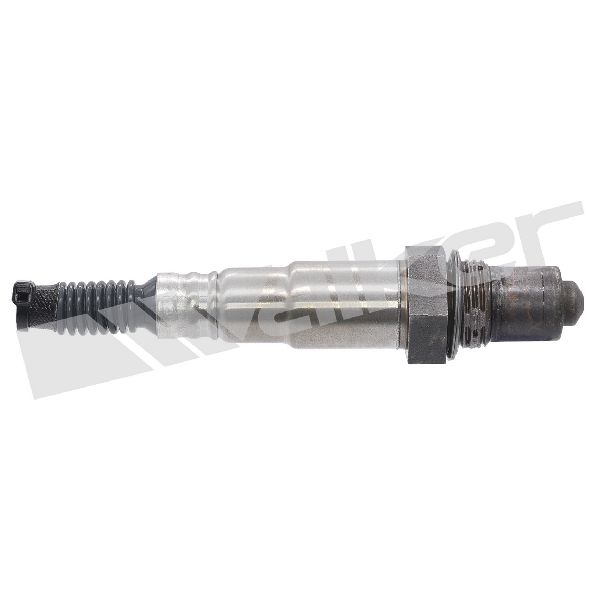
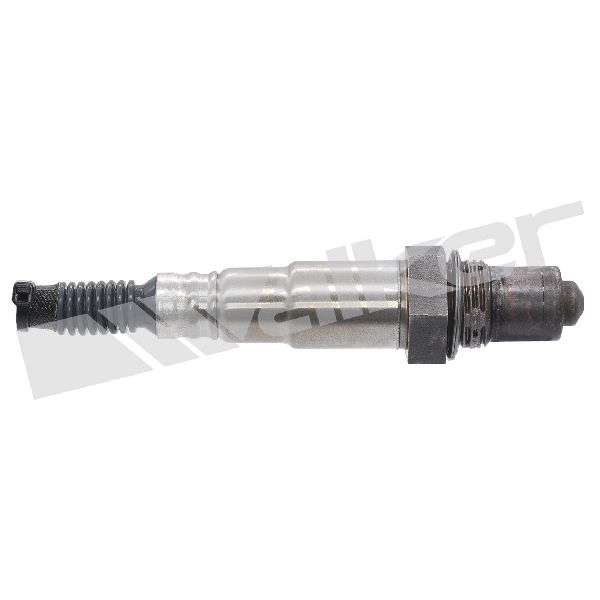
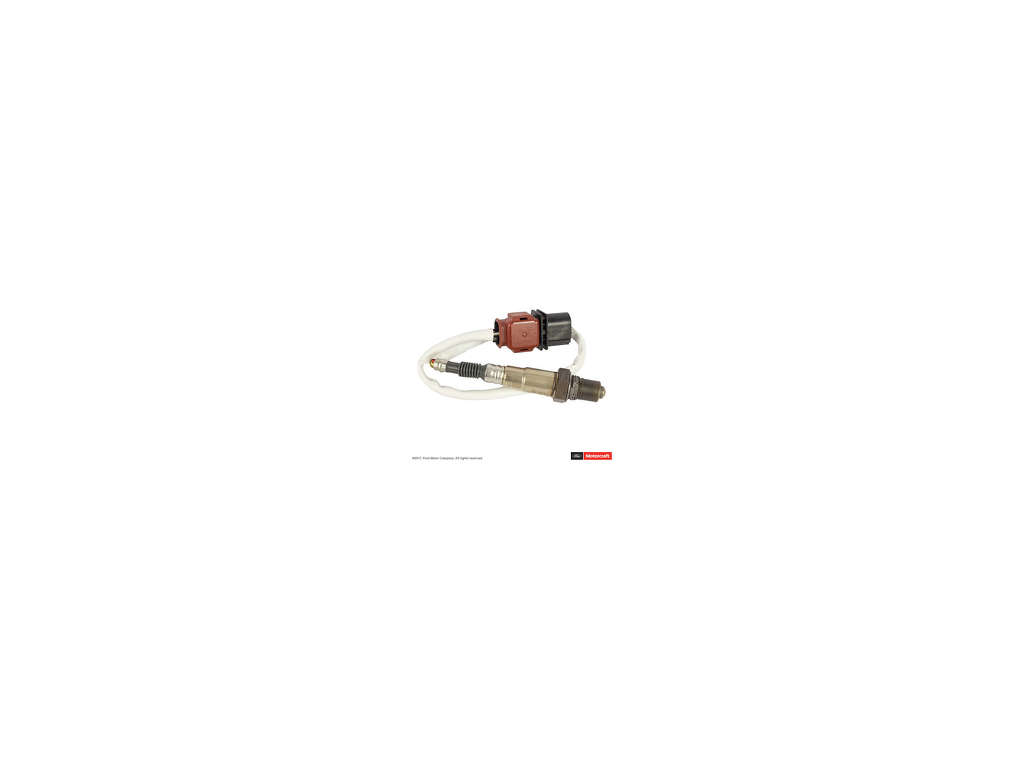
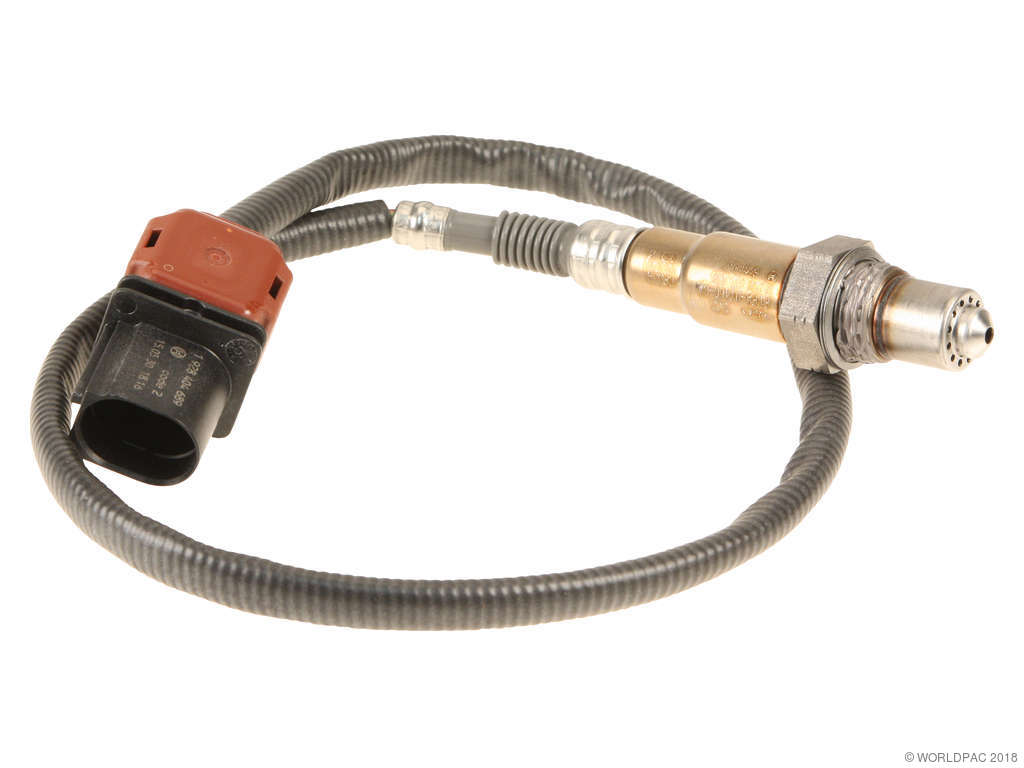
Aftermarket price range: $600-$900 - Downstream Oxygen Sensor (Bank 2, Sensor 2)
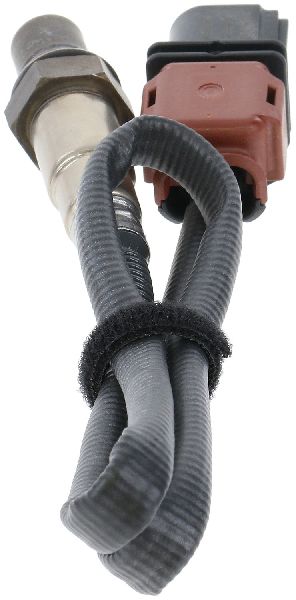
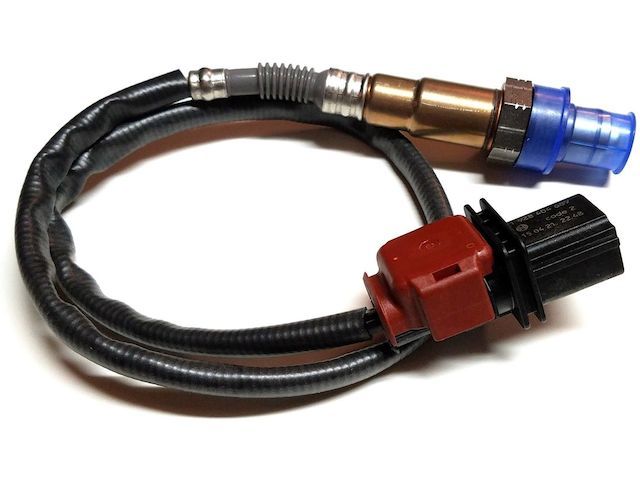
(OEM #DY1289 (Motorcraft) or GK4Z-9G444-H (Ford))— This sensor is responsible for reporting the converter's efficiency. It can fail and provide false readings, triggering the P0430 code.
Trusted brands: Motorcraft, Bosch, Denso, NTK
OEM price range: $80-$120
Aftermarket price range: $50-$90 - Exhaust Manifold to Converter Gasket — This gasket should always be replaced when the catalytic converter is removed to prevent future exhaust leaks.
Trusted brands: Motorcraft, Fel-Pro, Mahle
OEM price range: $20-$40
Aftermarket price range: $15-$30
Related Codes That Often Appear With This One
- P0420 — This is the equivalent code for Bank 1 (passenger side). Seeing both codes at once strongly suggests a systemic issue like contaminated fuel (as described in TSB 22-2260) or a common engine problem affecting both banks.
- P0300, P0302, P0304, P0306 — These are misfire codes for Bank 2 cylinders. An engine misfire allows unburnt fuel to enter the exhaust, which can quickly overheat and destroy the catalytic converter.
Technical Service Bulletins (TSBs) & Recalls
- Emission Recall 24E13: Some 2018-2021 Expedition/Navigator vehicles have an OBD system that may falsely set DTC P0430. The fix is a dealer-installed PCM software update.
- TSB 22-2260: Supersedes 21-2381. States that some 2020-2021 Expedition/Navigator vehicles may exhibit DTCs P0420 and/or P0430 due to high sulfur content in fuel. The service procedure involves a catalyst de-sulfation drive cycle before considering converter replacement.
- TSB 22-2137: Notes that 2020-2021 Expedition/Navigator vehicles may exhibit an illuminated MIL with DTCs P0420 and/or P0430 stored in the PCM, which may be due to high sulfur content in the fuel.
- TSB 21-2381: Some 2020 Expedition vehicles with the 3.5L engine may exhibit an illuminated check engine light with DTC P0430. This TSB is now superseded by TSB 22-2260.
Platform-Specific Known Issues
- A known issue with catalytic converter failure is documented in Ford TSB 22-2260 (superseding 21-2381) for the 2020-2021 model years, which points to high-sulfur fuel as a cause for catalyst efficiency codes.
Mechanic-Grade Diagnostic Values
- Downstream O2 Sensor (B2S2) Voltage — expected: Relatively steady voltage between 0.6V and 0.8V at idle on a fully warmed engine in closed loop.. Failure: If the voltage rapidly fluctuates between 0.2V and 0.8V, mimicking the upstream sensor, the catalytic converter is defective. If stuck low (e.g., below 0.2V), the sensor or its wiring may be faulty.
- Upstream O2 Sensor (B2S1) Voltage — expected: Should cycle continuously and rapidly between approximately 0.2V and 0.8V about once per second on a warm engine.. Failure: A slow or non-responsive sensor, or one with voltage stuck high or low, indicates a faulty sensor.
- Long-Term Fuel Trim (LTFT) — expected: Should be within +/- 10% at idle and various RPMs (1500, 2500).. Failure: Values exceeding +/- 10% indicate an underlying issue (like a vacuum leak or fuel delivery problem) that must be addressed before condemning the catalytic converter.
- O2 Sensor Heater Circuit Resistance — expected: Between 3 and 30 Ohms when measured across the two heater pins on the sensor's connector.. Failure: A reading outside this range indicates a failed heater circuit within the sensor, which would typically set a different code (like P0036) but can affect sensor performance.
Hidden / Shadow Codes Worth Checking
- Mode $06 Data (e.g., TID $81, CID $02): Mode $06 provides raw test results from the PCM's onboard diagnostic monitors before a DTC is set. For P0430, a technician would look at the Catalyst Efficiency Monitor results for Bank 2. It shows the measured switching ratio of the downstream O2 sensor compared to the upstream sensor, along with the PCM's pass/fail threshold. (see via A professional scan tool like Ford's IDS or a high-end consumer scanner with Mode $06 capability is required. The raw data needs to be decoded against manufacturer tables to be understood.)
Scan Tool Commands That Help
- Ford IDS (Integrated Diagnostic Software): Catalyst Monitor Drive Cycle / On-Board Diagnostics (OBD) Drive Cycle — After a repair (like replacing a converter or O2 sensor) or clearing codes, this guided procedure helps the technician perform the specific driving actions required to make the PCM run its internal catalyst efficiency test and confirm the fix.
- Ford IDS (Integrated Diagnostic Software): Retrieve Onboard Diagnostics (OBD) Mode 6 Data — This is used during diagnosis as outlined in TSB 22-2260. Before performing the de-sulfation procedure, the technician records the oxygen storage values from both banks to have a baseline. After the procedure, they check it again to see if the values have improved, indicating the procedure was successful.
- Ford IDS (or equivalent professional scanner): Power Balance Test — If a misfire is suspected as the root cause of catalyst failure, this test can identify which specific cylinder is not contributing power, helping to pinpoint a bad coil, plug, or injector without waiting for a misfire code to set.
Wiring & Ground Locations
- Engine Block to Firewall Ground Strap — Typically located on the driver's side, connecting the engine block or cylinder head to the vehicle's firewall.. A corroded or loose main engine ground can cause erratic sensor readings and phantom electrical issues. The PCM and its sensors rely on a stable ground reference; a poor ground can affect O2 sensor voltage readings, potentially leading to a false P0430 code.
- Frame/Body Ground Strap — There is a key body-to-frame ground strap located under the vehicle near the passenger door post area.. Corrosion at this point is common and can cause a wide range of electrical problems. While not directly in the O2 sensor circuit, poor body grounds can create electrical noise that interferes with sensitive sensor signals returning to the PCM.
- Bank 2 O2 Sensor Harness Connectors — The upstream B2S1 connector is located near the top of the engine, behind the EcoBoost engine cover. The downstream B2S2 connector is located underneath the vehicle on the driver's side, on the transmission crossmember or nearby frame rail.. These connectors are the primary points for testing voltage, resistance, and continuity of the O2 sensor circuits. Damage or corrosion here is a common point of failure.
Real Owner Repair Stories
- Ford Expedition Forum user (2019 Ford Expedition) — Recurring P0430 code after clearing.
❌ Tried (didn't work) Clearing the code multiple times.
✅ What actually fixed it The owner used a bottle of Liqui Moly Catalytic System Cleaner, followed the directions, cleared the code, and the error did not return. This suggests the issue may have been minor contamination on the O2 sensor or catalyst face, rather than a hard failure. - NHTSA ODI #11689464 — An owner reported that their vehicle experienced serious transmission and powertrain problems. Diagnostic testing identified catalyst efficiency codes (P0430), and they were given a repair estimate that included catalytic converter replacement.
- Ford Expedition Forum user 'expeditionmike361' (2018 Ford Expedition MAX with ~90,000 miles) — P0430 code appeared.
❌ Tried (didn't work) Replaced the downstream (B2S2) oxygen sensor and cleared the code, but it returned within a day.
✅ What actually fixed it The thread concluded that the catalytic converter itself was the likely failure, as is common when a new O2 sensor does not fix the issue. Another user in the same thread confirmed their P0430 at 30,000 miles required a converter replacement. - YouTube video by 'DoubleJ Repairs' (2018 Ford Expedition Max Limited 3.5L EcoBoost) — P0420 and P0430 codes appeared after a separate fuel pump repair. Also had a shutter at idle.
❌ Tried (didn't work) Initially suspected the catalytic converters, but an infrared temperature test showed they were working (outlet was hotter than inlet).
✅ What actually fixed it The upstream O2 sensors (Bank 1 and Bank 2, Sensor 1) were not responding correctly on the scan tool graph. Replacing both upstream O2 sensors resolved the codes and the idle shutter. The mechanic theorized the previous lean condition from the failing fuel pump may have damaged the sensors.
OEM Part Supersession History
JL7Z-5E212-A, JL7Z-5E212-K→JL7Z-5E212-R— Standard part revision and update by the manufacturer. Reasons can include improvements in materials, manufacturing process, or minor design tweaks.
Model Year Variations Within This Range
- 2020-2021: These model years are specifically called out in TSB 22-2260 regarding catalyst inefficiency (P0420/P0430) due to high-sulfur fuel. While it can affect other years, the TSB is targeted at this range.
- Late 2020-2021: Some late-production 2020 and 2021 models received the updated 3rd generation EcoBoost cam phasers, crankshaft, and valvetrain components (rockers/lifters from the 'Coyote' V8). While not directly related to the catalyst, these internal changes can affect overall engine operation and should be noted for diagnostics.
Diagnostic Flowchart
Other Known Issues on This Vehicle
Issues unrelated to this code that are worth knowing about as an owner of this generation:
- 3.5L EcoBoost Cam Phaser Rattle on Cold Start 🔴 High — Very common, especially on 2018-2020 models. Typically manifests as a loud 2-5 second rattle/clatter from the engine front upon starting after the vehicle has sat for several hours. Can occur at various mileages, some as low as 30,000 miles. (Ref: TSB 22-2200, TSB 23-2143)
- 10R80 10-Speed Transmission Harsh Shifting & Failures 🔴 High — Widespread complaints of erratic/harsh shifting, shuddering, delayed engagement, and sometimes catastrophic failure. A common internal failure point is the CDF clutch drum bushing. Problems can appear at any mileage and have led to class-action lawsuits. (Ref: TSB 24-2254 (supersedes multiple previous TSBs))
- Turbocharger Coolant Line Fitting Leaks 🟠 Medium — A notable number of owners report slow coolant leaks from the quick-connect fittings on the turbocharger coolant lines. The leak is often difficult to access, with many shops recommending lifting the cab for the repair, making it labor-intensive.
Used vs. New Parts: Buying Guide for This Vehicle
When a used part is the smart pick: For this specific repair, using used parts is generally not recommended. A used catalytic converter from a junkyard has an unknown history and may be near the end of its life, causing the P0430 code to return shortly after installation. Used O2 sensors are also a gamble with a high failure rate.
Donor-vehicle mileage cap: roughly under 40000 miles for the part to have meaningful remaining life.
What to inspect on the donor part:
- For a catalytic converter, inspect for any signs of physical damage, rattling (indicating a broken internal substrate), or heavy rust.
- Verify the donor vehicle did not have a P0420/P0430 code or known engine issues like high oil consumption or misfires.
- Ask for the VIN of the donor vehicle to check for compatibility and any open recalls.
OEM-only on this vehicle (don't cheap out):
- Catalytic Converter: Aftermarket converters for modern, complex engines like the 3.5L EcoBoost often lack the precise amount of precious metals needed to meet the PCM's strict efficiency monitoring, leading to a quick return of the P0430 code even if the part is new. Sticking with the Ford/Motorcraft OEM part (JL7Z-5E212-R) is strongly advised.
Aftermarket brands forum-validated for this vehicle:
- For Oxygen Sensors, NTK and Denso are often the original equipment manufacturers for Ford and are considered reliable alternatives to the Motorcraft-branded part. Some owners have had success with Bosch sensors, but others report issues, making them a less certain choice.
Brands owners have reported issues with on this vehicle:
- Unbranded or generic 'budget' oxygen sensors and catalytic converters found on sites like Amazon or eBay are frequently cited in forums as failing quickly or not working correctly out of the box on this platform.
Real Owner Stories
Aggregated from forums and TSBs cited above. Mileages and costs reflect what owners reported in those sources.
2018 Ford Expedition 3.5L EcoBoost — 30000 miles
Symptoms: P0430 code appearing at relatively low mileage.
What fixed it: Multiple owners discussed the issue, with some experiencing it as early as 30k miles and others up to 90k miles.
Source hint: https://www.expeditionforum.com/threads/p0430-on-a-2018-expo.46820/
2018 Ford Expedition 3.5L EcoBoost — 115000 miles
Symptoms: Intermittent P0430 code.
What fixed it: The owner was advised that the O2 sensors were likely working correctly to report a genuine fault, rather than being the cause of the code themselves.
Source hint: Reddit r/MechanicAdvice thread 'p0430_intermittent_on_2018_ford_expedition/'
2021 Ford Expedition 3.5L EcoBoost — 33000 miles
Symptoms: Check engine light; code returned immediately after a repair.
What fixed it: The dealer replaced the catalytic converter, but the P0430 code returned immediately, suggesting a misdiagnosis or a faulty replacement part.
Source hint: https://www.expeditionforum.com/threads/2021-expedition-p0430-code-before-and-after-cat-replacement-need-some-advise.51034/
2018-2021 Ford Expedition 3.5L EcoBoost
Symptoms: Code P0430 appearing intermittently, sometimes disappearing on long drives.
What fixed it: Replacing a failed aftermarket converter with an OEM Ford catalytic converter.
Source hint: https://www.expeditionforum.com/threads/code-p0430.49128/
Related OBD-II Codes
Frequently Asked Questions
Does Emission Recall 24E13 apply to my 2018-2021 Ford Expedition?
Can high-sulfur fuel cause a P0430 code on my 2020 Expedition?
Should I use an aftermarket catalytic converter to fix this code?
Is there a way to test if the O2 sensor is the problem without buying a new one?
What is the difference between TSB 21-2381 and TSB 22-2260?
Could a misfire be causing my P0430 code?
Helpful Videos
We Have This Part in Stock

The information in this article is provided for general reference and educational purposes only. Vehicle specifications, procedures, and part compatibility can vary by production date, trim level, and region. Always consult your vehicle's factory service manual and verify part numbers before purchasing or performing repairs. Safety-critical components such as airbags, seat belts, and braking systems should be installed by a qualified professional.
- Ford Expedition:
- 🧭 Diagnostic Flowchart
- 🎬 Helpful Videos
- 🛍️ Shop This Part
- What's Unique About the 2018-2021 Ford Expedition
- Symptoms You May Notice
- Most Likely Causes
- Rare But Worth Checking
- Diagnosis Steps
- Parts You'll Likely Need
- Related Codes That Often Appear With This One
- Technical Service Bulletins (TSBs) & Recalls
- Platform-Specific Known Issues
- Mechanic-Grade Diagnostic Values
- Hidden / Shadow Codes Worth Checking
- Scan Tool Commands That Help
- Wiring & Ground Locations
- Real Owner Repair Stories
- OEM Part Supersession History
- Model Year Variations Within This Range
- Other Known Issues on This Vehicle
- Used vs. New Parts: Buying Guide for This Vehicle
- Real Owner Stories
- 2018 Ford Expedition 3.5L EcoBoost — 30000 miles
- 2018 Ford Expedition 3.5L EcoBoost — 115000 miles
- 2021 Ford Expedition 3.5L EcoBoost — 33000 miles
- 2018-2021 Ford Expedition 3.5L EcoBoost
- Related OBD-II Codes
- Frequently Asked Questions
- 🎟️ Get 5% Off