

P0430 on 2013-2019 Ford Taurus 3.5L/3.7L V6: Causes, Fixes, and Catalytic Converter Costs
On a 2013-2019 Ford Taurus, P0430 most often means the Bank 2 (radiator side) catalytic converter has failed, a known issue on this platform. Before replacing this expensive part, check for exhaust leaks and faulty oxygen sensors. For 2016-2018 3.7L Police Interceptor models, a PCM software update (TSB 18-2297) should be the first step to rule out a false code.
- P0430 on a 2013-2019 Taurus points to the catalytic converter on the radiator side (Bank 2).
- Before spending over $1,000 on a new converter, always rule out cheaper problems like exhaust leaks and faulty O2 sensors.
- If you own a 3.7L Police Interceptor model (2016-2018), your first step should be checking if TSB 18-2297 (a software update) applies and has been done.
- If you have any engine misfire codes, you MUST fix the cause of the misfires before replacing the catalytic converter, or the new one will be damaged quickly.
What's Unique About the 2013-2019 Ford Taurus
The Ford Taurus shares its 3.5L/3.7L V6 platform with many other Ford vehicles, like the Explorer and Flex. For this code, the key platform-specific issue is a known software problem on certain models. Ford issued Technical Service Bulletin (TSB) 18-2297 for 2016-2018 3.7L Police Interceptor sedans because the catalyst monitor was too sensitive and could falsely trigger a P0430 code. This makes checking for a required PCM update a critical first step on those models to avoid a costly and unnecessary converter replacement. Beyond that, Ford has a history of converter issues on this platform, acknowledged through other bulletins like TSB 14-0102 and customer satisfaction programs (e.g., 19M01 for Police Interceptors) for premature failure. High idle hours on police vehicles are known to accelerate this failure. For all models, the Bank 2 converter's location at the front of the engine bay makes it significantly easier to access than the Bank 1 converter against the firewall.
Symptoms You May Notice
- Check Engine Light is on
- Vehicle fails emissions testing
- Reduced fuel economy
- Slight lack of power or sluggish acceleration
- A sulfur or 'rotten egg' smell from the exhaust
- In severe cases of clogging, rough idle or stalling
- Rattling or grinding noise from the exhaust if the internal catalyst brick has broken apart
- Immediately replacing the catalytic converter without checking for TSBs (on applicable models), exhaust leaks, or properly testing the oxygen sensors.
- Replacing the oxygen sensors when the catalytic converter has genuinely failed. The O2 sensor is often just doing its job by reporting the bad converter.
- Replacing the catalytic converter without addressing the underlying cause (like engine misfires or a rich fuel condition), which will lead to premature failure of the new converter.
Most Likely Causes
- Failing Catalytic Converter (Bank 2) 🔴 High Probability → Shop Catalytic Converter Catalytic converters degrade with age and mileage. This platform has a documented history of premature converter failure. Failure is often accelerated by engine issues (misfires, coolant/oil leaks) or, in the case of Police Interceptor models, high idle hours which cause excessive heat.
How to confirm: After ruling out other causes, a mechanic can use an infrared thermometer to check temperatures. The converter outlet should be significantly hotter (100°F+) than the inlet. A scan tool can also graph O2 sensor data; if the downstream sensor voltage switches rapidly like the upstream sensor, the converter is not working.
Typical fix: Replace the Bank 2 catalytic converter. This is the converter on the radiator side of the engine.
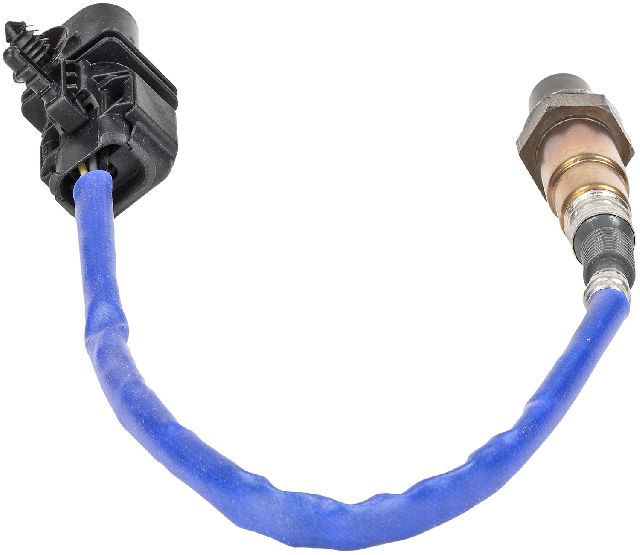
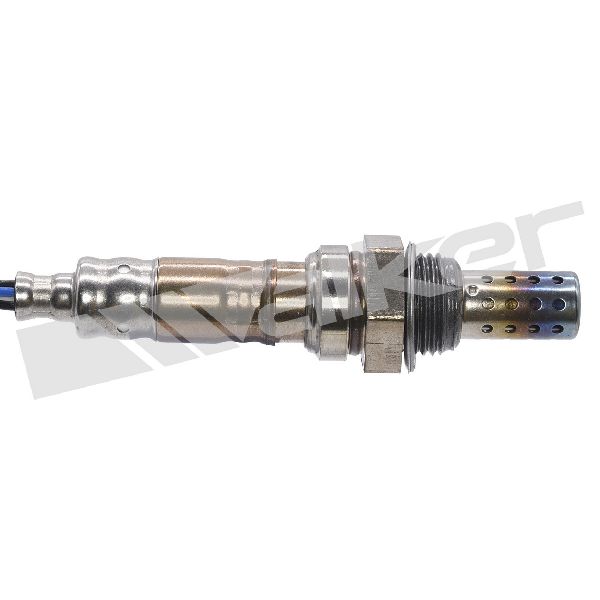
Est. part cost: $400-$1100 - Faulty Oxygen (O2) Sensor 🟡 Medium Probability → Shop Oxygen Sensor O2 sensors are wear items and can fail over time, providing inaccurate readings to the PCM. A lazy or biased sensor can trick the computer into thinking the converter has failed.
How to confirm: Use a scan tool to graph the sensor's voltage. A good downstream sensor should show a relatively steady voltage. A definitive test is to swap the downstream O2 sensors between Bank 1 and Bank 2. If the trouble code changes to P0420 (for Bank 1), the sensor is confirmed to be faulty.
Typical fix: Replace the faulty oxygen sensor. It is often recommended to replace them in pairs (e.g., both downstream sensors) if they are high-mileage.
Est. part cost: $50-$150 - Exhaust System Leak ⚪ Low Probability Exhaust components can develop leaks from rust or failed gaskets over time. Leaks upstream of or near the catalytic converter can introduce outside air, skewing O2 sensor readings. Some platform mates are known for warped exhaust manifolds and broken studs, which is a potential leak point to inspect.
How to confirm: Perform a visual inspection for soot trails or obvious cracks. A professional can perform a smoke test, which fills the exhaust system with smoke to reveal the precise location of any leaks.
Typical fix: Repair the leak. This may involve replacing a gasket, patching a small hole, or replacing a section of pipe.
Est. part cost: $10-$200
Rare But Worth Checking
- PCM Software Calibration Issue (3.7L Police Interceptor): Per TSB 18-2297, some 2016-2018 Police Interceptor models with the 3.7L engine can set a false P0430 due to overly sensitive monitoring software. A PCM reflash by a dealer or qualified shop is the first step and may be the only fix needed.
- Engine Misfires or Rich Fuel Condition: This is often the root cause of a catalytic converter failure. Unburned fuel from bad spark plugs, ignition coils, or leaking fuel injectors can enter the exhaust and destroy the converter's internal structure. These issues must be fixed before replacing the converter, or the new one will also fail.
- Warped Exhaust Manifold: → Shop Exhaust Manifold While less common, a warped exhaust manifold or broken manifold stud can create a significant exhaust leak right before the converter, introducing oxygen and causing false P0430 readings. This is a known issue on some platform mates with the same engine family.
Diagnosis Steps
- If you have a 2016-2018 Taurus Police Interceptor with a 3.7L engine, check with a dealer if TSB 18-2297 has been performed. If not, a PCM reflash is the first and most critical step.
- Check for other TSBs or warranty extensions (like 14-0102 or 19M01) that may apply to your vehicle's VIN.
- Scan for any other DTCs. Address any misfire (P03xx), fuel system (P017x), or O2 sensor circuit codes first, as they are likely the root cause of converter damage.
- Visually inspect the exhaust system from the engine to the catalytic converter for any signs of cracks, rust, or black soot that would indicate a leak. Pay close attention to the exhaust manifold and its flange.
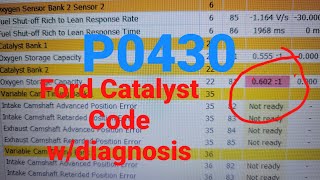
- Use a scan tool with live data capability to monitor the Bank 2 upstream 🎬 Watch: Using FORscan to diagnose P0430 on a Taurus Interceptor. (B2S1) and downstream (B2S2) O2 sensors. At a steady 2,500 RPM, the B2S1 sensor should fluctuate rapidly between ~0.1V and ~0.9V, while the B2S2 sensor should show a much slower, steadier voltage (typically >0.5V). If B2S2 mirrors B2S1's rapid switching, the converter is bad.
- If an O2 sensor is suspected, swap the downstream sensors between Bank 1 and Bank 2. Clear the codes and drive. If the code returns as P0420, the sensor you moved is faulty.
- With the engine fully warmed up, use an infrared thermometer to measure the temperature of the pipe going into the catalytic converter and the pipe coming out. The outlet should be at least 100°F hotter. If not, the converter is not working.
- If all other tests are inconclusive, the Bank 2 catalytic converter is the most likely failed component.
Parts You'll Likely Need
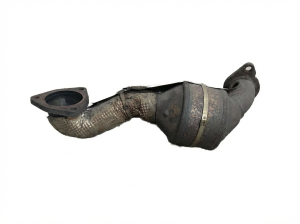
- Bank 2 Catalytic Converter
(OEM #FB5Z-5G232-A (Verify with VIN))— This is the most common failed component for a P0430 code, especially on vehicles with over 80,000 miles or Police Interceptor models.
Trusted brands: Motorcraft, Walker Exhaust, MagnaFlow, Davico
OEM price range: $850-$1200
Aftermarket price range: $300-$800 - Downstream Oxygen Sensor (Bank 2, Sensor 2)
(OEM #Motorcraft DY-1155 (Verify with VIN, based on platform mate))— A faulty O2 sensor can send incorrect data, causing a false P0430 code. It's a common diagnostic step to rule this out before replacing the converter.
Trusted brands: Motorcraft, Bosch, Denso, NGK/NTK
OEM price range: $80-$150
Aftermarket price range: $40-$90 - Upstream Oxygen Sensor (Bank 2, Sensor 1)
(OEM #Motorcraft DY-1178 (Verify with VIN, based on platform mate))— A slow-responding upstream sensor can confuse the PCM's catalyst efficiency calculation, though this is less common than a downstream sensor issue.
Trusted brands: Motorcraft, Bosch, Denso, NGK/NTK
OEM price range: $80-$160
Aftermarket price range: $50-$100 - Exhaust Manifold Gasket — If an exhaust leak is found at the manifold flange, this gasket will need to be replaced to seal the leak.
Trusted brands: Ford (Motorcraft), Fel-Pro
Related Codes That Often Appear With This One
- P0420 — If both P0420 (Bank 1) and P0430 are present, it suggests a common problem affecting both engine banks, such as a fuel system issue, a faulty purge valve, or contaminated fuel, rather than two independent converter failures.
- P0300, P0302, P0304, P0306 — Misfire codes for the Bank 2 cylinders (2, 4, 6) indicate that unburned fuel is likely being sent into the exhaust, which can quickly damage the catalytic converter and cause the P0430 code.
Technical Service Bulletins (TSBs) & Recalls
- TSB 18-2297: For 2016-2018 Police Interceptor Sedans with the 3.7L engine, addresses a false P0420/P0430 caused by sensitive software. The fix is a PCM reprogram. This bulletin notes that vehicles equipped with the 3.7L TiVCT engine may exhibit an illuminated MIL with these specific DTCs.
- TSB 14-0102: For some 2013-2014 models with 3.5L/3.7L engines, acknowledges P0420/P0430 codes and recommends replacing the converter and updating PCM software.
- Customer Satisfaction Program 19M01: Extends the warranty on catalytic converters for some Police Interceptor models due to failures caused by aggressive driving cycles.
Platform-Specific Known Issues
- Owner Experience: O2 Sensor as a Temporary Fix: → Shop Oxygen Sensor A 2013 Taurus owner on Reddit reported that after getting a P0430 code at 128k miles, they replaced the upstream Bank 2 O2 sensor. This cleared the code long enough to pass an emissions test, but the light returned about a month and 200+ miles later, indicating the catalytic converter was likely the true underlying failure.
- Intermittent Code Can Persist for Years: In the same Reddit thread, another owner of a 2011 Taurus mentioned that their P0430 code had been coming on and off for over two years and 270k miles without causing driveability issues, suggesting that in some borderline cases, the issue may not require immediate, costly repair.
- Police Interceptor High Failure Rate: Forum discussions specifically about the Police Interceptor models frequently conclude that the catalytic converters are the true point of failure for P0430, largely due to the high idle hours these vehicles endure, which leads to sustained high temperatures that degrade the catalyst material more quickly than in civilian vehicles.
Mechanic-Grade Diagnostic Values
- Upstream O2 Sensor (B2S1) Voltage — expected: Rapidly fluctuating between approximately 0.1V and 0.9V on a warm engine in closed loop.. Failure: A slow or non-responsive sensor may indicate a sensor fault, not necessarily a converter fault.
- Downstream O2 Sensor (B2S2) Voltage — expected: Relatively steady and slow to change, typically holding between 0.6V and 0.8V at a steady 2,000 RPM on a fully warmed-up, healthy converter.. Failure: If the voltage fluctuates rapidly between ~0.2V and ~0.8V, mirroring the upstream sensor's activity, the catalytic converter has failed and is no longer storing oxygen.
- O2 Sensor Heater Circuit Resistance — expected: Approximately 3.0 to 30 Ohms, depending on the specific sensor.. Failure: A reading of O/L (Open Loop) or infinite resistance indicates a failed internal heater element, requiring sensor replacement.
Hidden / Shadow Codes Worth Checking
- Mode $06, Test ID $82: This is the non-continuous monitor test for Bank 2 Catalyst Efficiency. The PCM calculates a switch ratio value based on the downstream vs. upstream O2 sensor activity. A value that is near or exceeds the maximum limit indicates the catalyst failed the on-board test, which can confirm a P0430 before it becomes a hard fault. (see via A professional scan tool capable of displaying Mode $06 data, such as the Ford IDS or high-end Autel/Snap-on scanners.)
Scan Tool Commands That Help
- Ford IDS (or equivalent): Clear Keep Alive Memory (KAM) — After replacing a major component like a catalytic converter or O2 sensor. This function erases all learned fuel trim and emissions adaptations, forcing the PCM to relearn with the new parts, which is critical for accurate operation and preventing a recurring code.
- Ford IDS (or equivalent): Catalyst Monitor Drive Cycle — After a repair and clearing codes, this guided driving procedure must be performed to allow the PCM to run its internal catalyst efficiency test. This confirms the fix and clears the P1000 'monitors not ready' status.
Wiring & Ground Locations
- PCM Engine Harness Ground — A ground for the PCM engine harness is located on the transmission case, below the brake booster.. A poor ground connection at this point can cause erratic voltage readings for multiple engine sensors, including the oxygen sensors, potentially leading to false diagnostic codes.
- G104 / G105 — Located at the right front (passenger side) of the engine compartment, behind the radiator or near the cooling fan relays on older Taurus models.. These are primary engine compartment ground points. While not directly for the O2 sensors, corrosion or looseness here can introduce electrical noise and issues into the system that may affect sensor readings.
Real Owner Repair Stories
- Ford Explorer/Flex Forum User (platform mate) (Ford Flex with 3.5L V6) — Persistent P0430 code.
❌ Tried (didn't work) Replacing oxygen sensors, Replacing the catalytic converter
✅ What actually fixed it The actual root cause was a leaking intake manifold gasket, which created a lean condition that the PCM was trying to correct, ultimately affecting the catalyst monitor readings. - Ford F-150 Forum User (platform mate) (2011-2016 Ford F-150 3.5L EcoBoost) — High-pitched screeching or chirping noise on acceleration, sometimes accompanied by P0420/P0430.
❌ Tried (didn't work) Initial diagnosis often points to a bad turbo or belt pulley.
✅ What actually fixed it The noise and exhaust leak were caused by a broken exhaust manifold stud on the rear of the cylinder head, a very common issue on this engine family due to the weight of the turbo and heat cycles. Replacing the manifold, gasket, and all studs resolved the leak and the associated code. - NHTSA ODI #11636255 — An owner reported that their engine light came on and was scanned for code P0430. Upon further research, they noted it appeared that a catalytic converter had failed.
OEM Part Supersession History
Unknown→FB5Z-5G232-A— This is the current OEM part number for the Bank 2 (front/radiator side) catalytic converter assembly for many vehicles in this platform group.
Heads up: Position is listed as 'Left Front' in some parts catalogs, which corresponds to the Bank 2 (radiator side) position on a transverse engine. Always verify with VIN.
Model Year Variations Within This Range
- 2016-2018: Police Interceptor models with the 3.7L engine may have an overly sensitive PCM calibration. TSB 18-2297 was issued to reprogram the PCM to correct false P0430 codes. This should be the first diagnostic step on these specific vehicles.
Diagnostic Flowchart
Other Known Issues on This Vehicle
Issues unrelated to this code that are worth knowing about as an owner of this generation:
- Internal Water Pump Failure 🔴 High — Common on 3.5L/3.7L V6 engines, often occurring around 100,000 miles. Failure can be catastrophic. (Ref: Subject of a class-action lawsuit (certified in Ontario, Canada). Not a formal recall in the US.)
- Power Transfer Unit (PTU) Failure (AWD Models) 🔴 High — Common due to fluid overheating and lack of a factory drain plug for servicing. Failures can occur at various mileages.
- Electronic Throttle Body Failure 🟠 Medium — Reported in some models, causing sudden stalling or loss of acceleration.
- Rear Suspension Toe Link Fracture 🔴 High — Affects 2013-2018 models, can cause loss of steering control. (Ref: Recall 19S52 / NHTSA 20V-770)
Used vs. New Parts: Buying Guide for This Vehicle
When a used part is the smart pick: Used parts are generally not recommended for emissions components like catalytic converters or oxygen sensors for this repair. The risk of getting a part that is already near the end of its service life is very high.
Donor-vehicle mileage cap: roughly under 50000 miles for the part to have meaningful remaining life.
What to inspect on the donor part:
- For a catalytic converter, inspect the honeycomb structure from both ends; it should be intact with no signs of melting, clogging, or breakage.
- Check for any rattling inside the converter, which indicates a broken internal substrate.
- Avoid converters with heavy external rust or damage, especially around the seams and heat shields.
- For O2 sensors, there is no reliable way to visually inspect the quality of a used one. It is a high-risk purchase.
OEM-only on this vehicle (don't cheap out):
- Catalytic Converter: While expensive, the OEM Motorcraft converter is the most reliable option. Many aftermarket converters, especially budget-priced ones, lack the necessary precious metal loading to satisfy the Ford PCM's catalyst monitor for an extended period, leading to the P0430 code returning within a year.
Aftermarket brands forum-validated for this vehicle:
- O2 Sensors: Denso and NGK/NTK are the original equipment manufacturers for many Ford sensors and are considered reliable alternatives to Motorcraft-branded parts.
- Catalytic Converters: MagnaFlow and Walker are reputable aftermarket brands that offer direct-fit and universal options. However, ensure they are EPA-compliant for your vehicle, and be aware they may still have a shorter lifespan than the OEM part.
Brands owners have reported issues with on this vehicle:
- Unnamed or 'white-box' ultra-cheap catalytic converters found on online marketplaces. These frequently fail to meet the efficiency requirements and will cause the code to return quickly.
Real Owner Stories
Aggregated from forums and TSBs cited above. Mileages and costs reflect what owners reported in those sources.
2013 Ford Taurus 3.5L V6 — 128000 miles
Symptoms: Check engine light with code P0430.
What fixed it: The owner initially replaced the upstream Bank 2 O2 sensor, which cleared the code for a month, but the light returned, suggesting the catalytic converter required replacement.
Source hint: Reddit - r/FordTaurus (2024) thread titled 'P0430 replaced O2 sensor what next!'
2011 Ford Taurus 3.5L V6 — 270000 miles
Symptoms: The P0430 code had been coming on and off for over two years without causing driveability issues.
What fixed it: The owner continued driving as it was a borderline case that did not immediately require costly repair.
Source hint: Reddit - r/FordTaurus (2024) user comment regarding a 2011 Taurus
2016 Ford Police Interceptor Sedan 3.7L V6 — ~100000 miles
Symptoms: P0430 code on a high-idle vehicle.
What fixed it: Replacing the catalytic converters, as high idle hours on these models are known to kill the catalyst.
Source hint: Reddit - r/MechanicAdvice (2024) thread '2016 Taurus Interceptor P0430 trying to rule out'
NHTSA ODI #11636255 — 2014 Ford Taurus
Symptoms: The engine light came on and was scanned for engine code P0430 (Catalyst System Efficiency Below Threshold Bank 2).
What fixed it: Upon further research, the owner noted it appeared that a catalytic converter had failed.
Source hint: NHTSA ODI #11636255
Related OBD-II Codes
Frequently Asked Questions
I have a 2016-2018 Taurus Police Interceptor 3.7L with P0430; is there a specific software fix?
Which side of the engine is Bank 2 on the Ford Taurus 3.5L/3.7L V6?
Is there a warranty extension for catalytic converter failure on Taurus Police models?
Can I just replace the O2 sensor to fix P0430 on my 2013 Taurus?
Why do Police Interceptor models seem to have more P0430 issues than civilian Taurus models?
Are there any other TSBs for the 2013-2014 Taurus regarding this code?
Helpful Videos
Used OEM Parts in Stock
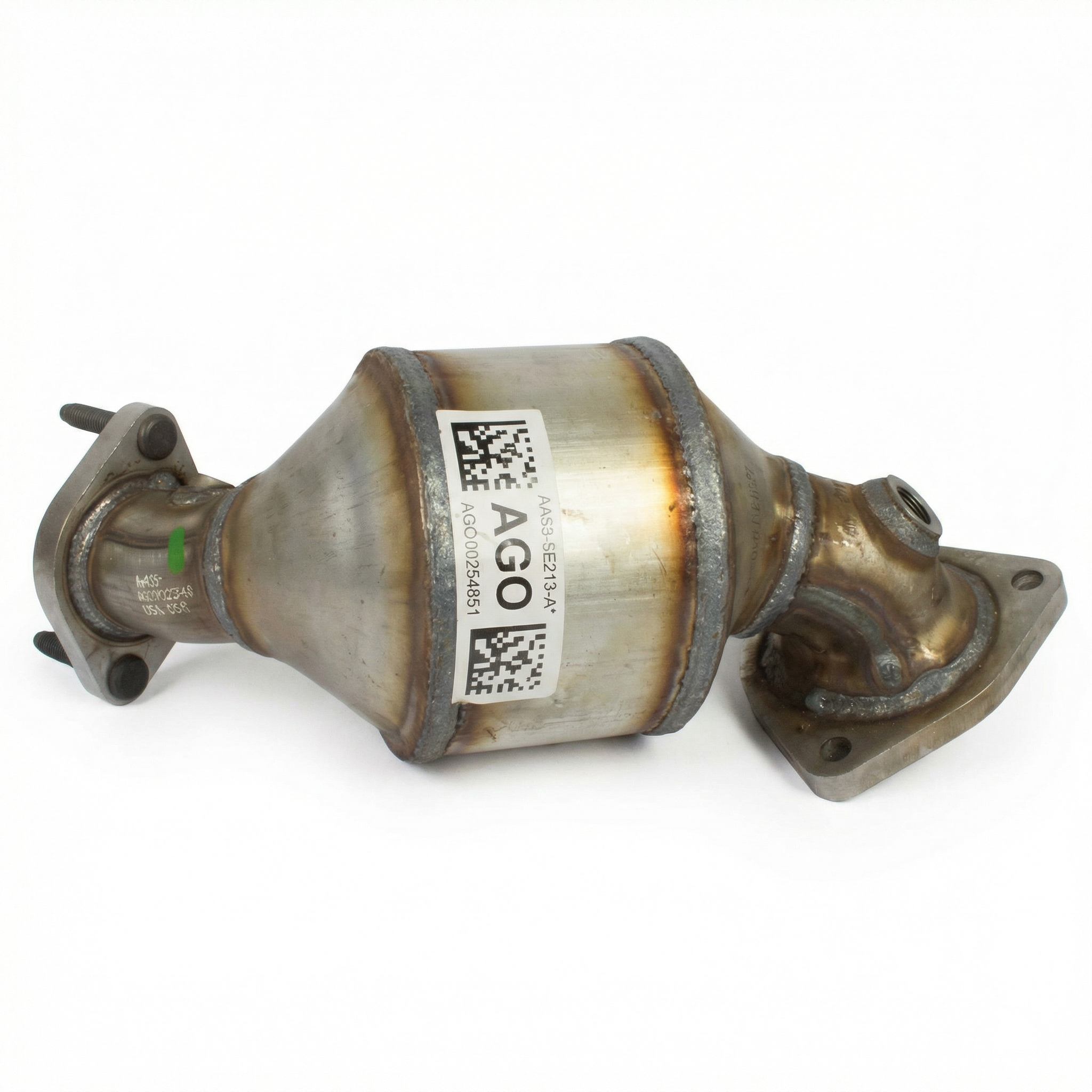
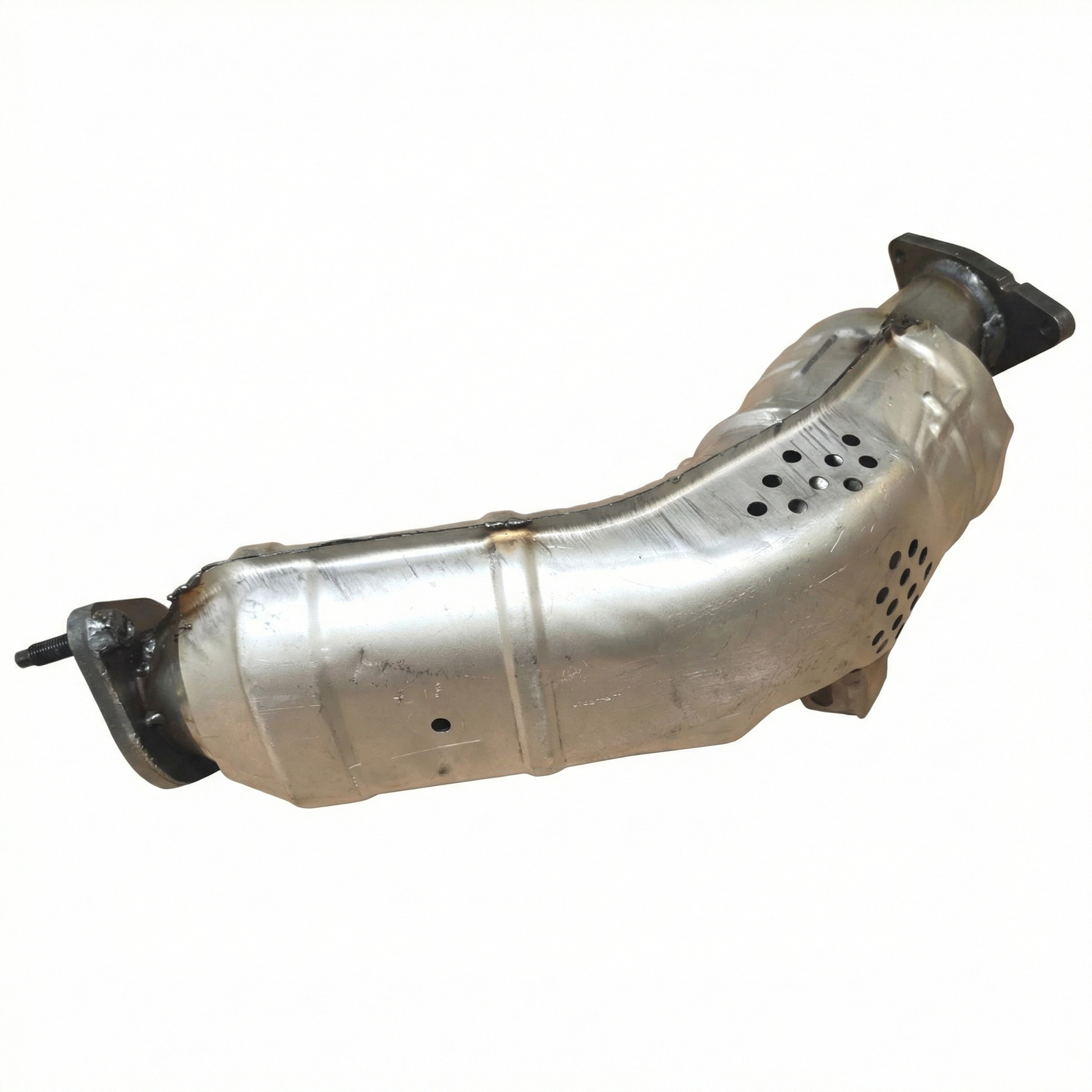
New Aftermarket Parts Available
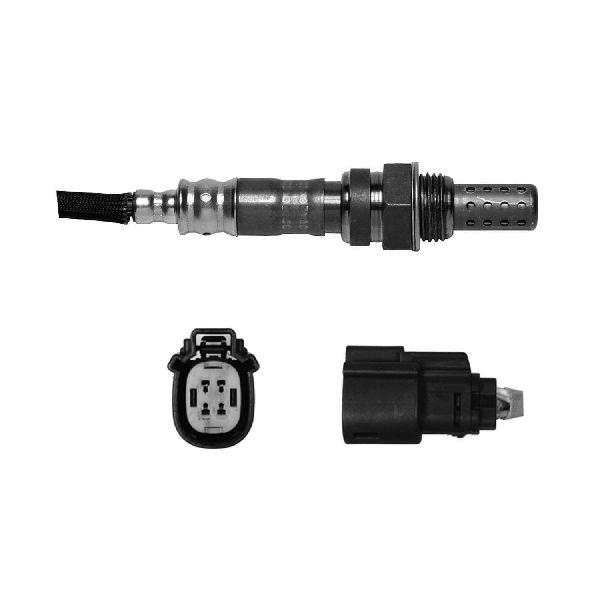


The information in this article is provided for general reference and educational purposes only. Vehicle specifications, procedures, and part compatibility can vary by production date, trim level, and region. Always consult your vehicle's factory service manual and verify part numbers before purchasing or performing repairs. Safety-critical components such as airbags, seat belts, and braking systems should be installed by a qualified professional.
- Ford Taurus:
- 🧭 Diagnostic Flowchart
- 🎬 Helpful Videos
- 🛍️ Shop This Part
- What's Unique About the 2013-2019 Ford Taurus
- Symptoms You May Notice
- Most Likely Causes
- Rare But Worth Checking
- Diagnosis Steps
- Parts You'll Likely Need
- Related Codes That Often Appear With This One
- Technical Service Bulletins (TSBs) & Recalls
- Platform-Specific Known Issues
- Mechanic-Grade Diagnostic Values
- Hidden / Shadow Codes Worth Checking
- Scan Tool Commands That Help
- Wiring & Ground Locations
- Real Owner Repair Stories
- OEM Part Supersession History
- Model Year Variations Within This Range
- Other Known Issues on This Vehicle
- Used vs. New Parts: Buying Guide for This Vehicle
- Real Owner Stories
- 2013 Ford Taurus 3.5L V6 — 128000 miles
- 2011 Ford Taurus 3.5L V6 — 270000 miles
- 2016 Ford Police Interceptor Sedan 3.7L V6 — ~100000 miles
- NHTSA ODI #11636255 — 2014 Ford Taurus
- Related OBD-II Codes
- Frequently Asked Questions
- 🎟️ Get 5% Off