

P0430 on 2019-2024 Genesis G70 3.3T: Catalyst Efficiency Bank 2 Causes and Fixes
P0430 on a Genesis G70 3.3T means the driver's side (Bank 2) catalytic converter is failing or has failed. Before replacing the expensive converter, first check for exhaust leaks and consider replacing the cheaper downstream oxygen sensor, as it can also cause this code. Also, ensure the recall for the Bank 2 turbo oil feed line (NHTSA 24V-191) has been performed, as an oil leak can destroy the converter.
- P0430 on the G70 3.3T points to an issue with the driver's side catalytic converter or its monitoring sensor.
- Before replacing the expensive catalytic converter, always rule out a cheaper faulty downstream O2 sensor and check for exhaust leaks.
- If you have other codes, especially for engine misfires, fix those first to avoid damaging a new converter.
- Check if your vehicle has had the recall service for the Bank 2 turbo oil feed line (TSB 24-01-032G), as an oil leak can cause this problem.
- If the car has aftermarket exhaust parts, it may be missing the catalytic converter, which will require a different solution than a standard repair.
What's Unique About the 2019-2024 Genesis G70
For the G70 3.3T, the P0430 code is a straightforward efficiency code that almost always points to a hardware failure rather than a software issue. A notable factor for this platform is its popularity in the aftermarket tuning scene; owners who install 'catless' or high-flow exhaust components will often trigger this code. Additionally, a critical safety recall (NHTSA 24V-191) for the Bank 2 (driver's side) turbo oil feed line exists. An unrepaired oil leak from this cracking pipe can drip directly onto the exhaust manifold and catalytic converter, contaminating and damaging the converter or O2 sensor on that bank, leading directly to this code.
Symptoms You May Notice
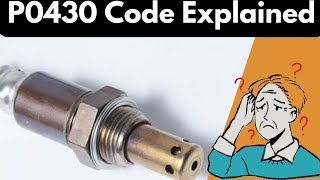
🎬 Watch: A quick breakdown of P0430 causes and symptoms.- Check Engine Light is on
- Vehicle will fail an emissions test
- A sulfur or 'rotten egg' smell from the exhaust if the converter is severely degraded
- Reduced acceleration or sluggish engine performance if the converter is clogged or blocked
- In rare cases, a rattling sound from the exhaust if the internal ceramic honeycomb of the converter has broken apart.
- Replacing the catalytic converter without first checking for exhaust leaks or testing the oxygen sensor. The O2 sensor is a much cheaper part to replace and can be the sole cause of the code.
- Replacing the upstream (pre-catalyst) oxygen/air-fuel ratio sensor. While related, the P0430 code is calculated based on the downstream sensor's reading, making it the more likely sensor culprit.
Most Likely Causes
- Failing or Failed Catalytic Converter 🔴 High Probability → Shop Catalytic Converter Catalytic converters are wear items that degrade over time from heat and contaminants. On the 3.3T, the Bank 2 converter is integrated with the exhaust manifold. An engine issue, such as a misfire or the oil leak from the recalled turbo feed line, can rapidly destroy the converter.
How to confirm: A mechanic can use a scan tool to monitor the upstream and downstream O2 sensor data. A healthy converter shows a steady downstream signal, while a failing one shows a downstream signal that fluctuates similarly to the upstream one. Another test involves using an infrared thermometer to check the inlet and outlet temperatures of the converter; the outlet should be significantly hotter. If the temperatures are nearly identical, the converter is not functioning.
Typical fix: Replace the Bank 2 (driver's side) exhaust manifold with integrated catalytic converter assembly.
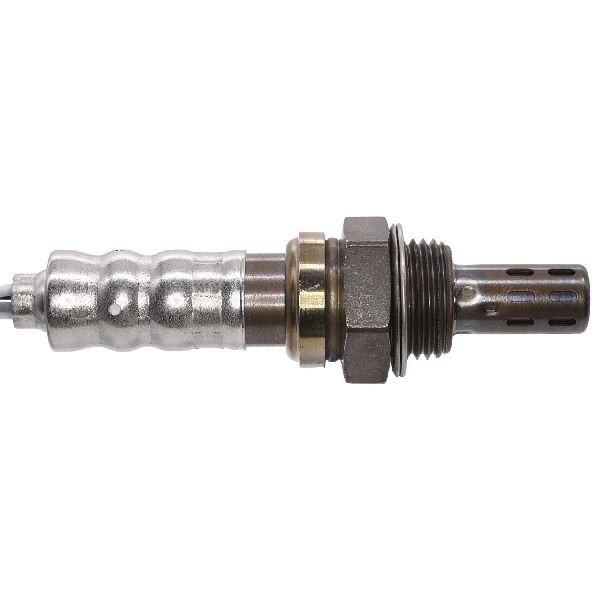
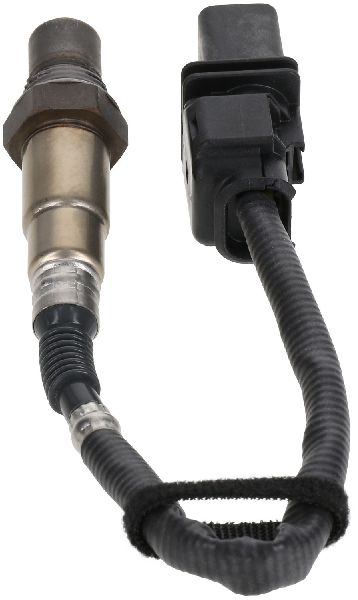
Est. part cost: $1200-$2500 - Faulty Downstream Oxygen Sensor (Bank 2) 🟡 Medium Probability → Shop Oxygen Sensor Oxygen sensors live in a harsh environment and have a finite lifespan. A sensor that becomes lazy, biased, or contaminated by oil/coolant can send incorrect data to the ECM, falsely indicating a bad catalytic converter.
How to confirm: Test the sensor's response using a professional scan tool. The easiest and most common diagnostic step is to replace the sensor, as it is significantly cheaper than a catalytic converter and is often replaced as a preventative measure. Swapping the Bank 1 and Bank 2 downstream sensors (if accessible) and seeing if the code changes to P0420 is another effective diagnostic trick.
Typical fix: Replace the Bank 2, downstream (post-catalyst) oxygen sensor.
Est. part cost: $80-$200 - Exhaust System Leak ⚪ Low Probability Exhaust gaskets or the flex pipe section can fail over time, allowing outside air to be drawn into the exhaust stream between the upstream and downstream O2 sensors. This extra oxygen fools the downstream sensor into thinking the catalyst isn't working.
How to confirm: Perform a visual inspection of the exhaust system from the engine to the catalytic converter, looking for black soot trails or cracks, especially at gasket flanges. A smoke test, where smoke is forced into the exhaust system, is the most effective way to pinpoint small leaks.
Typical fix: Replace the leaking gasket or repair the cracked component. The studs connecting the turbo to the downpipe are known to sometimes break during this repair.
Est. part cost: $20-$100
Rare But Worth Checking
- Engine Misfires or Fuel System Issues: This is not a direct cause of the code, but a root cause of catalytic converter failure. If you have other codes for misfires (e.g., P0300, P0303, P0306) or a rich/lean condition, they MUST be addressed first, or the new catalytic converter will be quickly destroyed by unburned fuel.
- Aftermarket Catless Exhaust: If the vehicle has an aftermarket 'catless' downpipe or midpipe installed, it will set this code because the catalytic converter is physically missing. The only fixes are to reinstall the factory converter or use a tune/O2 spacer to disable the check, which is for off-road use only.
- Aftermarket High-Flow Catted Downpipes: Even with aftermarket 'high-flow' catalytic converters, the code can still appear. Modern ECUs (especially on 2017+ models) are very sensitive and may still find the efficiency of a high-flow cat to be below the required threshold, triggering a P0420/P0430 code. A tune or O2 sensor spacer is often required to prevent the Check Engine Light.
Diagnosis Steps
- Check for Other Codes: Use an OBD-II scanner to see if any other codes are present. Misfire (P030x), fuel system (P017x), or O2 sensor circuit codes must be addressed first.
- Verify Recall Status: Check if NHTSA recall 24V-191 (Genesis recall 019G) for the Bank 2 turbo oil feed pipe has been completed. This applies to 2019-2022 models. If not, have this done by a dealer immediately, as an active leak is a likely root cause.
- Inspect for Exhaust Leaks: Visually inspect the driver's side exhaust system for any signs of leaks (soot trails) at gaskets between the upstream and downstream O2 sensors. A smoke test is the most reliable method.
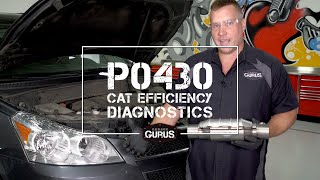
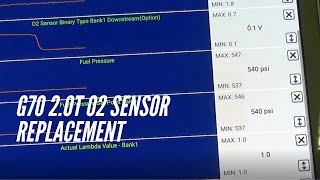
- Analyze Oxygen Sensor Data: 🎬 See how to diagnose catalyst efficiency using live sensor data. Using a scan tool with live data, graph the voltage of the Bank 2 upstream (Sensor 1) and downstream (Sensor 2) oxygen sensors. The upstream sensor should fluctuate rapidly between ~0.1V and ~0.9V. If the downstream sensor mimics this fluctuation, the converter is likely bad. A healthy converter will produce a much steadier, flatter downstream signal around 0.6-0.8V.
- Test the Catalytic Converter Temperature: With the engine fully warmed up, use an infrared thermometer to measure the temperature of the exhaust pipe going into and out of the catalytic converter. The outlet should be at least 100°F (38°C) hotter than the inlet. If it's not, the converter is not working.
- Swap or Replace the Downstream O2 Sensor: If diagnosis is inconclusive, consider swapping the downstream O2 sensors between Bank 1 and Bank 2. If the code changes to P0420, the sensor is bad. Alternatively, as a lower-cost first step, replace the Bank 2 downstream O2 sensor. Clear the codes and drive to see if P0430 returns.
- Replace the Catalytic Converter: If all other possibilities are ruled out, the Bank 2 catalytic converter has failed and needs to be replaced.
Parts You'll Likely Need
- Bank 2 Catalytic Converter / Exhaust Manifold — This is the most common cause of a persistent P0430 code after ruling out sensor and leak issues. On the 3.3T, it is an integrated unit with the exhaust manifold.
Trusted brands: Genuine Genesis, Walker Exhaust, MagnaFlow
OEM price range: $1500-$2500
Aftermarket price range: $600-$1200 - Bank 2 Downstream Oxygen Sensor
(OEM #39210-3L550)— This sensor provides the measurement that triggers the P0430 code. It can fail and send incorrect data. The part number 39210-2CTB5, often listed, is for the 2.0T engine.
Trusted brands: Genuine Hyundai/Genesis, Bosch, Denso, NGK
OEM price range: $150-$250
Aftermarket price range: $80-$150 - Bank 2 Upstream Oxygen Sensor
(OEM #39210-3L010)— While less likely to cause P0430 directly, a faulty upstream sensor can cause fuel mixture problems that eventually damage the catalytic converter. It is often replaced preventatively during a converter job.
Trusted brands: Genuine Hyundai/Genesis, Bosch, Denso
OEM price range: $250-$350
Aftermarket price range: $120-$220
Related Codes That Often Appear With This One
- P0420 — P0420 is the identical code but for Bank 1 (passenger side). Seeing both codes together often indicates a systemic issue like contaminated fuel, an issue with a tune, or another engine problem affecting both banks, rather than two simultaneous converter failures.
Technical Service Bulletins (TSBs) & Recalls
- 24-01-032G - LH TURBOCHARGER OIL FEED PIPE AND HOSE ASSEMBLY REPLACEMENT: This is the service bulletin associated with NHTSA safety recall 24V-191. It instructs dealers to replace the cracking Bank 2 turbo oil feed pipe with an improved, more durable part to prevent oil leaks and potential engine fires.
Platform-Specific Known Issues
- Recall 24-01-032G (NHTSA 24V191) was issued for 2019-2022 G70 3.3T models for a cracking left-hand (Bank 2) turbocharger oil feed pipe. An oil leak from this pipe could drip onto and damage the Bank 2 catalytic converter or O2 sensor, potentially causing code P0430. The official remedy involves replacing the original pipe with an improved stainless steel version. Owners should verify this recall has been performed via a dealer or the NHTSA website.
Mechanic-Grade Diagnostic Values
- Downstream O2 Sensor (Bank 2, Sensor 2) Voltage at Idle — expected: A relatively steady, flat voltage signal, typically between 0.6V and 0.8V on a fully warm engine with a healthy catalytic converter.. Failure: The voltage signal fluctuates rapidly, mimicking the pattern of the upstream (Sensor 1) O2 sensor. This indicates the catalytic converter is not storing oxygen.
- Upstream O2 Sensor (Bank 2, Sensor 1) Voltage at Idle — expected: A rapidly fluctuating voltage signal, switching quickly between approximately 0.1V (lean) and 0.9V (rich) as the ECM adjusts the air-fuel mixture.. Failure: A lazy or stuck signal that does not fluctuate indicates a failed upstream sensor, which can lead to fuel control problems and eventual catalytic converter damage.
- Mode 6, TID $51, CID $01 - Catalyst Monitor Bank 2 — expected: The test value should be below the maximum threshold set by the manufacturer. These values are unitless counts.. Failure: If the test value exceeds the maximum limit, it indicates the catalyst's oxygen storage capacity is below the minimum acceptable level, which triggers P0430. Accessing this data requires an advanced scan tool.
Scan Tool Commands That Help
- Genesis GDS (or equivalent advanced scanner): Live Data Graphing (Current Data) — This is the primary diagnostic step. Use it to graph Bank 2 Sensor 1 and Bank 2 Sensor 2 voltages simultaneously on the same screen to visually compare their switching patterns. A downstream sensor that mirrors the upstream sensor's activity confirms low catalyst efficiency.
- Genesis GDS: Service Function: Resetting Adaptive Values — After replacing a major component like a catalytic converter or oxygen sensor, this function should be used to clear the engine control module's long-term learned fuel trim and sensor adaptations. This allows the ECM to re-learn values with the new parts, ensuring optimal performance and preventing potential conflicts with old data.
Wiring & Ground Locations
- Bank 2 Downstream O2 Sensor Connector — The wiring for the downstream O2 sensor runs up into the engine bay. The connector is typically located on the driver's side, near the firewall, often clipped to a bracket alongside the upstream sensor connector.. A loose, corroded, or damaged connector can cause an incorrect signal to be sent to the ECM, falsely triggering a P0430 code. Wiggling the connector while monitoring live data can help identify intermittent connection issues.
- Engine Control Module (ECM/ECU) — On the Genesis G70 3.3T, the ECU is located in the engine bay on the driver's side, just ahead of the brake fluid reservoir and next to the strut tower.. In extremely rare cases of persistent, unexplainable sensor codes, a fault in the ECU itself or its grounding could be the cause. Knowing its location is the first step for advanced wiring and pin-out testing.
Real Owner Repair Stories
- Reddit user on r/GenesisG70 (Genesis G70 3.3T with 62,000 miles) — P0430 Check Engine Light appeared immediately after installing an aftermarket catless midpipe.
❌ Tried (didn't work) The user immediately suspected the modification was the cause.
✅ What actually fixed it The community confirmed that removing the secondary catalytic converters will cause a P0430 code. The resolution was to purchase and install a JB4 tuner, which can be used to clear/suppress the code for off-road use.
OEM Part Supersession History
39210-3L000→39210-3L200— Unknown, likely a minor internal revision or supplier change.
Heads up: This part number is for the UPSTREAM (Bank 1, Sensor 1) oxygen sensor, not the downstream sensor that is more commonly associated with P0430. However, it demonstrates that Hyundai/Genesis does revise these parts. Always confirm fitment with a VIN.
Model Year Variations Within This Range
- 2019-2022: These model years are subject to NHTSA recall 24V-191 for the cracking Bank 2 turbo oil feed line. The remedy part is made of a more durable stainless steel.
- Post-August 2021 Production: Vehicles produced after August 2021 were built with the updated stainless steel turbo oil feed pipe, so they are not subject to the recall for this specific part.
- 2022-2024: The 2022 facelift introduced a new variable sport exhaust system, resulting in a minor power increase to 368 hp. However, the core engine management, catalytic converters, and oxygen sensors related to P0430 diagnosis remained the same.
Diagnostic Flowchart
Other Known Issues on This Vehicle
Issues unrelated to this code that are worth knowing about as an owner of this generation:
- Warped Brake Rotors / Excessive Brake Dust 🟠 Medium — Common complaint, especially on models with Brembo brakes. Owners report vibration under braking, sometimes as early as 20,000-25,000 miles. The high-performance pads also generate significant dust.
- Cracking LH Turbocharger Oil Feed Pipe 🔴 High — Widespread enough to trigger a major safety recall. Affects 2019-2022 G70 3.3T models. The pipe can crack from heat exposure, leaking oil onto the exhaust manifold and creating a fire risk. (Ref: NHTSA 24V-191 / Genesis Recall 019G / TSB 24-01-032G)
- Difficult Alternator Replacement 🟠 Medium — Failure is not unusually common, but replacement is extremely labor-intensive (7.5-8+ hours). The alternator is buried deep in the engine bay, with some dealer procedures requiring engine removal. This turns a standard repair into a very expensive one ($1500+).
- Interior Rattles 🟡 Low — Several owners report minor but annoying rattles from areas like the sunroof assembly, sunglasses holder, or the plastic behind the rearview mirror.
- Harsh Transmission Downshifts 🟡 Low — Some owners of pre-facelift models report jerky or harsh downshifts from the 8-speed automatic transmission, particularly when slowing to a stop in traffic.
- Infotainment System Glitches 🟡 Low — Primarily on earlier models, issues include the screen flickering, Bluetooth connectivity dropping, or Apple CarPlay randomly disconnecting.
Used vs. New Parts: Buying Guide for This Vehicle
When a used part is the smart pick: For this specific repair, sourcing used parts is generally not recommended. A used oxygen sensor is a gamble with an unknown lifespan. Used catalytic converters are often illegal to sell in many jurisdictions and have a high likelihood of being worn out.
Donor-vehicle mileage cap: roughly under 60000 miles for the part to have meaningful remaining life.
What to inspect on the donor part:
- For an O2 sensor, there are no reliable visual cues. It's a high-risk part to buy used.
- For a catalytic converter (if legally obtainable), inspect for physical damage, rattling (indicating a broken internal substrate), and ensure it comes from a vehicle that was not scrapped due to engine failure (which could have contaminated the cat).
OEM-only on this vehicle (don't cheap out):
- Catalytic Converter: Strongly recommended to use a Genuine Genesis part. Aftermarket converters often have less precious metal loading and may fail to meet the ECU's strict efficiency monitoring, causing the P0430 code to return.
Aftermarket brands forum-validated for this vehicle:
- For Oxygen Sensors: Denso, NTK, and Bosch are reputable OEM suppliers and trusted aftermarket brands that generally meet or exceed factory specifications.
Brands owners have reported issues with on this vehicle:
- No specific brands were consistently reported as problematic in owner forums, but unbranded, low-cost sensors from online marketplaces are a significant risk and may cause incorrect readings or fail prematurely.
Real Owner Stories
Aggregated from forums and TSBs cited above. Mileages and costs reflect what owners reported in those sources.
2019 Genesis G70 3.3T
Symptoms: Check Engine Light (P0430) triggered after installing aftermarket primary downpipes without a proper tune.
What fixed it: Requires either O2 sensor spacers or a specific ECU tune to disable the catalyst efficiency code.
Source hint: genesisg70forum.com thread titled 'Downpipes without a proper tune'
2020 Genesis G70 3.3T
Symptoms: P0430 CEL code appeared after vehicle modifications.
What fixed it: Confirmed that installing a catless midpipe triggers this specific code.
Source hint: r/GenesisG70 thread titled 'P0430 CEL Code'
Related OBD-II Codes
Frequently Asked Questions
Is there a recall for my 2019-2022 Genesis G70 3.3T that could be causing the P0430 code?
What is the specific fix for the turbo oil feed pipe issue mentioned in TSB 24-01-032G?
I installed a catless midpipe on my G70 and now have a P0430 code; is this expected?
Can I swap parts between Bank 1 and Bank 2 to diagnose if the sensor is the problem?
How much does it typically cost to replace the Bank 2 catalytic converter on the G70 3.3T?
Does the Kia Stinger GT suffer from the same P0430 issues as the G70?
Helpful Videos

Used OEM Parts in Stock
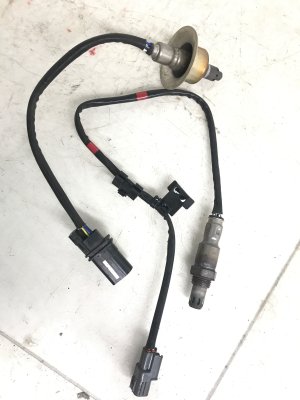
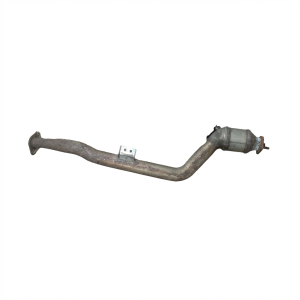
New Aftermarket Parts Available
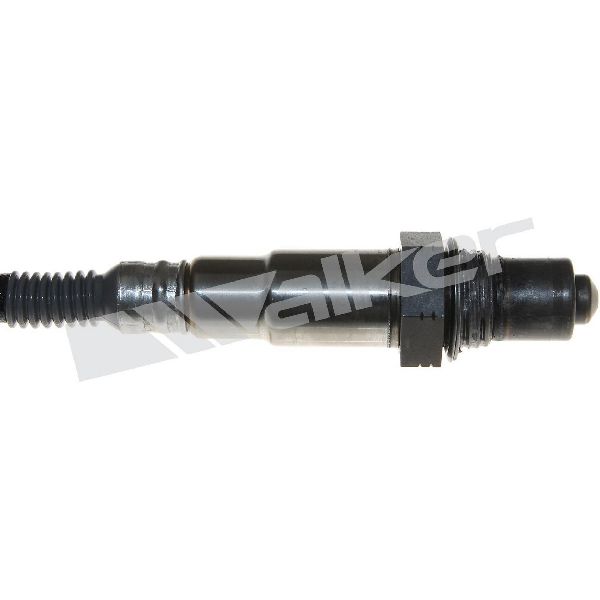

The information in this article is provided for general reference and educational purposes only. Vehicle specifications, procedures, and part compatibility can vary by production date, trim level, and region. Always consult your vehicle's factory service manual and verify part numbers before purchasing or performing repairs. Safety-critical components such as airbags, seat belts, and braking systems should be installed by a qualified professional.
- Genesis G70:
- 🧭 Diagnostic Flowchart
- 🎬 Helpful Videos
- 🛍️ Shop This Part
- What's Unique About the 2019-2024 Genesis G70
- Symptoms You May Notice
- Most Likely Causes
- Rare But Worth Checking
- Diagnosis Steps
- Parts You'll Likely Need
- Related Codes That Often Appear With This One
- Technical Service Bulletins (TSBs) & Recalls
- Platform-Specific Known Issues
- Mechanic-Grade Diagnostic Values
- Scan Tool Commands That Help
- Wiring & Ground Locations
- Real Owner Repair Stories
- OEM Part Supersession History
- Model Year Variations Within This Range
- Other Known Issues on This Vehicle
- Used vs. New Parts: Buying Guide for This Vehicle
- Real Owner Stories
- 2019 Genesis G70 3.3T
- 2020 Genesis G70 3.3T
- Related OBD-II Codes
- Frequently Asked Questions
- 🎟️ Get 5% Off