

P0430 on 2014-2016 GMC Sierra 1500: Catalyst and Air Box Causes
P0430 on a 2014-2016 Sierra indicates an inefficient passenger-side (Bank 2) catalytic converter. Before replacing the expensive converter, inspect the air filter housing for a poor seal, a known issue covered by TSB #16-NA-111 that can cause this code by allowing debris to contaminate sensors and the converter. Also, check for exhaust leaks from broken manifold bolts and failing oxygen sensors.
- P0430 on a 2014-2016 Sierra points to an inefficient passenger-side catalytic converter.
- Before replacing any parts, your FIRST step should be to inspect the air filter housing for a poor seal, as this is a known issue (TSB #16NA111) that causes this code.
- Always rule out cheaper fixes like exhaust leaks and faulty oxygen sensors before condemning the expensive catalytic converter.
- If you replace the catalytic converter, you must ensure any underlying problems (like the airbox seal or engine misfires) are fixed to prevent damaging the new part.
What's Unique About the 2014-2016 Gmc SIERRA 1500
For this specific generation of GMC Sierra (K2XX platform), a key and unique cause for P0430 is a known issue with the air intake system. GM issued Technical Service Bulletin #16-NA-111 because the air filter box may not seal properly, allowing sand and other abrasive debris to get past the filter. This debris can contaminate the oxygen sensors and physically block the catalytic converter, leading directly to a P0430 code. The TSB specifically notes to check for missing tabs on the housing cover and signs of dirt bypassing the filter seal. Another very common issue on the 5.3L and 6.2L V8s is the rearmost exhaust manifold bolt breaking off, causing a leak that draws in air and tricks the O2 sensors, falsely triggering the code.
Diagnostic Flowchart
Tap your situation to follow the diagnostic path that matches what you're seeing on this vehicle.
Symptoms You May Notice
- Check Engine Light is on
- Reduced engine power or sluggish acceleration if the converter is clogged
- A sulfur or "rotten egg" smell from the exhaust
- Vehicle fails an emissions test
- Worse than normal fuel economy
- A ticking or puffing noise from the engine bay, especially when cold, indicating an exhaust leak
- Replacing the oxygen sensors immediately without testing them. The P0430 code often means the O2 sensors are correctly reporting a bad converter.
- Replacing the catalytic converter without fixing the root cause (e.g., the TSB #16-NA-111 airbox seal, broken manifold bolts, misfires, or oil consumption). The new converter will be quickly damaged and fail again.
- Using cheap, low-quality aftermarket catalytic converters or oxygen sensors that do not meet OEM specifications, leading to the code returning quickly.
Most Likely Causes
- Failing or Degraded Catalytic Converter 🔴 High Probability → Shop Catalytic Converter Converters can fail from age or contamination. On these trucks, they are often damaged by debris ingested from a poorly sealed airbox (per TSB #16-NA-111), unburned fuel from misfires, or excessive oil consumption related to the Active Fuel Management (AFM) system.
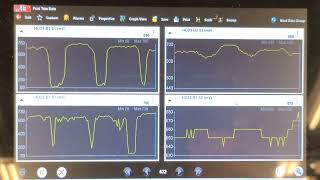
How to confirm: After ruling out other causes, use a scan tool to graph O2 sensor data. If the downstream sensor (Bank 2, Sensor 2) mimics the upstream sensor's rapid switching, the converter has failed. A healthy downstream sensor should show a relatively steady voltage around 650-750mV. An infrared thermometer can also be used; the converter's outlet should be at least 100°F hotter than its inlet.
Typical fix: Replace the Bank 2 (passenger side) catalytic converter, which is often sold as part of a Y-pipe assembly including both converters. Any underlying issues (airbox, misfires, oil consumption) must be fixed first to prevent destroying the new converter.
Est. part cost: $500-$1800 - Poorly Sealing Air Filter Housing 🔴 High Probability → Shop Air Cleaner Assembly This is a well-documented issue covered by GM TSB #16-NA-111 for 2014-2018 models. The airbox cover can warp or the retaining tabs can break, preventing a proper seal. This allows sand and dirt to bypass the filter, damaging O2 sensors and clogging the catalytic converter.
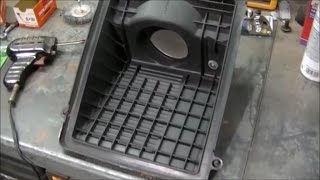
How to confirm: Visually inspect the air filter housing cover for missing tabs, warping, or loose fasteners. Remove the filter and look for dirt/sand tracks on the 'clean' side of the housing and in the intake tube.
Typical fix: Replace the air filter and the entire air cleaner assembly 🎬 Watch: How to repair the airbox and clean the MAF sensor if it is warped or damaged. Clean all debris from the intake tube and MAF sensor.
Est. part cost: $80-$250 - Exhaust Leak (Broken Manifold Bolts) 🟡 Medium Probability Exhaust manifold bolts on the 5.3L and 6.2L V8 engines are known to break, especially the rearmost bolt near the firewall on either side. A leak between the engine and the catalytic converter draws in outside air, which confuses the oxygen sensors and triggers a false P0430 code.
How to confirm: Listen for a distinct ticking noise from the engine bay when the engine is cold, which may quiet down as the engine warms up and the metal expands. Visually inspect the exhaust manifold for black soot trails or missing bolt heads, which are clear signs of a leak. A smoke test is the most definitive way to find smaller leaks.
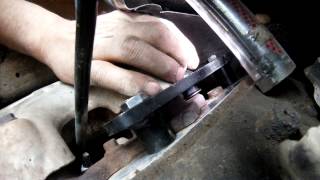
Typical fix: Repair the leak. This requires extracting the broken manifold bolt(s) and replacing them along with a new exhaust manifold gasket. This can be a difficult job due to the limited space.
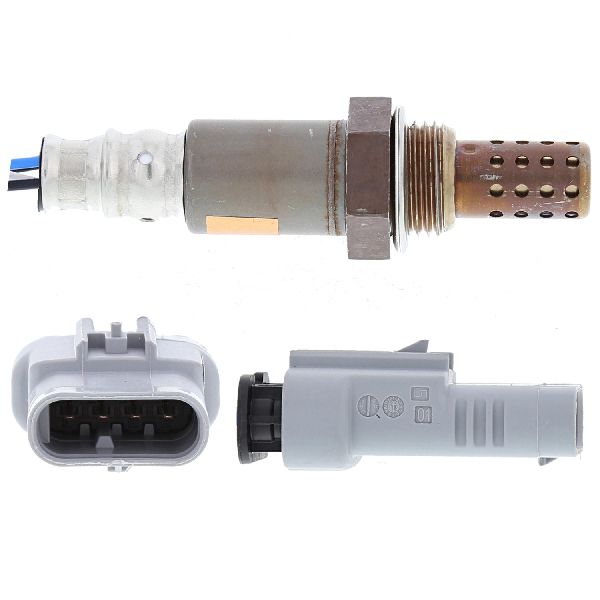
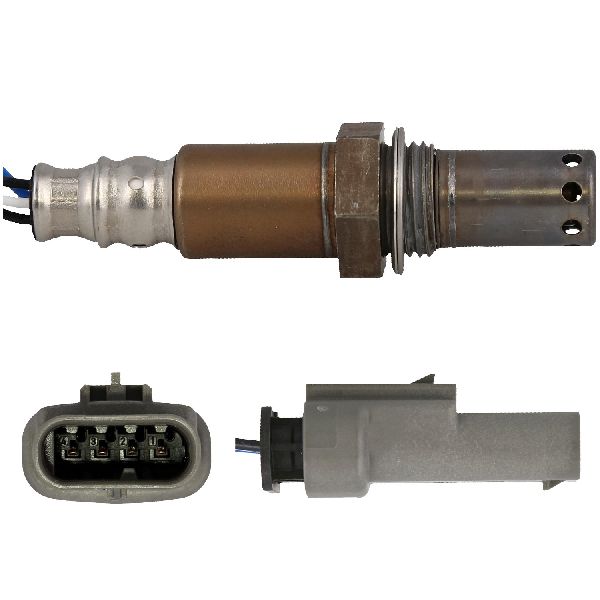
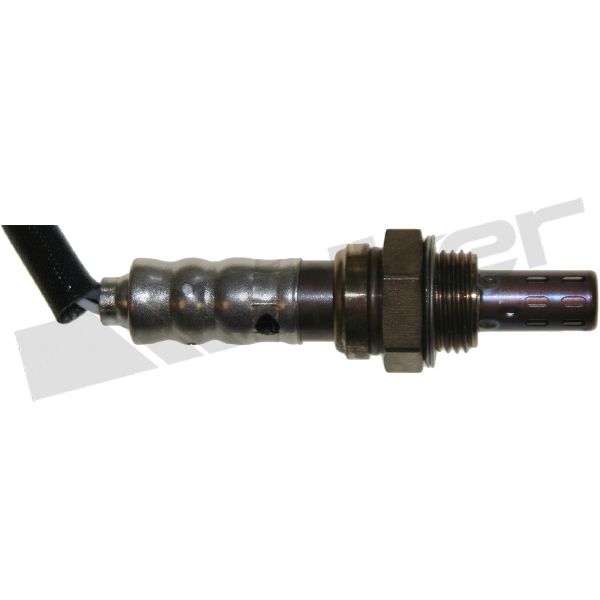
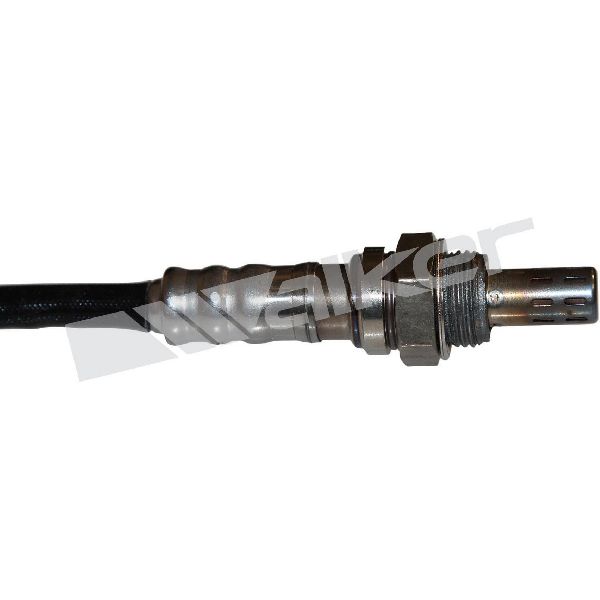
Est. part cost: $20-$300 - Faulty Downstream Oxygen (O2) Sensor 🟡 Medium Probability → Shop Oxygen Sensor O2 sensors are wear items and can fail with age. They can also be contaminated by engine oil or debris from the known airbox issue, leading to inaccurate readings that falsely trigger P0430. Using cheap aftermarket sensors is also a common reason for the code to return.
How to confirm: Use a scan tool to monitor the sensor's voltage. A healthy downstream sensor should show a relatively steady voltage (e.g., ~0.7V). If it's stuck, shows no activity, or switches rapidly like the upstream sensor, it may be faulty. A reliable diagnostic step is to swap the downstream sensors from Bank 1 and Bank 2. If the code changes to P0420, the sensor is bad.
Typical fix: Replace the Bank 2, Sensor 2 (downstream, passenger side) oxygen sensor. Using an OEM or quality aftermarket brand like ACDelco, Denso, or NTK is recommended.
Est. part cost: $50-$150
Rare But Worth Checking
- Faulty Fuel Injectors: → Shop Fuel Injector
- Contaminated Fuel:
Diagnosis Steps
- Scan for any other DTCs. Address codes for misfires (P030x), fuel trim (P017x/P219B), or other sensor faults first, as they are likely the root cause.
- CRITICAL: Inspect the air filter housing and seal for signs of dirt bypass, per TSB #16-NA-111. Check for broken tabs on the cover, a warped housing, and sand/dirt in the intake tube past the filter.
- Thoroughly inspect the exhaust system for leaks, from the exhaust manifolds to the rear O2 sensor. Listen for a ticking noise when cold and look for black soot trails or missing/broken manifold bolts, especially the rearmost bolt on the passenger side.
- Use a scan tool to observe live data for the upstream (B2S1) and downstream (B2S2) O2 sensors on Bank 2. The upstream sensor should fluctuate rapidly between ~0.1V and ~0.9V. The downstream sensor should hold a steady, high voltage (around 0.65V-0.75V). If the downstream sensor mirrors the upstream, the converter is likely bad.
- If the O2 sensor readings are suspect, swap the downstream sensors between Bank 1 and Bank 2. Clear the codes and drive. If the code changes to P0420, the sensor is bad.
Parts You'll Likely Need
- Catalytic Converter (Bank 2)
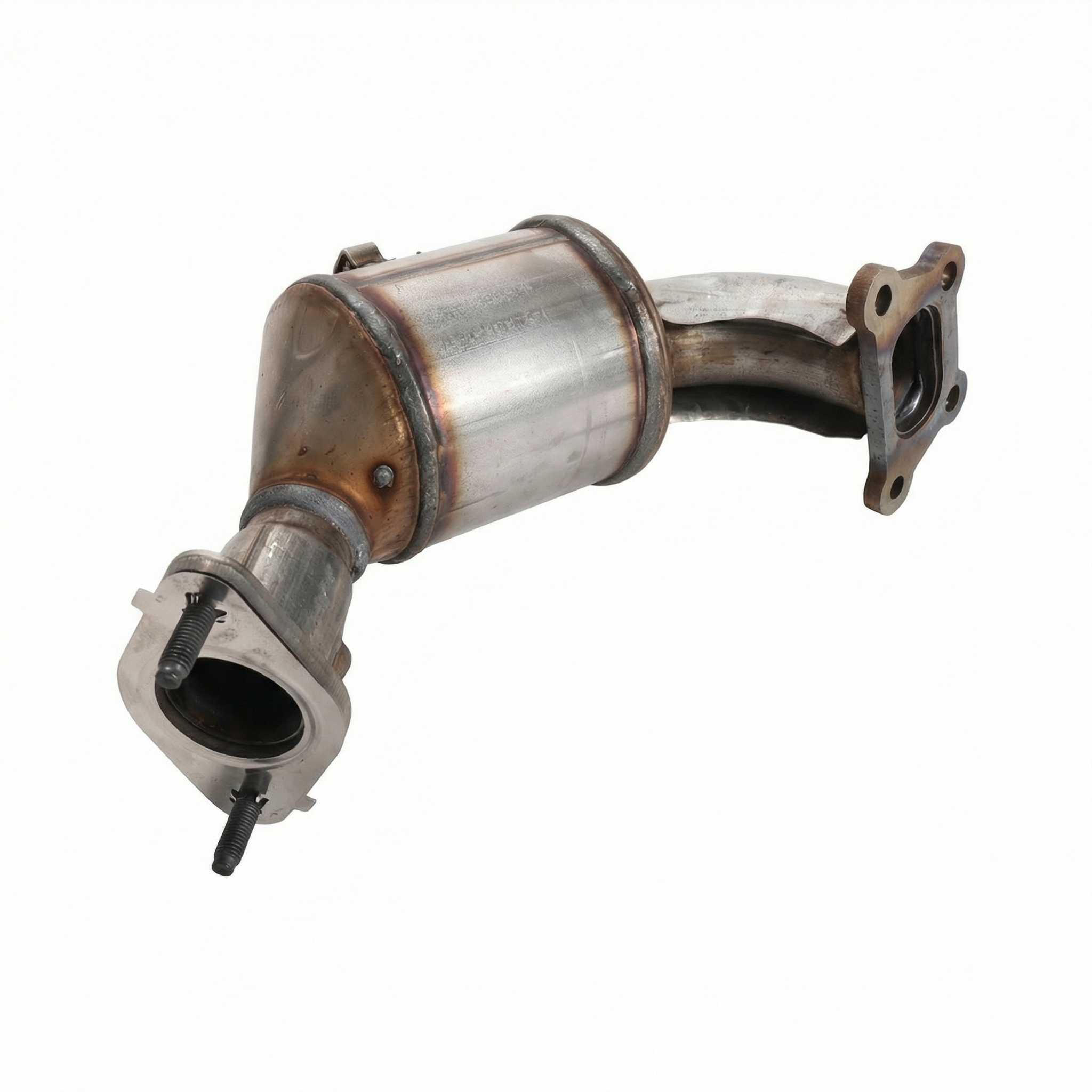
(OEM #84405203 (Y-Pipe Assembly))— This is the most common direct cause for the code, indicating the converter has lost its chemical efficiency. Often sold as a Y-pipe assembly that includes both converters.
Trusted brands: GM Genuine, Walker Exhaust, MagnaFlow, AP Exhaust
OEM price range: $1200-$2000
Aftermarket price range: $500-$900 - Downstream Oxygen Sensor (Bank 2, Sensor 2)
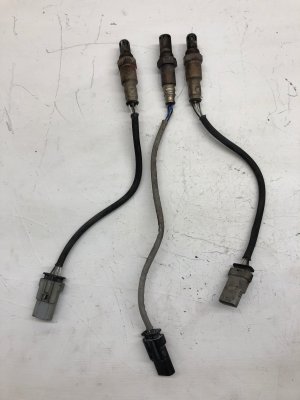
(OEM #12657188 (ACDelco #213-4768))— A faulty or contaminated sensor can send incorrect data, falsely triggering the P0430 code. It's a common misdiagnosis but also a potential cause, especially if contaminated by the airbox issue.
Trusted brands: ACDelco, Denso, NTK/NGK, Bosch
OEM price range: $80-$150
Aftermarket price range: $40-$100 - Air Cleaner Housing Assembly
(OEM #23400178)— If the original housing is warped or has broken tabs, it won't seal against the air filter, allowing debris to enter and cause P0430 as described in TSB #16-NA-111.
Trusted brands: GM Genuine, ACDelco
OEM price range: $150-$250
Aftermarket price range: $80-$150 - Exhaust Manifold Gasket and Bolt Kit — Needed when repairing an exhaust leak caused by broken manifold bolts, a common issue on these engines that can falsely trigger P0430.
Trusted brands: Fel-Pro, Dorman, GM Genuine
OEM price range: $50-$100
Aftermarket price range: $20-$50
Related Codes That Often Appear With This One
- P0420 — This is the identical code for Bank 1 (driver's side). If both converters are the same age and subjected to the same conditions (like debris from the airbox), they often fail around the same time.
- P0300-P0308 — These are misfire codes. Unburned fuel from a misfire is a primary cause of catalytic converter destruction, as it superheats and melts the internal structure.
- P0171 / P0174 — These codes indicate a lean fuel condition. This can be caused by an unmetered air leak, such as from a faulty airbox seal or a broken exhaust manifold bolt, both of which are common precursors to P0430 on these trucks.
- P219B — This code indicates a fuel trim imbalance on Bank 2, pointing to an underlying issue like a faulty fuel injector that can eventually damage the converter and trigger P0430.
Technical Service Bulletins (TSBs) & Recalls
- 16-NA-111: Provides detailed diagnostic information for a poorly sealing air box and air filter seal that allows debris to enter the intake, causing damage to O2 sensors and catalytic converters, which results in DTCs P0420 and P0430.
- PIP3119P: Notes that catalyst efficiency diagnostics (P0420/P0430) are disabled for the first hour of operation on some new vehicles to prevent false codes at low mileage.
Platform-Specific Known Issues
- TSB #16-NA-111: This is the most critical vehicle-specific issue. It documents that a poorly sealing air filter box can allow sand and debris to bypass the filter, damaging O2 sensors and the catalytic converter, directly causing P0420 and P0430 codes. The bulletin advises inspecting for broken tabs and dirt tracks past the filter seal before replacing any parts.
- Broken Exhaust Manifold Bolts: The 5.3L and 6.2L V8s are prone to the rearmost exhaust manifold bolts breaking. This creates an exhaust leak that is a very common cause of a false P0430 code on these trucks.
Mechanic-Grade Diagnostic Values
- Downstream O2 Sensor (B2S2) Voltage — expected: Relatively steady reading between 0.4V and 0.5V at stable operating conditions. Some sources suggest a slightly higher steady voltage of 650-750mV is ideal.. Failure: Voltage fluctuates rapidly, mimicking the upstream (B2S1) sensor's 0.1V - 0.9V oscillations.
- Upstream O2 Sensor (B2S1) Voltage — expected: Rapidly fluctuating signal between approximately 0.1V and 0.9V.. Failure: Sensor is slow to respond or shows a fixed voltage.
- Long-Term and Short-Term Fuel Trims (Bank 2) — expected: Combined value should be within +/- 10%. Ideally within +/- 5%.. Failure: Consistently high positive values (e.g., > +10%) suggest an unmetered air/exhaust leak. Consistently high negative values can indicate a leaking injector.
- Catalytic Converter Temperature Differential — expected: The outlet pipe should be at least 100°F hotter than the inlet pipe after the engine is fully warmed up.. Failure: The outlet temperature is the same as or cooler than the inlet, indicating the catalyst is not 'lighting off' and performing its chemical reaction.
- O2 Sensor Heater Circuit Resistance — expected: A known good sensor shows continuity with a resistance of around 5.3 - 5.4 ohms across the two heater circuit wires (typically the two same-colored wires).. Failure: No continuity (infinite resistance) indicates a failed heater element within the sensor.
Hidden / Shadow Codes Worth Checking
- Mode 6, Test ID $81 (for Bank 2): This is not a DTC but a raw data monitor from the PCM that directly measures catalyst efficiency. It compares the switching frequency of the upstream and downstream O2 sensors. The scan tool will show a value and a min/max threshold. A failing value here is the direct reason the PCM sets the P0430 code. (see via A professional-grade scan tool with Mode 6 diagnostic capabilities is required. The specific Test ID and Component ID may vary slightly by year and specific ECU software.)
Scan Tool Commands That Help
- GDS2/Tech2 or equivalent professional scanner: Catalyst System Test — Some GM service procedures include a specific on-demand catalyst test. This function runs the engine at specific RPMs to force the catalyst monitor to run and can give a pass/fail result more quickly than a standard drive cycle. It's used to verify a repair or confirm a failure without extensive driving.
- GDS2/Tech2 or equivalent professional scanner: Clear DTCs and Reset Monitors — After a repair, such as replacing a catalytic converter or O2 sensor, this command is used to clear the P0430 code and reset all emissions-related monitors. A full drive cycle must then be completed to confirm the fix was successful and the monitor runs to completion without setting a new code.
Wiring & Ground Locations
- G103 — On the front of the passenger side (Bank 2) cylinder head.. This is a primary engine ground. A poor connection here can introduce electrical noise or voltage offsets into sensor circuits, including the O2 sensors on Bank 2, potentially causing incorrect readings that could lead to a false P0430 code.
- G104 — On the rear of the driver's side (Bank 1) cylinder head, near the firewall.. While on Bank 1, this ground is part of the main engine harness grounding scheme. A fault here can affect the overall stability of the sensor reference voltages provided by the ECM. It's often checked when diagnosing any sensor-related codes.
- G218 — Inside the cabin, under the driver's side of the dashboard, often near the A-pillar behind the kick panel.. This is a major instrument panel and body control module ground. While less likely to directly cause a P0430, a poor connection here is a known issue on K2XX trucks causing a wide range of bizarre electrical problems, and it should be inspected if other electrical symptoms are present.
- Bank 2 O2 Sensor Connectors — The upstream sensor (B2S1) connector is typically located on the passenger side of the transmission bell housing. The downstream sensor (B2S2) connector is further back along the passenger side of the transmission.. These connectors are exposed to heat and road debris. Wiggling the connector while monitoring live data can reveal intermittent connections. Corrosion or damage to the pins or wiring at these points can directly cause a P0430 code.
Real Owner Repair Stories
- Reddit user in r/MechanicAdvice (2014 GMC Sierra 5.3L) — P0430 code returned after 1,500 miles of driving.
❌ Tried (didn't work) Replaced catalytic converter, Replaced fuel injectors, Replaced O2 sensors
✅ What actually fixed it The user reported that the code returned even after replacing all the common components. The final resolution was not posted in the thread, highlighting the frustration that can occur when an underlying issue (like a software anomaly or intermittent wiring fault) is missed and parts are replaced unnecessarily.
When the Usual Fixes Don't Work
- In one documented case involving a 2015 Sierra 5.3L, the truck initially presented with a P219B (Bank 2 fuel imbalance) and P0300 (random misfire). After the technician replaced the fuel injectors and cleaned the intake ports, those codes were resolved, but a P0430 code appeared for the first time. This demonstrates how a pre-existing fuel system problem can damage the catalytic converter, but the catalyst monitor test won't run (and thus won't set the P0430 code) until the primary issue is fixed. This proves the importance of addressing root causes, as the converter was likely already damaged before the P0430 code ever appeared.
OEM Part Supersession History
ACDelco GM OE 213-4768 (or GM 12639692)→This part number remains current for many GM applications but may have had internal revisions over time.— Standard production updates to integrate new materials or technologies.
Heads up: While this specific sensor fits many vehicles, using a non-OEM or 'universal' sensor is a common cause for the P0430 code to return, as the PCM is calibrated for the specific response time and heater characteristics of the original part.
Helpful Videos
Used OEM Parts in Stock
New Aftermarket Parts Available


The information in this article is provided for general reference and educational purposes only. Vehicle specifications, procedures, and part compatibility can vary by production date, trim level, and region. Always consult your vehicle's factory service manual and verify part numbers before purchasing or performing repairs. Safety-critical components such as airbags, seat belts, and braking systems should be installed by a qualified professional.
- Gmc SIERRA 1500:
- 🧭 Diagnostic Flowchart
- 🎬 Helpful Videos
- 🛍️ Shop This Part
- What's Unique About the 2014-2016 Gmc SIERRA 1500
- Symptoms You May Notice
- Most Likely Causes
- Rare But Worth Checking
- Diagnosis Steps
- Parts You'll Likely Need
- Related Codes That Often Appear With This One
- Technical Service Bulletins (TSBs) & Recalls
- Platform-Specific Known Issues
- Mechanic-Grade Diagnostic Values
- Hidden / Shadow Codes Worth Checking
- Scan Tool Commands That Help
- Wiring & Ground Locations
- Real Owner Repair Stories
- When the Usual Fixes Don't Work
- OEM Part Supersession History
- 🎟️ Get 5% Off