

P0430 on 2004-2008 GMC Sierra Denali: Catalyst Efficiency Causes and Fixes
P0430 on a 2004-2008 GMC Sierra Denali indicates a failing catalytic converter on the driver's side (Bank 2). Before replacing the expensive converter, first rule out exhaust leaks and faulty oxygen sensors, which are common and cheaper to fix. Broken exhaust manifold bolts are a very frequent cause of leaks on these trucks.
- P0430 points to an issue with the driver's side (Bank 2) catalytic converter.
- Do not immediately replace the catalytic converter. First, inspect for exhaust leaks and test the oxygen sensors.
- Use a scan tool to watch live O2 sensor data; this is the best way to confirm if the converter is truly bad.
- If you have any misfire codes (P030x), you must fix that problem first, or you will destroy the new catalytic converter.
- Ensure you are buying parts for the correct generation (GMT800 vs. GMT900) of your Sierra Denali.
What's Unique About the 2004-2008 Gmc SIERRA DENALI
The 2004-2008 GMC Sierra Denali spans two truck generations: the GMT800 (until 2006 and 2007 "Classic" models) and the GMT900 (starting in 2007). While the P0430 code's meaning is consistent, the specific engine (e.g., 6.0L LQ4/LQ9 vs. 6.2L L92) and exhaust components can differ. A very common issue on these V8 engines is the shearing of exhaust manifold bolts due to heat cycles, leading to exhaust leaks that trigger P0430. A Technical Service Bulletin (TSB) for 2008 models notes that the diagnostic for this code is intentionally disabled for the first hour of engine operation to prevent false positives at low mileage, indicating a known sensitivity. [Bulletin #PIP3119N]
Diagnostic Flowchart
Tap your situation to follow the diagnostic path that matches what you're seeing on this vehicle.
Generation note: This range covers the end of the first-generation Sierra ('NBS' or GMT800 platform, 2004-2006 and 'Classic' 2007 models) and the start of the second-generation ('NNBS' or GMT900 platform, 2007-2008). The diagnostic approach is identical, but ensure you purchase parts specific to your vehicle's year and generation. The GMT800 and GMT900 trucks are both known for breaking exhaust manifold bolts, a frequent cause of this code.
Symptoms You May Notice
- Check Engine Light is on
- Vehicle may fail an emissions inspection
- Reduced engine power or sluggish acceleration, especially if the converter is clogged.
- A sulfur or "rotten egg" smell from the exhaust.
- Audible ticking noise from the engine bay, especially when cold, which often indicates an exhaust manifold leak from a broken bolt.
- In rare cases, a rough idle.
- Immediately replacing the catalytic converter without checking for exhaust leaks or testing the oxygen sensors. A broken exhaust manifold bolt causing a leak is a very common cause of this code on these trucks and is a much cheaper fix than a new converter.
Most Likely Causes
- Failing Catalytic Converter 🔴 High Probability → Shop Catalytic Converter Catalytic converters have a finite lifespan and can fail from age, or be damaged by engine issues like misfires or burning oil, which are not uncommon on higher-mileage trucks. The internal ceramic honeycomb can break down, reducing efficiency.
How to confirm: Use a scan tool to monitor O2 sensor data. The Bank 2 Sensor 2 (downstream) voltage should be stable (typically 0.4-0.8V). If it fluctuates rapidly, mirroring the Bank 2 Sensor 1 (upstream), the converter is not working. An infrared thermometer can also be used; the outlet of a working converter should be significantly hotter (at least 100°F) than the inlet.
Typical fix: Replace the Bank 2 catalytic converter. This often involves cutting and welding for universal-fit parts or bolting on a direct-fit assembly. 🎬 See this walkthrough on replacing the catalytic converter
Est. part cost: $250-$800 - Exhaust System Leak 🔴 High Probability The most common failure point is broken exhaust manifold bolts, especially the rearmost bolt on the driver's side and the foremost on the passenger's side. The constant expansion and contraction from heat cycles fatigues and snaps the bolts, creating a leak between the cylinder head and manifold that introduces oxygen and triggers the code.
How to confirm: Listen for a distinct 'ticking' sound from the wheel well when the engine is cold; it may quiet down as the engine warms and the metal expands. Visually inspect the manifold for black soot trails near the flange. A smoke machine test is the most effective way to find small leaks.
Typical fix: Replace the broken manifold bolts and gasket. This can be a difficult DIY job as the broken bolts often need to be drilled out and the holes re-tapped, especially the rear bolt near the firewall. In some cases, aftermarket repair brackets are available to clamp the manifold without needing to extract 🎬 Watch: A clever fix for broken exhaust manifold bolts the broken bolt.
Est. part cost: $20-$200 - Faulty Oxygen (O2) Sensor 🟡 Medium Probability → Shop Oxygen Sensor O2 sensors are exposed to extreme heat and exhaust gases, causing them to wear out over time. A lazy or biased downstream sensor can send incorrect data to the PCM, falsely indicating a bad converter.
How to confirm: Graph the sensor's voltage with a scan tool. A healthy downstream sensor should show a relatively steady voltage. If it's stuck high, low, or not responding, it's likely faulty. Swapping the Bank 1 and Bank 2 downstream sensors and seeing if the code changes to P0420 is a good diagnostic step.
Typical fix: Replace the Bank 2, Sensor 2 (downstream) oxygen sensor. It is often recommended to replace O2 sensors before condemning the catalytic converter.
Est. part cost: $50-$150 - Engine Running Rich or Misfiring ⚪ Low Probability Issues like leaking fuel injectors, faulty spark plugs, or a bad ignition coil can cause unburnt fuel to enter the exhaust, overheating and destroying the catalytic converter. GM has noted that fuel injector cleaning is only approved when directed by a specific diagnostic procedure, not as preventative maintenance.
How to confirm: Check for other trouble codes (e.g., P0300-P0308 for misfires, or fuel trim codes P0172/P0175). Address these codes FIRST before dealing with P0430.
Typical fix: Resolve the root cause of the misfire or rich condition, which could involve replacing spark plugs, ignition coils, or fuel injectors.
Est. part cost: $50-$500
Rare But Worth Checking
- PCM Software Issue: As mentioned in TSB PIP3119N, the diagnostic parameters can be sensitive. While rare, checking with a dealer for any available PCM updates related to emissions diagnostics can sometimes resolve the issue.
Diagnosis Steps
- Check for any other stored trouble codes. If misfire (P030x) or fuel system (P017x) codes are present, diagnose and repair them first.
- Perform a thorough visual and audible inspection of the exhaust system on Bank 2 (driver's side), especially when the engine is cold. Listen for a 'ticking' noise indicative of a manifold leak.
- Visually inspect the exhaust manifold for broken bolt heads (especially the rear-most one) and for black soot trails indicating a leak.
- If a leak is suspected, confirm with a smoke test.
- Using a scan tool with live data, graph the voltage for the upstream (Bank 2, Sensor 1) and downstream (Bank 2, Sensor 2) oxygen sensors at a steady 2,500 RPM.
- The upstream sensor should fluctuate rapidly between approximately 0.1V and 0.9V. The downstream sensor should remain relatively stable and steady (e.g., ~0.7V).
- If the downstream sensor's graph mimics the upstream sensor's graph, the catalytic converter is not storing oxygen and has likely failed.
- If the downstream sensor appears stuck or slow to respond, suspect a faulty sensor.
- If no definitive conclusion can be made, perform a temperature test. Use an infrared thermometer to measure the temperature of the pipe entering the converter and exiting it. The outlet should be at least 100°F hotter than the inlet on a fully warmed-up engine.
Parts You'll Likely Need
- Catalytic Converter (Bank 2, Driver Side) — This is the most common definitive fix for a P0430 code, assuming O2 sensors and exhaust leaks have been ruled out.
Trusted brands: Walker Exhaust, MagnaFlow, ACDelco (OE)
OEM price range: $600-$1200
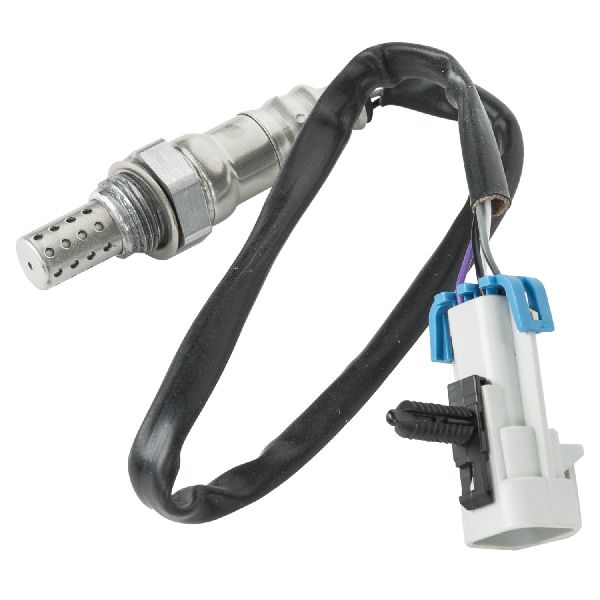
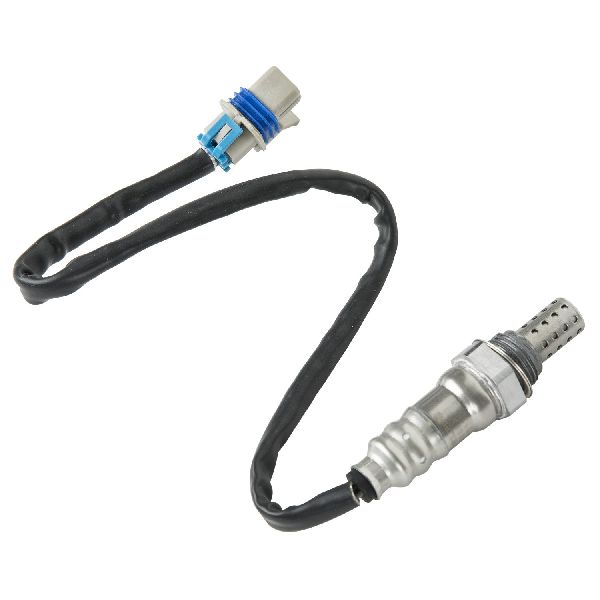
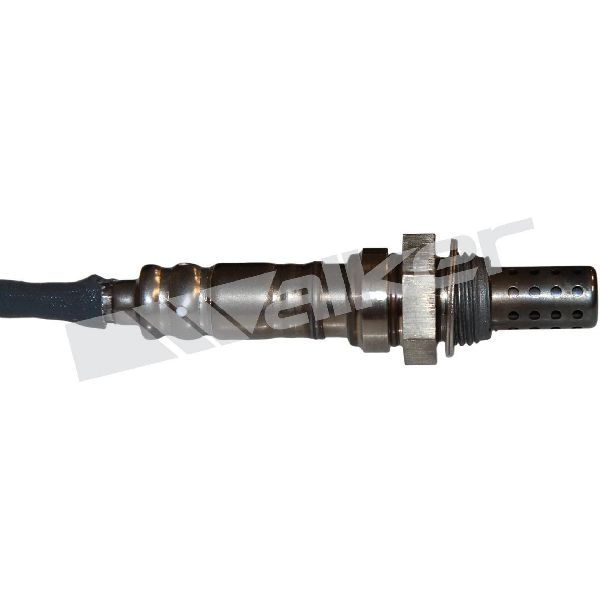
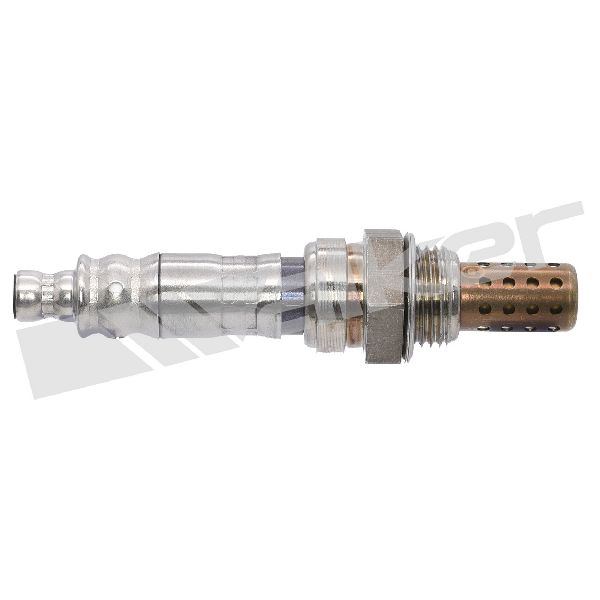
Aftermarket price range: $250-$800 - Downstream Oxygen Sensor (Bank 2, Sensor 2)
(OEM #12579820)— A faulty downstream O2 sensor can incorrectly trigger a P0430 code and is a common misdiagnosis for a bad converter. It's a critical part of the diagnostic system.
Trusted brands: ACDelco, Denso, Bosch
OEM price range: $80-$150
Aftermarket price range: $50-$100 - Exhaust Manifold Bolt Kit — Leaks at the exhaust manifold from broken bolts are extremely common on these trucks and will introduce oxygen that throws off O2 sensor readings, causing this code.
Trusted brands: Dorman, Fel-Pro, ACDelco
OEM price range: $30-$50
Aftermarket price range: $20-$40
Related Codes That Often Appear With This One
- P0420 — This is the identical code for Bank 1 (passenger side). If both converters are of similar age and condition, it's common for them to fail around the same time. It's also common to see both codes if there are issues causing the engine to run rich or lean.
- P0300-P0308 — These are misfire codes. An unresolved engine misfire will send raw fuel into the exhaust, quickly destroying the catalytic converter. The misfire is the root cause that must be fixed first.
Technical Service Bulletins (TSBs) & Recalls
- PIP3119N: Mentions that the catalytic converter efficiency diagnostics (P0420/P0430) are disabled for the first hour of operation on some 2008 models to prevent false codes at low mileage.
- 04-06-04-051G: While not directly for P0430, this TSB notes that GM only endorses the use of GM Fuel System Treatment PLUS and TOP TIER gas for preventing fuel system deposits, and does not endorse routine injector cleaning, which is relevant as engine deposits can lead to conditions that damage the catalytic converter.
Platform-Specific Known Issues
- Per TSB #PIP3119N, some 2008 models have a built-in delay for the P0420/P0430 diagnostic monitors, which are disabled for the first hour of operation to prevent premature codes on new vehicles.
- Broken exhaust manifold bolts are a very common problem on the 6.0L and 6.2L V8 engines in these trucks, frequently causing exhaust leaks that trigger P0430.
Mechanic-Grade Diagnostic Values
- Mode $06 Catalyst Monitor Test (Bank 2) — expected: The raw value should be below the maximum threshold specified by the manufacturer. For example, a test value for TID $A2, UASID $05 might be 0.01, with a maximum limit of 0.4.. Failure: A test value that exceeds the manufacturer's maximum limit indicates the catalyst has failed the on-board diagnostic test.
- Fuel Pressure (Return-style systems, primarily GMT800) — expected: Approximately 48-62 PSI at the fuel rail test port.. Failure: Low fuel pressure can cause a lean condition, while excessively high pressure can cause a rich condition, both of which can affect converter efficiency and potentially set a P0430 code over time.
- Short-Term Fuel Trim (STFT) — expected: Should fluctuate within +/- 5% at idle on a healthy, warmed-up engine.. Failure: Consistently high positive values (e.g., > +10%) indicate the PCM is adding fuel to compensate for a vacuum leak or weak fuel delivery. Consistently high negative values indicate the PCM is removing fuel due to a rich condition (e.g., leaking injector). Both scenarios can lead to P0430.
Hidden / Shadow Codes Worth Checking
- Mode $06, Monitor ID $22 (or MID $22): This is not a DTC but a monitor for the Bank 2 Catalyst test. Advanced scan tools can read the raw test data, including the test value and the pass/fail threshold determined by the PCM. (see via A professional scan tool with Mode $06 capabilities (e.g., Tech2, GDS2, or high-end aftermarket scanners). The data is found under 'On-Board Monitored Systems'.)
Wiring & Ground Locations
- G103 — On GMT900 models (2007+), located on the front of the passenger side cylinder head. On some GMT800 models, it's on the right front side of the engine near the thermostat housing.. This is a primary engine ground. While not directly for the O2 sensors, a poor connection at G103 can introduce electrical noise and unstable voltages to the entire engine management system, potentially affecting sensor readings and PCM calculations.
- PCM Connector C1/Blue (GMT800) — At the Powertrain Control Module (PCM).. Pin 25 (TAN wire) is the HO2S Low Signal for Bank 2 Sensor 2. Pin 65 (PPL/WHT wire) is the HO2S High Signal for Bank 2 Sensor 2. These are the specific pins to test for continuity and shorts when diagnosing a faulty sensor circuit.
- O2 Sensor Fuses (GMT800/Classic) — In the under-hood fuse box, often labeled as fuses #8 and #18.. A blown fuse for the O2 sensor heater circuit will cause the sensor to respond slowly or not at all, which can lead to incorrect efficiency readings and trigger a P0430 code. Always check fuses before replacing sensors.
Real Owner Repair Stories
- 2CarPros Forum User (Vehicle with P0430, specific year/model not mentioned but symptoms align with GM trucks.) — P0430 code present, rough running, and exhaust fumes. A large hole was discovered in the driver's side (Bank 2) exhaust manifold.
❌ Tried (didn't work) Patching the hole in the exhaust manifold did not resolve the leak or the code.
✅ What actually fixed it The confirmed cause was the hole in the exhaust manifold. The required fix is to replace the damaged exhaust manifold and its gasket to eliminate the pre-catalyst exhaust leak that was corrupting the oxygen sensor readings.
OEM Part Supersession History
12579820→ACDelco 213-4229 (GM 12609457)— Standard part evolution, integrating updated materials and technologies.
Model Year Variations Within This Range
- 2004-2007 (GMT800/Classic): These models use a return-style fuel system with the pressure regulator on the fuel rail. Fuel pressure should be checked at the rail. The PCM connectors and some ground locations differ from the later GMT900 platform.
- 2007-2008 (GMT900): These models transitioned to a returnless fuel system where pressure is regulated in the tank. The ground location G103 is typically on the front of the passenger cylinder head. The O2 sensor part numbers were updated for this generation.
Helpful Videos
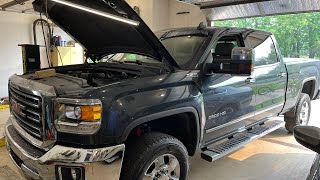

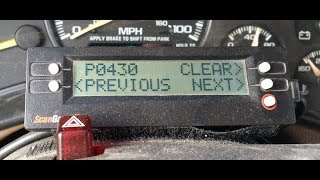
We Have This Part in Stock
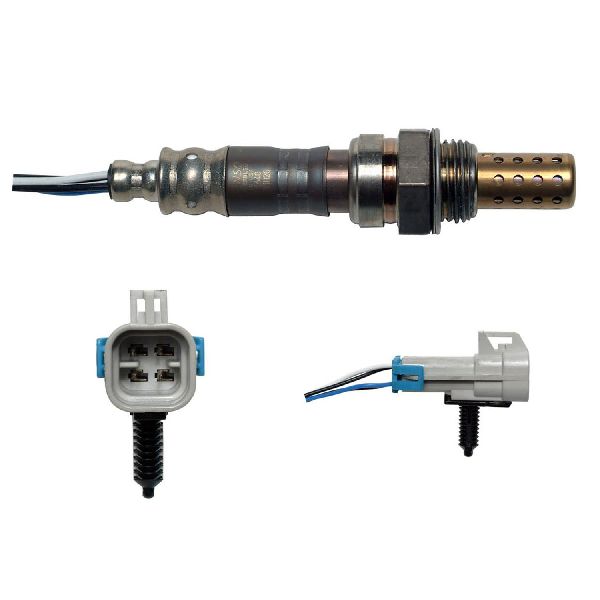
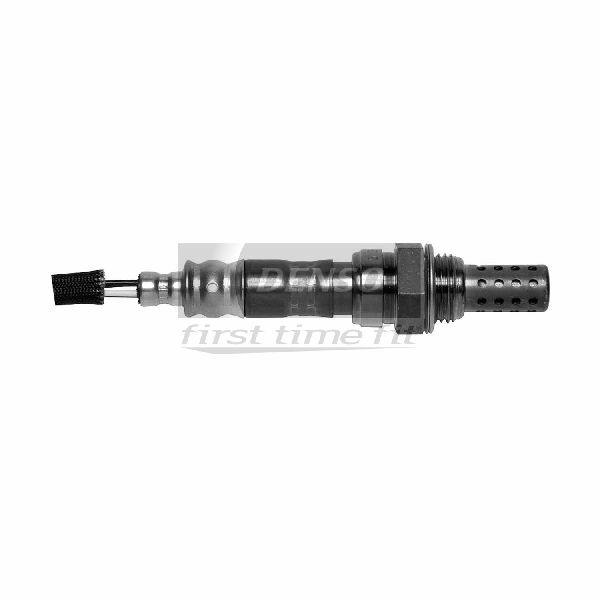

The information in this article is provided for general reference and educational purposes only. Vehicle specifications, procedures, and part compatibility can vary by production date, trim level, and region. Always consult your vehicle's factory service manual and verify part numbers before purchasing or performing repairs. Safety-critical components such as airbags, seat belts, and braking systems should be installed by a qualified professional.
- Gmc SIERRA DENALI:
- 🧭 Diagnostic Flowchart
- 🎬 Helpful Videos
- 🛍️ Shop This Part
- What's Unique About the 2004-2008 Gmc SIERRA DENALI
- Symptoms You May Notice
- Most Likely Causes
- Rare But Worth Checking
- Diagnosis Steps
- Parts You'll Likely Need
- Related Codes That Often Appear With This One
- Technical Service Bulletins (TSBs) & Recalls
- Platform-Specific Known Issues
- Mechanic-Grade Diagnostic Values
- Hidden / Shadow Codes Worth Checking
- Wiring & Ground Locations
- Real Owner Repair Stories
- OEM Part Supersession History
- Model Year Variations Within This Range
- 🎟️ Get 5% Off