

P0430 on 2002-2006 GMC Yukon Denali: Causes and Fixes for Catalyst Efficiency
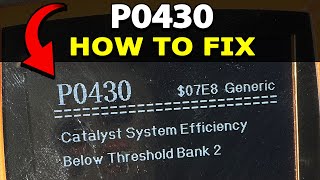
The P0430 code on a 2002-2006 GMC Yukon Denali indicates that the catalytic converter on Bank 2 (passenger side) is no longer working efficiently. While the most common cause is a failing catalytic converter, it's crucial to first rule out exhaust leaks from cracked manifolds or broken bolts and faulty oxygen sensors to avoid a costly misdiagnosis.
- P0430 means the catalytic converter on the passenger side (Bank 2) is inefficient.
- Before buying a new converter, thoroughly check for exhaust leaks, especially at the manifold, and test the oxygen sensors.
- If you have any engine misfire codes, fix those first or you will damage the new catalytic converter.
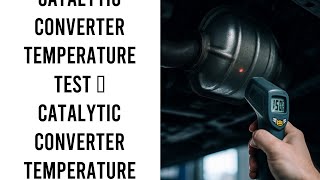
- A working converter should be hotter at its outlet than its inlet; this can be checked with an infrared thermometer.
- On these specific trucks, this code is very common and often does mean the converter needs replacement, but proper diagnosis is key to avoiding wasted money.
What's Unique About the 2002-2006 Gmc YUKON DENALI
For the GMT800 platform, which includes the 2002-2006 Yukon Denali, the P0430 code is a very common issue as these vehicles age. The primary culprits are often the original catalytic converters reaching the end of their service life or exhaust manifold leaks, which are frequent on these V8 engines due to broken manifold bolts. 🎬 Watch: How to repair broken exhaust manifold bolts on GM V8s. A notable TSB (PIP3119P) for 2002 models indicates that the P0420 and P0430 diagnostic tests are disabled for the first hour of engine operation to prevent false codes at low mileage, highlighting a sensitivity in the monitoring system from the factory.
Diagnostic Flowchart
Tap your situation to follow the diagnostic path that matches what you're seeing on this vehicle.
Symptoms You May Notice
- Check Engine Light is on
- Reduced engine power and sluggish acceleration
- Decreased fuel economy
- A sulfur or "rotten egg" smell from the exhaust
- Failed emissions test
- Audible ticking or exhaust leak sound, especially when the engine is cold
- Immediately replacing the catalytic converter without checking for exhaust leaks or testing the oxygen sensors. An exhaust leak, especially from a broken manifold bolt, can allow extra oxygen into the system, fooling the sensors and triggering a false P0430 code. Always diagnose in order: Leaks > Sensors > Converter.
Most Likely Causes
- Failing Catalytic Converter (Bank 2) 🔴 High Probability → Shop Catalytic Converter Catalytic converters have a finite lifespan and can fail from age, contamination from burning oil/coolant, or physical damage. On high-mileage GMT800s, this is the most frequent ultimate cause, often after underlying issues like misfires have been ignored.
How to confirm: Use an infrared thermometer to check the temperature of the exhaust pipe before and after the converter. A working converter should be significantly hotter (at least 100°F) at the outlet than the inlet. A scan tool can also be used to observe that the downstream O2 sensor voltage is fluctuating rapidly like the upstream sensor, instead of holding steady.
Typical fix: Replace the Bank 2 catalytic converter.
Est. part cost: $250-$700 - Exhaust Leak 🟡 Medium Probability The exhaust manifolds on the 4.8L, 5.3L, and 6.0L GM V8 engines are notorious for developing leaks due to broken rear manifold-to-head bolts. The constant expansion and contraction cycles snap the bolts, creating a leak that introduces oxygen and tricks the O2 sensors, causing a false P0430.
How to confirm: Visually inspect the exhaust system, especially the rearmost bolt on the passenger-side exhaust manifold. Look for black soot trails. Listen for a distinct ticking or hissing sound that is loudest on a cold start and may quiet down as the engine warms up and the metal expands. A smoke machine can also be used to pinpoint leaks that are not visually obvious.
Typical fix: Repair the leak. This often involves extracting the broken bolt from the cylinder head and replacing the manifold gasket. Sometimes the manifold itself is cracked and requires replacement.
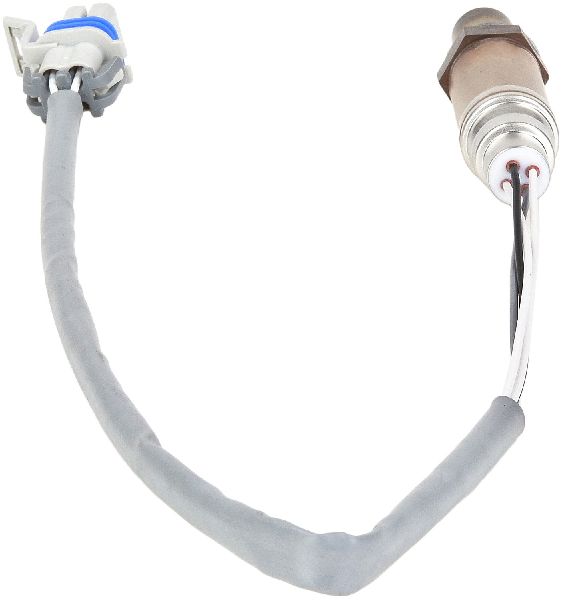
Est. part cost: $20-$300 - Faulty Oxygen (O2) Sensor 🟡 Medium Probability → Shop Oxygen Sensor O2 sensors are wear items and degrade over time, especially with over 100,000 miles. They can become lazy or biased, sending inaccurate readings to the computer and tricking it into thinking the converter has failed. Owners on forums often recommend replacing original sensors as preventative maintenance.
How to confirm: Use a scan tool to graph the voltage of the upstream and downstream O2 sensors. A healthy downstream sensor should show a relatively steady voltage. If it appears lazy, stuck, or switches as rapidly as the upstream sensor, it may be faulty. Swapping the Bank 1 and Bank 2 downstream sensors (if identical) and seeing if the code follows to P0420 is a definitive test.
Typical fix: Replace the faulty oxygen sensor, typically the downstream (post-cat) sensor on Bank 2.
Est. part cost: $40-$100
Rare But Worth Checking
- Engine Misfires or Fuel System Issues: An underlying issue like a bad spark plug, faulty ignition coil, or leaking fuel injector can send unburned fuel into the exhaust, which superheats and destroys the catalytic converter. If you don't fix the root cause, you will destroy the new converter as well. Always check for and resolve other codes (like P0300-P0308) before replacing the converter.
- Internal Engine Problems: A leaking head gasket or worn piston rings can allow coolant or oil to enter the exhaust, contaminating and ruining the catalytic converter. This is known as converter poisoning and is a less common but serious issue to consider if you notice excessive smoke or fluid loss.
Diagnosis Steps
- Check for other DTCs. If any misfire (P030x) or fuel system (P017x) codes are present, address them first, as they are likely the root cause of the converter inefficiency.
- Visually inspect the entire exhaust system for leaks. Pay close attention to the exhaust manifold on Bank 2 (passenger side), especially the rear bolt. Look for soot and listen for audible leaks on a cold start. For hard-to-find leaks, use a smoke machine.
- Use a scan tool to observe the live data for the Bank 2 oxygen sensors (Sensor 1 and Sensor 2). At operating temperature and steady RPM (around 2000 RPM), the upstream sensor (Sensor 1) should fluctuate rapidly between ~0.1V and ~0.9V. The downstream sensor (Sensor 2) should show a much slower, steadier voltage, typically above 0.5V. If the downstream sensor is mirroring the upstream sensor's activity, the converter is likely not working.
- If the downstream O2 sensor appears lazy or stuck, it may be faulty. Consider swapping the Bank 1 and Bank 2 downstream sensors (if they are the same part number) and see if the code changes to P0420. If it does, the sensor is bad.
- If sensors and wiring are good and there are no exhaust leaks, perform a temperature test on the catalytic converter using an infrared thermometer. The outlet pipe should be at least 100°F hotter than the inlet pipe. If it's the same temperature or cooler, the converter is not functioning.
- If all other possibilities are exhausted, the Bank 2 catalytic converter has failed and needs replacement.
Parts You'll Likely Need
- Catalytic Converter (Bank 2) — This is the most common direct cause for the P0430 code, especially on higher-mileage vehicles where the original converter has worn out.
Trusted brands: Walker, MagnaFlow, ACDelco
OEM price range: $500-$900
Aftermarket price range: $250-$700 - Downstream Oxygen Sensor (Bank 2, Sensor 2)
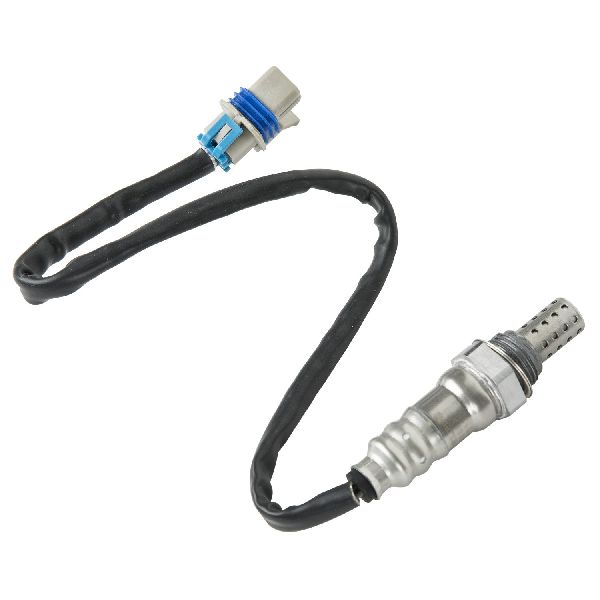
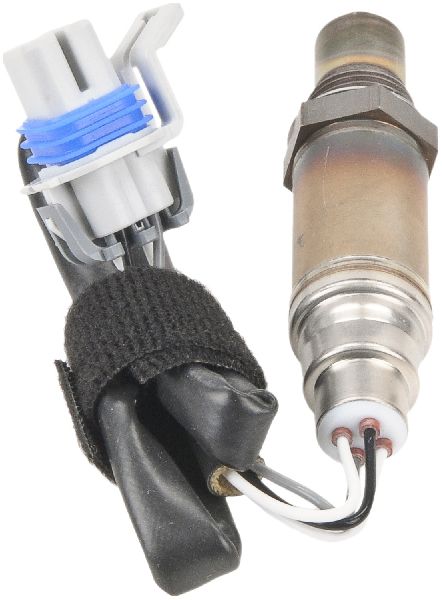
(OEM #ACDelco 213-4229 (GM 12609457))— A faulty downstream O2 sensor can send incorrect data, leading to a false P0430 code. It's a common point of failure and a critical part of the diagnostic process.
Trusted brands: Denso, Bosch, ACDelco
OEM price range: $80-$150
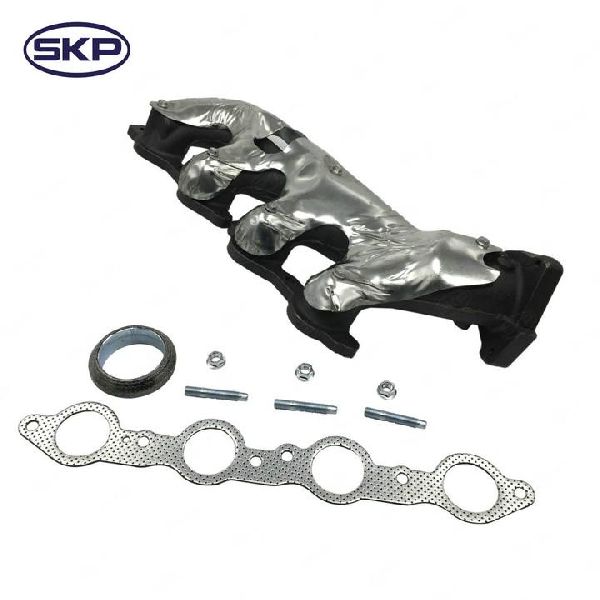
Aftermarket price range: $40-$100 - Exhaust Manifold Gasket
(OEM #Fel-Pro MS 98016 T (aftermarket))— Leaks between the cylinder head and the exhaust manifold are common due to broken bolts and will introduce oxygen that throws off sensor readings, causing a false P0430 code.
Trusted brands: Fel-Pro, ACDelco
OEM price range: $20-$40
Aftermarket price range: $10-$25
Related Codes That Often Appear With This One
- P0420 — This is the identical code for Bank 1 (driver's side). If both converters are of similar age and condition, they may fail around the same time.
- P0300-P0308 — These are misfire codes. An engine misfire is a primary cause of catalytic converter failure because it allows raw, unburned fuel to enter the exhaust and damage the converter.
- P0151-P0161 — These codes relate specifically to the Bank 2 oxygen sensors (e.g., P0157 - O2 Sensor Circuit Low Voltage Bank 2 Sensor 2). Their presence strongly suggests the O2 sensor itself or its circuit is the problem, not the converter.
Technical Service Bulletins (TSBs) & Recalls
- PIP3119P: Notes that for some 2002 models, the diagnostic for codes P0420 and P0430 is disabled for the first hour of engine operation to prevent false codes at low mileage. This TSB also provides a specific drive cycle procedure to 'break-in' a newly installed catalytic converter to prevent th
Platform-Specific Known Issues
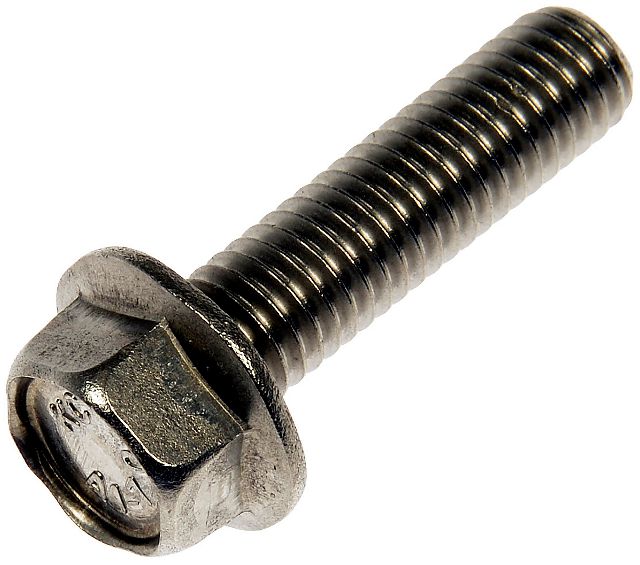
- Broken Exhaust Manifold Bolts: → Shop Exhaust Manifold A very common failure on GMT800 trucks with V8 engines is for the rearmost exhaust manifold bolts to snap due to heat cycles. This creates an exhaust leak right before the upstream O2 sensor. The leak sucks in fresh air, which the O2 sensor reads as a lean condition. The ECM then commands a richer fuel mixture, which can overwhelm the catalytic converter and, combined with the skewed O2 readings from the leak, trigger a false P0430 code. Many owners have fixed their P0430 code simply by repairing the manifold leak and not replacing the converter.
Mechanic-Grade Diagnostic Values
- Upstream O2 Sensor (Bank 2, Sensor 1) Voltage — expected: Rapidly fluctuating between approximately 0.1V and 0.9V at steady 2000 RPM.. Failure: A slow or non-responsive sensor that is stuck at a specific voltage.
- Downstream O2 Sensor (Bank 2, Sensor 2) Voltage — expected: Relatively steady voltage, typically between 0.5V and 0.8V at steady 2000 RPM.. Failure: Voltage fluctuates rapidly, mirroring the upstream sensor, indicating the catalyst is not working. A voltage stuck low (near 0.1V) or high (near 0.9V) can indicate a sensor or wiring fault.
- Engine Vacuum at Intake Manifold — expected: Steady 16-21 inches of mercury (inHg) at idle.. Failure: When revving to 2500 RPM, if the vacuum drops and does not recover, or slowly continues to fall, it indicates an exhaust restriction (clogged converter).
- Exhaust Backpressure (tested at upstream O2 sensor port) — expected: Should not exceed 1.0 PSI at idle and 3.0 PSI at 2500 RPM.. Failure: Pressures higher than the specified limits confirm a physical blockage in the exhaust system, most commonly a clogged catalytic converter.
Hidden / Shadow Codes Worth Checking
- Mode $06, Catalyst Monitor (e.g., Test ID $81): Mode $06 data provides access to the raw results of the PCM's self-tests before a full-blown DTC is set. For the catalyst monitor, the PCM calculates an efficiency ratio by comparing upstream and downstream O2 sensor switching. This value is compared against a minimum and maximum threshold. (see via A professional scan tool with Mode $06 capability. A technician can view the test value and see if it is close to the failure threshold, indicating a marginal catalytic converter even if the P0430 code is not yet consistently present.)
Scan Tool Commands That Help
- Tech 2 / GDS2: Catalyst System Test / Catalyst Monitor Drive Cycle — After replacing a catalytic converter, the PCM's catalyst monitor must be run to confirm the repair. A specific drive cycle (a sequence of starting, driving at various speeds, and stopping) is often required to allow the PCM to test the new converter's efficiency. The TSB PIP3119P mentions a 'break-in' procedure for new converters to prevent a false code from being set immediately after installation.
- Tech 2 / GDS2: Snapshot - Engine Data — This function allows a technician to record a 'movie' of live data parameters during a specific event, such as when symptoms of the P0430 code occur. By triggering a snapshot during a test drive, the technician can review the O2 sensor graphs, fuel trims, and other data frame-by-frame to pinpoint the exact moment of failure.
Wiring & Ground Locations
- G104 — Rear of the driver's side (Bank 1) cylinder head.. This is a primary engine-to-chassis ground. While on the opposite bank, poor grounding here can introduce electrical noise and voltage offsets that affect sensor readings across the entire engine, including the Bank 2 O2 sensors.
- PCM Ground (on engine block) — A dedicated ground wire for the Powertrain Control Module (PCM) that typically bolts to the top rear of the engine block.. This is the most critical ground for all engine sensors. If this connection is loose, corroded, or broken, the PCM gets unreliable data from the O2 sensors, which can easily trigger false P0430/P0420 codes and other seemingly unrelated electrical issues.
- Blue PCM Connector (C1), Pin 65 — At the Powertrain Control Module (PCM), typically located in the engine bay.. On 1999-2002 model year trucks, this pin is the high signal wire (Purple wire) for the Bank 2, Sensor 2 (downstream) oxygen sensor. A technician can test for voltage and continuity directly at this pin to diagnose wiring issues between the sensor and the PCM.
- Blue PCM Connector (C1), Pin 63 — At the Powertrain Control Module (PCM), typically located in the engine bay.. On 1999-2002 model year trucks, this pin is the low signal/sensor ground wire (Tan wire) for the Bank 2, Sensor 2 oxygen sensor. A fault in this ground circuit can cause incorrect sensor readings.
Real Owner Repair Stories
- Synthesized from multiple forum threads (TahoeYukonForum, GM-Trucks) (2004 GMC Yukon Denali, ~150,000 miles) — Persistent P0430 code, slight ticking noise on cold start that would disappear when warm, passed emissions a few months prior.
❌ Tried (didn't work) Replacing the Bank 2 downstream O2 sensor., Using a bottle of catalytic converter cleaner., Clearing the code, only for it to return within 50-100 miles.
✅ What actually fixed it The owner was advised by a mechanic to check the exhaust manifold bolts. Upon inspection, the rearmost bolt on the passenger side manifold had snapped off. The manifold was lifting slightly from the head when cold, creating a small exhaust leak that was sealed by thermal expansion as the engine warmed up. The fix involved extracting the broken bolt, replacing the exhaust manifold gasket (Fel-Pro), and installing a new bolt. The P0430 code did not return after the repair.
"I Checked Everything" — The Actual Cause
- A common scenario for a false P0430 on these trucks is a hairline crack in the passenger-side exhaust manifold or a broken rear manifold bolt. A standard smoke test performed on a cold engine may show no leaks, as the crack or gap is closed. However, once the engine reaches operating temperature, the metal expands, opening the crack and allowing unmetered oxygen to be sucked into the exhaust stream just before the upstream O2 sensor. This fools the sensor and the PCM into diagnosing an inefficient converter. The key is to listen for a distinct 'tick' on a cold start that goes away after a few minutes, which is a classic sign of this specific failure mode.
OEM Part Supersession History
ACDelco 213-4229→GM 12609457— Part number consolidation and branding. ACDelco is the GM Original Equipment service brand, and 12609457 is the current GM part number.
Heads up: While a direct replacement, some official GM parts sources note that this sensor 'requires programming and/or special setup procedures.' This may refer to the need to perform a catalyst monitor drive cycle or clear adaptations with a scan tool after installation to ensure the PCM correctly reads the new sensor.
Model Year Variations Within This Range
- 2002-2006: The Yukon Denali in this period could be equipped with either the LQ4 (9.4:1 compression) or the higher-output LQ9 (10.0:1 compression, flat-top pistons) 6.0L V8. The LQ9 was generally standard on Denali models. While diagnosis for P0430 is identical, being aware of the specific engine is useful for ordering other components.
- 2004: Around the 2004 model year, GM transitioned many of its trucks, including the Yukon, from a return-style fuel system (with a regulator on the fuel rail) to a returnless system (with the regulator in the tank). This changes the procedure and specifications for fuel pressure testing, which is a relevant step if investigating a fuel system issue as a root cause for converter failure.
Helpful Videos

We Have This Part in Stock

The information in this article is provided for general reference and educational purposes only. Vehicle specifications, procedures, and part compatibility can vary by production date, trim level, and region. Always consult your vehicle's factory service manual and verify part numbers before purchasing or performing repairs. Safety-critical components such as airbags, seat belts, and braking systems should be installed by a qualified professional.
- Gmc YUKON DENALI:
- 🧭 Diagnostic Flowchart
- 🎬 Helpful Videos
- 🛍️ Shop This Part
- What's Unique About the 2002-2006 Gmc YUKON DENALI
- Symptoms You May Notice
- Most Likely Causes
- Rare But Worth Checking
- Diagnosis Steps
- Parts You'll Likely Need
- Related Codes That Often Appear With This One
- Technical Service Bulletins (TSBs) & Recalls
- Platform-Specific Known Issues
- Mechanic-Grade Diagnostic Values
- Hidden / Shadow Codes Worth Checking
- Scan Tool Commands That Help
- Wiring & Ground Locations
- Real Owner Repair Stories
- "I Checked Everything" — The Actual Cause
- OEM Part Supersession History
- Model Year Variations Within This Range
- 🎟️ Get 5% Off