

P0430 on 2017-2018 GMC Yukon Denali: Catalyst Efficiency Causes and Fixes
P0430 on a 2017-2018 Yukon Denali usually means the passenger side (Bank 2) catalytic converter is failing, which is an expensive repair often costing over $2,500. Before replacing it, it is critical to check for underlying causes common to this platform, such as exhaust leaks, failing oxygen sensors, a poorly sealed air filter box (per TSB 16-NA-111), and oil consumption issues related to the Active Fuel Management (AFM) system.
- P0430 points to an inefficient catalytic converter on the passenger side (Bank 2).
- This is a very expensive repair; therefore, cheaper potential causes must be ruled out first.
- Always check for exhaust leaks and inspect the air filter box for a proper seal before condemning the converter.
- If you have any engine misfire codes (P030x), they MUST be fixed first, or you will destroy the new catalytic converter.
- Confirm the diagnosis by swapping O2 sensors or analyzing their live data with a scan tool before purchasing parts.
What's Unique About the 2017-2018 Gmc YUKON DENALI
On these GM trucks and SUVs with the 6.2L L86 V8, the P0430 code is frequently a symptom of deeper platform-specific issues. The Active/Dynamic Fuel Management (AFM/DFM) system is known to cause issues with lifters, leading to excessive oil consumption. This oil gets burned and sent down the exhaust, fouling oxygen sensors and poisoning the catalytic converter, causing premature failure. Additionally, GM has issued TSB #16-NA-111 because a poorly sealing air filter box can allow abrasive debris to enter the engine, contaminating sensors and clogging the converter. Lastly, TSB #PIP3119P notes that the diagnostic test for this code is intentionally disabled for the first hour of vehicle operation to allow a new converter to 'break-in', meaning a false code can be set if a battery was disconnected or a new converter was installed without a proper drive cycle.
Diagnostic Flowchart
Tap your situation to follow the diagnostic path that matches what you're seeing on this vehicle.
Symptoms You May Notice
- Check Engine Light is on
- Reduced engine power or sluggish acceleration
- A sulfur or "rotten egg" smell from the exhaust
- Failing an emissions test
- Rattling noise from under the vehicle if the converter's internal structure has broken apart
- Reduced fuel economy
- Immediately replacing the oxygen sensors without testing them. The P0430 code often means the O2 sensors are working correctly and have detected a real problem with the converter.
- Replacing the catalytic converter without first checking for exhaust leaks, fixing the airbox seal (TSB 16-NA-111), or fixing other engine codes like misfires or oil consumption. This can lead to the new converter failing prematurely.
- Using cheap, low-quality aftermarket catalytic converters or oxygen sensors. Many forum users report that these parts do not meet the PCM's strict monitoring parameters and cause the code to return.
Most Likely Causes
- Failing Catalytic Converter (Bank 2) 🔴 High Probability → Shop Catalytic Converter While converters have a finite life, they often fail prematurely on this platform due to other issues. Excessive oil consumption from Active Fuel Management (AFM) system problems is a primary culprit, as burnt oil contaminates the catalyst. Engine misfires and debris ingestion from a faulty airbox seal (TSB 16-NA-111) also destroy converters.
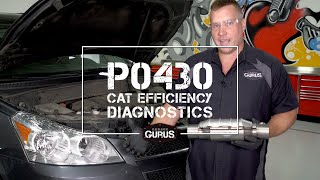
How to confirm: Use a scan tool to observe the downstream O2 sensor data; if it switches rapidly like the upstream sensor, the converter is not working. 🎬 Watch: How to use a scan tool to diagnose converter efficiency. An infrared thermometer can also be used; the outlet of a working converter should be at least 100°F hotter than the inlet after the engine is fully warmed up.
Typical fix: Replace the Bank 2 catalytic converter (passenger side). This MUST be done only after confirming and repairing the root cause 🎬 Watch this walkthrough on installing new catalytic converters. of the failure (e.g., oil consumption, misfires, airbox leak).
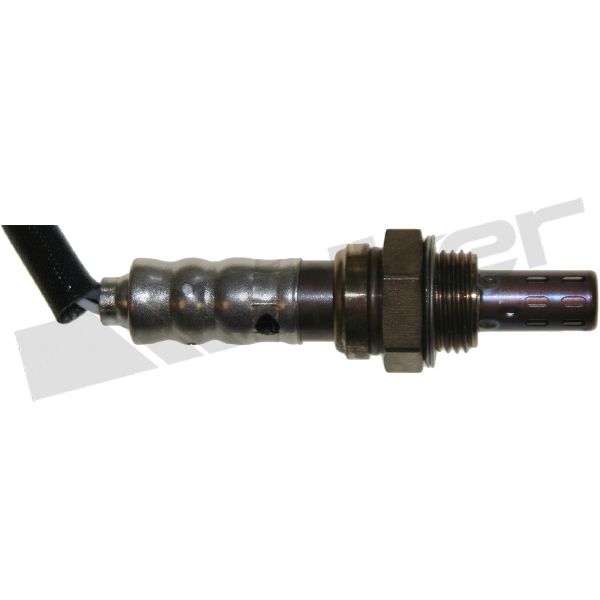
Est. part cost: $400-$2000+ - Failing Oxygen (O2) Sensor 🟡 Medium Probability → Shop Oxygen Sensor O2 sensors are exposed to extreme heat and wear out. On this platform, they are also highly susceptible to contamination from burnt oil (due to AFM issues) or silicone/dirt debris that gets past the air filter (per TSB 16-NA-111). A faulty downstream sensor can send incorrect data, while a faulty upstream sensor can create a poor air/fuel mixture that damages the converter.
How to confirm: The best method is to swap the downstream (Sensor 2) O2 sensors from Bank 1 and Bank 2. Clear the codes and drive. If the code returns as P0420 (Bank 1), the sensor is faulty. If P0430 returns, the sensor is likely not the cause. A scan tool can also graph sensor voltage to check for lazy or erratic readings.
Typical fix: Replace the faulty oxygen sensor. It is often recommended to replace them in pairs (e.g., both downstream sensors) and to use high-quality OEM or OE-spec brands (ACDelco, Denso) to avoid repeat issues.
Est. part cost: $50-$200 - Exhaust System Leak ⚪ Low Probability Rust and vibration can cause gaskets and welds in the exhaust system to fail, particularly at the manifold flanges. While less common than on older GM trucks with broken manifold bolts, a leak can still occur.
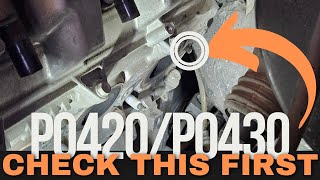
How to confirm: Visually inspect the exhaust system from the engine to the catalytic converter for black soot marks, which indicate a leak. You can also use a smoke machine to pressurize the exhaust and see where smoke escapes. A leak will allow oxygen into the exhaust, fooling the O2 sensors.
Typical fix: Replace the leaking gasket or repair the leaking section of the exhaust pipe.
Est. part cost: $20-$100
Rare But Worth Checking
- Underlying Engine Issues: Engine misfires (P0300-P0308) or persistent lean/rich fuel conditions (P0171/P0174, P219B) can dump unburned fuel or create improper mixtures in the exhaust, overheating and destroying a new catalytic converter quickly. These issues MUST be fixed before replacing the converter.
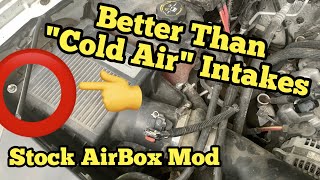
- Poorly Sealing Air Filter Housing: → Shop Air Cleaner Assembly A critical and well-documented issue on this GM platform (per TSB #16-NA-111) is a warped or improperly secured air filter box cover. This allows abrasive sand and debris to bypass the filter, which then gets sucked into the engine. This debris can score internal components, contaminate the MAF sensor, foul the O2 sensors, and physically clog the catalytic converter, directly causing a P0430 code. Always check for a tight seal and look for dirt in the 'clean' side of the intake tube.
Diagnosis Steps
- Scan for any other trouble codes. If codes for misfires (P030x), fuel trim (P0171/P0174), or other sensor faults are present, diagnose and repair them first as they are likely the root cause.
- Inspect the air filter housing per TSB #16-NA-111. Remove the air filter and check for dirt/debris in the clean side of the airbox and intake tube. Ensure the cover is seated correctly and the retaining tabs are not broken.
- Check for oil consumption. Note the oil level and condition. Excessive consumption is a known issue with the 6.2L's AFM system and will destroy a new converter.
- Carefully inspect the exhaust system for any signs of leaks between the engine's exhaust manifold and the Bank 2 catalytic converter. Pay close attention to gaskets and welds.
- With the engine fully warmed up, use an infrared thermometer to measure the temperature of the pipe entering the Bank 2 converter and the pipe exiting it. The outlet should be at least 100°F hotter than the inlet. If temperatures are similar or the outlet is cooler, the converter is not working.
- With a scan tool, graph the voltage of the Bank 2 upstream (Sensor 1) and downstream (Sensor 2) oxygen sensors. The upstream sensor should fluctuate rapidly. A healthy converter will show a much slower, steadier voltage from the downstream sensor. If the downstream sensor mirrors the upstream sensor's activity, the converter has failed.
- If the converter appears to be bad but you want to be certain, perform a final check by swapping the downstream O2 sensors between Bank 1 and Bank 2. If the code changes to P0420, the sensor is the problem. If P0430 returns, the catalytic converter is confirmed to be the fault.
- Check for any relevant recalls or Technical Service Bulletins (TSBs) from GMC for your specific VIN.
Parts You'll Likely Need
- Bank 2 Catalytic Converter
(OEM #GM 23385906 (Example, always verify with VIN))— This is the most common part replaced for a P0430 code, indicating the part has reached the end of its service life or, more likely on this platform, has been damaged by oil consumption, misfires, or debris ingestion.
Trusted brands: ACDelco (GM Genuine), Walker, MagnaFlow
OEM price range: $1500-$2500
Aftermarket price range: $400-$1600 - Bank 2, Sensor 2 (Downstream) Oxygen Sensor
(OEM #ACDelco 12678994 or Denso 234-4668 (Examples, verify with VIN))— A faulty downstream O2 sensor can send incorrect readings to the PCM, falsely triggering the P0430 code. It can also fail due to contamination from oil or debris.
Trusted brands: ACDelco, Denso, Bosch
OEM price range: $80-$150
Aftermarket price range: $50-$100
Related Codes That Often Appear With This One
- P0420 — This is the identical code for Bank 1 (driver's side). If both catalytic converters are the same age and subjected to the same conditions (e.g., oil consumption), they may fail around the same time.
- P0300-P0308 — These are misfire codes. Unburned fuel from a misfiring cylinder will enter the exhaust and can quickly destroy the catalytic converter, leading to a P0430 code. A flashing check engine light indicates a severe misfire.
- P219B — This code for 'Bank 2 Air-Fuel Ratio Imbalance' points to an underlying fuel delivery problem. The issue that causes P219B (like a bad injector) can also damage the converter, causing P0430 to appear as well.
Technical Service Bulletins (TSBs) & Recalls
- PIP3119P: Notes that P0420 and P0430 diagnostics are disabled for the first hour of operation on new vehicles to allow for catalyst break-in. A battery disconnect or new converter install can lead to a false code if a proper drive cycle isn't performed.
- 16-NA-111: Details how a poorly sealing air filter housing allows debris to bypass the filter, contaminating O2 sensors and clogging the catalytic converter. It instructs technicians to validate the airbox seal BEFORE replacing any parts for P0420/P0430 codes.
Platform-Specific Known Issues
- A known issue on this platform is a poorly sealing air filter housing, which can allow sand and debris to enter the intake, ultimately damaging O2 sensors and the catalytic converters. This is documented in TSB #16-NA-111 for similar models.
- Per TSB #PIP3119P, the self-test that triggers code P0430 is disabled for the first hour of engine operation on some models to prevent false codes during warm-up or after a new converter installation.
- The 6.2L V8 (L86) engine's Active Fuel Management (AFM) system is known for potential lifter failures, which can lead to significant oil consumption. This burnt oil contaminates and prematurely destroys catalytic converters, making it a frequent root cause of P0430.
Mechanic-Grade Diagnostic Values
- Upstream O2 Sensor (B2S1) Voltage — expected: Constantly fluctuating from approximately 100mV to 900mV (0.1V to 0.9V) in closed loop.. Failure: A slow, non-responsive, or flat-lined voltage reading.
- Downstream O2 Sensor (B2S2) Voltage (with a good catalyst) — expected: Relatively steady voltage, typically above 450mV (0.45V).. Failure: Voltage that rapidly fluctuates, mimicking the upstream sensor's pattern, indicates a failed converter.
- Long Term Fuel Trim (LTFT) at idle and cruise — expected: Close to 0%, ideally within +/- 5%.. Failure: Consistently high positive values (e.g., > +10%) suggest a vacuum leak, while high negative values (e.g., < -10%) can indicate leaking injectors or other issues causing a rich condition.
Scan Tool Commands That Help
- GDS2 (GM Global Diagnostic System 2): Vehicle DTC Information / All DTC Check — To perform an initial scan of all vehicle modules for any stored trouble codes, which is the first step in any diagnosis.
- GDS2 (GM Global Diagnostic System 2): Engine Control Module (ECM) Data Display — To view live data streams, including O2 sensor voltages, short-term fuel trims (STFT), and long-term fuel trims (LTFT) to assess engine performance and sensor activity in real-time.
- GDS2 (GM Global Diagnostic System 2): Output Control / Bidirectional Controls — To command specific components on or off, such as testing the O2 sensor heater circuits or other related actuators to verify their function without having to remove them.
Wiring & Ground Locations
- Bank 2 O2 Sensor Harness — The wiring for the oxygen sensors runs along the passenger side of the engine and exhaust.. The wiring harness can be susceptible to heat damage from the exhaust manifold or chafing against engine or chassis components. A short or open in the O2 sensor wiring can cause false readings, leading to a P0430 code.
- Engine Harness Chafe Points (K2XX Platform) — General areas of concern on this platform include the harness contacting the ECM/TCM bracket, the upper control arm, and the shock tower bolt.. While not specific to the O2 sensor circuit alone, chafing in the main engine harness can cause a multitude of electrical issues, including short-to-ground or short-to-voltage on sensor circuits, which could theoretically trigger fault codes. A thorough visual inspection of the harness routing is warranted if electrical issues are suspected.
- O2 Sensor Connector — Connectors are located near each oxygen sensor on the exhaust.. The 4-terminal female connectors can become corroded or filled with debris, leading to a poor connection and incorrect signals. A 'wiggle test' on the connector while watching live data can help identify a bad connection.
Real Owner Repair Stories
- Reddit user on r/MechanicAdvice (Vehicle with 104k miles, likely a Honda but the diagnostic principle is universal and cited by mechanics for GM vehicles as well.) — P0420 & P0430 codes appeared intermittently.
❌ Tried (didn't work) Using a catalytic converter cleaner (Cataclean) provided a temporary fix, but the code returned after a month., Replacing all four oxygen sensors did not solve the problem; the codes returned.
✅ What actually fixed it The consensus from multiple technicians in the thread was that after ruling out exhaust leaks and confirming O2 sensors are switching, the only permanent fix is to replace the catalytic converter(s). The user acknowledged this was the likely next step.
OEM Part Supersession History
ACDelco 213-4229 (GM 12609457)→Not directly superseded but is for the older GMT900 platform. The K2UG platform (2015+) uses different sensors.— Change in vehicle generation and engine (L94 vs L86).
Heads up: The O2 sensor for a 2014 (GMT900) Yukon Denali will not work on a 2017 (K2UG) Yukon Denali. The correct part for the 2017 model is often cited as GM 12678994 (downstream). Always verify with VIN.
Model Year Variations Within This Range
- 2018: The 2018 Yukon Denali was equipped with a new 10-speed automatic transmission, replacing the 8-speed used in the 2017 model. It also received a new grille design and different interior wood trim. The core 6.2L L86 engine and its emissions components remained the same.
Helpful Videos
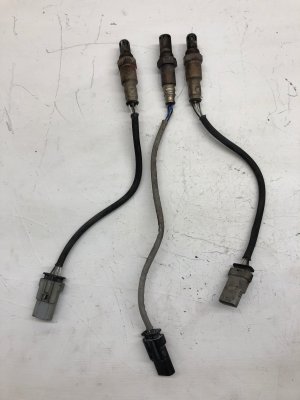
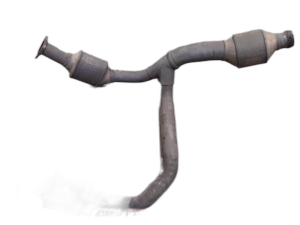
Used OEM Parts in Stock
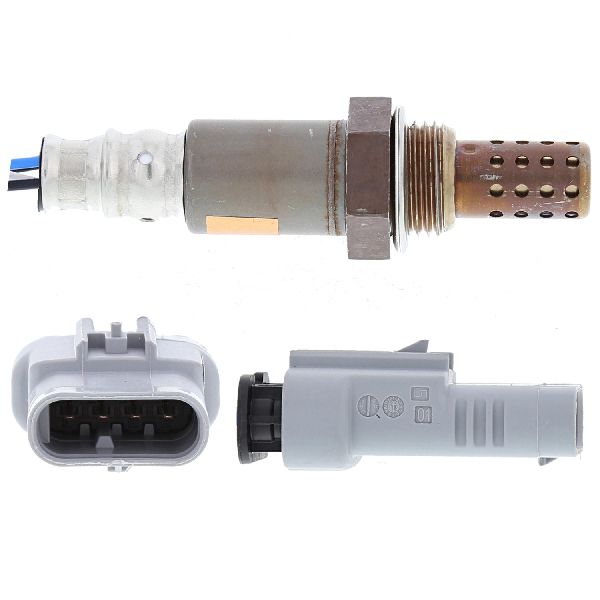
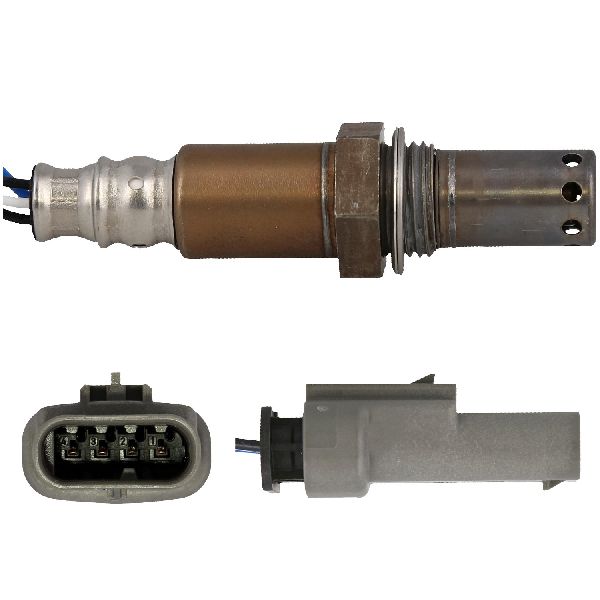
New Aftermarket Parts Available


The information in this article is provided for general reference and educational purposes only. Vehicle specifications, procedures, and part compatibility can vary by production date, trim level, and region. Always consult your vehicle's factory service manual and verify part numbers before purchasing or performing repairs. Safety-critical components such as airbags, seat belts, and braking systems should be installed by a qualified professional.
- Gmc YUKON DENALI:
- 🧭 Diagnostic Flowchart
- 🎬 Helpful Videos
- 🛍️ Shop This Part
- What's Unique About the 2017-2018 Gmc YUKON DENALI
- Symptoms You May Notice
- Most Likely Causes
- Rare But Worth Checking
- Diagnosis Steps
- Parts You'll Likely Need
- Related Codes That Often Appear With This One
- Technical Service Bulletins (TSBs) & Recalls
- Platform-Specific Known Issues
- Mechanic-Grade Diagnostic Values
- Scan Tool Commands That Help
- Wiring & Ground Locations
- Real Owner Repair Stories
- OEM Part Supersession History
- Model Year Variations Within This Range
- 🎟️ Get 5% Off