

P0430 on 2010-2017 Honda Odyssey: Catalyst and Sensor Fixes
P0430 on a 2010-2017 Honda Odyssey means the Bank 2 catalytic converter is inefficient. While this often points to a failed converter, first check for faulty A/F or O2 sensors and exhaust leaks. On many models, faulty fuel injectors are the root cause, a fix covered by a Honda warranty extension (TSB 21-010) to 10 years/150,000 miles. A PCM software update may also be required.
- P0430 means the Bank 2 (front) catalytic converter is not working efficiently.
- Do not immediately assume the catalytic converter is bad. Diagnose in order: check for exhaust leaks, then test the A/F and O2 sensors.
- Check for other codes, especially for engine misfires (P030x), and fix those issues first to avoid damaging a new converter.
- For some model years, a known fuel injector problem could be the cause. Check with a Honda dealer for any applicable warranty extensions related to TSBs A21-010 or 19-072.
- If the catalytic converter does need replacement, the Bank 2 unit is located at the front of the engine bay, near the radiator.
What's Unique About the 2010-2017 Honda ODYSSEY

On the Honda J35 V6 engine, P0430 is a very common and well-documented issue. While catalytic converters can fail from age, Honda has issued multiple Technical Service Bulletins (TSBs) acknowledging that other components are often the true root cause. TSBs A19-072, A19-073, and 21-010 specifically identify faulty fuel injectors and/or PCM software that misinterprets sensor data as the primary culprits. This has led Honda to issue a warranty extension for the fuel injectors to 10 years or 150,000 miles for affected vehicles. Furthermore, Honda's Variable Cylinder Management (VCM) system, designed to improve fuel economy, is widely cited by owners for causing increased oil consumption and fouling the spark plugs on the VCM-deactivated cylinders (which often includes Bank 2), leading to misfires that can destroy the catalytic converter over time.
Diagnostic Flowchart

Tap your situation to follow the diagnostic path that matches what you're seeing on this vehicle.
Generation note: This range covers the end of the third generation (2010, model RL3/RL4) and the entire fourth generation (2011-2017, model RL5). While the core causes are similar, the TSBs and warranty extension for fuel injectors (e.g., TSB 21-010) are most prominent for the later fourth-gen models (2016-2017) and the subsequent fifth-gen (2018+). However, the underlying principles—that misfires, faulty sensors, or software glitches can trigger P0430—apply to all years. The VCM-related oil consumption issue is a known concern across all J35 V6 engines with this technology.
Symptoms You May Notice

- Check Engine Light is on
- Reduced engine power and acceleration
- Decrease in fuel economy
- Rotten egg or sulfur smell from the exhaust
- Vehicle will fail an emissions test
- Engine running rough or misfiring
- Immediately replacing the catalytic converter. This is an expensive mistake, as the true cause is often faulty fuel injectors, a software issue, or simple misfires which will destroy the new converter.
- Replacing oxygen sensors without checking for TSBs. On this vehicle, the injector and software issues are far more likely culprits than a bad O2 sensor if no specific sensor codes are present.
- Ignoring misfire codes (P030x) or air-fuel imbalance codes (P219B). These codes are critical clues pointing away from the converter and towards the fuel or ignition system.
Most Likely Causes

- Faulty Fuel Injectors 🔴 High Probability → Shop Fuel Injector This is a primary, well-documented cause. Honda TSBs 21-010 and A19-072 state that debris from the high-pressure fuel pump or the injector machining process can clog injectors. This causes an air-fuel ratio imbalance (often triggering P219B) and misfires (P030x), which can either be misinterpreted by the PCM as a bad converter or directly damage the converter with raw fuel.
How to confirm: Check for accompanying codes P219B or P0300-P0306. A Honda dealer can perform a "cylinder A/F test" as specified in the TSBs. If P0430 is present with these other codes, the TSB often directs to replace the injectors without further testing. Check your VIN with a Honda dealer for eligibility under the 10-year/150,000-mile warranty extension.
Typical fix: Replace all fuel injectors on both banks. The repair should be done under warranty if eligible. The kit often includes a new fuel joint pipe which must be replaced. OEM Injector Kit Part #: 06160-RLV-305. 🎬 Watch: Step-by-step guide to replacing your fuel injectors.
Est. part cost: $375-$550 for an OEM set. - Engine Control Unit (ECU/PCM) Software Issue 🔴 High Probability Multiple TSBs (including A19-072 and Acura's 17-034) explicitly state that the "PCM software may misinterpret sensor inputs as a deteriorated catalytic converter." In these cases, the hardware is fine, but the software logic is too sensitive.
How to confirm: This can only be confirmed by a Honda/Acura dealership with access to the Honda Diagnostic System (HDS) and i-HDS software. They can check the current software version against the latest available version mentioned in the TSBs.
Typical fix: Update the PGM-FI (powertrain) software. Per TSB A19-072, if only P0430 is present, the procedure is to first update the software, then perform the cylinder A/F test. If the test fails, the injectors are then replaced.
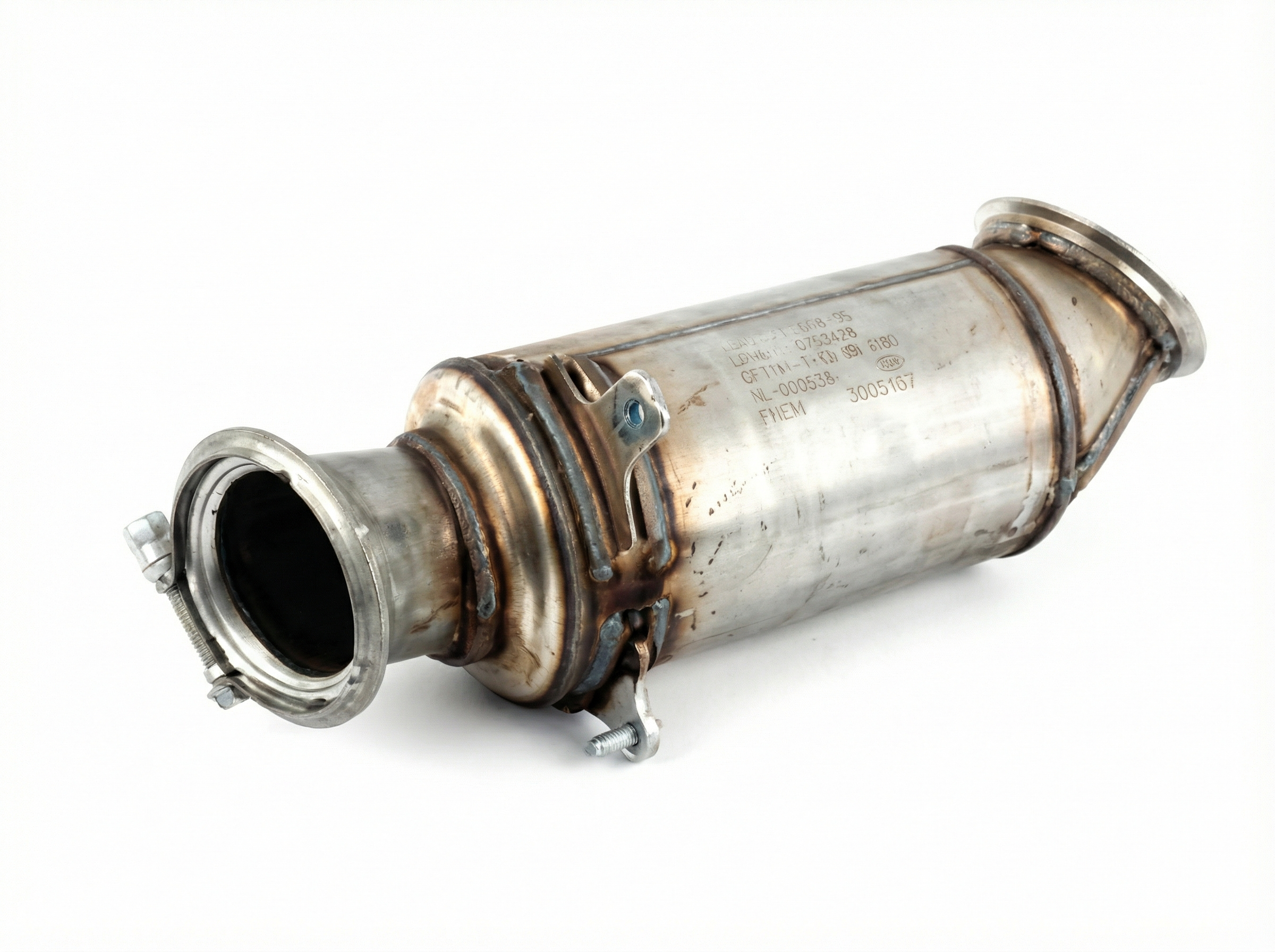
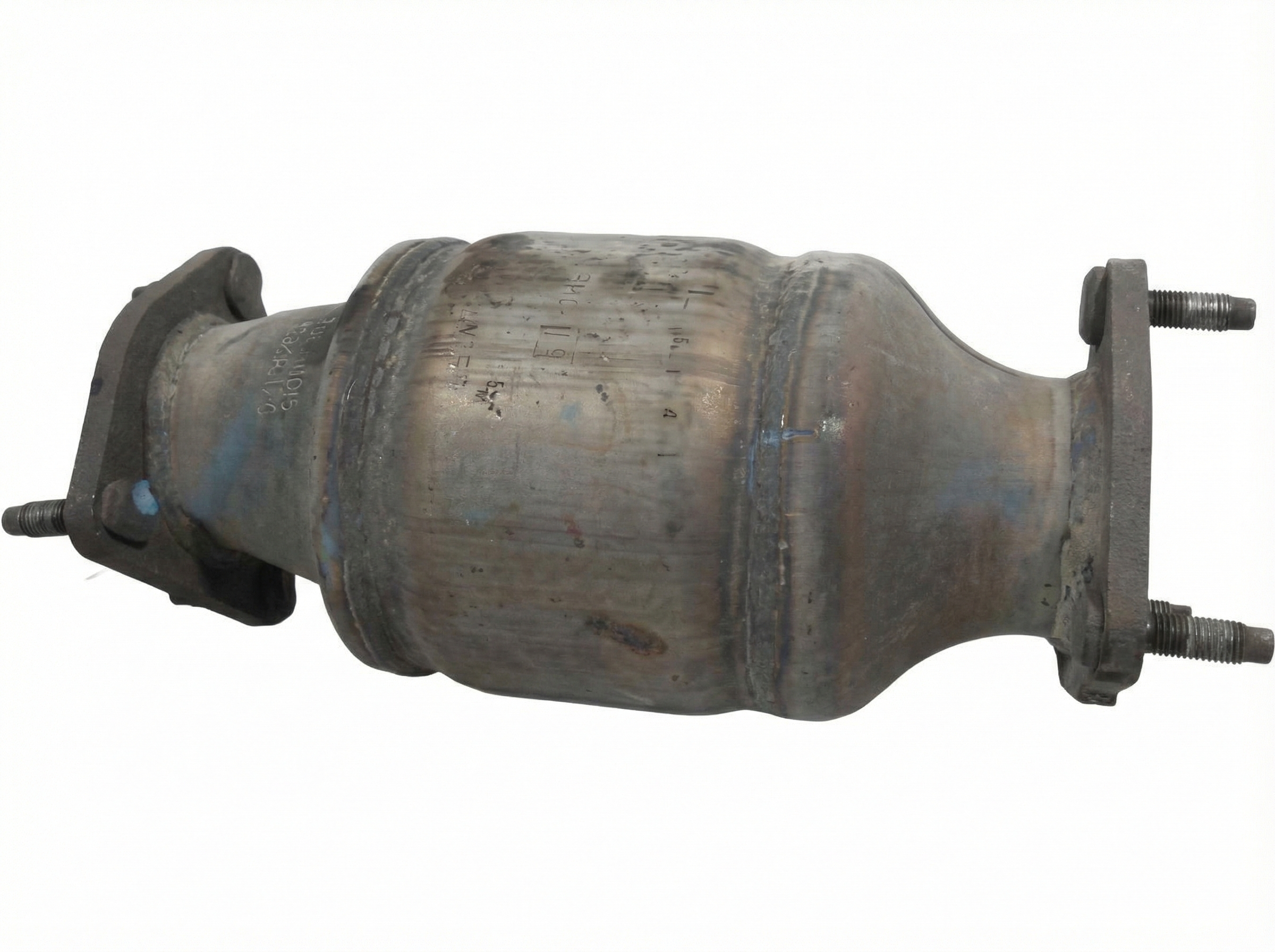
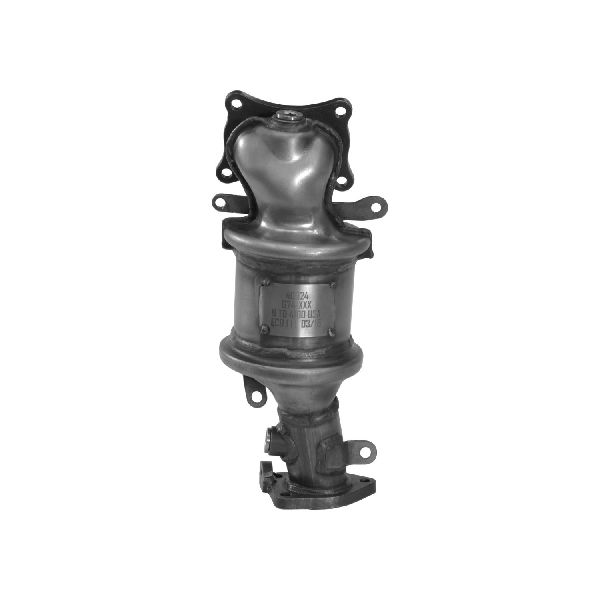
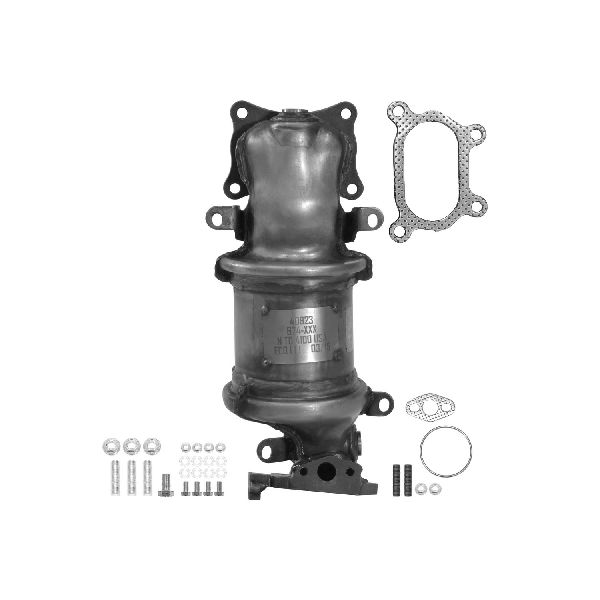
Est. part cost: $0 (if part of a warranty/TSB) to $150-$250 for a dealer software update. - Failed Catalytic Converter (Bank 2) 🟡 Medium Probability → Shop Catalytic Converter Converters can fail from normal aging over 100,000+ miles, but on this platform, failure is often accelerated by unresolved engine issues like injector problems, misfires, or oil burning from the VCM system fouling the catalyst substrate. A failed converter is often the *result* of another problem, not the root cause.
How to confirm: After ruling out injectors and software, use a scan tool to graph O2 sensor data. At a steady 2500 RPM, the upstream (B2S1) sensor should fluctuate rapidly, while the downstream (B2S2) should hold a relatively steady, high voltage. If B2S2 mirrors B2S1, the converter is not working. An infrared thermometer should show the converter outlet is at least 100°F hotter than the inlet.
Typical fix: Replace the Bank 2 catalytic converter (front, near radiator). Always fix the root cause (misfires, oil leaks, etc.) first, or the new converter will fail quickly. OEM Part Number for 2011-2013 models is 18290-RV0-A00 (rear manifold/converter assembly, often confused with Bank 1). Aftermarket options are available.
Est. part cost: $400-$900 for aftermarket, $1000+ for OEM. - Faulty Air/Fuel Ratio Sensor or Oxygen Sensor ⚪ Low Probability → Shop Oxygen Sensor Sensors can fail with age. A lazy or biased sensor can send incorrect data to the ECU, tricking it into thinking the converter has failed. An older Honda TSB from 2014 specifically links P0430 with a faulty primary A/F sensor (Bank 2, Sensor 1).
How to confirm: Test the sensor's response time, voltage, and internal heater resistance using a scan tool and multimeter. Compare readings to the service manual specifications. A faulty upstream A/F sensor may also have its own trouble code.
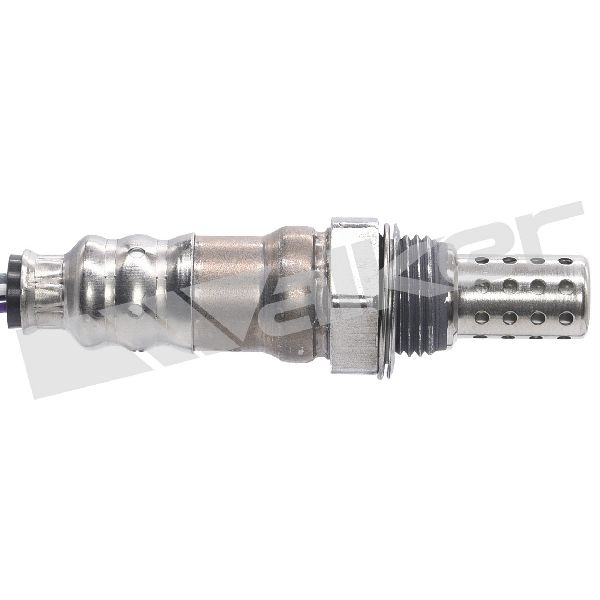
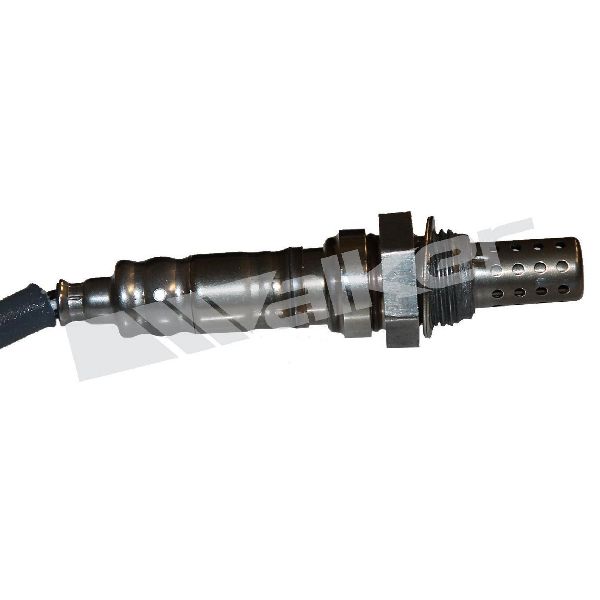
Typical fix: Replace the faulty sensor. Bank 2 Sensor 1 (Upstream A/F) is Denso part #234-9108. Bank 2 Sensor 2 (Downstream O2) is Denso part #234-4461.
Est. part cost: $50-$180 - Exhaust Leak ⚪ Low Probability Rust and vibration can cause leaks at manifold gaskets or converter flanges. An exhaust leak between the upstream and downstream O2 sensors can draw in outside air, fooling the downstream sensor into reading lean and causing the ECU to incorrectly flag the converter.
How to confirm: Visually inspect for cracks or black soot trails around gaskets and welds. Listen for ticking or hissing noises that increase with engine RPM. A smoke machine provides the most definitive test.
Typical fix: Replace the leaking gasket or repair/weld the damaged pipe section.
Est. part cost: $20-$150
Rare But Worth Checking
- Engine Misfires (from spark plugs/ignition coils): While injectors are a specific known issue, simple worn-out spark plugs or failing ignition coils are a primary cause of misfires. A misfire dumps unburnt fuel into the exhaust, which superheats and melts the converter's internal structure. Always address misfire codes (P0300-P0306) before replacing a catalytic converter.
- VCM-Related Oil Consumption: The J35's Variable Cylinder Management (VCM) system can cause piston rings on deactivated cylinders to stick, leading to oil consumption. This burned oil contaminates the spark plugs, O2 sensors, and ultimately clogs the catalytic converter, causing P0430. Many owners on forums like Odyclub.com and Reddit's r/hondapilot discuss installing a 'VCM Muzzler' or 'VCMTuner' to disable the system and prevent this long-term damage. 🎬 See how to install a VCM muzzler to protect your engine.
Diagnosis Steps
- Scan for Codes: Use an OBD-II scanner to confirm P0430. Document all other codes present, especially P0420, P219A/B, and P0300-P0306. The combination of codes is critical for diagnosis. 🎬 Watch this professional diagnostic walkthrough for P0420 and P0430 codes.
- Check for TSBs and Warranty Extension: Contact a Honda dealer with your VIN. Inquire about eligibility for the fuel injector warranty extension (TSB 21-010) and required software updates (TSB A19-072). This should be the first step, as the repair may be free.
- Follow TSB Diagnostic Logic: If codes P219B or any P030x are present with P0430, Honda's procedure is to replace the fuel injectors (and update software if applicable). If only P0430 is present, the procedure is to update the PCM software first, then perform a cylinder A/F balance test. Only if that test fails should the injectors be replaced.
- Inspect for Exhaust Leaks: If TSBs don't apply, perform a thorough inspection. Visually and audibly check the exhaust system from the engine to the tailpipe for soot marks or hissing sounds. A smoke test is the most reliable method to find small leaks that can fool O2 sensors.
- Analyze Sensor Data: Only after ruling out the above, analyze sensor data. Use a scan tool to graph the Bank 2 upstream (Sensor 1) and downstream (Sensor 2) O2 sensors. At a steady 2500 RPM, Sensor 1 should fluctuate rapidly (0.1-0.9V). Sensor 2 should be relatively stable and high (e.g., >0.6V). If Sensor 2's graph mirrors Sensor 1, the converter has failed or is clogged.
- Address Root Causes: If the converter is confirmed bad, you MUST find out why it failed. Check for misfires (plugs, coils), oil consumption (VCM issue), or coolant leaks before installing a new converter, or it will be destroyed as well.
Parts You'll Likely Need
- Fuel Injector Kit
(OEM #06160-RLV-305)— A primary cause of P0430 on this platform, often replaced under an extended warranty. TSBs direct replacement when seen with misfire or A/F imbalance codes. - Catalytic Converter (Bank 2, Front)
(OEM #18190-RV0-A00 (Varies by exact year/trim))— The final part to be replaced after all other causes (injectors, software, sensors, leaks) have been ruled out. Often fails due to contamination from other unresolved issues. - Downstream Oxygen Sensor (Bank 2, Sensor 2)
(OEM #Denso 234-4461)— A possible but less common cause than injectors or software. A failed sensor can send incorrect data, falsely triggering the P0430 code. - Upstream Air/Fuel Ratio Sensor (Bank 2, Sensor 1)
(OEM #Denso 234-9108)— Less common, but a faulty upstream sensor can disrupt fuel control and lead to conditions that either damage the converter or trigger the code directly.
Related Codes That Often Appear With This One
- P0420 — This is the equivalent code for Bank 1 (rear bank). It's common to see both codes if the issue is systemic, like faulty injectors on both banks, a widespread software issue, or if both converters are failing from high mileage or oil consumption.
- P219B — This code indicates an air-fuel ratio imbalance on Bank 2. Honda TSBs A19-072 and 21-010 directly link this code with P0430, stating that when seen together, the fuel injectors should be replaced.
- P0300-P0306 — These are misfire codes for specific cylinders (e.g., P0304 is cylinder 4). A misfire is a primary cause of catalytic converter failure. The TSBs confirm that seeing misfire codes alongside P0430 strongly points to faulty fuel injectors.
Technical Service Bulletins (TSBs) & Recalls
- A21-010: Warranty Extension: MIL Comes On with DTC P0420/P0430, P030x, and/or P219A/B (Without Software Update). Extends injector warranty to 10 years/150,000 miles.
- A19-072 / A20-100: MIL Comes On with DTC P0430 or P0430 with P030X, P219A, P219B (With Software Update). Details diagnostic flow: update software first, then test/replace injectors.
- A19-073: MIL Comes On with DTC P0430 or P0430 with P030X, P219A, P219B (Without Software Update). Precursor to TSB 21-010, details injector replacement procedure.
- Acura TSB 17-034: MIL Comes On with DTC P0430. Acknowledges PCM software can misinterpret sensor inputs and requires a software update. Affects platform mates like MDX and TLX.
Platform-Specific Known Issues
- TSB #Service Bulletin (Feb 2014): Notes that the MIL may be on with DTC P0430 and that a primary A/F Sensor could be the cause, sometimes accompanied by P2243 or P2247.
- TSB #A21-010 / #19-072: Affecting later models but relevant contextually, these bulletins describe how faulty fuel injectors can cause misfires and air-fuel imbalances, leading to P0430. Honda extended the warranty for this issue on certain vehicles.
- VCM System Issues: The Variable Cylinder Management (VCM) system in the J35 engine can cause oil to foul spark plugs on the cylinders it deactivates, leading to misfires that can damage the catalytic converters over time.
Mechanic-Grade Diagnostic Values
- Fuel Pressure (2010 models) — expected: 380-430 kPa (55-63 psi) at idle. Failure: Pressure outside of this range indicates a problem with the fuel pump or pressure regulator.
- Fuel Pressure (2011-2017 models) — expected: 390-440 kPa (57-64 psi) at idle. Failure: Pressure outside of this range points to a faulty fuel pump or pressure regulator.
- A/F (O2) Sensor Heater Resistance (Upstream/Downstream) — expected: 5–15 ohms at room temperature. Failure: A reading outside this range indicates a failed heater circuit within the sensor, requiring sensor replacement.
Scan Tool Commands That Help
- Honda Diagnostic System (HDS): Cylinder A/F Test — This is a dealer-level function specified in TSBs A19-072 and 21-010. It is used to confirm a fuel injector malfunction after a software update has been performed and P0430 (with P219B or P030x) is still present.
Wiring & Ground Locations
- G101 / G201 — Typically located on or near the thermostat housing at the front of the engine, or on the engine block/transmission case. G201 is specified as 'bottom left front of engine compt'.. This is a primary engine ground. A corroded or loose G101/G201 can cause erratic voltage signals for many sensors, including the A/F and O2 sensors, leading to false catalyst codes.
- G302 — Located at the left end of the dash, inside the vehicle.. This is a chassis ground point that can affect the PCM and other interior control units. While less likely to be the primary cause, poor grounding here can contribute to intermittent electronic issues.
- Bank 2, Sensor 1 (A/F Sensor) Connector — Located at the front of the engine, easily visible after removing the plastic engine cover. The connector is often clipped to a metal bracket.. This connector is exposed to heat and vibration. Technicians should check for corrosion, backed-out pins, or harness damage here when diagnosing P0430.
- Bank 2, Sensor 2 (O2 Sensor) Connector — The sensor is located underneath the vehicle, downstream of the front catalytic converter. The connector plug is located up in the engine bay, near the Bank 2 Sensor 1 connector, requiring the harness to be routed down.. The long harness is susceptible to damage. The connector's location in the engine bay means it should be inspected for the same issues as the upstream sensor connector.
Real Owner Repair Stories
- Reddit user in r/HondaOdyssey (2008 Honda Odyssey (similar J35 engine with VCM)) — P0430 code and rough idle.
❌ Tried (didn't work) Initial diagnosis pointed towards a bad catalytic converter.
✅ What actually fixed it Installing a VCM muzzler. The code went away after about a week of driving. The user also replaced the PCV valve which solved the rough idle, but believed the muzzler resolved the P0430. - Reddit user in r/HondaOdyssey (2008 Honda Odyssey with 270k miles) — P0430 code.
❌ Tried (didn't work) Considering replacing just the one indicated O2 sensor or the catalytic converter.
✅ What actually fixed it Installed a VCM muzzler and replaced all four O2 sensors. The code cleared and did not return. This suggests the VCM issue may have been the root cause, potentially aided by aged sensors. - Reddit user in r/MechanicAdvice (2019 Honda Odyssey with 50k miles (newer generation, but same TSB applies)) — P0430 code. User noted identical voltage readings from both downstream O2 sensors.
❌ Tried (didn't work) Owner was considering replacing upstream O2 sensors or the catalytic converter.
✅ What actually fixed it A commenter pointed out the Honda TSB for clogged fuel injectors causing P0430. The fix was to have the dealer replace the fuel injectors and update the ECU under the extended warranty.
OEM Part Supersession History
18290-RV0-A00→18290-RV0-A10— Part revision or change in manufacturing.
Heads up: Part 18290-RV0-A00 is specified for 2011-2013 models. Part 18290-RV0-A10 is specified for 2014-2017 models. While they may appear physically similar, using the wrong part could lead to fitment or sensor reading issues.N/A→06160-RLV-305— This is the part number for the fuel injector kit specified in the TSBs to resolve the P0430/P219B/P030x issues.
Heads up: This is a kit containing all injectors. When ordering, dealers often require a VIN to ensure the correct kit is supplied for the specific vehicle and to check warranty eligibility.
Model Year Variations Within This Range
- 2010-2013: These models use the J35Z8 engine. The specified fuel pressure is 55-63 psi. The rear (Bank 1) catalytic converter part number is 18290-RV0-A00.
- 2014-2017: These facelift models use the J35Y6 engine, which has different internal specifications and tuning. The specified fuel pressure is slightly higher at 57-64 psi. The rear (Bank 1) catalytic converter part number was superseded to 18290-RV0-A10.
- 2011-2017 (VCM System): These J35 engines feature Variable Cylinder Management (VCM). Unlike earlier J-series engines with VTEC on both intake and exhaust, these engines lack traditional VTEC for performance, using the system solely for cylinder deactivation. This is a source of confusion, as many refer to the spool valves as 'VTEC solenoids' when they are for the VCM system. This system is the primary reason for oil consumption issues that lead to catalyst failure, making VCM deactivation devices a popular, albeit unofficial, fix.
Helpful Videos
![How to Fix HONDA P0430 Engine Code in 3 Minutes [3 DIY Methods / Only $4.97]](https://img.youtube.com/vi/9M6fHAvAWJA/mqdefault.jpg)
Used OEM Parts in Stock
New Aftermarket Parts Available


The information in this article is provided for general reference and educational purposes only. Vehicle specifications, procedures, and part compatibility can vary by production date, trim level, and region. Always consult your vehicle's factory service manual and verify part numbers before purchasing or performing repairs. Safety-critical components such as airbags, seat belts, and braking systems should be installed by a qualified professional.
- Honda ODYSSEY:
- 🧭 Diagnostic Flowchart
- 🎬 Helpful Videos
- 🛍️ Shop This Part
- What's Unique About the 2010-2017 Honda ODYSSEY
- Symptoms You May Notice
- Most Likely Causes
- Rare But Worth Checking
- Diagnosis Steps
- Parts You'll Likely Need
- Related Codes That Often Appear With This One
- Technical Service Bulletins (TSBs) & Recalls
- Platform-Specific Known Issues
- Mechanic-Grade Diagnostic Values
- Scan Tool Commands That Help
- Wiring & Ground Locations
- Real Owner Repair Stories
- OEM Part Supersession History
- Model Year Variations Within This Range
- 🎟️ Get 5% Off