

P0430 on 2018-2019 Honda Odyssey: Faulty Fuel Injector and Catalyst Guide
On a 2018-2019 Honda Odyssey, code P0430 is most often caused by faulty fuel injectors, not a bad catalytic converter. Honda has acknowledged this with multiple Technical Service Bulletins (TSBs), including A19-072 and A21-010, and issued a warranty extension for the fuel injectors to 10 years or 150,000 miles. The fix almost always involves replacing all six fuel injectors and, in some cases, updating the engine computer's software, a repair that should be covered if the vehicle is eligible.
- For a 2018-2019 Odyssey, P0430 is most likely caused by faulty fuel injectors, not the catalytic converter.
- Before paying for any repairs, contact a Honda dealer with your VIN to check for coverage under the fuel injector warranty extension (10 years/150,000 miles).
- Do not replace the catalytic converter or oxygen sensors unless the fuel injector issue has been ruled out by following Honda's specific diagnostic procedures.
- The correct repair involves replacing all six fuel injectors and updating the engine computer's software.
- Ignoring this code can lead to the eventual failure of the catalytic converter, a much more expensive repair.
What's Unique About the 2018-2019 Honda ODYSSEY
For most vehicles, a P0430 code points directly to a failed catalytic converter. However, on the fifth-generation Honda Odyssey and other Honda models with the direct-injected 3.5L V6, the story is different. A widespread, documented issue with faulty fuel injectors is the most common root cause. Debris from the manufacturing process of the high-pressure fuel pump or the injectors themselves can cause them to clog or wear internally. This leads to an incorrect air-fuel mixture that the PCM's software misinterprets as a bad catalytic converter. Honda has issued multiple Technical Service Bulletins (TSBs A19-072, A21-010) and a warranty extension (10 years/150,000 miles) to address this specific problem, making it critical to diagnose the fuel system before considering converter replacement.
Diagnostic Flowchart
Tap your situation to follow the diagnostic path that matches what you're seeing on this vehicle.
Symptoms You May Notice
- Check Engine Light is on
- "Emissions System Problem" message on the dashboard
- Reduced fuel economy
- Possible rough idle or engine hesitation, especially if misfire codes (P030x) are also present
- Failure to pass an emissions test
- Vehicle may struggle to start
- Replacing the catalytic converter without first addressing the known fuel injector issue. This is a very expensive mistake that will not fix the root cause, and the P0430 code will return.
- Replacing the oxygen sensors when they are accurately reporting the inefficiency of the catalytic converter, which is itself caused by the faulty fuel injectors.
- Ignoring the code or clearing it repeatedly. An owner in a YouTube video noted that after clearing the code, it returned, and the ultimate fix was the warranty injector replacement. 🎬 Watch: An owner explains the free warranty injector replacement process.
Most Likely Causes
- Faulty Fuel Injectors 🔴 High Probability → Shop Fuel Injector This is a well-documented manufacturing defect. Honda TSBs A19-072, A19-073, and A21-010 state that debris from the fuel injector or high-pressure pump manufacturing process can cause injectors to clog or wear internally. This leads to an improper air-fuel mixture that triggers the P0430 code. Honda acknowledged this by extending the warranty on the injectors.
How to confirm: A Honda dealer or qualified shop must use a Honda Diagnostic System (HDS) to follow the TSB diagnostic flow. If P0430 is present with misfire codes (P0300-P0306) or A/F imbalance codes (P219A/P219B), the TSB directs to replace the injectors. If P0430 appears alone, a 'Cylinder A/F Test' must be performed to confirm the fault.
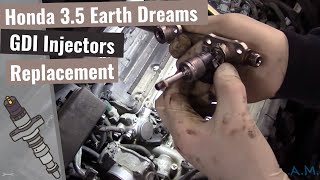
Typical fix: Replace all six fuel injectors as a set and update the PCM software if required by the specific TSB. Check with a Honda dealer for VIN eligibility under the warranty extension (10 years/150,000 miles). The repair should be free if covered.
Est. part cost: $235-$352 for OEM set - PCM Software Issue 🔴 High Probability TSB A19-072 and others note that the original PCM software may misinterpret sensor inputs, leading to a false P0430 code. An update is often required as part of the fuel injector replacement procedure, though some TSB versions (like A21-010) focus only on the injector replacement.
How to confirm: This is diagnosed and fixed by a dealer or a shop with Honda-specific software tools. The dealer's iN VIN status inquiry will determine if a software update is needed as part of the repair.
Typical fix: Update the Powertrain Control Module (PCM) software. This is typically done in conjunction with fuel injector replacement and is part of the warranty extension repair.
Est. part cost: $0 (if part of warranty work) - Failed Catalytic Converter (Bank 2) ⚪ Low Probability → Shop Catalytic Converter While the converter can fail, it is rarely the root cause on these specific models. It is more often a secondary failure caused by long-term driving with faulty injectors dumping raw fuel into the exhaust, which overheats and melts the converter's internal structure. Replacing it without fixing the injectors will result in the code returning.
How to confirm: This should only be considered after the fuel injectors have been confirmed to be working correctly per the TSB diagnostic procedure. A technician can use a temperature gun to check for a significant temperature increase from the converter's inlet to its outlet. A lack of temperature change suggests inefficiency.
Typical fix: Replace the Bank 2 catalytic converter (front manifold). This is a costly repair and should be the last resort.
Est. part cost: $200-$1100 - Faulty Oxygen (O2) / Air-Fuel (A/F) Sensor ⚪ Low Probability
How to confirm: Graph the voltage of the upstream (Sensor 1) and downstream (Sensor 2) on Bank 2. A healthy upstream sensor will fluctuate rapidly, while the downstream sensor should hold a relatively steady voltage. If the downstream sensor mimics the upstream sensor's fluctuations, it confirms the converter isn't working. If the sensor is stuck or slow to respond, the sensor itself may be faulty. However, this is an unlikely cause on this vehicle compared to the injectors.
Typical fix: Replace the faulty oxygen sensor on Bank 2. This is an uncommon fix for this specific problem.
Est. part cost: $50-$150 - Exhaust Leak ⚪ Low Probability
How to confirm: Visually inspect the exhaust manifold and piping for cracks or black soot marks. Listen for a ticking or hissing sound from the engine bay, especially when cold. A smoke test can definitively locate any leaks. An exhaust leak can allow oxygen to enter the exhaust, confusing the O2 sensors and triggering the code.
Typical fix: Replace the leaking gasket or repair the cracked exhaust component.
Est. part cost: $20-$100
Rare But Worth Checking
- Engine Internal Issues (VCM, Carbon Buildup):
Diagnosis Steps
- Contact a Honda dealer with your vehicle's VIN. Ask them to check for eligibility under the fuel injector warranty extension (Service Bulletins 20-100 or 21-010). This should be your first step.
- If the vehicle is covered, schedule an appointment for diagnosis and repair, which should be performed free of charge.
- If diagnosing yourself, scan for any accompanying codes. The presence of P030x (misfires) or P219A/B (A/F imbalance) alongside P0430 almost guarantees the fuel injector issue per Honda's TSBs.
- Follow the TSB-prescribed diagnostic path. If P0430 appears with the codes above, the TSB directs to replace the fuel injectors.
- If P0430 appears alone, the official procedure requires a 'Cylinder A/F Test' with a Honda HDS scan tool to confirm faulty injectors. If the test fails, the injectors are replaced.
- Only if the warranty does not apply AND the fuel injector tests pass should you proceed with other diagnostics.
- Inspect the exhaust system for leaks between the engine and the rear oxygen sensor.
- Test the Bank 2 oxygen sensors' live data to ensure they are functioning correctly.
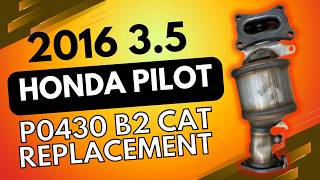
- The catalytic converter itself should be the last component to be suspected and tested. 🎬 Watch: How to diagnose and fix the P0430 code correctly.
Parts You'll Likely Need
- Fuel Injector Set (Set of 6)
(OEM #16010-RLV-315)— This is the most common cause of P0430 on this vehicle, as documented by multiple Honda TSBs. They are replaced as a complete set. This part number supersedes the previous version, 16010-RLV-305.
Trusted brands: Honda (Genuine OEM)
OEM price range: $235-$352
Aftermarket price range: $60-$150 (per injector, but OEM set is required for the TSB fix) - Front Catalytic Converter (Bank 2)
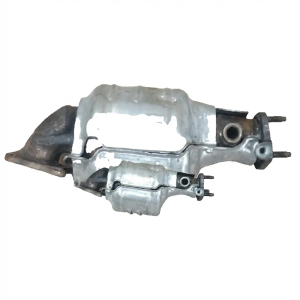
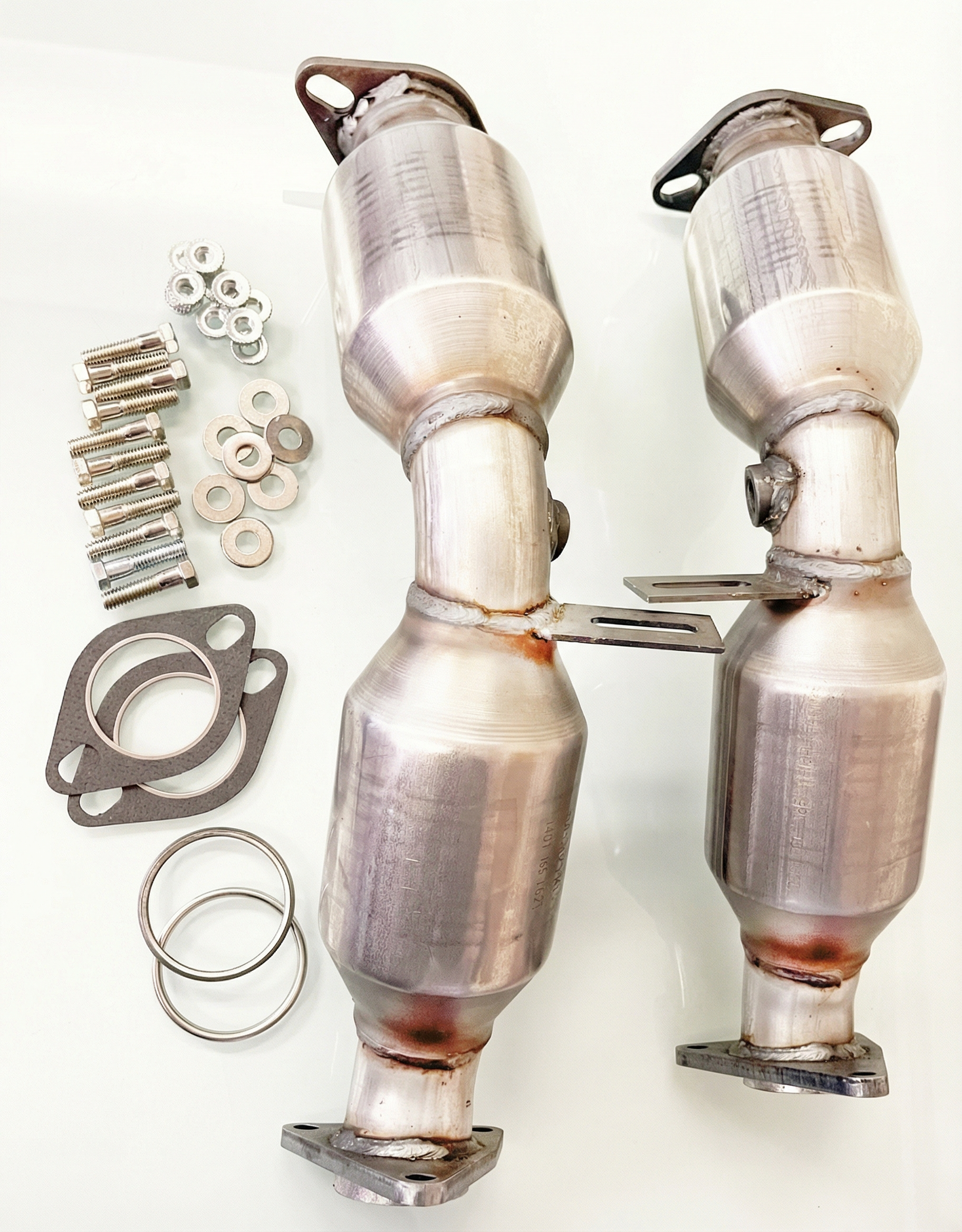
(OEM #18180-RN0-A20)— This part is replaced if it has failed, usually due to prolonged exposure to a rich condition from faulty injectors. It is a common misdiagnosis if replaced before the injectors.
Trusted brands: Honda (Genuine OEM), Walker, MagnaFlow
OEM price range: $1091
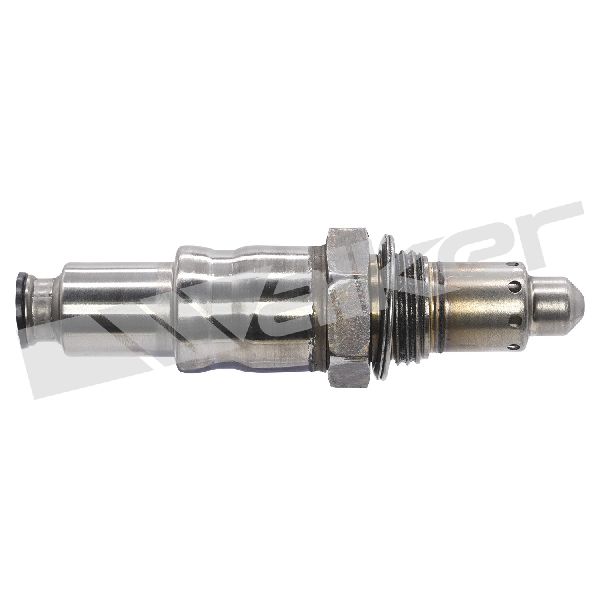
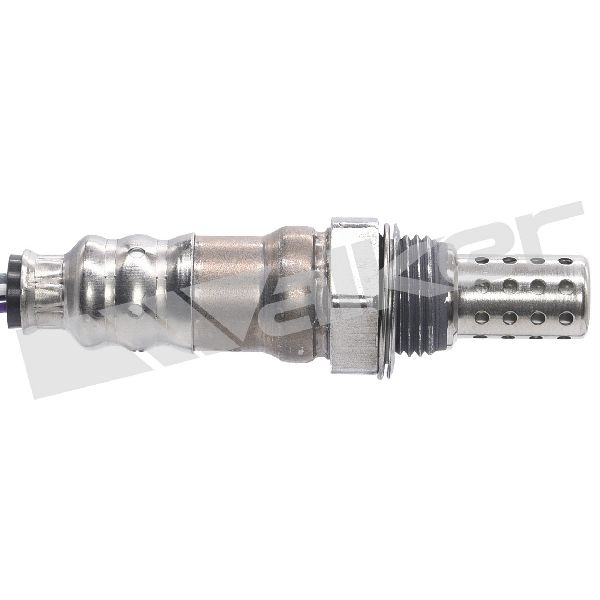
Aftermarket price range: $200-$700 - Downstream Oxygen Sensor (Bank 2, Sensor 2)
(OEM #36532-RLV-A01)— This sensor is responsible for reporting catalyst efficiency to the PCM. It may be replaced if it is faulty, but it is often misdiagnosed when the real issue is the fuel injectors.
Trusted brands: Denso, NTK, Honda (Genuine OEM)
OEM price range: $100-$180
Aftermarket price range: $50-$120 - Fuel Joint Pipe Set
(OEM #16012-R9P-315)— This is a required one-time-use part that must be replaced anytime the fuel injectors are serviced, per Honda's repair procedure, to prevent fuel leaks.
Trusted brands: Honda (Genuine OEM)
OEM price range: $30-$50
Related Codes That Often Appear With This One
- P0420 — Catalyst efficiency code for the other bank (Bank 1). The fuel injector issue is systemic and can affect both banks, often triggering both codes.
- P0300-P0306 — These are cylinder misfire codes. Faulty fuel injectors are a primary cause of misfires, and these codes are explicitly mentioned in Honda's TSBs (A19-072, A21-010) as a direct indicator for injector replacement.
- P219A / P219B — These codes indicate an air-fuel ratio imbalance. They are also directly linked to the fuel injector problem in Honda's TSBs and strongly suggest the injector issue over a converter failure.
Technical Service Bulletins (TSBs) & Recalls
- A19-072: MIL Comes On with DTC P0430 or P0430 with P030X, P219A, P219B (With Software Update)
- A19-073: MIL Comes On with DTC P0430 or P0430 with P030X, P219A, P219B (Without Software Update)
- A21-010: Mentions P0430 in a group of DTCs that may be stored due to faulty injectors.
- ONLN9403292021: Lists P0430 as a potential DTC.
- ONLW8V03292021: Lists P0430 as a potential DTC.
Platform-Specific Known Issues
- Fuel Injector Warranty Extension: → Shop Fuel Injector Honda has extended the warranty on fuel injectors to 10 years or 150,000 miles for 2018-19 Odyssey models due to a manufacturing defect. This is the primary cause of P0430 and related codes. Owners should always check with a dealer for warranty coverage before paying for repairs.
- Crankshaft Manufacturing Defect: A separate, serious issue affects some J35Y6 engines. A manufacturing error on the crankshaft can lead to premature connecting rod bearing failure and catastrophic engine damage. NHTSA has an ongoing investigation (Recall 23V-751) into this issue, which covers 2018-2019 Odyssey models among others. While not directly related to P0430, it highlights manufacturing issues with this engine generation.
Helpful Videos
Used OEM Parts in Stock
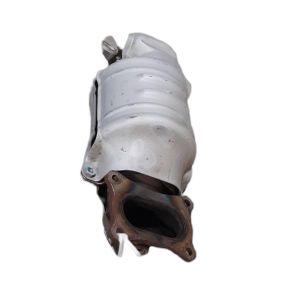
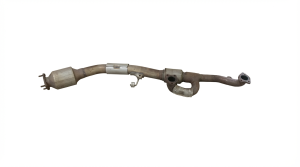
New Aftermarket Parts Available
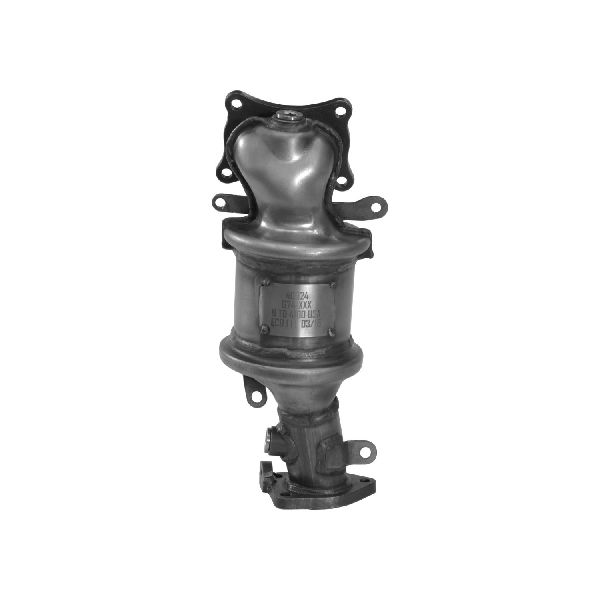
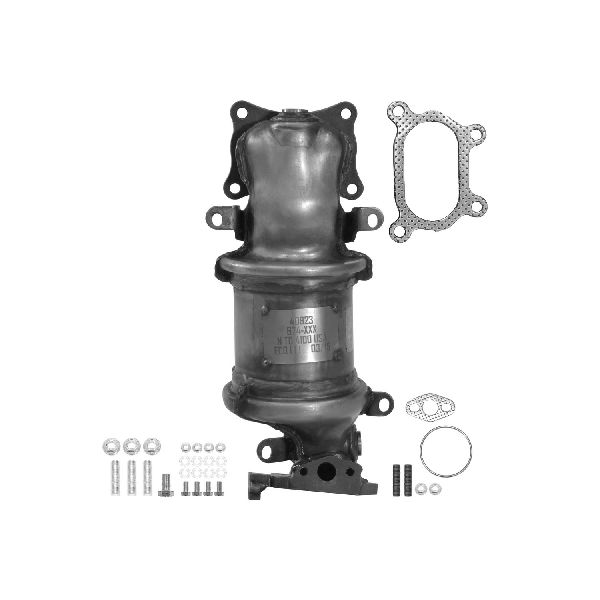


The information in this article is provided for general reference and educational purposes only. Vehicle specifications, procedures, and part compatibility can vary by production date, trim level, and region. Always consult your vehicle's factory service manual and verify part numbers before purchasing or performing repairs. Safety-critical components such as airbags, seat belts, and braking systems should be installed by a qualified professional.
- Honda ODYSSEY:
- 🧭 Diagnostic Flowchart
- 🎬 Helpful Videos
- 🛍️ Shop This Part
- What's Unique About the 2018-2019 Honda ODYSSEY
- Symptoms You May Notice
- Most Likely Causes
- Rare But Worth Checking
- Diagnosis Steps
- Parts You'll Likely Need
- Related Codes That Often Appear With This One
- Technical Service Bulletins (TSBs) & Recalls
- Platform-Specific Known Issues
- 🎟️ Get 5% Off