

P0430 on 2010-2016 Hyundai Genesis Coupe 3.8L: Causes, Fixes, and Diagnosis
P0430 on a Genesis Coupe 3.8L most often means the Bank 2 (driver's side) catalytic converter is failing, a common issue after 100,000 miles. Aftermarket 'pop' tunes are known to destroy them quickly. Before replacing the expensive converter, rule out exhaust leaks and faulty oxygen sensors. Expect to spend $600+ for a replacement part.
- P0430 on your Genesis Coupe 3.8L points to a failing catalytic converter on the driver's side.
- Before replacing the expensive converter, thoroughly inspect for exhaust leaks and use a scan tool to check O2 sensor data.
- If you have an aftermarket engine tune, especially one that creates pops and bangs, it has likely damaged your catalytic converter.
- An engine misfire or rich running condition must be fixed before replacing the converter, or the new one will be damaged as well.
- This code will cause an automatic failure of any emissions inspection.
What's Unique About the 2010-2016 Hyundai Genesis Coupe
The 2010-2016 model years span two generations of the Genesis Coupe, the BK1 (2010-2012) and the BK2 (2013-2016). The 3.8L V6 engine was significantly updated for the BK2, moving from Multi-Port Injection (MPI) to Gasoline Direct Injection (GDI), which increased power and complexity. While the fundamental cause of P0430 (catalyst inefficiency) is the same, GDI engines can be more prone to conditions like carbon buildup that may indirectly affect the exhaust system over time. Additionally, many owners modify these cars, and aftermarket tunes (especially 'pop' or 'crackle' tunes) are known to quickly destroy catalytic converters by causing fuel to ignite in the exhaust, leading to this code.
Generation note: The specified range covers the BK1 (2010-2012) and BK2 (2013-2016) generations. The BK1 uses a Multi-Port Injection (MPI) 3.8L V6 (Lambda II RS G6DK), while the BK2 uses a Gasoline Direct Injection (GDI) 3.8L V6 (Lambda II RS G6DJ). While the P0430 code's meaning and primary causes are consistent across both, diagnostic approaches for engine-related issues (like fuel system problems) that could lead to catalyst failure will differ. Critically, parts like oxygen sensors are not interchangeable between generations.
Symptoms You May Notice
- Check Engine Light is on.
- Failure to pass an emissions test 🎬 Watch: How to handle emissions tests with a bad converter..
- Reduced engine power or sluggish acceleration if the converter becomes clogged.
- A sulfur or 'rotten egg' smell from the exhaust.
- Rattling noise from underneath the car if the converter's internal structure has broken apart.
- Excess heat felt from under the vehicle near the catalytic converter.
- Replacing the oxygen sensors when the catalytic converter is actually the problem. While O2 sensors can fail, the P0430 code is more frequently caused by the converter itself. Always diagnose by checking live sensor data and exhaust temperatures before replacing parts.
Most Likely Causes
- Failing Catalytic Converter (Bank 2) 🔴 High Probability → Shop Catalytic Converter Catalytic converters have a finite lifespan and typically fail from age after 100k-150k miles. On this platform, aftermarket 'pop' tunes are a very common cause of premature failure, as they can melt the internal structure of the converter.
How to confirm: Use a scan tool to monitor the upstream and downstream O2 sensor data for Bank 2. The downstream sensor voltage should be steady. If it fluctuates in a similar pattern to the upstream sensor, the converter is not working. An infrared temperature gun can also be used; the outlet of a working converter should be at least 100°F hotter than the inlet.
Typical fix: Replace the Bank 2 (driver's side) catalytic converter. This is often integrated with the exhaust manifold.
Est. part cost: $600-$1200 - Exhaust Leak 🟡 Medium Probability Exhaust gaskets, especially at the manifold-to-head or manifold-to-downpipe flanges, can fail over time, allowing oxygen to enter the exhaust stream. This unmetered oxygen fools the O2 sensors into providing false data that mimics a failed converter.
How to confirm: Visually inspect the exhaust system from the engine to the rear O2 sensor for any signs of black soot, cracks, or rust. Listen for hissing or ticking sounds, especially when the engine is cold. A smoke test is the most definitive way to locate hard-to-see leaks.
Typical fix: Replace the leaking gasket or damaged exhaust component.
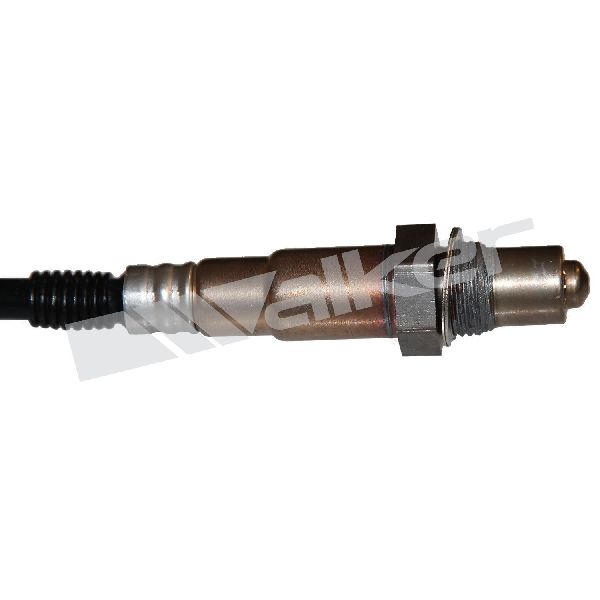
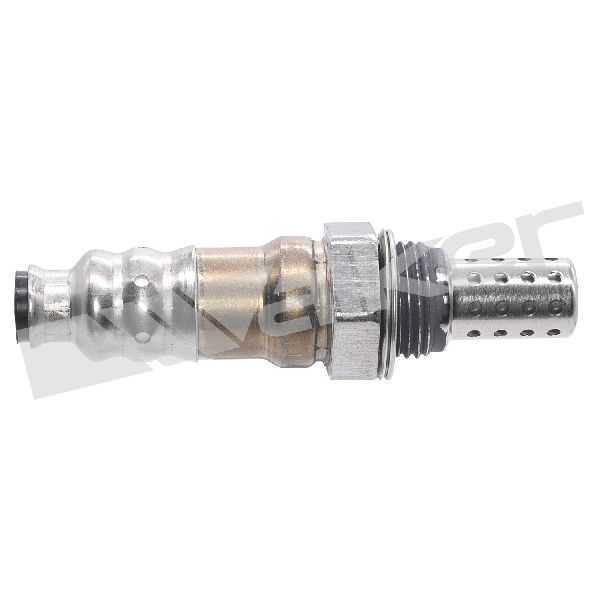
Est. part cost: $20-$100 - Faulty Oxygen (O2) Sensor ⚪ Low Probability → Shop Oxygen Sensor While less common than converter failure, a lazy or failing downstream (post-catalyst) O2 sensor can send incorrect data to the ECM, falsely triggering a P0430 code. Sensors are wear items and can fail from contamination or age.
How to confirm: Use a scan tool to observe the O2 sensor's voltage readings. A healthy downstream sensor should show a relatively stable voltage above 0.5V. If the sensor is stuck, slow to respond, or shows a flat low voltage, it may be faulty. Swapping the Bank 1 and Bank 2 downstream sensors and seeing if the code changes to P0420 is a definitive diagnostic test.
Typical fix: Replace the Bank 2 downstream oxygen sensor.
Est. part cost: $50-$150
Rare But Worth Checking
- Engine Misfires or Rich Fuel Condition: A persistent engine misfire or a problem causing the engine to run rich (e.g., a leaking fuel injector, faulty MAF sensor) can send unburned fuel into the exhaust, which overheats and physically damages the catalytic converter. This is a root cause that must be fixed, or the new converter will fail quickly. Usually, other codes (like P03xx for misfires or P017x for fuel trim) will be present.
- Stretched Timing Chain: While rare to cause P0430 alone, a significantly stretched timing chain can alter cam timing enough to affect combustion efficiency, potentially leading to conditions that damage the converter over time. This would typically be accompanied by startup rattle and other timing-related codes. TSB 19-EM-001H addresses updated timing chain parts for the GDI engine.
Diagnosis Steps
- Read all stored trouble codes with an OBD-II scanner. Note any other codes (misfire, fuel trim, O2 sensor heater) as they are critical clues to the root cause.
- Visually and audibly inspect the entire exhaust system for leaks, from the cylinder heads back to the downstream O2 sensors. Pay close attention to gasket flanges. A cold start can make ticks from a leak more obvious.
- Use a scan tool with live data capability to view the voltage signals from the Bank 2 oxygen sensors (B2S1 - Upstream and B2S2 - Downstream).
- Hold the engine at a steady 2500 RPM. The upstream sensor (B2S1) should fluctuate rapidly between ~0.1V and ~0.9V.
- If the downstream sensor's voltage is fluctuating rapidly and mirroring the upstream sensor, the catalytic converter has failed.
- If the downstream sensor's voltage is flatlined, stuck low, or very slow to respond, the sensor itself is likely faulty. Consider swapping it with the Bank 1 downstream sensor to see if the code follows to P0420.
- If O2 sensor data is inconclusive, perform a temperature test. Use an infrared thermometer to measure the temperature of the exhaust pipe just before and just after the catalytic converter. The outlet should be at least 100°F hotter than the inlet on a fully warmed-up, working converter.
- If no leaks are found and the O2 sensors function correctly, the catalytic converter is the confirmed failure point.
Parts You'll Likely Need
- Manifold Catalytic Converter (Bank 2 / Driver's Side)
(OEM #Varies by year (BK1/BK2), VIN verification required.)— This is the most common failure part that directly causes the P0430 code.
Trusted brands: Hyundai (OEM), MagnaFlow, Walker Exhaust, AP Exhaust
OEM price range: $1000-$1500
Aftermarket price range: $600-$900 - Downstream Oxygen Sensor (Bank 2 / Driver's Side)
(OEM #BK1 (2010-12): 39210-3C100; BK2 (2013-16): 39210-3CFA0)— Replaced when diagnosis confirms the sensor itself is faulty. Part numbers are different for MPI (BK1) and GDI (BK2) engines and are not interchangeable.
Trusted brands: Bosch, Denso, NGK/NTK
OEM price range: $120-$200
Aftermarket price range: $50-$150 - Exhaust Manifold Gasket (Bank 2)
(OEM #Varies, e.g., 28521-3C100 for some models.)— Necessary to replace when the catalytic converter is replaced, and is a common source of exhaust leaks that can trigger the code. Often included with new converter assemblies.
Trusted brands: Fel-Pro, Mahle, Hyundai (OEM)
OEM price range: $30-$50
Aftermarket price range: $15-$30
Related Codes That Often Appear With This One
- P0420 — Catalyst System Efficiency Below Threshold (Bank 1). If both P0420 and P0430 are present, it suggests a widespread issue affecting both catalytic converters, such as contaminated fuel, a major engine problem, a 'pop' tune, or simply old age on a high-mileage vehicle.
- P0300-P0306 — Misfire codes (P0300 for random, P0301-P0306 for specific cylinders). A misfire is a root cause that can destroy a catalytic converter by dumping raw fuel into it. The misfire must be fixed to prevent repeat failure of the new converter.
Technical Service Bulletins (TSBs) & Recalls
- 19-EM-001H — Provides information on changes to timing chain and crankshaft sprocket parts for Lambda 3.3L/3.8L GDI engines, including the 2013-2016 Genesis Coupe. Relevant if a timing issue is suspected as a root cause for engine conditions leading to catalyst failure.
Platform-Specific Known Issues
Mechanic-Grade Diagnostic Values
- Downstream O2 Sensor (B2S2) Voltage at steady 2000-2500 RPM — expected: Relatively stable voltage, typically between 0.4V and 0.5V. Some systems consider a steady value around 0.25V normal.. Failure: Voltage waveform rapidly fluctuates, mimicking the upstream O2 sensor, or the signal amplitude is consistently greater than 0.30V on some models.
- ECM Catalyst Efficiency Test Threshold (2012 Genesis Coupe) — expected: Oxygen Storage Time > 3.25 seconds.. Failure: The measured Oxygen Storage Time is less than 3.25 seconds, indicating the catalyst can no longer store and release oxygen effectively.
- O2 Sensor Heater Element Resistance — expected: Typically between 2 and 30 Ohms at room temperature.. Failure: An infinite reading (open circuit) or a near-zero reading (short circuit) indicates a failed heater element within the sensor.
Scan Tool Commands That Help
- Hyundai GDS (Global Diagnostic System): Reset Adaptive Values — After replacing a component like an oxygen sensor or catalytic converter, resetting the engine's long-term fuel trim and other learned values can help the PCM adapt to the new parts faster and prevent the code from returning during the relearn period.
- Hyundai GDS (Global Diagnostic System): Actuation Test — While not directly for the converter, the GDS tool can perform actuation tests on related components like fuel injectors or the electronic throttle control. This helps diagnose underlying engine issues that could lead to catalyst failure.
Wiring & Ground Locations
- ECU Ground Strap — On the intake manifold; a common grounding point for the ECU.. A poor ECU ground can cause erratic sensor readings and incorrect diagnostics. The Genesis Coupe is known by owners to have notoriously poor factory grounding points, and improving them is a common modification.
- Engine Mount Ground — A pre-existing ground wire is located on the engine mount.. This is a primary engine-to-chassis ground. Poor connection here can affect the entire engine management system, including the sensors that trigger P0430.
- Starter Bell Housing Bolt — On the transmission bell housing where the starter connects.. This is another critical engine block ground point. A weak connection can introduce electrical noise, potentially affecting O2 sensor signals.
- Ghg01 — Left rear of the engine compartment.. This is a listed ground distribution point in the wiring diagram, serving multiple components in the engine bay.
Real Owner Repair Stories
- Reddit r/MechanicAdvice (2011 Jeep Wrangler (Note: Not a Genesis, but illustrates the diagnostic principle)) — P0430 code present. Check engine light came on almost immediately after a supposed fix.
❌ Tried (didn't work) A mechanic diagnosed a faulty O2 sensor based on out-of-range voltage and replaced the Bank 2 Sensor 1 (upstream) sensor.
✅ What actually fixed it The code returned immediately. The consensus from other technicians was that replacing the O2 sensor for a P0430/P0420 code is a common misdiagnosis, and the catalytic converter itself was the actual failed component, as the O2 sensors were correctly reporting the inefficiency.
OEM Part Supersession History
39210-3CBA0→39210-3CBB0— Part revision or supplier change.
Heads up: This is for the downstream passenger side sensor (Bank 2, Sensor 2 on a LHD vehicle is driver side, this part is for the opposite bank), but illustrates that part numbers were updated during the production run. Always verify the correct part for the specific bank and generation.
Model Year Variations Within This Range
- 2010-2012 (BK1) vs 2013-2016 (BK2): The downstream oxygen sensors are not interchangeable between the MPI (BK1) and GDI (BK2) engines. The BK1 uses part number 39210-3C100 for the Bank 2 downstream sensor, while the BK2 uses 39210-3CFA0.
- 2010-2012 (BK1) vs 2013-2016 (BK2): The catalytic converter assemblies, which are integrated with the exhaust manifolds, have different part numbers and are not cross-compatible due to the different engine architecture (MPI vs GDI). For example, Magnaflow lists different part numbers for BK1 and BK2 converters.
Diagnostic Flowchart
Other Known Issues on This Vehicle
Issues unrelated to this code that are worth knowing about as an owner of this generation:
- Manual Transmission Grind / Lockout 🔴 High — Very common, especially on BK1 (2010-2012) models. Can manifest as grinding going into 2nd, 3rd, or 5th gear, or being locked out of gear. Often attributed to weak synchronizers, which were reportedly improved with carbon-coated versions in 2014+.
- Timing Chain Rattle on Cold Start 🟠 Medium — Commonly reported around 80,000-100,000 miles. A rattling noise for a few seconds on a cold start can indicate wear in the timing chain tensioners and guides. If ignored, it can lead to jumped timing. (Ref: TSB 19-EM-001H)
- Taillight Gasket / Trunk Water Leak 🟡 Low — A frequent complaint where failed taillight gaskets allow water to leak into the trunk, potentially damaging the amplifier or other electronics stored there.
- Interior Trim Peeling / Rattles 🟡 Low — Common cosmetic issue where the chrome-like finish on interior door handles, steering wheel trim, and center console flakes off. General interior creaks and rattles are also widely reported.
- Clutch Slave Cylinder Failure 🟠 Medium — The concentric slave cylinder is located inside the transmission bellhousing and is known to fail. Replacement requires removing the entire transmission, making it a labor-intensive repair.
Used vs. New Parts: Buying Guide for This Vehicle
When a used part is the smart pick: A used part is almost never a smart choice for this repair. Catalytic converters and oxygen sensors are wear items with a finite lifespan. Installing a used one is implanting a part that has already consumed a significant portion of its useful life.
Donor-vehicle mileage cap: roughly under 40000 miles for the part to have meaningful remaining life.
What to inspect on the donor part:
- For a catalytic converter, there is no reliable way to visually inspect its internal condition. Avoid.
- For an oxygen sensor, check for physical damage, melted wires, or heavy carbon fouling, but even a clean-looking used sensor could be lazy or failing electronically.
OEM-only on this vehicle (don't cheap out):
- Catalytic Converter: This is strongly recommended. Many aftermarket converters, especially cheaper ones, use less precious metal in their catalyst substrate. This can lead to them failing to meet the ECM's strict efficiency monitoring, causing the P0430 code to return within months, even if they pass an initial emissions test.
Aftermarket brands forum-validated for this vehicle:
- Oxygen Sensors: NGK/NTK and Denso are the original equipment manufacturers for many brands and are considered a reliable choice.
- Catalytic Converters: If OEM is not an option, brands like MagnaFlow and Walker offer 'OEM Grade' or CARB-compliant converters that have a better reputation for longevity and performance than generic, unbranded units.
Brands owners have reported issues with on this vehicle:
- Unbranded, low-cost catalytic converters found on online marketplaces. These are notorious for failing quickly and not having enough catalyst material to keep the check engine light off.
Real Owner Stories
Aggregated from forums and TSBs cited above. Mileages and costs reflect what owners reported in those sources.
2013-2016 Hyundai Genesis Coupe 3.8L V6
Symptoms: The owner reported getting both P0420 and P0430 codes a few weeks after installing an 'SFR tune with pops'.
What fixed it: The catalytic converters were likely melted by the 'pops and bangs' tune and required replacement.
Source hint: Reddit - r/genesiscoupe
Related OBD-II Codes
Frequently Asked Questions
Does TSB 19-EM-001H apply to my 2013-2016 Genesis Coupe 3.8L?
Can an aftermarket 'pop' tune cause a P0430 code on my Genesis Coupe?
Is the P0430 code related to the common timing chain rattle on the 3.8L engine?
How can I tell if my Bank 2 catalytic converter is actually bad or if it's just a sensor?
Where is the Bank 2 catalytic converter located on the Lambda 3.8L V6?
Could an exhaust leak cause a false P0430 code on this vehicle?
Helpful Videos
We Have This Part in Stock




The information in this article is provided for general reference and educational purposes only. Vehicle specifications, procedures, and part compatibility can vary by production date, trim level, and region. Always consult your vehicle's factory service manual and verify part numbers before purchasing or performing repairs. Safety-critical components such as airbags, seat belts, and braking systems should be installed by a qualified professional.
- Hyundai Genesis Coupe:
- 🧭 Diagnostic Flowchart
- 🎬 Helpful Videos
- 🛍️ Shop This Part
- What's Unique About the 2010-2016 Hyundai Genesis Coupe
- Symptoms You May Notice
- Most Likely Causes
- Rare But Worth Checking
- Diagnosis Steps
- Parts You'll Likely Need
- Related Codes That Often Appear With This One
- Technical Service Bulletins (TSBs) & Recalls
- Platform-Specific Known Issues
- Mechanic-Grade Diagnostic Values
- Scan Tool Commands That Help
- Wiring & Ground Locations
- Real Owner Repair Stories
- OEM Part Supersession History
- Model Year Variations Within This Range
- Other Known Issues on This Vehicle
- Used vs. New Parts: Buying Guide for This Vehicle
- Real Owner Stories
- 2013-2016 Hyundai Genesis Coupe 3.8L V6
- Related OBD-II Codes
- Frequently Asked Questions
- 🎟️ Get 5% Off