

P0430 on 2007-2012 Hyundai Santa Fe: Bank 2 Catalyst Causes and Fixes
P0430 on a V6 Santa Fe means the front catalytic converter (Bank 2) is inefficient. While the converter itself is the most common failure, always check for exhaust leaks (especially the flex pipe) and test the downstream oxygen sensor first to avoid a costly misdiagnosis. A new converter can exceed $1,000.
- P0430 on a 2007-2012 Santa Fe V6 refers to the front catalytic converter, near the radiator.
- Never replace the catalytic converter without first using a scan tool to analyze live O2 sensor data to confirm it has failed.
- Always check for exhaust leaks and test the downstream (Bank 2, Sensor 2) oxygen sensor, as these are common, cheaper fixes.
- If you have a 3.3L V6, inspect the front valve cover for oil leaks that could be contaminating the catalytic converter.
- If any engine misfire codes are present, they MUST be repaired before replacing the converter to prevent repeat failure.
What's Unique About the 2007-2012 Hyundai Santa Fe
On the transverse-mounted V6 engines in the 2007-2012 Santa Fe, 'Bank 2' is the cylinder bank located at the front of the engine bay, near the radiator. This is a frequent point of confusion, but it makes the associated catalytic converter and oxygen sensors easier to access than their Bank 1 counterparts, which are tucked against the firewall. While age is the primary cause of converter failure, the 3.3L V6 engine, in particular, can develop leaking valve cover gaskets. This can allow oil to drip onto and contaminate the exhaust system, leading to premature failure of the Bank 2 catalytic converter.
Symptoms You May Notice
- Check Engine Light is on
- Reduced fuel economy
- Sluggish acceleration or lack of power
- A sulfur or "rotten egg" smell from the exhaust
- Excessive heat coming from under the vehicle
- Replacing the catalytic converter without first testing the oxygen sensors or checking for exhaust leaks. This is the most common and expensive mistake.
- Replacing the wrong oxygen sensor (e.g., replacing the upstream sensor instead of the downstream, or replacing a Bank 1 sensor instead of Bank 2).
- Using a cheap, universal aftermarket catalytic converter that does not meet the required specifications, leading to the code returning quickly.
Most Likely Causes
- Failed Catalytic Converter (Bank 2) 🔴 High Probability → Shop Catalytic Converter Catalytic converters are wear items that fail from age, heat cycles, and mileage. Contamination from underlying engine issues, like burning oil from a leaking valve cover gasket on the 3.3L V6, can accelerate this failure. The converter is integrated into the exhaust manifold on these engines.
How to confirm: Use an OBD-II scan tool to graph the live voltage of the Bank 2 oxygen sensors. The upstream sensor (Sensor 1) should fluctuate rapidly. The downstream sensor (Sensor 2) should show a relatively steady, stable voltage. If the downstream sensor voltage is fluctuating rapidly like the upstream sensor, the converter has failed. An infrared thermometer can also be used; the outlet of the converter should be significantly hotter than the inlet on a working unit.
Typical fix: Replace the Bank 2 catalytic converter, which is often sold as a single assembly with the exhaust manifold.
Est. part cost: $400-$1200 - Faulty Downstream Oxygen Sensor (Bank 2, Sensor 2) 🟡 Medium Probability → Shop Oxygen Sensor Oxygen sensors have a finite lifespan and can become 'lazy' or fail with age, sending inaccurate data to the PCM and falsely triggering a P0430 code.
How to confirm: After confirming the sensor's heater circuit is working (no heater circuit codes), observe its live data on a scan tool. A healthy downstream sensor should produce a steady voltage. If it's stuck high, low, or not responding, it's likely faulty. Swapping the Bank 1 and Bank 2 downstream sensors (if they are identical and accessible) and seeing if the code changes to P0420 is another diagnostic method.
Typical fix: Replace the Bank 2, Sensor 2 oxygen sensor.
Est. part cost: $50-$150 - Exhaust System Leak 🟡 Medium Probability Exhaust manifold gaskets, flex pipes, and flange gaskets can degrade over time from heat and corrosion, allowing outside air into the exhaust stream. The braided flex pipe section is a particularly common failure point on this generation of Santa Fe. This extra oxygen can trick the downstream O2 sensor into thinking the converter is not working correctly.
How to confirm: Perform a visual inspection of the exhaust system from the engine to the tailpipe, looking for black soot, cracks, or holes. Listen for a ticking or hissing noise, especially on a cold start. A smoke test is the most effective way to pinpoint small, hard-to-see leaks.
Typical fix: Replace the leaking gasket or repair/replace the damaged section of the exhaust pipe. Often, a new flex pipe section needs to be welded in.
Est. part cost: $20-$300
Rare But Worth Checking
- Underlying Engine Misfires: If you have any misfire codes (P0300, P0302, P0304, P0306), you MUST fix them before replacing the catalytic converter. Unburned fuel from a misfire will quickly overheat and destroy a new converter.
- Leaking Fuel Injector: → Shop Fuel Injector A leaking injector can create a rich fuel condition that damages the catalytic converter over time. This would likely be accompanied by other codes or symptoms.
- Outdated ECM Software: In some cases, the logic the engine computer uses to monitor the catalyst can be overly sensitive. A software update from a Hyundai dealer may be available to correct this and prevent false codes.
Diagnosis Steps
- Connect an OBD-II scanner and confirm P0430 is present. Note any other codes and check freeze frame data.
- Carefully inspect the entire exhaust system for Bank 2 (front/radiator side) for any signs of leaks, especially around the exhaust manifold gaskets and the braided flex pipe. Listen for audible leaks on a cold start.
- Use the scanner's live data function to monitor the voltage of the Bank 2, Sensor 1 (upstream) and Bank 2, Sensor 2 (downstream) oxygen sensors with the engine fully warmed up and running at around 2000 RPM.
- A healthy system will show the upstream sensor (B2S1) voltage fluctuating rapidly between approximately 0.1V and 0.9V. The downstream sensor (B2S2) voltage should be relatively stable and steady (typically above 0.5V).
- If the downstream sensor (B2S2) is fluctuating in a similar pattern to the upstream sensor, the catalytic converter is not storing oxygen and has likely failed.
- If the downstream sensor (B2S2) voltage is stuck low (e.g., <0.2V) or high (e.g., >0.8V) and not responding, the sensor itself is likely faulty.
- If an exhaust leak is suspected but not visible, perform a smoke test to confirm.
- If any misfire or fuel system codes are present, diagnose and repair those issues before condemning the catalytic converter.
Parts You'll Likely Need
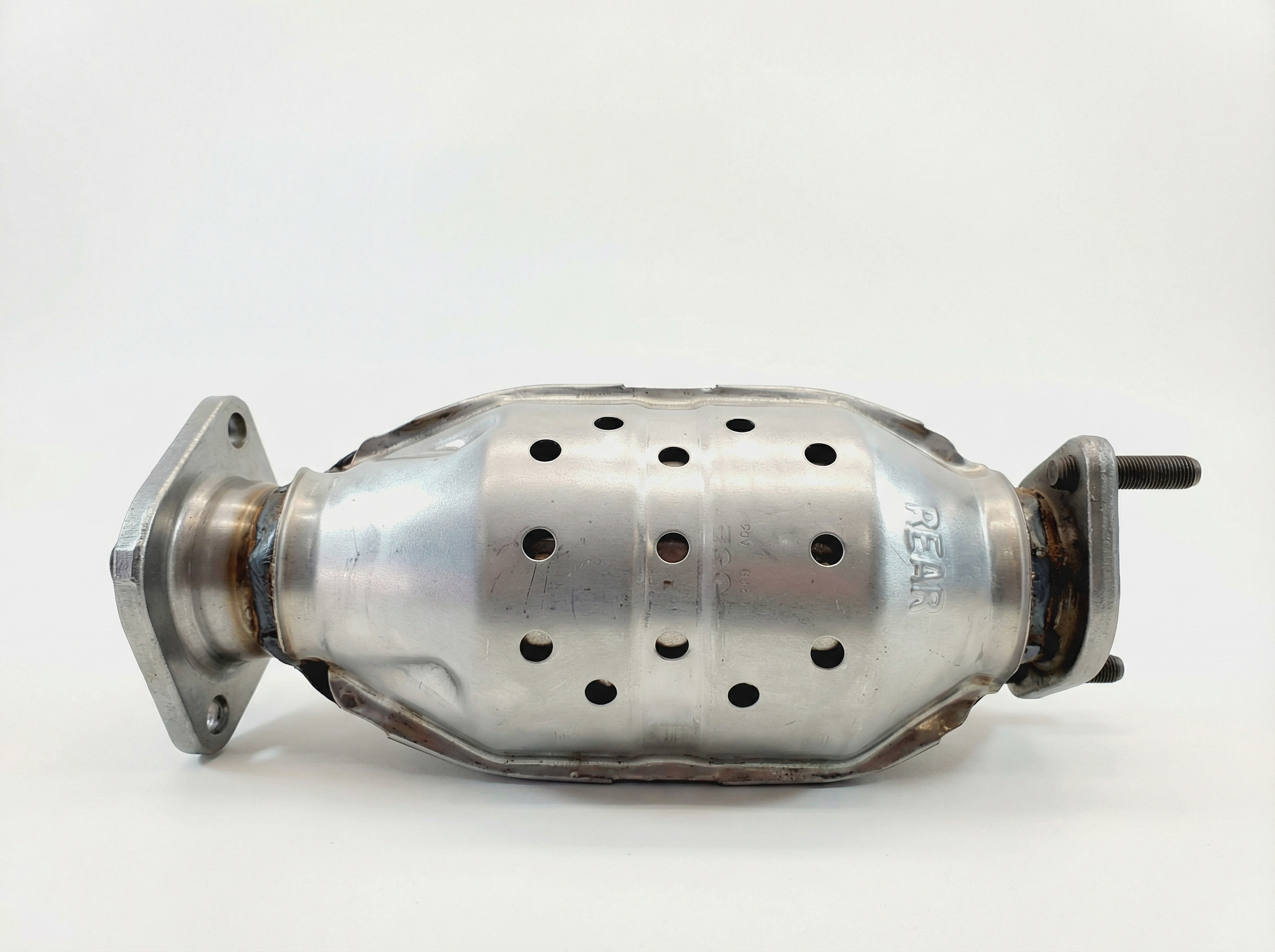
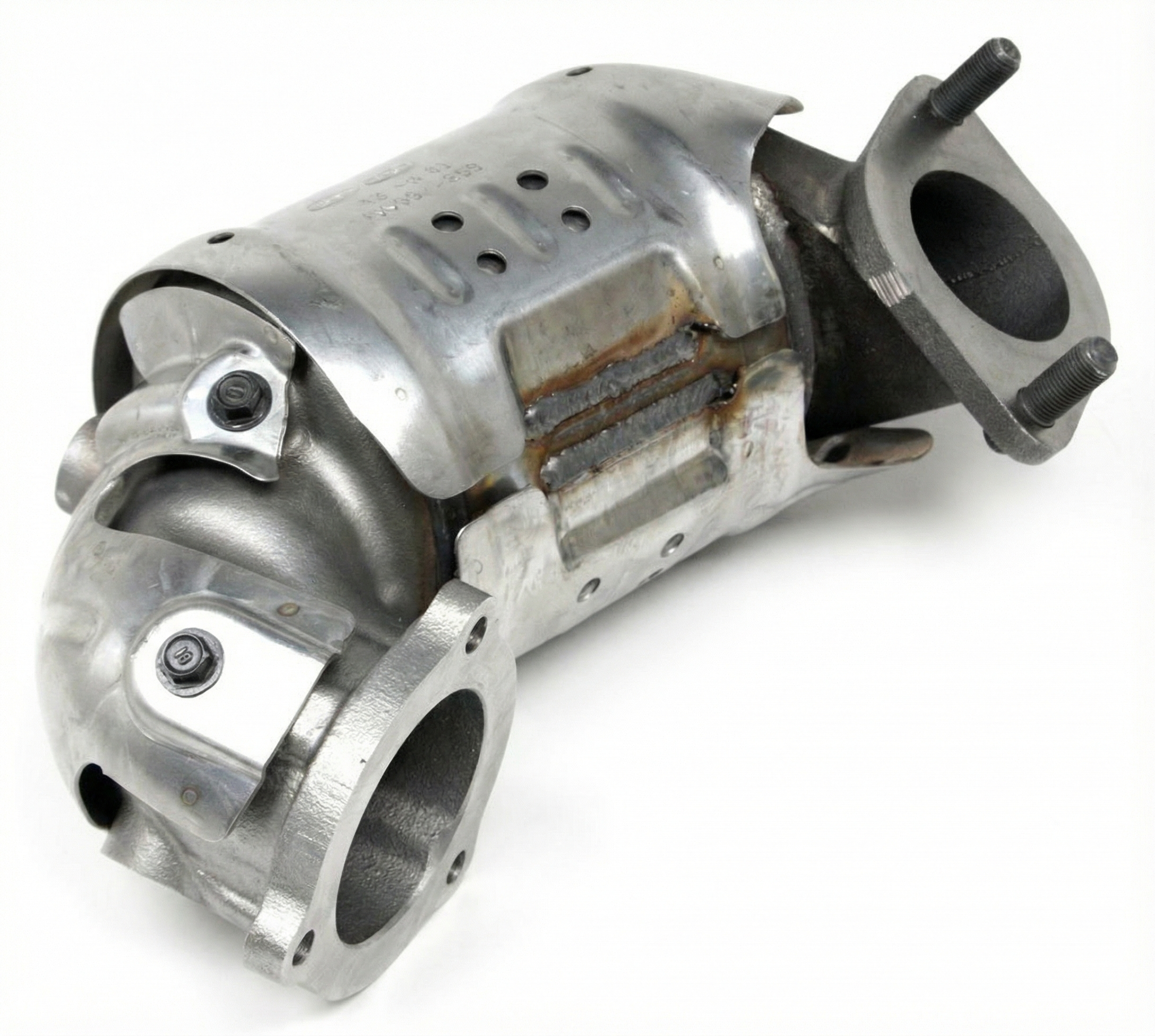
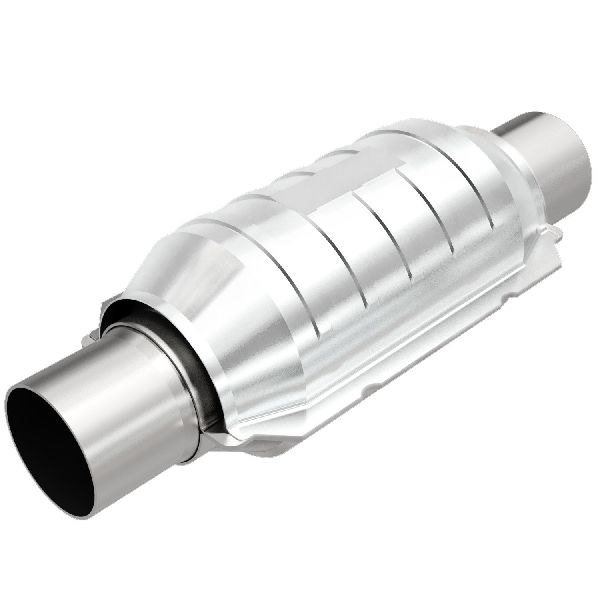
- Catalytic Converter (Bank 2)
(OEM #28950-3E140 (For 3.3L V6, 2007-2009), 28910-3E500 (For 2.7L V6, 2007-2009) - Always verify with VIN)— This is the most common ultimate failure for a persistent P0430 code after sensors and leaks have been ruled out.
Trusted brands: Hyundai (OEM), Walker Exhaust, MagnaFlow, AP Exhaust
OEM price range: $1000-$1500
Aftermarket price range: $400-$800 - Oxygen Sensor (Bank 2, Sensor 2)
(OEM #39210-3C200, 39210-3E210 (Varies by engine/year - Verify with VIN))— A faulty downstream O2 sensor is a common cause of a false P0430 code and should be considered a primary suspect before replacing the converter.
Trusted brands: Denso, NGK/NTK, Bosch
OEM price range: $150-$250
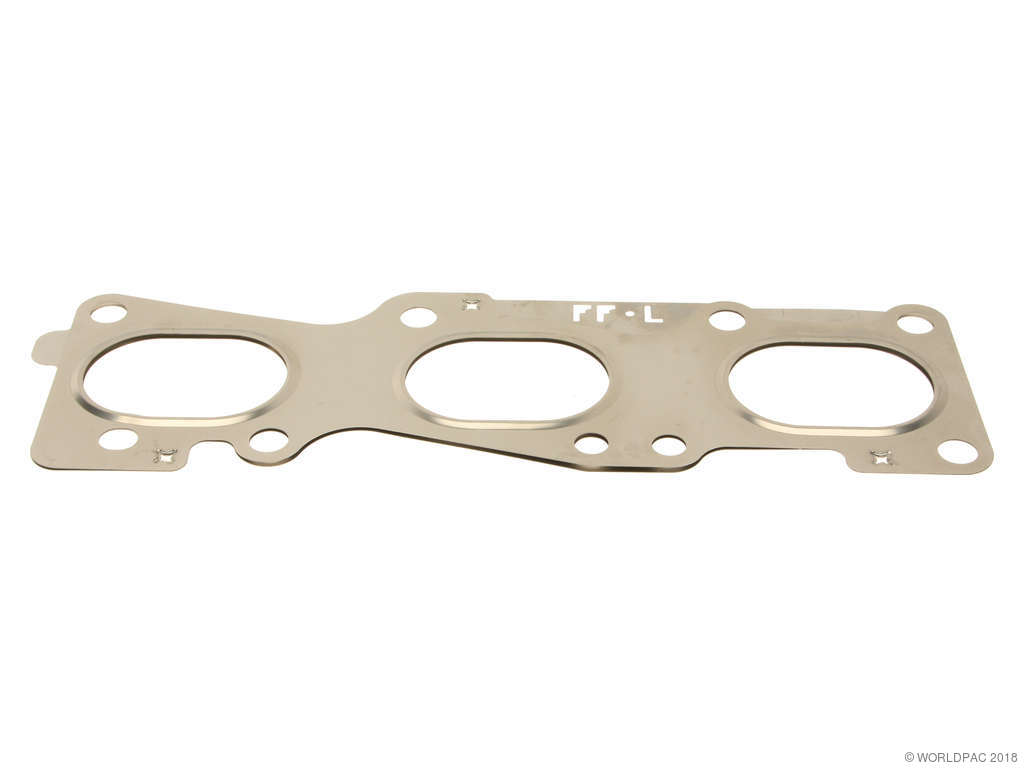
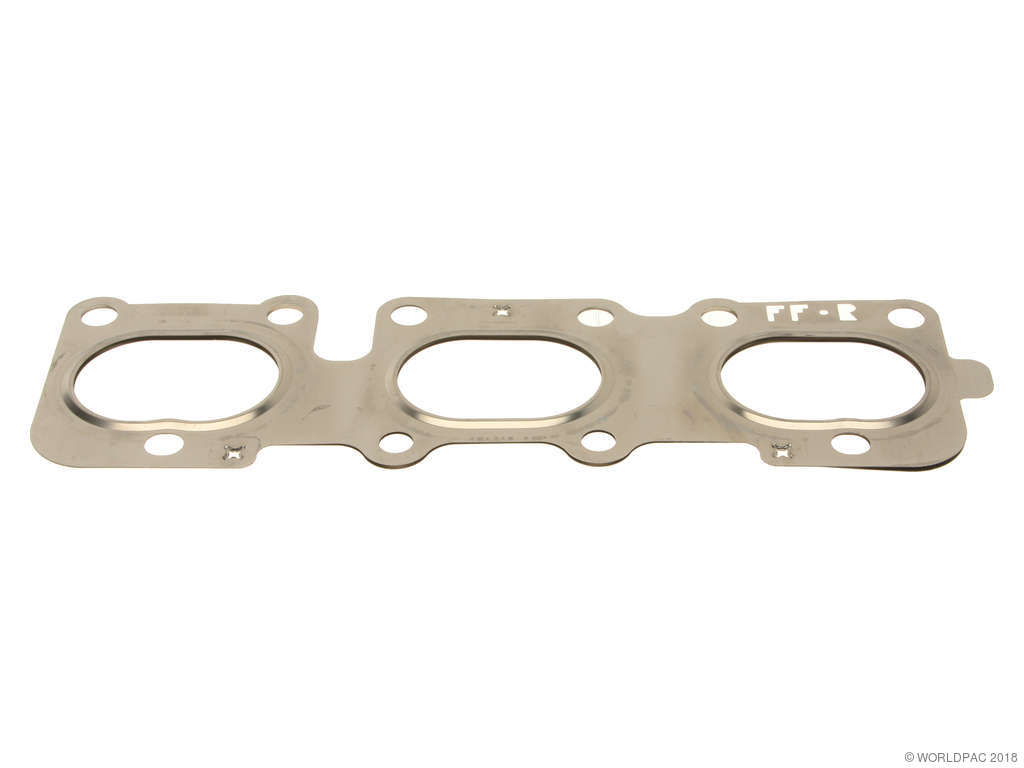
Aftermarket price range: $50-$120 - Exhaust Manifold Gasket
(OEM #28521-3C100 (For 3.3L V6 - Verify with VIN))— If the catalytic converter is replaced, this gasket must also be replaced. It can also be a source of an exhaust leak that causes the code.
Trusted brands: Fel-Pro, Mahle, Victor Reinz
OEM price range: $20-$40
Aftermarket price range: $10-$25
Related Codes That Often Appear With This One
- P0420 — This is the identical code for Bank 1 (rear, firewall side). Seeing both codes together suggests a systemic issue like poor fuel quality or a problem affecting the entire engine, rather than two simultaneous, independent converter failures.
- P0300, P0302, P0304, P0306 — These are misfire codes for Bank 2 cylinders (2, 4, and 6 are at the front). Misfires allow unburnt fuel into the exhaust, which is a primary cause of catalytic converter failure. These codes must be addressed first.
Technical Service Bulletins (TSBs) & Recalls
- TSB 15-FL-002: Mentions a potential ECM software update to improve the logic for catalyst monitoring, which may help address false P0430 codes in some cases. It's worth checking with a dealer if this update has been applied to your vehicle.
- TSB 10-FL-002: Addresses an ECM update for some 2007-2009 3.3L models for a P161B code but also mentions improving cold start and fuel compatibility logic, which can indirectly affect catalyst health.
Platform-Specific Known Issues
- On the 3.3L V6 engine, the valve cover gaskets are known to leak oil. The front (Bank 2) valve cover can leak oil directly onto the exhaust manifold/catalytic converter, causing contamination and eventual failure. This is a very common issue that should be inspected whenever a P0430 code is present.
- The braided exhaust flex pipe located before the main underbody catalytic converter is a common point of failure. A crack or leak in this pipe will introduce oxygen into the exhaust stream and can set a false P0430 code.
Mechanic-Grade Diagnostic Values
- Upstream O2 Sensor (B2S1) Voltage — expected: Rapidly fluctuating between ~0.1V and ~0.9V on a warm engine.. Failure: Stuck high (e.g., >0.8V) or low, or slow to respond.
- Downstream O2 Sensor (B2S2) Voltage — expected: Relatively stable voltage, typically around 0.45V to 0.7V, when the catalyst is working efficiently.. Failure: Fluctuating rapidly in a pattern similar to the upstream sensor, indicating the catalyst is not storing oxygen.
Hidden / Shadow Codes Worth Checking
- Mode 6, TID $81, CID $02: This is the specific On-Board Diagnostic Monitor ID for the Catalyst Efficiency Monitor for Bank 2. It allows a technician to see the raw test values the ECU uses to determine if the converter passes or fails, often before a full-blown DTC like P0430 is set. (see via An advanced scan tool with Mode 6 capability, such as the Hyundai GDS (Global Diagnostic System) or an equivalent professional-grade aftermarket scanner.)
Scan Tool Commands That Help
- Hyundai GDS (Global Diagnostic System): Resetting Adaptive Values — After a repair, such as replacing an O2 sensor or fixing a vacuum/exhaust leak, it's beneficial to reset the engine's learned fuel trim and other adaptive values. This forces the ECU to relearn with the new, correct inputs, which can be crucial for verifying a fix and preventing the code from returning due to old, skewed data.
Wiring & Ground Locations
- Bank 2 Sensor 2 Connector — On the 2.7L V6, the B2S2 connector is located underneath the vehicle, accessible after removing a small protective shield. The sensor itself is downstream of the front catalytic converter.. The connector and its wiring are exposed to road debris and corrosion. A poor connection or damaged wire at this point can mimic a failed sensor, leading to a false P0430 code. Wiggling the connector while watching live data can help identify intermittent connection issues.
- Engine Ground Wiring Assembly — There are multiple ground points on the engine and chassis. A key ground assembly for the 2007-2009 models is part number 91860-0W210. Schematics are required for precise locations of all grounds related to the ECM and O2 sensor circuits.. A corroded or loose engine ground can cause erratic voltage readings on sensor circuits, including the oxygen sensors. The PCM relies on a stable ground reference to interpret sensor data correctly. An unstable ground can lead to false catalyst efficiency codes.
Real Owner Repair Stories
- hyundai-forums.com user (2008 Hyundai Santa Fe 3.3L) — Check Engine Light with P0430.
❌ Tried (didn't work) Replacing the downstream O2 sensor (Bank 2, Sensor 2).
✅ What actually fixed it The catalytic converter for Bank 2 was ultimately determined to be faulty and was replaced, which resolved the code. - santafeforums.com user (2007 Hyundai Santa Fe) — Persistent P0430 code.
❌ Tried (didn't work) Initial diagnostics pointed towards the catalytic converter or O2 sensors.
✅ What actually fixed it The owner discovered a significant leak in the braided exhaust flex pipe. Replacing the flex pipe section resolved the P0430 code without needing to replace the more expensive catalytic converter.
Model Year Variations Within This Range
- 2007-2009: These model years were primarily equipped with the 2.7L Mu V6 and 3.3L Lambda V6 engines, which are the focus of this guide.
- 2010-2012: For the 2010 model year refresh, Hyundai replaced the V6 engines with a 2.4L four-cylinder and a more powerful 3.5L V6. While the P0430 code still applies to the V6 Bank 2, the specific part numbers for the catalytic converter and sensors, as well as potential engine-related causes, will differ from the earlier 2007-2009 models.
Diagnostic Flowchart
Other Known Issues on This Vehicle
Issues unrelated to this code that are worth knowing about as an owner of this generation:
- Leaking Valve Cover Gaskets 🔴 High → Shop Engine Valve Cover — Very common, especially on the 3.3L V6. Often occurs after 80,000 miles. The front leak can drip on the alternator, causing failure, while both can leak onto hot exhaust manifolds. (Ref: While no specific recall, this is a widely documented repair.)
- Faulty Fuel Level Sensor 🟠 Medium — Extremely common. The fuel gauge becomes erratic or reads empty when the tank is full. Often requires replacement of both sending units inside the tank. (Ref: NHTSA Campaign ID: 14V434000 (Service Campaign TXXC))
- Leaking Oil Pressure Switch 🔴 High — Common on V6 models. The switch, located in the engine 'valley', leaks oil down the back of the engine, often being misdiagnosed as a costly rear main seal leak.
- Crankshaft Position Sensor Failure 🟠 Medium — A known issue that can cause stalling or a no-start condition, often with little warning.
- Faulty EGR Switching Valve 🟡 Low — Can cause a rough or erratic idle, particularly on the 2.7L V6. The valve gets clogged with carbon deposits over time.
Used vs. New Parts: Buying Guide for This Vehicle
When a used part is the smart pick: Used parts are generally not recommended for this repair. A used oxygen sensor is a gamble with a limited lifespan, and a used catalytic converter from a junkyard has an unknown history and may not meet emissions standards or could fail shortly after installation.
Donor-vehicle mileage cap: roughly under 80000 miles for the part to have meaningful remaining life.
What to inspect on the donor part:
- For a catalytic converter, check for any rattling (indicating a broken substrate), heavy external rust, or signs of oil contamination in the inlet/outlet.
- Ensure the donor vehicle was not wrecked due to engine failure, which could have damaged the converter.
- Verify the donor vehicle's mileage; a low-mileage donor is always preferable.
OEM-only on this vehicle (don't cheap out):
- Catalytic Converter: Many owners report that cheap aftermarket catalytic converters do not have enough precious metal loading to satisfy the PCM's monitoring criteria, leading to the P0430 code returning within a few months. An OEM or high-quality, CARB-compliant aftermarket converter is strongly recommended for a lasting repair.
Aftermarket brands forum-validated for this vehicle:
- Oxygen Sensors: Denso, NGK/NTK, and Bosch are widely regarded as reliable OEM-quality suppliers for oxygen sensors.
- Catalytic Converters: MagnaFlow and Walker are reputable aftermarket exhaust component manufacturers.
Brands owners have reported issues with on this vehicle:
- Unnamed or "white box" catalytic converters sold on online marketplaces are frequently cited as failing prematurely.
Real Owner Stories
Aggregated from forums and TSBs cited above. Mileages and costs reflect what owners reported in those sources.
2008 Hyundai Santa Fe 3.3L V6
Symptoms: Check engine light on for P0430; owner attempted to replace the O2 sensor first but the code persisted.
What fixed it: Replacement of the Bank 2 catalytic converter.
Source hint: hyundai-forums.com thread "P0430 code on 2008 Santa Fe"
2007-2012 Hyundai Santa Fe 3.3L V6 — ~80000 miles
Symptoms: Oil leaking from the front of the engine, potentially dripping onto the alternator and the hot exhaust manifold/catalytic converter.
What fixed it: Replacement of the valve cover gaskets to prevent further converter contamination.
Source hint: vehicle_specific_issues and known_issues regarding Leaking Valve Cover Gaskets
Related OBD-II Codes
Frequently Asked Questions
Is there a software update for my 2007-2012 Santa Fe to address the P0430 code?
Can a leaking valve cover gasket on my 3.3L V6 cause a P0430 code?
I hear a ticking noise on cold starts; could this be related to my P0430 code?
Can I just swap parts between Bank 1 and Bank 2 to diagnose the issue?
Why is the Bank 2 catalytic converter so expensive to replace on the Santa Fe?
Helpful Videos
Used OEM Parts in Stock
New Aftermarket Parts Available


The information in this article is provided for general reference and educational purposes only. Vehicle specifications, procedures, and part compatibility can vary by production date, trim level, and region. Always consult your vehicle's factory service manual and verify part numbers before purchasing or performing repairs. Safety-critical components such as airbags, seat belts, and braking systems should be installed by a qualified professional.
- Hyundai Santa Fe:
- 🧭 Diagnostic Flowchart
- 🎬 Helpful Videos
- 🛍️ Shop This Part
- What's Unique About the 2007-2012 Hyundai Santa Fe
- Symptoms You May Notice
- Most Likely Causes
- Rare But Worth Checking
- Diagnosis Steps
- Parts You'll Likely Need
- Related Codes That Often Appear With This One
- Technical Service Bulletins (TSBs) & Recalls
- Platform-Specific Known Issues
- Mechanic-Grade Diagnostic Values
- Hidden / Shadow Codes Worth Checking
- Scan Tool Commands That Help
- Wiring & Ground Locations
- Real Owner Repair Stories
- Model Year Variations Within This Range
- Other Known Issues on This Vehicle
- Used vs. New Parts: Buying Guide for This Vehicle
- Real Owner Stories
- 2008 Hyundai Santa Fe 3.3L V6
- 2007-2012 Hyundai Santa Fe 3.3L V6 — ~80000 miles
- Related OBD-II Codes
- Frequently Asked Questions
- 🎟️ Get 5% Off