

P0430 on 2013-2018 Hyundai Santa Fe 3.3L V6: Catalyst Efficiency Causes and Fixes
The P0430 code on a 2013-2018 Hyundai Santa Fe with the 3.3L V6 most often means the Bank 2 catalytic converter has failed. Before replacing this expensive part, it's critical to rule out a bad oxygen sensor or an exhaust leak. A new OEM converter can cost over $1,000, while an O2 sensor is typically $80-$150. Underlying engine issues like oil consumption or misfires must be addressed to prevent repeat failure of a new converter.
- P0430 means the catalytic converter on Bank 2 (front/radiator side) is no longer working efficiently.
- The most common fix is replacing the Bank 2 catalytic converter, but this is expensive.
- Always check for exhaust leaks and test the downstream (Bank 2, Sensor 2) oxygen sensor before replacing the converter to avoid a costly misdiagnosis.
- You must fix any other engine codes, especially for misfires (P030x), before replacing the converter, or the new one will be damaged quickly.
What's Unique About the 2013-2018 Hyundai Santa Fe
On the transverse-mounted 3.3L V6 in the Santa Fe, 'Bank 2' refers to the cylinder bank located at the front of the engine bay, near the radiator. This makes the associated catalytic converter (often integrated with the exhaust manifold) and oxygen sensors somewhat easier to access than their Bank 1 counterparts, which are tucked against the firewall. While catalytic converter failure is the most common cause for P0430 on high-mileage vehicles, this specific Lambda II engine has known issues with oil consumption and internal component wear that can lead to premature converter failure. Therefore, it's crucial to investigate engine health before assuming the converter simply aged out.
Symptoms You May Notice
- Check Engine Light is on
- Failure to pass an emissions test
- Reduced fuel economy
- Sluggish acceleration or lack of engine power if the converter is clogged
- A sulfur or 'rotten egg' smell from the exhaust.
- Engine hesitation or stalling in severe cases of clogging.
- Replacing the catalytic converter without first checking for exhaust leaks or faulty oxygen sensors. An O2 sensor is much cheaper and easier to replace and can often be the true cause.
- Replacing the upstream (Bank 2, Sensor 1) oxygen sensor. While a faulty upstream sensor can affect fuel mixture and indirectly harm the converter over time, it is not the sensor used to measure catalyst efficiency. The downstream sensor (Bank 2, Sensor 2) is responsible for this measurement.
- Using a cheap, low-quality aftermarket catalytic converter. Many 'universal' or low-cost converters lack the necessary amount of precious metals to function correctly and may cause the P0430 code to return shortly after installation.
Most Likely Causes
- Failing Catalytic Converter 🔴 High Probability → Shop Catalytic Converter Catalytic converters have a finite lifespan and can fail due to age, contamination from burning oil/coolant, or overheating from engine misfires. On the Lambda II 3.3L engine, issues like excessive oil consumption or internal engine wear can contaminate the converter, leading to premature failure. This is the most frequent final cause of P0430, especially on vehicles with over 100,000 miles.
How to confirm: Use a scan tool to graph the voltage of the Bank 2 oxygen sensors. The upstream sensor (B2S1) should fluctuate rapidly between ~0.1V and ~0.9V. The downstream sensor (B2S2) should show a relatively steady, stable voltage (typically >0.6V). If the B2S2 voltage graph mimics the B2S1 graph, the converter is not working. An infrared thermometer can also be used; the outlet of a working converter should be at least 100°F hotter than the inlet after the engine is fully warmed up.
Typical fix: Replace the Bank 2 catalytic converter. It is critical to fix any underlying engine issues (like misfires, oil consumption, or rich running conditions) before replacing the converter to prevent repeat failure. Aftermarket converters are available, but OEM or high-quality aftermarket parts are recommended to ensure the check engine light stays off.
Est. part cost: $400-$1500+ - Faulty Downstream Oxygen (O2) Sensor (Bank 2, Sensor 2) 🟡 Medium Probability → Shop Oxygen Sensor Oxygen sensors are wear-and-tear items that can become slow to respond or send inaccurate readings over time, fooling the PCM into thinking the converter is bad. Their location in the hot exhaust stream makes them susceptible to failure.
How to confirm: Observe the sensor's live data on a scan tool. If the voltage is stuck (e.g., at 0.4V), flat, or very slow to change when the engine RPM is varied, the sensor is likely faulty. A definitive test is to swap the Bank 1 and Bank 2 downstream sensors (if they are the same part number and accessible). If the trouble code changes to P0420 (for Bank 1), the sensor is confirmed to be the problem.
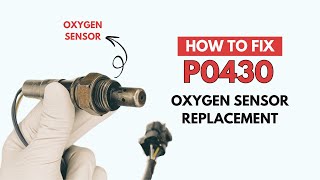
Typical fix: Replace the Bank 2, Sensor 2 oxygen sensor. This sensor is located on the front exhaust pipe, after the catalytic converter. 🎬 Watch: Step-by-step guide to replacing the Bank 2 oxygen sensor. Using a dedicated O2 sensor socket can make removal easier.
Est. part cost: $80-$150 - Exhaust System Leak 🟡 Medium Probability Exhaust manifold gaskets, flex pipes, and flange gaskets can degrade from heat cycles and corrosion, allowing outside air to be drawn into the exhaust stream. This extra oxygen can confuse the downstream O2 sensor, leading to a false P0430 code.
How to confirm: Perform a visual inspection of the exhaust system from the engine to the rear O2 sensor, looking for cracks, rust holes, or black soot marks at gaskets. A smoke test is the most effective way to pinpoint small, hard-to-see leaks. You can also have a helper temporarily block the tailpipe with a rag while the engine is running and listen for hissing sounds.
Typical fix: Repair the leak by replacing the failed gasket or damaged exhaust component. This could involve replacing a donut gasket, a section of pipe, or the exhaust manifold gasket.
Est. part cost: $20-$300 - Engine Misfires or Rich Fuel Condition ⚪ Low Probability Issues like worn spark plugs, faulty ignition coils, or leaking fuel injectors can send unburned fuel into the exhaust. This unburned fuel superheats and melts the internal ceramic honeycomb of the catalytic converter, destroying its ability to function. The Lambda II GDI engine can also suffer from carbon buildup on intake valves, which can affect air/fuel mixture.
How to confirm: Check for other diagnostic trouble codes, especially misfire codes (P0300-P0306) or fuel trim codes (P0172, P0175, P2188). Address and resolve these codes *before* addressing the P0430. A history of engine roughness or hesitation is a strong clue.
Typical fix: Perform a full engine tune-up, including replacing spark plugs and ignition coils. Test and replace any faulty fuel injectors. Perform an intake valve cleaning service if significant carbon buildup is suspected.
Est. part cost: $100-$600
Rare But Worth Checking
- PCM Software Issue: In some cases, the PCM's parameters for triggering the P0430 code may be too sensitive. Check with a Hyundai dealer for any available software updates (ECU reflash) related to emissions or P0430 diagnostics.
- Contamination from Internal Engine Failure: The Lambda II 3.3L V6 has documented cases of premature connecting rod bearing wear and failure. This can cause excessive oil consumption which contaminates and clogs the catalytic converters. If the engine has knocking noises or high oil consumption, this must be investigated as the root cause.
Diagnosis Steps
- Check for other DTCs. If any misfire, fuel system, knock sensor (P1326), or other oxygen sensor codes are present, diagnose and repair them first.
- Visually inspect the exhaust system for any obvious leaks, cracks, or damage, especially between the engine and the Bank 2 catalytic converter. Pay close attention to manifold gaskets and flange connections.
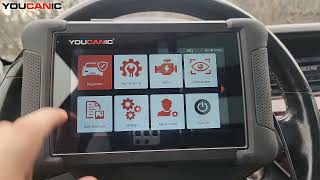
- Use a scan tool with live data capability to monitor the oxygen sensors for Bank 2 (B2S1 and B2S2) with the engine fully warmed up and running at a steady 2000-2500 RPM. 🎬 See how to monitor live sensor data with a scan tool.
- Observe the B2S1 (upstream) sensor voltage. It should fluctuate rapidly between approximately 0.1V and 0.9V.
- Observe the B2S2 (downstream) sensor voltage. On a healthy converter, this voltage should be relatively stable and steady, typically above 0.5V or 0.6V.
- If the B2S2 voltage is fluctuating in a pattern similar to the B2S1 sensor, the catalytic converter is not storing oxygen and has likely failed.
- If the B2S2 voltage is stuck at a specific value (e.g., 0V or 0.45V) or responds very slowly to changes in throttle, the oxygen sensor itself is the most likely culprit.
- If no definitive conclusion can be made from sensor data, perform an exhaust backpressure test or use an infrared thermometer to check the converter's inlet and outlet temperatures. The outlet should be significantly hotter (at least 100°F) than the inlet on a working converter.
Parts You'll Likely Need
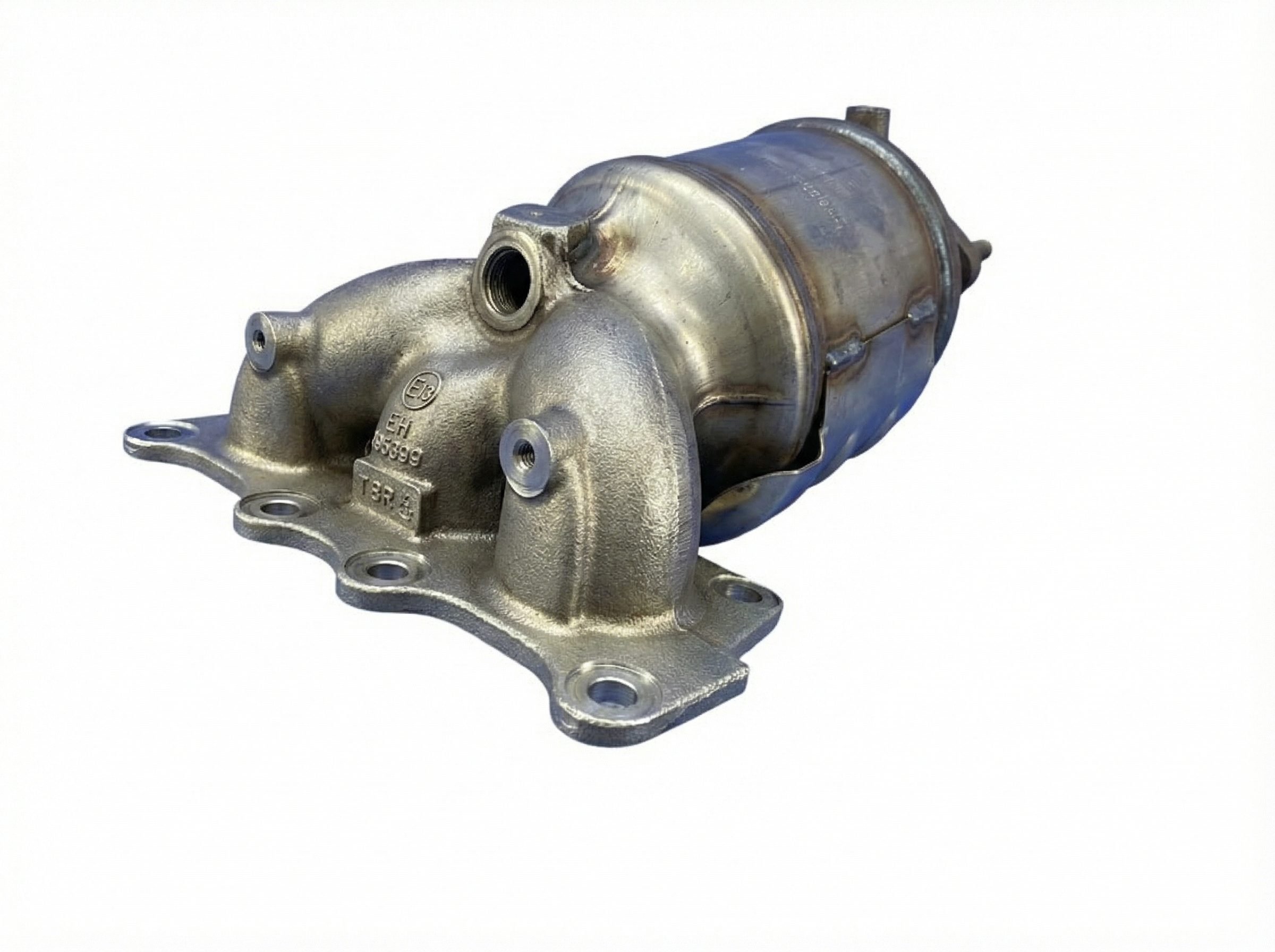
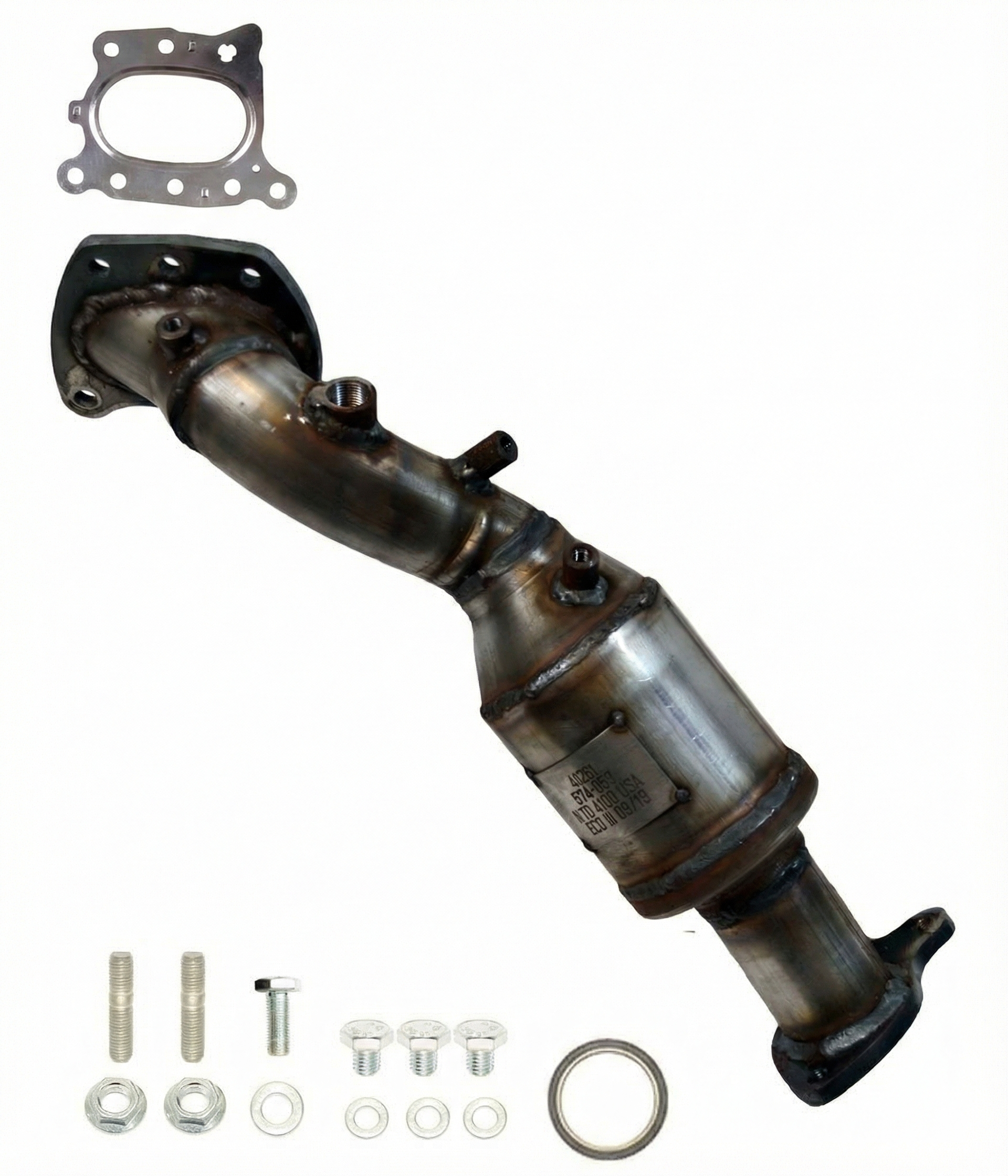
- Catalytic Converter (Bank 2, Front/Radiator Side)
(OEM #28620-4Z700 (This is an example part number, always verify with VIN))— This is the most common cause of a P0430 code, resulting from age-related decline in efficiency or damage from other engine problems like oil consumption.
Trusted brands: Hyundai (OEM), Walker, MagnaFlow, Davico
OEM price range: $1200-$1800
Aftermarket price range: $400-$800 - Downstream Oxygen Sensor (Bank 2, Sensor 2)
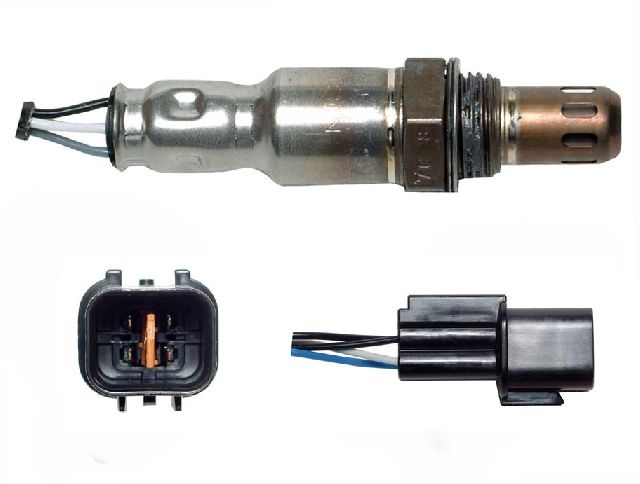
(OEM #39210-3CAA0 (This is an example part number, always verify with VIN))— A faulty or lazy sensor can send incorrect data to the PCM, falsely triggering the P0430 code. It's a common failure point and a wise part to check or replace before the converter.
Trusted brands: Bosch, Denso, NGK/NTK
OEM price range: $120-$180
Aftermarket price range: $80-$120 - Exhaust Manifold Gasket
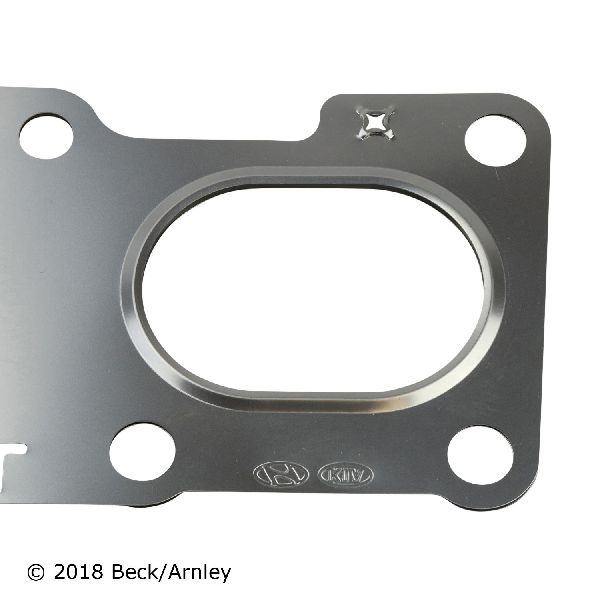
(OEM #28521-3CAA0 (Example, verify with VIN))— If the catalytic converter is integrated into the exhaust manifold, this gasket will need to be replaced during the job. It can also be a source of an exhaust leak causing the code.
Trusted brands: Hyundai (OEM), Fel-Pro, Mahle
OEM price range: $25-$50
Aftermarket price range: $15-$30
Related Codes That Often Appear With This One
- P0420 — This is the equivalent code for Bank 1 (firewall side). If both converters are of similar age and mileage, it's not uncommon for them to fail around the same time, especially if there is an underlying engine issue affecting both banks.
- P0153 — This code indicates a 'Slow Response' from the Bank 2, Sensor 1 (upstream) O2 sensor. A lazy upstream sensor can lead to improper fuel control, which can damage the catalytic converter over time and eventually cause a P0430.
- P0300, P0302, P0304, P0306 — These are misfire codes for Bank 2 cylinders (2, 4, 6). Unburned fuel from a misfire is a primary cause of catalytic converter failure. These codes must be fixed first.
- P1326 — This code is related to the Knock Sensor Detection System. Hyundai issued a campaign to update software to detect abnormal engine bearing noise. If this code is present, it indicates a potentially serious internal engine problem that could be the root cause of the catalytic converter failure.
Technical Service Bulletins (TSBs) & Recalls
- While no TSB is specifically for P0430, several are highly relevant. TSB 21-01-023H and its successors describe a software update campaign (Event #644, etc.) for the Knock Sensor Detection System (KSDS) to identify abnormal engine bearing noise, which is a root cause of oil contamination that destroys converters. Owners should ensure this campaign has been performed on their vehicle.
Mechanic-Grade Diagnostic Values
- Downstream O2 Sensor (B2S2) Voltage at idle — expected: Relatively constant ~0.45V to >0.6V. Failure: Voltage fluctuates rapidly, mimicking the upstream sensor, or is stuck at a specific value.
- Downstream O2 Sensor Heater Circuit Resistance — expected: 5.0 to 15.0 Ohms at ambient temperature. Failure: A reading of infinity (open circuit) or near zero (short circuit) indicates a bad heater element in the sensor.
- Mode 6 - Catalyst Monitor - Oxygen Storage Time — expected: A time value greater than the failure threshold.. Failure: A reported Oxygen Storage Time of less than 3.25 seconds indicates the catalyst has failed the PCM's internal test.
- Low-Pressure Fuel System — expected: ~38 to 50 PSI. Failure: Pressure significantly below this range can indicate a weak fuel pump or clogged filter, leading to a lean condition that can affect exhaust readings. Note: This is a general spec; the GDI system has a much higher pressure side.
Hidden / Shadow Codes Worth Checking
- Mode 6, TID $81, CID $02: This refers to the onboard diagnostic monitor for Bank 2 catalyst efficiency. The PCM stores a value for 'Oxygen Storage Time'. If this value falls below a minimum threshold (e.g., <3.25 seconds), it confirms the test has failed and will trigger the P0430 code. (see via A professional scan tool with Mode 6 capability, such as the Hyundai GDS.)
Scan Tool Commands That Help
- Hyundai GDS (Global Diagnostic System): Vehicle S/W Management — To check for and apply a PCM software update. Hyundai (and other manufacturers) sometimes release updates that adjust the sensitivity of the catalyst monitor, which can fix a P0430 code if it's being triggered erroneously by overly strict parameters.
- Hyundai GDS (Global Diagnostic System): Actuation Test — While not a direct test for the converter, GDS allows for actuation tests of related components like fuel injectors or solenoids. This can help rule out underlying engine issues that could be causing the P0430 code.
- Hyundai GDS (Global Diagnostic System): Reset Adaptive Values — After replacing a component like an oxygen sensor or performing a major repair, resetting the engine's long-term adaptive values can help the PCM learn the new parameters faster and prevent the code from returning during the relearn period.
"I Checked Everything" — The Actual Cause
- A common scenario is a smoke test showing no leaks, yet the P0430 persists. The root cause can be a hairline crack in the Bank 2 exhaust manifold. The crack may be almost invisible when the engine is cold and sealed during a smoke test, but it opens up as the metal heats and expands during operation, drawing in just enough oxygen to disrupt the downstream O2 sensor reading and trigger the code. The fix is to replace the manifold, as welding cast iron is often a temporary solution.
Model Year Variations Within This Range
- 2017-2018: The 2017 model year introduced a mid-cycle refresh with updated front/rear styling, new LED lighting, and interior changes like a standard 7-inch touchscreen. While the 3.3L V6 engine remained, some early 2017 models were subject to a specific recall for crankshaft pin heat treatment issues that could lead to engine bearing failure.
- 2013-2019: Hyundai extended the limited engine warranty for Santa Fe SUVs with the 3.3L Lambda-II V6 to 15 years or 150,000 miles. This was in response to concerns about engine failures. Additionally, Hyundai issued Technical Service Bulletin TSB 23-EM-007H related to combustion chamber cleaning procedures to help prevent issues. Owners experiencing P0430 alongside engine performance problems should investigate these programs.
Diagnostic Flowchart
Other Known Issues on This Vehicle
Issues unrelated to this code that are worth knowing about as an owner of this generation:
- Catastrophic Engine Failure (Rod Bearing Wear) 🔴 High — Occurs frequently enough to trigger class-action lawsuits and warranty extensions. Can happen at relatively low mileage (e.g., under 80,000 miles). (Ref: Hyundai extended the engine warranty for some 2013-2019 Santa Fe models and issued software updates (KSDS) to detect bearing wear early (related to DTC P1326).)
- Excessive Oil Consumption 🔴 High — A very common complaint, often starting after 60,000 miles. Owners report consuming 1-2 quarts every 1,000 miles. This is often a precursor to rod bearing failure and is a primary cause of catalytic converter contamination. (Ref: No specific recall for oil consumption itself, but it is a primary symptom of the engine issues covered by warranty extensions and the KSDS update.)
- Worn Steering Coupler 🟠 Medium — Extremely common. Owners typically notice a distinct clicking or clunking noise from the steering column when turning the wheel, especially at low speeds or when parked. Usually appears after 60,000-100,000 miles. (Ref: A TSB exists for this issue. The part itself is a very inexpensive rubber bushing, but labor can be a few hundred dollars as the steering column must be partially disassembled.)
- ABS Module Fire Risk / Recall 🔴 High — Affects a large number of vehicles across multiple model years. Not mileage-dependent. (Ref: Multiple recalls (e.g., NHTSA 20V-520, and subsequent replacements like R0246) have been issued. Brake fluid can leak into the ABS module, causing an electrical short and potential fire, even when the car is off. The fix involves replacing a fuse and/or the module itself. Owners are advised to park outdoors away from structures.)
- Secondary Hood Latch Corrosion 🟠 Medium — Common enough to warrant a recall across 2013-2017 models. (Ref: Recall 163. The secondary hood latch cable can corrode and bind, preventing the latch from engaging properly. If the primary latch fails or is released, the hood could open while driving.)
Used vs. New Parts: Buying Guide for This Vehicle
When a used part is the smart pick: A used OEM exhaust manifold from a low-mileage donor vehicle can be a cost-effective alternative to a new part, especially if trying to fix a crack. However, it carries the risk of having or developing the same issue. Used oxygen sensors are generally not recommended as they are wear-and-tear items.
Donor-vehicle mileage cap: roughly under 80000 miles for the part to have meaningful remaining life.
What to inspect on the donor part:
- For an exhaust manifold, inspect thoroughly for any hairline cracks, especially around the welds and flanges.
- Check the donor vehicle's history if possible to ensure it wasn't in a front-end collision.
- Ensure the part is from a region with little to no road salt to minimize rust and corrosion damage.
OEM-only on this vehicle (don't cheap out):
- Catalytic Converter: This is the most critical part to buy OEM or a high-quality, EPA-compliant direct-fit aftermarket unit. Cheap 'universal' converters often lack sufficient precious metals and will cause the P0430 code to return, failing emissions tests.
Aftermarket brands forum-validated for this vehicle:
- Oxygen Sensors: NTK and Denso are the primary OEM suppliers and are highly recommended for replacement. They offer the best fit and performance.
- Catalytic Converters: MagnaFlow and Walker are reputable aftermarket brands that offer direct-fit and OEM-grade options that are more likely to perform correctly long-term compared to budget brands.
Brands owners have reported issues with on this vehicle:
- Unbranded or generic 'eBay' catalytic converters. These are almost universally reported to be a waste of money, often failing within weeks or months and causing the P0430 code to reappear.
Real Owner Stories
Aggregated from forums and TSBs cited above. Mileages and costs reflect what owners reported in those sources.
2013-2019 Hyundai Santa Fe 3.3L V6 — ~80000 miles
Symptoms: The owner noted the converter is made of steel and was rusting faster than the aluminum engine components.
What fixed it: Discussion emphasized finding the root cause rather than just replacing O2 sensors, noting the impact of engine wear on the exhaust system.
Source hint: Reddit - r/MechanicAdvice thread titled 'P0430 Code: Check engine light came on...'
2013-2018 Hyundai Santa Fe Lambda II 3.3L V6 — ~110000 miles
Symptoms: Check engine light with P0430; debate over whether to replace the O2 sensor or the converter.
What fixed it: Replacement of the catalytic converter with an OEM part after aftermarket versions failed to keep the light off.
Source hint: Hyundai Forum - hyundai-forums.com
2013-2019 Hyundai Santa Fe 3.3L — ~75000 miles
Symptoms: Engine oil consumption issues linked to rod bearing defects.
What fixed it: Addressing the extended warranty for 3.3L engines due to rod bearing defects which cause the oil consumption that leads to converter failure.
Source hint: Reddit - r/Hyundai thread regarding extended warranty for 3.3L engines
Related OBD-II Codes
Frequently Asked Questions
Is there a TSB for the 3.3L Lambda II engine that relates to my P0430 code?
Can I use an aftermarket catalytic converter on my Santa Fe to fix P0430?
Why did my Santa Fe's converter fail before 100,000 miles?
Should I replace my Bank 2, Sensor 2 oxygen sensor first to save money?
Is the P0430 code covered under the Hyundai extended engine warranty?
Helpful Videos
Used OEM Parts in Stock
New Aftermarket Parts Available

The information in this article is provided for general reference and educational purposes only. Vehicle specifications, procedures, and part compatibility can vary by production date, trim level, and region. Always consult your vehicle's factory service manual and verify part numbers before purchasing or performing repairs. Safety-critical components such as airbags, seat belts, and braking systems should be installed by a qualified professional.
- Hyundai Santa Fe:
- 🧭 Diagnostic Flowchart
- 🎬 Helpful Videos
- 🛍️ Shop This Part
- What's Unique About the 2013-2018 Hyundai Santa Fe
- Symptoms You May Notice
- Most Likely Causes
- Rare But Worth Checking
- Diagnosis Steps
- Parts You'll Likely Need
- Related Codes That Often Appear With This One
- Technical Service Bulletins (TSBs) & Recalls
- Mechanic-Grade Diagnostic Values
- Hidden / Shadow Codes Worth Checking
- Scan Tool Commands That Help
- "I Checked Everything" — The Actual Cause
- Model Year Variations Within This Range
- Other Known Issues on This Vehicle
- Used vs. New Parts: Buying Guide for This Vehicle
- Real Owner Stories
- 2013-2019 Hyundai Santa Fe 3.3L V6 — ~80000 miles
- 2013-2018 Hyundai Santa Fe Lambda II 3.3L V6 — ~110000 miles
- 2013-2019 Hyundai Santa Fe 3.3L — ~75000 miles
- Related OBD-II Codes
- Frequently Asked Questions
- 🎟️ Get 5% Off