

P0430 on 2018-2023 Kia Stinger 3.3T: Catalyst Efficiency Causes and Fixes
For the 2018-2023 Kia Stinger 3.3T, code P0430 almost always indicates a failing catalytic converter on the driver's side (Bank 2). Before replacing the expensive converter, rule out a much cheaper faulty downstream O2 sensor and check for exhaust leaks. Crucially, verify that Kia recall SC300 for a turbo oil line leak has been performed, as this oil leak is a known cause of converter destruction on this engine and its platform-mate, the Genesis G70.
- Before buying any parts for P0430, check if your Stinger has had the SC300 (turbo oil leak) and SC170 (wiring harness) recalls performed.
- The most likely cause is a failed driver's side catalytic converter, but always diagnose the cheaper downstream O2 sensor first.
- A scan tool that can graph live O2 sensor data is the most important tool for correctly diagnosing this code.
- Bank 2 on the Stinger 3.3T is the driver's side. Sensor 2 is the downstream sensor, located after the catalytic converter.
- If you have any engine misfire codes, you must fix those first or you will destroy the new catalytic converter.
What's Unique About the 2018-2023 Kia Stinger
On the high-performance twin-turbo 3.3T Stinger, P0430 requires careful diagnosis beyond just assuming a bad catalytic converter. This engine is subject to a critical safety recall (SC300) for a turbocharger oil feed pipe on the driver's side (Bank 2) that can deteriorate from heat, leaking oil directly onto the catalytic converter and O2 sensor, causing damage and triggering this code. This exact issue also affects its platform mates, the Genesis G70 and Kia K900. Additionally, some 2018 models have a recall (SC170) for a wiring harness that can short out on the driver's side, potentially mimicking O2 sensor failure. These platform-specific issues make it crucial to check for recalls before spending money on parts.
Symptoms You May Notice
- Check Engine Light is on
- Vehicle fails emissions testing
- Reduced fuel economy
- Possible slight loss of engine power or hesitation
- A sulfur or 'rotten egg' smell from the exhaust if the converter is severely failed.
- In some cases, no noticeable symptoms other than the Check Engine Light.
- Immediately replacing the catalytic converter without diagnosing the O2 sensors or checking for exhaust leaks. The sensor is a much cheaper part to replace.
- Replacing the oxygen sensor when the catalytic converter has actually failed. A proper scan tool data analysis is key to differentiating the two.
- Replacing parts without first checking if the vehicle is affected by recalls SC300 (turbo oil line) or SC170 (wiring harness), which can be the true root cause.
Most Likely Causes
- Failing Catalytic Converter (Bank 2) 🔴 High Probability → Shop Catalytic Converter The high heat from the twin-turbo engine puts stress on the converters. More importantly, a known oil leak from the Bank 2 turbo feed line (Recall SC300) can drip onto and destroy the converter by contaminating the catalyst materials.
How to confirm: After confirming O2 sensors are working and there are no exhaust leaks, use a scan tool to monitor live O2 sensor data. If the downstream sensor (Bank 2, Sensor 2) voltage graph mimics the rapid 0.1V-0.9V fluctuations of the upstream sensor, the converter has lost its oxygen storage capacity and is not working.
Typical fix: Replace the Bank 2 (driver's side) catalytic converter. Ensure any root causes like misfires or the SC300 oil leak are fixed first to prevent destroying the new part.
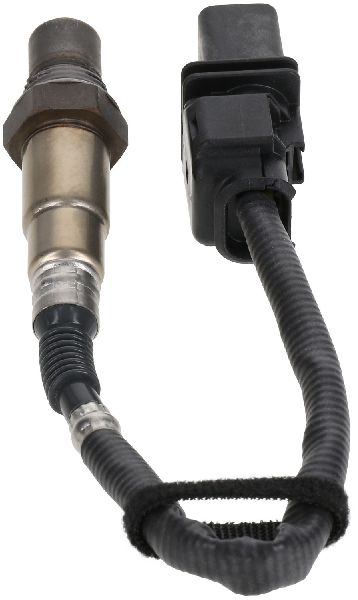
Est. part cost: $1800-$3200 - Failing Downstream Oxygen Sensor (Bank 2, Sensor 2) 🟡 Medium Probability → Shop Oxygen Sensor Oxygen sensors are wear-and-tear items exposed to extreme heat. A faulty sensor can send incorrect data, falsely triggering the P0430 code. Oil contamination from the SC300 recall issue can also foul the sensor.
How to confirm: The best method is to swap the Bank 1 and Bank 2 downstream O2 sensors. Clear the codes and drive. If the code changes to P0420 (Bank 1), the sensor is confirmed bad. Alternatively, a scan tool showing a stuck or flat voltage from B2S2 (e.g., stuck at 0.1V or 0.9V) indicates failure.
Typical fix: Replace the Bank 2, Sensor 2 (downstream, driver's side) oxygen sensor.
Est. part cost: $80-$200 - Exhaust System Leak ⚪ Low Probability
How to confirm: Visually inspect the exhaust from the engine to the catalytic converter for cracks or broken gaskets, particularly at the manifold and flange connections. A smoke test is the most reliable method to find small, non-visible leaks. The leak must be upstream of or near the rear O2 sensor to allow outside oxygen to enter and skew the readings.
Typical fix: Repair the leak by replacing the gasket or damaged exhaust section.
Est. part cost: $20-$300 - Engine Misfires or Fuel System Issues ⚪ Low Probability
How to confirm: Check for other stored trouble codes, such as misfire codes (P0300, P0302, P0304, P0306) or fuel system codes (P0175, P2097). These issues must be addressed first, as dumping raw fuel into the exhaust will quickly destroy a catalytic converter.
Typical fix: Diagnose and repair the root cause of the other codes (e.g., replace spark plugs, ignition coils, or fuel injectors) before addressing the P0430 code.
Est. part cost: $50-$500
Rare But Worth Checking
- Damaged Bank 2 Wiring Harness: On 2018 models, recall SC170 was issued because the front wiring harness could be damaged by a sharp edge on the left fender apron, causing a short in the O2 sensor circuit. This can be misdiagnosed as a bad sensor or converter. The repair involves inspection and adding protective covering or replacing the harness.
- Aftermarket Downpipes/Midpipes: Owners who install catless or high-flow aftermarket exhaust components often trigger P0420/P0430 because the change in exhaust flow and composition is outside the ECM's expected parameters. This is often resolved with a tune or O2 sensor spacers, not by replacing parts.
Diagnosis Steps
- Check for Recalls: Use the vehicle's VIN to check the NHTSA or a Kia dealer website for open recalls, specifically SC300 (Turbo Oil Feed Pipe) and SC170 (Front Wiring Harness on 2018 models). Perform these recalls if applicable, as they are known causes.
- Scan for Other Codes: Use an OBD-II scanner. If any misfire (P03xx) or fuel system (P017x, P209x, P0088) codes are present, diagnose and fix them first.
- Inspect for Exhaust Leaks: Visually and audibly inspect the entire exhaust system on the driver's side for any cracks, rust holes, or gasket leaks, especially between the engine and the rear O2 sensor. A smoke test is the most effective way to find small leaks.
- Analyze Live O2 Sensor Data: With a warm engine, use a scan tool to graph the voltage of all four O2 sensors. Bank 2 Sensor 1 (upstream) should fluctuate rapidly between ~0.1V and ~0.9V. A healthy Bank 2 Sensor 2 (downstream) should show a relatively steady, high voltage (typically above 0.6V).
- Diagnose the Data: If the B2S2 voltage graph mirrors the rapid switching of the B2S1 graph, the catalytic converter has failed. If the B2S2 voltage is stuck low (near 0V), flat, or unresponsive, the sensor itself is likely bad.
- Confirm a Bad Sensor (Optional): To be certain, swap the downstream O2 sensors between the driver's side (Bank 2) and passenger's side (Bank 1). They are the same part number. Clear the codes and drive. If the trouble code changes to P0420, you have definitively proven the sensor is faulty.
- Replace the Faulty Component: Based on your diagnosis, replace either the catalytic converter or the oxygen sensor. Always fix the root cause (like the SC300 oil leak) first.
Parts You'll Likely Need
- Catalytic Converter (Bank 2, Left/Driver's Side)
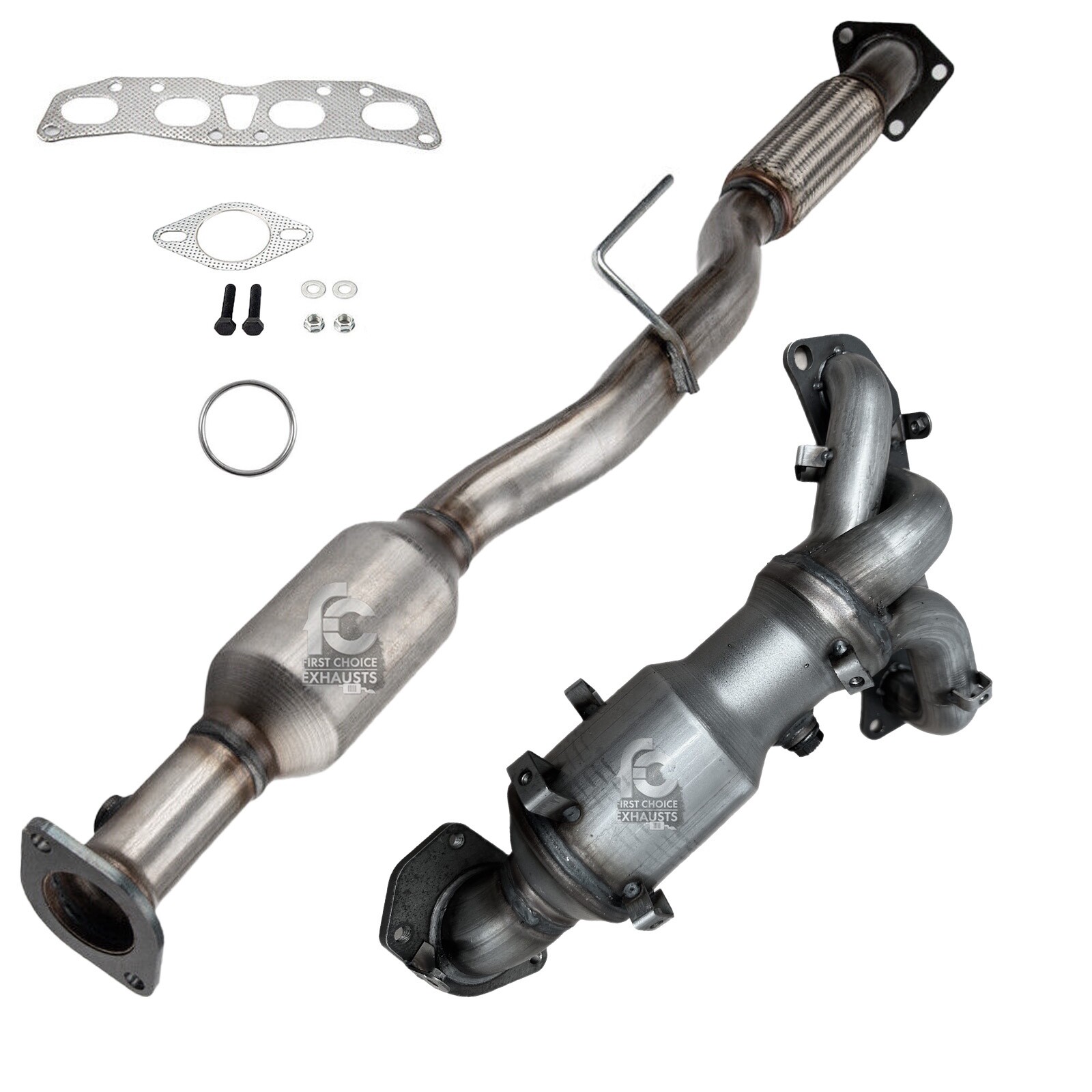
(OEM #28530-3LVE0 (supersedes 28530-3LWL0))— This is the most common cause of a true P0430 code after other possibilities are ruled out. It is the component responsible for the emissions conversion that the code monitors.
Trusted brands: Kia/Hyundai Genuine
OEM price range: $2500-$3200
Aftermarket price range: $600-$1200 - Downstream Oxygen Sensor (Bank 2, Sensor 2)
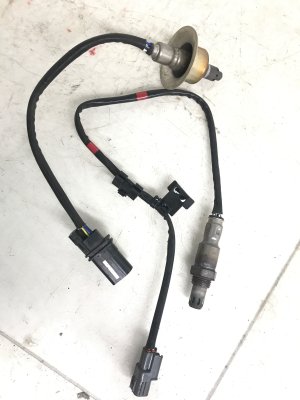
(OEM #39210-3L550)— This sensor provides the direct measurement that triggers the P0430 code. It is a common wear item and can fail, sending inaccurate signals to the ECM. It is identical to the Bank 1 Sensor 2.
Trusted brands: Kia/Hyundai Genuine, Bosch, NTK, Denso
OEM price range: $150-$200
Aftermarket price range: $80-$150 - Exhaust Gaskets
(OEM #28751-2V000 (example, verify specific gasket needed))— When replacing either the catalytic converter or O2 sensor, it is best practice to replace any associated gaskets to prevent exhaust leaks.
Trusted brands: Kia/Hyundai Genuine
OEM price range: $10-$30
Aftermarket price range: $5-$15
Related Codes That Often Appear With This One
- P0420 — This is the identical code for Bank 1 (passenger side). If both are present, it suggests a systemic issue like a fuel problem affecting the whole engine (e.g. HPFP failure), or that both converters have reached the end of their service life.
- P0300, P0302, P0304, P0306 — These are misfire codes for Bank 2 cylinders. An unaddressed misfire dumps raw fuel into the exhaust, which quickly overheats and destroys the catalytic converter. The misfire is the cause, and P0430 is the effect.
Technical Service Bulletins (TSBs) & Recalls
- SC300 / NHTSA 24V169000: Recall for left-hand turbocharger oil feed pipe deterioration and oil leak.
- SC170 / NHTSA 18V754000: Recall for front wiring harness chafing on 2018 models.
- SC281 / NHTSA 23V-652: Recall for high-pressure fuel pump (HPFP) internal failure on 2018-2021 models.
- SC196 / NHTSA 20V-518: Recall for potential electrical short in the HECU module on 2018-2021 models.
Platform-Specific Known Issues
- Recall SC300 (NHTSA: 24V169000): A left-hand (Bank 2) turbocharger oil feed pipe can deteriorate from heat and leak oil. This oil can drip onto the Bank 2 catalytic converter or O2 sensor, causing contamination and damage that directly leads to code P0430. The repair involves replacing the pipe and hose assembly with an improved part.
- Recall SC170 (NHTSA: 18V754000): Affects some 2018 models. The front wiring harness can chafe
Mechanic-Grade Diagnostic Values
- Downstream O2 Sensor (B2S2) Heater Circuit Resistance — expected: 3.3 - 4.1 Ω at 69.8°F (21°C). Failure: Resistance is outside of this range (OL for open circuit, near 0 for shorted).
- Downstream O2 Sensor (B2S2) Voltage at Idle (Warm Engine) — expected: Relatively stable voltage between 0.6V and 0.8V.. Failure: Voltage graph mimics the rapid switching of the upstream sensor, indicating a failed converter. A voltage stuck low (under 0.2V) indicates a failed sensor.
- Upstream O2 Sensor (B2S1) Heater Circuit Resistance — expected: 2.5 - 4.0 Ω at 20°C (68°F). Failure: A reading of OL (infinite resistance) or near zero ohms indicates a failed heater element in the upstream sensor, which can affect catalyst readiness tests.
- O2 Sensor Heater Circuit Power Supply (at harness connector) — expected: ~12 Volts (Battery Voltage) with Key On, Engine Off.. Failure: Zero or low voltage points to a problem with the fuse (labeled 'SENSOR 1' in engine bay fuse box) or wiring, not the sensor itself.
Hidden / Shadow Codes Worth Checking
- Mode 6, TID $51, CID $01: Catalyst Monitor Bank 2. This test measures the oxygen storage capacity of the Bank 2 catalytic converter. The raw test value is compared against a maximum allowable threshold stored in the ECM. (see via An advanced OBD-II scan tool with Mode $06 data capability (e.g., Kia GDS, advanced Autel/Launch scanners). If the test value exceeds the max limit, it confirms the failure that triggers P0430.)
Scan Tool Commands That Help
- Kia GDS (Global Diagnostic System): Resetting Adaptive Values — After replacing a catalytic converter or O2 sensors, resetting the engine's long-term fuel and emissions adaptations can help the ECM learn the new components' characteristics faster and prevent the code from returning due to old, skewed data.
- Kia GDS (Global Diagnostic System): ECU Upgrade / Vehicle S/W Management — Check for any available ECU software updates. Kia may have released updates that adjust the sensitivity or logic of the catalyst efficiency monitor, which could resolve the code without a part replacement if the vehicle is borderline.
- Kia GDS (Global Diagnostic System): Guided Troubleshooting Procedures — For a P0430 code, the GDS software provides a step-by-step diagnostic tree with expected values, component locations, and wiring diagrams specific to the Stinger, which is invaluable for systematically finding the fault.
Wiring & Ground Locations
- Bank 2 Downstream O2 Sensor Connector — Under the vehicle, on the driver's side, post-catalytic converter. The harness runs up the transmission tunnel area.. This is the primary connector for the sensor that triggers the P0430 code. It is exposed to road debris and heat, making it a point of failure for wiring damage, corrosion, or loose connections.
- Engine Ground Strap (91860-J5010) — Main ground strap connecting the engine block to the chassis.. A loose, corroded, or broken main engine ground can cause erratic or incorrect voltage readings on multiple engine sensors, including the O2 sensors. This can lead to a false P0430 code that is difficult to diagnose, as the sensor and converter may be perfectly fine.
Real Owner Repair Stories
- Reddit user in r/MechanicAdvice (Vehicle with 104k miles, P0420 & P0430 codes) — Check Engine Light with P0420 and P0430 codes.
❌ Tried (didn't work) Replacing all four oxygen sensors.
✅ What actually fixed it The consensus from mechanics in the thread was that after replacing sensors and confirming no exhaust leaks, the only remaining cause was failed catalytic converters. The final fix is replacing the catalytic converters themselves. - Reddit user Rileycoe in r/kiastinger (2019 Kia Stinger GT2 AWD) — Check Engine Light with P0430 code.
❌ Tried (didn't work) The user initially suspected aftermarket midpipes, but they have no sensors.
✅ What actually fixed it The thread did not have a final confirmed fix from the original poster, but multiple experienced users advised the diagnostic path: 1) Check downstream O2 sensor, 2) Check for exhaust leaks, 3) If those are good, the catalytic converter has failed. One user suggested checking for a used converter from a wrecked Stinger as a cost-effective solution. - NHTSA ODI #10320360 — Although reported on a different model from the same manufacturer, an owner noted that P0430 appeared alongside P0300 and P0170. The report highlights that code P0170 specifically spells out a "fuel trim" problem that can affect catalyst efficiency readings.
OEM Part Supersession History
28530-3LWL0→28530-3LVE0— Part has been updated by the manufacturer. Reasons can include minor design changes, material improvements, or a change in supplier.
Model Year Variations Within This Range
- 2022-2023: The 2022+ facelift models feature a factory-installed active (valved) cat-back exhaust system. While the catalytic converters and sensors themselves remain the same, the change in downstream exhaust components and acoustics is a factor to consider, especially when diagnosing leaks or fitting aftermarket parts.
- 2018: Some 2018 models were subject to recall SC170 for a front wiring harness that could chafe on the fender apron, potentially causing shorts in the O2 sensor circuit and triggering a false P0430. This is specific to early production models.
Diagnostic Flowchart
Other Known Issues on This Vehicle
Issues unrelated to this code that are worth knowing about as an owner of this generation:
- Brake Judder and Premature Rotor Warping 🟠 Medium — Commonly reported by owners, especially on 2018-2020 models, sometimes within 25,000-30,000 miles. Many owners upgrade to aftermarket rotors and pads to resolve the issue.
- High-Pressure Fuel Pump (HPFP) Failure 🔴 High — Sufficiently common on 2018-2021 models to warrant a recall (SC281). Failure can cause stalling and loss of power. (Ref: Recall SC281 (NHTSA: 23V-652))
- Paint Chipping and Peeling 🟡 Low — Frequently discussed by owners. The paint is considered thin and prone to chips. An early issue with 'Sunset Yellow' paint led to a special service campaign for repainting due to poor adhesion. (Ref: Service campaign for 'Sunset Yellow' paint.)
- Interior Rattles 🟡 Low — A common complaint among owners, often originating from the trunk/hatch area or dashboard.
- HECU (Hydraulic Electronic Control Unit) Fire Risk 🔴 High — Affects 2018-2021 models. An electrical short within the HECU can occur, creating a fire risk even when the car is off. (Ref: Recall SC196 (NHTSA: 20V-518))
Used vs. New Parts: Buying Guide for This Vehicle
When a used part is the smart pick: A used catalytic converter from a low-mileage, verified donor vehicle can be a cost-effective option, given the very high price of a new OEM unit. Used wiring harness pigtails are also a good choice if only the connector is damaged.
Donor-vehicle mileage cap: roughly under 40000 miles for the part to have meaningful remaining life.
What to inspect on the donor part:
- Verify the donor vehicle's VIN to ensure it did not have a history of misfires, oil consumption, or fuel system faults.
- Physically inspect the converter for any signs of external damage, cracks, or rattling (which indicates a broken internal substrate).
- Ensure the donor vehicle is from a state with similar emissions standards.
OEM-only on this vehicle (don't cheap out):
- Catalytic Converter: Aftermarket catalytic converters for modern, high-performance GDI engines like the 3.3T are notorious for failing to meet the ECM's strict efficiency monitoring, often causing the P0430 code to return. OEM is strongly recommended for longevity and to guarantee the check engine light stays off.
Aftermarket brands forum-validated for this vehicle:
- NTK (for O2 Sensors): NTK is the OEM supplier for many Kia/Hyundai vehicles and is considered the top choice for replacement sensors, ensuring proper fit and function.
- Denso (for O2 Sensors): Denso is another major OEM supplier with a reputation for high-quality sensors that meet or exceed factory specifications.
- Bosch (for O2 Sensors): A well-regarded brand offering reliable aftermarket sensors.
Brands owners have reported issues with on this vehicle:
- Universal or 'no-name' catalytic converters: These often lack the precise precious metal loading required by the Stinger's ECU and are highly likely to fail the catalyst efficiency monitor, leading to a recurring P0430 code.
Real Owner Stories
Aggregated from forums and TSBs cited above. Mileages and costs reflect what owners reported in those sources.
2018-2023 Kia Stinger 3.3T
Symptoms: Check Engine Light on; oil leaking from the left-hand turbocharger oil feed pipe onto the exhaust components.
What fixed it: Replacement of the turbocharger oil feed pipe and hose assembly with an improved part under Recall SC300.
Source hint: Recall SC300 / NHTSA 24V169000
2018 Kia Stinger 3.3T
Symptoms: Check Engine Light and potential electrical issues due to front wiring harness chafing.
What fixed it: Repair or replacement of the front wiring harness under Recall SC170.
Source hint: Recall SC170 / NHTSA 18V754000
2019-2023 Genesis G70 3.3T
Symptoms: P0430 code triggered by catalytic converter failure similar to the Stinger.
What fixed it: Addressing the Bank 2 turbo oil feed line leak (NHTSA 24V-191) to prevent catalyst contamination.
Source hint: 2019-2023 Genesis G70 (3.3T) platform mate description
Related OBD-II Codes
Frequently Asked Questions
How does the SC300 recall for the turbo oil feed pipe affect my P0430 code?
Can I swap parts to confirm if the downstream O2 sensor is the problem?
Is there a specific wiring issue on the 2018 Kia Stinger that causes sensor codes?
What is the estimated cost to replace the Bank 2 catalytic converter on a Stinger 3.3T?
Could my high-pressure fuel pump issues be related to the P0430 code?
Which side of the engine is Bank 2 on the Kia Stinger 3.3T?
Helpful Videos
Used OEM Parts in Stock
New Aftermarket Parts Available

The information in this article is provided for general reference and educational purposes only. Vehicle specifications, procedures, and part compatibility can vary by production date, trim level, and region. Always consult your vehicle's factory service manual and verify part numbers before purchasing or performing repairs. Safety-critical components such as airbags, seat belts, and braking systems should be installed by a qualified professional.
- Kia Stinger:
- 🧭 Diagnostic Flowchart
- 🎬 Helpful Videos
- 🛍️ Shop This Part
- What's Unique About the 2018-2023 Kia Stinger
- Symptoms You May Notice
- Most Likely Causes
- Rare But Worth Checking
- Diagnosis Steps
- Parts You'll Likely Need
- Related Codes That Often Appear With This One
- Technical Service Bulletins (TSBs) & Recalls
- Platform-Specific Known Issues
- Mechanic-Grade Diagnostic Values
- Hidden / Shadow Codes Worth Checking
- Scan Tool Commands That Help
- Wiring & Ground Locations
- Real Owner Repair Stories
- OEM Part Supersession History
- Model Year Variations Within This Range
- Other Known Issues on This Vehicle
- Used vs. New Parts: Buying Guide for This Vehicle
- Real Owner Stories
- 2018-2023 Kia Stinger 3.3T
- 2018 Kia Stinger 3.3T
- 2019-2023 Genesis G70 3.3T
- Related OBD-II Codes
- Frequently Asked Questions
- 🎟️ Get 5% Off