

P0430 on 2003-2009 Lexus GX470: Catalyst, O2 Sensor, and Exhaust Leak Causes
On a 2003-2009 Lexus GX470, code P0430 is most often caused by a worn-out catalytic converter or a failing downstream oxygen sensor on Bank 2 (driver's side). Before replacing the expensive converter, it is critical to first check for cracked exhaust manifolds, a very common failure on the 2UZ-FE engine that causes a false P0430 code. An exhaust leak check and O2 sensor test are mandatory first steps. A new Denso oxygen sensor costs around $60-$120, while a new OEM catalytic converter assembly c
- Do not automatically replace the catalytic converter. It's the most expensive part and may not be the cause.
- Always check for exhaust leaks first, especially for a ticking noise from the driver's side engine bay when cold, which points to the common cracked manifold issue on the 2UZ-FE engine.
- Testing or replacing the downstream (Bank 2, Sensor 2) oxygen sensor is a cost-effective next step. Use a quality Denso sensor for best results.
- Bank 2 on a US-market Lexus GX470 is the DRIVER'S side of the engine.
- If you do need a catalytic converter, be aware that OEM parts are expensive, and aftermarket parts may have varying quality and legality depending on your state's emissions laws.
What's Unique About the 2003-2009 Lexus GX470
The 2UZ-FE V8 in the GX470 is legendary for its durability, but it has a specific weakness that relates directly to this code: cracked exhaust manifolds. To meet emissions standards and ensure the catalysts heat up quickly, Toyota designed the manifolds with thin steel tubes and integrated the primary catalytic converters very close to the engine. The combination of thin metal and the significant weight of the catalytic converter hanging off the end, combined with thousands of heat cycles, causes stress fractures. These cracks create an exhaust leak that draws in outside air, disrupting sensor readings and often leading to a false P0430 code before the converter itself has actually failed.
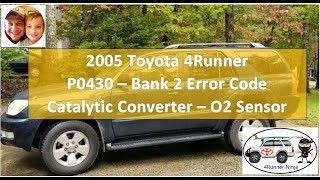
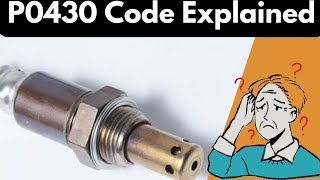
🎬 Watch: A deep dive into P0430 causes and symptoms.Symptoms You May Notice
- Check Engine Light is on
- VSC and TRAC lights are on (these often illuminate with any Check Engine Light)
- Noticeable decrease in fuel economy
- Sluggish acceleration or lack of power, especially if the converter is clogged
- A sulfur or "rotten egg" smell from the exhaust
- A distinct ticking noise from the engine bay, especially when cold, that may quiet down as the engine warms up. This is a classic sign of a cracked exhaust manifold.
- Immediately replacing the catalytic converter without first thoroughly checking for exhaust leaks from a cracked manifold. This is an extremely expensive and common mistake on the GX470.
- Replacing the wrong bank's sensors. Bank 2 on a US-spec GX470 is the driver's side. Some aftermarket parts sites may incorrectly label Bank 2 as the passenger side.
Most Likely Causes
- Exhaust Leak (Cracked Manifold) 🔴 High Probability The 2UZ-FE engine is notoriously prone to developing cracks in the stock tubular exhaust manifolds due to their design, which integrates the heavy catalytic converter. This is widely considered the most common issue to check first for a P0430 code on this platform.
How to confirm: Listen for a ticking noise from the driver's side of the engine, especially on a cold start, that may quiet down as the engine warms and the metal expands to close the crack. A visual inspection may reveal cracks or black soot trails near the manifold welds. A professional smoke test is the most definitive way to pinpoint the leak.
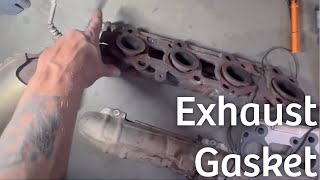
Typical fix: Replace the cracked exhaust manifold. 🎬 See this walkthrough for removing seized manifold studs and gaskets. Many owners upgrade to more durable aftermarket headers (e.g., Doug Thorley) to prevent a recurrence, as they are often more robust and sometimes cheaper than a new OEM manifold.
Est. part cost: $400-$800 for an OEM manifold, $600-$1300 for aftermarket headers. - Failing Catalytic Converter (Bank 2) 🟡 Medium Probability → Shop Catalytic Converter These are high-mileage vehicles, and catalytic converters are a wear-and-tear item with a finite lifespan. Contamination from unresolved engine issues (misfires, burning oil) can also accelerate failure.
How to confirm: This should only be confirmed after ruling out all other possibilities (exhaust leaks, sensor failures). A professional can use a 5-gas analyzer or a scan tool to graph sensor data to confirm. If the downstream O2 sensor voltage graph mimics the upstream A/F sensor graph, the converter is not functioning. An infrared thermometer can also be used; the outlet of a working converter should be at least 100-150°F hotter than the inlet.
Typical fix: Replace the Bank 2 catalytic converter assembly. This is a labor-intensive job. OEM parts are extremely expensive.
Est. part cost: $2000-$3000+ for OEM. Aftermarket direct-fit options range from $400-$900. - Failing Downstream Oxygen Sensor (Bank 2, Sensor 2) 🟡 Medium Probability → Shop Oxygen Sensor O2 sensors are wear items. After 100,000+ miles, they can become slow to respond or send inaccurate voltage signals, tricking the ECM into thinking the converter is bad when it isn't.
How to confirm: Use a scan tool to monitor the voltage of the Bank 2 Sensor 2. It should be relatively stable (around 0.6-0.8V) on a healthy, warm converter. If it's fluctuating rapidly like the upstream sensor, it may be faulty. A common diagnostic trick is to swap the Bank 1 and Bank 2 downstream sensors; if the code changes to P0420, the sensor is confirmed bad.
Typical fix: Replace the Bank 2, Sensor 2 oxygen sensor. 🎬 Watch: How to replace the Bank 2 Sensor 2 O2 sensor. Use a quality brand like Denso, which is the original equipment manufacturer, to avoid compatibility issues.
Est. part cost: $60-$120 - Failing Upstream Air/Fuel Ratio Sensor (Bank 2, Sensor 1) ⚪ Low Probability → Shop Oxygen Sensor Less common than a downstream sensor failure for this specific code, but a faulty A/F sensor can provide incorrect data, causing a rich or lean condition that either damages the converter or leads to an improper diagnosis by the ECM.
How to confirm: Graph the sensor's performance on a scan tool. It should fluctuate rapidly. If it's stuck or slow to respond, it needs replacement. Swapping upstream sensors side-to-side is also a valid diagnostic step.
Typical fix: Replace the Bank 2, Sensor 1 A/F sensor.
Est. part cost: $100-$180
Rare But Worth Checking
- Engine Misfire or Fuel System Issues: An unresolved engine misfire (P030x codes) or a rich/lean running condition (e.g., from a bad MAF sensor or faulty fuel injector) can dump unburned fuel into the exhaust, which can quickly overheat and destroy the catalytic converter. Always fix other engine codes before addressing a P0430.
Diagnosis Steps
- Check for any other stored OBD-II codes. If codes for misfires (P0300-P0308), fuel trim (P0171, P0174), or sensor heaters are present, diagnose and fix them first.
- Perform a thorough visual and auditory inspection of the Bank 2 (driver's side) exhaust system, especially when the engine is cold. Listen for a distinct 'ticking' sound that points to a manifold crack. Look for black soot marks indicating a leak.
- A professional smoke test is the most effective way to find small or hard-to-see leaks in the manifold or gaskets.
- If no leaks are found, use a capable OBD-II scan tool to view live data. Graph the signals from the Bank 2 upstream (A/F Sensor) and downstream (O2 Sensor) sensors at a steady 2500 RPM on a fully warmed engine.
- On a healthy system, the upstream sensor should fluctuate rapidly, while the downstream sensor should show a steady, high voltage (e.g., ~0.7V).
- If the downstream sensor's waveform mimics the upstream sensor's fluctuations, it confirms the catalytic converter is not storing oxygen and is likely inefficient.
- If the downstream sensor's voltage is stuck low, high, or is slow to respond, suspect a faulty sensor.
- If accessible, swap the downstream O2 sensors from Bank 1 and Bank 2. Clear the codes and drive. If P0430 returns, the issue is on Bank 2 (converter or leak). If code P0420 appears, the sensor you moved is faulty.
- If all sensors test good and there are absolutely no exhaust leaks, the Bank 2 catalytic converter is the most likely cause.
Parts You'll Likely Need
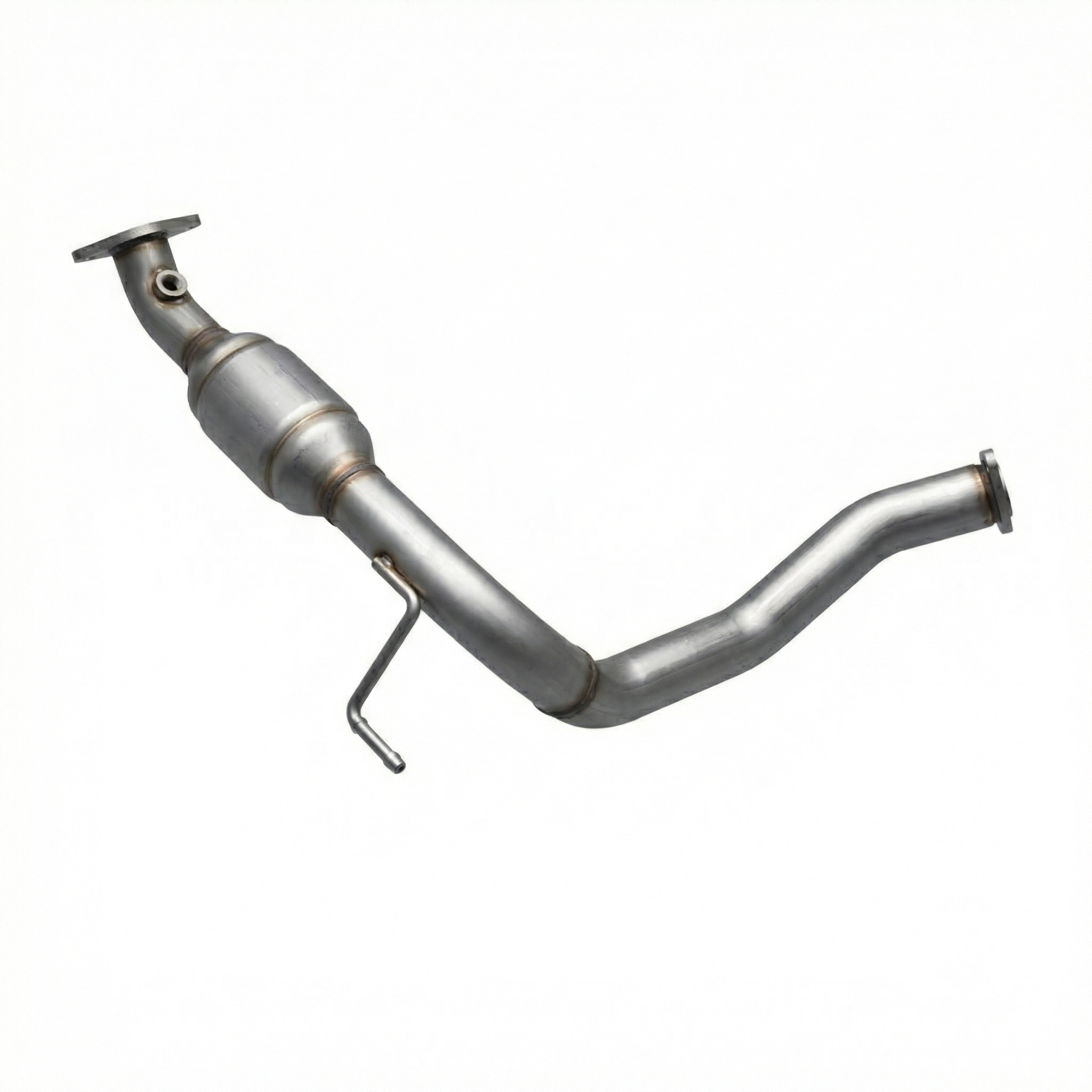
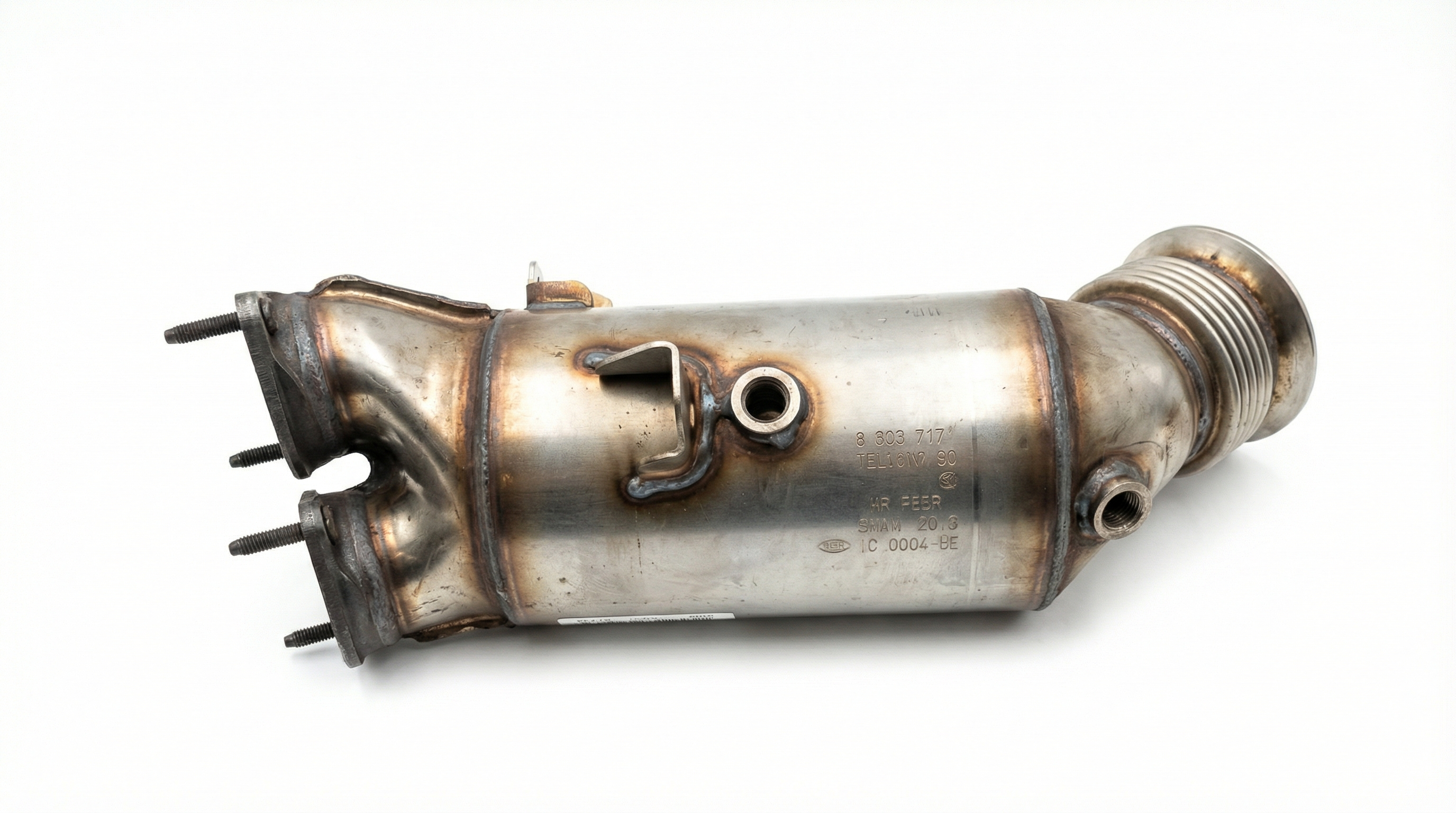
- Bank 2 Catalytic Converter / Exhaust Manifold Assembly
(OEM #17140-50100 (for 2003-2004 models))— This is the most common ultimate failure for this code on high-mileage GX470s, often due to a preceding exhaust manifold crack. The part is an integrated unit from the factory.
Trusted brands: Lexus (OEM), Walker, MagnaFlow, Dorman
OEM price range: $2000-$3000+
Aftermarket price range: $400-$900 - Bank 2, Sensor 2 (Downstream) Oxygen Sensor
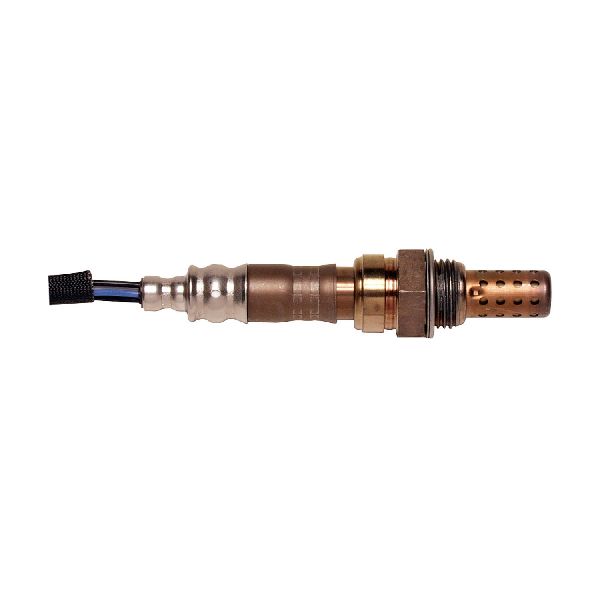
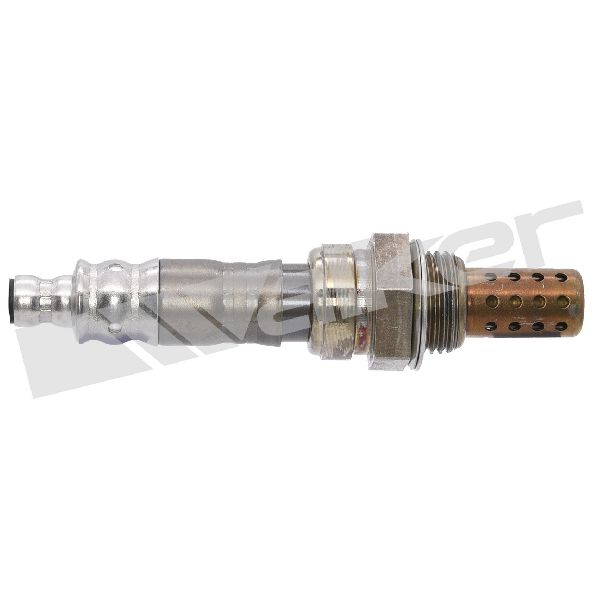
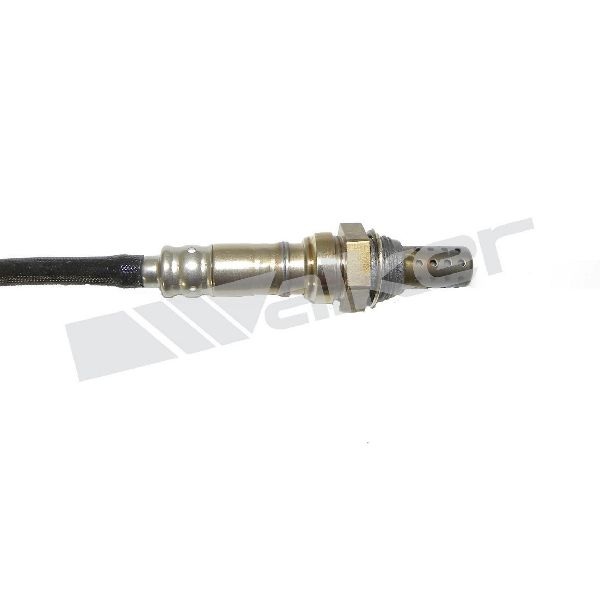
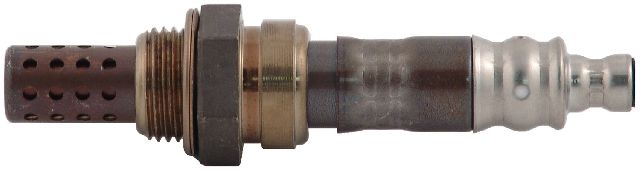
(OEM #89465-35580 (Denso P/N: 234-4169))— This sensor is responsible for monitoring the converter's efficiency. It's a common failure point and a frequent cause of a false P0430 code.
Trusted brands: Denso (OEM)
OEM price range: $100-$150
Aftermarket price range: $60-$120 - Bank 2, Sensor 1 (Upstream) Air/Fuel Ratio Sensor
(OEM #89467-50020 (Denso P/N: 234-9056 for 2005-2009 VVTi))— Though less common, a faulty upstream sensor can cause fuel trim issues that lead to a P0430 code.
Trusted brands: Denso (OEM)
OEM price range: $120-$200
Aftermarket price range: $100-$180 - Aftermarket Exhaust Headers — A popular and durable solution to the chronic cracked manifold problem. Replaces the factory manifold/cat design, often requiring relocation of the primary catalytic converters further downstream.
Related Codes That Often Appear With This One
- P0420 — This is the identical code but for Bank 1 (passenger side). It's common for both manifolds/converters to age and fail at a similar rate. Seeing P0420 and P0430 together on a high-mileage vehicle strongly points toward both catalytic converters nearing the end of their life or, more likely, cracks in both exhaust manifolds.
Technical Service Bulletins (TSBs) & Recalls
- DL002-07: Addresses a 'clunk/thump noise from the rear' by replacing the propeller shaft with an updated part (37110-60A40).
- Warranty Enhancement Program ZLD: Not a TSB, but a factory program extending warranty coverage for cracked/sticky dashboards on 2003-2008 GX470s due to heat and humidity.
Platform-Specific Known Issues
- The 2UZ-FE engine is widely known for cracked exhaust manifolds, which integrate the primary catalytic converter. This is a design issue related to emissions compliance and material choice. A resulting exhaust leak is a very common cause for P0430 on this platform.
Mechanic-Grade Diagnostic Values
- Downstream O2 Sensor (Bank 2, Sensor 2) Heater Resistance — expected: 11 - 16 Ω at 68°F (20°C) or 14 - 18.5 Ω at 68°F (20°C) depending on part number.. Failure: An open circuit (infinite resistance) or a dead short (zero resistance) indicates a failed heater element within the sensor.
- Catalyst Temperature Differential (Infrared Thermometer) — expected: Outlet temperature should be at least 100-150°F (38-65°C) hotter than the inlet temperature on a fully warmed-up engine.. Failure: If the outlet temperature is the same as or cooler than the inlet, the catalyst is not functioning chemically and is likely dead or clogged.
- Mode $06 - Catalyst Monitor Bank 2 (TID $05, CID $01/$02) — expected: The test value should be below the maximum threshold specified in the scan tool. This value represents the switching ratio of the front and rear O2 sensors.. Failure: A test value that exceeds the ECM's maximum limit indicates the rear O2 sensor is switching too frequently, mimicking the front sensor, which confirms low catalyst efficiency.
Scan Tool Commands That Help
- Toyota Techstream: Active Test: Control the Injection Volume for A/F Sensor — This test allows a technician to manually alter the fuel mixture (-12.5% to +25%) and observe the live response of both the upstream A/F sensor and the downstream O2 sensor. It helps confirm if the sensors are responding correctly to rich/lean commands, which is crucial for differentiating a bad sensor from a bad catalyst.
- Toyota Techstream: Data List Monitoring — Used to graph 'O2S B2S2' (downstream sensor voltage) against 'AFS B2S1' (upstream sensor current/equivalence ratio) simultaneously. This is the primary method for visually confirming catalyst inefficiency; if the B2S2 voltage graph mirrors the B2S1 graph, the catalyst is not working.
- Toyota Techstream: Utility: Readiness Monitor / Drive Pattern — After a repair, this utility guides the technician through the specific Toyota drive cycle required to run the catalyst efficiency monitor and confirm the fix. It prevents the vehicle from being returned to the customer before the ECM has verified the repair is successful.
Wiring & Ground Locations
- ECM Connector E6 (Bank 2 Sensor 2 Signal) — At the Engine Control Module (ECM), typically located behind the glove box.. Pin E6-22 (Green/Brown wire) is the signal wire (OX2A) and Pin E6-25 (White/Brown wire) is the ground/reference wire (OX2B) for the Bank 2 downstream O2 sensor. Testing for voltage and continuity at these pins can isolate a wiring problem between the sensor and the ECM.
- Ground Point 'EB' — On the 2UZ-FE, this primary engine ground is located on the lower left side (driver's side) of the engine block.. The ECM and its sensors rely on clean ground connections. Corrosion or a loose connection at this main engine-to-chassis ground point can introduce electrical noise and cause erratic sensor readings, potentially leading to a false P0430 code.
Real Owner Repair Stories
- ClubLexus user '3dreamer' (2003 GX470 with 200,000+ miles) — P0420 and P0430 codes appearing together.
❌ Tried (didn't work) Was planning to replace the catalytic converters.
✅ What actually fixed it Performing basic maintenance tasks: cleaning the battery terminals, cleaning the Mass Airflow (MAF) sensor, cleaning the PCV valve, and replacing the air filter. The codes were resolved without replacing any major emissions components. - Reddit user in r/GXOR (2007 GX 470) — Persistent P0420 and P0430 codes for 8 years.
❌ Tried (didn't work) Using CRC emissions test additive to temporarily clear the light for inspections., Timing inspections after oil changes.
✅ What actually fixed it The user had not yet fixed it but was advised by others that the likely permanent solutions were either replacing the cracked manifolds/cats with OEM parts or, for off-road/less strict states, installing aftermarket headers and using O2 sensor spacers to prevent the CEL.
"I Checked Everything" — The Actual Cause
- In some cases, a P0430 can be triggered by a clogged secondary catalytic converter located in the mid-pipe, downstream of the monitored manifold converter. A smoke test on the manifold would come back clean, and sensor readings might seem ambiguous. The backpressure from the clogged mid-pipe alters exhaust flow dynamics, causing the ECM to incorrectly flag the primary catalyst's efficiency.
OEM Part Supersession History
89467-50020 (Upstream A/F Sensor)→89467-71020— Part update/revision by Toyota/Lexus.
Heads up: The pre-VVTi (2003-2004) and VVTi (2005-2009) engines use different upstream A/F sensors. They are not interchangeable. Using the wrong sensor will result in incorrect fuel trim and persistent codes.
Model Year Variations Within This Range
- 2005-2009: In the 2005 model year, the 2UZ-FE engine was updated with Variable Valve Timing with intelligence (VVT-i). This increased horsepower from 235 to 270 (later revised to 263) and required a change in engine management, including different upstream Air/Fuel ratio sensors. While the P0430 diagnosis is broadly similar, part numbers for the upstream sensors are different, and premium fuel is recommended for the VVTi models.
Diagnostic Flowchart
Other Known Issues on This Vehicle
Issues unrelated to this code that are worth knowing about as an owner of this generation:
- Cracked / Sticky Dashboard 🟠 Medium — Extremely common, especially in warmer climates. Affects most vehicles of this era. (Ref: Lexus Warranty Enhancement Program ZLD was issued to cover replacements, but has since expired.)
- Seized Front Brake Calipers 🔴 High — Very common, particularly in regions with road salt. Pistons inside the caliper corrode and stick. (Ref: No recall, but it is a widely documented failure. Many owners upgrade to calipers from the newer GX460 as a direct-fit replacement.)
- Driveshaft 'Clunk' or 'Thump' 🟡 Low — Extremely common. Caused by the slip yoke on the rear driveshaft binding and releasing when stopping or accelerating. (Ref: TSB DL002-07 was issued, recommending a replacement driveshaft. The issue can often be managed by regularly greasing the zerk fittings on the driveshaft.)
- Secondary Air Injection System (SAIS) Failure 🟠 Medium — Common on 2005+ models with the VVTi engine. The air pump or switching valves fail, leading to a check engine light and the vehicle entering 'limp mode'. (Ref: No recall, but numerous forum discussions and aftermarket bypass kits are available.)
- Rear Air Suspension Failure 🟠 Medium — Common on higher-mileage vehicles. The rubber airbags develop leaks, causing the rear of the vehicle to sag. The height control sensors can also fail. (Ref: No recall. Many owners choose to replace the air suspension with conventional coil springs for reliability and lower cost.)
Used vs. New Parts: Buying Guide for This Vehicle
When a used part is the smart pick: A used OEM exhaust manifold/catalytic converter assembly from a lower-mileage, rust-free donor vehicle can be a cost-effective choice. Given the high price of new OEM cats and the potential for aftermarket parts to fail emissions tests, a verified good used part is a viable option.
Donor-vehicle mileage cap: roughly under 120000 miles for the part to have meaningful remaining life.
What to inspect on the donor part:
- Check for zero visible cracks, especially around the welds and collector.
- Inspect the catalyst honeycomb from the outlet side with a flashlight; it should be intact, with no signs of melting, clogging, or rattling.
- Source from a dry, non-salt-belt state to minimize rust and corrosion on the flanges and heat shields.
- Ask for the donor vehicle's VIN to verify its mileage and accident history.
OEM-only on this vehicle (don't cheap out):
- Catalytic Converter: While some aftermarket brands work, many owners report recurring P0420/P0430 codes with cheaper, non-CARB compliant converters. For guaranteed success in passing emissions, OEM (new or used) is the safest bet.
- Air/Fuel Ratio (Upstream) and Oxygen (Downstream) Sensors: Only use Denso, the original equipment manufacturer. Other brands are notorious for causing compatibility issues, incorrect readings, and false codes on Toyota/Lexus vehicles.
Aftermarket brands forum-validated for this vehicle:
- Denso (for all sensors)
- Doug Thorley (for aftermarket headers as a permanent fix for cracked manifolds)
- MagnaFlow / Walker (for direct-fit catalytic converters, but ensure they are CARB compliant if required by your state)
Brands owners have reported issues with on this vehicle:
- Generic, unbranded oxygen sensors from online marketplaces.
- Ultra-cheap, non-CARB catalytic converters, as they often lack sufficient precious metals to satisfy the ECM's efficiency monitoring over the long term.
Real Owner Stories
Aggregated from forums and TSBs cited above. Mileages and costs reflect what owners reported in those sources.
2003-2009 Lexus GX470 4.7L V8
Symptoms: A distinct ticking noise from the engine bay, especially when cold, that may quiet down as the engine warms up.
What fixed it: Replace the cracked exhaust manifold or upgrade to more durable aftermarket headers (e.g., Doug Thorley).
Source hint: vehicle_specific_issues and common_causes
2003-2009 Lexus GX470 4.7L V8
Symptoms: Check Engine Light with P0430; discussion regarding the high cost of catalytic converter replacement.
What fixed it: Replacement of the catalytic converter assembly.
Cost: $4000-$5000
Source hint: Reddit r/LexusGX - 'Catalytic converter replacement - cost?'
2003-2009 Toyota 4Runner (4.7L 2UZ-FE V8) — ~150000 miles
Symptoms: P0430 code on the 4.7L V8 platform after already replacing manifolds with headers.
What fixed it: Diagnostic steps to determine if the catalytic system or sensors are still at fault.
Source hint: 4Runner Forum - 'Catalytic system question'
Related OBD-II Codes
Frequently Asked Questions
Is there a TSB or warranty program for the cracked exhaust manifolds on my 2003-2009 GX470?
Why are my VSC and TRAC lights on along with the P0430 Check Engine Light?
Should I use OEM or aftermarket parts for the Bank 2 catalytic converter?
How can I tell if my P0430 code is caused by a cracked manifold or a bad converter?
Which brand of oxygen sensor should I use for my Lexus GX470?
Can I swap sensors to diagnose if the P0430 code is just a bad sensor?
Helpful Videos
Used OEM Parts in Stock
New Aftermarket Parts Available

The information in this article is provided for general reference and educational purposes only. Vehicle specifications, procedures, and part compatibility can vary by production date, trim level, and region. Always consult your vehicle's factory service manual and verify part numbers before purchasing or performing repairs. Safety-critical components such as airbags, seat belts, and braking systems should be installed by a qualified professional.
- Lexus GX470:
- 🧭 Diagnostic Flowchart
- 🎬 Helpful Videos
- 🛍️ Shop This Part
- What's Unique About the 2003-2009 Lexus GX470
- Symptoms You May Notice
- Most Likely Causes
- Rare But Worth Checking
- Diagnosis Steps
- Parts You'll Likely Need
- Related Codes That Often Appear With This One
- Technical Service Bulletins (TSBs) & Recalls
- Platform-Specific Known Issues
- Mechanic-Grade Diagnostic Values
- Scan Tool Commands That Help
- Wiring & Ground Locations
- Real Owner Repair Stories
- "I Checked Everything" — The Actual Cause
- OEM Part Supersession History
- Model Year Variations Within This Range
- Other Known Issues on This Vehicle
- Used vs. New Parts: Buying Guide for This Vehicle
- Real Owner Stories
- 2003-2009 Lexus GX470 4.7L V8
- 2003-2009 Lexus GX470 4.7L V8
- 2003-2009 Toyota 4Runner (4.7L 2UZ-FE V8) — ~150000 miles
- Related OBD-II Codes
- Frequently Asked Questions
- 🎟️ Get 5% Off