

P0430 on 2010-2015 Lexus RX350: Catalyst Efficiency Fixes
The P0430 code on a 2010-2015 Lexus RX350 indicates a failing catalytic converter on Bank 2 (the front, radiator side). While a faulty oxygen sensor or exhaust leak are possible causes, the most common fix is replacing the Bank 2 manifold catalytic converter. This is often due to the internal honeycomb structure physically breaking down. Expect to pay a significant amount for the part, often over $1,000 for a quality aftermarket or OEM unit.
- P0430 on your RX350 means the catalytic converter on Bank 2 (front/radiator side) is not working efficiently.
- While a bad oxygen sensor or exhaust leak is possible, the most common cause for this specific vehicle is a failed catalytic converter.
- Before spending thousands on a new converter, it's wise to have a mechanic confirm the diagnosis using live scan tool data.
- If you replace the converter, use a high-quality OEM or direct-fit aftermarket part to avoid exhaust leaks and ensure the code does not return.
- Do not ignore other engine codes; issues like misfires must be fixed first to avoid damaging the new converter.
What's Unique About the 2010-2015 Lexus RX350
On the 2GR-FE engine in this RX350, there are three catalytic converters: one integrated into each exhaust manifold (Bank 1 and Bank 2) and a third one downstream. The P0430 code specifically points to the manifold converter on Bank 2, which is the more accessible one at the front of the vehicle. While some other Lexus/Toyota models have TSBs pointing to faulty O2 sensors as the primary cause for this code, owner experiences with the RX350 suggest that a physically degraded catalytic converter is the most frequent culprit, often with the internal honeycomb structure breaking apart. This is a common failure point as the vehicle ages, typically occurring at higher mileages (e.g., over 150,000 miles).
Symptoms You May Notice
- Check Engine Light is on
- VSC and/or TRAC OFF lights may also illuminate
- Failure to pass an emissions test
- Reduced engine power or sluggish acceleration if the converter becomes clogged
- A rattling sound from the exhaust if the converter's internal structure has broken apart
- Immediately replacing the oxygen sensors without proper diagnosis. While a faulty O2 sensor can cause this code, many owners report that on the RX350, the catalytic converter itself is the more common failure point.
- Using fuel additives like 'Cataclean'. While some users try this as a cheap first step, it is unlikely to fix a converter that is physically damaged or has a degraded catalyst substrate.
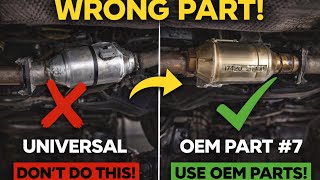
- Using a cheap, universal, or poorly-made aftermarket converter. Many owners report that these parts often do not fit correctly, cause exhaust leaks, and fail to resolve the P0430 code, leading to repeated repairs. 🎬 Watch why choosing the right aftermarket converter is critical.
Most Likely Causes
- Failed Bank 2 Catalytic Converter 🔴 High Probability → Shop Catalytic Converter Based on numerous owner reports and repair videos, the internal honeycomb material of the original Bank 2 converter can degrade and break apart over time and with high mileage (often over 150,000 miles). This physical failure is the most cited reason for P0430 on this platform.
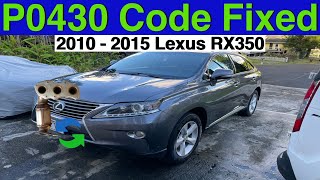
How to confirm: A mechanic can use a scan tool to graph the upstream and downstream O2 sensor data. If the downstream sensor voltage switches rapidly like the upstream sensor, the converter is not working. Another method is to use an infrared thermometer to check the converter's inlet and outlet temperatures; the outlet should be significantly hotter (at least 100°F) than the inlet on a working converter. A rattling noise from the converter is also a strong indicator of internal failure. Upon removal, the broken honeycomb is often visible. 🎬 Watch: A complete walkthrough for fixing P0430 on this Lexus.
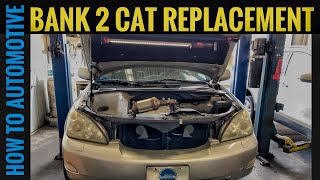
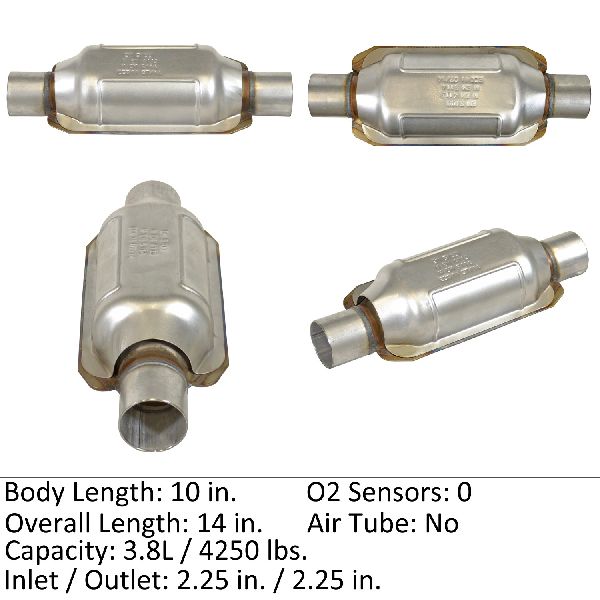
Typical fix: Replace the Bank 2 (front/radiator side) manifold catalytic converter and associated gaskets. It is highly recommended to use an OEM or high-quality, direct-fit aftermarket part (like Walker, Magnaflow, or Eastern). Cheaper, poorly fitting units can cause exhaust leaks and may not resolve the code.
Est. part cost: $800-$1800 - Failed Oxygen Sensor(s) 🟡 Medium Probability → Shop Oxygen Sensor Oxygen sensors are wear items and can fail over time, becoming 'lazy' or unresponsive. The downstream sensor's heater circuit is a known failure point on some Toyota/Lexus models.
How to confirm: Test the sensors using a scan tool to monitor their voltage readings. A lazy or non-responsive sensor can be identified. For example, a faulty downstream sensor might show 0 volts intermittently. Swapping the Bank 1 and Bank 2 downstream sensors is a diagnostic technique; if the code changes to P0420 (Bank 1), the sensor is bad.
Typical fix: Replace the Bank 2 downstream (Sensor 2) oxygen sensor. It is also common to replace the upstream (Sensor 1, Air-Fuel Ratio) sensor at the same time, especially when replacing the converter.
Est. part cost: $70-$200 per sensor - Exhaust System Leak ⚪ Low Probability Gaskets, welds, and flex pipes can fail over time due to corrosion and vibration. A leak between the engine and the downstream O2 sensor can introduce extra oxygen, fooling the sensor into reporting a bad converter.
How to confirm: Visually inspect the exhaust system for cracks or broken gaskets, particularly around the manifold and converter flanges. A common failure point is the weld on the flange connecting the y-pipe to the manifold. A shop can perform a smoke test, or a DIY method is to use a leaf blower to force air into the tailpipe and spray soapy water on joints to look for bubbles.
Typical fix: Repair the leak by replacing the damaged pipe section, replacing the failed gasket, or welding the cracked area. Using high-quality OEM gaskets is recommended as aftermarket ones can cause sealing issues.
Est. part cost: $20-$150
Rare But Worth Checking
- Engine Misfires or Fuel System Issues: A persistent engine misfire or a problem causing a rich fuel mixture (like a leaking fuel injector) can dump unburnt fuel into the exhaust, which can quickly destroy a catalytic converter. If you have other codes like P030x (misfire) or fuel trim codes, they must be addressed first to prevent damaging the new converter.
Diagnosis Steps
- Read the code with an OBD-II scanner to confirm P0430 is present. Check for any other codes (e.g., misfire, fuel system, O2 sensor codes) and diagnose those first.
- Visually inspect the Bank 2 exhaust manifold and catalytic converter area for any obvious cracks or signs of leaks at the gaskets. Use a smoke test or soapy water with a leaf blower to find small leaks.
- Use a scan tool with live data capability. Graph the voltage for the Bank 2, Sensor 1 (Air-Fuel Ratio Sensor) and Bank 2, Sensor 2 (Downstream Oxygen Sensor).
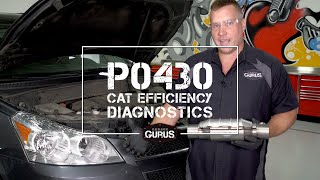
- At a steady 2500 RPM, observe the sensor graphs. The upstream sensor (B2S1) should show rapid fluctuations. A healthy converter will cause the downstream sensor (B2S2) to show a much slower, relatively steady voltage (typically above 0.5V). If the B2S2 graph closely mimics the B2S1 graph, the converter has failed. 🎬 See how to perform these live data catalyst efficiency diagnostics.
- If the converter appears to be working based on the graph, the downstream O2 sensor may be faulty. Test the sensor's response or consider swapping it with the Bank 1 downstream sensor to see if the code follows.
- If the converter is suspected to be clogged, a backpressure test can be performed. An easier, though less precise, check is to use an infrared temperature gun to measure the pipe temperature before and after the converter. The outlet should be at least 100°F hotter than the inlet.
- If a rattling noise is heard from the converter, it has failed internally and must be replaced.
Parts You'll Likely Need
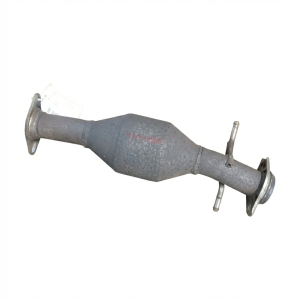
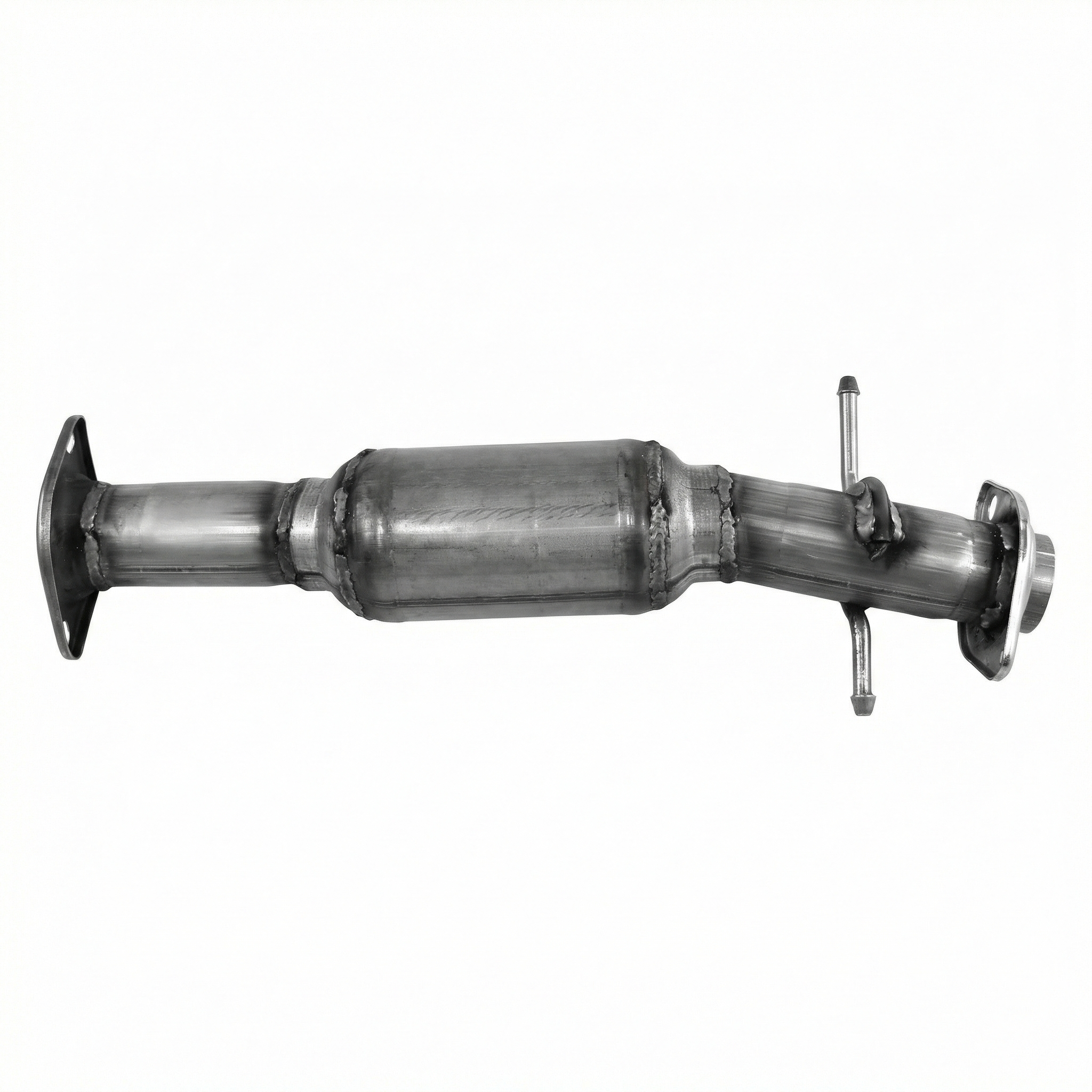
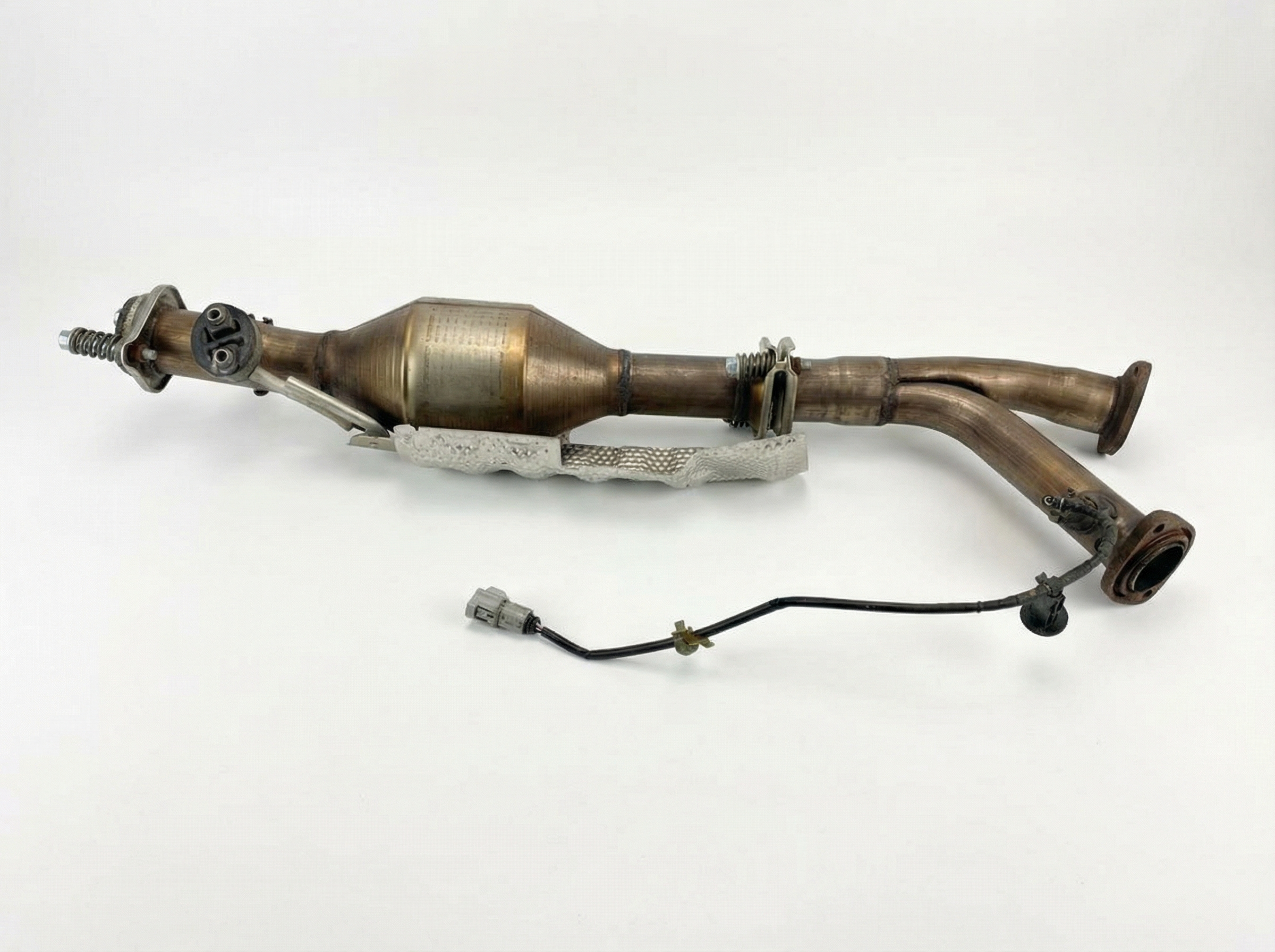
- Bank 2 Manifold Catalytic Converter
(OEM #17420-0P110 (replaces 17420-31280))— This is the most common failure for the P0430 code on this specific vehicle, often due to internal degradation.
Trusted brands: Walker (e.g., p/n 16680), MagnaFlow (e.g., p/n 51832), Eastern Catalytic, Lexus/Toyota (OEM)
OEM price range: $1800-$2300
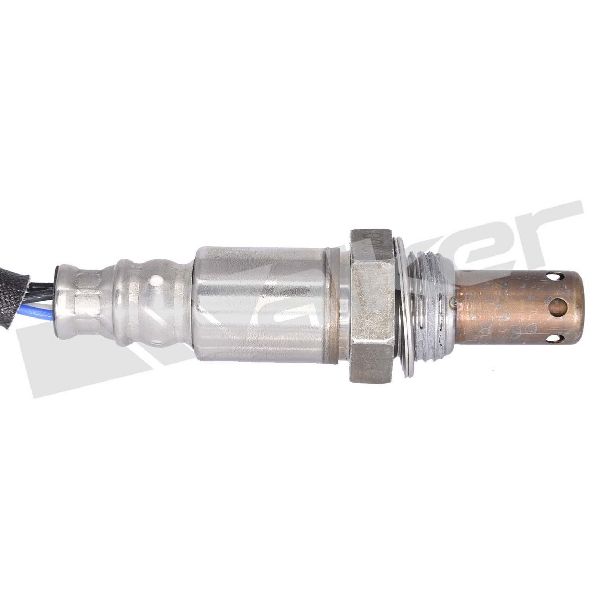
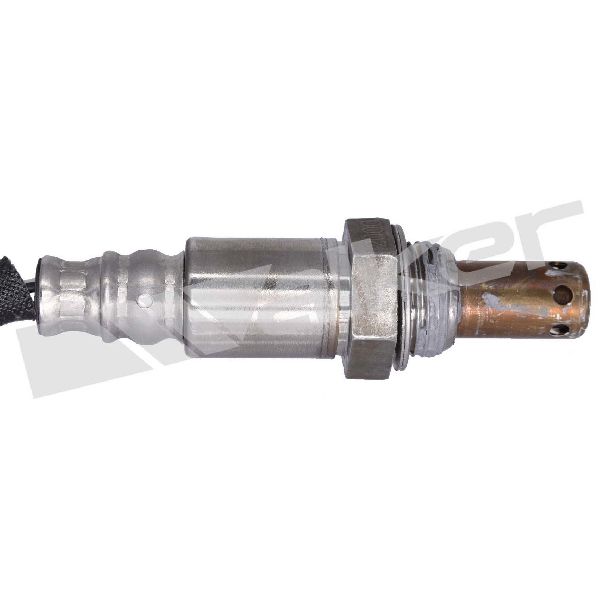
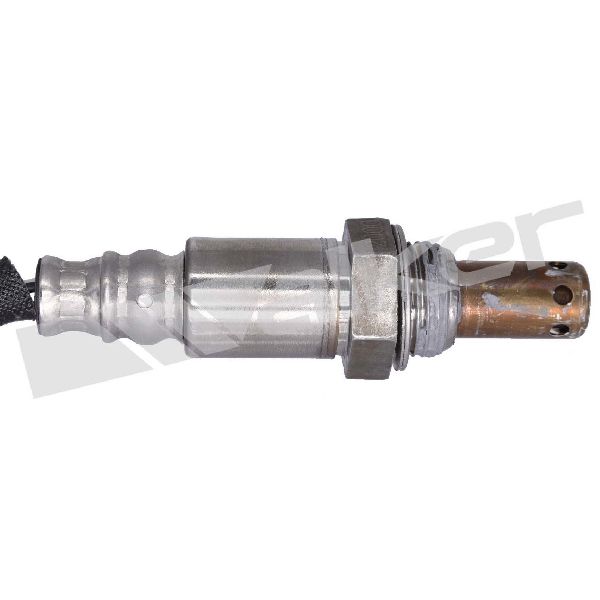
Aftermarket price range: $600-$1100 - Bank 2, Sensor 2 (Downstream) Oxygen Sensor
(OEM #89465-0E040)— A faulty or 'lazy' downstream sensor can incorrectly report poor catalyst efficiency, triggering the code. It's often replaced as a primary diagnostic step or along with the converter.
Trusted brands: Denso (OEM supplier, e.g., p/n 234-4512), NTK
OEM price range: $150-$220
Aftermarket price range: $70-$120 - Bank 2, Sensor 1 (Upstream) Air-Fuel Ratio Sensor
(OEM #89467-0E020)— A failing upstream sensor can create an improper air-fuel mixture, which can reduce the life of the catalytic converter. It's often replaced preventatively when the converter is changed.
Trusted brands: Denso (OEM supplier, e.g., p/n 234-9115), NTK
OEM price range: $180-$250
Aftermarket price range: $90-$150
Technical Service Bulletins (TSBs) & Recalls
- L-SB-0005-15 / L-SB-0127-11 Rev: While these TSBs apply to the RX450h, they note that P0430 can be caused by a faulty O2 sensor and provide specific diagnostic parameters. This highlights that Lexus is aware of sensor issues causing this code in the RX family, though it may be less common on the RX350.
- L-EG18-002: A TSB for some other Lexus models that mentions P0420/P0430, but primarily focuses on different engine platforms. No specific TSB for the 2010-2015 RX350 for P0430 due to converter failure appears to be widely published.
Mechanic-Grade Diagnostic Values
- Upstream Air-Fuel (A/F) Sensor Voltage (B2S1) — expected: Centered around 3.3V at steady throttle. Drops below 2.8V on hard acceleration and rises above 4.0V on deceleration.. Failure: Voltage is stuck, does not respond to throttle changes, or is significantly deviated from 3.3V at idle/cruise.
- Downstream Oxygen (O2) Sensor Voltage (B2S2) — expected: Slowly oscillating, relatively steady voltage between 0.5V and 0.8V with a warm engine at 2500 RPM.. Failure: Voltage rapidly mimics the upstream A/F sensor's fluctuations, indicating a bad converter. If the voltage is stuck at 0V or a fixed value, the sensor itself is likely faulty.
- Downstream Oxygen (O2) Sensor Heater Resistance — expected: 1.8 to 3.4 Ω at 68°F (20°C) between terminals HA1A and +B on the sensor connector.. Failure: Resistance is outside the specified range, indicating a failed heater circuit which can cause incorrect sensor readings.
- Downstream Oxygen (O2) Sensor Live Data Switching — expected: When holding RPM at 2,500, the downstream O2 sensor voltage should oscillate more than 8 times in 10 seconds during an active test.. Failure: Fewer than 8 oscillations in 10 seconds indicates a 'lazy' or failing sensor.
Hidden / Shadow Codes Worth Checking
- Mode 6, Catalyst Monitor ($06): Toyota/Lexus ECUs store the results of the internal catalyst efficiency test. This isn't a separate code but rather detailed test data. You can view the measured value versus the minimum and maximum thresholds. (see via Using a capable scan tool like Toyota Techstream, navigate to the 'Engine and ECT' menu, select 'Monitor', and then click the 'Details' icon next to the Catalyst B2 test. This shows if the converter is passing, but also how close it is to the failing threshold.)
Scan Tool Commands That Help
- Toyota Techstream: Data List for O2 Sensors (O2S B2 S2) and A/F Sensors (A/FS B2 S1) — This is the primary function for diagnosing P0430. It allows you to graph the upstream and downstream sensor voltages in real-time to visually confirm if the catalytic converter is functioning by comparing the waveforms.
- Toyota Techstream: Active Test -> Control the Fuel Cut — This bidirectional command allows a technician to force the engine to run lean or rich. While observing the O2 sensor data list, this test can confirm if the sensors are responding correctly to mixture changes, helping to isolate a bad sensor from a bad converter.
- Toyota Techstream: Readiness Monitor / Utility -> All Readiness — After a repair (like replacing a converter or sensor), you must perform a specific drive cycle to get the catalyst monitor to run and confirm the fix. This screen shows if the 'Catalyst' monitor has completed. If it has and the code does not return, the repair is successful.
Wiring & Ground Locations
- Engine Harness Ground (Bank 2 side) — On the front cylinder head (Bank 2), there is a boss on the side of the head where a main engine harness ground attaches. It is located down and underneath the throttle body area.. A poor ground at this location can cause incorrect readings from the Bank 2 A/F sensor and O2 sensor, potentially triggering a false P0430 code. This should be checked for corrosion and tightness before replacing expensive components.
- Main Chassis Ground — The main battery negative cable grounds to the inner fender in the engine bay. There is also a ground strap from the lower firewall to the back of the engine block.. Overall system grounding is critical for all sensors and the ECM to function correctly. A compromised main ground can cause a host of floating voltages and spurious codes, including P0430.
Real Owner Repair Stories
- YouTube user in video 'P0430 Fix for 2010 - 2015 Lexus RX350' (2010-2015 Lexus RX350, failure at 188,000 miles) — P0430 code kept returning weekly after being cleared.
❌ Tried (didn't work) Using two bottles of Cataclean fuel additive., Replacing both Bank 2 oxygen sensors (upstream and downstream).
✅ What actually fixed it Replacing the Bank 2 (radiator side) manifold catalytic converter. Upon removal, the original converter's internal honeycomb was found to be physically broken. The owner also noted that an initial attempt with a cheap aftermarket converter (Davico) failed due to poor fitment and exhaust leaks; success was achieved with a better quality aftermarket brand (APE Eastern from Rock Auto).
OEM Part Supersession History
17420-31280→17420-0P110— Standard part number revision by Toyota/Lexus.
Heads up: These parts are interchangeable for the specified vehicle range.17430-31730→17430-0P181— Standard part number revision for the rear muffler/pipe assembly (not directly related to P0430 but part of the same system).
Diagnostic Flowchart
Other Known Issues on This Vehicle
Issues unrelated to this code that are worth knowing about as an owner of this generation:
- VVT-i Oil Line Rupture 🔴 High — Common on earlier 2GR-FE engines (pre-2010 models were most affected), but the all-metal replacement line may not have been installed on all vehicles. A rubber section of the line can degrade and burst, leading to rapid and catastrophic oil loss and engine failure. (Ref: Limited Service Campaign (LSC 90K) was issued for 2007-2009 RX350 models to replace the rubber hose with an all-metal line.)
- Melting / Sticky Dashboard 🟡 Low — Very common in vehicles exposed to heat and humidity. The dashboard material degrades, becoming shiny, sticky, and prone to cracking. (Ref: Warranty Enhancement Program (ZLD) was issued for 2007-2009 models, but the 2010+ models can still exhibit this issue, though perhaps less frequently. The program has since expired.)
- Oil Leaks (Timing Cover / Oil Cooler Lines) 🟠 Medium — Seeping or leaking from the timing chain cover gasket is a common oil leak source. Additionally, models with the tow package have oil cooler lines with rubber sections that can leak. (Ref: T-SB-0201-11 Rev1 addresses the oil cooler pipe leak on related Toyota models with the 2GR-FE engine.)
- Water Pump Failure 🟠 Medium — A relatively common failure item. Symptoms include a sweet smell of coolant, pink crusty buildup near the pump on the passenger side of the engine, or a grinding/howling noise.
- Navigation/Infotainment Screen Failure 🟡 Low — Owners report the main screen randomly going blank, freezing, or rebooting. This can be due to software glitches or hardware failure of the screen or radio unit. (Ref: No specific recall, but dealers may perform software updates. In many cases, hardware replacement is required.)
Used vs. New Parts: Buying Guide for This Vehicle
When a used part is the smart pick: A used OEM catalytic converter from a low-mileage, non-corroded donor vehicle can be a cost-effective alternative to a new OEM part, often performing better than a new, cheap aftermarket unit. This is only recommended if the part's history is known and it comes from a region without heavy road salt usage.
Donor-vehicle mileage cap: roughly under 80000 miles for the part to have meaningful remaining life.
What to inspect on the donor part:
- Check for a lack of significant rust or corrosion on the heat shields and flanges.
- Inspect the inlet and outlet of the converter with a light; the honeycomb structure should be intact, with no signs of melting, clogging, or broken pieces.
- Shake the converter vigorously to ensure there are no rattling sounds, which would indicate a broken internal substrate.
- Confirm the donor vehicle did not have a head gasket failure or high oil consumption, which can contaminate and ruin a converter.
OEM-only on this vehicle (don't cheap out):
- Catalytic Converter: Many forum and video reports for the RX350 indicate that cheap, non-CARB compliant aftermarket converters often fail to resolve the P0430 code, have fitment issues causing leaks, or fail within a year. Sticking with OEM or a high-quality, direct-fit, CARB-compliant brand is critical.
Aftermarket brands forum-validated for this vehicle:
- Denso for Air/Fuel and Oxygen Sensors (OEM supplier).
- NTK for Air/Fuel and Oxygen Sensors.
- MagnaFlow, Walker, or Eastern Catalytic for catalytic converters (ensure it is a direct-fit, CARB-compliant model if required by your state).
Brands owners have reported issues with on this vehicle:
- Unbranded or extremely cheap 'Direct-Fit' catalytic converters from online marketplaces, as they are frequently cited for poor fitment and inability to clear the code.
Real Owner Stories
Aggregated from forums and TSBs cited above. Mileages and costs reflect what owners reported in those sources.
2010-2015 Lexus RX350 3.5L V6 — ~165000 miles
Symptoms: The owner tried using Cataclean and replacing O2 sensors, but the code persisted. The vehicle had high mileage.
What fixed it: Replacing the Bank 2 converter; the original unit was found to have broken honeycomb internals upon removal.
Source hint: YouTube.com ('P0430 Fix for 2010 - 2015 Lexus RX350')
2010-2015 Lexus RX350 3.5L V6
Symptoms: Check Engine Light with code P0430; the owner was advised to check for exhaust leaks before buying expensive parts.
What fixed it: Repairing a leak found at the Y-pipe flange weld.
Source hint: ClubLexus.com: 'Code p0430'
2010-2015 Lexus RX350 3.5L V6
Symptoms: OBDII graphs showed the downstream O2 sensor voltage dropping intermittently to 0 volts.
What fixed it: Diagnosis confirmed a faulty downstream O2 sensor rather than a failed converter.
Source hint: ClubLexus.com: 'P0430 Code Help Catalytic Converter Oxygen Sensor'
Related OBD-II Codes
Frequently Asked Questions
Does TSB L-SB-0005-15 or L-SB-0127-11 apply to my 2010-2015 Lexus RX350?
Is there a specific TSB for catalytic converter failure on the 2010-2015 RX350?
Which catalytic converter should I replace for a P0430 code on my RX350?
Can I use Cataclean to fix the P0430 code on my Lexus?
Why are my VSC and TRAC OFF lights on along with the Check Engine Light?
How can I tell if my RX350 converter has failed internally without taking it apart?
Helpful Videos
Used OEM Parts in Stock
New Aftermarket Parts Available


The information in this article is provided for general reference and educational purposes only. Vehicle specifications, procedures, and part compatibility can vary by production date, trim level, and region. Always consult your vehicle's factory service manual and verify part numbers before purchasing or performing repairs. Safety-critical components such as airbags, seat belts, and braking systems should be installed by a qualified professional.
- Lexus RX350:
- 🧭 Diagnostic Flowchart
- 🎬 Helpful Videos
- 🛍️ Shop This Part
- What's Unique About the 2010-2015 Lexus RX350
- Symptoms You May Notice
- Most Likely Causes
- Rare But Worth Checking
- Diagnosis Steps
- Parts You'll Likely Need
- Technical Service Bulletins (TSBs) & Recalls
- Mechanic-Grade Diagnostic Values
- Hidden / Shadow Codes Worth Checking
- Scan Tool Commands That Help
- Wiring & Ground Locations
- Real Owner Repair Stories
- OEM Part Supersession History
- Other Known Issues on This Vehicle
- Used vs. New Parts: Buying Guide for This Vehicle
- Real Owner Stories
- 2010-2015 Lexus RX350 3.5L V6 — ~165000 miles
- 2010-2015 Lexus RX350 3.5L V6
- 2010-2015 Lexus RX350 3.5L V6
- Related OBD-II Codes
- Frequently Asked Questions
- 🎟️ Get 5% Off