

P0430 on 2013-2019 Lincoln MKT: Catalyst Efficiency Fixes and Causes
P0430 on a Lincoln MKT most often indicates a failing Bank 2 catalytic converter, which is an expensive repair. Before replacing it, always check for exhaust leaks and test the oxygen sensors, as they are much cheaper to fix and can cause the same code. The underlying cause of converter failure, such as engine misfires or oil leaks, must also be addressed.
- P0430 points to a problem with the Bank 2 (front/radiator side) catalytic converter's performance.
- The most likely cause is a failed catalytic converter, a known issue for this vehicle, but it's an expensive fix.
- Always rule out cheaper possibilities first: inspect for exhaust leaks and test the Bank 2 oxygen sensors.
- If you replace the converter, ensure there are no underlying engine issues (like misfires or lean/rich conditions) that could damage the new part.
- Bank 2 is the cylinder bank closer to the radiator on the MKT's V6 engines.
What's Unique About the 2013-2019 Lincoln MKT
The Lincoln MKT, sharing its platform with the Ford Flex and Taurus, utilizes catalytic converters integrated with the exhaust manifolds, making replacement more labor-intensive than older designs. A Ford Customer Satisfaction Program (19M01, later updated to 20M01) specifically for 2013-2018 models acknowledges that P0420/P0430 can be caused by a degraded catalytic converter, reinforcing that converter failure is a known issue on this platform. [TSB #20M01] The 3.5L EcoBoost engine, in particular, is a direct-injection engine, which can be prone to carbon buildup on intake valves; if severe, this can affect combustion and contribute to conditions that damage the converter over time. The Gen 1 3.5L EcoBoost (2013-2016) is also known for warping exhaust manifolds and breaking the rearmost studs, creating an exhaust leak that can trigger P0430.
Diagnostic Flowchart
Tap your situation to follow the diagnostic path that matches what you're seeing on this vehicle.
Symptoms You May Notice
- Check Engine Light is on
- Failure to pass an emissions test
- Reduced engine power or sluggish acceleration (if the converter is clogged)
- A sulfur or "rotten egg" smell from the exhaust
- Intermittent illumination of the Check Engine Light; some owners report the code appears and disappears, sometimes taking weeks to return.
- A ticking or rasping noise from the engine bay, especially when cold, which may indicate a cracked or leaking exhaust manifold on 3.5L EcoBoost models.
- Immediately replacing the catalytic converter without testing the oxygen sensors or checking for exhaust leaks. An O2 sensor is a much cheaper initial repair and should always be ruled out first.
- Replacing the downstream O2 sensor when the upstream sensor is actually the cause. A slow-responding upstream sensor can alter the fuel mixture enough to trigger a catalyst code without setting a sensor-specific code.
- Replacing the catalytic converter without addressing the root cause of its failure, such as a misfire, oil leak, or contaminated air filter. The new converter will likely fail prematurely.
Most Likely Causes
- Failing Catalytic Converter (Bank 2) 🔴 High Probability → Shop Catalytic Converter A manufacturer Customer Satisfaction Program (#19M01/20M01) directly links P0430 to catalyst degradation on these vehicle platforms. [TSB #20M01] High mileage, combined with potential underlying engine issues like misfires or contamination from oil/coolant, leads to failure. Some owners report the code appearing after a PCM software update, suggesting the new software has stricter efficiency thresholds.
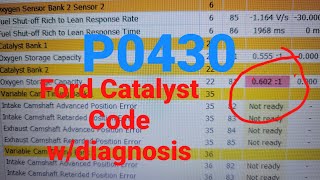
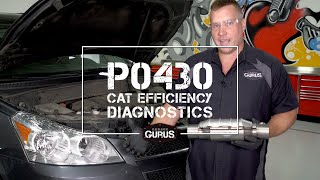
How to confirm: Use a scan tool to graph O2 sensor data; if the downstream sensor (Bank 2, Sensor 2) waveform mimics the upstream sensor (Bank 2, Sensor 1), the converter is not storing oxygen and has failed. An infrared thermometer can also be used; the outlet of a good converter should be significantly hotter (at least 100°F) than the inlet. A higher temperature at the inlet can indicate a clog. Advanced diagnosis involves checking Mode $06 data; a catalyst oxygen storage 🎬 Watch: How to use FORscan to check catalyst efficiency data. value greater than 0.4 on the affected bank indicates failure.
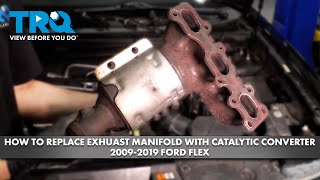
Typical fix: Replace the Bank 2 catalytic converter assembly. This is integrated with the exhaust manifold on these vehicles. 🎬 See this walkthrough for replacing the manifold and converter assembly.
Est. part cost: $1800-$2200 (OEM), $400-$900 (Aftermarket) - Faulty Oxygen Sensor(s) 🟡 Medium Probability → Shop Oxygen Sensor Oxygen sensors are wear items that degrade over time. A lazy or biased downstream (post-cat) sensor can send false data to the PCM, mimicking a bad converter. It is also possible for a slow-responding upstream sensor to cause the code, even without setting its own specific fault code.
How to confirm: Test the sensor's response time and voltage output using a scan tool. A healthy downstream sensor should show a relatively steady voltage (e.g., ~0.6-0.7V) on a warm engine at steady RPM, while the upstream sensor switches rapidly. Swapping the downstream sensors from Bank 1 and Bank 2 is a diagnostic trick; if the code changes to P0420 (Bank 1), the sensor is bad.
Typical fix: Replace the faulty oxygen sensor(s) on Bank 2. It is often recommended to replace the upstream and downstream sensors on the same bank together.
Est. part cost: $70-$180 per sensor - Exhaust System Leak 🟡 Medium Probability The 3.5L EcoBoost engines in 2013-2016 models are known for warping exhaust manifolds and breaking the rear-most exhaust studs, causing a leak between the cylinder head and the manifold/turbo assembly. This introduces oxygen that confuses the upstream O2 sensor and can trigger P0430. Standard rust and cracks at flanges are also possible.
How to confirm: Listen for a ticking sound on a cold start that may disappear as the engine warms up. Visually inspect the exhaust manifold for black soot marks, particularly near the rearmost cylinder on Bank 2. A smoke test is the most definitive way to find small leaks.
Typical fix: Repair the leak. For a warped manifold, this involves replacing the manifold, all studs and nuts, and the gasket. Minor leaks may be fixed by replacing a gasket or welding a crack.
Est. part cost: $20-$300
Rare But Worth Checking
- Engine Misfires or Fuel System Issues: While not the direct cause of the code, an underlying issue like a leaking fuel injector, bad spark plugs/ignition coils, or a vacuum leak can create a rich fuel condition. This sends unburnt fuel into the exhaust, which overheats and destroys the catalytic converter. If you don't fix the root cause, you will destroy the new converter as well. The 3.5L EcoBoost in particular puts high stress on ignition components.
- Rodent Damage: In some cases, rodents have been known to chew on the wiring for the oxygen sensors. This can cause erratic signals and trigger a P0430 code, leading to a misdiagnosis of a failed sensor or converter. A visual inspection of the wiring harness is recommended.
- Contaminated Air Filter: → Shop Air Cleaner Assembly On EcoBoost engines, using an overly-oiled aftermarket air filter (like some K&N models) can contaminate the MAF sensor and skew air/fuel ratios. This can lead to a rich condition that overwhelms the catalytic converter and eventually triggers a P0430 code, even with no other apparent engine issues.
Diagnosis Steps
- Scan for any other DTCs. If codes for misfires (P030X), fuel trim (P017X), or other O2 sensor faults are present, address them first as they are likely the root cause.
- Perform a thorough visual inspection of the exhaust system for any leaks, cracks, or damage between the engine and the Bank 2 downstream O2 sensor. On 3.5L EcoBoost models, pay close attention to the rear of the exhaust manifold for soot trails indicating a common leak.
- Use a scan tool to observe live data. Bring the engine to operating temperature and hold the RPMs steady around 2,000-2,500.
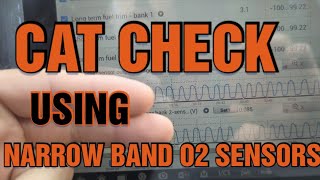
- Watch the voltage graphs for the Bank 2 oxygen sensors. The upstream sensor (B2S1) should switch rapidly between ~0.1V and ~0.9V. The downstream sensor (B2S2) should hold a relatively steady voltage, typically above 0.5V (e.g., 0.6-0.8V).
- If the B2S2 voltage is switching rapidly and mirroring the B2S1 sensor, the catalytic converter has most likely failed.
- If the B2S2 voltage is stuck low (e.g., <0.2V) or high (e.g., >0.9V) and not responding, the sensor itself is likely faulty.
- Use a scan tool that supports Mode $06 to check the catalyst monitor test results. For Ford vehicles, check the oxygen storage capacity value. A value greater than 0.4 indicates a failed converter.
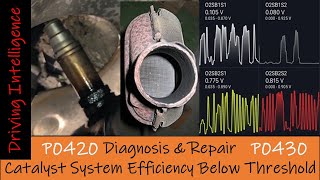
- If no definitive conclusion can be made, consider testing for a clogged converter by checking backpressure or using an infrared thermometer to compare the inlet and outlet temperatures of the converter. 🎬 Watch: A mechanic's guide to diagnosing P0420 and P0430 codes. The outlet should be at least 100°F hotter than the inlet on a working converter.
- As a final sensor test, consider swapping the Bank 1 and Bank 2 downstream O2 sensors. Clear the codes and drive. If the code returns as P0420, the sensor you moved is faulty.
Parts You'll Likely Need
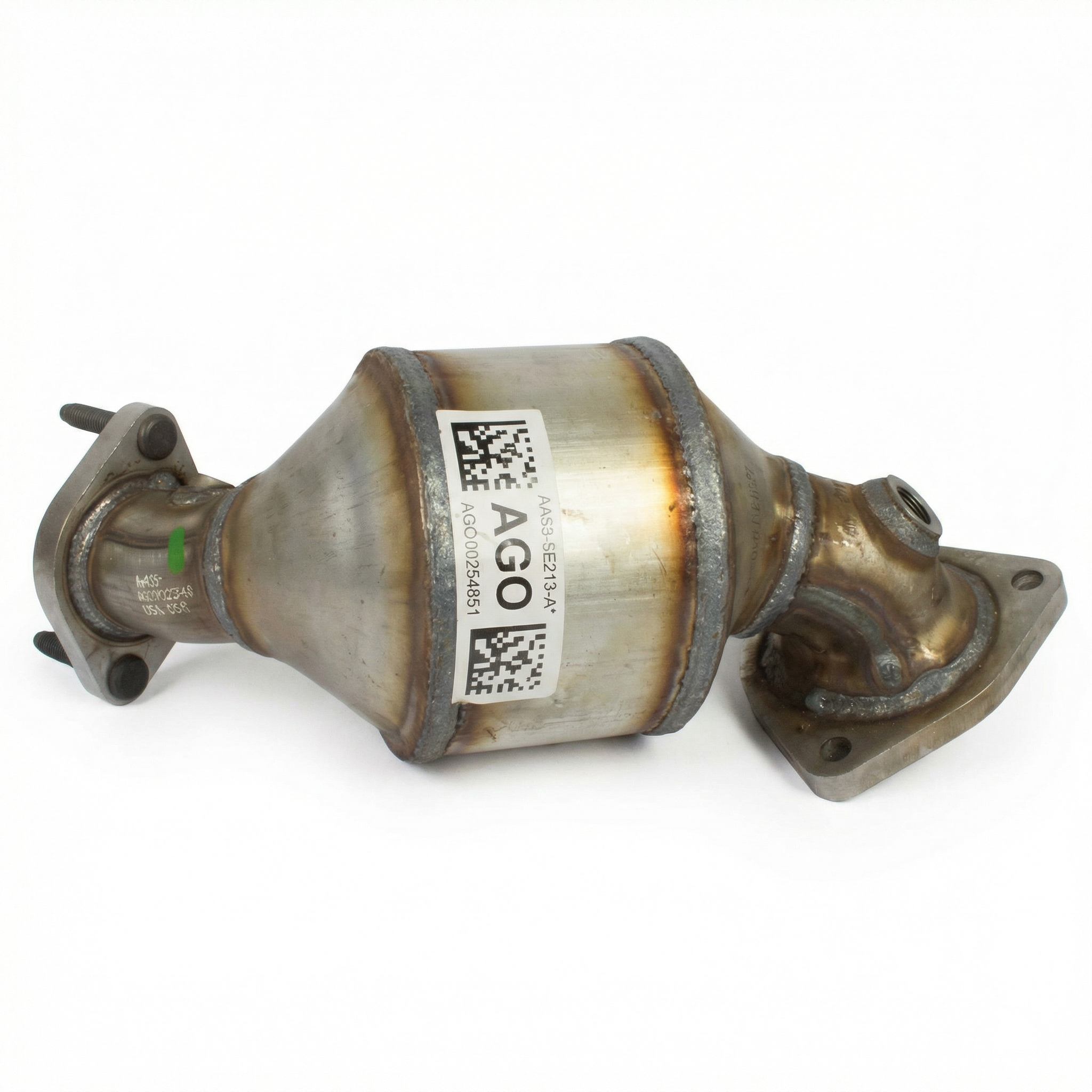
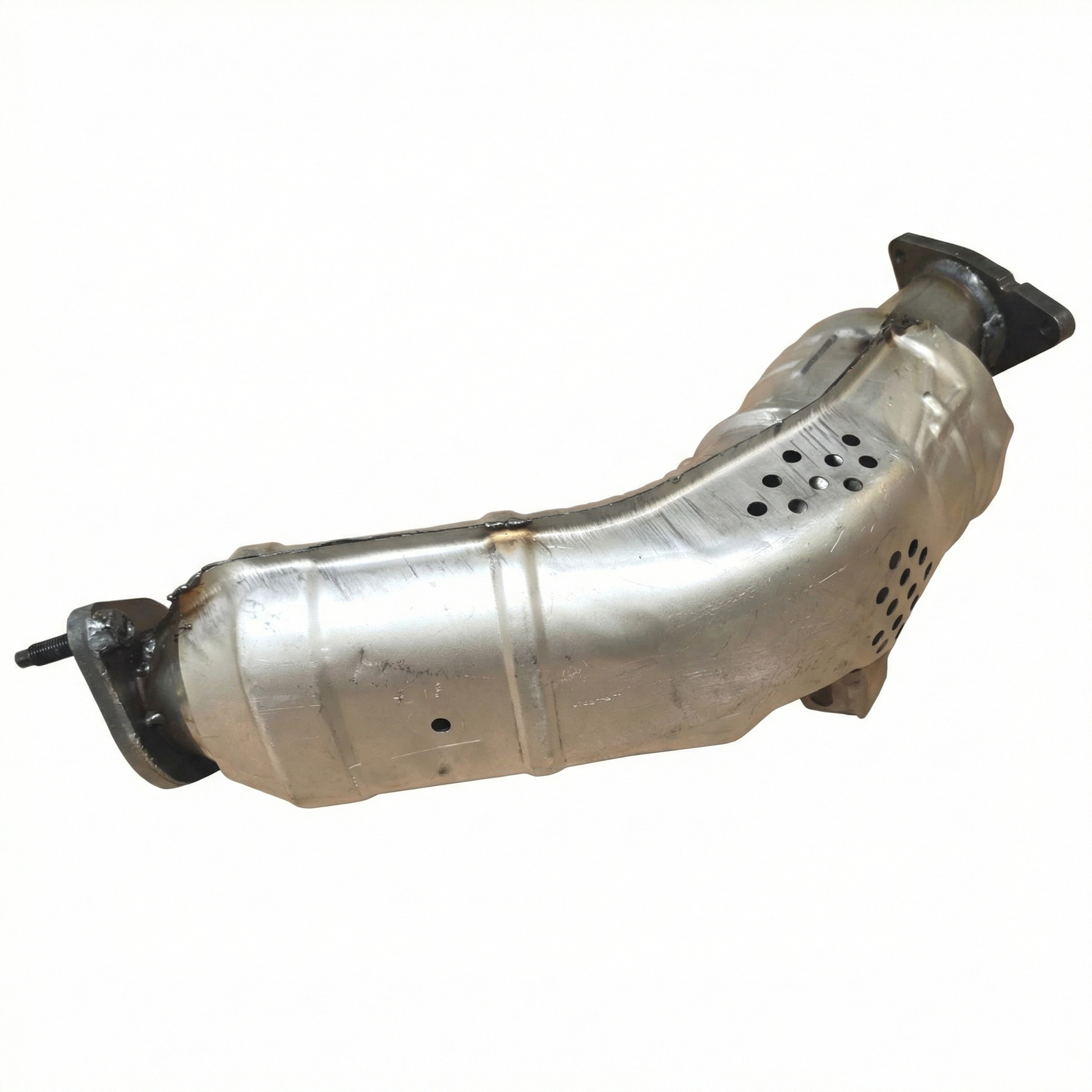
- Bank 2 Catalytic Converter
(OEM #DA8Z-5G232-C (For 3.5L EcoBoost, verify by VIN))— This is the most common cause of P0430, especially on higher-mileage vehicles, and is cited in a manufacturer TSB/Customer Satisfaction Program. [TSB #20M01]
Trusted brands: Motorcraft, Walker, MagnaFlow, Eastern Catalytic
OEM price range: $850-$1000 (Part only)
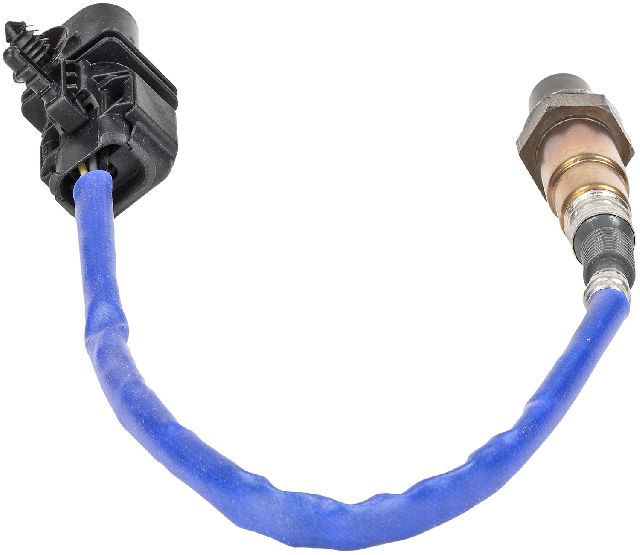
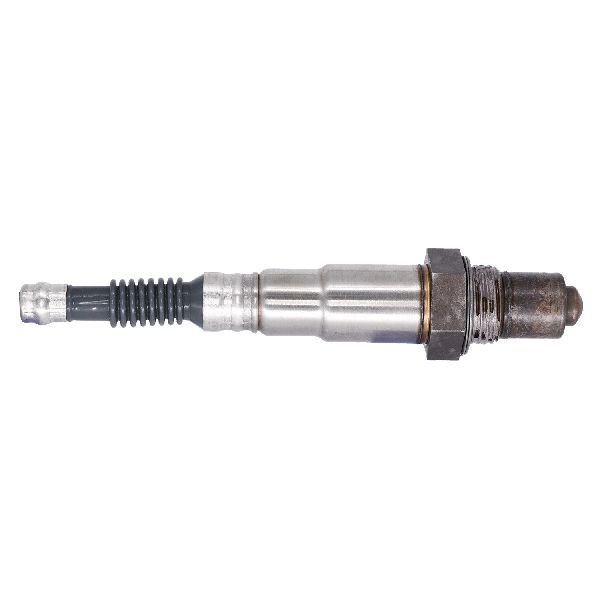
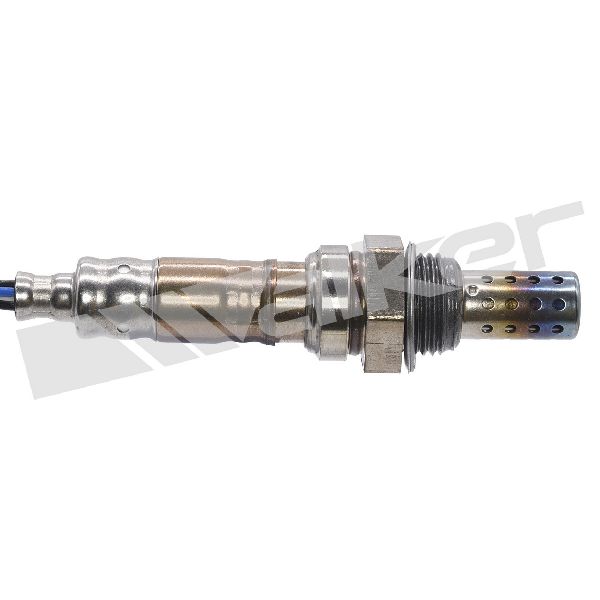
Aftermarket price range: $400-$900 - Downstream Oxygen Sensor (Bank 2, Sensor 2)
(OEM #Motorcraft DY-1155 (or W0133-1894367, verify by VIN))— A faulty downstream sensor can send incorrect data, falsely triggering the P0430 code. It's a critical diagnostic step to rule this out before replacing the expensive converter.
Trusted brands: Motorcraft, Bosch, Denso, NTK/NGK
OEM price range: $150-$250
Aftermarket price range: $50-$120 - Upstream Oxygen Sensor (Bank 2, Sensor 1)
(OEM #Motorcraft DY-1178 (or W0133-1912350 for 3.5L, verify by VIN))— A failing upstream sensor can cause improper fuel mixture, which can damage the catalytic converter over time. If replacing one sensor, it's often wise to replace its counterpart.
Trusted brands: Motorcraft, Bosch, Denso, NTK/NGK
Related Codes That Often Appear With This One
- P0420 — This is the identical code but for Bank 1 (the passenger side/firewall side). If both converters are of similar age and condition, it's not uncommon for them to fail around the same time, especially if there's a systemic engine problem.
- P0300, P0302, P0304, P0306 — These are misfire codes (P0300 for random, P0302/4/6 for cylinders on Bank 2). An unresolved misfire will dump raw fuel into the exhaust, quickly destroying the catalytic converter. The misfire is the root cause and must be fixed first.
- P0171 / P0174 — These 'System Too Lean' codes indicate a vacuum leak or fuel delivery problem. If left unaddressed, these conditions can affect the air/fuel ratio and potentially damage the catalytic converters over time.
Technical Service Bulletins (TSBs) & Recalls
- 19M01 / 20M01: This was a Customer Satisfaction Program, not a traditional TSB, that extended warranty coverage for catalytic converter replacement on vehicles exhibiting DTCs P0420 and/or P0430. It specifically notes that aggressive driving (in the context of police use) could overheat and degrade the converters.
Platform-Specific Known Issues
- Customer Satisfaction Program #19M01 / #20M01 was issued for some 2013-2018 models (primarily Police Interceptor Utility, which shares the MKT platform), extending the warranty on catalytic converters to 11 years or 120,000 miles due to premature degradation causing P0420/P0430. This indicates a known weakness in the original parts.
- On the 3.5L EcoBoost engine, issues like leaking turbo oil seals or excessive carbon buildup can contaminate and destroy the catalytic converters. A P0430 code on these engines warrants a closer look at the turbochargers and intake system.
Mechanic-Grade Diagnostic Values
- Mode $06 Catalyst Monitor Oxygen Storage Value (Bank 2) — expected: Less than 0.4. Failure: A value greater than 0.4 indicates the converter has failed the PCM's internal efficiency test.
- Downstream O2 Sensor (B2S2) Voltage — expected: Relatively steady voltage between 0.6V and 0.8V at a steady 2,000-2,500 RPM on a warm engine.. Failure: Voltage rapidly switching between ~0.1V and ~0.9V, mimicking the upstream sensor's pattern, indicates a failed catalytic converter.
Hidden / Shadow Codes Worth Checking
- Mode $06, TID $81, CID $12 (example): This is not a DTC, but a raw data result from the onboard Catalyst Efficiency Monitor. It shows the measured oxygen storage capacity of the Bank 2 converter. The specific Test ID (TID) and Component ID (CID) can vary by year and software, but a technician can view this data to see how close the converter is to the failing threshold without waiting for the P0430 code to set. (see via A scan tool that can access OBD-II Mode $06 data, such as FORScan or a professional-grade dealer tool like IDS.)
Scan Tool Commands That Help
- Ford IDS, FORScan: Key On, Engine Off (KOEO) Self-Test — To command the PCM to perform a static check of all its sensor circuits and actuators before starting the engine. This can help identify electrical faults with O2 sensor heaters or wiring that could contribute to a P0430 code.
- Ford IDS, FORScan: Key On, Engine Running (KOER) Self-Test — To command the PCM to perform a dynamic check of its systems while the engine is running. This is a more comprehensive test that can reveal issues not present during a static test.
- Ford IDS, FORScan: Power Balance Test — To identify which specific cylinder is misfiring, which is a common root cause of catalytic converter failure. This test graphically displays the power contribution of each cylinder, making it easy to spot a weak one.
Wiring & Ground Locations
- G101 — Left side of the engine compartment.. This is a primary engine bay ground. A poor connection here can cause erratic behavior from various engine sensors and the PCM itself.
- G102 — Right rear of the engine compartment, near the PCM.. This ground is critical for the Powertrain Control Module (PCM). A faulty ground here can lead to incorrect sensor readings and misdiagnosis of major components.
- C139 (on similar platforms) — A large connector located at the front of the engine.. On similar Ford platforms like the F-150, the wiring for both downstream O2 sensors passes through this single connector. Corrosion or a loose pin in this location can cause issues for one or both sensors.
Real Owner Repair Stories
- Reddit user reports on r/FordF150 (2018 Ford F-150 2.7L EcoBoost (similar engine controls and emissions system)) — Check Engine Light with code P0430 appeared just days after having a mandatory PCM software recall (24E12) performed at the dealership. The truck ran perfectly before the update.
❌ Tried (didn't work) The dealership denied responsibility and quoted a full catalytic converter replacement.
✅ What actually fixed it The underlying issue was that the new PCM software had more stringent parameters for catalyst efficiency. The previously 'passing' but marginal converter was now failing the test. The owner contacted Ford corporate customer care, explained the situation, and received financial assistance for the repair. This indicates it's a known issue. - Ford F150 Forum user report (2020 F-150 2.7L EcoBoost) — Intermittent P0420 and P0430 codes appearing randomly, sometimes weeks apart.
❌ Tried (didn't work) Using a catalytic converter cleaner additive., Multiple attempts at a catalyst de-sulfation drive cycle per a TSB.
✅ What actually fixed it The owner had recently installed a K&N oiled air filter. The oil from the filter likely contaminated the air mass readings, causing a slightly rich condition that the cats couldn't process efficiently. Replacing the oiled filter with a standard paper element and driving for ~400km allowed the system to return to normal, and the Mode 6 data for catalyst efficiency improved dramatically back into the passing range. - Ford F150 Forum user report (Ford F-150 with 3.5L EcoBoost) — Recurring P0420/P0430 codes.
❌ Tried (didn't work) The dealer replaced the catalytic converters three times under warranty, but the codes kept returning.
✅ What actually fixed it The actual root cause was found to be rodent damage. A rodent had chewed on the O2 sensor wiring harness, causing intermittent and incorrect signals to the PCM. Repairing the chewed wires permanently solved the problem.
"I Checked Everything" — The Actual Cause
- An overly oiled aftermarket air filter contaminated the MAF sensor, skewing the air/fuel ratio and causing the converter to perform poorly under load. An exhaust smoke test would show no leaks, but the root cause was intake-side contamination.
- A hairline crack in an exhaust manifold (common on the 3.5L EcoBoost) may not leak enough to be detected by a smoke test when the engine is cold and static, but opens up under the heat and pressure of driving, allowing oxygen to enter the exhaust stream and trigger the code.
When the Usual Fixes Don't Work
- While P0430 is most commonly a failed catalytic converter, several real-world cases on Ford platforms show it can be triggered by non-component failures. Multiple owners have reported the code appearing immediately after a PCM software update, suggesting stricter emissions monitoring parameters are the cause, not a sudden part failure. In another case, an overly oiled aftermarket air filter was the confirmed cause, which was resolved by switching back to a standard paper filter. Finally, hard-to-find issues like rodent-damaged wiring have led to multiple unnecessary converter replacements before the true electrical fault was found. These instances highlight the importance of diagnosing the entire system rather than defaulting to converter replacement.
Model Year Variations Within This Range
- 2013-2016: Models with the first-generation 3.5L EcoBoost V6 are known to have issues with exhaust manifolds warping and breaking the rear studs. This was addressed with a redesigned manifold for the second-generation EcoBoost starting in 2017. Therefore, an exhaust leak at the manifold is a more probable cause for P0430 on the earlier models in this range.
Helpful Videos

Used OEM Parts in Stock
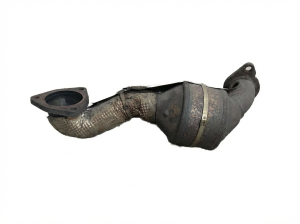
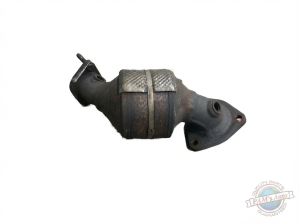
New Aftermarket Parts Available


The information in this article is provided for general reference and educational purposes only. Vehicle specifications, procedures, and part compatibility can vary by production date, trim level, and region. Always consult your vehicle's factory service manual and verify part numbers before purchasing or performing repairs. Safety-critical components such as airbags, seat belts, and braking systems should be installed by a qualified professional.
- Lincoln MKT:
- 🧭 Diagnostic Flowchart
- 🎬 Helpful Videos
- 🛍️ Shop This Part
- What's Unique About the 2013-2019 Lincoln MKT
- Symptoms You May Notice
- Most Likely Causes
- Rare But Worth Checking
- Diagnosis Steps
- Parts You'll Likely Need
- Related Codes That Often Appear With This One
- Technical Service Bulletins (TSBs) & Recalls
- Platform-Specific Known Issues
- Mechanic-Grade Diagnostic Values
- Hidden / Shadow Codes Worth Checking
- Scan Tool Commands That Help
- Wiring & Ground Locations
- Real Owner Repair Stories
- "I Checked Everything" — The Actual Cause
- When the Usual Fixes Don't Work
- Model Year Variations Within This Range
- 🎟️ Get 5% Off