

P0430 on 2012-2013 Mercedes-Benz S-Class: Catalyst Efficiency Fixes for M278 V8
P0430 on a 2012-2013 S550 most often means the Bank 2 (driver's side) catalytic converter is failing. However, always check for exhaust leaks and consider replacing the cheaper downstream O2 sensor first, as it can be a misdiagnosis. A new converter is very expensive, often over $2,000 for the part alone. Before replacing the converter, it's critical to rule out underlying M278 engine issues like oil consumption or leaking fuel injectors that can destroy the new part.
- This guide is for the 2012-2013 S-Class (S550) with the 4.7L M278 V8 engine only.
- P0430 means the driver's side catalytic converter is not working efficiently.
- Before buying a very expensive new converter, always rule out a bad downstream O2 sensor and any exhaust leaks.
- Check for underlying engine problems like oil consumption or fuel system issues, as they can destroy a new converter quickly.
- Diagnosis involves using a scan tool to watch O2 sensor data; a healthy downstream sensor should be relatively stable, not switching like the upstream sensor.
What's Unique About the 2012-2013 Mercedes-Benz S-Class
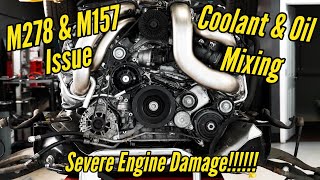
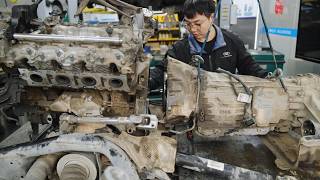
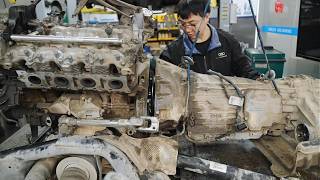
This guide specifically covers the 2012-2013 S-Class (W221 chassis) equipped with the M278 4.7L twin-turbo V8. The M278 is a direct-injection engine, which can be susceptible to issues like carbon buildup. More importantly, some owners have noted oil consumption, which can contaminate and destroy a catalytic converter over time. Some 2012-2015 M278 engines were also known to have potential cylinder scoring issues, which would lead to excessive oil consumption and catalyst failure. 🎬 Watch: How to overhaul an M278 with cylinder scoring issues. Therefore, before replacing an expensive converter, it's crucial to investigate potential underlying engine issues that may have caused the failure in the first place, such as oil leaks from timing covers or faulty fuel injectors.
Generation note: The 2007-2013 S-Class covers the W221 generation. However, the M278 engine specified was only used in the S550 models from 2012-2013. This guide is only applicable to those specific years and engine.
Symptoms You May Notice
- Check Engine Light is on
- Failing a vehicle emissions test
- Reduced engine performance or power (less common)
- A sulfur or 'rotten egg' smell from the exhaust (less common)
- Slight decrease in fuel economy
- Rough idle in some cases, especially in cold weather
- Immediately replacing the catalytic converter without first testing the oxygen sensors or checking for exhaust leaks. This can be a very expensive mistake if the converter was not the root cause.
- Replacing oxygen sensors repeatedly when the catalytic converter is truly faulty and needs replacement.
- Ignoring underlying engine problems like oil consumption or misfires, which will cause the new catalytic converter to fail again.
Most Likely Causes
- Failing Catalytic Converter (Bank 2) 🔴 High Probability → Shop Catalytic Converter Can be contaminated by oil if the engine has consumption issues, or can simply fail from age and mileage. Can also be damaged by unburnt fuel from misfires.
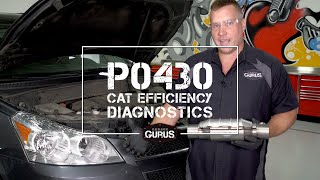
How to confirm: After confirming O2 sensors and the exhaust system are good, graphing the sensor data with a scan tool will show the downstream sensor mimicking the upstream sensor, confirming low efficiency. 🎬 See this walkthrough on diagnosing P0430 catalyst efficiency codes. A temperature gun can also be used; a working converter should be significantly hotter at the outlet than the inlet. If the inlet is hotter, it may be clogged.
Typical fix: Replace the Bank 2 catalytic converter assembly.
Est. part cost: $1500-$3500+ - Failing Downstream Oxygen (O2) Sensor (Bank 2) 🟡 Medium Probability → Shop Oxygen Sensor Sensors are a common wear item and can become 'lazy' or biased with age, sending incorrect data to the ECU. They can also be damaged by contaminants.
How to confirm: Swap the downstream O2 sensors from Bank 1 and Bank 2. Clear codes and drive. If the code returns as P0420 (Bank 1), the sensor is bad. If P0430 returns, the sensor is likely good. Also inspect wiring for damage.
Typical fix: Replace the Bank 2 downstream oxygen sensor.
Est. part cost: $70-$180 - Exhaust System Leak 🟡 Medium Probability
How to confirm: Visually inspect the exhaust manifold and all piping and flanges between the engine and the rear O2 sensor for cracks or black soot marks indicating a leak. A smoke test can also be performed to pinpoint hard-to-see leaks. Even small leaks can introduce oxygen and throw off sensor readings.
Typical fix: Repair the leak. This may involve replacing a gasket or welding a cracked pipe.
Est. part cost: $20-$300 - Underlying Engine Issue ⚪ Low Probability The M278 engine can have issues with oil leaks from timing covers or consumption, which contaminates the catalyst. Leaking fuel injectors can also cause a rich condition that overheats and damages the converter. Misfires from bad spark plugs or ignition coils will also quickly destroy a converter.
How to confirm: Check for other fault codes (misfires, fuel trim). Monitor oil levels closely. Check fuel trims with a scan tool to identify a rich or lean condition. A user on MBWorld noted their P0430 appeared after a coil failure event.
Typical fix: Repair the root cause first (e.g., replace leaking gaskets, replace faulty fuel injectors, address misfires) before replacing the catalytic converter.
Est. part cost: $200-$1500+
Diagnosis Steps
- Read all fault codes with an OBD-II scanner. If any other codes are present, especially for misfires (P030x), fuel mixture, or O2 sensor circuits, diagnose and fix them first.
- Perform a thorough visual inspection of the Bank 2 (driver's side) exhaust system. Look for cracks in the exhaust manifold and any signs of soot or rust at flanges that would indicate a leak.
- Use a scan tool with live data capabilities (like Mercedes XENTRY or a high-end scanner). Graph the voltage of the Bank 2 upstream (Sensor 1) and downstream (Sensor 2) O2 sensors. At a steady RPM (around 2500), the upstream sensor should fluctuate rapidly between ~0.1V and ~0.9V. The downstream sensor should hold a relatively steady, high voltage (e.g., 0.6V-0.8V). If the downstream sensor's graph looks like a mirror of the upstream sensor, the catalyst has failed.
- To rule out a bad sensor, swap the downstream (post-cat) sensors between Bank 1 and Bank 2. Clear the codes and drive the car until the monitor runs again. If P0430 returns, the catalytic converter is the problem. If a P0420 code appears, the sensor you moved is faulty.
- Check for underlying causes. A user on MBWorld.org with a 2012 S550 and P0430 noted oil consumption and performed a 'glove test' (placing a rubber glove over the oil filler neck to check for excessive blow-by indicating bad piston rings). Also check for leaking fuel injectors or oil leaks from common M278 problem areas like the front timing covers.
- If the catalyst is confirmed bad, investigate potential root causes like oil consumption or leaking fuel injectors before replacing it to prevent damaging the new part.
Parts You'll Likely Need
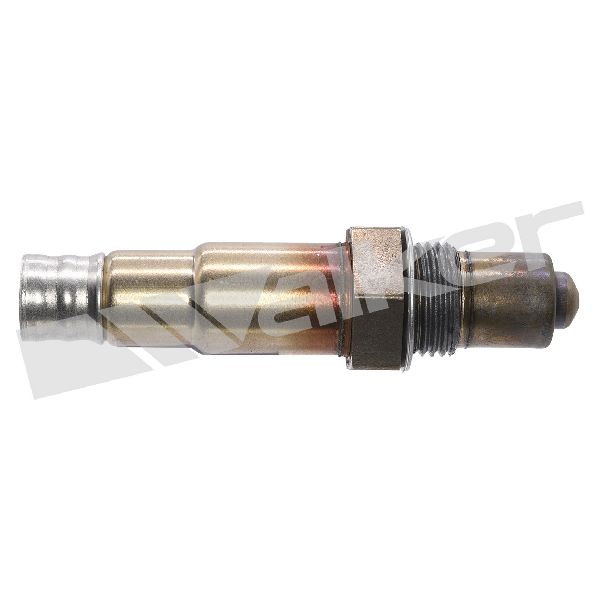
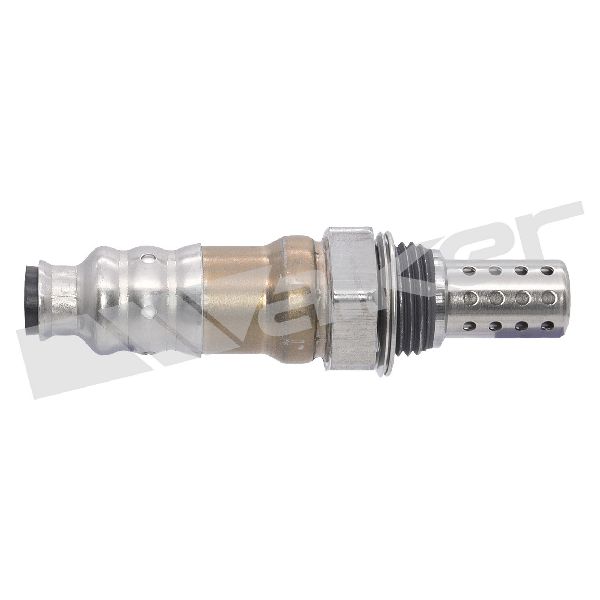
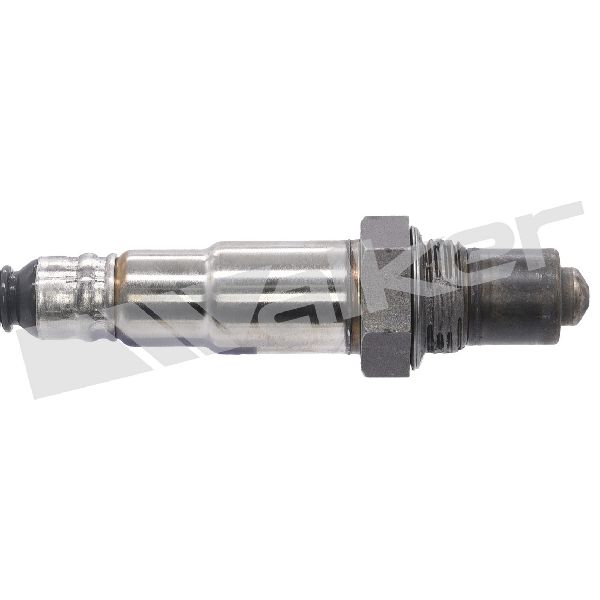
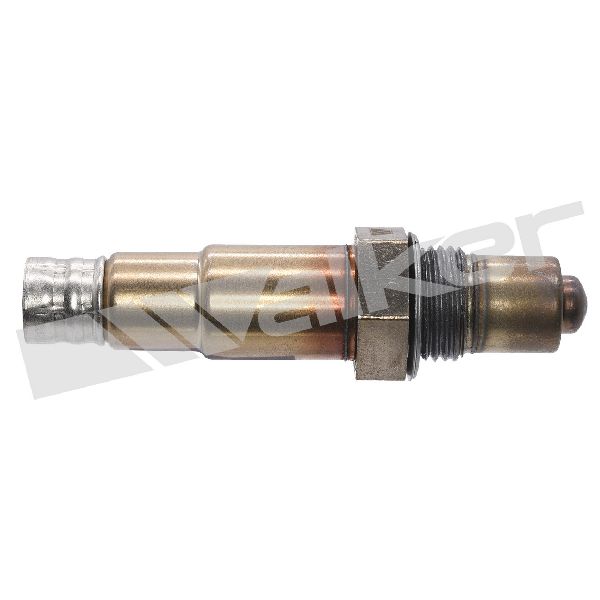
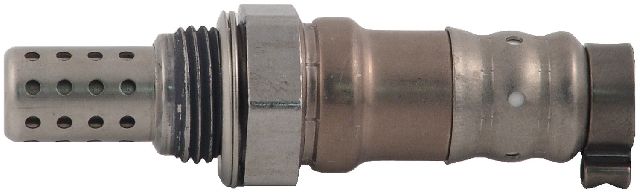
- Downstream Oxygen Sensor (Bank 2)
(OEM #0085427818)— This sensor is responsible for reporting catalyst efficiency. 🎬 Watch: A breakdown of M278 oxygen sensor locations and replacement. It's a common failure point and a critical diagnostic component that is much cheaper to replace than the converter.
Trusted brands: Bosch, Denso, Genuine Mercedes-Benz
OEM price range: $150-$200
Aftermarket price range: $70-$120 - Catalytic Converter (Bank 2, Driver's Side)
(OEM #A2214906419 (Verify with VIN))— This is the direct cause of the code if it has failed internally. OEM part numbers should be verified with a dealer using the VIN due to variations. Aftermarket options exist but may have fitment or longevity issues.
Trusted brands: Genuine Mercedes-Benz, MagnaFlow, Walker Exhaust
OEM price range: $2700-$3500+
Aftermarket price range: $800-$2000 - Exhaust Manifold Gasket — If an exhaust leak is found at the manifold, this gasket will need to be replaced.
Trusted brands: Victor Reinz, Elring, Genuine Mercedes-Benz
OEM price range: $20-$40
Aftermarket price range: $10-$25
Related Codes That Often Appear With This One
- P0420 — If the vehicle has similar issues on both engine banks, you may see the corresponding code for Bank 1 catalyst inefficiency.
- P0300-P0308 — Engine misfire codes (P030X, where X is the cylinder number) can cause unburnt fuel to enter the exhaust, overheating and damaging the catalytic converter.
- P001177, P001685, P001785, P001885 — These codes relate to camshaft position and timing. Issues with cam adjusters or timing chains on the M278 can affect engine performance and combustion, indirectly leading to conditions that damage the catalytic converter.
Technical Service Bulletins (TSBs) & Recalls
- TSB LI05.10-P-056435: Addresses a rattle from the timing chain on cold starts due to faulty tensioners. This is a known issue on early M276 and M278 engines and involves replacing the tensioners.
- Emissions Extended Warranty: Mercedes-Benz extended the warranty on the catalytic converter system for certain MY vehicles with the M278 engine. Owners should check with a dealer to see if their specific VIN is covered.
Platform-Specific Known Issues
- The M278 engine is known to sometimes develop oil leaks from areas like the upper timing covers or oil filter housing. Significant oil consumption from any cause can poison the catalytic converters, leading to premature failure and a P0430 code.
- Early M278 engines had issues with timing chain tensioners that could cause a rattle on startup. While not a direct cause of P0430, ignoring this can lead to timing issues, poor running, and eventual catalyst damage. Mercedes issued a TSB (LI05.10-P-056435) for this problem.
- Some early M278 engines (2012-2015) may be prone to cylinder wall scoring, leading to high oil consumption that destroys catalytic converters. This is a major engine-out repair if it occurs.
Mechanic-Grade Diagnostic Values
- Downstream O2 Sensor (Sensor 2) Voltage at steady cruise — expected: A relatively stable voltage between 0.5V and 0.8V.. Failure: Voltage fluctuates rapidly, mirroring the upstream (Sensor 1) O2 sensor's waveform. A flatline voltage (e.g., below 0.3V) indicates a dead sensor.
- Upstream O2 Sensor (Sensor 1) Voltage at steady cruise — expected: Rapidly fluctuating voltage between approximately 0.1V (lean) and 0.9V (rich).. Failure: A slow or non-fluctuating signal indicates a faulty upstream sensor, which should be fixed before diagnosing the converter.
- Catalytic Converter Temperature Differential — expected: The outlet pipe temperature should be significantly hotter than the inlet pipe temperature when the engine is at operating temperature.. Failure: If the inlet temperature is hotter than the outlet, it suggests the converter is clogged and creating a restriction.
Scan Tool Commands That Help
- Mercedes XENTRY Diagnosis: Update of control unit software — To address potential software-related issues affecting emissions control. Mercedes has issued software updates for the M278 engine control unit (ME). This is found under: Quick test view → N3/10 Motor Electronics 'MED177' → Adaptations → Control unit update. SCN coding may be required after replacing a catalytic converter.
- Mercedes XENTRY Diagnosis: Actual values - Lambda control upstream/downstream of catalytic converter — To view and graph the live voltage data from the oxygen sensors to diagnose catalyst efficiency. This allows a technician to compare the switching activity of the upstream sensor to the stability of the downstream sensor, which is the primary method for confirming a P0430 fault.
Model Year Variations Within This Range
- 2012-2013: The 2012 model year S550 was the first to receive the new 4.7L twin-turbo M278 V8, replacing the previous 5.5L naturally aspirated M273 engine used from 2007-2011. Therefore, this P0430 guide is specific to the M278 engine found only in the later W221 models.
- 2012-2013: There are no significant mechanical differences reported between the 2012 and 2013 S550 models with the M278 engine; they are considered identical.
Diagnostic Flowchart
Other Known Issues on This Vehicle
Issues unrelated to this code that are worth knowing about as an owner of this generation:
- Timing Chain Tensioner Rattle on Startup 🔴 High — Common on early production M278 engines. A rattle for 2-10 seconds on a cold start is the primary symptom. (Ref: TSB LI05.10-P-056435)
- Oil Leaks from Front Timing Covers 🟠 Medium — A common source of oil leaks on the M278. Leaking oil can drip onto the alternator, causing it to fail.
- Plastic Turbo Coolant Line Failure 🟠 Medium — The plastic coolant lines running to the turbochargers can become brittle and crack, causing coolant leaks.
- Airmatic Suspension Failure 🔴 High — A very common issue on the W221 platform. Air struts can leak or the compressor can fail, causing the vehicle to sag and become undrivable. Failures are common after 100,000 miles.
- Camshaft Adjuster and Sensor Oil Contamination 🟠 Medium — Oil can leak past the camshaft position sensor seals and wick into the engine wiring harness, potentially damaging the ECU.
- 7G-Tronic Transmission Electronics Failure 🟠 Medium — More common on pre-facelift (2007-2009) W221 models, but can still occur. Issues with the conductor plate or valve body can cause harsh shifting or transmission faults.
Used vs. New Parts: Buying Guide for This Vehicle
When a used part is the smart pick: For this vehicle, buying a used OEM catalytic converter from a low-mileage, rear-ended donor car can be a cost-effective option, as OEM units have the highest compatibility and longevity. However, it is often illegal for businesses to sell used converters, so this typically applies to private sales. Used oxygen sensors are generally not recommended due to their nature as a wear item.
Donor-vehicle mileage cap: roughly under 60000 miles for the part to have meaningful remaining life.
What to inspect on the donor part:
- Verify the donor vehicle's mileage; lower is always better.
- Inspect the converter for any physical damage, dents, or heavy corrosion.
- Ensure the part number matches the original part exactly.
- Ask for the VIN of the donor car to confirm it did not have codes related to catalyst failure or high oil consumption.
OEM-only on this vehicle (don't cheap out):
- Catalytic Converter: While expensive, the OEM converter is the only guaranteed way to pass stringent emissions tests long-term. Aftermarket converters for these vehicles have a reputation for failing prematurely or not having enough precious metal loading to satisfy the sensitive ECU, causing the P0430 code to return.
Aftermarket brands forum-validated for this vehicle:
- Oxygen Sensors: Bosch or Denso are often the original equipment manufacturers for Mercedes and are considered reliable replacements.
- Catalytic Converters (with caution): MagnaFlow and Walker are reputable aftermarket brands, but ensure you purchase their 'OEM Grade' or 'CARB Compliant' versions for the best chance of success. Even then, success is not guaranteed compared to a genuine Mercedes part.
Brands owners have reported issues with on this vehicle:
- Unbranded or exceptionally cheap 'universal' catalytic converters found on sites like eBay or Amazon. These almost universally lack the necessary catalyst materials and will not resolve the code long-term on a sensitive European vehicle like the S-Class.
Real Owner Stories
Aggregated from forums and TSBs cited above. Mileages and costs reflect what owners reported in those sources.
2012 Mercedes-Benz S550 M278 — 67000 miles
Symptoms: Check engine light with P0430 code. The owner noted the engine was consuming about a quart of oil every three months.
What fixed it: The discussion focused on diagnosing whether the O2 sensors were the culprit or if oil consumption had already poisoned the catalytic converters.
Source hint: MBWorld.org Forums - Thread: '2012 S550 Base (W221) - P430 error code'
2012-2015 Mercedes-Benz M278 V8
Symptoms: High oil consumption leading to catalytic converter failure and P0430 codes.
What fixed it: Major engine-out repair to address cylinder wall scoring.
Source hint: vehicle_specific_issues - Cylinder wall scoring on early M278 engines
Mercedes-Benz M278 V8
Symptoms: P0430 code appeared immediately after an ignition coil failure.
What fixed it: The owner theorized the brief misfire dumped unburnt fuel into the exhaust, damaging the catalyst.
Source hint: MBWorld.org Forums - Thread: 'PO 430 Code, when it rains it pours...'
Related OBD-II Codes
Frequently Asked Questions
Is there an extended warranty for the catalytic converters on my M278-equipped S-Class?
My 2012 S550 has a rattle for a few seconds when I start it cold; could this be related to my P0430 code?
Can I just replace the O2 sensors on my S550 to fix the P0430 code?
How does oil consumption in the M278 engine affect the catalytic converter?
Could a recent engine misfire have caused my P0430 code?
What is the 'glove test' mentioned for diagnosing M278 engine issues?
Helpful Videos
We Have This Part in Stock


The information in this article is provided for general reference and educational purposes only. Vehicle specifications, procedures, and part compatibility can vary by production date, trim level, and region. Always consult your vehicle's factory service manual and verify part numbers before purchasing or performing repairs. Safety-critical components such as airbags, seat belts, and braking systems should be installed by a qualified professional.
- Mercedes-Benz S-Class:
- 🧭 Diagnostic Flowchart
- 🎬 Helpful Videos
- 🛍️ Shop This Part
- What's Unique About the 2012-2013 Mercedes-Benz S-Class
- Symptoms You May Notice
- Most Likely Causes
- Diagnosis Steps
- Parts You'll Likely Need
- Related Codes That Often Appear With This One
- Technical Service Bulletins (TSBs) & Recalls
- Platform-Specific Known Issues
- Mechanic-Grade Diagnostic Values
- Scan Tool Commands That Help
- Model Year Variations Within This Range
- Other Known Issues on This Vehicle
- Used vs. New Parts: Buying Guide for This Vehicle
- Real Owner Stories
- 2012 Mercedes-Benz S550 M278 — 67000 miles
- 2012-2015 Mercedes-Benz M278 V8
- Mercedes-Benz M278 V8
- Related OBD-II Codes
- Frequently Asked Questions
- 🎟️ Get 5% Off