

P0430 on 2004-2012 Mitsubishi Galant 3.8L V6: Catalyst Efficiency Bank 2 Causes and Fixes
This code indicates the catalytic converter for Bank 2 (the cylinder bank near the firewall) is no longer working efficiently. The most common fix is replacing the Bank 2 catalytic converter, though faulty oxygen sensors or exhaust leaks should be ruled out first. Expect to spend $300-$800+ for an aftermarket converter, with OEM parts costing significantly more.
- P0430 on your Galant V6 means the rear catalytic converter (Bank 2) is failing.
- Before replacing the expensive converter, rule out cheaper problems like exhaust leaks and faulty oxygen sensors.
- Use a scan tool to watch O2 sensor data; this is the most definitive way to confirm a bad converter.
- Always check for and fix any engine misfire codes (P030x) *before* replacing the converter, or the new one will be damaged too.
- On a high-mileage Galant, the catalytic converter is the most probable cause of this code.
What's Unique About the 2004-2012 Mitsubishi Galant
The 2004-2012 Galant with the 6G75 V6 engine uses a fairly standard exhaust setup. While there are no widespread, unique design flaws that make this model exceptionally prone to P0430, the primary cause is often the natural aging of the catalytic converter. Owners report that after 100,000 miles, the converter simply wears out. It's crucial to investigate underlying causes like engine misfires or oil consumption that could accelerate this failure, but in many cases on this specific vehicle, the converter itself is the root problem after a long service life. The Bank 2 converter, being tucked against the firewall, is significantly more difficult to access and replace than the Bank 1 converter, which increases labor time and cost.
Symptoms You May Notice
- Check Engine Light is illuminated.
- Vehicle fails an emissions test.
- Reduced engine performance and acceleration, especially if the converter is clogged.
- A sulfur or 'rotten egg' smell from the exhaust.
- Possible decrease in fuel economy.
- In severe cases of clogging, you may feel excess heat from under the vehicle.
- Replacing the oxygen sensors when the catalytic converter is actually the part that has failed. It's a common misconception that a bad O2 sensor causes a P0430 code; in reality, it takes a *good* O2 sensor to correctly identify a failing converter. Because sensors are cheaper, they are often replaced first as a 'hopeful' fix, but this rarely solves the problem if the converter is truly degraded.
Most Likely Causes
- Failing Bank 2 Catalytic Converter 🔴 High Probability → Shop Catalytic Converter Catalytic converters have a finite lifespan and can degrade or become clogged after many years and miles of service. This is the most frequent cause of a P0430 code on a higher-mileage vehicle. Forum discussions for the Galant and its platform mates confirm that converter failure is common after 100,000-150,000 miles.
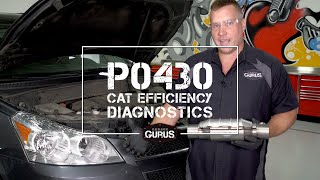
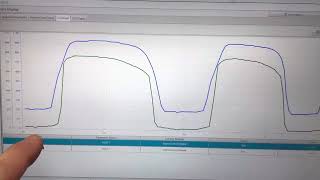
How to confirm: Use a scan tool to monitor the downstream (post-catalyst) O2 sensor voltage for Bank 2. If it fluctuates rapidly, mirroring the upstream sensor, the converter is not working. 🎬 Watch: How to use scan tool data to diagnose a converter. A good converter will result in a steady, relatively flat voltage from the downstream sensor. A temperature gun can also be used; the outlet of a working converter should be significantly hotter (at least 100-150°F) than the inlet.
Typical fix: Replace the Bank 2 catalytic converter. This is the rear converter, integrated with the exhaust manifold on the 6G75 engine. Due to its location, replacement is labor-intensive.
Est. part cost: $300 - $800 - Faulty Oxygen (O2) Sensor 🟡 Medium Probability → Shop Oxygen Sensor Oxygen sensors are also wear items and can fail over time, sending incorrect data to the PCM. People often replace these first as they are cheaper and easier than a converter. However, it's more common for a *good* O2 sensor to correctly identify a bad converter than for a bad sensor to falsely trigger P0430.
How to confirm: Test the sensor's operation using a multimeter or an advanced scan tool. Check for slow response times or voltage that is stuck high or low. Inspect wiring and connectors for damage, as they are exposed to high heat and road debris.
Typical fix: Replace the downstream (post-catalyst) oxygen sensor for Bank 2. If the sensor is faulty, it cannot accurately report on the catalyst's efficiency.
Est. part cost: $50 - $150 - Exhaust System Leak ⚪ Low Probability Gaskets and flex pipes can fail over time, allowing oxygen to enter the exhaust stream before the O2 sensors. This can fool the sensors into providing readings that suggest poor catalyst efficiency.
How to confirm: Visually inspect the exhaust system from the engine to the catalytic converter for cracks, rust holes, or black soot marks indicating a leak. Listen for an audible ticking or hissing sound, especially when the engine is cold. A smoke test is the most definitive way to find small leaks.
Typical fix: Repair the leak by replacing the faulty gasket, flex pipe, or section of exhaust pipe.
Est. part cost: $20 - $200
Rare But Worth Checking
- Engine Misfires or Fuel System Issues: An unresolved engine misfire (from bad spark plugs or coils) or a rich fuel condition (from a leaking injector) can send unburnt fuel into the exhaust, which superheats and destroys the catalytic converter. If you replace the converter without fixing the root cause, the new one will fail quickly. Always check for and resolve other codes (e.g., P030x misfire codes) before replacing the converter.
- PCM Software Glitch: In some vehicles, the PCM software logic for monitoring catalyst efficiency can be too sensitive, leading to false P0420/P0430 codes. While not a widely reported issue for this specific Galant, some manufacturers release TSBs to update the PCM software with revised monitoring parameters. It's worth checking with a dealer if a software update is available.
Diagnosis Steps
- Use an OBD-II scanner to confirm P0430 is the only code present. If other codes exist (especially for misfires P0300-P0306 or fuel mixture), address them first.
- With the engine cold, start the vehicle and listen for any hissing or ticking sounds from the exhaust manifolds and pipes, which would indicate an exhaust leak.
- Visually inspect the exhaust system for any signs of cracks, rust, or damage, particularly around welds and flanges before the catalytic converter.
- Connect a scan tool that can display live data. Graph the voltage of the Bank 2 upstream (Sensor 1) and downstream (Sensor 2) oxygen sensors.
- At a steady 2,500 RPM, observe the graphs. The upstream sensor should fluctuate rapidly between ~0.1V and ~0.9V. The downstream sensor should show a much slower, steadier voltage (typically above 0.5V). If the downstream sensor's graph mimics the upstream sensor, the catalytic converter has failed.
- If the downstream sensor's voltage is flat, unresponsive, or stuck, the sensor itself is likely faulty or has a wiring issue.
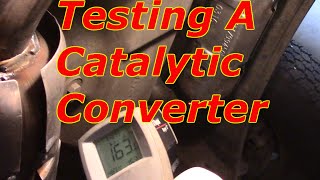
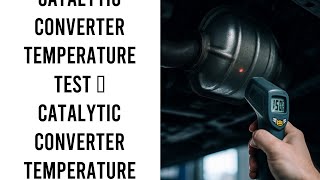
- Perform a temperature test. Using an infrared thermometer, measure the temperature of the exhaust pipe at the inlet and outlet of the Bank 2 converter after the engine is fully warmed up. The outlet should be at least 100°F hotter than the inlet. 🎬 See how to perform a catalytic converter temperature test. If it's not, the converter is not functioning.
- If diagnostic steps point to a failed converter, it is the most likely culprit and should be replaced.
Parts You'll Likely Need
- Bank 2 Catalytic Converter
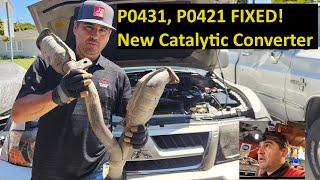
(OEM #MN153024 (Manifold/Converter Assembly))— This is the component directly identified by the P0430 code as having failed. On the Galant V6, this is the rear converter, integrated with the exhaust manifold. 🎬 Watch: Step-by-step catalytic converter replacement on a Mitsubishi Galant.
Trusted brands: Walker, MagnaFlow, Eastern Catalytic, AP Exhaust
OEM price range: $700-$1200
Aftermarket price range: $300-$800 - Bank 2 Downstream Oxygen Sensor
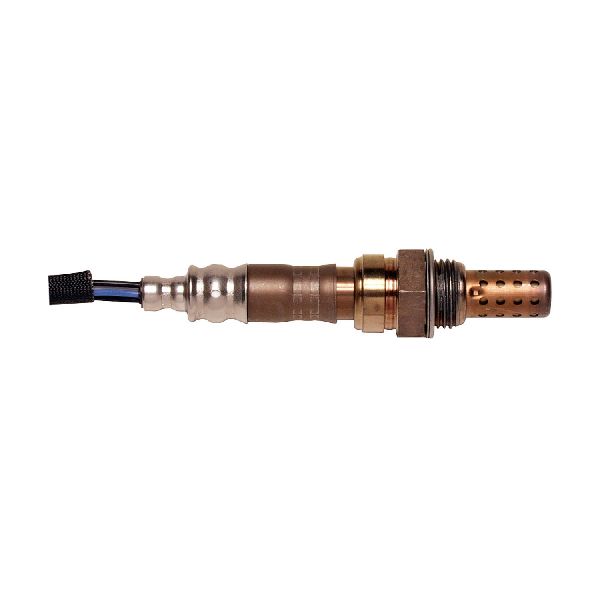
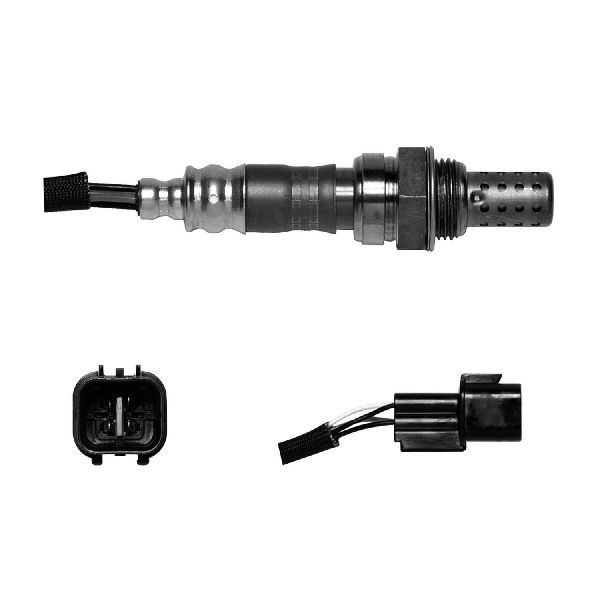
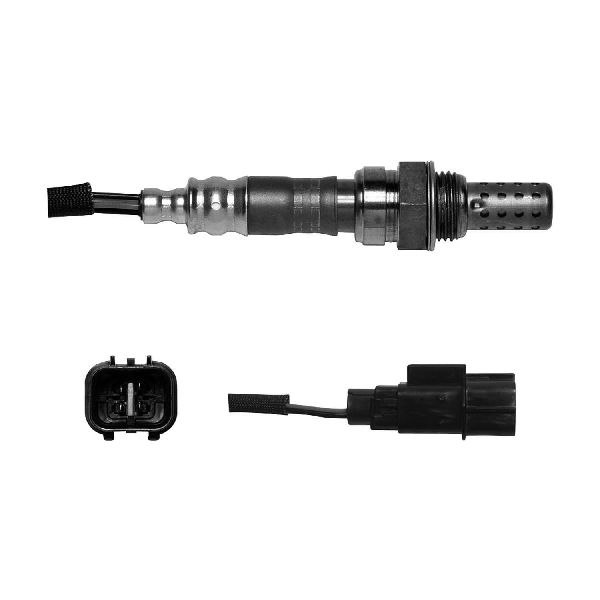
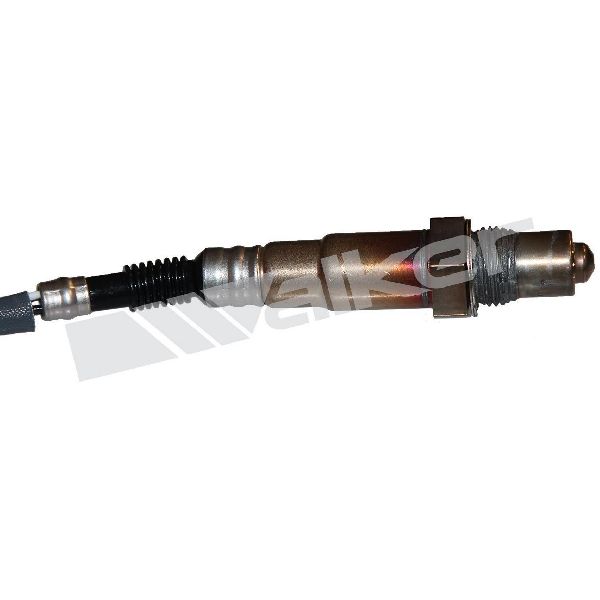
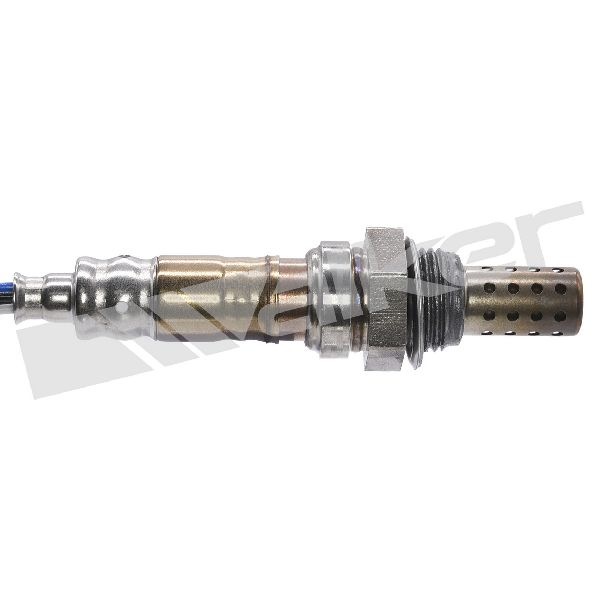
(OEM #MN158919 (or compatible))— This sensor is responsible for monitoring the converter's efficiency. It can fail and provide false readings, or it can be replaced as a preventative measure when installing a new converter. Common aftermarket part numbers include Denso 234-4656 and Bosch 15582.
Trusted brands: Denso, NGK/NTK, Bosch
OEM price range: $120-$200
Aftermarket price range: $50-$150 - Exhaust Manifold Gasket — A new gasket is required when replacing the manifold/converter assembly to prevent exhaust leaks.
Trusted brands: Fel-Pro, Victor Reinz
OEM price range: $20-$40
Aftermarket price range: $10-$25
Related Codes That Often Appear With This One
- P0420 — P0420 is the identical code for Bank 1 (the front bank). It's not uncommon for both converters to fail around the same time on a higher-mileage vehicle, sometimes triggering both codes simultaneously.
- P0300-P0306 — These are cylinder misfire codes. A persistent misfire can dump raw fuel into the exhaust, destroying the catalytic converter and leading to a P0430 code. The misfire is the cause, and the P0430 is the effect.
Platform-Specific Known Issues
- Difficult Access to Bank 2 Converter: Owners and mechanics consistently report that replacing the Bank 2 (rear) catalytic converter is a challenging job due to its location tucked between the engine and the firewall. Access to the mounting bolts is extremely limited, often requiring the removal of the wiper cowl and strut tower brace for better access from above.
Mechanic-Grade Diagnostic Values
- Catalytic Converter Temperature Differential — expected: Outlet pipe temperature should be at least 100-150°F hotter than the inlet pipe temperature after the engine is fully warmed up.. Failure: If the outlet temperature is the same as or cooler than the inlet, the catalytic converter is not performing its chemical reaction and has failed.
- Downstream O2 Sensor (Bank 2, Sensor 2) Voltage — expected: A steady voltage reading, typically between 0.5V and 0.8V, when cruising at a constant speed (e.g., 2500 RPM).. Failure: The voltage rapidly fluctuates in a pattern that mimics the upstream O2 sensor (Bank 2, Sensor 1). This indicates exhaust gas is passing through the converter unchanged.
Wiring & Ground Locations
- Firewall to Intake Manifold Ground — A ground strap often runs from the firewall to a bolt on the intake manifold, sometimes near the throttle cable bracket.. A corroded or loose main engine ground can introduce electrical noise and cause erratic readings from engine sensors, including the oxygen sensors, potentially leading to an incorrect diagnosis.
- G12 / G13 — Located on the left (driver's) side of the engine compartment.. These are primary chassis ground points in the engine bay. Poor contact at these locations can affect the entire engine management system, which relies on a stable ground reference for all sensor readings.
Real Owner Repair Stories
- Honda owner on YouTube (High-mileage Honda Accord V6 (similar V6 layout with two cats)) — Persistent P0420 and P0430 codes.
❌ Tried (didn't work) Replacing upstream and downstream O2 sensors., Using a catalytic converter cleaner additive (Cataclean)., Installing spark plug non-fouler spacers on the downstream O2 sensors., Attempting a DIY resistor/capacitor circuit to fool the ECU.
✅ What actually fixed it Ultimately, the problem was only solved by replacing both catalytic converters with a quality aftermarket brand (Walker). The original aftermarket cats (Dorman) had failed prematurely. - Jeep owner on JK-Forum.com (2007 Jeep JKU with 82,000 miles) — P0430 code.
❌ Tried (didn't work) Replacing the downstream (post-cat) Bank 2 O2 sensor., Replacing the upstream (pre-cat) Bank 2 O2 sensor.
✅ What actually fixed it After replacing sensors failed, the owner found the true cause was a tiny, hard-to-see pinhole exhaust leak near the post-cat sensor bung. Welding the pinhole shut permanently resolved the P0430 code.
"I Checked Everything" — The Actual Cause
- In some cases, a very small crack or pinhole leak in the exhaust manifold or near an O2 sensor bung can trigger a P0430 code but be missed by a visual inspection or even a smoke test that isn't performed meticulously. This happens because outside oxygen is drawn into the exhaust stream, which the downstream O2 sensor reads as a lean condition, making the PCM believe the converter isn't working. The actual cause was a cracked exhaust manifold that was difficult to see.
Model Year Variations Within This Range
- 2009-2012: The Galant Ralliart trim, introduced for 2009, featured a higher-output version of the 3.8L V6 (258 hp vs 230 hp). While the fundamental engine is the same, the Ralliart version had an upgraded exhaust and may use different catalytic converters or have a slightly different PCM calibration. Diagnosis remains the same, but part numbers should be double-checked for Ralliart models.
Diagnostic Flowchart
Other Known Issues on This Vehicle
Issues unrelated to this code that are worth knowing about as an owner of this generation:
- Leaking Valve Cover Gaskets Soaking Alternator 🟠 Medium → Shop Engine Valve Cover — Common after 80,000-100,000 miles. The rear valve cover gasket leaks oil directly onto the alternator, causing premature failure. (Ref: TSB-06-16-001 addresses a related alternator terminal issue, but the oil leak is a well-known root cause of failure.)
- Failing Air Conditioning (A/C) Condenser 🟠 Medium — Very common issue reported by many owners, sometimes requiring multiple replacements.
- Timing Belt Replacement Interval 🔴 High — Not a failure, but a critical maintenance item. The 6G75 is an interference engine, and a snapped timing belt will cause catastrophic engine damage. The recommended interval is typically 105,000 miles, but some sources say 60,000 miles.
- Whining or Failing Power Steering Pump 🟡 Low — A noticeable whine during turns or at idle is a common complaint, often indicating a failing pump or low/aerated fluid.
- Main Bearing Bolt Stretch (Primarily on Boosted Engines) 🟡 Low — A niche but documented issue where center main bearing bolts can stretch, particularly in modified, high-output (boosted) applications, leading to bearing failure.
Used vs. New Parts: Buying Guide for This Vehicle
When a used part is the smart pick: For this repair, using used parts is generally not recommended. A used oxygen sensor has an unknown lifespan and may fail shortly after installation. A used catalytic converter from a junkyard is a major gamble, as its internal catalyst material may already be degraded, causing the P0430 code to return.
Donor-vehicle mileage cap: roughly under 80000 miles for the part to have meaningful remaining life.
What to inspect on the donor part:
- For O2 sensors: Not recommended, as sensor life is unpredictable.
- For catalytic converters: Avoid. There is no reliable way to visually inspect the health of the internal catalyst substrate. A converter from a collision vehicle could be internally fractured.
OEM-only on this vehicle (don't cheap out):
- Catalytic Converter: While expensive, many professional mechanics recommend using the OEM converter for this repair, as some aftermarket converters have been known to fail emissions testing or trigger the same P0430 code within a year or two on sensitive vehicles.
Aftermarket brands forum-validated for this vehicle:
- Oxygen Sensors: Denso and NGK/NTK are highly recommended as they are often the original equipment manufacturers for Mitsubishi.
- Catalytic Converters: If OEM is not an option, Walker and MagnaFlow are reputable aftermarket brands that offer direct-fit options and generally have a better track record than budget brands.
Brands owners have reported issues with on this vehicle:
- Oxygen Sensors: Some owners report issues when using Bosch sensors on Japanese vehicles, preferring to stick with Denso or NTK.
- Catalytic Converters: Avoid generic, unbranded 'eBay special' converters and brands with a reputation for poor catalyst loading, such as Catco, as they are more likely to fail quickly.
Real Owner Stories
Aggregated from forums and TSBs cited above. Mileages and costs reflect what owners reported in those sources.
2004-2012 Mitsubishi Galant 3.8L V6 — ~125000 miles
Symptoms: The owner experienced the P0420 and P0430 codes appearing primarily during cold starts, which would then disappear for the remainder of the day after being cleared.
What fixed it: The catalytic converters were failing the PCM's efficiency test specifically during the critical warm-up phase, indicating they were on the edge of the efficiency threshold.
Source hint: ScannerDanner Forum - "P0420 and P0430 at the same time"
2004-2012 Mitsubishi Galant 3.8L V6
Symptoms: The Check Engine Light was on with codes P0420 and P0430. The owner attempted to fix the issue by replacing all four oxygen sensors, but the codes returned shortly after.
What fixed it: Replacement of the catalytic converters, as the O2 sensors were correctly reporting a genuine converter failure.
Source hint: r/MechanicAdvice on Reddit - "P0420 and P0430 of and on for a month now"
Related OBD-II Codes
Frequently Asked Questions
Is the P0430 code on my 3.8L V6 Galant likely just a bad oxygen sensor?
Where is the Bank 2 catalytic converter located on the 6G75 engine?
Does TSB-06-16-001 relate to my P0430 efficiency code?
At what mileage does the catalytic converter typically fail on the Galant?
Can I use a temperature gun to check if my Galant's converter is bad?
Are there any specific parts I need to remove to reach the Bank 2 converter?
Helpful Videos

We Have This Part in Stock


The information in this article is provided for general reference and educational purposes only. Vehicle specifications, procedures, and part compatibility can vary by production date, trim level, and region. Always consult your vehicle's factory service manual and verify part numbers before purchasing or performing repairs. Safety-critical components such as airbags, seat belts, and braking systems should be installed by a qualified professional.
- Mitsubishi Galant:
- 🧭 Diagnostic Flowchart
- 🎬 Helpful Videos
- 🛍️ Shop This Part
- What's Unique About the 2004-2012 Mitsubishi Galant
- Symptoms You May Notice
- Most Likely Causes
- Rare But Worth Checking
- Diagnosis Steps
- Parts You'll Likely Need
- Related Codes That Often Appear With This One
- Platform-Specific Known Issues
- Mechanic-Grade Diagnostic Values
- Wiring & Ground Locations
- Real Owner Repair Stories
- "I Checked Everything" — The Actual Cause
- Model Year Variations Within This Range
- Other Known Issues on This Vehicle
- Used vs. New Parts: Buying Guide for This Vehicle
- Real Owner Stories
- 2004-2012 Mitsubishi Galant 3.8L V6 — ~125000 miles
- 2004-2012 Mitsubishi Galant 3.8L V6
- Related OBD-II Codes
- Frequently Asked Questions
- 🎟️ Get 5% Off