

P0430 on 2009-2012 Suzuki Equator 4.0L: Catalytic Converter Causes and Fixes
On the 4.0L V6 Suzuki Equator, P0430 almost always means the driver's side (Bank 2) primary catalytic converter has failed. This is a known issue for this engine. A rattling noise from the exhaust is a critical warning sign that converter debris could destroy the engine. Replacing the converter is the typical fix.
- P0430 on a 2009-2012 Equator 4.0L points directly to a problem with the driver's side (Bank 2) catalytic converter.
- This vehicle is a rebadged Nissan Frontier, and information for the Frontier is directly applicable.
- A rattling noise accompanying this code is a critical warning. Stop driving the vehicle to prevent converter debris from destroying the engine.
- While a bad O2 sensor or exhaust leak can cause the code, the converter itself is the most likely failure point on this platform.
- Before replacing an expensive catalytic converter, ensure the engine has no misfires or rich-running conditions that would damage the new part.
What's Unique About the 2009-2012 Suzuki Equator
The 2009-2012 Suzuki Equator is a rebadged Nissan Frontier, sharing the same VQ40DE 4.0L V6 engine, chassis, and exhaust system. Therefore, all known issues and fixes for the Nissan Frontier, Xterra, and Pathfinder of the same era apply directly to the Equator. This specific engine platform has a notorious issue where the primary catalytic converters, which are integrated into the exhaust manifolds, can physically break apart internally. Due to engine valve overlap used for emissions control (in place of a traditional EGR valve), this ceramic debris can be sucked back into the cylinders on the intake stroke, causing catastrophic engine damage. For this reason, a P0430 code accompanied by a rattling noise should be treated as a critical issue requiring immediate attention.
Symptoms You May Notice
- Check Engine Light is on.
- Reduced engine power and sluggish acceleration, especially under load.
- Rattling noise from underneath the truck, especially at startup or idle, that may sound like marbles in a can.
- Rotten egg or sulfur smell from the exhaust.
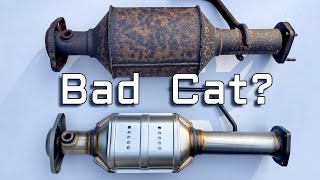
- Vehicle will fail an emissions test. 🎬 Watch: 4 signs your catalytic converter is failing
- In severe cases of clogging, the engine may struggle to start or stall at low speeds.
- Replacing the oxygen sensors without confirming they are faulty. While O2 sensors can cause this code, the catalytic converter itself is the most common point of failure on this specific platform. Many owners replace sensors only to have the code return, indicating the converter was the issue all along.
- Ignoring the P0430 code or using a 'spacer' or 'O2 simulator' on the downstream sensor. While this may extinguish the light, it does not fix the underlying problem and ignores the critical risk of engine damage from disintegrating converter material.
Most Likely Causes
- Failed Bank 2 (Driver's Side) Primary Catalytic Converter 🔴 High Probability → Shop Catalytic Converter The primary catalytic converters on the VQ40DE engine are widely known to degrade and break apart internally over time. This is a well-documented failure on the Nissan Frontier, Xterra, and Suzuki Equator with this engine, often leading to engine damage if ignored.
How to confirm: Listen for a rattling sound from the driver's side exhaust manifold area. A mechanic can also perform a backpressure test or use a thermal camera to check the converter's inlet and outlet temperatures; the outlet should be significantly hotter. A rubber mallet can be used to gently tap the converter (when cold) to listen for loose internal debris.
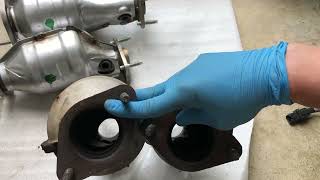
Typical fix: Replace the Bank 2 primary catalytic converter, which is integrated with the exhaust manifold. It is highly recommended to use new exhaust gaskets and consider replacing both upstream and downstream 🎬 Watch: Step-by-step catalytic converter replacement walkthrough oxygen sensors at the same time.
Est. part cost: $250-$800 - Failing Oxygen (O2) Sensors 🟡 Medium Probability → Shop Oxygen Sensor O2 sensors are wear items and can become lazy or biased with age and mileage, sending incorrect data to the computer. A faulty rear O2 sensor can falsely trigger a P0430 code. However, on this platform, the converter itself is the more likely culprit.
How to confirm: Use a diagnostic scan tool to graph the voltage of the upstream and downstream O2 sensors for Bank 2. The upstream sensor (A/F sensor) should have a voltage centered around 2.2V. The downstream sensor should hold a relatively steady voltage around 0.6-0.8V. If the downstream sensor is fluctuating rapidly similar to the upstream, the converter is likely bad. If the sensor's response is flat or slow, the sensor itself may be the issue.
Typical fix: Replace the corresponding Bank 2 oxygen sensor(s). It is often recommended to replace them when replacing the catalytic converter. Using genuine OEM (Bosch/Denso/NGK) sensors is highly recommended as some aftermarket sensors can cause issues.
Est. part cost: $50-$180 - Exhaust System Leak ⚪ Low Probability Gaskets between the manifold, converter, and pipes can fail over time, causing leaks.
How to confirm: Visually inspect the exhaust system from the manifold to the tailpipe for cracks, holes, or loose flange connections, indicated by black soot trails. Listen for an audible ticking or hissing sound that changes with engine RPM. A smoke test is the most effective way to pinpoint the exact location of a leak. 🎬 See how to diagnose P0420 and P0430 exhaust codes
Typical fix: Repair the leak. This may involve replacing a gasket (e.g., Fel-Pro), tightening bolts, or welding a crack in the pipe.
Est. part cost: $10-$100
Rare But Worth Checking
- Engine Misfires or Fuel System Issues: An underlying issue like a bad spark plug, ignition coil, or leaking fuel injector can dump unburned fuel into the exhaust, which will overheat and destroy a new catalytic converter quickly. Always ensure the engine is in a good state of tune before replacing a converter.
- ECM Software Glitch: While not a direct cause for P0430, some 2011-2012 models with the VQ40DE were subject to Nissan TSB NTB12-051j for a P0101 MAF sensor code that could be fixed with an ECM reprogram. Faulty MAF readings can affect air/fuel ratio and contribute to converter damage over time.
Diagnosis Steps
- Scan the vehicle for any other stored trouble codes. Address any misfire (P030X), fuel system, or air intake (P0101) codes first, as these can cause converter failure.
- Listen carefully for any rattling noises from the exhaust system, especially on startup. A rattle strongly indicates an internally failed converter. You can gently tap the converter with a rubber mallet (when cold) to check for loose debris.
- Inspect the exhaust system for any leaks between the engine and the rear oxygen sensor. Pay close attention to the manifold and flange gaskets, looking for black soot.
- Use a scan tool to observe the live data streams for the Bank 2 upstream (A/F Sensor 1) and downstream (O2 Sensor 2) oxygen sensors. The upstream sensor voltage should be relatively steady around 2.2V on a Nissan-specific scan tool, while the downstream should be relatively stable and above 0.5V. If the downstream sensor mirrors the upstream's fluctuations (on a generic scanner showing 0.1-0.9V), the converter is not working.
- If scan tool data is inconclusive, perform a temperature check using an infrared thermometer. Measure the temperature of the pipe just before the converter and just after. The outlet temperature should be at least 100-150°F hotter than the inlet on a fully warmed-up engine.
- If the converter is suspected to be clogged (causing power loss), a backpressure test can be performed by a professional by removing the upstream O2 sensor and inserting a pressure gauge.
Parts You'll Likely Need
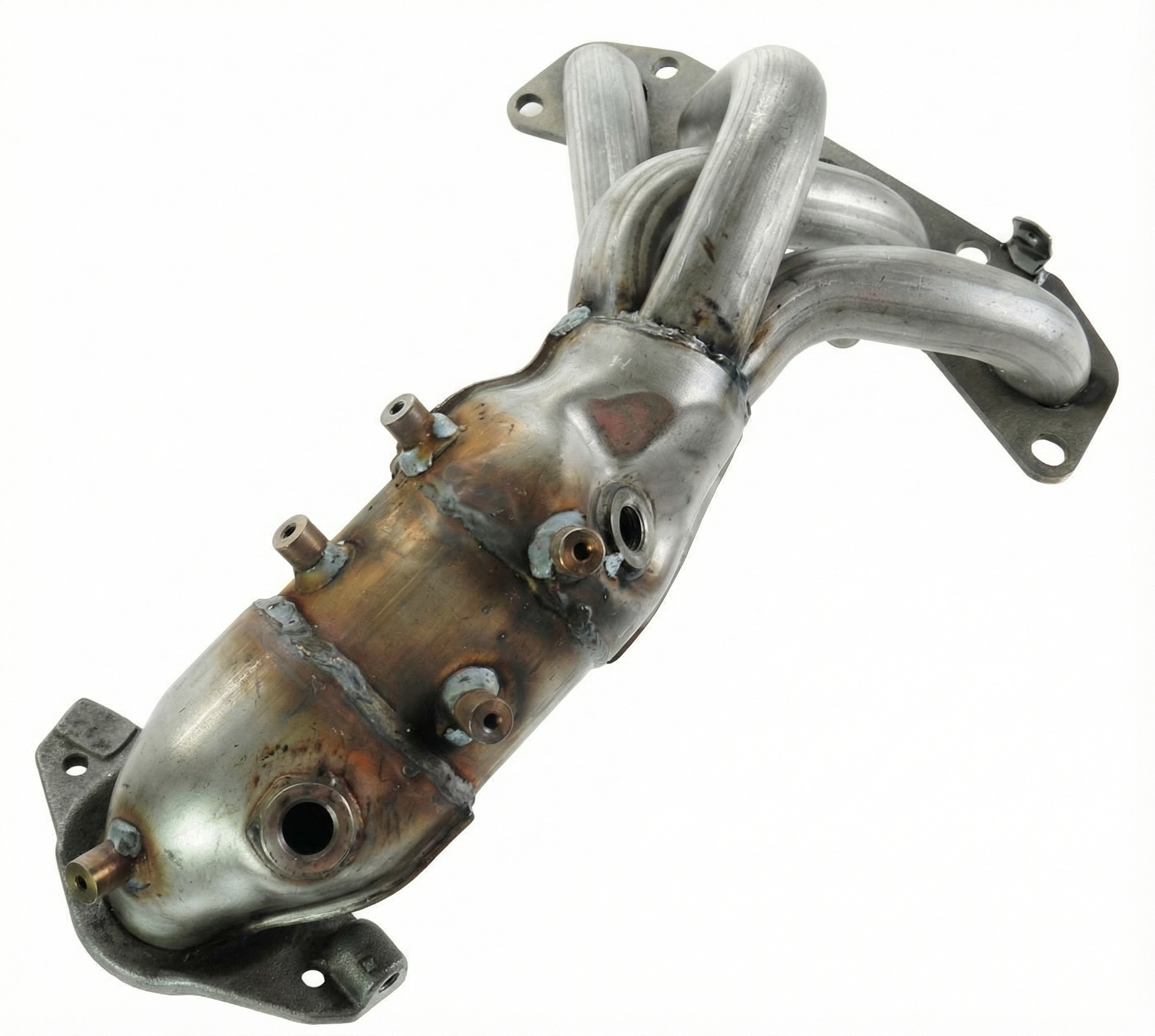
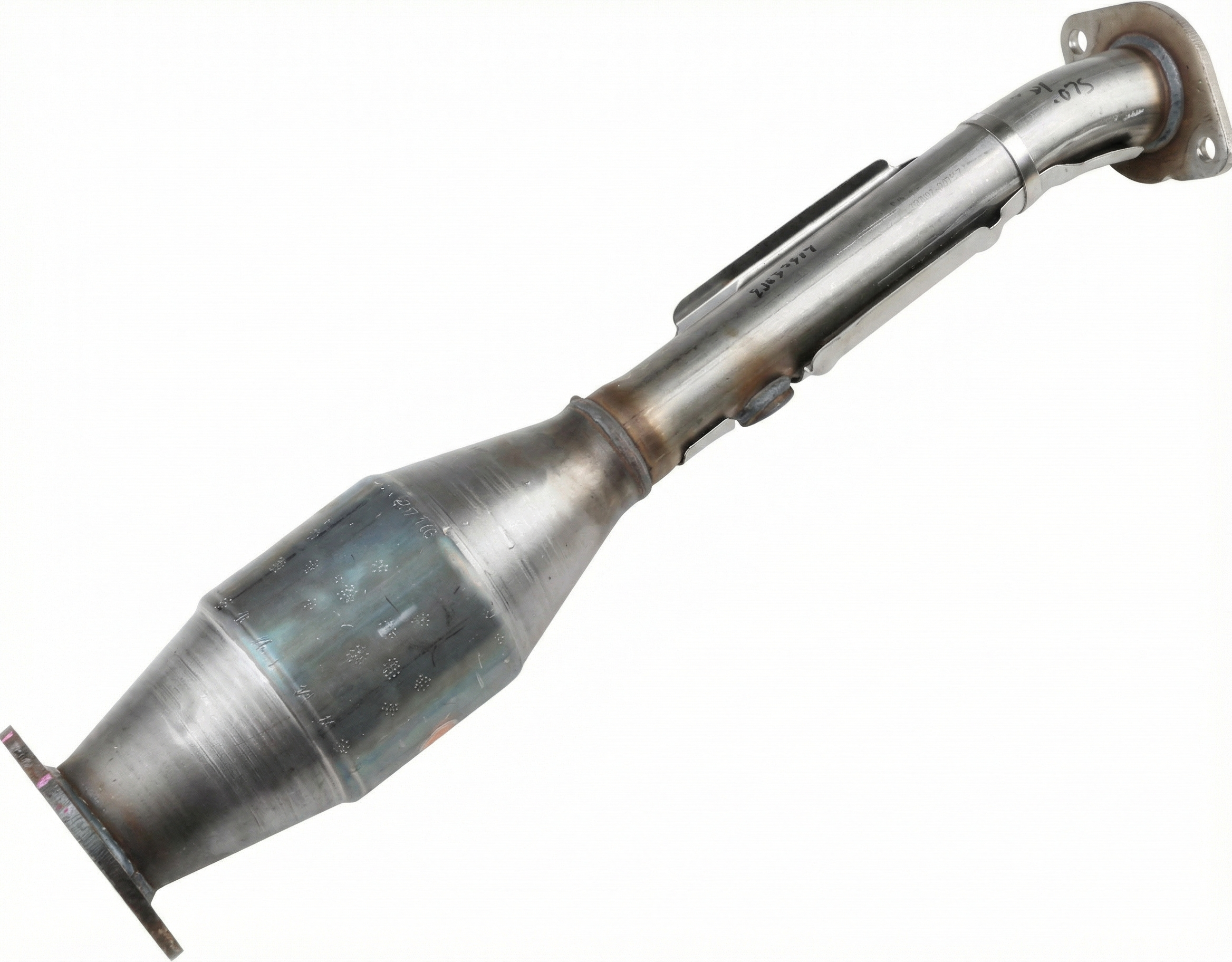
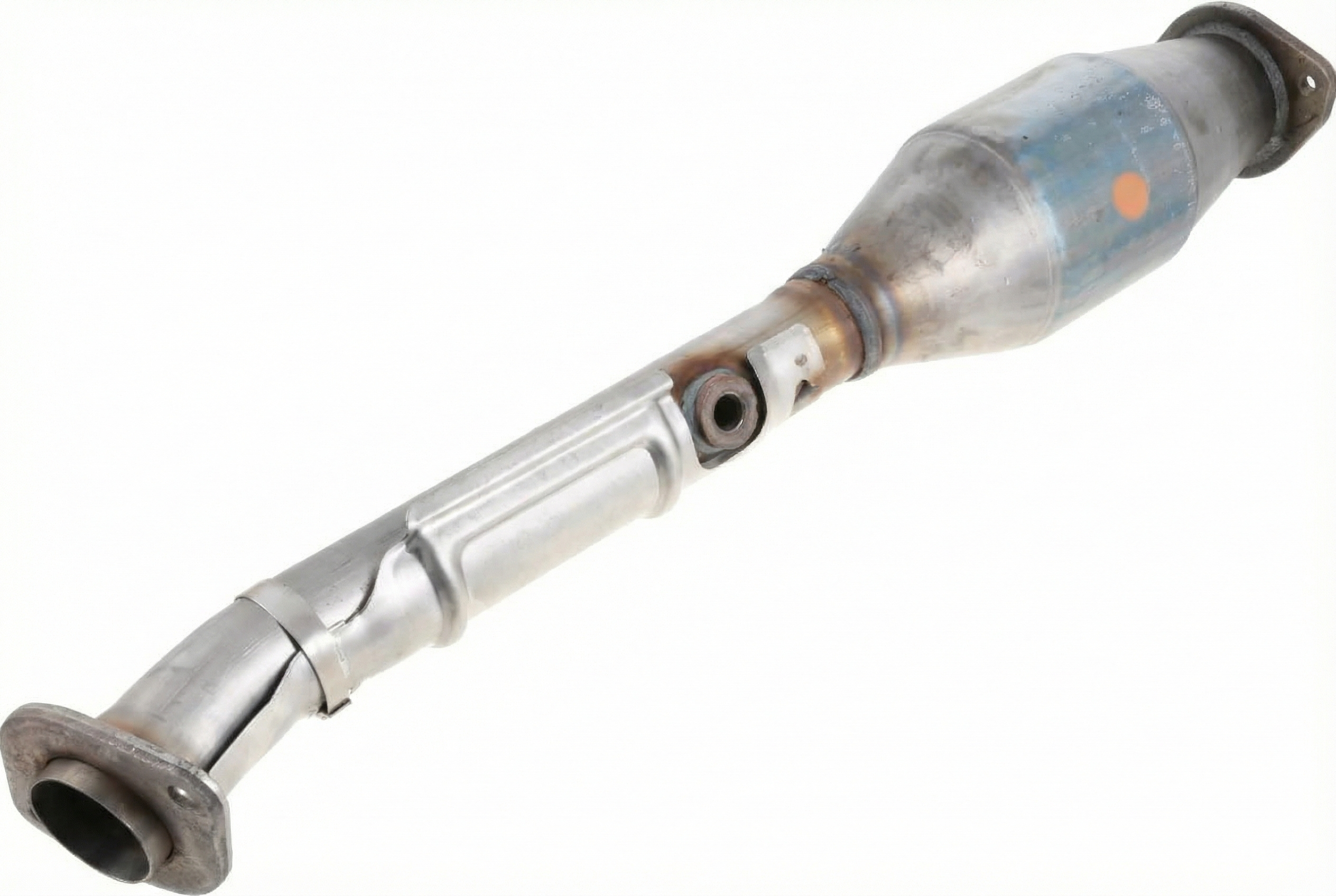
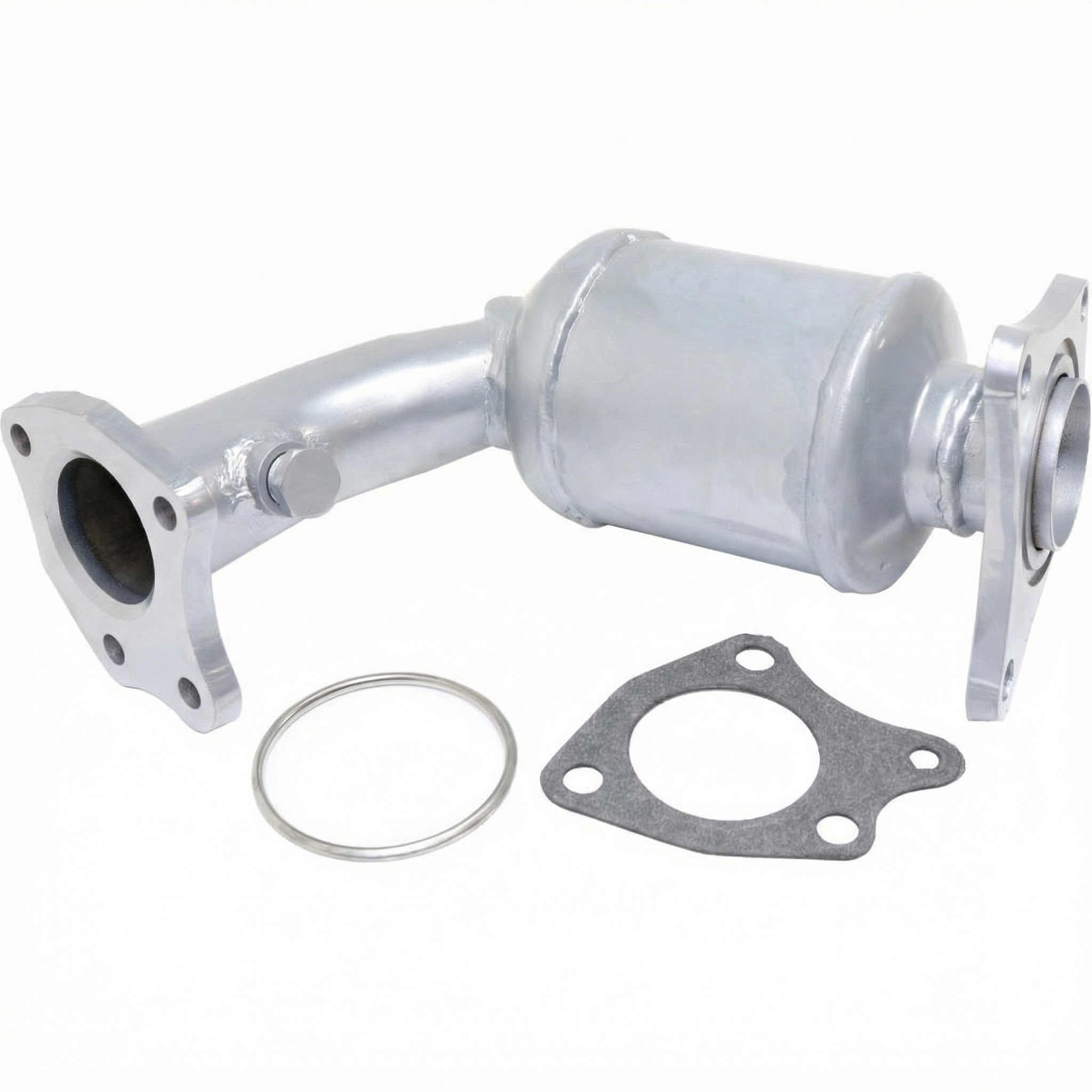
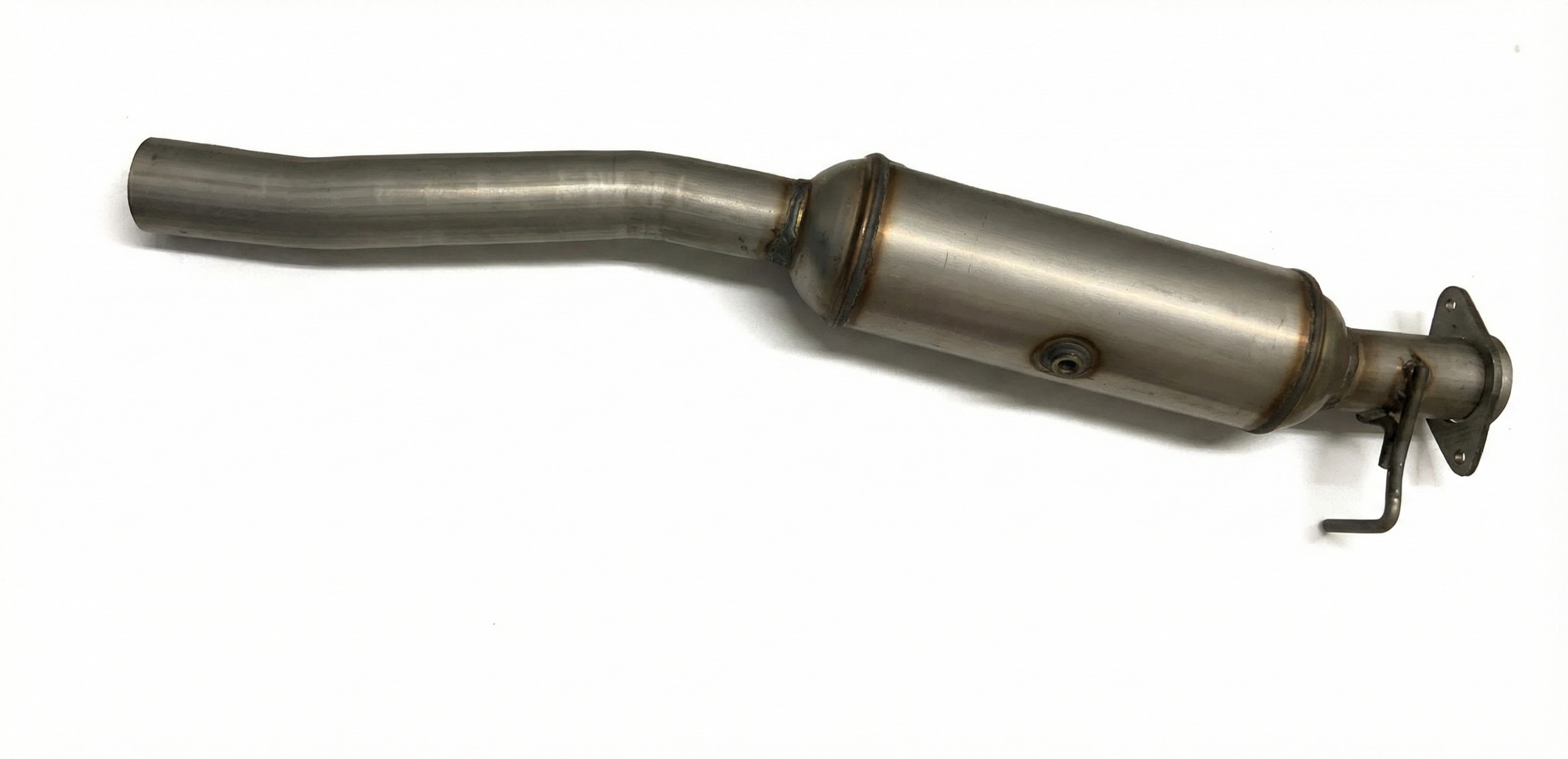
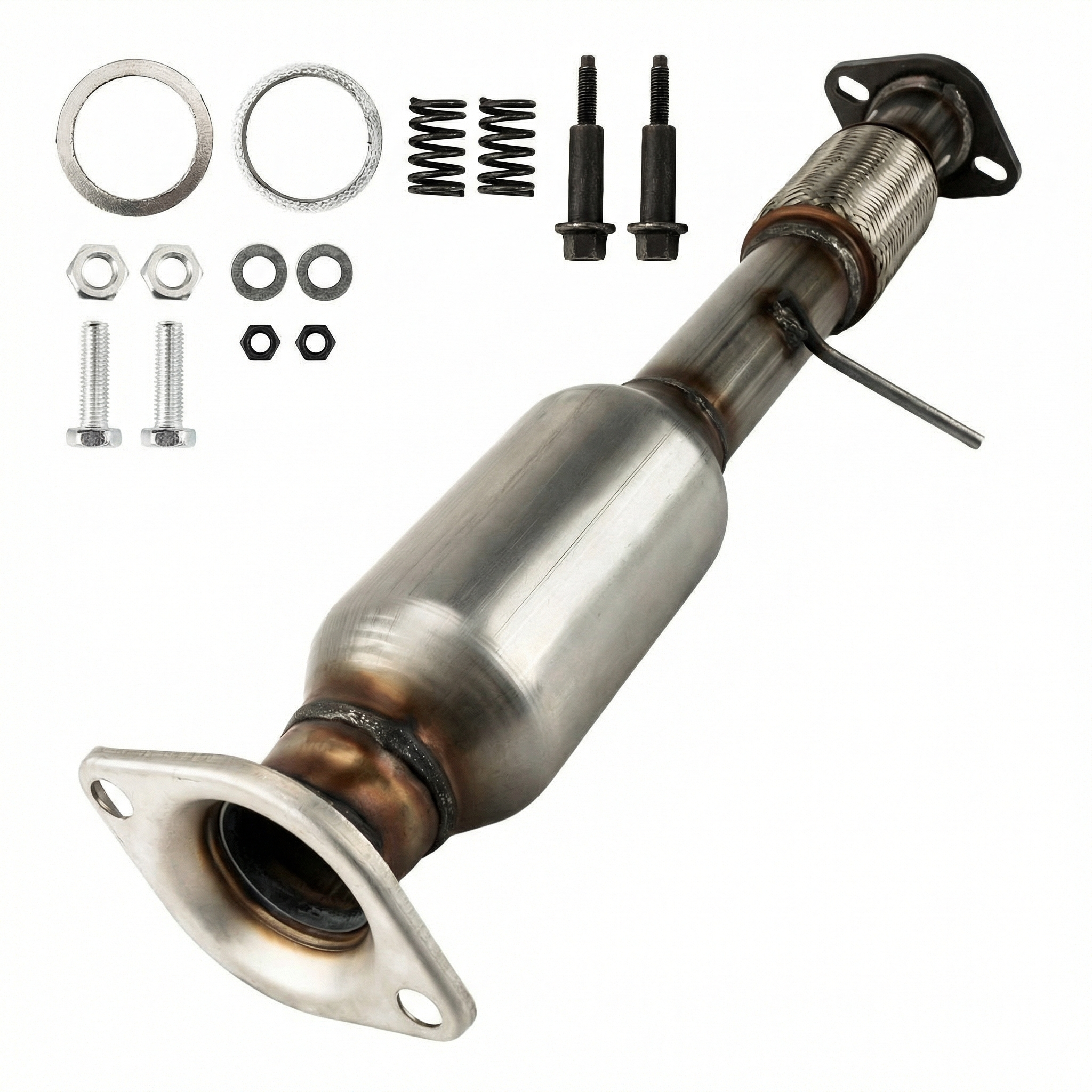
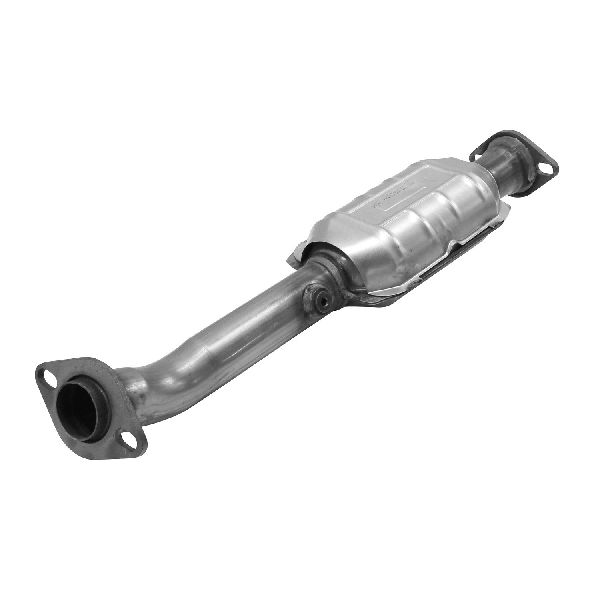
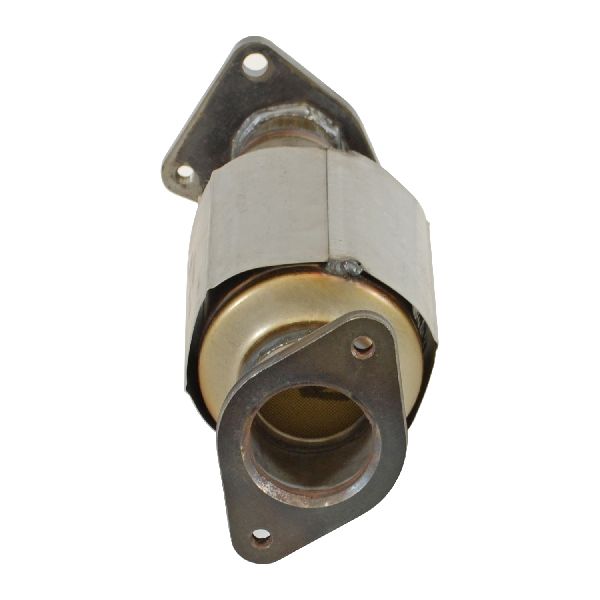
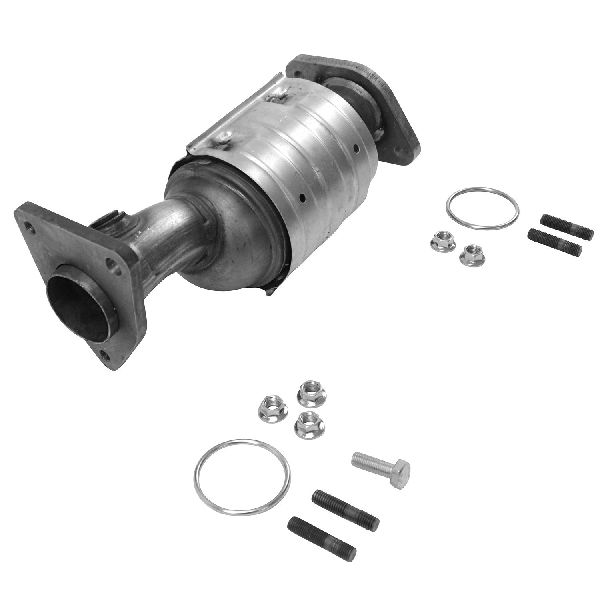
- Bank 2 (Driver Side) Catalytic Converter
(OEM #Replaced by 208A3-EA21B (Nissan))— This is the most common failure item for code P0430 on the VQ40DE engine due to a known issue with internal degradation.
Trusted brands: Walker Exhaust, MagnaFlow, Bosal, AP Exhaust
OEM price range: $600-$900
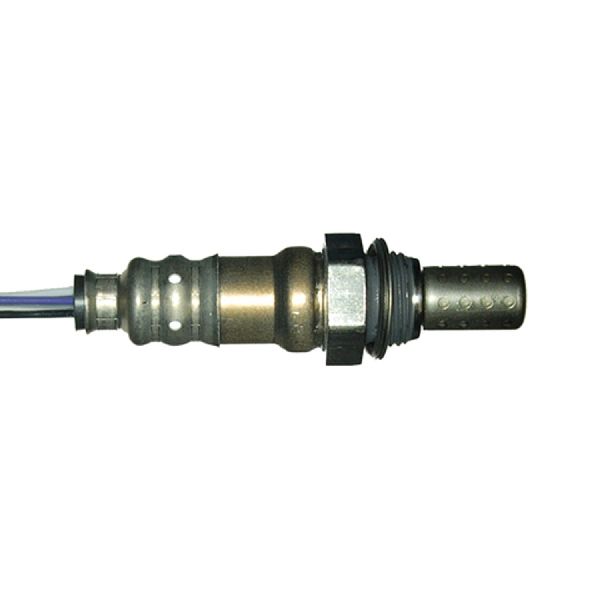
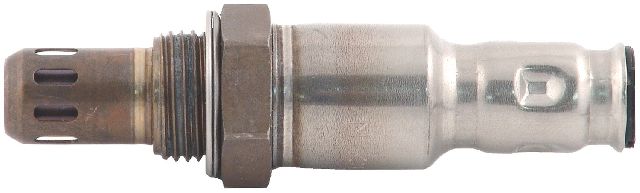
Aftermarket price range: $250-$500 - Downstream Oxygen Sensor (Bank 2, Sensor 2)
(OEM #226A0-EA211 (Nissan))— Can fail and send incorrect readings, falsely triggering the code. It is also often recommended to replace with the converter as it can be damaged during removal or by the failing converter.
Trusted brands: Denso, Bosch, NGK/NTK
OEM price range: $120-$180
Aftermarket price range: $50-$100 - Exhaust Gaskets
(OEM #Manifold Gasket: 14036-EA200 (Nissan), Flange Gasket: 20692-EA200 (Nissan))— New gaskets must be used when replacing the catalytic converter to prevent exhaust leaks.
Trusted brands: Fel-Pro, Victor Reinz, Nissan OEM
OEM price range: $15-$30
Aftermarket price range: $10-$20
Related Codes That Often Appear With This One
- P0420 — P0420 is the identical code for Bank 1 (passenger side). It is common for both primary catalytic converters to fail around the same time due to age and mileage.
- P0300-P0306 — These are misfire codes. An engine misfire allows unburned fuel to enter the exhaust, which can overheat and damage the catalytic converter, leading to a P0430 code.
- P0101 — This code relates to the Mass Air Flow (MAF) sensor. A faulty MAF sensor can cause an incorrect air-fuel mixture, which can, over time, damage the catalytic converter. Nissan issued a TSB (NTB12-051j) for some 2011-2012 models with the VQ40DE for a P0101 that could be fixed with an ECM reprogram.
Technical Service Bulletins (TSBs) & Recalls
- NTB12-051j: Addresses a P0101 MAF sensor code on 2011-2012 models with the VQ40DE engine, which can be fixed with an ECM reprogram.
Platform-Specific Known Issues
- CRITICAL: The primary catalytic converters integrated into the exhaust manifolds are known to break apart. The ceramic debris can be sucked back into the engine cylinders during valve overlap, causing scoring of the cylinder walls, oil consumption, and catastrophic engine failure. A rattling noise is the key warning sign.
Mechanic-Grade Diagnostic Values
- Fuel Pressure (at fuel pump) — expected: ~51 PSI. Failure: Pressure is significantly lower or drops off quickly after priming, indicating a weak pump or bad check valve.
- O2 Sensor Heater Element Resistance (cold) — expected: 2.5 - 4.0 Ohms. Failure: Infinite resistance (OL) or a reading far outside the specified range.
- Upstream Air/Fuel Ratio Sensor Voltage (Nissan Scan Tool) — expected: Steady around 2.2 Volts at stoichiometric. Failure: Voltage significantly different from 2.2V or unresponsive.
- Downstream O2 Sensor Voltage (warmed up, steady RPM) — expected: Relatively stable voltage between 0.6V and 0.9V.. Failure: Voltage fluctuates rapidly, mimicking the upstream sensor's pattern, indicating a failed converter.
- Short-Term Fuel Trim (STFT) at idle — expected: Within +/- 5%. Failure: Consistently high positive or negative values, suggesting a vacuum leak or fuel delivery issue that could damage the converter.
- Long-Term Fuel Trim (LTFT) + Short-Term Fuel Trim (STFT) — expected: Total should be less than +/- 10%. Failure: A combined value consistently above +15% or more indicates the engine is running lean and compensating by adding excessive fuel.
Hidden / Shadow Codes Worth Checking
- Mode $06, TID $81: This is not a stored DTC, but a test result within the ECM's Mode 6 data. It represents the Catalyst Efficiency Monitor test for Bank 2. Technicians can view the test value and compare it against the manufacturer's minimum/maximum thresholds to see how close the converter is to failing, even before the P0430 code is set. (see via A professional scan tool capable of displaying Mode $06 data.)
Scan Tool Commands That Help
- Nissan CONSULT-III Plus: ECM Reprogramming — For 2011-2012 models, this is used to apply the fix for TSB NTB12-051j/k if a P0101 code is present, which can prevent future catalyst damage.
- Nissan CONSULT-III Plus: Idle Air Volume Learn — This function is required after replacing or cleaning the throttle body, or after an ECM reprogram. An incorrect idle air volume can affect the air-fuel ratio and catalyst operation.
- Nissan CONSULT-III Plus: Self-Learn Cont. (Clear) — This command resets the long-term fuel trims (LTFT) to zero. It should be performed after repairs like fixing a vacuum leak or replacing fuel injectors to allow the ECM to relearn fuel strategy with the new parameters.
Wiring & Ground Locations
- ECM Power Ground — The Engine Control Module (ECM) is typically located in the engine bay. The main power grounds are provided directly through its wiring harness connector.. A poor ground connection to the ECM can cause erratic behavior and incorrect readings from all sensors, including the oxygen sensors, potentially leading to a false P0430 code.
- Bank 2 O2 Sensor Connectors — The upstream (A/F) sensor connector is on the driver's side, accessible from the top of the engine bay near the exhaust manifold. The downstream sensor connector is located underneath the vehicle, accessible by tracing the wire from the sensor located after the primary catalytic converter on the driver's side.. These connectors are common points of failure due to heat and vibration. Corrosion or damage can disrupt the sensor signal, heater power, or ground, directly causing a P0430 or related sensor codes.
Real Owner Repair Stories
- Nissan Frontier Forum (2005 Nissan Frontier, 102,000 miles) — Check Engine Light with code P0430, 15% drop in fuel mileage.
❌ Tried (didn't work) The owner planned to replace the O2 sensor first.
✅ What actually fixed it A senior forum member advised that an O2 sensor will not correct a P0430 on this platform, strongly implying the catalytic converter itself was the required fix, a sentiment echoed by many mechanics for the VQ40DE engine. - Quora Mechanic Response (General Nissan V6 (applies to Equator/Frontier)) — P0430 code returns after replacing parts.
❌ Tried (didn't work) Replacing O2 sensors., Installing a cheap, universal aftermarket catalytic converter.
✅ What actually fixed it The responding mechanic stated they had never seen a P0430 on this platform that was not fixed by a new, high-quality (often OEM) catalytic converter. Cheap aftermarket units often lack the necessary precious metals and will not resolve the code.
"I Checked Everything" — The Actual Cause
- On the VQ40DE engine, it is common for a smoke test of the exhaust system to come back clean, showing no leaks, yet the P0430 code persists. This is because the primary cause is not an external leak but the internal failure and degradation of the ceramic monolith inside the catalytic converter. A clean smoke test, therefore, becomes a diagnostic step that points *away* from a simple gasket leak and *towards* a failed converter or a faulty oxygen sensor.
OEM Part Supersession History
208A1-EA200, 208A3-EA200, 208A3-EA20A, 208A3-EA20B→208A3-EA21B— Part has been updated by Nissan over the years for design improvements or manufacturing changes.
Heads up: The newest part number, 208A3-EA21B, is the correct replacement for all 2005-2012 models. Using an older number is not recommended.
Model Year Variations Within This Range
- 2011-2012: These model years may have an ECM software issue that can set a P0101 MAF sensor code without any drivability problems. Nissan issued TSB NTB12-051j (later revised) to fix this with an ECM reprogram. An unaddressed faulty MAF signal can lead to incorrect air-fuel ratios that damage the catalytic converter over time, making this TSB relevant to P0430 diagnosis on these specific years.
Diagnostic Flowchart
Other Known Issues on This Vehicle
Issues unrelated to this code that are worth knowing about as an owner of this generation:
- Secondary Timing Chain Tensioner Wear 🔴 High — Common on 2005-2010 models, but can occur on later models. Often presents as a high-pitched whine between 1500-2500 RPM, starting around 70,000-100,000 miles. (Ref: NTB09-128a)
- SMOD (Strawberry Milkshake of Death) 🔴 High — Primarily affects 2005-2010 models with automatic transmissions. The internal transmission cooler in the radiator fails, mixing coolant and ATF, destroying the transmission. Less common on 2011-2012 models after a radiator redesign. (Ref: Nissan offered an extended warranty (not a recall) for this issue on some models.)
- IPDM (Intelligent Power Distribution Module) Relay Failure 🟠 Medium — Common on 2005-2007 models. The ECM relay inside the IPDM fails, causing a crank-no-start or stalling condition. (Ref: NHTSA Campaign ID: 10V517000 (Recall for some 2005-2006 models). The replacement relay part number is 284B7-CW29E.)
- Fuel Level Sending Unit Failure 🟡 Low — Very common across all years. The fuel level sensor in the tank fails, causing the fuel gauge to be inaccurate or read empty. The fix requires dropping the fuel tank to replace the sender.
Used vs. New Parts: Buying Guide for This Vehicle
When a used part is the smart pick: For this specific repair, obtaining a used catalytic converter from a junkyard is strongly discouraged. The risk of receiving a part that is already degraded internally or will fail shortly is extremely high. Furthermore, there is a risk the used part could release ceramic debris and damage the engine, the very problem the repair is meant to prevent.
What to inspect on the donor part:
- If forced to consider a used converter, it must not make any rattling sounds when shaken.
- Inspect the inlet and outlet flanges to ensure they are not warped or excessively rusted.
- Visually inspect the internal honeycomb structure with a light; it should be intact and not appear melted, clogged, or broken.
OEM-only on this vehicle (don't cheap out):
- Catalytic Converter: Strongly recommended. Many aftermarket converters, especially low-cost universal units, lack sufficient precious metal loading to meet the ECM's efficiency requirements for this engine, leading to the P0430 code returning.
Aftermarket brands forum-validated for this vehicle:
- O2 Sensors: Denso, Bosch, and NGK/NTK are OEM suppliers and are considered reliable replacements.
- Catalytic Converters: If OEM is not an option, brands like MagnaFlow and Walker are recognized aftermarket choices, but may have a shorter lifespan than the original part.
Brands owners have reported issues with on this vehicle:
- Unbranded, 'eBay special', or suspiciously cheap catalytic converters. These are notorious for failing emissions tests and causing the P0430 code to return within a short period.
Real Owner Stories
Aggregated from forums and TSBs cited above. Mileages and costs reflect what owners reported in those sources.
2010 Nissan Frontier VQ40DE (Equator Platform Mate) — 102000 miles
Symptoms: Check Engine Light illuminated with code P0430.
What fixed it: Replacement of the catalytic converter; a technician confirmed the O2 sensor was unlikely to be the cause.
Source hint: ClubFrontier.org - P0430 Code w/Check Engine Light
2009-2012 Suzuki Equator VQ40DE — 182000 miles
Symptoms: High-pitched whining noise between 1500-2500 RPM, eventually leading to a ticking sound.
What fixed it: Repair of the secondary timing chain tensioners.
Source hint: Reddit r/nissanfrontier - VQ40 timing chain tensioner, anybody experience failure?
Nissan Xterra VQ40DE (Equator Platform Mate)
Symptoms: P0420/P0430 codes present; internal converter debris being sucked back into the engine.
What fixed it: Replacement of the failed catalytic converters to prevent catastrophic engine failure.
Source hint: Reddit r/Xterra - Massive Xterra engine failure!
Related OBD-II Codes
Frequently Asked Questions
I have a 2011 Suzuki Equator with a P0101 code; could this be related to my P0430 issue?
My Equator is making a rattling noise like marbles in a can at idle. Is this dangerous?
Which catalytic converter is affected by the P0430 code on my 4.0L V6 Equator?
Can I just replace the oxygen sensors to fix P0430 on this truck?
Are there specific brands of O2 sensors I should use for the Suzuki Equator?
Is the P0430 code related to the 'Strawberry Milkshake of Death' (SMOD) issue?
Helpful Videos
Used OEM Parts in Stock
New Aftermarket Parts Available


The information in this article is provided for general reference and educational purposes only. Vehicle specifications, procedures, and part compatibility can vary by production date, trim level, and region. Always consult your vehicle's factory service manual and verify part numbers before purchasing or performing repairs. Safety-critical components such as airbags, seat belts, and braking systems should be installed by a qualified professional.
- Suzuki Equator:
- 🧭 Diagnostic Flowchart
- 🎬 Helpful Videos
- 🛍️ Shop This Part
- What's Unique About the 2009-2012 Suzuki Equator
- Symptoms You May Notice
- Most Likely Causes
- Rare But Worth Checking
- Diagnosis Steps
- Parts You'll Likely Need
- Related Codes That Often Appear With This One
- Technical Service Bulletins (TSBs) & Recalls
- Platform-Specific Known Issues
- Mechanic-Grade Diagnostic Values
- Hidden / Shadow Codes Worth Checking
- Scan Tool Commands That Help
- Wiring & Ground Locations
- Real Owner Repair Stories
- "I Checked Everything" — The Actual Cause
- OEM Part Supersession History
- Model Year Variations Within This Range
- Other Known Issues on This Vehicle
- Used vs. New Parts: Buying Guide for This Vehicle
- Real Owner Stories
- 2010 Nissan Frontier VQ40DE (Equator Platform Mate) — 102000 miles
- 2009-2012 Suzuki Equator VQ40DE — 182000 miles
- Nissan Xterra VQ40DE (Equator Platform Mate)
- Related OBD-II Codes
- Frequently Asked Questions
- 🎟️ Get 5% Off