

P0430 on 2003-2009 Toyota 4Runner: Catalyst Efficiency Fixes for the 4.0L V6
P0430 on a 4th Gen 4Runner usually points to a failing catalytic converter on the driver's side, but it's wise to first check for exhaust leaks and consider replacing the less expensive downstream (post-cat) oxygen sensor, as it can also trigger the code. A new converter is often the ultimate fix, but the O2 sensor is a common and cheaper first attempt at a repair.
- P0430 on a 2003-2009 4Runner means the driver's side (Bank 2) catalytic converter is not working efficiently.
- While the catalytic converter itself is the most likely failed part, it's often cheaper to first replace the downstream (post-cat) O2 sensor on the driver's side, as it can also cause this code.
- Always check for exhaust leaks between the engine and the downstream O2 sensor before replacing any parts.
- When replacing sensors, use Denso brand parts, as they are the Original Equipment Manufacturer for Toyota and are known for reliability.
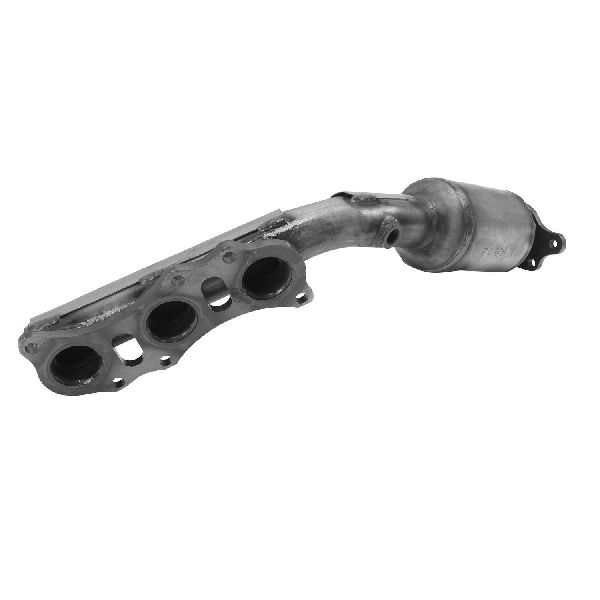
- The catalytic converter is integrated into the exhaust manifold, making replacement more labor-intensive than a simple bolt-on part.
What's Unique About the 2003-2009 Toyota 4Runner
For the 4th generation 4Runner (2003-2009), the P0430 code is a very common issue as these vehicles age and accumulate high mileage. While the catalytic converter is a frequent culprit, many owners report success in first replacing the downstream O2 sensor. Unlike some vehicles where the converter is a simple bolt-in part in the middle of the exhaust, the 1GR-FE engine uses a design where the primary catalytic converters are integrated directly into the exhaust manifolds. This makes replacement a more involved and expensive job that requires accessing the side of the engine.
Symptoms You May Notice
- Check Engine Light is on
- VSC and TRAC OFF lights may also illuminate as a secondary effect; the vehicle's computer disables these systems as a precaution when a powertrain fault is detected.
- Reduced fuel economy
- Sluggish acceleration or lack of power, especially if the converter becomes clogged.
- A sulfur or "rotten egg" smell from the exhaust.
- A rough or hard idle, particularly when the engine is cold.
- Replacing the upstream Air/Fuel Ratio sensor (Bank 2, Sensor 1) is a common mistake. This sensor is primarily used for fuel trim, while the downstream O2 sensor (Bank 2, Sensor 2) is the one that monitors catalyst efficiency for this code.
- Immediately replacing the catalytic converter without first checking for exhaust leaks or testing/replacing the downstream O2 sensor. The sensor is much cheaper and easier to replace, making it a logical first step for many DIYers.
- Ignoring underlying engine issues like misfires or a rich running condition, which will destroy the new catalytic converter quickly.
Most Likely Causes
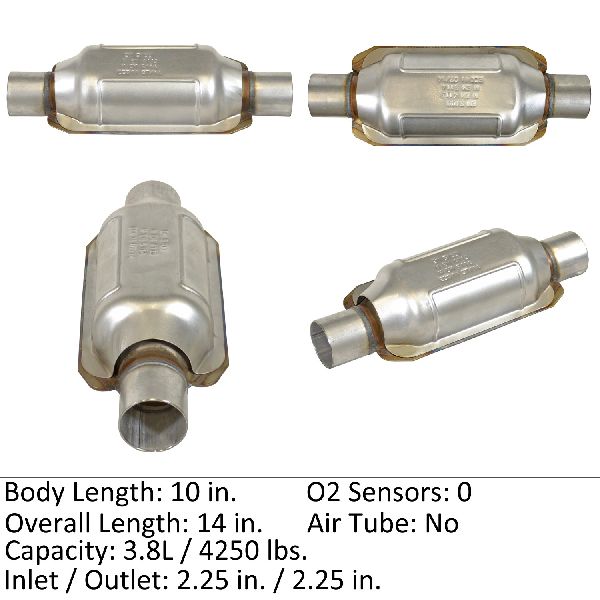
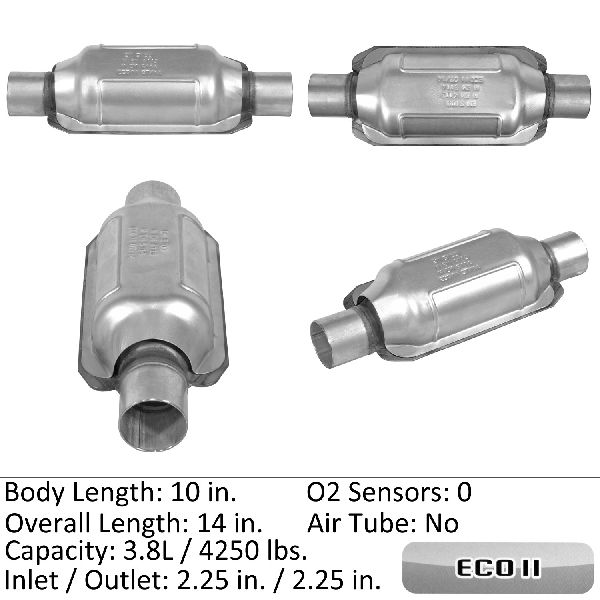
- Failing Catalytic Converter (Bank 2) 🔴 High Probability → Shop Catalytic Converter Catalytic converters have a finite lifespan and their internal precious metals degrade over time and with high mileage, which is common for these vehicles. They can also be damaged by unburned fuel from misfires or by coolant from a leaking head gasket.
How to confirm: After ruling out O2 sensors and exhaust leaks, a professional diagnosis involves using a scan tool to analyze the live data streams from both upstream and downstream O2 sensors. A healthy converter shows a steady, flat line from the downstream sensor (typically 0.6-0.8V), while a failing one will show a fluctuating waveform that mirrors the upstream sensor. An infrared thermometer can also be used to check the temperature of the pipe entering and exiting the converter; the outlet should be significantly hotter than the inlet.
Typical fix: Replace the Bank 2 (driver's side) exhaust manifold with integrated catalytic converter.
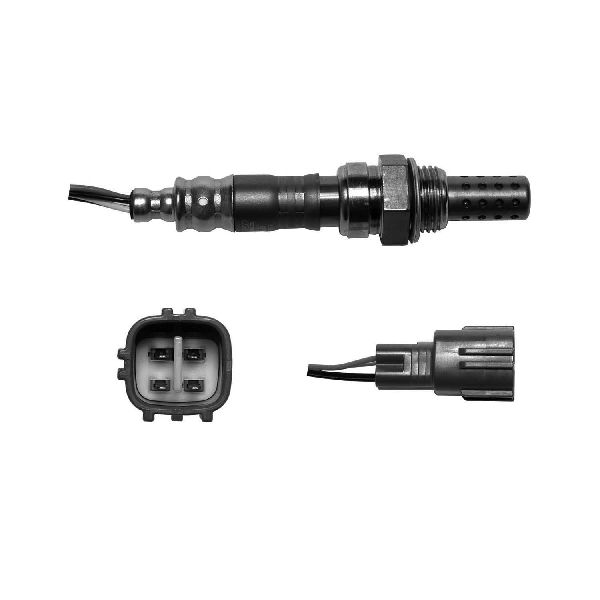
Est. part cost: $300-$1500 - Failing Downstream Oxygen (O2) Sensor (Bank 2, Sensor 2) 🟡 Medium Probability → Shop Oxygen Sensor O2 sensors are wear items and can become lazy or biased with age, sending inaccurate data to the ECU. Given the age of these trucks, sensor failure is common and a much cheaper potential fix than the converter itself.
How to confirm: Test the sensor's voltage output with a multimeter or a capable scan tool. A healthy downstream sensor should show a relatively stable voltage (typically around 0.6-0.8V) when the engine is warm and at a steady RPM. A failing sensor may show erratic or flatlined voltage. Often, due to the low cost, owners will replace the sensor as a diagnostic step.
Typical fix: Replace the Bank 2, Sensor 2 (driver's side, post-catalyst) oxygen sensor. It is highly recommended to use OEM or Denso brand sensors, as other brands can cause compatibility issues.
Est. part cost: $50-$120 - Exhaust Leak ⚪ Low Probability Rust and corrosion can cause leaks at gasket flanges or cracks in the exhaust manifold or pipes, especially in regions that use road salt. The manifold itself is known to crack or rot out.
How to confirm: Perform a visual inspection of the exhaust system from the manifold to the tailpipe, looking for black soot trails or cracks. A common method is to have the engine running and carefully feel for escaping exhaust gases or use a smoke machine to pressurize the system and spot leaks. You may also hear a ticking or tapping noise that gets louder with acceleration.
Typical fix: Replace the leaking gasket or repair/replace the cracked exhaust component.
Est. part cost: $10-$300
Rare But Worth Checking
- Engine Misfire or Rich Fuel Condition: If the engine is misfiring or running rich, unburned fuel can enter the exhaust and overheat the catalytic converter, causing it to fail prematurely. This is a root cause, not a direct trigger of P0430, but if you have other codes like P030x (misfire) or P0172 (rich condition), they must be addressed first to prevent destroying the new converter.
- Head Gasket Leak: The 1GR-FE engine, particularly in earlier years (2003-2005), had some instances of head gasket failure, often around cylinder #6. A slow leak can allow coolant to enter the exhaust, contaminating the O2 sensors and catalytic converter, eventually leading to failure and codes like P0430. Look for symptoms like unexplained coolant loss, white exhaust smoke with a sweet smell, or milky-looking oil.
Diagnosis Steps
- Read the code with an OBD-II scanner to confirm P0430 is present. Note any other codes. If misfire codes (P0300-P0306) are present, address those first.
- Inspect the entire exhaust system for leaks, from the Bank 2 (driver's side) manifold back. Pay close attention to the manifold-to-engine gasket and the flange after the converter. Repair any leaks found.
- Use a scan tool with live data capability to monitor the voltage of the Bank 2, Sensor 2 (downstream) oxygen sensor at a steady 2,000 RPM. A healthy sensor on a good converter will show a steady voltage (e.g., ~0.7V). If the voltage is fluctuating rapidly (e.g., between 0.1V and 0.9V), similar to the Sensor 1 reading, it points towards a bad converter. If the voltage is stuck or unresponsive, the sensor itself is likely bad.
- If a scan tool isn't available, consider replacing the Bank 2, Sensor 2 oxygen sensor as a primary diagnostic step. It is a common failure point and much less expensive than a catalytic converter. Use a quality Denso sensor. 🎬 See this guide for replacing the Bank 2 downstream sensor. Many owners report this fixes the issue.
- A controversial, temporary, and not-recommended-for-emissions-compliance trick mentioned in forums is using a spark plug non-fouler or O2 sensor spacer to pull the downstream sensor out of the direct exhaust stream. If this makes the code disappear, it strongly indicates the catalytic converter is bad.
- Clear the codes and drive the vehicle. If the P0430 code returns after replacing the O2 sensor and confirming no exhaust leaks, the catalytic converter is almost certainly the cause.
- Replace the Bank 2 (driver's side) catalytic converter/exhaust manifold assembly.
Parts You'll Likely Need
- Bank 2 Catalytic Converter / Exhaust Manifold Assembly
(OEM #17150-31070 (superseded by 17150-0P100, 17150-31250))— This is the most common ultimate fix for a persistent P0430 code after O2 sensors and leaks have been ruled out. The converter is integrated with the manifold.
Trusted brands: Toyota (OEM), Walker, MagnaFlow (e.g., 49210), AP Exhaust
OEM price range: $1200-$1500
Aftermarket price range: $300-$800 - Downstream Oxygen Sensor (Bank 2, Sensor 2)
(OEM #89465-35660)— This sensor is responsible for monitoring the converter's efficiency. It can fail and give false readings, triggering the P0430 code. It's a common first part to replace due to its lower cost.
Trusted brands: Denso (OEM supplier, Part No. 234-4261)
OEM price range: $100-$150
Aftermarket price range: $50-$90 - Exhaust Manifold Gasket
(OEM #17173-31010)— Required when replacing the catalytic converter/manifold assembly to ensure a proper seal against the cylinder head.
Trusted brands: Toyota (OEM), Fel-Pro, Mahle
OEM price range: $20-$30
Aftermarket price range: $10-$20
Related Codes That Often Appear With This One
- P0420 — P0420 is the identical code but for Bank 1 (passenger side). It's not uncommon for both converters to fail around the same time on a high-mileage vehicle.
Platform-Specific Known Issues
- O2 Sensor Replacement is a Common First Step: → Shop Oxygen Sensor Due to the high cost and labor involved in replacing the manifold/converter assembly, a very common first step for owners is to replace the downstream (post-cat) oxygen sensor on Bank 2. These sensors can degrade over time and send faulty signals that mimic a bad converter. Since the sensor is relatively inexpensive and easy to access, it's a logical and popular diagnostic/repair step before committing to a full converter replacement.
- Aftermarket Catalytic Converters Can Be Problematic: → Shop Catalytic Converter While cheaper, many owners report that aftermarket catalytic converters (especially non-CARB compliant models) may not meet the strict efficiency monitoring parameters of the Toyota ECU. This can lead to the P0430 code returning even with a new part. For a permanent fix, an OEM or high-quality CARB-compliant aftermarket converter is often recommended.
Mechanic-Grade Diagnostic Values
- Mode $06 - Catalyst Efficiency Monitor (Bank 2) — expected: The test value should be below the maximum threshold set by the ECU. For example, a test value of 0.2 with a max limit of 0.8 would be a 'PASS'.. Failure: If the test value reported by the scan tool exceeds the maximum limit, it indicates the catalyst has failed the non-continuous monitor test, triggering the P0430 code.
- Downstream O2 Sensor (Bank 2, Sensor 2) Voltage at steady 2,500 RPM (warm engine) — expected: A steady voltage, typically between 0.5V and 0.8V. A healthy converter will have absorbed oxygen, resulting in a stable, slightly rich reading downstream.. Failure: Voltage that fluctuates rapidly between 0.1V and 0.9V, mirroring the activity of the upstream A/F sensor. This indicates the converter is not storing oxygen and is inefficient.
- Long Term Fuel Trim (Bank 2) — expected: Ideally within +/- 5% at idle and under load. Values up to +/- 10% are generally acceptable.. Failure: Consistently high positive values (e.g., > +15%) could indicate a vacuum or exhaust leak introducing unmetered air. Consistently high negative values could indicate a leaking injector, which can damage the catalytic converter over time.
Hidden / Shadow Codes Worth Checking
- Mode $06, TID $02, CID $02: This refers to the raw data from the onboard diagnostic test for Catalyst Efficiency on Bank 2. TID (Test ID) $02 and CID (Component ID) $02 specifically point to the Bank 2 catalyst monitor. A capable scanner can read this data, which shows the measured efficiency value and the ECU's pass/fail threshold. (see via A professional scan tool or an advanced OBD-II app (like Torque Pro, OBD Fusion) that can access Mode $06 diagnostic data.)
Scan Tool Commands That Help
- Toyota Techstream: Active Test -> Control the Injection Volume for A/F sensor — This function allows a technician to manually command a rich or lean condition (+/- 25%) and observe the reaction of the upstream A/F sensor and downstream O2 sensor. It's used to confirm that both sensors are responsive and functioning correctly before condemning the catalytic converter. If the downstream sensor doesn't respond as expected to the forced rich/lean commands, it may indicate a faulty sensor or wiring issue.
Wiring & Ground Locations
- Ed (On Left Cylinder Head) — Located on the driver's side (Bank 2) cylinder head.. This is a primary ground point for the engine harness on the driver's side. Corrosion or a loose connection here can affect the signals from various sensors on Bank 2, including the A/F sensor and O2 sensor, potentially causing erroneous readings that could contribute to a P0430 code.
- Ef (On Rear of Left Cylinder Head) — Located on the rear of the driver's side (Bank 2) cylinder head.. Another critical ground point for the engine harness and Engine Control Module (ECM) on Bank 2. A poor connection here can lead to unstable sensor readings and intermittent issues that are difficult to diagnose.
- Bank 2 Sensor 2 Connector — The connector for the downstream oxygen sensor is typically located on the driver's side of the transmission bell housing, clipped to a bracket. The harness runs from the sensor in the exhaust pipe up to this location.. This connector is a common point for inspection. Damage from road debris, corrosion in the pins, or a loose connection can interrupt the signal from the sensor, directly causing a P0430 or making diagnosis difficult.
Real Owner Repair Stories
- Reddit user on r/MechanicAdvice (Toyota 4Runner (year not specified, but 4th Gen implied)) — Check Engine Light with codes P0420 and P0430.
❌ Tried (didn't work) The user was getting the codes and resetting them daily.
✅ What actually fixed it The user had replaced the original exhaust manifolds with a 'cheap Chinese pair' which immediately caused both P0420 and P0430 codes to appear. The community consensus was that the cheap aftermarket converters lacked the necessary precious metals to meet the Toyota ECU's strict efficiency monitoring, leading to the codes. The implied fix is to use OEM or high-quality aftermarket converters. - Reddit user on r/4thGen4Runner (2006 Toyota 4Runner V6 4WD, 225k miles) — Check Engine Light with code P0430.
✅ What actually fixed it The user reported that replacing both catalytic converters with an aftermarket pair from Amazon for $300 and having a local shop install them resolved the P0420 and P0430 codes. This presents a counter-narrative to the common failure of cheap converters, suggesting some low-cost options may work, albeit with risk. - Toyota Owner Report (NHTSA ODI #10850705) — An owner of a related Toyota model noted that immediately after receiving their vehicle back from service, the check engine light illuminated with codes P0420 and P0430, indicating a new catalytic converter issue that was not present before the service.
- Toyota Owner Report (NHTSA ODI #10359074) — A report describes a vehicle experiencing a hard downshift into first gear when stopping, accompanied by a check engine light and codes P0420 and P0430. An independent shop suggested a dealer re-flash of the ECM if the codes returned.
OEM Part Supersession History
17150-31070→17150-31250— Standard part evolution, likely for improved durability, material composition, or manufacturing process.
Heads up: The new part number 17150-31250 is a direct replacement for 17150-31070 and is fully compatible. No special modifications are needed when using the superseded part.Denso 234-4261 (Downstream O2 Sensor)→N/A— N/A
Heads up: This sensor (Denso 234-4261) is specified for the V8 model in some catalogs but is the correct part for the V6 Bank 2, Sensor 2 as well. The Bank 1, Sensor 2 (for P0420) is a different part number (Denso 234-4260). Using the wrong side sensor can lead to issues, as wire lengths may differ.
Model Year Variations Within This Range
- 2003-2004: These early models used a four-speed automatic transmission paired with the 1GR-FE V6. The engine itself is also a distinct version from the 2005-2009 models, with some sensor and wiring differences.
- 2005-2009: Starting in 2005, the V6 was paired with a five-speed automatic transmission. The engine also received updates, including a new head gasket design in 2006 to address failures seen in earlier years. While parts are largely interchangeable, an engine swap between an 03-04 and an 05-09 requires changing some components.
Diagnostic Flowchart
Other Known Issues on This Vehicle
Issues unrelated to this code that are worth knowing about as an owner of this generation:
- Frame and Undercarriage Rust 🔴 High — Very common, especially in the 'Salt Belt'. Can lead to structural failure. Toyota faced a class-action lawsuit for Tacoma/Tundra/Sequoia frames but 4Runner was not officially included in the US settlement, though the problem is widespread. (Ref: No official US recall for 4Runner, but a major known issue.)
- Head Gasket Failure (Early Models) 🔴 High — A known weakness on 2003-2005 model year 1GR-FE engines, typically failing around cylinder #6. Onset can be anywhere from 125k-200k+ miles. It is not a guaranteed failure but is one of the engine's few significant potential flaws.
- Cracked/Melting/Sticky Dashboard 🟡 Low — Extremely common on 2003-2005 models, especially in hot, humid climates. The dashboard material degrades, becoming shiny, sticky, and prone to cracking. (Ref: Warranty Enhancement Program ZE6 was issued, but it has since expired.)
- Cracked Integrated Exhaust Manifolds 🟠 Medium → Shop Exhaust Manifold — The manifolds, which contain the primary catalytic converters, are known to develop cracks with age and heat cycles, causing exhaust leaks. This is separate from the catalyst failing internally but requires the same expensive part replacement.
- Seized Brake Calipers 🟠 Medium — Front brake calipers are known to have pistons that seize, leading to uneven pad wear, pulling during braking, and excessive heat. This is a common maintenance item for high-mileage 4th gens.
Used vs. New Parts: Buying Guide for This Vehicle
When a used part is the smart pick: Purchasing a used OEM catalytic converter/manifold assembly from a junkyard can be a cost-effective strategy, especially if the vehicle is in a rust-free region. This is often preferable to a new, cheap aftermarket converter.
Donor-vehicle mileage cap: roughly under 120000 miles for the part to have meaningful remaining life.
What to inspect on the donor part:
- Check for a vehicle from a dry, salt-free state to minimize rust and corrosion.
- Look for a donor vehicle with verifiable low mileage (ideally under 120,000 miles).
- Visually inspect the manifold for any hairline cracks, especially near the welds and flanges.
- Ensure the O2 sensor bung threads are not stripped or damaged.
- If possible, check the donor vehicle's history to ensure it wasn't salvaged due to a front-end collision that could have damaged the manifold.
OEM-only on this vehicle (don't cheap out):
- Oxygen Sensor: Strongly recommended to use Denso (the OEM supplier) or genuine Toyota parts. The ECU is very sensitive, and off-brand sensors are a well-documented cause of persistent or new codes.
- Catalytic Converter: If buying new, OEM is the most reliable option to guarantee the code does not return. High-quality, CARB-certified aftermarket brands are a second choice, but cheap, non-certified converters frequently fail to meet Toyota's efficiency thresholds.
Aftermarket brands forum-validated for this vehicle:
- Denso for Oxygen Sensors (Part No. 234-4261 for B2S2).
- MagnaFlow or Walker for catalytic converters (ensure it is a CARB-compliant model if required by your state for better performance).
Brands owners have reported issues with on this vehicle:
- Unbranded, 'eBay special' or 'Amazon's choice' catalytic converters that are priced significantly lower than name-brand aftermarket parts. These often lack the necessary precious metal loading and will trigger the P0430 code again shortly after installation.
Real Owner Stories
Aggregated from forums and TSBs cited above. Mileages and costs reflect what owners reported in those sources.
2003-2009 Toyota 4Runner 4.0L V6
Symptoms: Check Engine Light accompanied by VSC and TRAC OFF lights appearing simultaneously.
What fixed it: Replacing the downstream (post-cat) oxygen sensor on Bank 2 as a first diagnostic step.
Source hint: T4R.org (Toyota 4Runner Forum) thread from March 2023
2005 Toyota Tacoma 4.0L 1GR-FE V6 — ~150000 miles
Symptoms: Coolant loss and bubbling in the radiator, eventually leading to catalyst efficiency codes.
What fixed it: Addressing the head gasket failure which was the root cause of the catalyst damage.
Source hint: TacomaWorld Forums thread titled 'Real world head gasket failure risk/mileage 2005 V6 1GR-FE Tacoma'
2003-2009 Toyota 4Runner 4.0L V6
Symptoms: P0430 code present; used a scan tool to monitor live data and found the downstream sensor mirroring the upstream sensor's fluctuating waveform.
What fixed it: Replace the Bank 2 (driver's side) exhaust manifold with integrated catalytic converter.
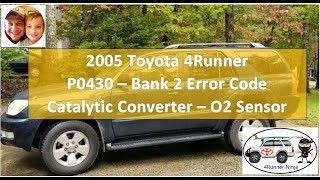
Source hint: YouTube (BundysGarage, 4Runner Ninja)
Toyota Owner Complaint (NHTSA ODI #10351085)
Symptoms: A mechanic reading the vehicle computer found a Check Engine Light with P0430, which was also found in the system history alongside an engine immobilizer code.
What fixed it: The report notes the P0430 code was associated with a high input reading from the EVAP system pressure sensor.
Related OBD-II Codes
Frequently Asked Questions
Why are my VSC and TRAC OFF lights on along with the P0430 code on my 4Runner?
Which side of my 4.0L V6 engine is Bank 2?
Is there a specific O2 sensor brand recommended for the 1GR-FE engine?
Can a head gasket leak cause my catalytic converter to fail?
Should I use an aftermarket catalytic converter to fix P0430?
How can I tell if my P0430 code is just an exhaust leak?
Helpful Videos
Used OEM Parts in Stock
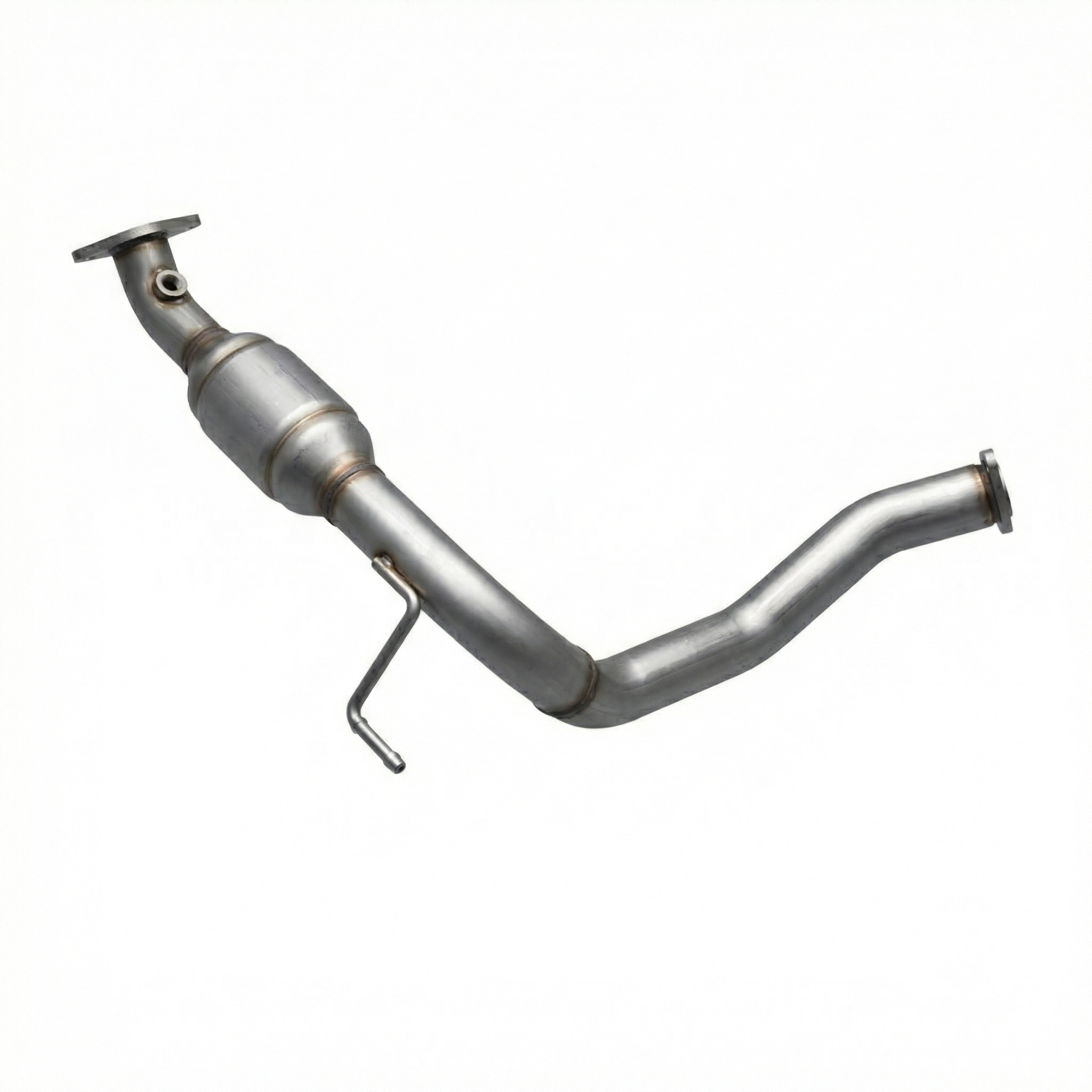
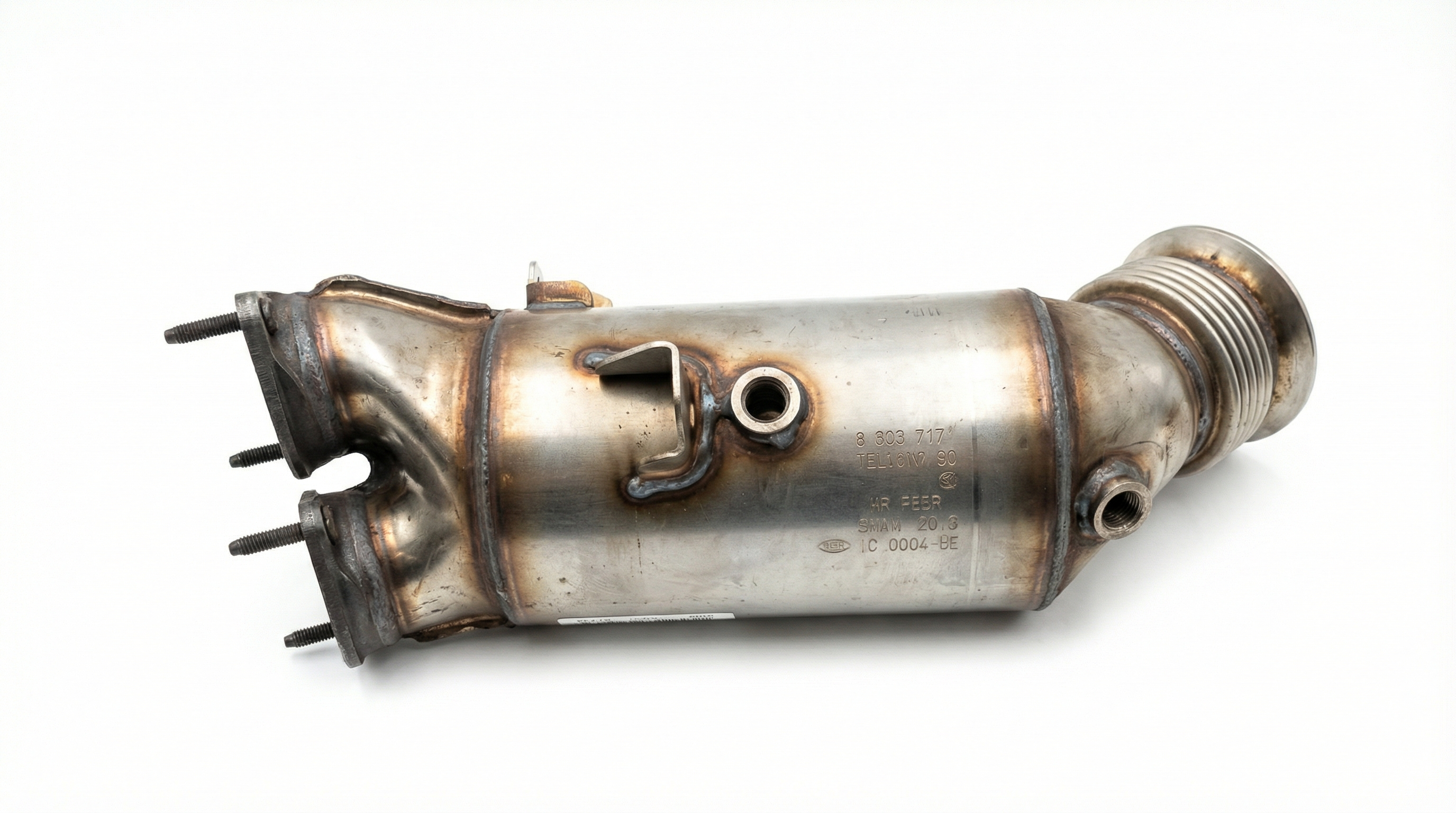
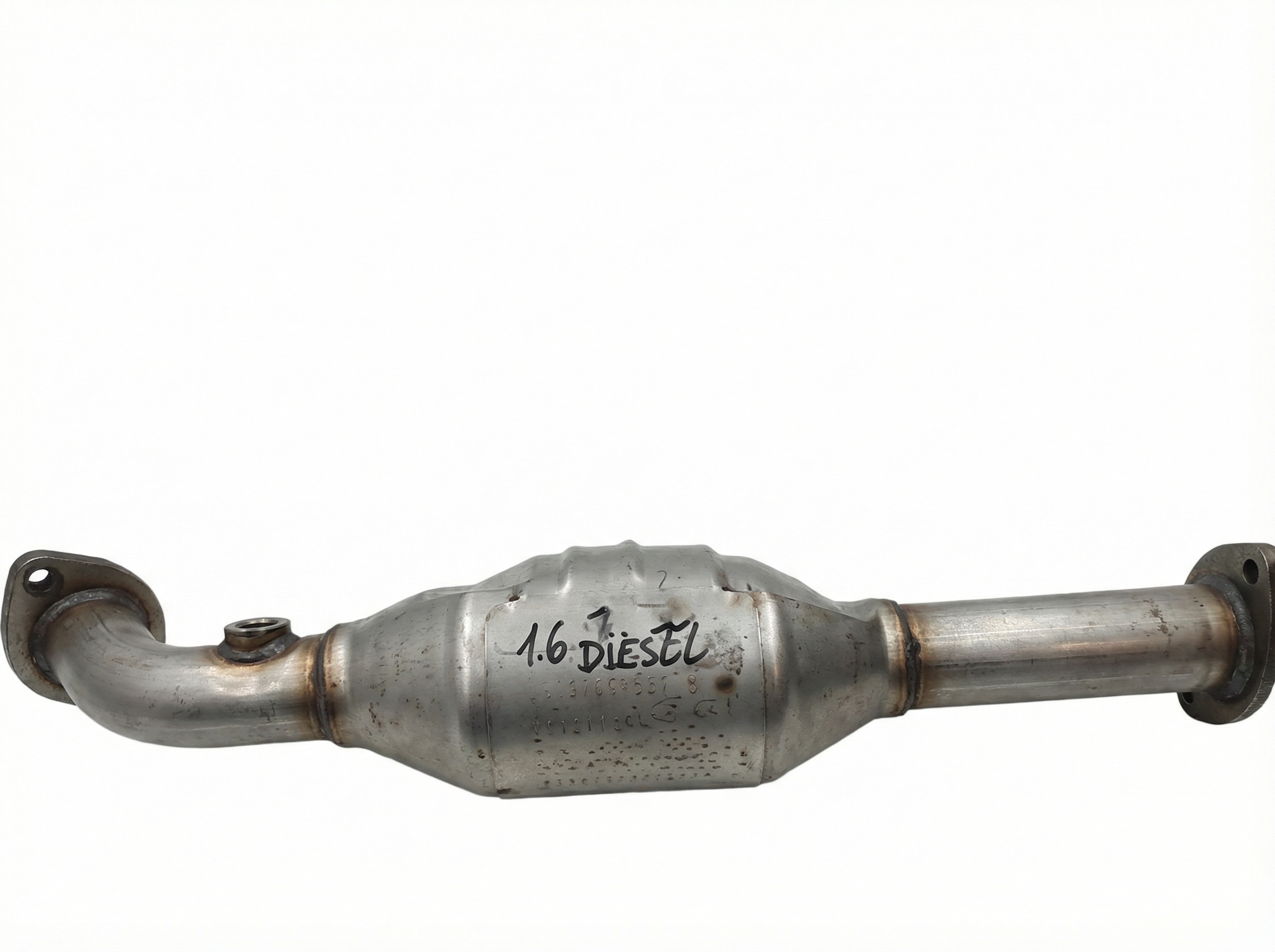
New Aftermarket Parts Available
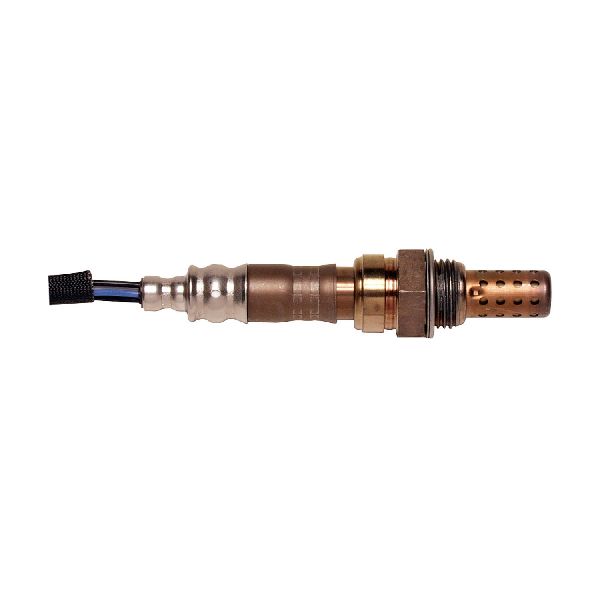

The information in this article is provided for general reference and educational purposes only. Vehicle specifications, procedures, and part compatibility can vary by production date, trim level, and region. Always consult your vehicle's factory service manual and verify part numbers before purchasing or performing repairs. Safety-critical components such as airbags, seat belts, and braking systems should be installed by a qualified professional.
- Toyota 4Runner:
- 🧭 Diagnostic Flowchart
- 🎬 Helpful Videos
- 🛍️ Shop This Part
- What's Unique About the 2003-2009 Toyota 4Runner
- Symptoms You May Notice
- Most Likely Causes
- Rare But Worth Checking
- Diagnosis Steps
- Parts You'll Likely Need
- Related Codes That Often Appear With This One
- Platform-Specific Known Issues
- Mechanic-Grade Diagnostic Values
- Hidden / Shadow Codes Worth Checking
- Scan Tool Commands That Help
- Wiring & Ground Locations
- Real Owner Repair Stories
- OEM Part Supersession History
- Model Year Variations Within This Range
- Other Known Issues on This Vehicle
- Used vs. New Parts: Buying Guide for This Vehicle
- Real Owner Stories
- 2003-2009 Toyota 4Runner 4.0L V6
- 2005 Toyota Tacoma 4.0L 1GR-FE V6 — ~150000 miles
- 2003-2009 Toyota 4Runner 4.0L V6
- Toyota Owner Complaint (NHTSA ODI #10351085)
- Related OBD-II Codes
- Frequently Asked Questions
- 🎟️ Get 5% Off