

P0430 on 2005-2015 Toyota Tacoma 4.0L V6: Causes and Fixes for Catalyst Efficiency
P0430 on a 2nd Gen Tacoma 4.0L V6 usually means the driver's side (Bank 2) catalytic converter is failing. Before replacing this expensive part, thoroughly inspect for exhaust leaks (especially at the manifold and donut gaskets) and consider replacing the downstream O2 sensor first, as it's a cheaper potential fix that many owners find successful.
- P0430 points to a problem with the driver's side (Bank 2) catalytic converter's efficiency.
- DO NOT immediately replace the catalytic converter. It's the most expensive part. First, rule out cheaper problems.
- Your first steps should be to inspect for exhaust leaks and test or replace the downstream (post-cat) O2 sensor on the driver's side.
- If you've had a recent engine misfire, it may have damaged the converter, making its failure more likely.
- Bank 1 is the passenger side; Bank 2 is the driver's side on the 4.0L V6 Tacoma.
What's Unique About the 2005-2015 Toyota Tacoma
On the 2005-2015 Tacoma with the 4.0L V6, the primary catalytic converters are integrated directly into the exhaust manifolds, making replacement more labor-intensive and costly than bolt-in underbody converters. While the converters can and do fail, owners on forums like Tacoma World frequently report success by first addressing exhaust leaks or replacing the downstream (post-catalyst) oxygen sensors. A past engine misfire, even if fixed, can cause lasting damage to the converter by dumping unburnt fuel into it, leading to a P0430 code appearing later.
Symptoms You May Notice
- Check Engine Light is on
- Failure to pass an emissions test
- Reduced engine power or sluggish acceleration (if the converter is clogged)
- Sulfur or 'rotten egg' smell from the exhaust (less common)
- A rattling noise from the exhaust if the internal honeycomb of the converter has broken apart.
- Rough idle, particularly in cold weather, can sometimes be a symptom.
- Immediately replacing the catalytic converter without checking for exhaust leaks or testing the oxygen sensors. This can be a very expensive mistake, as a much cheaper part is often the true cause.
Most Likely Causes
- Failing Catalytic Converter (Bank 2) 🔴 High Probability → Shop Catalytic Converter Catalytic converters have a finite lifespan and degrade over time. Misfires or other engine problems can accelerate this wear by sending unburnt fuel into the exhaust, overheating the converter. Aftermarket converters are often cited as being less efficient than OEM Toyota parts and may still trigger the code.
How to confirm: Use a scan tool to monitor live data from Bank 2 oxygen sensors. The downstream sensor (Sensor 2) voltage should be relatively stable (typically >0.5V). If it fluctuates rapidly like the upstream sensor (Sensor 1), the converter is not working. An infrared thermometer can also be used; the outlet of the converter should be at least 100°F hotter than the inlet after the engine is fully warmed up.
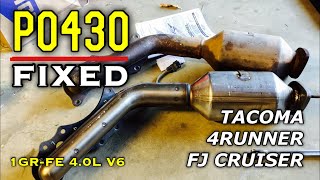
Typical fix: Replace the Bank 2 (driver's side) exhaust manifold with the integrated catalytic converter. This is a costly repair, especially if an OEM part is used, which is often necessary in states with strict emissions like California.
Est. part cost: $400-$1500 - Failing Downstream Oxygen Sensor (Bank 2, Sensor 2) 🟡 Medium Probability → Shop Oxygen Sensor Oxygen sensors wear out over time and can send inaccurate or slow-to-respond readings to the computer, falsely indicating a bad converter. Given the high cost of a converter, replacing the sensor is a common and logical first step, especially on high-mileage trucks. Many owners report this fixes the issue.
How to confirm: The best way is to swap the downstream sensors from Bank 1 and Bank 2. Clear the codes and drive the vehicle. If the code changes to P0420 (Bank 1), the sensor is confirmed faulty. If the P0430 code returns, the problem is likely the converter or an exhaust leak.
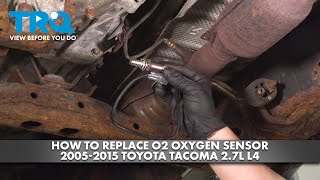
Typical fix: Replace the Bank 2, Sensor 2 (downstream) oxygen sensor. 🎬 See this video for a walkthrough on replacing the oxygen sensor. Denso is the OEM supplier and is highly recommended by forum users.
Est. part cost: $50-$150 - Exhaust System Leak 🟡 Medium Probability Gaskets on the exhaust manifold and flanges can fail over time, allowing outside oxygen to enter the exhaust stream between the upstream and downstream sensors. This extra oxygen fools the downstream O2 sensor into thinking the converter isn't working. The donut gasket at the flange after the converter is a very common failure point.
How to confirm: Visually inspect the exhaust manifold and flanges on the driver's side for black soot trails or broken studs. A smoke test is the most effective method. Another DIY method is to use a shop vacuum on its blow setting at the tailpipe and spray soapy water on all exhaust connections; bubbling will indicate a leak.
Typical fix: Replace the leaking gasket(s) (e.g., manifold gasket, donut gasket) and any broken hardware. This is a relatively inexpensive fix.
Est. part cost: $20-$60
Rare But Worth Checking
- Failing Upstream Air/Fuel Ratio Sensor (Bank 2, Sensor 1): → Shop Oxygen Sensor A faulty A/F sensor can cause an incorrect air/fuel mixture. Over time, this can damage the catalytic converter. This would typically throw its own codes, but it's a root cause worth considering if you have recurring P0430 issues.
- Engine Misfires or Fuel System Issues: Unburnt fuel from a misfiring cylinder (e.g., from a bad spark plug or ignition coil) or a leaking fuel injector can destroy a catalytic converter. You should have other codes (like P0300-P0306) if this is the case. Always fix misfires before replacing a converter.
- O2 Sensor Spacer / Anti-Fouler Trick: → Shop Oxygen Sensor Some owners install a spacer on the downstream O2 sensor to pull it out of the direct exhaust stream. This can 'trick' the sensor and clear the code, but it does not fix the underlying problem and will cause the vehicle to fail a visual emissions inspection. This is not a proper repair.
- ECM Software Issues: In some Toyota models, a re-flash of the ECM may be necessary if codes persist after hardware repairs. For instance, NHTSA ODI #10359074 notes that a technician recommended an ECM re-flash to address recurring P0420 and P0430 codes following transmission work.
Diagnosis Steps
- Check for other DTCs. If any misfire (P030x) or fuel system codes are present, diagnose and fix them first. A misfire will destroy a new converter.
- Thoroughly inspect the exhaust system on the driver's side (Bank 2) for any signs of leaks. Check for black soot at gaskets. Pay close attention to the manifold-to-head gasket and especially the donut gasket at the flange after the converter. Perform a smoke test or soapy water test to be certain. Repair any leaks found.
- Use a scan tool with live data capability. Graph the voltage of the Bank 2 upstream (A/F Sensor 1) and downstream (O2 Sensor 2) sensors.
- At a steady 2,500 RPM, the upstream sensor should show rapid fluctuations (switching rich-to-lean). The downstream sensor should show a relatively steady, high voltage (around 0.6-0.8V).
- If the downstream sensor's graph mimics the upstream sensor's rapid fluctuations, the catalytic converter has failed.
- If the downstream sensor's reading is flat, low, or slow to respond, the sensor itself may be faulty. A definitive test is to swap the left and right downstream sensors. Clear codes and drive. If the code returns as P0420 (Bank 1), you have a bad sensor. If P0430 returns, the issue is not the sensor.
- If sensors and the exhaust system check out, the catalytic converter is the most likely culprit. Note that in some instances, such as described in NHTSA ODI #10351085, a P0430 may be found in the system history alongside other electrical or sensor-related faults like an immobilizer code.
Parts You'll Likely Need
- Catalytic Converter / Exhaust Manifold Assembly (Bank 2, Driver's Side)
(OEM #17150-31250)— This is the most common, though most expensive, fix for a confirmed P0430 code where sensors and leaks have been ruled out. OEM is recommended for longevity and emissions compliance.
Trusted brands: Toyota (OEM), Walker, MagnaFlow, AP Exhaust
OEM price range: $1000-$1500
Aftermarket price range: $400-$800 - Downstream Oxygen Sensor (Bank 2, Sensor 2, Driver's Side)
(OEM #89465-04350 (Denso P/N: 234-4261))— A failing sensor can incorrectly trigger a P0430 code and is a cost-effective part to replace for diagnosis. Many owners on forums report success with this fix alone.
Trusted brands: Denso (OEM supplier), Bosch, NGK/NTK
OEM price range: $120-$180
Aftermarket price range: $50-$90 - Exhaust Manifold Gasket (Bank 2)
(OEM #17173-31010)— Required when replacing the manifold/converter assembly or if a leak is found at the cylinder head.
Trusted brands: Toyota (OEM), Fel-Pro, Mahle
OEM price range: $25-$40
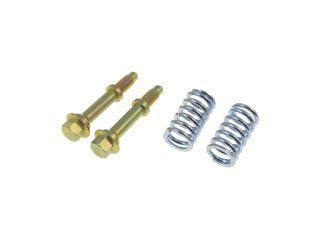
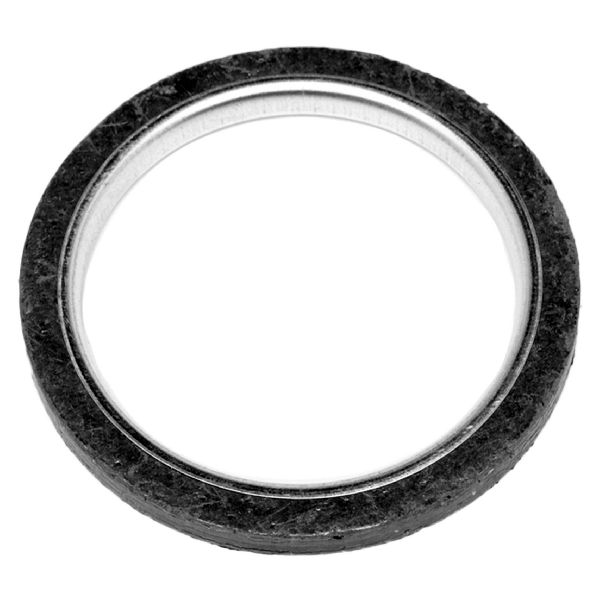
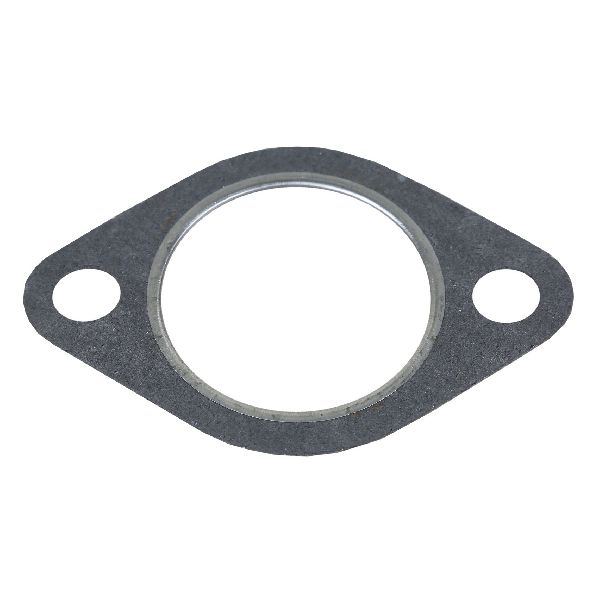
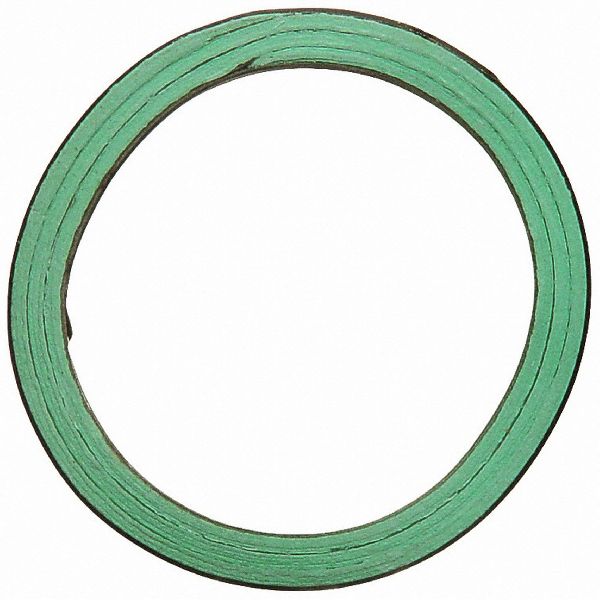
Aftermarket price range: $15-$25 - Exhaust Pipe Flange Gasket (Donut Gasket)
(OEM #90917-A6005)— This donut-style gasket is a very common leak point that can trigger a P0430. It's required when replacing the manifold/converter assembly to seal it to the rest of the exhaust system.
Trusted brands: Toyota (OEM), Walker, Bosal
OEM price range: $20-$35
Aftermarket price range: $10-$20
Related Codes That Often Appear With This One
- P0420 — If both P0420 (Bank 1) and P0430 (Bank 2) appear together, it could indicate that both catalytic converters are failing due to age, or there's a common issue like contaminated fuel or a systemic engine problem affecting both banks. It could also point to both downstream O2 sensors failing.
- P0302, P0304, P0306 — These are misfire codes for the cylinders on Bank 2 (driver's side). An active or recent misfire on this bank can quickly damage the catalytic converter by sending raw fuel into it, leading to the P0430 code.
Technical Service Bulletins (TSBs) & Recalls
- While no specific TSB is universally cited for P0430 on this model, Toyota has issued TSBs for related issues. For example, T-TT-0686-22 for newer models highlights how small, hard-to-find exhaust leaks are a common cause of catalyst efficiency codes, a principle that also applies to the 2nd Gen Tacoma.
Platform-Specific Known Issues
- Owner Experience: O2 Sensor Replacement Success: → Shop Oxygen Sensor A user on TacomaWorld with a 2006 4.0L at 394k miles reported getting a P0430 code. As a first step, they replaced both downstream O2 sensors with Denso parts. After replacement, the P0430 code did not return, suggesting the aged sensors were the cause, not the catalytic converter.
Mechanic-Grade Diagnostic Values
- Upstream Air/Fuel (A/F) Sensor Heater Resistance — expected: 0.8 - 1.4 Ω at 20°C (68°F). Failure: A reading of 'OL' (Open Loop/infinite resistance) or a value significantly outside the specified range indicates a failed internal heater. This test is performed on the sensor itself between the two same-colored wires.
- Short Term and Long Term Fuel Trims (STFT/LTFT) — expected: Within +/- 10% at idle and steady cruise.. Failure: Consistently high positive fuel trims (>10%) on one bank can indicate an unmetered air leak, such as an exhaust leak upstream of the A/F sensor, which can contribute to a P0430 code.
Scan Tool Commands That Help
- Toyota Techstream: Active Test: Control the Injection Volume for A/F Sensor — This function allows a technician to manually make the fuel mixture rich or lean. While graphing all four O2/AF sensors, a technician can observe the response time. On a healthy converter, the downstream O2 sensor's voltage (B2S2) should react with a noticeable delay after the upstream A/F sensor (B2S1) sees the change. If the downstream sensor reacts almost instantly, it confirms the catalytic converter has lost its oxygen storage capacity and is no longer functioning.
Wiring & Ground Locations
- Bank 2, Sensor 2 Connector — On the driver's side, the wiring for the downstream O2 sensor runs up along the frame. The connector is typically located up high, requiring you to follow the wire from the sensor to find its connection point to the main harness.. The connector and its wiring are exposed to road debris and heat. A damaged connector or chafed wire can cause erratic signals, mimicking a failed sensor or converter. A visual inspection of the harness from the sensor to the connector is a critical step.
Real Owner Repair Stories
- TacomaWorld forum user 'qnyla' (2006 Toyota Tacoma 4.0L V6 with 394,000 miles) — P0430 code occurring with increasing frequency, especially in humid or rainy weather.
❌ Tried (didn't work) Initially just reset the code, but it kept returning.
✅ What actually fixed it Replaced both downstream oxygen sensors (Bank 1 and Bank 2) with new Denso sensors (P/N 234-4261 for the driver's side). The user decided to do this as a first, cost-effective step before replacing the more expensive A/F sensors or the catalytic converter. The P0430 code did not return after the replacement. - TacomaWorld forum user 'Abomboboi' (2005 Toyota Tacoma with 230,000 miles) — Persistent P0420 and P0430 codes appearing together.
❌ Tried (didn't work) Cleaned MAF sensor and throttle body., Replaced all four O2/AF sensors with new Denso parts., Removed and cleaned all four catalytic converters.
✅ What actually fixed it The user eventually found a post suggesting an exhaust leak. Another user confirmed their identical codes were fixed by replacing a bad gasket on the flange right before the downstream O2 sensor. - NHTSA ODI #10850705 — An owner reported that immediately after receiving their truck back from service, the check engine light illuminated with codes P0420 and P0430, indicating a catalytic converter issue that was not present when the vehicle was initially taken in.
OEM Part Supersession History
17150-31070→17150-31250— Standard part revision by the manufacturer.
Heads up: These parts are interchangeable for the specified application (Bank 2 manifold/converter).
Model Year Variations Within This Range
- 2012-2015 (approx.): Later models of the 2nd Gen Tacoma (approximately 2012+) with the 1GR-FE engine incorporated a secondary air injection system. While this doesn't directly cause the P0430 code, the cylinder heads and exhaust manifolds are different to accommodate this system. When swapping engines or manifolds between early (non-SAIS) and late (SAIS) models, block-off plates must be used on the manifolds if putting a later engine into an earlier truck.
Diagnostic Flowchart
Other Known Issues on This Vehicle
Issues unrelated to this code that are worth knowing about as an owner of this generation:
- Frame Rust/Corrosion 🔴 High — Very common, especially in the 'Salt Belt'. Led to a Warranty Enhancement Program (ZH6) and class-action lawsuit. Frames could rust to the point of perforation. (Ref: Warranty Enhancement Program ZH6 covered 2005-2010 models for frame inspection and potential replacement.)
- Rear Leaf Spring Failure 🔴 High — Common enough to trigger a major safety recall (NHTSA #14V604000). Springs could fracture from stress and corrosion. (Ref: Safety Recall for 2005-2011 models. A broken leaf could shift and potentially puncture the fuel tank.)
- Secondary Air Injection System Failure 🟠 Medium — Primarily affects 2012 models, but can occur on 2013-2015. The foam filter for the air pump disintegrates, destroying the pump and/or causing valves to stick, putting the truck in 'limp mode'. (Ref: Special Service Campaign (20TC01) was issued for 2012 models to inspect and repair the system.)
- Head Gasket Failure (Early Models) 🟠 Medium — More prevalent on early 1GR-FE engines, particularly 2005-2006 models, often around cylinder 6. Less common on later years after a revised gasket design was introduced. (Ref: No recall, but a widely discussed issue. An updated gasket part number was released by Toyota.)
Used vs. New Parts: Buying Guide for This Vehicle
When a used part is the smart pick: For this repair, sourcing a used OEM catalytic converter/manifold assembly from a reputable auto recycler can be a viable option, especially considering the high cost of a new OEM part and the reported short lifespan of some aftermarket units. It is generally not recommended for oxygen sensors, as they are wear items with a finite life.
Donor-vehicle mileage cap: roughly under 80000 miles for the part to have meaningful remaining life.
What to inspect on the donor part:
- Ask for the VIN of the donor vehicle to verify its mileage and ensure it's from a state without heavy road salt usage to minimize rust.
- Visually inspect the converter body for any signs of dents, heavy rust, or previous repairs.
- Look inside the converter with a flashlight. The honeycomb structure should be intact, with no signs of melting, clogging, or pieces broken loose.
- Ensure all mounting studs are present and not broken off in the flanges.
OEM-only on this vehicle (don't cheap out):
- Catalytic Converter: Many mechanics and forum users strongly recommend using an OEM (Toyota) catalytic converter. Aftermarket converters, especially budget options, have a high failure rate and may not contain enough precious metals to satisfy the ECM's efficiency monitoring, leading to the P0430 code returning within a year.
- Air/Fuel Ratio and Oxygen Sensors: Denso is the original equipment manufacturer for Toyota. Using Denso-branded sensors is highly recommended as they are identical to the parts from a Toyota dealer but often cost less. Other brands can have different resistance values or response times that the Toyota ECM may not tolerate.
Aftermarket brands forum-validated for this vehicle:
- MagnaFlow: Often cited as the best aftermarket option if OEM is not feasible. They offer direct-fit units, but ensure it is a CARB-compliant version if required by your state, as those have a higher precious metal load.
- Walker: A well-known exhaust brand that offers direct-fit and universal options. Generally considered a decent budget-friendly choice, but may not have the same longevity as OEM or MagnaFlow.
Brands owners have reported issues with on this vehicle:
- Unbranded or generic 'eBay/Amazon' converters: These are almost universally reported to fail quickly, sometimes within months. They often lack the necessary catalyst materials to perform the chemical conversion effectively, making them a waste of money and labor.
Real Owner Stories
Aggregated from forums and TSBs cited above. Mileages and costs reflect what owners reported in those sources.
2006 Toyota Tacoma 4.0L V6 — 394000 miles
Symptoms: Check Engine Light with code P0430.
What fixed it: Replaced both downstream O2 sensors with Denso parts.
Source hint: TacomaWorld thread 'P0430 Code: Catalyst System Efficiency Below Threshold (Bank 2)'
2005-2015 Toyota Tacoma 4.0L V6
Symptoms: P0430 code and check engine light.
What fixed it: Identified and repaired an exhaust leak at the donut gasket using a shop vacuum and soapy water test.
Source hint: Tacoma World thread 'How did YOU fix your p0420 & p0430 codes'
2005-2015 Toyota Tacoma 4.0L V6
Symptoms: Check engine light (P0430) following engine performance issues.
What fixed it: The owner confirmed a misfire directly led to the catalytic converter failure.
Source hint: Reddit r/ToyotaTacoma thread 'P0430 & check engine light, advice?'
Related OBD-II Codes
Frequently Asked Questions
Which oxygen sensor should I replace first for a P0430 code on my 4.0L Tacoma?
Is there a specific gasket known to cause P0430 on the 2nd Gen Tacoma?
Can I use an aftermarket catalytic converter to fix this code?
How can I tell if the P0430 code is a bad sensor or a bad converter without buying parts?
Does Toyota have a TSB for exhaust leaks causing catalyst codes like P0430?
Could a misfire on my 1GR-FE engine cause the P0430 code?
Helpful Videos
Used OEM Parts in Stock
New Aftermarket Parts Available


The information in this article is provided for general reference and educational purposes only. Vehicle specifications, procedures, and part compatibility can vary by production date, trim level, and region. Always consult your vehicle's factory service manual and verify part numbers before purchasing or performing repairs. Safety-critical components such as airbags, seat belts, and braking systems should be installed by a qualified professional.
- Toyota Tacoma:
- 🧭 Diagnostic Flowchart
- 🎬 Helpful Videos
- 🛍️ Shop This Part
- What's Unique About the 2005-2015 Toyota Tacoma
- Symptoms You May Notice
- Most Likely Causes
- Rare But Worth Checking
- Diagnosis Steps
- Parts You'll Likely Need
- Related Codes That Often Appear With This One
- Technical Service Bulletins (TSBs) & Recalls
- Platform-Specific Known Issues
- Mechanic-Grade Diagnostic Values
- Scan Tool Commands That Help
- Wiring & Ground Locations
- Real Owner Repair Stories
- OEM Part Supersession History
- Model Year Variations Within This Range
- Other Known Issues on This Vehicle
- Used vs. New Parts: Buying Guide for This Vehicle
- Real Owner Stories
- 2006 Toyota Tacoma 4.0L V6 — 394000 miles
- 2005-2015 Toyota Tacoma 4.0L V6
- 2005-2015 Toyota Tacoma 4.0L V6
- Related OBD-II Codes
- Frequently Asked Questions
- 🎟️ Get 5% Off