

P0430 on 2015-2018 Volkswagen Jetta: Catalyst 'Bank 2' Causes and Fixes
On 2015-2018 Jettas with the 1.8T or 2.0T engine, P0430 almost always points to a failing catalytic converter. However, before spending over $1,500 on a new converter, it is crucial to rule out cheaper causes like faulty oxygen sensors (around $70-$150 each) or exhaust leaks. In some cases, an ECM software update may be required.
- P0430 on a 2015-2018 Jetta refers to the efficiency of the main catalytic converter, which the system designates as 'Bank 2'.
- This code is most common on the 1.8T and 2.0T EA888 engines and is a known issue documented by VW.
- Always diagnose and rule out cheaper fixes like exhaust leaks and faulty oxygen sensors before replacing the expensive catalytic converter.
- Address any engine misfire or fuel system codes immediately, as they are often the root cause of catalytic converter failure.
What's Unique About the 2015-2018 Volkswagen JETTA
The main point of confusion for this code on a Jetta is the term "Bank 2," as its inline-four engines technically only have one cylinder bank. However, the 1.8T and 2.0T EA888 engines feature a complex exhaust system with a preliminary warm-up catalyst integrated into the downpipe near the turbo and a main, under-car converter further downstream. The vehicle's computer monitors these stages separately. P0420 typically refers to the primary catalyst (Bank 1), while P0430 can be triggered for the secondary, under-car catalyst (designated as Bank 2). 🎬 Watch: P0430 code causes and symptoms explained Volkswagen has issued Technical Service Bulletins (TSBs) that acknowledge the occurrence of P0420 and/or P0430 on these engines, sometimes recommending an ECM software update in conjunction with converter replacement.
Diagnostic Flowchart
Tap your situation to follow the diagnostic path that matches what you're seeing on this vehicle.
Symptoms You May Notice
- Check Engine Light is on
- Vehicle may fail an emissions test
- Reduced engine performance or acceleration
- Slight decrease in fuel economy
- A sulfur or "rotten egg" smell from the exhaust
- Engine may feel sluggish or bog down on acceleration if the converter is clogged.
- Immediately replacing the catalytic converter without testing the oxygen sensors or checking for exhaust leaks. The sensors are much cheaper and a common point of failure.
- Replacing the O2 sensor and ignoring the P0430 code when it returns. A recurring code after sensor replacement strongly points to a bad catalytic converter.
Most Likely Causes
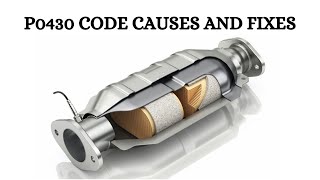
- Failing Catalytic Converter 🔴 High Probability → Shop Catalytic Converter Catalytic converters have a finite lifespan and can be damaged by other engine issues like misfires or burning oil. The TSB for the 1.8T/2.0T engines suggests a known pattern of this issue, sometimes requiring both a new converter and an ECM software update.
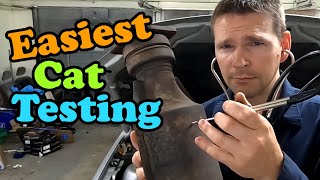
How to confirm: A mechanic can perform a temperature test (checking inlet vs. outlet temps with an infrared thermometer) or view O2 sensor data on a scan tool. A properly functioning converter will have a significantly higher outlet temperature. If the outlet is cooler or the same temperature, the converter is not working. 🎬 See how to test a catalytic converter like a pro
Typical fix: Replace the catalytic converter assembly. An ECM software update may also be required per TSB 01-20-01.
Est. part cost: $1200-$2000 - Faulty Downstream Oxygen (O2) Sensor 🟡 Medium Probability → Shop Oxygen Sensor O2 sensors are exposed to extreme heat and can degrade over time, sending inaccurate readings to the computer. While often replaced, they are less likely to be the root cause than the converter itself if P0430 is the only code present.
How to confirm: Use a scan tool to graph the voltage of the downstream O2 sensor (Bank 2, Sensor 2). A healthy sensor after warm-up should show a relatively steady voltage. If it's switching rapidly like the upstream sensor, the converter has likely failed. If the voltage is stuck high, low, or is unresponsive, the sensor itself is the likely culprit. 🎬 Watch: How to test your converter using a scan tool
Typical fix: Replace the downstream (post-catalyst) oxygen sensor.
Est. part cost: $70-$150 - Exhaust Leak 🟡 Medium Probability Gaskets and flex pipes can fail over time due to heat cycles and corrosion, allowing oxygen to enter the exhaust stream before the O2 sensors, skewing the readings. Common leak points include the turbo downpipe flange and flex pipe section.
How to confirm: Visually inspect the exhaust system from the engine to the tailpipe for black soot marks, cracks, or holes. A smoke test is the most effective way to pinpoint small leaks that aren't visually obvious.
Typical fix: Replace the leaking gasket, repair the pipe, or tighten loose connections.
Est. part cost: $20-$200 - Engine Misfires or Rich/Lean Fuel Mixture ⚪ Low Probability Issues like failing ignition coils, spark plugs, or fuel injectors can send unburned fuel into the exhaust, which overheats and damages the catalytic converter over time. The EA888 engine is known for potential ignition coil failures.
How to confirm: Check for other trouble codes related to misfires (P0300-P0304) or fuel trim (P0171, P0172). Address these codes first, as they are the root cause.
Typical fix: Repair the root cause of the misfire or fuel mixture issue (e.g., replace spark plugs, ignition coils, or fuel injectors).
Est. part cost: $50-$500
Rare But Worth Checking
- Outdated Engine Control Module (ECM) Software: → Shop Engine Control Module (ECM)
Diagnosis Steps
- Scan for all codes. If other codes are present (especially for misfires, fuel trim, or O2 sensor circuits), diagnose and fix them first.
- Check for applicable TSBs. A dealer or shop with access to VW service bulletins should check if an ECM software update is available, such as TSB 01-20-01.
- Inspect the exhaust system visually and audibly for any leaks, especially between the engine and the downstream O2 sensor. Pay close attention to gaskets and flex pipes. A smoke test is recommended for accuracy.
- Use a scan tool to observe the live data from the upstream and downstream oxygen sensors once the engine is fully warmed up.
- The upstream sensor's voltage should fluctuate rapidly between approximately 0.1V and 0.9V. The downstream sensor's voltage should be relatively stable and steady, typically above 0.5V.
- If the downstream sensor's voltage is mirroring the upstream sensor's rapid fluctuations, the catalytic converter is likely not working.
- If the downstream sensor's voltage is flatlined (e.g., at 0V or 1V) or very slow to respond, the sensor itself may be faulty.
- If no exhaust leaks or sensor issues are found, and the ECM software is up to date, the catalytic converter is the most likely culprit.
Parts You'll Likely Need
- Catalytic Converter (Downpipe Assembly)
(OEM #5Q0254501TX (or 3QF254500MX as per TSB))— This is the most common direct cause for the P0430 code when other components have been ruled out. For the EA888, this is often the downpipe assembly which includes the primary catalyst.
Trusted brands: Volkswagen (OEM), Bosal, Walker Exhaust, MagnaFlow
OEM price range: $1500-$2200
Aftermarket price range: $500-$1200 - Downstream Oxygen Sensor
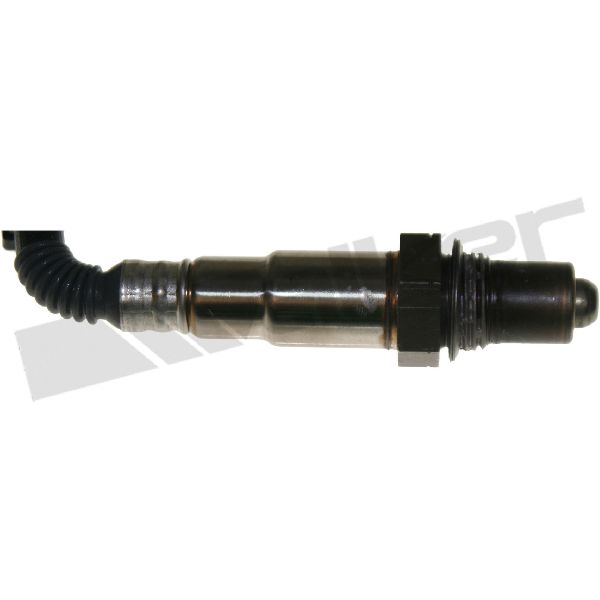
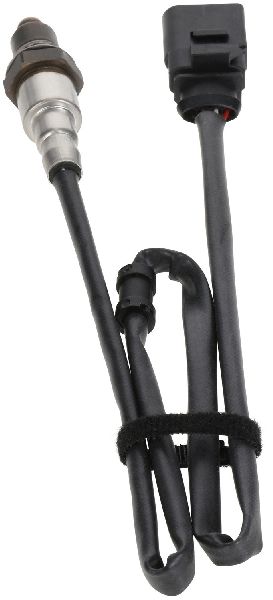
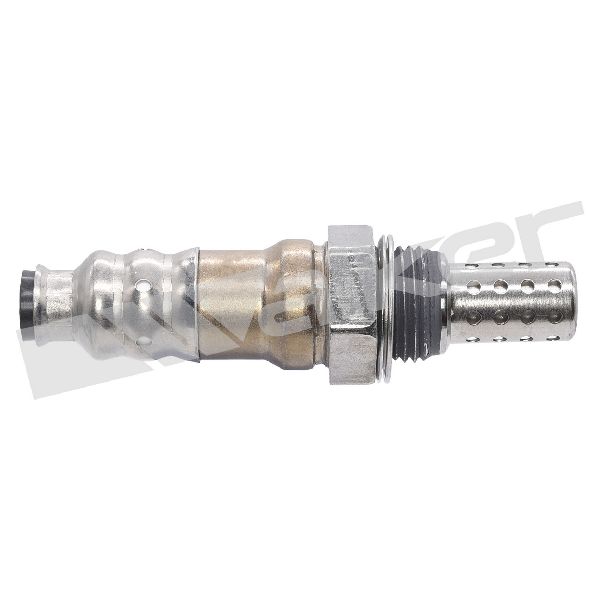
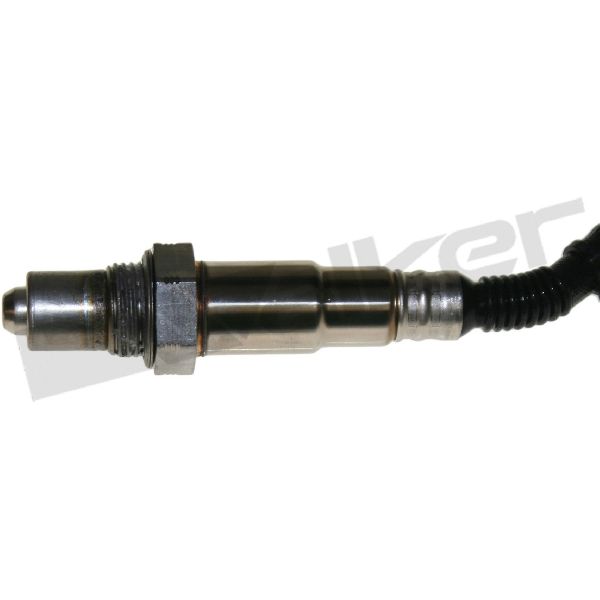
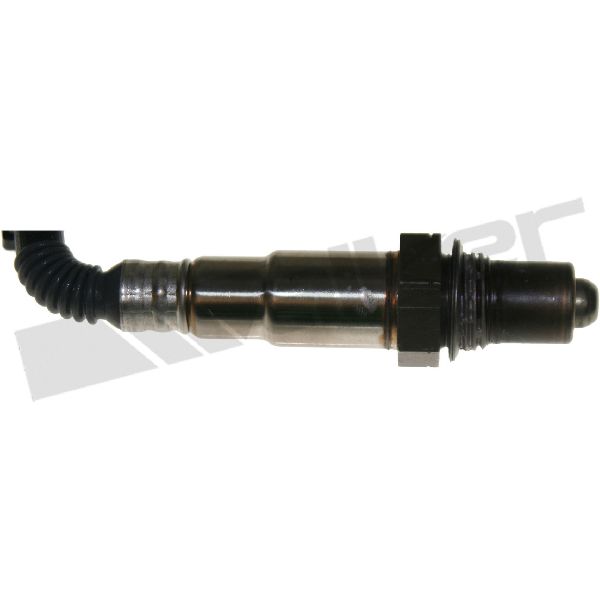
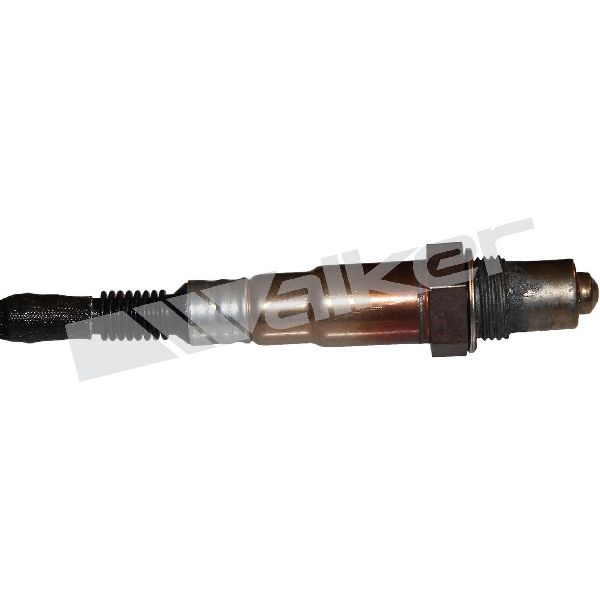
(OEM #1K0998262T (or Bosch 16002))— A faulty sensor can send incorrect data, falsely triggering the P0430 code. It's a critical diagnostic step and a common point of failure.
Trusted brands: Bosch, Denso, NGK/NTK
OEM price range: $150-$250
Aftermarket price range: $70-$150
Related Codes That Often Appear With This One
- P0420 — This is the equivalent code for 'Catalyst System Efficiency Below Threshold (Bank 1)'. On Jettas with the dual-stage catalyst system, P0420 may refer to the primary catalyst while P0430 refers to the secondary. It's common for both to appear if there's a systemic issue.
- P0138 — This code indicates 'O2 Sensor Circuit High Voltage (Bank 1, Sensor 2)', pointing directly to a potential issue with the downstream oxygen sensor that is used to monitor the catalyst.
- P0300-P0304 — These are misfire codes. An engine misfire can cause unburnt fuel to enter the exhaust and damage the catalytic converter, leading to a P0430 code over time.
Technical Service Bulletins (TSBs) & Recalls
- TSB 01-20-01 (NHTSA ID: 10174275): 'Catalyst Replacement with Updated Programming DTCs P0420 or P0430'. This TSB is critical, as it indicates a software update is necessary along with the hardware replacement to provide a permanent fix.
- Bulletin #VIN-4-A-PIN Sept (2017 EQUIPMENT, dated 2017-09-07): 'MIL-on P0420 and/or P0430 in the ECM, MIL-on P0463 and B103E1B stored'
Platform-Specific Known Issues
- A Volkswagen Technical Service Bulletin (TSB 01-20-01 / 2058261) exists for vehicles exhibiting P0420 or P0430, which advises replacing the catalytic converter AND performing an ECM software update to prevent recurrence.
- Owners on forums frequently discuss using an 'O2 sensor spacer' or 'non-fouler' to pull the downstream sensor out of the direct exhaust stream. While this can sometimes extinguish the check engine light, it does not fix the underlying problem of a failing catalyst and will cause the car to fail a visual emissions inspection.
Mechanic-Grade Diagnostic Values
- Downstream O2 Sensor (Post-Catalyst) Voltage at Idle — expected: Relatively stable voltage, typically around 0.45V to 0.6V.. Failure: Voltage is consistently bouncing between 0.1V and 0.9V, mimicking the upstream sensor. This indicates the catalyst is not storing oxygen.
- Upstream O2 Sensor (Pre-Catalyst) Voltage — expected: Rapidly fluctuating between approximately 0.1V and 0.9V as the ECU adjusts the air-fuel mixture.. Failure: Voltage is stuck, slow to respond, or does not fluctuate. A stuck lean (low voltage) or rich (high voltage) reading points to a sensor or fuel mixture problem, not necessarily the catalyst.
- Upstream Wideband Air/Fuel Sensor (if equipped) — expected: On EA888 engines using a wideband front sensor, voltage will read steady around 1.5V. Technicians should monitor the Lambda value, which should oscillate around 1.0.. Failure: Lambda value is consistently rich (less than 1.0) or lean (greater than 1.0) at idle, or voltage deviates significantly from 1.5V.
Hidden / Shadow Codes Worth Checking
- 16814: This is the Ross-Tech VCDS equivalent fault code for P0430, 'Catalyst System; Bank 2: Efficiency Below Threshold'. (see via Using VW/Audi specific diagnostic software like VCDS by Ross-Tech or ODIS (dealer tool).)
Scan Tool Commands That Help
- VCDS (Ross-Tech): Basic Settings, Group 046 - Catalyst Aging — After replacing a catalytic converter, this function can be run to perform a test cycle and help the ECU adapt to the new converter and set readiness monitors more quickly. It's also a diagnostic step to confirm if the new converter is functioning correctly.
- VCDS (Ross-Tech): Read Measuring Value Blocks (MVB) for O2 Sensors — Essential for diagnosis. Technicians will view blocks for Group 032 (Lambda values), Group 033 (O2 Sensor Voltage Bank 1 Sensor 2), and Group 036 (Catalyst Temperature) to compare pre- and post-catalyst readings and temperatures to verify catalyst operation.
Wiring & Ground Locations
- Main Engine Ground Strap — There are several key ground points. A primary one is located on the chassis frame rail, often near the battery or under the battery tray. Another critical ground strap connects the engine block/transmission to the chassis.. A poor engine ground can cause erratic voltage signals from all engine sensors, including the oxygen sensors. The ECU relies on a stable ground reference for accurate readings. If O2 sensor readings are noisy or illogical, checking and cleaning the main ground connections is a crucial, often overlooked, step before replacing parts.
- O2 Sensor Connectors — The electrical connectors for both upstream and downstream O2 sensors are often housed in a black plastic box secured to the vehicle's underbody, on the passenger side, near the catalytic converter.. Water intrusion or physical damage to this connector box can cause corrosion on the pins for the downstream O2 sensor, leading to incorrect readings and a false P0430 code. Wiggling the connector while watching live data can help identify a poor connection.
Real Owner Repair Stories
- Reddit user comment in r/Volkswagen (2013 Tiguan with EA888 engine) — Check Engine Light, rough running, oil leaks.
❌ Tried (didn't work) Replacing the PCV valve with an aftermarket part made the engine run worse and caused flashing CEL with misfire codes.
✅ What actually fixed it The technician suspected the aftermarket PCV valve's internal spring pressure was incorrect for the application. Using a reputable OE or OEM-equivalent brand (like Hengst) for the PCV valve is critical, as many aftermarket versions will bolt on but are internally different, causing vacuum leaks or improper crankcase pressure regulation.
Model Year Variations Within This Range
- 2015-2018: The EA888 Gen 3 engine used in the 2015-2018 Jetta is a 1.8T variant. While it shares its core architecture with the 2.0T found in the GTI of the same era, it has a different crankshaft and exhaust camshaft. However, key systems related to P0430, such as the integrated exhaust manifold in the cylinder head, direct injection, and PCV system, are conceptually the same. This means diagnostic procedures and common failures like PCV issues are highly similar across both 1.8T and 2.0T Gen 3 engines.
Helpful Videos
We Have This Part in Stock

The information in this article is provided for general reference and educational purposes only. Vehicle specifications, procedures, and part compatibility can vary by production date, trim level, and region. Always consult your vehicle's factory service manual and verify part numbers before purchasing or performing repairs. Safety-critical components such as airbags, seat belts, and braking systems should be installed by a qualified professional.
- Volkswagen JETTA:
- 🧭 Diagnostic Flowchart
- 🎬 Helpful Videos
- 🛍️ Shop This Part
- What's Unique About the 2015-2018 Volkswagen JETTA
- Symptoms You May Notice
- Most Likely Causes
- Rare But Worth Checking
- Diagnosis Steps
- Parts You'll Likely Need
- Related Codes That Often Appear With This One
- Technical Service Bulletins (TSBs) & Recalls
- Platform-Specific Known Issues
- Mechanic-Grade Diagnostic Values
- Hidden / Shadow Codes Worth Checking
- Scan Tool Commands That Help
- Wiring & Ground Locations
- Real Owner Repair Stories
- Model Year Variations Within This Range
- 🎟️ Get 5% Off