

P0440 on 2011-2018 Audi A6: EVAP System Malfunction Causes and Fixes
P0440 on a 2011-2018 Audi A6 indicates a general fault in the evaporative emissions (EVAP) system. The most common causes are a loose gas cap or a faulty N80 purge valve. Check the gas cap first, but expect the N80 valve to be the likely culprit, costing around $20-$50 for a DIY replacement. This is a very common and easy DIY fix that can save hundreds over a shop visit.
- P0440 is an emissions-related code that will not stop you from driving but will cause you to fail an emissions test.
- Always start with the simplest fix: check that your gas cap is tight and its seal is intact.
- The most likely part to have failed is the N80 EVAP purge valve, which is a common and relatively inexpensive DIY replacement.
- If simple fixes don't work, a smoke test is the most reliable way to find the source of the leak before replacing more expensive parts like the charcoal canister.
What's Unique About the 2011-2018 Audi A6
For the Audi A6 C7 generation (2011-2018), the P0440 code is frequently linked to the failure of specific, well-known components. While it's a generic code, the diagnostic path for this platform is fairly established among enthusiasts and mechanics. The N80 purge valve is a particularly common point of failure across many Volkswagen and Audi models of this era, not just the A6. Additionally, for 2016-2018 models with the 3.0L engine, a Technical Service Bulletin (TSB 20-22-41 / 2050276/7) addresses issues where water intrusion into the EVAP system, particularly the Leak Detection Pump (LDP), can cause this code and others, especially in cold weather.
Symptoms You May Notice
- Check Engine Light is on.
- A faint smell of fuel, especially around the gas tank area or under the hood.
- Difficulty refueling (the gas pump nozzle clicks off prematurely).
- Failing a vehicle emissions test.
- Hard starting after refueling.
- Rough idle or stumbling, as a stuck-open purge valve can create a vacuum leak.
- Replacing the charcoal canister before performing a smoke test. The canister is expensive and less likely to fail than the purge valve or a simple hose.
- Replacing parts without checking for relevant TSBs. For example, TSB 2027732/6 for 2019+ models (and potentially relevant to C7) notes that a P0456 code can be fixed with a software update, not a part replacement.
Most Likely Causes
- Loose or Faulty Gas Cap 🔴 High Probability → Shop Fuel Tank Cap This is the most common cause for any vehicle with an EVAP code. The cap's seal can degrade over time, become cracked, or it may simply not have been tightened correctly after refueling, preventing the system from holding pressure.
How to confirm: Ensure the gas cap clicks at least once when tightened. Inspect the rubber O-ring on the cap for cracks, stiffness, or damage. Check the fuel filler neck for rust or debris that could prevent a good seal.
Typical fix: Tighten the cap. If the light returns or the seal is damaged, replace the gas cap with an OEM or high-quality aftermarket part. A cheap, poorly designed aftermarket cap can also cause this code.
Est. part cost: $15-$50 - Faulty EVAP Purge Valve (N80 Valve) 🔴 High Probability → Shop Vapor Canister The N80 valve is a known common failure item on many VW/Audi platforms from this period. It can get stuck open or closed, causing a system malfunction. A stuck-open valve is a common cause for an associated P0441 code.
How to confirm: With the engine running, you can sometimes hear a rapid clicking from the valve, which is normal. If it's silent, it may have failed. A more definitive test involves applying vacuum to see if it holds when de-energized or using a scan tool (like VCDS) to perform an output test. You can also remove the valve and try to blow through it; if air passes, it's stuck open and faulty.
Typical fix: Replacement of the N80 valve. It is typically located in the engine bay on top of the intake manifold and is relatively easy to access and replace in under 30 minutes.
Est. part cost: $20-$60 - Cracked or Disconnected EVAP Hoses 🟡 Medium Probability Over time, the plastic and rubber hoses in the engine bay and under the car can become brittle from heat and age, leading to cracks and leaks. Rodent damage is also a possibility.
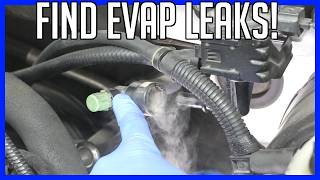
How to confirm: A visual inspection may reveal obvious cracks or disconnections. The most effective method is a smoke test, which forces smoke into the EVAP system to reveal the exact location of any leaks.
Typical fix: Replace the damaged section of hose. In some cases, the entire hose assembly may need to be replaced.
Est. part cost: $10-$100 - Faulty Leak Detection Pump (LDP) or NVLD Switch ⚪ Low Probability → Shop Evaporative Emissions System Leak Detection Pump The LDP is located behind the rear passenger-side wheel liner, exposing it to road debris and moisture, which can lead to failure. TSB 2050276/7 specifically notes that water can enter the system through the tank ventilation system and freeze in the LDP (J909 switch), causing faults.
How to confirm: Diagnosis often requires a scan tool (like VCDS) to run a system test. A mechanic may also test the pump's wiring and function directly. A failure of the LDP can sometimes be accompanied by other codes like P0451, P0441, or P0453.
Typical fix: Replace the Leak Detection Pump. The TSB may involve relocating the LDP filter to the engine bay to prevent future water intrusion.
Est. part cost: $100-$250
Rare But Worth Checking
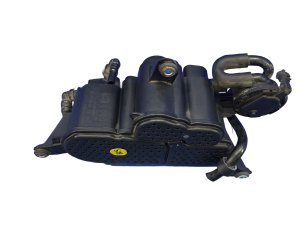
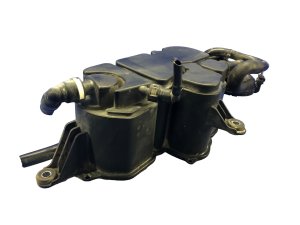
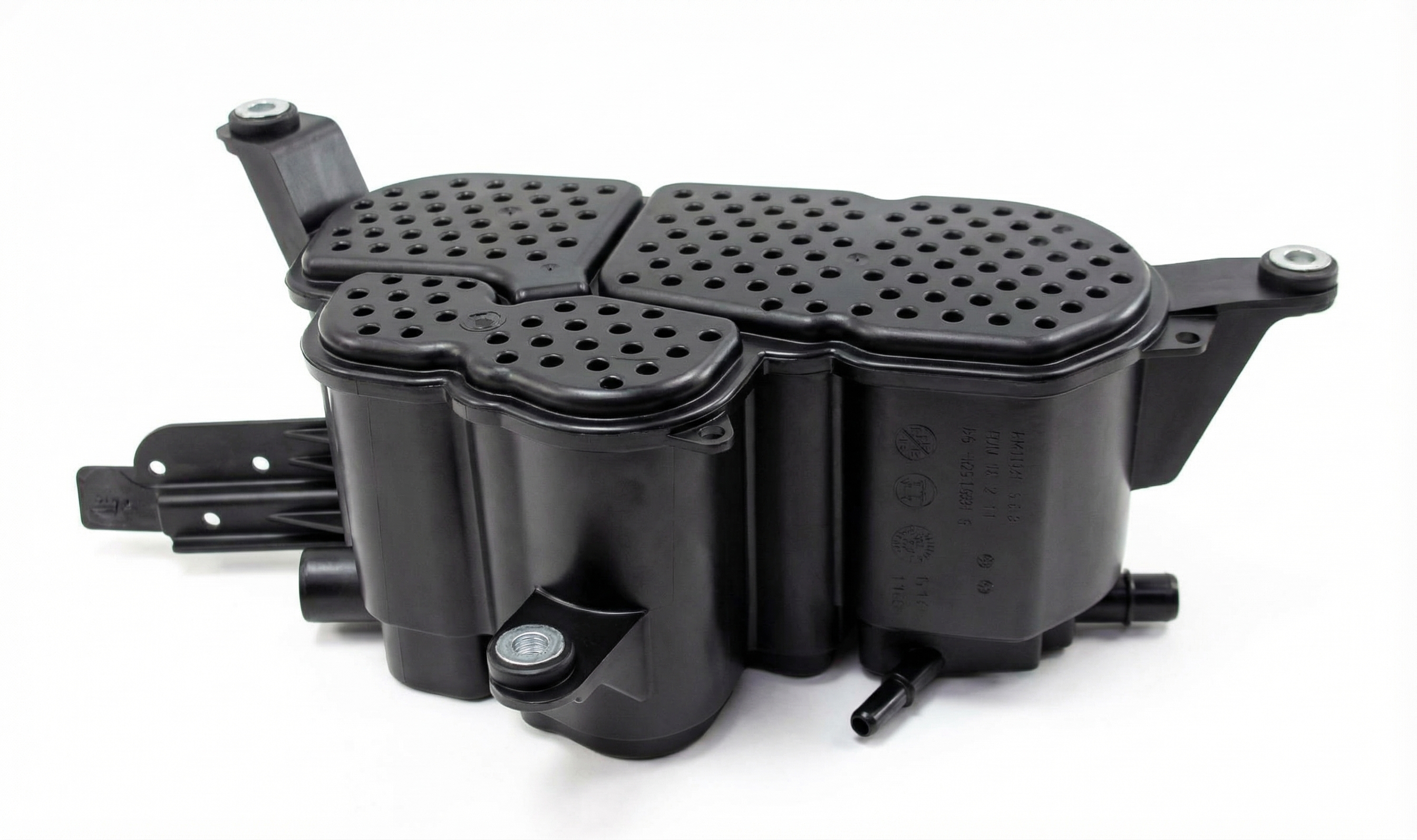
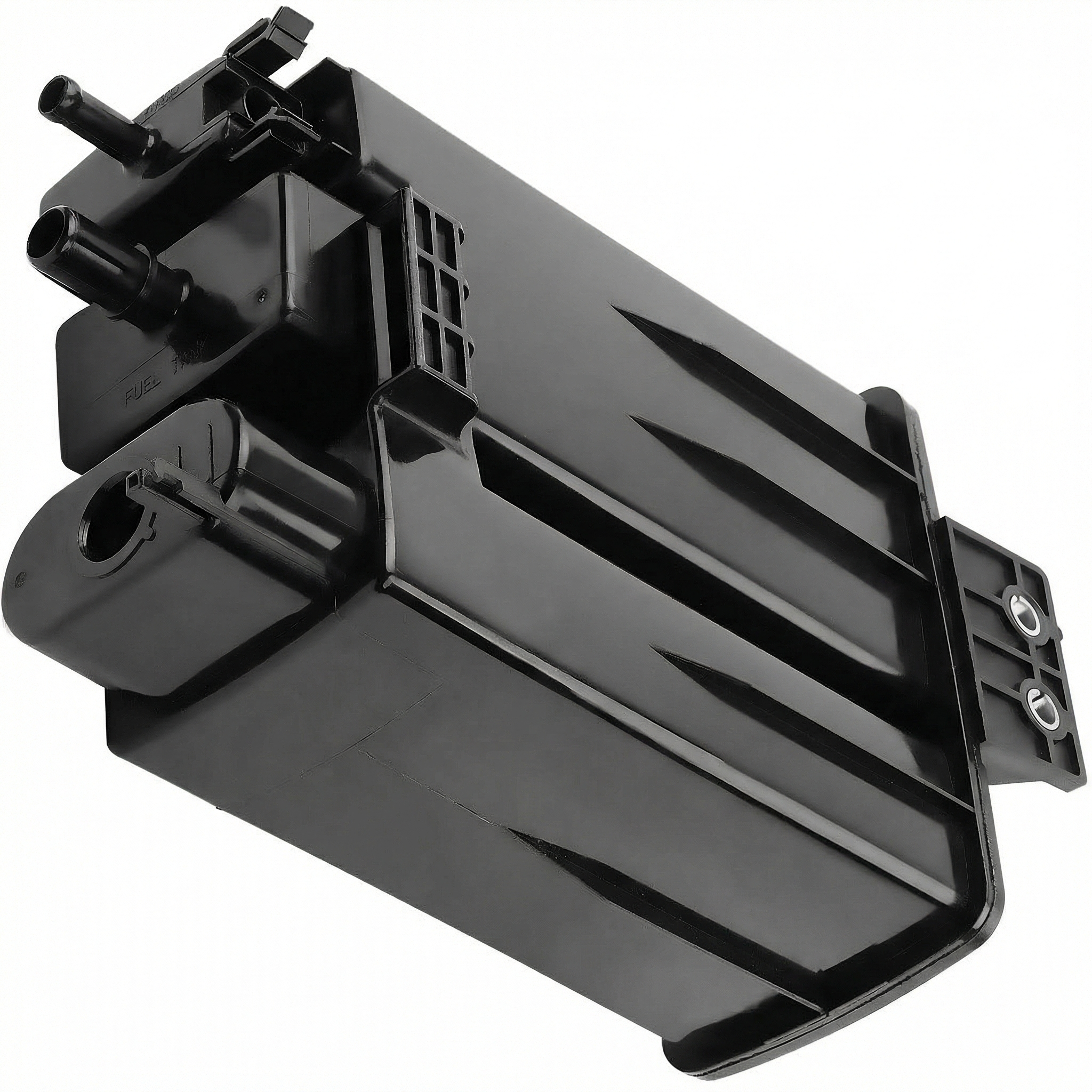
- Cracked Charcoal Canister: → Shop Vapor Canister The charcoal canister can be damaged by road debris or become saturated with fuel if the tank is consistently overfilled. This is an expensive part, so it should be diagnosed last after a smoke test confirms it is the source of the leak. In some cases, a failing purge valve can be caused by charcoal bits from a deteriorating canister breaking loose.
- Faulty Fuel Tank Pressure Sensor (G400): → Shop Fuel Tank This sensor reports the pressure within the EVAP system to the ECM. If it provides incorrect readings, it can falsely trigger a P0440 code. It is often located on top of the fuel tank or integrated with the fuel pump assembly.
Diagnosis Steps
- Check the gas cap. Ensure it is tight (clicks at least once) and the seal is not cracked or worn. Clear the code and drive for a few days to see if it returns.
- Visually inspect the EVAP purge valve (N80) and its connecting hoses in the engine bay for any obvious cracks or damage. The N80 is on top of the intake manifold.
- If a scan tool is available, perform an output test on the N80 purge valve to see if it clicks. Alternatively, remove the valve and try blowing through it; if air passes, it's stuck open and needs replacement.
- Visually inspect all accessible EVAP lines running from the engine bay to the rear of the vehicle for damage.
- If the simple checks do not reveal the problem, the most effective next step is to have a professional smoke test performed. This will pressurize the system with smoke and make even the smallest leaks visible.
- If the smoke test shows no leaks, investigate the Leak Detection Pump (LDP) and its wiring, especially if you have a 2016-2018 model, referencing TSB 2050276/7 for water intrusion issues.
- As a final step, testing of the fuel tank pressure sensor may be required.
Parts You'll Likely Need
- EVAP Canister Purge Valve (N80 Valve)
(OEM #06E906517A)— This valve is a very common failure point on VW/Audi vehicles of this era and is often the root cause of P0440 and P0441 codes. It's an easy and inexpensive DIY replacement.
Trusted brands: Bosch, Genuine VW/Audi, Vemo, Vaico
OEM price range: $40-$70
Aftermarket price range: $20-$50 - Fuel Cap
(OEM #4F0201550F (verify by VIN))— A worn-out seal on the gas cap is a simple but very common cause of EVAP system leaks.
Trusted brands: Genuine VW/Audi, Blau, Stant
OEM price range: $30-$50
Aftermarket price range: $15-$25 - Leak Detection Pump (LDP) / NVLD Pressure Switch
(OEM #8K0906253H (verify by VIN))— This pump pressurizes the system for leak checks and can fail due to its location behind the rear wheel, causing the self-test to fail. Water intrusion is a known issue on later C7 models per TSB 2050276/7.
Trusted brands: Bosch, Genuine VW/Audi
OEM price range: $150-$250
Aftermarket price range: $100-$180
Related Codes That Often Appear With This One
- P0441 — This code indicates incorrect purge flow and is often caused by the same faulty N80 purge valve that can trigger a P0440.
- P0455 — Indicates a large leak was detected. This often points to a very loose or missing gas cap, or a large, obvious hose disconnection.
- P0456 — Indicates a very small leak was detected. This can be caused by a failing gas cap seal or a pinhole leak in a hose, and can be more difficult to find.
Technical Service Bulletins (TSBs) & Recalls
- TSB 2050276/7 (20-22-41): Addresses MIL on or difficulty refueling for 2016-2018 A6/A7 3.0L due to water/ice in the EVAP canister and LDP (NVLD) pressure switch, causing DTCs P045100, P044100, P202500, and/or P045300.
Platform-Specific Known Issues
- Water Intrusion into LDP on 2016-2018 Models: TSB 2050276/7 (also listed as 20-22-41) details a problem on 3.0L engine models where water can enter the EVAP system, flow into the Leak Detection Pump (NVLD pressure switch J909), and freeze in cold weather. This can cause codes P0451, P0441, and P0453. The fix may involve replacing the LDP, weighing the charcoal canister to check for water saturation, and potentially relocating the LDP filter to the engine bay to prevent recurrence.
Mechanic-Grade Diagnostic Values
- EVAP Canister Purge Regulator Valve (N80) resistance — expected: 22.0 to 30.0 Ohms between terminals 1 and 2.. Failure: A reading outside this range indicates a faulty valve coil.
- Fuel Tank Pressure Sensor (G400) resistance (on NVLD systems) — expected: 2200 ± 500 Ω at room temperature between pins 1 and 3 of the sensor.. Failure: A reading significantly outside this range suggests a failed sensor.
- Wiring harness resistance to EVAP components — expected: Max 1.5 Ohms for most circuits.. Failure: Higher resistance indicates corrosion or a break in the wire.
- EVAP system pressure hold test — expected: When pressurized to 30 mbar, the system pressure should not drop below 22.4 mbar after 3 minutes.. Failure: A pressure drop below 22.4 mbar indicates a leak that needs to be found with a smoke test.
Scan Tool Commands That Help
- VCDS (VAG-COM): Engine -> Basic Settings -> Group 070 (EVAP Purge Test) — This command manually runs the EVAP purge system test to check the function of the N80 valve and related components. The result should display 'EVAP OK'. This is useful for verifying a fix after replacing the N80 valve.
- VCDS (VAG-COM): Engine -> Basic Settings -> Group 071 (Tank Leak Test) — This runs the leak detection pump (LDP) to pressurize the system and check for leaks. It's a key diagnostic step before resorting to a smoke test. A 'System OK' result indicates no leaks were found by the LDP. If it fails, it confirms a leak is present.
- VCDS (VAG-COM): Engine -> Output Tests -> EVAP Canister Purge Regulator Valve (N80) — This function directly commands the N80 valve to cycle on and off. You should hear an audible clicking from the valve. If there is no clicking, it confirms the valve is either seized or not receiving a signal, pointing to a bad valve or a wiring issue.
- VCDS (VAG-COM) for UDS Modules: Basic Settings -> IDE00553 (Automatic test sequence) — On newer C7 models with UDS controllers, this function initiates a full EVAP system self-test sequence. It can be used to force the system to check itself after a repair, but may not always complete successfully depending on preconditions.
Wiring & Ground Locations
- N80 Valve Connector — On the N80 valve itself, located on top of the intake manifold in the engine bay.. This is the connection point for power and signal to the purge valve. Terminal 1 receives voltage from the Engine Component Power Supply Relay (J757), and Terminal 2 is the ground signal wire to the ECM (e.g., T94 connector, pin 49). Checking for voltage at terminal 1 and continuity to the ECM on terminal 2 is a key electrical diagnostic step.
- Ground Point 386 — Described as 'Earth connection 21, in main wiring harness' in wiring diagrams.. While not a direct chassis ground, this is a common splice point within the main harness. A failure at this internal ground connection could affect multiple components, including the EVAP system sensors or modules that share this path.
- J909 LDP/NVLD Module Connector — Behind the rear passenger-side wheel well liner, on the Leak Detection Pump assembly.. This connector powers the LDP and transmits data from the integrated pressure sensor (G400). Corrosion or damage here due to its exposed location is a potential cause for LDP-related faults, especially when water intrusion is suspected per TSB 2050276/7.
Real Owner Repair Stories
- AudiWorld Forums user 'Oneplank' (Audi A8 (D3 platform, similar EVAP system)) — Persistent Check Engine Light with code P0455 (Large EVAP leak).
❌ Tried (didn't work) Checking the gas cap (it was tight and the first thing checked).
✅ What actually fixed it The user ran a VCDS Basic Settings test on Group 071, which failed. They then clamped the hose between the N80 valve and the intake manifold and re-ran the test, which then passed. This isolated the leak to the N80 valve itself. Replacing the N80 valve, which took about 5 minutes, resolved the P0455 code.
OEM Part Supersession History
06E906517→06E906517A— Standard part revision for improved reliability or manufacturing process change.
Heads up: The 'A' version is the correct and widely compatible part for most 2.0T and 3.0T engines in this generation. Using a non-'A' version may work but is not recommended.
Model Year Variations Within This Range
- 2016-2018: Models with the 3.0L engine in these years are subject to TSB 2050276/7, which addresses water freezing in the Leak Detection Pump (LDP/J909). The official fix can involve replacing the pump and relocating the system's air filter from the rear of the car to the engine bay to prevent future water ingestion. This issue is less documented on 2011-2015 models.
Diagnostic Flowchart
Other Known Issues on This Vehicle
Issues unrelated to this code that are worth knowing about as an owner of this generation:
- Water Pump & Thermostat Failure (3.0T) 🔴 High — Very common, especially on pre-2013 models. The plastic components become brittle and crack, often failing between 50k-80k miles, leading to coolant leaks and potential overheating. (Ref: A service action was issued for some early models to replace thermostats.)
- Timing Chain Tensioner Wear (2.0T & high-mileage 3.0T) 🔴 High — Early C7 models with the 2.0T EA888 Gen 2 engine are prone to tensioner failure, which can cause catastrophic engine damage. High-mileage 3.0T engines (>100k miles) can develop a rattle on cold starts, indicating wear. This is an engine-out repair on the 3.0T.
- PCV Valve Failure (3.0T) 🟠 Medium — The PCV valve (crankcase vent valve) under the supercharger is a common failure item, leading to high oil consumption, rough idle, and vacuum leaks. Failure can occur around 80k-100k miles. (Ref: Audi updated the PCV valve design to address the issue.)
- Carbon Buildup on Intake Valves 🟠 Medium — A universal issue for all direct-injection engines (2.0T and 3.0T). Carbon deposits build up on intake valves over time, typically requiring cleaning every 60k-80k miles to prevent misfires, hesitation, and reduced performance.
- Excessive Oil Consumption (Early 2.0T) 🔴 High — Early 2.0T engines (pre-2012) were known for piston ring issues that caused significant oil consumption. This was subject to a class-action lawsuit. (Ref: Class-action settlement for some VINs.)
- Leaking Mechatronics Unit (S-Tronic Gearbox) 🔴 High — The dual-clutch S-Tronic gearbox can develop leaks from its Mechatronics unit, which controls the transmission. This is an expensive repair and can cause shifting problems.
Used vs. New Parts: Buying Guide for This Vehicle
When a used part is the smart pick: A used EVAP Purge Valve (N80) can be a cost-effective choice if sourced from a low-mileage donor vehicle, as it is a simple electro-mechanical part and easy to replace if it fails. Hoses and the charcoal canister are also generally safe to buy used, provided they are visually inspected for cracks and damage.
Donor-vehicle mileage cap: roughly under 80000 miles for the part to have meaningful remaining life.
What to inspect on the donor part:
- For N80 valves, check that the plastic housing is not brittle or cracked.
- For charcoal canisters, ensure there are no visible cracks and shake it to listen for loose charcoal bits, which indicates internal failure.
- For hoses, bend them slightly to check for dry rot or hairline cracks that could cause small leaks.
OEM-only on this vehicle (don't cheap out):
- Gas Cap: Aftermarket gas caps are notoriously problematic and often do not seal correctly, leading to persistent EVAP codes. It is strongly recommended to use a Genuine VW/Audi cap.
- Leak Detection Pump (LDP) / NVLD Switch: Given the sensitivity of this component and the known issues with water intrusion, an OEM part (typically Bosch or Genuine VW/Audi) is recommended to ensure proper function and longevity.
Aftermarket brands forum-validated for this vehicle:
- Bosch: Bosch is the Original Equipment Manufacturer (OEM) for many Audi EVAP components, including the N80 valve and LDP. Buying a Bosch-branded part is often identical to the Genuine Audi part without the dealership markup.
Brands owners have reported issues with on this vehicle:
- Unbranded or generic 'white-box' parts from online marketplaces for electronic components like the N80 valve or LDP. While they may be cheap, failure rates are high.
Real Owner Stories
Aggregated from forums and TSBs cited above. Mileages and costs reflect what owners reported in those sources.
2016-2018 Audi A6 3.0L
Symptoms: Check engine light on (MIL on) and difficulty refueling the vehicle.
What fixed it: Replacement of the Leak Detection Pump (NVLD pressure switch J909) and potentially relocating the LDP filter to the engine bay to prevent water intrusion, as per TSB 2050276/7.
Source hint: TSB 2050276/7 (20-22-41)
2011-2018 Audi A6
Symptoms: Check engine light with a P0441/P0440 code; the valve was silent during operation.
What fixed it: Replacement of the N80 purge valve (Part No. 06E906517A), which is a known common failure item on this platform.
Source hint: AudiWorld Forums - 'Evap system purge valve replacement (N80)'
Related OBD-II Codes
Frequently Asked Questions
I have a 2017 Audi A6 3.0L and the gas pump keeps clicking off. Is there a known issue?
Where is the N80 purge valve located on the 2011-2018 Audi A6?
My A6 is hard to start specifically after I fill up at the gas station. Is this related to P0440?
Can a cheap gas cap cause the P0440 code on my Audi?
What is the 'smoke test' mentioned for diagnosing my A6?
Is the Leak Detection Pump (LDP) failure common on these cars?
Helpful Videos
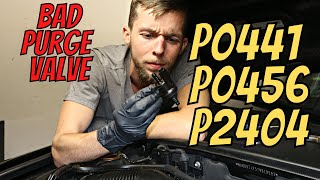
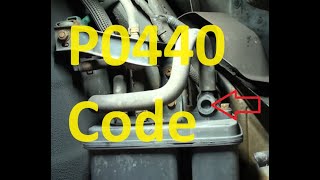
![How to Fix P0440 Engine Code in 3 Minutes [2 DIY Methods / Only $4.73]](https://img.youtube.com/vi/-kSpB9clrrs/mqdefault.jpg)
Used OEM Parts in Stock

New Aftermarket Parts Available

The information in this article is provided for general reference and educational purposes only. Vehicle specifications, procedures, and part compatibility can vary by production date, trim level, and region. Always consult your vehicle's factory service manual and verify part numbers before purchasing or performing repairs. Safety-critical components such as airbags, seat belts, and braking systems should be installed by a qualified professional.
- Audi A6:
- 🧭 Diagnostic Flowchart
- 🎬 Helpful Videos
- 🛍️ Shop This Part
- What's Unique About the 2011-2018 Audi A6
- Symptoms You May Notice
- Most Likely Causes
- Rare But Worth Checking
- Diagnosis Steps
- Parts You'll Likely Need
- Related Codes That Often Appear With This One
- Technical Service Bulletins (TSBs) & Recalls
- Platform-Specific Known Issues
- Mechanic-Grade Diagnostic Values
- Scan Tool Commands That Help
- Wiring & Ground Locations
- Real Owner Repair Stories
- OEM Part Supersession History
- Model Year Variations Within This Range
- Other Known Issues on This Vehicle
- Used vs. New Parts: Buying Guide for This Vehicle
- Real Owner Stories
- 2016-2018 Audi A6 3.0L
- 2011-2018 Audi A6
- Related OBD-II Codes
- Frequently Asked Questions
- 🎟️ Get 5% Off