

P0440 on 2009-2017 Audi Q5: EVAP System Malfunction Causes and Fixes
P0440 on a first-generation Audi Q5 indicates a general fault in the EVAP emissions system. The most common causes are a faulty gas cap, a bad N80 purge valve, or a failing Leak Detection Pump (LDP). Start by checking the gas cap, but be prepared to diagnose the N80 valve or LDP if the light returns, as these are known weak points on this platform.
- Don't panic, P0440 does not affect how your Audi Q5 drives.
- Always start with the simplest fix: check that your gas cap is tight and its seal is in good condition.
- If the code returns, the most likely culprits are the N80 Purge Valve in the engine bay or the Leak Detection Pump (LDP) near the rear wheel.
- A smoke test is the most definitive way to find a physical leak in a hose or the charcoal canister.
- Check if your vehicle is covered by the LDP warranty extension, as this could result in a free repair at a dealership.
What's Unique About the 2009-2017 Audi Q5
On the first-generation Audi Q5 (Typ 8R), the P0440 code often points towards specific component failures rather than just a simple leak. While a loose gas cap is always a possibility, the N80 purge valve and the Leak Detection Pump (LDP) are well-documented weak points. In fact, Audi has issued warranty extensions for the LDP on some vehicles due to overly sensitive calibrations that can falsely trigger EVAP fault codes. There is also a warranty extension (U61) covering the N80 purge valve for 15 years/150,000 miles on certain vehicles. This means a P0440 code on this platform warrants a closer look at these specific components beyond a standard smoke test.
Generation note: The 2009-2017 model years cover the entire first generation of the Audi Q5 (Typ 8R), which is part of the Audi B8 platform. This includes the pre-facelift models (2009-2012) and the facelift models (2013-2017). The underlying EVAP system components and common failures are largely the same across this generation.
Symptoms You May Notice
- Check Engine Light is on.
- A faint smell of fuel, particularly around the rear of the vehicle or after refueling.
- Failing a state emissions inspection.
- Difficulty refueling, such as the fuel nozzle shutting off prematurely.
- Slightly rough idle or hesitation in some cases.
- Replacing the oxygen sensors. O2 sensors are not part of the EVAP system and will not cause a P0440 code.
- Replacing the catalytic converter. This is an expensive repair that is completely unrelated to the EVAP system.
Most Likely Causes
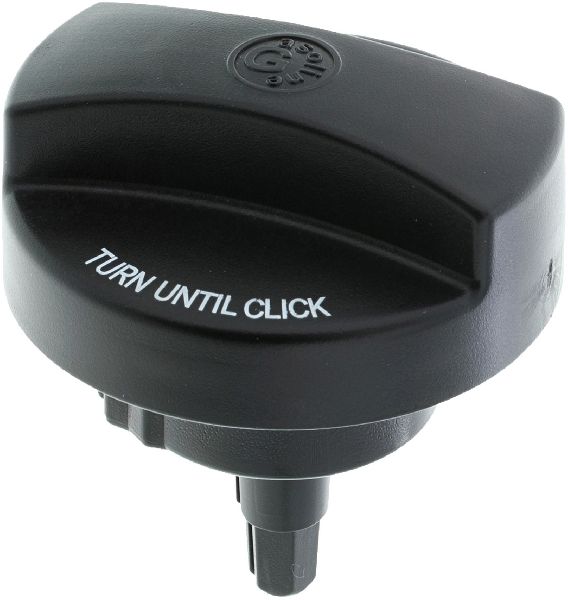
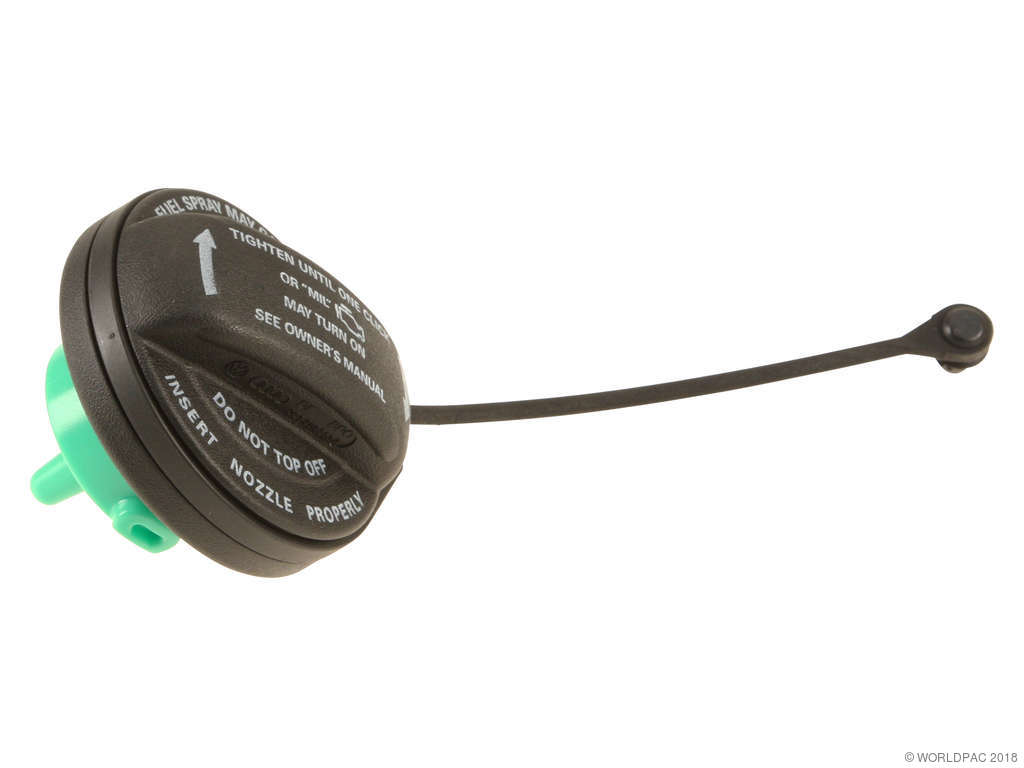
- Loose or Faulty Gas Cap 🔴 High Probability → Shop Fuel Tank Cap This is a universal issue for all vehicles. The cap's seal can degrade, crack, or dry out over time, or it may not have been tightened correctly after refueling. It's the most common and cheapest potential fix.
How to confirm: Inspect the gas cap for cracks or damage to the rubber O-ring seal. Ensure it is tightened until it clicks at least once. Also, inspect the fuel filler neck for rust or debris that could prevent a good seal. If the seal is visibly worn, it's worth replacing as a cheap first step.
Typical fix: Tighten or replace the gas cap.
Est. part cost: $15-$40 - Faulty EVAP Purge Valve (N80) 🟡 Medium Probability → Shop Vapor Canister The N80 valve is a common failure item on many VW and Audi products of this era. It can get stuck open, stuck closed, or clogged with carbon particles from the charcoal canister. Audi has acknowledged this with a warranty extension (U61) for some vehicles, covering the part for 15 years/150,000 miles.
How to confirm: The valve is located in the engine bay, often near the intake manifold. A simple test is to remove it and try to blow through it; when not energized, it should be closed and not allow air to pass. A scan tool can also perform an output test to see if it clicks when commanded. If it's stuck open, it may cause a rough idle.
Typical fix: Replace the N80 valve and the associated hoses if they are brittle.
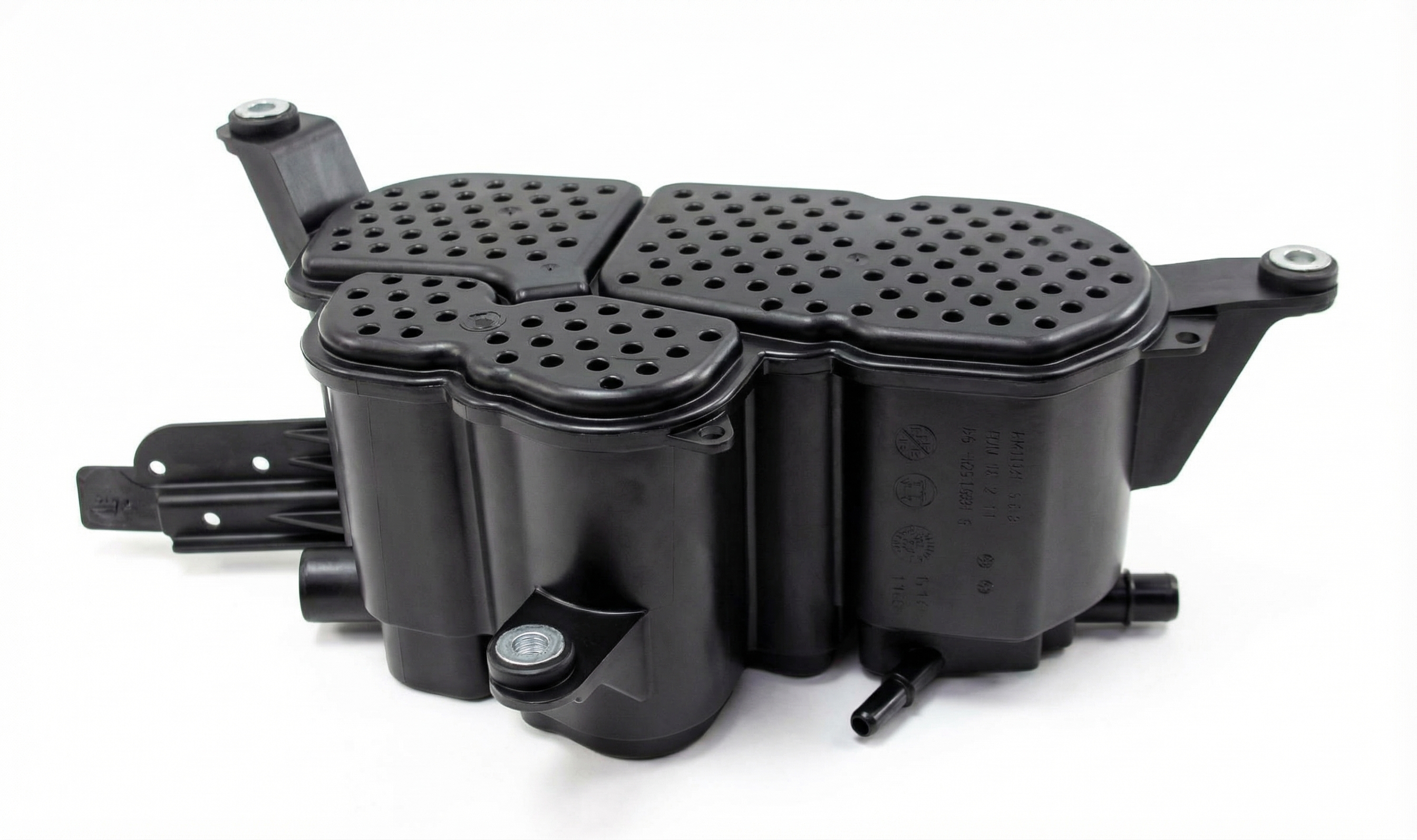
Est. part cost: $50-$100 - Faulty Leak Detection Pump (LDP / NVLD) 🟡 Medium Probability → Shop Evaporative Emissions System Leak Detection Pump Audi has acknowledged issues with the LDP's sensitivity, leading to warranty extensions for this part on many vehicles. It can fail internally and either not run its test correctly or falsely report a leak. Forum users report these failing frequently, sometimes taking months to get a replacement part due to high demand.
How to confirm: The LDP is located behind the rear passenger-side wheel well liner. Diagnosis is difficult without a bi-directional scan tool to command the pump. Often, it is diagnosed by exclusion: if a smoke test shows no leaks and other components are good, the LDP is the likely culprit. According to some repair data, this pump is the cause of nearly 68% of P045x codes on this platform.
Typical fix: Replace the Leak Detection Pump assembly.
Est. part cost: $150-$250 - Cracked or Disconnected EVAP Hoses ⚪ Low Probability The plastic and rubber lines in the engine bay and under the car can become brittle with age and heat cycles, leading to cracks. This is especially true for the hard plastic lines which can become fragile.
How to confirm: A smoke test is the most effective method. A machine fills the EVAP system with a harmless, visible smoke. Smoke will pour out of any leaks, making them easy to find. A visual inspection may reveal obvious cracks, especially on hoses in the engine bay near the N80 valve.
Typical fix: Replace the cracked hose section. Sometimes this requires replacing a complete hose assembly from Audi.
Est. part cost: $20-$150
Rare But Worth Checking
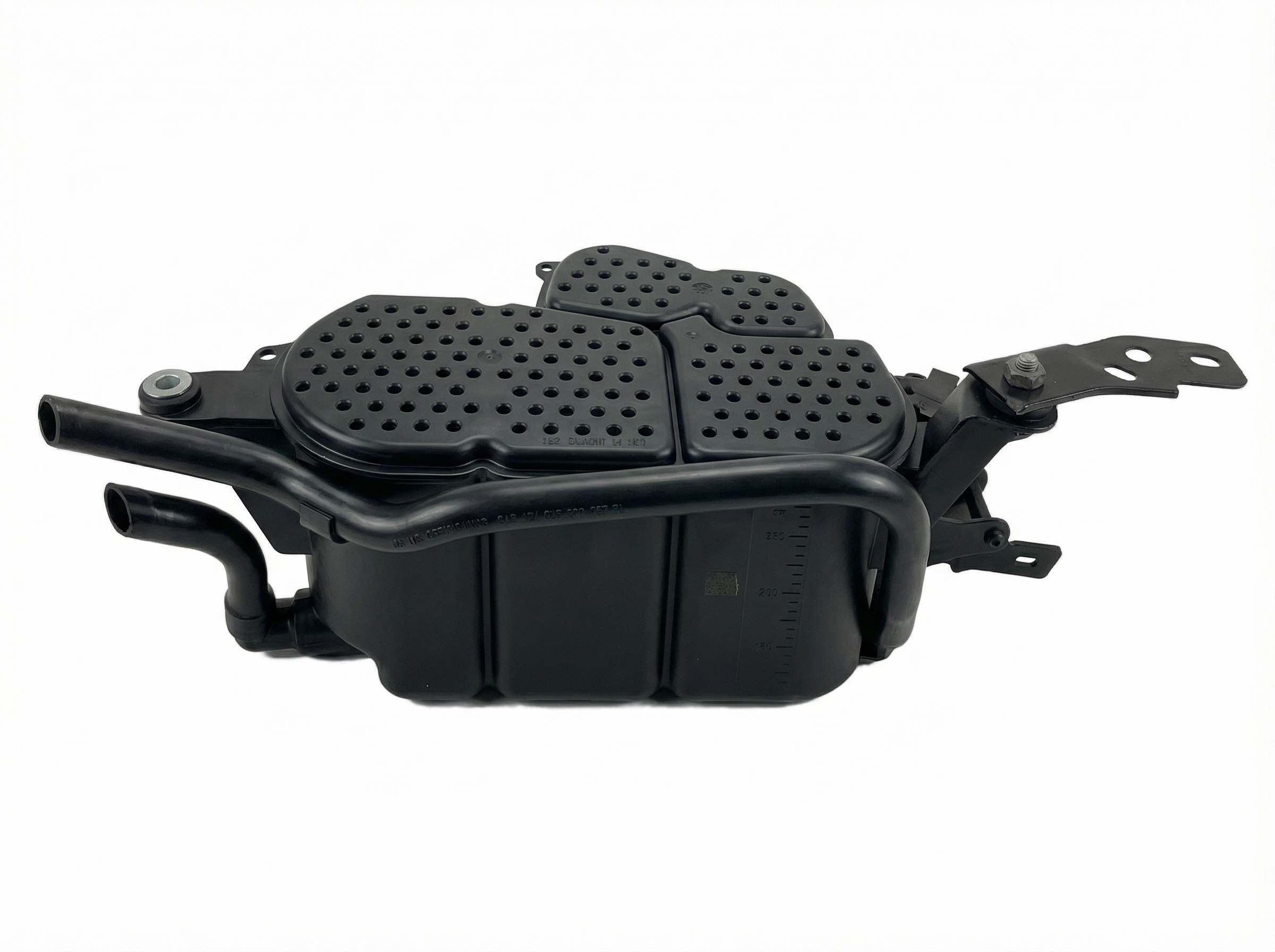
- Cracked Charcoal Canister: → Shop Vapor Canister The charcoal canister, located near the fuel tank, can develop cracks from road debris or age. This is less common than valve or pump failures but will cause a significant leak that is usually easy to find with a smoke test.
- Faulty Fuel Tank Vent Valve: → Shop Fuel Tank A less common but documented cause is a crack in the fuel tank vent valve itself, which can be difficult to spot. One owner reported finding a hairline crack on this valve after replacing other components, which finally solved the P0440 code.
Diagnosis Steps
- Read the Code: Use an OBD-II scanner to confirm P0440 and check for any other pending or stored codes.
- Inspect the Gas Cap: Remove the gas cap. Check for any visible cracks on the cap or its rubber seal. Ensure it is the correct type for the vehicle. Reinstall it, making sure it clicks several times.
- Clear the Code and Drive: After checking the cap, clear the code and drive the vehicle for a few days to see if the Check Engine Light returns. If it doesn't, the gas cap was the issue.
- Visual Inspection: If the light returns, visually inspect the EVAP hoses in the engine bay, particularly around the N80 purge valve, for obvious cracks or disconnections.
- Test the N80 Purge Valve: If no leaks are found, test the N80 valve. With the engine off, it should be closed. You can use a scan tool to command it open and closed, listening for a click. Check if your VIN is covered by the U61 warranty extension for this part.
- Perform a Smoke Test: This is the most reliable way to find physical leaks. Connect a smoke machine to the EVAP service port and watch for smoke escaping from any hoses, the charcoal canister, or the gas cap area.
- Suspect the Leak Detection Pump (LDP): If the smoke test shows no leaks and the N80 valve is functioning correctly, the LDP is the next most likely cause, especially given the history of issues with this part on Audis and the related TSBs and warranty extensions.
Parts You'll Likely Need
- EVAP Purge Valve (N80)
(OEM #06E906517A)— This valve is a very common failure point on VW/Audi vehicles, getting stuck or clogged over time. It is common enough that Audi issued a 15yr/150k mile warranty extension (U61) for it on some models.
Trusted brands: Bosch, Genuine VW/Audi
OEM price range: $80-$120
Aftermarket price range: $40-$70 - Leak Detection Pump (LDP)
(OEM #8K0906253N)— This pump is known to have a high failure rate and was subject to a warranty extension due to being overly sensitive. Note: Always verify the part number with your VIN, as several variations exist (e.g., ending in J, L, or N).
Trusted brands: Bosch, Genuine VW/Audi
OEM price range: $200-$280
Aftermarket price range: $150-$220 - Fuel Filler Cap
(OEM #8K0201550N (verify with VIN))— The seal on the gas cap wears out over time, creating a leak. It's the simplest and cheapest part to replace first.
Trusted brands: Genuine VW/Audi, Blau
OEM price range: $30-$50
Aftermarket price range: $15-$25
Related Codes That Often Appear With This One
- P0441 — P0441 indicates incorrect purge flow, often pointing directly to a faulty N80 purge valve, which can also trigger a general P0440 fault.
- P0442 — P0442 indicates a small leak. If the system has a borderline leak, the computer may set either P0440 or P0442 depending on the test conditions.
- P0456 — P0456 indicates a very small leak. A failing LDP is known to cause false P0456 codes, and can also be associated with a general P0440. TSB 2065287/6 directly addresses this for the LDP.
Technical Service Bulletins (TSBs) & Recalls
- TSB 2065287/6: Addresses false P0442/P0456 codes caused by an internal defect in the Leak Detection Pump, recommending replacement if no other leaks are found.
- Warranty Extension U61: Extends warranty coverage for the EVAP Purge Valve (N80) to 15 years or 150,000 miles on applicable vehicles.
- LDP Warranty Extension: A separate letter campaign extended the warranty on the Leak Detection Pump (LDP) to 15 years or 150,000 miles for many owners due to high failure rates.
- TSB 2071770/5: Addresses DTC P240700 (LDP current fluctuating) on some 2022-2023 Q5 models due to overly sensitive OBD diagnostics, fixed with a software update. While for a newer generation, it shows a continued pattern of LDP-related diagnostic sensitivity.
Platform-Specific Known Issues
- Audi of America issued a limited warranty extension for the EVAP Leak Detection Pump (LDP) for some vehicles due to a sensitive calibration causing false leak detection faults. This makes the LDP a higher-probability cause on these vehicles compared to other makes.
- A separate warranty extension, code U61, was issued for the N80 EVAP Purge Valve, extending coverage to 15 years or 150,000 miles for affected
Mechanic-Grade Diagnostic Values
- N80 EVAP Purge Valve Coil Resistance — expected: 15 to 30 Ohms. Some sources cite a tighter range of 22-30 Ohms.. Failure: A reading of 'OL' (Open Line) or resistance significantly outside the specified range indicates a failed coil.
- N80 EVAP Purge Valve Power Supply (at connector) — expected: Pin 1 should have battery voltage with the key on. Pin 2 is the ground, which is pulse-width modulated by the ECM.. Failure: Absence of voltage at Pin 1 points to a wiring or fuse issue. The N80 valve is often powered by Fuse 4 on Fuse Panel B in the engine compartment.
Scan Tool Commands That Help
- VCDS (VAG-COM): Engine -> Basic Settings -> "EVAP canister purge regulator valve (N80), test" — This is an output test that commands the N80 valve to cycle on and off, allowing you to listen for an audible click, which confirms the solenoid is actuating. Failure to click indicates a bad valve or a wiring issue.
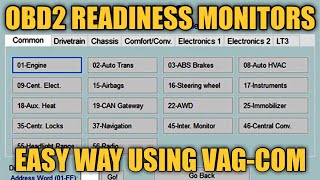
- VCDS (VAG-COM): Engine -> Basic Settings -> "Automatic test procedure" — This function attempts to run all the necessary sequences to set the vehicle's emissions readiness monitors. For newer B8 platform cars, the old Group 071 EVAP test script is not available, so this automatic procedure is the alternative to force the EVAP monitor to run after a repair, instead of performing a complex drive cycle.
- VCDS (VAG-COM): Engine -> Advanced Measuring Values — Allows for monitoring specific EVAP system parameters in real-time, such as 'IDE00744-EVAP Valve test' status or fuel tank pressure sensor readings. This is essential for diagnosing intermittent issues or confirming sensor functionality under different conditions.
Wiring & Ground Locations
- N80 Valve Connector — On the N80 valve itself, located in the engine bay near the intake manifold.. Pin 1 is power (often from a fuse in panel B), Pin 2 is the control signal (ground) from the ECM (Pin T94/92 on some diagrams). Checking for voltage here is a primary step in diagnosing a non-responsive valve.
- LDP Connector — On the Leak Detection Pump, located behind the rear passenger-side wheel well liner.. This 3-pin connector provides power, ground, and a signal line to the ECM. A forum user reported test values of Pin 1 = 0.06V, Pin 2 = 5.92V, Pin 3 = 13.75V with ignition on, which can be used as a reference for diagnosing a faulty LDP or wiring.
- Ground Point 663 — Behind the right rear side panel trim.. This is a primary ground connection for components in the rear of the vehicle. A corroded or loose ground here could potentially affect the operation of the Leak Detection Pump (LDP) or other nearby EVAP components.
- Ground Point 12 — In the left side of the engine compartment, near the suspension strut.. This is a key ground point for engine bay components. A poor connection here could cause intermittent electrical issues with the N80 purge valve.
Real Owner Repair Stories
- AliExpress Product Review (Audi Q5 (year not specified)) — Check Engine Light with EVAP codes (P0455 mentioned), faint fuel smell near the rear quarter panel.
❌ Tried (didn't work) Replacing the gas cap did not solve the issue.
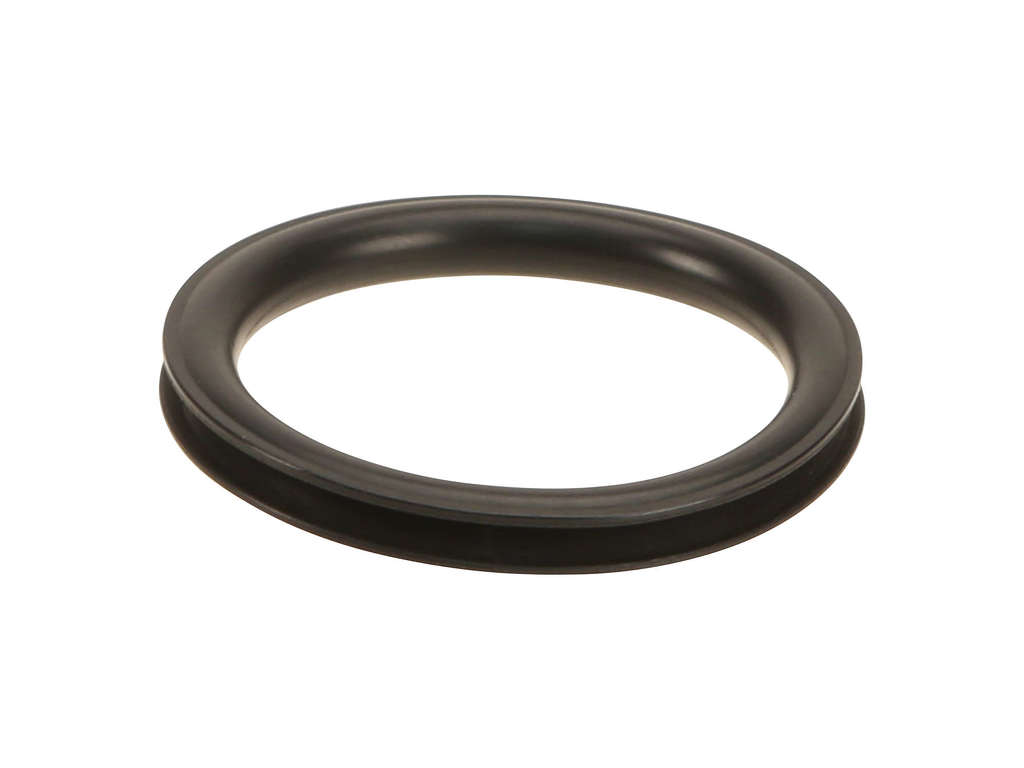
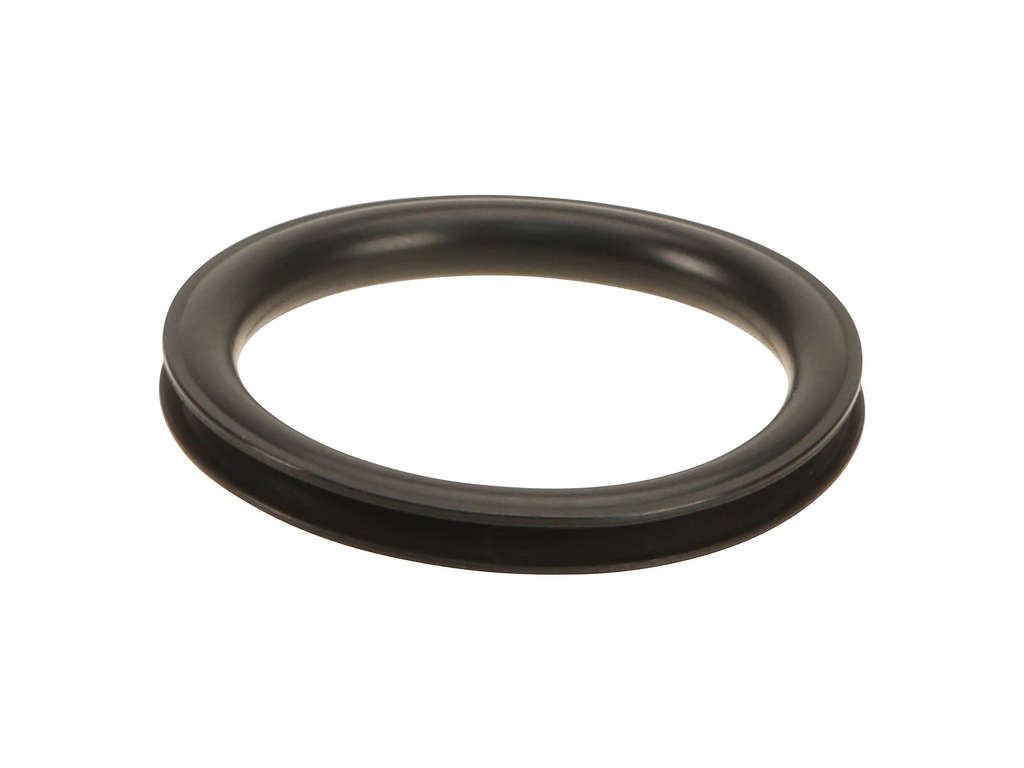
✅ What actually fixed it The actual cause was a degraded V-shaped rubber O-ring seal (55mm OD x 5mm thickness) located inside the fuel filler neck assembly, not the gas cap itself. Replacing this specific O-ring resolved the leak and the code. - Audi-Sport.net forum user (2009 Audi A4 2.0T quattro (B8 platform shared with Q5)) — Difficulty refueling (fuel nozzle clicks off prematurely), took 6 months to diagnose.
❌ Tried (didn't work) Initial diagnosis was difficult and prolonged.
✅ What actually fixed it A plastic guide tube inside the fuel filler neck had snapped off and slid down, causing fuel to splash back during filling. This indicates the entire filler neck assembly can be a point of failure beyond just the cap or seal.
"I Checked Everything" — The Actual Cause
- A smoke test will not identify a faulty N80 purge valve that is leaking internally into the intake manifold. The system will appear sealed from the outside. The definitive test is to run the VCDS Basic Settings test for the EVAP system; if it fails, pinch off the vacuum hose between the N80 and the charcoal canister and run it again. If the test now passes, the N80 valve is confirmed as the internal leak source.
- A smoke test may not reveal a faulty Leak Detection Pump (LDP) that is failing its internal self-test or has a faulty pressure switch. If the system is smoke-tested and shows no leaks, and the N80 valve tests good, the LDP becomes the primary suspect by exclusion, especially given its known high failure rate on this platform.
OEM Part Supersession History
8K0906253A / C / E / J / L→8K0906253N— Revisions to improve reliability and address sensitivity issues that led to false codes and warranty extensions.
Heads up: While physically interchangeable, using an older revision (e.g., 'E') in a vehicle that came with a newer one ('N') can cause the fault code to return due to differences in internal calibration. Always verify the correct part number for your specific VIN.8K0906253 / B / D / F / H / K→8K0-906-253-M— Part evolution and updates over the vehicle's lifecycle.
Heads up: This is another part number sequence for the LDP assembly. It is critical to cross-reference with the vehicle's VIN as the 'M' series may not be compatible with vehicles specified for the 'N' series.
Model Year Variations Within This Range
- 2013+: Some later models (facelift B8.5) may use a Natural Vacuum Leak Detection (NVLD) system instead of the traditional LDP. Diagnosing this system is different, as it relies on temperature and pressure changes during a cool-down cycle rather than a pump-induced pressure test. VCDS output tests for the LDP may not be available on these systems.
Diagnostic Flowchart
Other Known Issues on This Vehicle
Issues unrelated to this code that are worth knowing about as an owner of this generation:
- Excessive Oil Consumption (2.0T) 🔴 High — Very common on early 2009-2012 models with the 2.0T engine due to faulty piston ring design. Can consume over 1 quart per 1,000 miles. (Ref: A class-action lawsuit and multiple TSBs (e.g., 2027731/5) were issued, leading to an oil consumption test and potential piston/ring replacement.)
- Timing Chain Tensioner Failure (2.0T) 🔴 High — Common on pre-2013 2.0T engines with the original tensioner design. Failure can be catastrophic and often occurs between 60k-120k miles. A brief rattle on cold start is the primary warning sign. (Ref: Audi updated the tensioner design. No recall, but warranty extensions were offered, though most have expired. Visual inspection is the only sure way to check.)
- Intake Valve Carbon Buildup (All Direct Injection Engines) 🟠 Medium — Affects all FSI/TFSI engines (2.0T, 3.2L, 3.0T). Symptoms like rough idle, misfires, and power loss can appear as early as 20,000-40,000 miles and typically require cleaning every 60k-80k miles. (Ref: No recall. This is considered a maintenance item. The fix is a manual cleaning (e.g., walnut blasting) of the intake valves.)
- Water Pump & Thermostat Failure 🟠 Medium — A known weak spot on both 2.0T and 3.0T engines, often failing between 60k-90k miles, causing coolant leaks. On the 3.0T, the location under the supercharger makes replacement more labor-intensive. (Ref: Audi updated the water pump design for post-2012 models, which proved more durable.)
- PCV Valve Failure 🟡 Low — The diaphragm in the PCV (crankcase ventilation) valve can tear, causing a large vacuum leak, rough running, high idle, and sometimes contributing to oil consumption. Common on both 2.0T and 3.0T engines.
Used vs. New Parts: Buying Guide for This Vehicle
When a used part is the smart pick: Used parts can be a cost-effective option for structural components like the charcoal canister or EVAP hoses, provided they are from a low-mileage, non-corroded donor vehicle. A used gas cap is generally not recommended as the seal is a primary wear item.
Donor-vehicle mileage cap: roughly under 75000 miles for the part to have meaningful remaining life.
What to inspect on the donor part:
- For hoses, check for any signs of cracking, brittleness, or swelling. Squeeze the hose to ensure it's still pliable.
- For electronic parts like the N80 valve or LDP, check the plastic housing for cracks and ensure the electrical connector pins are clean and not corroded.
- Inspect the donor vehicle's location - parts from dry, salt-free climates are less likely to have corrosion on electrical contacts or degradation of rubber/plastic.
OEM-only on this vehicle (don't cheap out):
- Leak Detection Pump (LDP): Due to the high failure rate and sensitivity to calibration, it is strongly recommended to use a new, Genuine VW/Audi part with the latest part number revision (e.g., 8K0906253N). Aftermarket or used versions are known to cause persistent issues.
Aftermarket brands forum-validated for this vehicle:
- Bosch: Bosch is the original equipment manufacturer (OEM) for many VW/Audi electronic components, including the N80 Purge Valve and the Leak Detection Pump. A Bosch-branded part is often identical to the Genuine Audi part but at a lower cost.
Brands owners have reported issues with on this vehicle:
- Unbranded/"White-box" LDPs: Many owners report that cheap, unbranded Leak Detection Pumps from online marketplaces fail to resolve the P0440 code due to incorrect internal calibration, even if they physically fit.
Real Owner Stories
Aggregated from forums and TSBs cited above. Mileages and costs reflect what owners reported in those sources.
2009-2017 Audi Q5
Symptoms: The Leak Detection Pump (LDP) failed internally, falsely reporting a leak despite no physical openings in the system.
What fixed it: Replacement of the Leak Detection Pump assembly as per TSB 2065287/6.
Source hint: TSB 2065287/6
2009-2017 Audi Q5 — ~150000 miles
Symptoms: Check engine light on; part was found to be a common failure item that can get stuck open, closed, or clogged with carbon.
What fixed it: Replacement of the N80 EVAP Purge Valve under the U61 warranty extension.
Source hint: Warranty Extension U61
2009-2017 Audi Q5
Symptoms: Owners reported the LDP failing frequently, with some experiencing long wait times for replacement parts due to high demand.
What fixed it: Replacement of the Leak Detection Pump (LDP).
Source hint: https://www.reddit.com/r/AudiQ5/comments/14c3k9p/audi_q5_evap_leak_detection_pump_ldp_limited/
Related OBD-II Codes
Frequently Asked Questions
Is there a warranty extension for the N80 purge valve on my Audi Q5?
My Q5 is showing P0440 but I don't see any leaks. Could it be the Leak Detection Pump?
How long is the Leak Detection Pump (LDP) covered under the extended warranty?
I have a 2015 SQ5; does it share the same EVAP issues as the standard Q5?
Can a faulty N80 valve cause my Audi to idle roughly?
What does TSB 2065287/6 recommend for P0442 or P0456 codes on this platform?
Helpful Videos

![How to Fix P0440 Engine Code in 3 Minutes [2 DIY Methods / Only $4.73]](https://img.youtube.com/vi/-kSpB9clrrs/mqdefault.jpg)

Used OEM Parts in Stock


New Aftermarket Parts Available


The information in this article is provided for general reference and educational purposes only. Vehicle specifications, procedures, and part compatibility can vary by production date, trim level, and region. Always consult your vehicle's factory service manual and verify part numbers before purchasing or performing repairs. Safety-critical components such as airbags, seat belts, and braking systems should be installed by a qualified professional.
- Audi Q5:
- 🧭 Diagnostic Flowchart
- 🎬 Helpful Videos
- 🛍️ Shop This Part
- What's Unique About the 2009-2017 Audi Q5
- Symptoms You May Notice
- Most Likely Causes
- Rare But Worth Checking
- Diagnosis Steps
- Parts You'll Likely Need
- Related Codes That Often Appear With This One
- Technical Service Bulletins (TSBs) & Recalls
- Platform-Specific Known Issues
- Mechanic-Grade Diagnostic Values
- Scan Tool Commands That Help
- Wiring & Ground Locations
- Real Owner Repair Stories
- "I Checked Everything" — The Actual Cause
- OEM Part Supersession History
- Model Year Variations Within This Range
- Other Known Issues on This Vehicle
- Used vs. New Parts: Buying Guide for This Vehicle
- Real Owner Stories
- 2009-2017 Audi Q5
- 2009-2017 Audi Q5 — ~150000 miles
- 2009-2017 Audi Q5
- Related OBD-II Codes
- Frequently Asked Questions
- 🎟️ Get 5% Off