

P0440 on 2007-2015 Audi Q7: EVAP System Malfunction Causes and Fixes
For a 2007-2015 Audi Q7, code P0440 usually points to a leak in the evaporative emissions (EVAP) system. The most common culprits are a loose or faulty gas cap, a failed purge valve (N80), or a bad leak detection pump (LDP). Always check the gas cap first before buying any parts, as it's the simplest and most common fix.
- Code P0440 on a 2007-2015 Audi Q7 indicates a general malfunction in the EVAP system.
- Always start with the simplest fix: check that your gas cap is tight and its seal is not cracked or worn.
- The most common parts to fail after the gas cap are the N80 purge valve (in the engine bay) and the Leak Detection Pump (near the rear of the vehicle).
- While you can safely drive with this code, your vehicle will fail an emissions test and may have a slight fuel odor or reduced mileage.
- For hard-to-find leaks, a professional smoke test is the most effective diagnostic tool.
What's Unique About the 2007-2015 Audi Q7
The first-generation Audi Q7 (Typ 4L) and its platform mates (VW Touareg, Porsche Cayenne) use a sophisticated EVAP system with a dedicated Leak Detection Pump (LDP) to pressurize the system for leak testing. This LDP is a known common failure point. Unlike some vehicles where a loose gas cap is almost always the cause, on the Q7, the N80 purge valve and the LDP itself are frequent culprits. Owners have also reported that significant changes in altitude can sometimes trigger an EVAP code, which may later clear on its own, suggesting the system can be sensitive.
Symptoms You May Notice
- Check Engine Light is on.
- A faint smell of fuel, particularly around the gas cap area or in the cabin.
- Slightly reduced fuel economy.
- Difficulty starting the engine immediately after refueling (classic sign of a stuck-open purge valve).
- Rough or unstable idle if the purge valve is stuck open, creating a vacuum leak.
- Loud, rapid clicking noise from the N80 valve in the engine bay.
- Replacing the O2 sensors. Oxygen sensors are not part of the EVAP system and will not cause a P0440 code.
- Replacing the catalytic converter. This is an expensive and unrelated part of the exhaust system.
- Assuming a non-OEM gas cap is sealing properly. Aftermarket caps can sometimes be poorly designed and fail to create a perfect seal, leading to persistent codes.
Most Likely Causes
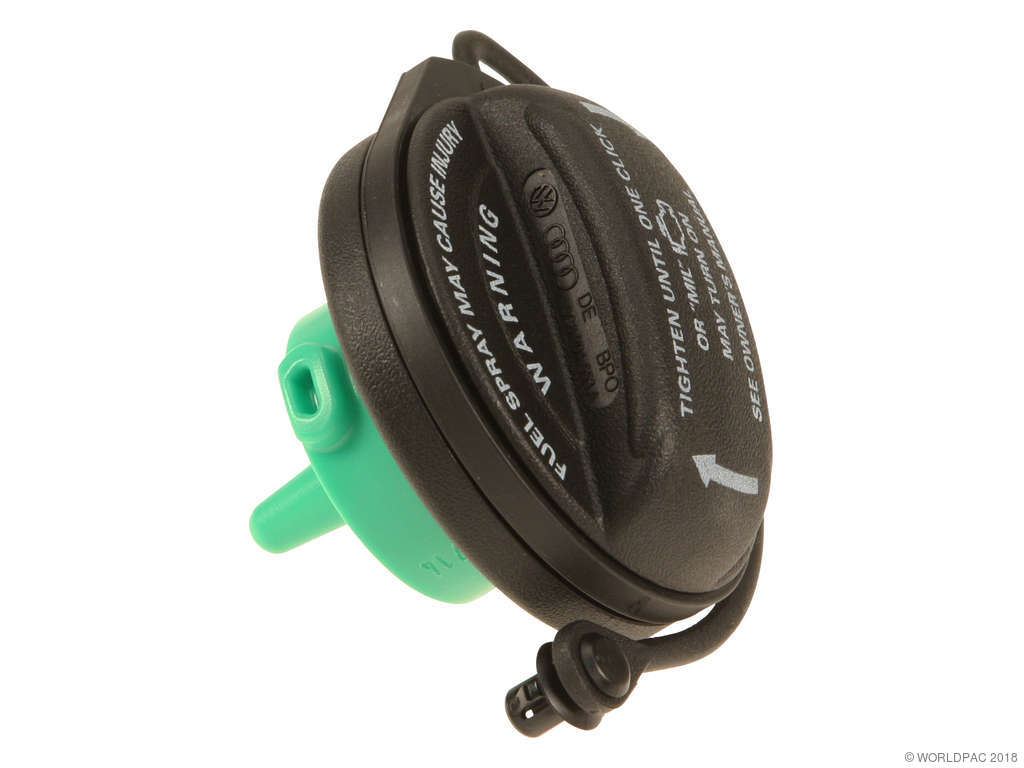
- Loose or Faulty Gas Cap 🔴 High Probability → Shop Fuel Tank Cap The gas cap seal is a simple rubber O-ring that can crack, harden, or get dirty over time, preventing a proper seal. This is the most common and easiest-to-fix cause for any EVAP leak code.
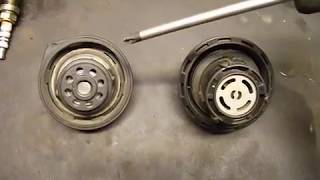
How to confirm: Ensure the gas cap is tightened until it clicks several times. Visually inspect the cap's rubber seal for any cracks, brittleness, or debris. Also, inspect the fuel filler neck for rust or debris that could prevent a good seal.
Typical fix: Tighten or replace the gas cap.
Est. part cost: $15-$50 - Faulty EVAP Purge Valve (N80 Valve) 🟡 Medium Probability → Shop Vapor Canister The N80 purge valve is a known failure point on many Volkswagen and Audi vehicles of this era. It can get stuck open or closed internally, leading to incorrect vapor flow or a constant vacuum leak. Its failure is often associated with code P0441 (Incorrect Purge Flow) but can also cause a general P0440.
How to confirm: With the engine idling, you can disconnect the vacuum line from the valve; there should be no suction. A scan tool (like VCDS) can also be used to command the valve open and closed while observing system pressure. A classic symptom of it being stuck open is difficulty starting after refueling. A user on AudiWorld confirmed that on the 3.6L engine, removing the air intake makes accessing the valve at the back of the engine much easier.
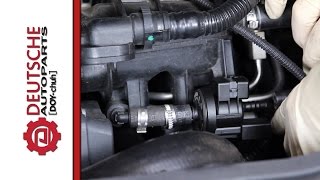
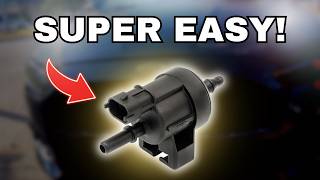
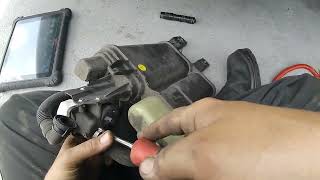
Typical fix: Replace the N80 purge valve. 🎬 Watch: A pro's guide to replacing your purge valve. It is typically located in the engine bay, often on the passenger side near the rear of the valve cover.
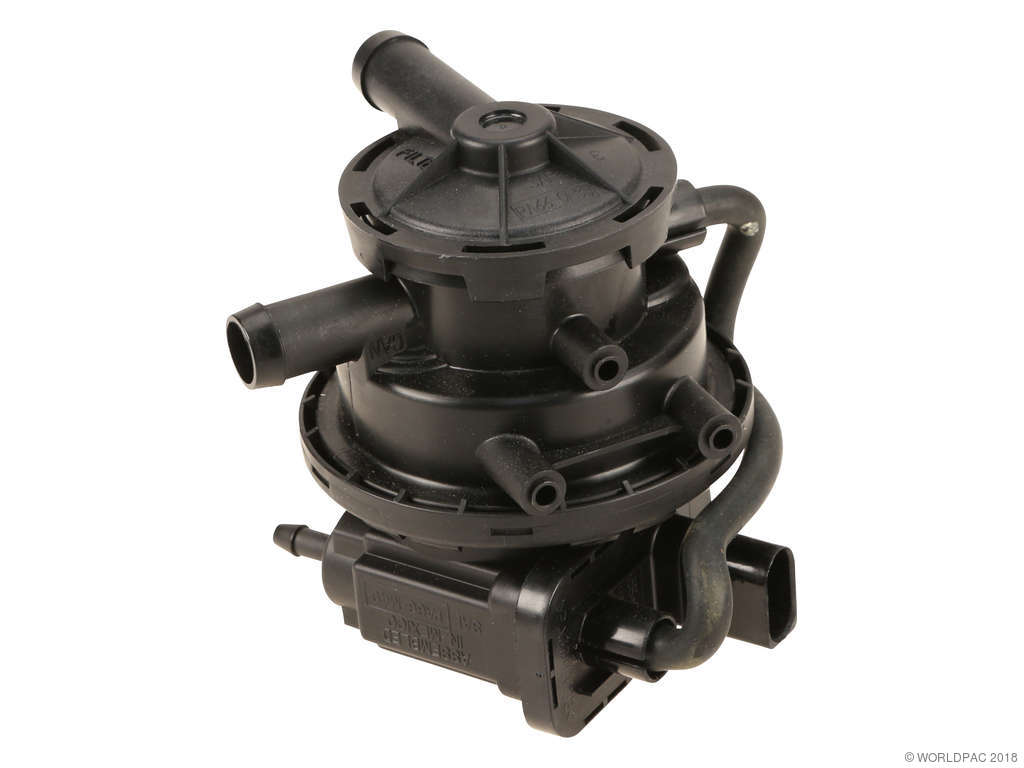
Est. part cost: $30-$80 - Failed Leak Detection Pump (LDP) 🟡 Medium Probability → Shop Evaporative Emissions System Leak Detection Pump The LDP is a mechanical pump responsible for pressurizing the EVAP system to check for leaks. These pumps can fail electrically or develop internal leaks over time, causing them to report a system leak when they are the actual problem. Moisture and road salt can get into the pump, corroding internal components.
How to confirm: Diagnosis often requires a specialized scan tool (like VCDS) to run the EVAP system self-test and monitor the LDP's operation. A mechanic may also use a smoke machine to verify if the pump itself is leaking. The LDP is located under the vehicle, behind the rear wheel housing liner, near the charcoal canister.
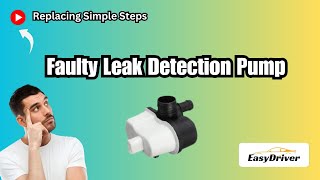
Typical fix: Replace the Leak Detection Pump. This requires lifting the vehicle and removing the wheel and wheel arch liner for access. 🎬 Watch this walkthrough on replacing a faulty leak detection pump.
Est. part cost: $150-$300 - Cracked or Disconnected EVAP Hoses ⚪ Low Probability Over time, the plastic and rubber hoses in the EVAP system can become brittle and crack, especially those exposed to engine heat or underbody elements.
How to confirm: A visual inspection may reveal obvious cracks or disconnections. For small, hard-to-see leaks, a smoke test is the most effective diagnostic method. A mechanic will inject smoke into the EVAP system and look for where it escapes.
Typical fix: Replace the damaged section of hose.
Est. part cost: $10-$50
Rare But Worth Checking
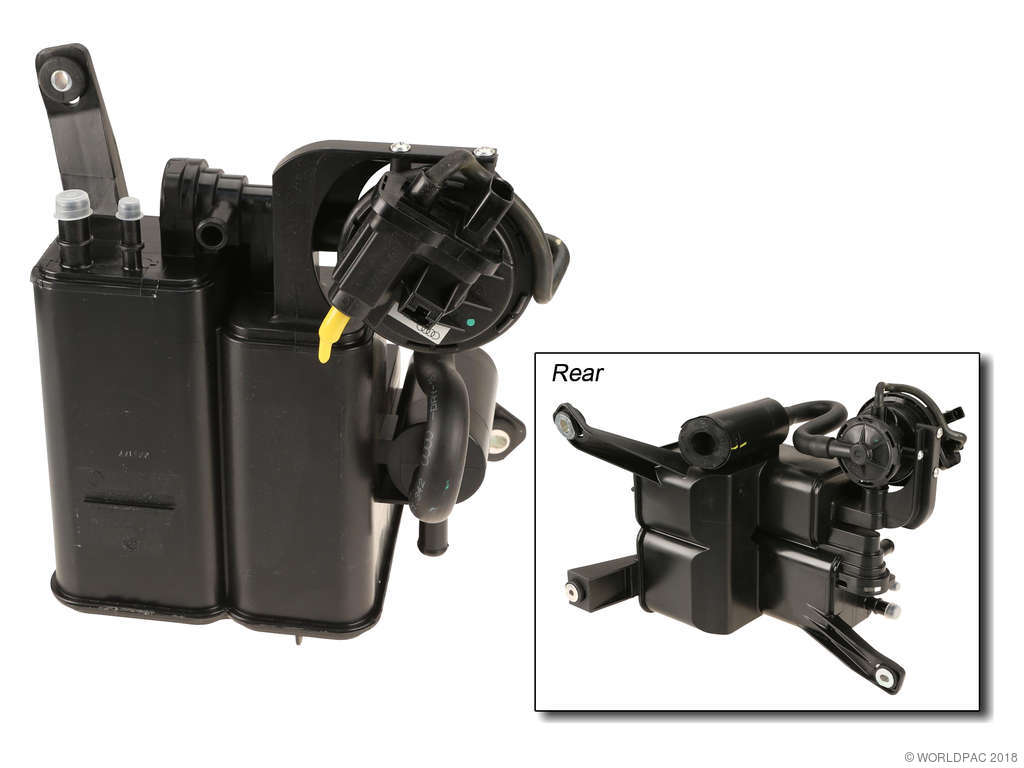
- Cracked Charcoal Canister: → Shop Vapor Canister The charcoal canister itself can develop cracks from age or physical damage, creating a leak. This is less common than valve or pump failure but should be inspected if other components check out.
- Faulty Fuel Tank Pressure Sensor: → Shop Fuel Tank The sensor that reads the pressure in the EVAP system can fail and send incorrect data to the ECM, tricking it into thinking there is a leak when there isn't one.
Diagnosis Steps
- Read the code: Use an OBD-II scanner to confirm P0440 is the active code and check for any other related codes.
- Inspect the Gas Cap: Remove the gas cap. Check for any visible cracks on the cap or its rubber seal. Ensure it is the correct cap for the vehicle. Reinstall it and tighten until it clicks at least three times. Clear the code and drive for a few days to see if it returns.
- Visual Inspection: Visually inspect all accessible EVAP hoses in the engine bay and around the fuel tank area for obvious cracks, breaks, or loose connections.
- Test the Purge Valve (N80): Locate the N80 valve in the engine bay. With the engine running, disconnect the hose running from the valve to the intake manifold and check for suction. There should be no vacuum pull at idle. If there is, the valve is stuck open and needs replacement. A VCDS or similar bi-directional tool can actuate the valve to confirm function.
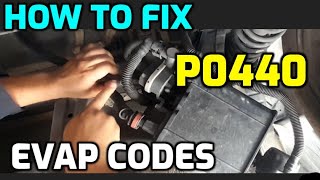
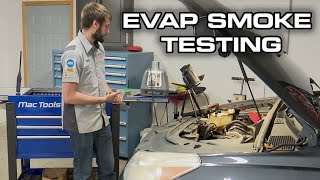
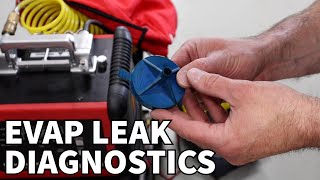
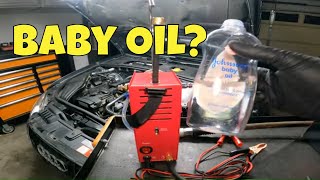
- Perform a Smoke Test: If the gas cap and purge valve are good, the next step is a smoke test. This involves injecting pressurized smoke into the EVAP system's service port. Smoke will exit from any leaks, making them easy to spot. 🎬 See how to find Audi EVAP leaks using a smoke tester. This is the most reliable way to find leaks in hoses, the charcoal canister, the leak detection pump, or tank seals.
- Test the Leak Detection Pump (LDP): If no external leaks are found, the LDP itself may be faulty. This usually requires a bi-directional scan tool to command the pump and monitor its response. The LDP is located behind the rear driver's side wheel well liner.
Parts You'll Likely Need
- Fuel Cap
(OEM #4L0201551)— This is the most frequent cause of EVAP leaks. The seal wears out over time, preventing the system from holding pressure.
Trusted brands: Audi Genuine, Blau, Stant
OEM price range: $30-$50
Aftermarket price range: $15-$25 - EVAP Purge Valve / N80 Valve
(OEM #06E906517A)— A very common failure item on VAG vehicles. It gets stuck open or closed, causing either a constant leak or improper flow.
Trusted brands: Bosch (OEM supplier), Audi Genuine, Dorman
OEM price range: $60-$90
Aftermarket price range: $30-$50 - Leak Detection Pump (LDP)
(OEM #7L0906243D)— This pump is responsible for testing the system and is a known failure point on the Q7, either by failing electrically or leaking internally due to moisture intrusion.
Trusted brands: Bosch (OEM supplier), Audi Genuine
OEM price range: $250-$350
Aftermarket price range: $150-$220
Related Codes That Often Appear With This One
- P0455 — P0455 indicates a 'Large EVAP Leak.' P0440 is a more general malfunction code, but they often share the same causes, like a missing gas cap or a major hose disconnection.
- P0456 — P0456 indicates a 'Small EVAP Leak.' This can be caused by a failing gas cap seal or a very small crack in a hose. Sometimes a failing component can initially cause a small leak code before progressing to a general malfunction or large leak code.
- P0441 — P0441 indicates 'Incorrect Purge Flow,' which points more directly to a problem with the N80 purge valve's operation rather than a system leak, but the two can be related and often appear together.
Platform-Specific Known Issues
- A user on AudiWorld forums reported their 2015 Q7 repeatedly threw a P0440 code that was ultimately traced to a faulty Leak Detection Pump after the dealer initially replaced the gas cap with no success.
- On the Rennlist forums for the Porsche Cayenne (a platform mate), a user with a P0440 code noted a raw gas smell and discovered the issue was a faulty fuel tank vent valve, another component of the EVAP system.
- An AudiWorld user with a 3.6L Q7 seeking to replace their N80 valve was advised that it's located on the back side of the passenger side valve cover. The user later confirmed that removing the air intake assembly made the job 'quite easy'.
Mechanic-Grade Diagnostic Values
- N80 Purge Valve Coil Resistance — expected: 22 to 30 Ohms. Failure: A reading outside this range indicates a faulty internal coil.
- N80 Purge Valve Connector Voltage (Pin 1 to Ground) — expected: ~12V (Battery Voltage) with Key On. Failure: No voltage indicates a wiring or fuse issue upstream of the valve.
Scan Tool Commands That Help
- VCDS (VAG-COM): Basic Settings - Group 070 (or 071) — This function initiates the EVAP system self-test. It commands the LDP to run and pressurize the system, allowing the tech to monitor for leaks or component failure. The test will report 'System OK' or abort with a specific error if a fault is found.
- VCDS (VAG-COM): Output Tests (DTM) - EVAP Canister Purge Regulator Valve (N80) — This test directly commands the N80 valve to cycle on and off. The user should hear an audible clicking from the valve. It's used to confirm if the valve is electrically responsive, though it doesn't confirm if it's mechanically sealed.
Wiring & Ground Locations
- N80 - EVAP Canister Purge Regulator Valve — On the 3.6L and 4.2L engines, it is typically located at the rear of the engine compartment on the passenger side, sometimes near or on the valve cover.. This is a primary failure component. Knowing its location is critical for testing and replacement.
- LDP - Leak Detection Pump (V144) & EVAP Canister — Located under the vehicle, inside the rear right (passenger side) wheel housing liner.. This is the second most common electrical failure point. Access requires removing the rear wheel and liner.
- T94 Connector — A 94-pin black connector located on the Engine Control Module (ECM).. This is the main connector where the wiring from EVAP components terminates. It's a key point for advanced electrical diagnostics like checking for continuity or shorts from the component back to the ECM.
Real Owner Repair Stories
- YouTube video by 'Fix it Angel' (2000 Toyota Celica GT (demonstrates a common P0440 issue applicable across brands)) — Persistent P0440 Check Engine Light.
❌ Tried (didn't work) Replaced gas cap, Inspected all engine bay hoses, Replaced entire EVAP canister assembly with used parts
✅ What actually fixed it The final cause was a small, hard-to-see crack in the rubber seal for the fuel tank vent valve, which is located on top of the fuel tank. Dropping the tank was required to access and replace this seal. - AudiForums.com user (Audi A6 (similar EVAP system and LDP)) — EVAP system would not achieve readiness. VCDS test Group 071 would abort.
❌ Tried (didn't work) Replaced Leak Detection Pump (LDP), Smoke test (only showed smoke exiting the LDP filter, which was misleading), Tested N80 valve (passed), Leak tested all accessible lines
✅ What actually fixed it The user suspected the new LDP was also faulty or there was a wiring issue, as the pump would not generate any air pressure during the VCDS test, even when disconnected from the system. The thread ends before a final resolution, but highlights that a new part can be faulty and that testing the pump's basic function (generating air) is a key step.
"I Checked Everything" — The Actual Cause
- In some cases, a smoke test may not reveal a leak if the fault is intermittent or related to a component that only fails under specific conditions (e.g., temperature or vibration). A user with a similar Audi system reported a persistent code despite multiple checks. The issue was an 'implausible signal' from the LDP, suggesting an electrical fault in the pump's sensor circuit or the ECM itself, which a smoke test cannot detect.
- A cracked fuel tank vent valve seal, located on top of the fuel tank, can cause a P0440. This is often missed because it requires dropping the fuel tank to inspect, a step most technicians will not take unless a smoke test clearly points to the top of the tank.
OEM Part Supersession History
06E906517→06E906517A— Standard part revision and improvement by the manufacturer.
Heads up: The parts are interchangeable, with 'A' being the later, more common revision.
Model Year Variations Within This Range
- 2010-2015: The first-generation Q7 received a facelift for the 2010 model year. This included cosmetic updates and engine changes, such as the introduction of a 3.0L Supercharged V6 and a 3.0L TDI V6, replacing the older 3.6L and 4.2L naturally aspirated engines. While the fundamental EVAP system design (using an LDP) remained, component locations and specific part numbers for items like the N80 valve may vary slightly with the new engines.
Diagnostic Flowchart
Other Known Issues on This Vehicle
Issues unrelated to this code that are worth knowing about as an owner of this generation:
- Panoramic Sunroof Leaks 🔴 High — Very common across all years. Caused by clogged front or rear drain tubes. (Ref: Multiple TSBs exist. Can lead to catastrophic failure of MMI/audio components located in the trunk if water ingress occurs.)
- Carbon Buildup (FSI/TFSI Engines) 🟠 Medium — Common on direct-injection gasoline engines (3.6L, 4.2L, 3.0T) starting around 60k-80k miles. Causes misfires, rough idle, and loss of power. (Ref: TSB 2014753/7 addresses this. Not typically covered by warranty as it's considered 'environmental'.)
- Carbon/Soot Buildup (TDI Engines) 🟠 Medium — Common on TDI diesel engines, particularly in the EGR system and intake manifold, affecting performance over time.
- MMI System Failure 🟠 Medium — Failures can range from black screens to intermittent operation. Often caused by sunroof water leaks damaging the amplifier/control module in the rear, or internal failure of the control unit in the center console due to liquid spills.
- Air Suspension Failure 🔴 High — Compressor failure or air spring leaks are common, especially on higher-mileage vehicles. Leads to sagging corners and a harsh ride. (Ref: TSB 2014915/4 exists for software updates, but most failures are mechanical.)
- Timing Chain Rattle / Tensioner Issues (4.2L V8) 🔴 High — The 4.2L V8 can suffer from timing chain guide and tensioner failure, causing a rattle on startup. This is an engine-out repair and extremely expensive.
Used vs. New Parts: Buying Guide for This Vehicle
When a used part is the smart pick: For expensive components like the Leak Detection Pump (LDP), a used part from a low-mileage donor vehicle can be a cost-effective option. Hoses and the charcoal canister can also be sourced used, provided they are visually inspected for cracks and damage.
Donor-vehicle mileage cap: roughly under 80000 miles for the part to have meaningful remaining life.
What to inspect on the donor part:
- For an LDP, check for corrosion on the housing and electrical connector.
- For hoses, ensure they are still pliable and show no signs of cracking or brittleness.
- For a charcoal canister, ensure there are no visible cracks in the plastic housing and no loose charcoal rattling inside.
OEM-only on this vehicle (don't cheap out):
- Fuel Cap: The rubber seal is the primary failure point. Aftermarket caps are notorious for poor sealing performance, leading to persistent codes. Always buy a new, genuine OEM cap.
Aftermarket brands forum-validated for this vehicle:
- Bosch: Bosch is the original equipment manufacturer (OEM) for many VAG electrical components, including the N80 Purge Valve and the Leak Detection Pump. A Bosch-branded part is equivalent to the genuine Audi part but often costs less.
Brands owners have reported issues with on this vehicle:
- Unbranded/No-Name Gas Caps: Many forum and technician accounts warn against cheap, generic gas caps as they frequently fail to seal correctly on VAG vehicles.
Real Owner Stories
Aggregated from forums and TSBs cited above. Mileages and costs reflect what owners reported in those sources.
2015 Audi Q7
Symptoms: The vehicle repeatedly threw a P0440 code. The dealer initially replaced the gas cap, but the light returned.
What fixed it: The issue was ultimately traced to a faulty Leak Detection Pump (LDP).
Source hint: AudiWorld forums
2009 Audi Q7 3.6L
Symptoms: Owner was seeking to replace the N80 purge valve and noted the difficulty of the location.
What fixed it: Removing the air intake assembly made the replacement of the N80 valve 'quite easy'.
Source hint: AudiWorld forum thread titled 'n80 purge valve 09 q7 3.6'
2004 Porsche Cayenne S (Platform Mate)
Symptoms: The owner reported a P0440 code accompanied by a raw gas smell.
What fixed it: The issue was discovered to be a faulty fuel tank vent valve.
Source hint: Rennlist forums for the Porsche Cayenne
Related OBD-II Codes
Frequently Asked Questions
Where is the N80 purge valve located on my 3.6L Audi Q7?
I have a P0440 and difficulty starting my Q7 after getting gas. What is the likely cause?
Where is the Leak Detection Pump (LDP) located on the 2007-2015 Q7?
Can a bad gas cap really cause a P0440 code on my Audi?
Is there a TSB for carbon buildup on my Q7's FSI engine?
Could my Q7's panoramic sunroof leak be related to EVAP codes?
Helpful Videos


Used OEM Parts in Stock
New Aftermarket Parts Available


The information in this article is provided for general reference and educational purposes only. Vehicle specifications, procedures, and part compatibility can vary by production date, trim level, and region. Always consult your vehicle's factory service manual and verify part numbers before purchasing or performing repairs. Safety-critical components such as airbags, seat belts, and braking systems should be installed by a qualified professional.
- Audi Q7:
- 🧭 Diagnostic Flowchart
- 🎬 Helpful Videos
- 🛍️ Shop This Part
- What's Unique About the 2007-2015 Audi Q7
- Symptoms You May Notice
- Most Likely Causes
- Rare But Worth Checking
- Diagnosis Steps
- Parts You'll Likely Need
- Related Codes That Often Appear With This One
- Platform-Specific Known Issues
- Mechanic-Grade Diagnostic Values
- Scan Tool Commands That Help
- Wiring & Ground Locations
- Real Owner Repair Stories
- "I Checked Everything" — The Actual Cause
- OEM Part Supersession History
- Model Year Variations Within This Range
- Other Known Issues on This Vehicle
- Used vs. New Parts: Buying Guide for This Vehicle
- Real Owner Stories
- 2015 Audi Q7
- 2009 Audi Q7 3.6L
- 2004 Porsche Cayenne S (Platform Mate)
- Related OBD-II Codes
- Frequently Asked Questions
- 🎟️ Get 5% Off