

P0440 on 2005-2010 BMW 5-Series (N52): EVAP System Malfunction Causes and Fixes
For a 2005-2010 BMW 5-Series with a P0440 code, the most likely causes are a faulty fuel tank vent valve (purge valve) or a loose/bad gas cap. If the car struggles to start after refueling, the vent valve is the prime suspect. A new valve costs around $50-$100 and is a common DIY fix. A failing gas cap is the next most common culprit and is the cheapest and easiest part to replace.
- P0440 on your 5-Series means there's a leak in the emissions system that contains fuel vapors.
- Always check the gas cap first. Make sure it's tight and the rubber seal isn't cracked.
- If your car has trouble starting right after you get gas, the Fuel Tank Vent Valve (Purge Valve) is the most likely culprit.
- If the simple fixes don't work, a smoke test is the best way to find the leak, which could be a cracked hose or a faulty DMTL pump.
- This code will not stop you from driving the car, but it will cause you to fail an emissions test.
What's Unique About the 2003-2010 BMW 5-Series
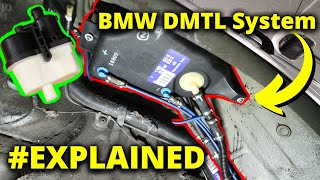
Unlike many vehicles that use engine vacuum to test the EVAP system, BMWs of this era use a dedicated electric pump, the DMTL, located in the rear wheel well. This makes the DMTL pump itself a potential point of failure, in addition to the usual suspects like purge valves and hoses. A very common symptom specific to these cars, particularly with a failing purge valve, is a rough start or extended cranking immediately after filling up the gas tank. This happens because a stuck-open valve allows unmetered fuel vapor to flood the intake manifold, creating a rich condition that makes starting difficult.
Generation note: The 2003-2010 year range covers the entire E60 (sedan) and E61 (wagon) 5-Series generation. However, the N52 engine was introduced in 2005. This guide is specifically for the 2005-2010 models equipped with the N52 engine, as earlier 2003-2004 models used the M54 engine which has a different EVAP system configuration.
Symptoms You May Notice
- Check Engine Light is on
- Difficulty starting or rough idle immediately after refueling
- A faint smell of fuel around the vehicle, especially in an enclosed garage
- A 'Check Gas Cap' warning message on the iDrive screen or instrument cluster
- Replacing the oxygen sensors. O2 sensors are not related to the EVAP system.
- Replacing the DMTL pump when the actual problem is a simple bad gas cap or a cracked hose. Always start with the simplest and cheapest fixes first, like checking and cleaning the gas cap.
Most Likely Causes
- Faulty Fuel Tank Vent Valve (Purge Valve) 🔴 High Probability → Shop Fuel Tank This valve, also known as the Tank Venting Valve (TEV) in BMW terminology, is electronically controlled and cycles frequently, leading to wear. It can get stuck open or closed, causing a leak or a blockage in the EVAP system.
How to confirm: The most telling symptom is difficulty starting after a fill-up. You can also test it by applying 12V to its terminals to see if it clicks open and closed. When not energized, it should be closed and hold a vacuum; you should not be able to blow through it.
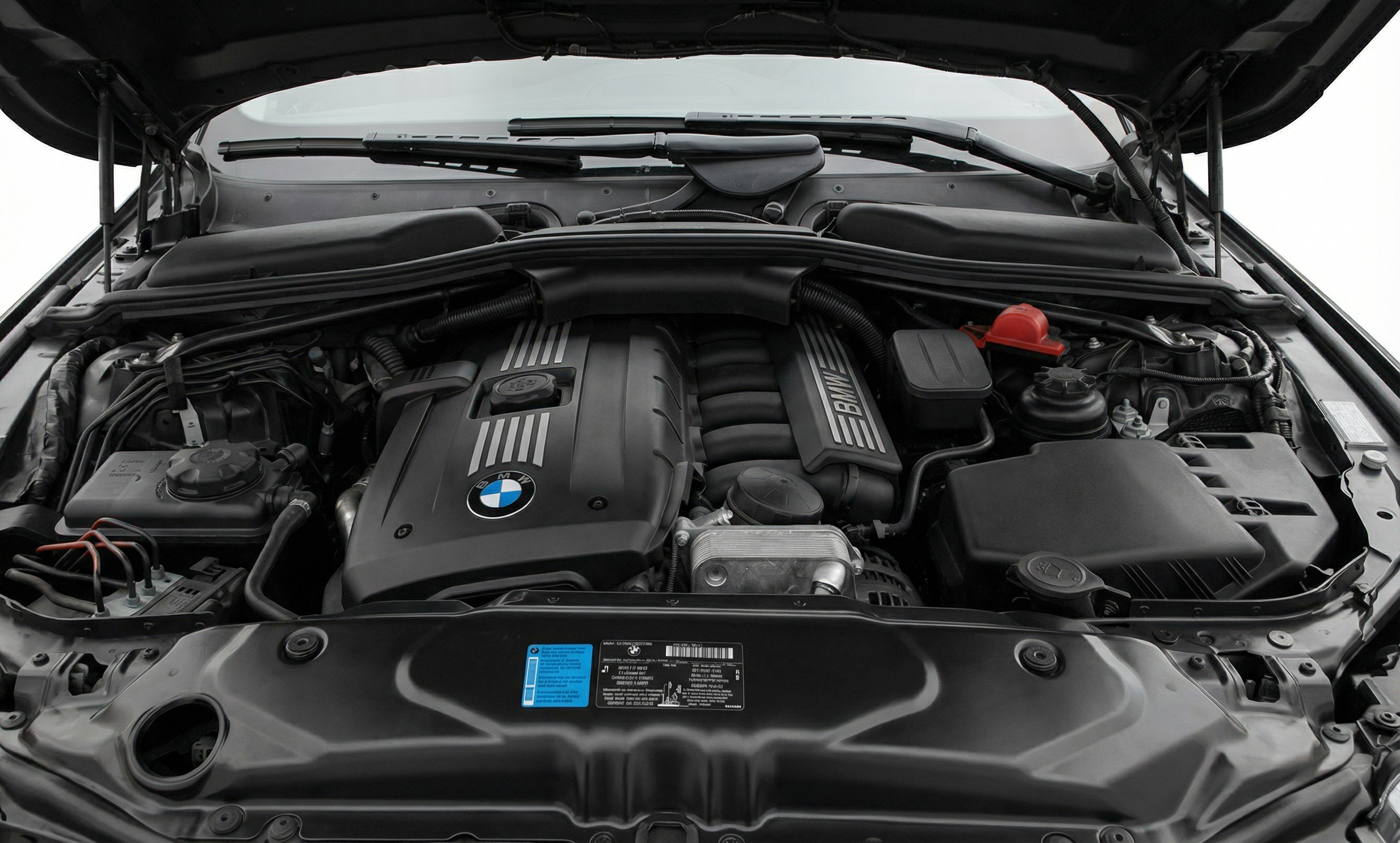
Typical fix: Replace the fuel tank vent valve. It is located in the engine bay, attached to the intake manifold.
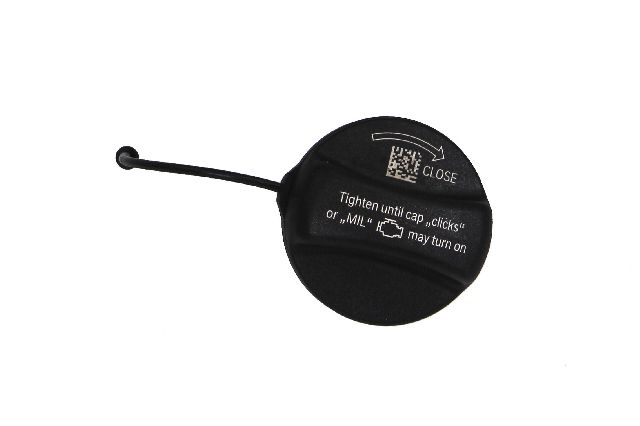
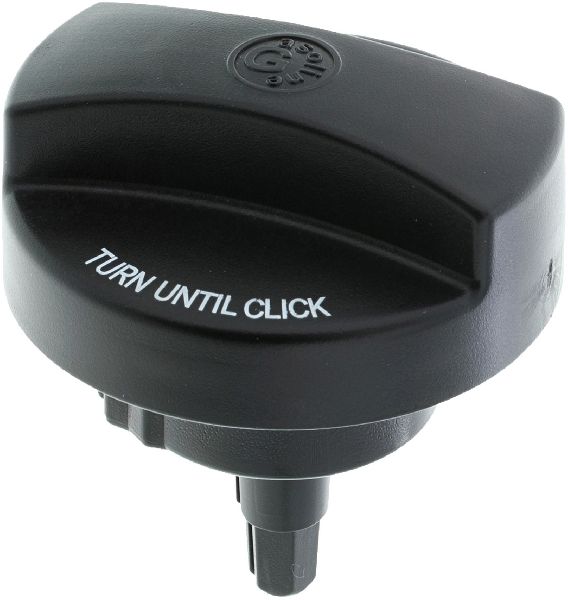
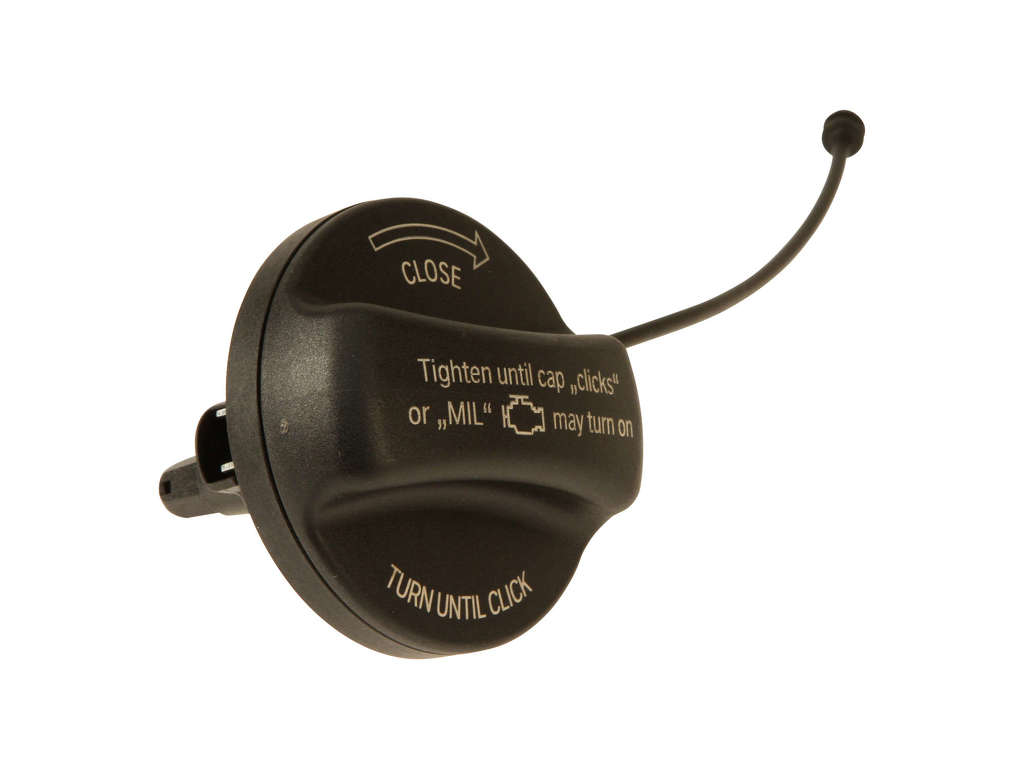
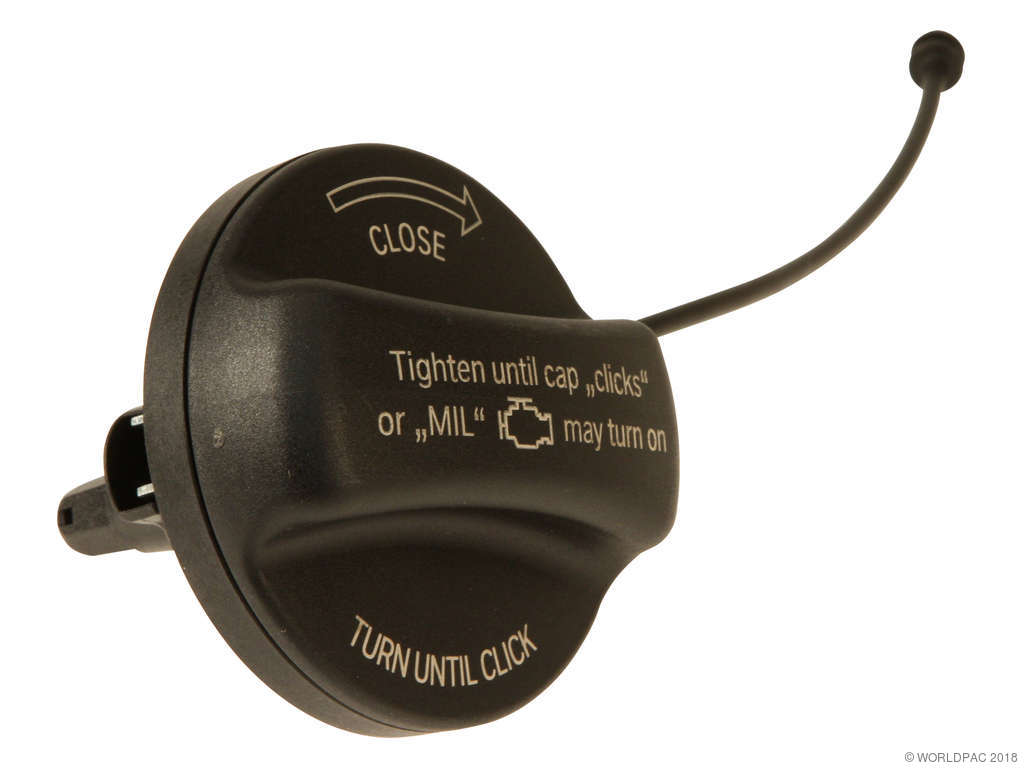
Est. part cost: $50-$100 - Loose, Worn, or Incorrect Gas Cap 🔴 High Probability → Shop Fuel Tank Cap The gas cap seal is made of rubber that can dry out, crack, and fail over time, preventing a proper seal. It's also easy to forget to tighten it properly after refueling.
How to confirm: First, ensure the cap is tightened until it clicks several times. Inspect the rubber O-ring on the cap for any cracks, stiffness, or visible damage. A hissing sound from the gas cap area after a drive can indicate a leak. Cleaning the cap and filler neck sealing surfaces can sometimes resolve the issue.
Typical fix: Clean the cap and filler neck sealing surfaces. If the seal is damaged, replace the gas cap with a new OEM or equivalent part.
Est. part cost: $20-$40 - Failed DMTL Pump 🟡 Medium Probability → Shop Evaporative Emissions System Leak Detection Pump The DMTL pump contains a small electric motor and vane pump that can wear out or fail electrically, a known issue on many BMW models. Overfilling the fuel tank can sometimes force raw fuel into the charcoal canister and DMTL pump, causing premature failure. The pump's internal filter can also become clogged with dust, leading to failure.
How to confirm: Diagnosis requires a BMW-specific scan tool to run the DMTL leak test. The pump should be heard running during the test. The pump is located behind the right-rear wheel well liner. A common related fault code is 2A17 for a DMTL module failure.
Typical fix: Replace the DMTL pump. It is typically mounted to the charcoal canister.
Est. part cost: $70-$150 - Cracked or Disconnected EVAP Hoses ⚪ Low Probability The plastic and rubber hoses, especially in the engine bay, are exposed to heat and can become brittle and crack over time.
How to confirm: A visual inspection may reveal obvious cracks, but small leaks are hard to see. The most effective method is to use a smoke machine to inject smoke into the EVAP system and watch for where it escapes.
Typical fix: Replace the specific hose or line that is found to be leaking.
Est. part cost: $30-$100
Rare But Worth Checking
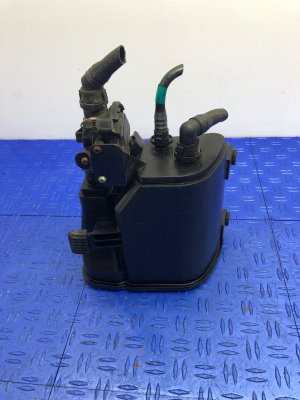
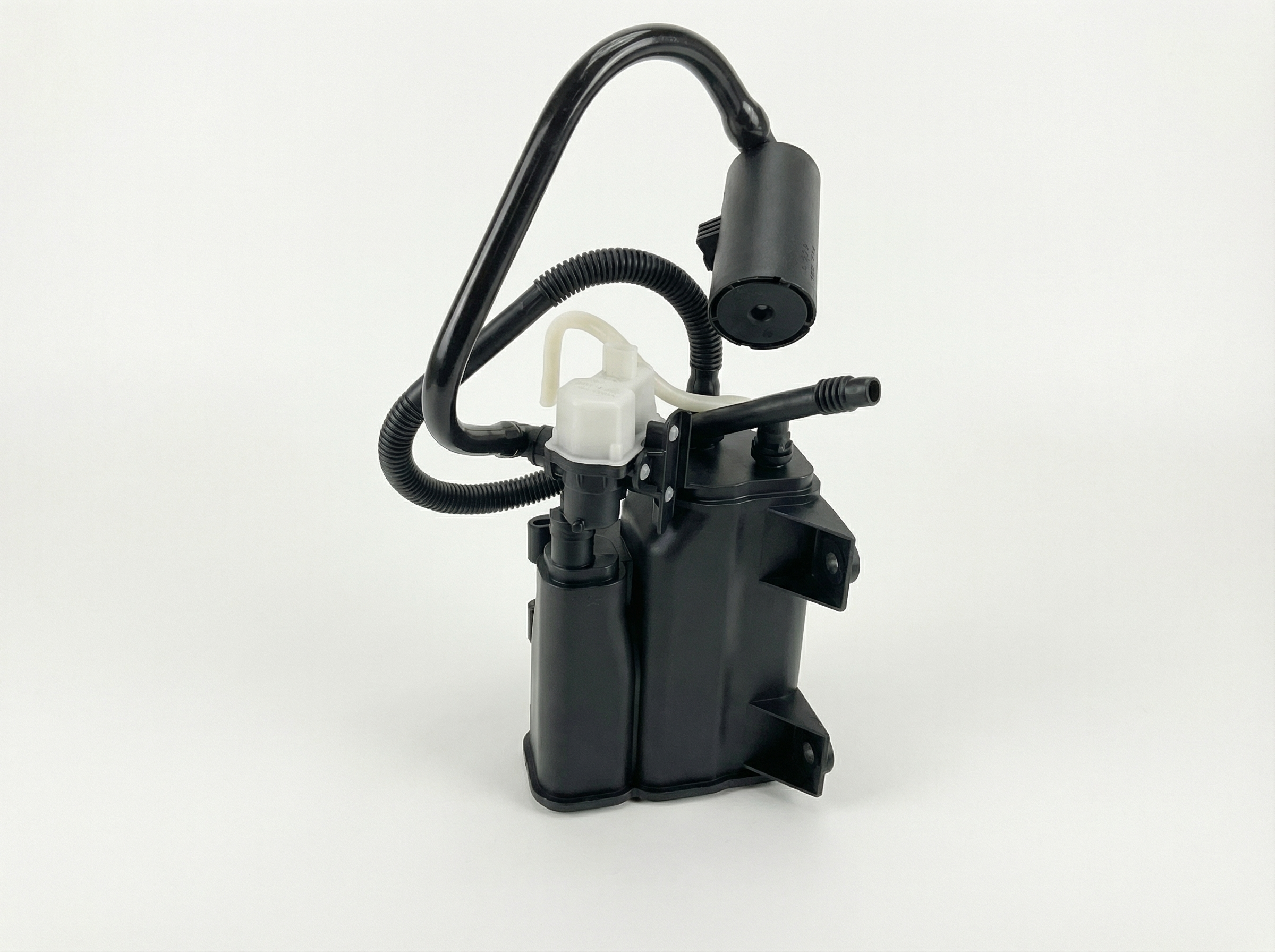
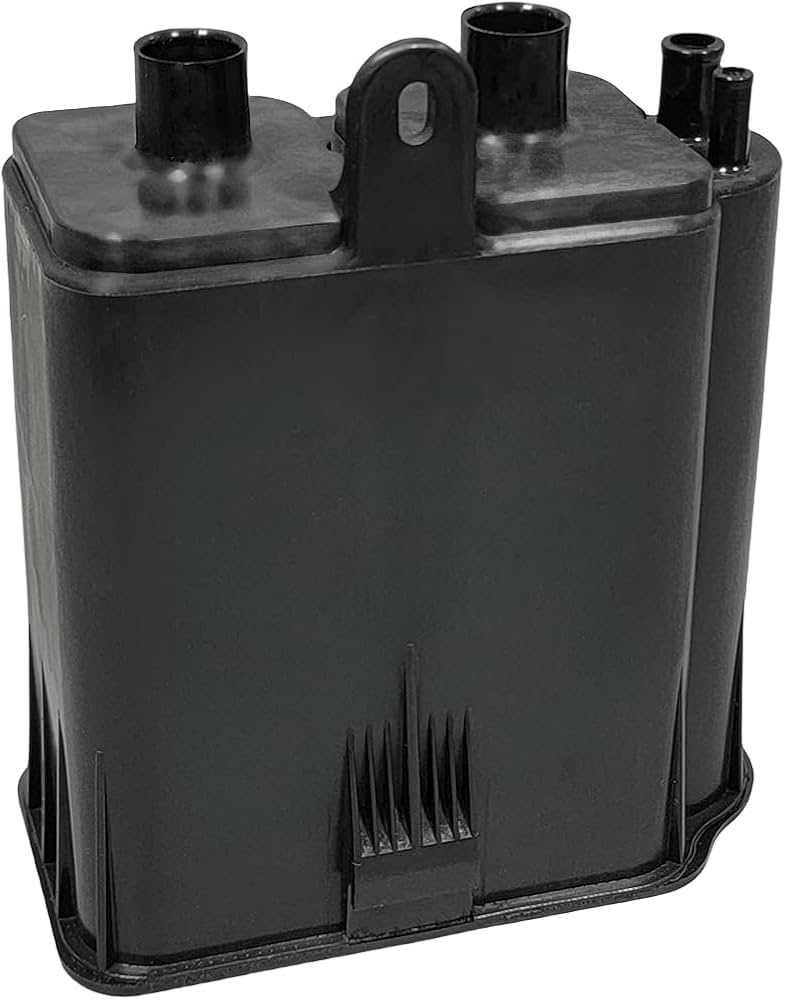
- Cracked Charcoal Canister: → Shop Vapor Canister The canister itself can develop cracks from road debris or age, creating a large leak. This is usually found during a smoke test. Overfilling the gas tank repeatedly can saturate the canister with liquid fuel, destroying the activated carbon inside and causing a blockage.
- Leaking Fuel Tank or Filler Neck: → Shop Fuel Tank Rust or physical damage can cause the fuel tank or filler neck to leak vapors. This is a more serious issue and would likely be accompanied by a strong fuel smell and be easily found with a smoke test.
Diagnosis Steps
- Check the Gas Cap: Remove the gas cap, inspect the rubber seal for cracks or damage, and clean the sealing surfaces on both the cap and the filler neck. Reinstall it and tighten until it clicks at least three times. Clear the code and drive for a few days to see if it returns.
- Scan for BMW-Specific Codes: Use a BMW-capable scanner to read for codes beyond the generic P0440. Codes like 2A17 can point directly to a faulty DMTL pump, saving diagnostic time.
- Inspect the Fuel Tank Vent Valve (Purge Valve): Locate the valve in the engine bay. Listen for a clicking sound from it with the engine running. A common failure is being stuck open, which can cause rough running after refueling.
- Perform a Visual Inspection: Look over all accessible EVAP hoses in the engine bay and around the charcoal canister area (right rear wheel well) for obvious cracks, breaks, or disconnections.
- Conduct a Smoke Test: This is the most reliable way to find leaks. Introduce smoke into the EVAP system (usually via the purge valve line or a special adapter) and look for smoke escaping from any component, including hoses, the charcoal canister, the DMTL pump, or the gas cap.
- Test the DMTL Pump: Using a capable scan tool, activate the DMTL pump test function. You should hear the pump running in the right-rear wheel well area. If it doesn't run or if it fails the test, it may be faulty.
- Check for Power: If a component like the purge valve or DMTL pump is suspected and doesn't operate, use a multimeter to check for power and ground at its electrical connector when it's supposed to be activated.
Parts You'll Likely Need
- Fuel Tank Vent Valve / Purge Valve
(OEM #13907618643 (or superseding part 13907572234))— This is a very frequent failure item that causes the P0440 code and often leads to starting issues after refueling.
Trusted brands: Bosch, Bremmen Parts, Genuine BMW
OEM price range: $80-$120
Aftermarket price range: $40-$70 - Gas Cap / Fuel Filler Cap
(OEM #16117222391)— The seal on the gas cap degrades over time, causing a leak. It's an inexpensive and easy first part to replace during diagnosis.
Trusted brands: Genuine BMW, Rein, Blau
OEM price range: $30-$40
Aftermarket price range: $15-$25 - EVAP Leak Diagnosis Pump (DMTL)
(OEM #16137193479)— The pump motor fails over time, preventing the EVAP system from being tested, which sets a fault code. This part has been superseded by several numbers, including 16136764191 and 16136752551.
Trusted brands: Bosch, Genuine BMW
OEM price range: $120-$160
Aftermarket price range: $70-$100
Related Codes That Often Appear With This One
- P0442 — This indicates a 'small' EVAP leak, while P0440 can sometimes mean a 'gross' or general leak. They point to the same set of problems, just differing in the size of the leak detected.
- P0456 — This indicates a 'very small' EVAP leak. It's common to see this code for a failing gas cap seal.
- 2A15 / 2A16 / 2A17 — These are BMW-specific fault codes for minor leaks, major leaks, or DMTL module failure, respectively. They provide more specific information than the generic P0440 code and can point directly to a DMTL pump issue.
Technical Service Bulletins (TSBs) & Recalls
- SI B 16 01 07: This BMW Service Information bulletin provides a detailed diagnostic procedure for the EVAP system, outlining the function and test plan for the DMTL pump. It is a key document for technicians diagnosing leak faults.
- SI B 12 15 07: This bulletin addresses updates to the DME (eng
Platform-Specific Known Issues
- A user on the r/e60 subreddit with a 2007 525xi documented their experience with P0440 and a hard start after refueling. After research, they identified the Vapor Canister Purge Valve as the likely culprit, replaced it, and confirmed the fix after a fill-up.
- Multiple owners on a Bimmerfest forum thread titled 'P0440, P0456 and rough idle after fill up' corroborate that replacing the purge valve resolved both the codes and the starting issue, confirming this is a widespread and well-known fix.
Mechanic-Grade Diagnostic Values
- Fuel Tank Vent Valve (Purge Valve) State — expected: The valve should be normally closed when no voltage is applied. It should not be possible to blow air through it.. Failure: If air can be blown through the valve when it is not energized, it is stuck open and faulty.
- Fuel Tank Vent Valve (Purge Valve) Activation — expected: When 12V is applied to the two terminals, the valve should make an audible 'click' and open, allowing air to pass through.. Failure: No click or failure to open when 12V is applied indicates a failed solenoid coil.
Hidden / Shadow Codes Worth Checking
- 2A15: DMTL, tank leak, minor leak detected. This is a BMW-specific code indicating a small leak was found during the system test. (see via BMW-specific scan tool like ISTA or a capable aftermarket scanner (e.g., Foxwell, Autel).)
- 2A16: DMTL, tank leak, major leak detected. This often corresponds to the generic P0440 code. (see via BMW-specific scan tool like ISTA or a capable aftermarket scanner.)
- 2A17: DMTL, system fault. This code points directly to a failure of the DMTL pump module itself, such as a failed motor or internal valve, preventing the test from running at all. (see via BMW-specific scan tool like ISTA or a capable aftermarket scanner.)
- 2A1A: Tank-venting system, function. This is another BMW-specific code that can be triggered along with P0440, pointing to a general EVAP system functional issue. (see via BMW-specific scan tool like ISTA.)
Scan Tool Commands That Help
- ISTA: DME Component Triggering: Motor of diagnostic module for tank leakage (DMTL) — Use this to manually activate the DMTL pump motor. You should be able to hear the pump running in the right rear wheel well. If no sound is heard, it confirms the pump is not running, pointing to a pump failure or wiring issue.
- ISTA: DME Component Triggering: Changeover valve of diagnostic module for tank leakage (DMTL) — This command tests the internal valve within the DMTL pump assembly. A clicking sound should be heard. This helps differentiate between a failed pump motor and a failed internal valve.
- ISTA: ABL (Test Plan) for Fuel tank leakage — This is the guided diagnostic routine. ISTA will automatically run the DMTL pump, measure the current draw, and analyze the pressure to determine the size of any leak. It's the most comprehensive software-based test.
Wiring & Ground Locations
- DMTL Pump Location — Behind the passenger-side (right) rear wheel well liner. The wheel and liner must be removed for access.. This is the physical location for visual inspection, testing, and replacement of the DMTL pump.
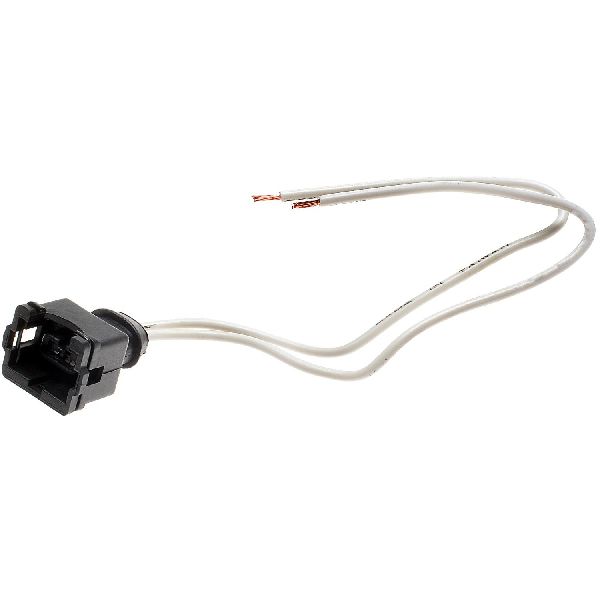
- DMTL Pump Connector (X1714) — The electrical connector on the DMTL pump itself.. This connector is the primary test point for power and ground signals to the pump. A forum post for a similar E90 chassis identifies Pin 4 (Red/White wire) as power, Pin 1 (Brown/Blue) as the pump motor ground signal from the DME, Pin 2 (Black/Red) for the heater, and Pin 3 (Black/Green) for the valve.
- Fuel Tank Vent Valve (Purge Valve) Location — In the engine bay, attached to the intake manifold. On the N52, it is located underneath the throttle body and requires removing the airbox and throttle body for access.. This is the location for testing and replacing the purge valve, a very common failure point causing P0440 and hard starts after refueling.
Real Owner Repair Stories
- Reddit user on r/e60 (2007 BMW 525xi (N52 engine)) — P0440 Service Engine Soon light, and extended cranking (10-15 seconds) with a rough start immediately after filling the gas tank.
✅ What actually fixed it Replacing the Vapor Canister Purge Valve (also called Fuel Tank Vent Valve). The user confirmed that after replacement, the car started smoothly after a fill-up and the check engine light did not return. - Bimmerpost forum user (E90 (N52-era chassis)) — Check engine light with P0440, which appeared the day after a walnut blasting service.
❌ Tried (didn't work) Checking the gas cap.
✅ What actually fixed it The user later updated that the cause was a boost leak. While the N52 is not turbocharged, this implies a vacuum leak was introduced during the intake manifold service (walnut blasting), which can also trigger an EVAP code on some systems.
OEM Part Supersession History
13907572234→13907618643— Part revision and update by BMW.
Heads up: The new part number, 13907618643, is the correct replacement for the older numbers and should be used for repairs. The older numbers it replaces also include 13904588396.
Model Year Variations Within This Range
- 2008-2010 (LCI): The E60 received a Life Cycle Impulse (LCI) update for the 2008 model year. While the N52 engine was used in both pre-LCI (2006-2007) and LCI models, the LCI brought numerous quality control improvements and updates to electronics and wiring. While the fundamental EVAP system design is the same, connectors or harness routing may have minor differences. The N52 itself was revised to the N52K variant around this time, addressing some earlier engine issues.
Diagnostic Flowchart
Other Known Issues on This Vehicle
Issues unrelated to this code that are worth knowing about as an owner of this generation:
- Electric Water Pump Failure 🔴 High — Extremely common. Failure is often sudden and without warning, typically between 60,000 and 100,000 miles.
- Oil Filter Housing Gasket (OFHG) Leak 🔴 High — Very common leak. If left untreated, leaking oil drips onto the serpentine belt, causing it to degrade, slip, and potentially be ingested by the front main seal, leading to catastrophic engine damage.
- Valve Cover & Gasket Leak 🟠 Medium — Extremely common. The plastic valve cover can warp or crack, and the gasket becomes brittle, causing oil to leak onto the exhaust manifold, resulting in a burning oil smell.
- VANOS Solenoid Failure 🟡 Low — Common. Solenoids get clogged with debris over time, leading to rough idle, poor acceleration, and VANOS-specific fault codes. They are relatively inexpensive and easy to clean or replace.
- Hydraulic Valve Lifter ('HVA') Ticking 🟡 Low — Common on earlier N52 engines, especially on short trips. Causes an audible ticking sound from the top of the engine. It is often an annoyance rather than a critical failure, and BMW later released an updated cylinder head design.
Used vs. New Parts: Buying Guide for This Vehicle
When a used part is the smart pick: For this repair, a used Fuel Tank Vent Valve (Purge Valve) or DMTL pump from a reputable salvage yard can be a cost-effective option, especially from a low-mileage donor vehicle. These are not high-wear mechanical parts like suspension components. A used charcoal canister is also viable if the donor car has no EVAP codes and there's no evidence of fuel saturation.
Donor-vehicle mileage cap: roughly under 80000 miles for the part to have meaningful remaining life.
What to inspect on the donor part:
- Check the donor vehicle's history for EVAP-related codes if possible.
- For a purge valve or DMTL pump, ensure electrical connectors are free of corrosion.
- Inspect the rubber o-rings and plastic hose connections for any cracks or brittleness before purchasing.
- For a charcoal canister, avoid any that appear physically damaged or have a strong raw fuel smell, which indicates saturation.
OEM-only on this vehicle (don't cheap out):
- Gas Cap: While inexpensive, aftermarket gas caps are notorious for poor sealing and can cause the same codes to return. It is strongly recommended to use a Genuine BMW or OEM-supplier (e.g., Blau, Rein) gas cap to ensure a perfect seal.
Aftermarket brands forum-validated for this vehicle:
- Bosch: Bosch is the original equipment manufacturer for many BMW electronic components, including the DMTL pump and purge valve. Choosing Bosch is equivalent to getting the genuine part without the BMW logo and dealer markup.
- Febi Bilstein: A reputable German aftermarket brand that often provides quality alternatives to OEM parts.
Brands owners have reported issues with on this vehicle:
- Unbranded/No-name eBay parts: While tempting due to low cost, the quality control on sensors and electronic valves from unknown brands is highly inconsistent and can lead to repeat failures.
Real Owner Stories
Aggregated from forums and TSBs cited above. Mileages and costs reflect what owners reported in those sources.
2007 BMW 525xi N52
Symptoms: Check engine light P0440 and a hard start immediately after refueling the vehicle.
What fixed it: Replaced the Vapor Canister Purge Valve (Fuel Tank Vent Valve).
Source hint: r/e60 on Reddit - 'How to fix issue when filling up gas and car has trouble starting (P0440) For BMW 525XI 2007 or possibly any N52 engine'
2003-2010 BMW 5-Series N52
Symptoms: P0440 and P0456 codes accompanied by a rough idle specifically after a fill-up.
What fixed it: Replacement of the purge valve resolved both the fault codes and the starting issues.
Source hint: Bimmerfest - 'P0440, P0456 and rough idle after fill up'
2006-2013 BMW 3-Series (E90) N52
Symptoms: Error code P0440; discussion focused on whether to start replacing parts or perform professional diagnosis.
What fixed it: The recommended path was checking the gas cap first, followed by a smoke test to identify the specific leak location before replacing components.
Source hint: Bimmerpost - 'Error code P0440 ?'
Related OBD-II Codes
Frequently Asked Questions
Why does my 5-Series have trouble starting only after I fill up the gas tank?
Is there a specific BMW diagnostic procedure for the DMTL pump on my E60?
Where is the DMTL pump located on the 2003-2010 5-Series?
Can I use a generic OBD-II scanner to diagnose P0440 on my BMW?
My iDrive is displaying a 'Check Gas Cap' message; is this related to P0440?
Could overfilling my gas tank cause the P0440 code?
Helpful Videos
Used OEM Parts in Stock
New Aftermarket Parts Available


The information in this article is provided for general reference and educational purposes only. Vehicle specifications, procedures, and part compatibility can vary by production date, trim level, and region. Always consult your vehicle's factory service manual and verify part numbers before purchasing or performing repairs. Safety-critical components such as airbags, seat belts, and braking systems should be installed by a qualified professional.
- BMW 5-Series:
- 🧭 Diagnostic Flowchart
- 🎬 Helpful Videos
- 🛍️ Shop This Part
- What's Unique About the 2003-2010 BMW 5-Series
- Symptoms You May Notice
- Most Likely Causes
- Rare But Worth Checking
- Diagnosis Steps
- Parts You'll Likely Need
- Related Codes That Often Appear With This One
- Technical Service Bulletins (TSBs) & Recalls
- Platform-Specific Known Issues
- Mechanic-Grade Diagnostic Values
- Hidden / Shadow Codes Worth Checking
- Scan Tool Commands That Help
- Wiring & Ground Locations
- Real Owner Repair Stories
- OEM Part Supersession History
- Model Year Variations Within This Range
- Other Known Issues on This Vehicle
- Used vs. New Parts: Buying Guide for This Vehicle
- Real Owner Stories
- 2007 BMW 525xi N52
- 2003-2010 BMW 5-Series N52
- 2006-2013 BMW 3-Series (E90) N52
- Related OBD-II Codes
- Frequently Asked Questions
- 🎟️ Get 5% Off