

P0440 on 2000-2005 Buick LeSabre: EVAP System Malfunction Causes and Fixes
For a P0440 code on a 2000-2005 Buick LeSabre, start by checking for a loose or worn gas cap. If that doesn't fix it, the most likely cause is a cracked fuel filler neck, a common issue on this car. A new gas cap is under $25, while a filler neck replacement can cost $200-$400 at a shop.
- Always start with the simplest fix: check and tighten the gas cap. If that doesn't work, spend the $15-20 on a new OEM gas cap before attempting any other repairs.
- If a new gas cap doesn't solve the P0440 code, the next most likely culprit on a 2000-2005 LeSabre is a cracked fuel filler neck.
- Do not replace parts without a diagnosis. A smoke test from a mechanic can cost around $100-$150 but can save you hundreds in unnecessary parts by pinpointing the exact leak.
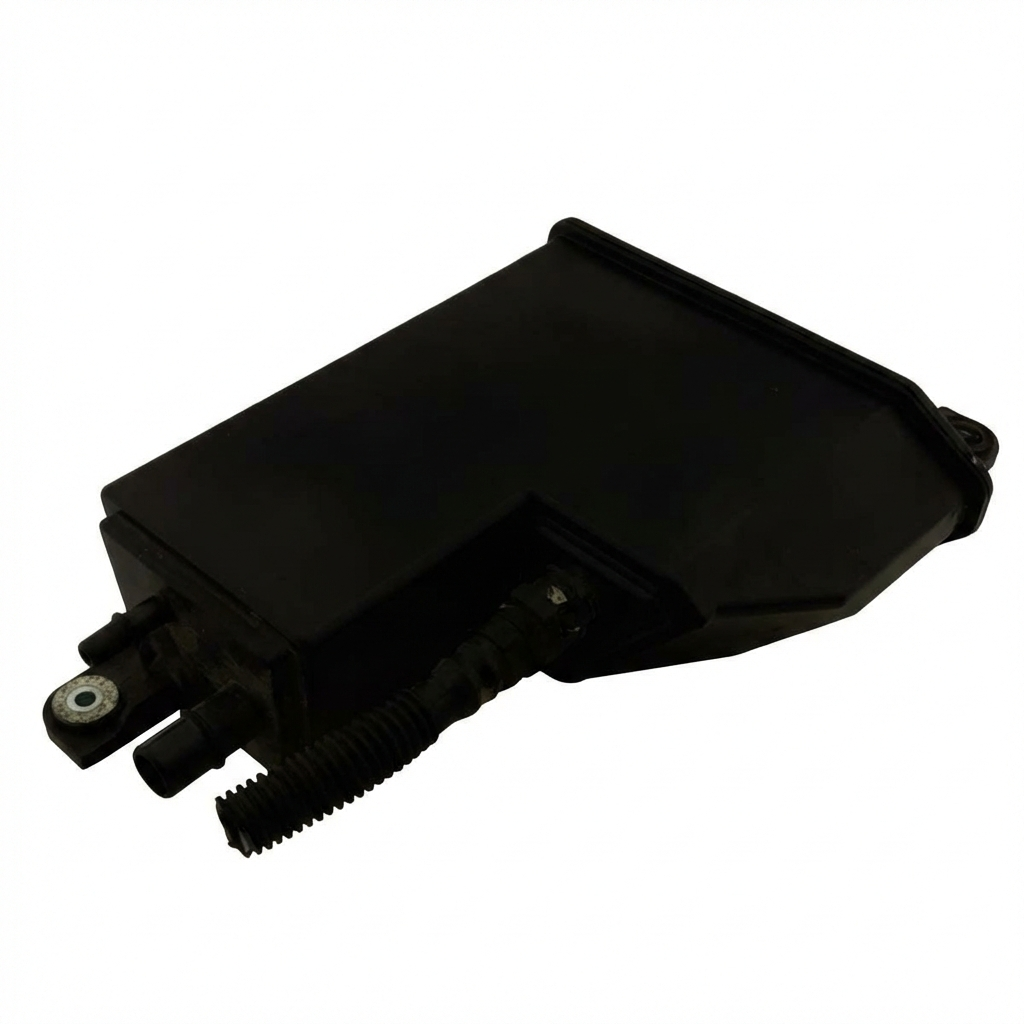
- The purge valve is in the engine bay; the vent valve and charcoal canister are in the rear of the car on the driver's side.
What's Unique About the 2000-2005 Buick LeSabre
On this generation of Buick LeSabre and its platform mates (like the Pontiac Bonneville), the P0440 code is very frequently caused by a specific design flaw in the fuel filler neck. The metal flange that the gas cap seals against tends to separate from the plastic neck, creating a leak that is impossible to fix with just a new gas cap. While other EVAP components can fail, the filler neck is a well-documented weak point on these GM H-Body vehicles and should be a primary suspect after the gas cap has been ruled out.
Symptoms You May Notice
- Check Engine Light is on
- A "Gas Cap Loose - Check Cap" message may appear on the Driver Information Center (DIC)
- A faint smell of gasoline, especially around the rear of the car or after refueling
- Difficulty starting immediately after refueling (in rare cases, if the purge valve is stuck open)
- Difficulty refueling, where the gas pump nozzle clicks off repeatedly (can indicate a stuck-closed vent valve or clogged canister).
- Replacing the gas cap multiple times when the fuel filler neck is the actual cause of the leak.
- Replacing the charcoal canister when only the vent or purge valve is bad. The valves are separate, cheaper, and more common failure points.
- Replacing the purge valve when the real issue is the fuel filler neck. Because the purge valve is easier to access, it's often replaced first without a proper diagnosis like a smoke test.
Most Likely Causes
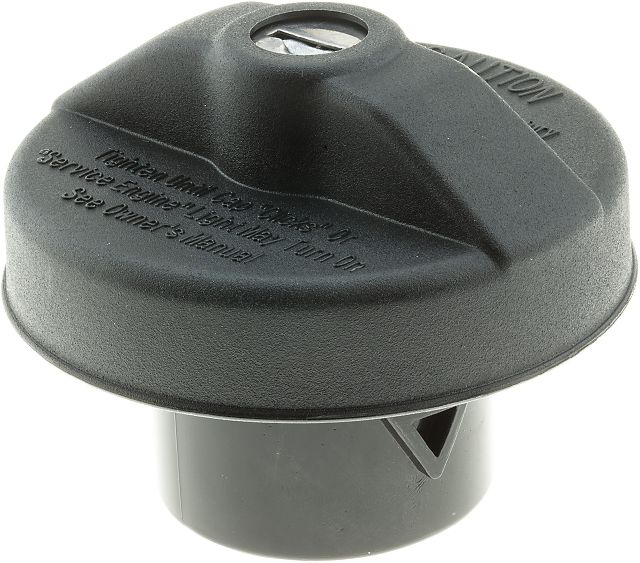
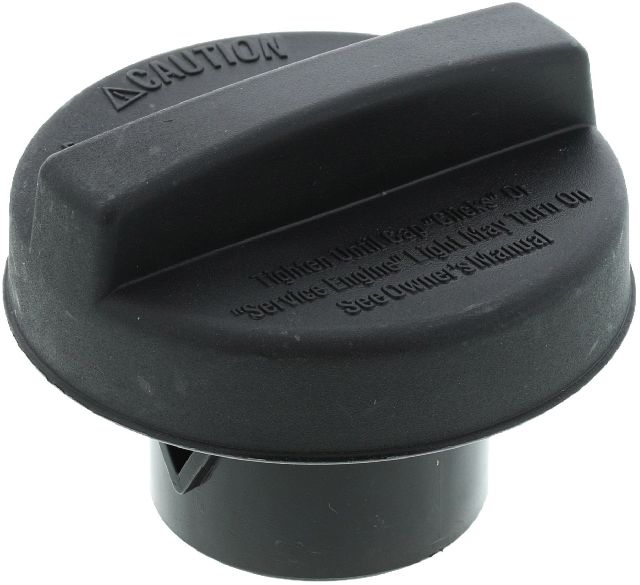
- Loose, Worn, or Incorrect Gas Cap 🔴 High Probability → Shop Fuel Tank Cap This is the most common cause for any EVAP code on any vehicle due to frequent use and seal degradation over time. Aftermarket caps are a frequent source of problems if they don't meet OEM sealing specifications.
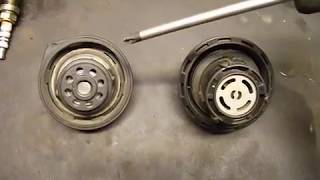
How to confirm: Ensure the cap clicks at least three times when tightened. Inspect the rubber seal on the cap for cracks, stiffness, or tearing. If it's an aftermarket cap, ensure it's the correct design for the vehicle. An OEM-spec cap is highly recommended.
Typical fix: Replace the gas cap with a new OEM or high-quality aftermarket part like an ACDelco GT229.
Est. part cost: $15-$30 - Cracked or Leaking Fuel Filler Neck 🔴 High Probability → Shop Fuel Filler Neck The design uses a metal flange pressed onto a plastic neck. Repeated twisting from the gas cap causes the plastic to wear or the flange to separate, breaking the seal and creating a leak. This is a very common failure point specific to this platform and its relatives like the Pontiac Bonneville.
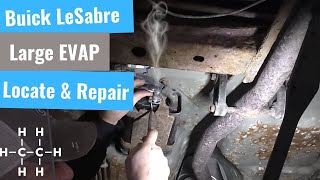
How to confirm: After confirming the gas cap is good, this is the next logical suspect. A smoke test is the definitive way to confirm, as smoke will be seen escaping from the junction of the metal flange and the plastic tube, right behind the fuel door. Visually, you may see rust or separation where the two materials meet.
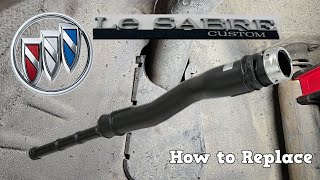
Typical fix: The fuel filler neck must be replaced. Some owners have attempted to seal the leak with epoxy like JB Weld as a temporary fix, but replacement is the only permanent solution. The Dorman 577-321 is a common 🎬 Watch: Step-by-step guide to replacing the fuel filler neck. aftermarket replacement part. The repair requires partially dropping the fuel tank to gain access.
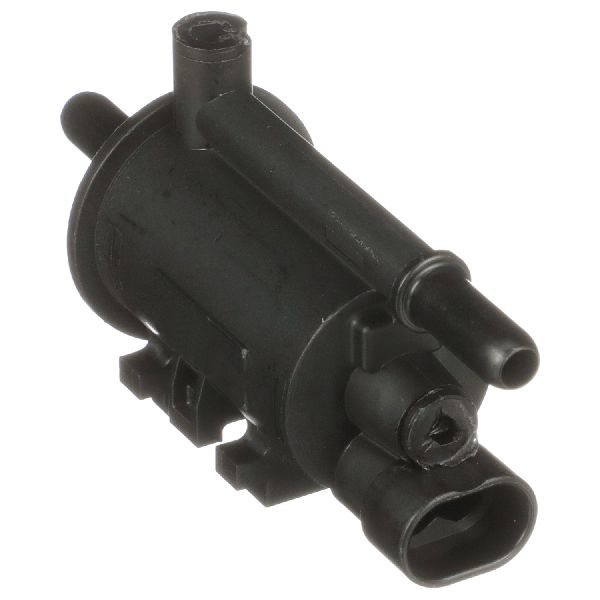
Est. part cost: $60-$150 - Failed EVAP Purge Solenoid/Valve 🟡 Medium Probability → Shop Vapor Canister This solenoid is located in the hot engine bay and cycles frequently, leading to eventual failure where it may stick open or closed. It's a common failure part across many GM vehicles of this era.
How to confirm: The purge solenoid is located on top of the engine under the plastic cover. With the engine running, you can sometimes feel or hear it clicking. A more definitive test involves applying 12V to see if the valve actuates, or using a scan tool to command it open and closed while observing system vacuum. A valve stuck open can sometimes cause a rough idle after refueling.
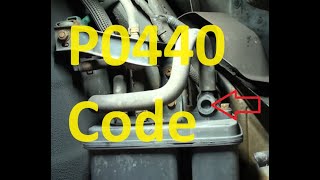
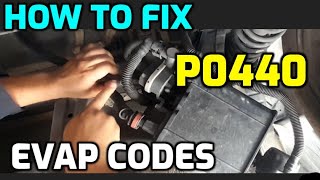
Typical fix: Replace the purge solenoid. It is typically held by a bracket and connected with two hoses and an electrical connector. The ACDelco part number is 214-641 🎬 See how to fix the purge solenoid on this engine. or the updated 214-2246.
Est. part cost: $25-$50 - Failed EVAP Vent Solenoid/Valve ⚪ Low Probability → Shop Vapor Canister Located under the car, this valve is exposed to road debris and moisture, which can cause it to clog with dirt or fail electronically. On many 2000-2005 LeSabres, the vent solenoid and canister are located in the front driver's side of the engine bay, under the air filter housing, which is an unusual location.
How to confirm: The vent valve is normally open and should close when 12V is applied. A scan tool can command it closed to test for leaks. Often, it fails by not sealing completely when commanded closed, which would be found with a smoke test. It can also fail by getting stuck closed, which often makes refueling the vehicle difficult.
Typical fix: Replace the vent solenoid.
Est. part cost: $30-$60 - Cracked or Disconnected EVAP Hoses ⚪ Low Probability Over time, the rubber hoses and plastic lines in the engine bay and under the car can become brittle, crack, or disconnect, especially rubber elbows at connection points.
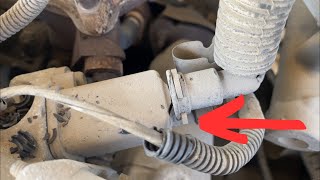
How to confirm: A thorough visual inspection of all accessible EVAP lines is the first step. A smoke test is the most effective method to find small cracks or leaks that are not obvious. Pay close attention to the lines connecting to the purge solenoid on the engine, particularly the U-shaped bend which is known to crack.
Typical fix: Replace the cracked section of hose or the damaged connector.
Est. part cost: $5-$20
Rare But Worth Checking
- Cracked Charcoal Canister: → Shop Vapor Canister The canister itself can develop cracks from age or road debris impact. This is less common than the valves attached to it but can happen. A smoke test will quickly identify a cracked canister.
- Leaking Fuel Tank Gasket/Seal: → Shop Fuel Tank The seal for the fuel pump and sending unit assembly on top of the gas tank can fail, creating an EVAP leak. This is usually accompanied by a strong fuel smell, especially with a full tank. This may occur after the fuel pump or sending unit has been replaced.
- Faulty Fuel Tank Pressure (FTP) Sensor: → Shop Fuel Tank The FTP sensor monitors the pressure and vacuum inside the fuel tank for the EVAP self-test. While uncommon on these GM vehicles, the sensor itself can fail and provide incorrect readings to the computer, causing it to set a P0440 code even if no leak exists.
Diagnosis Steps
- Check the Gas Cap: Ensure it is tight. Remove it, inspect the seal for damage, and reinstall it, making sure it clicks several times.
- Replace the Gas Cap: If the seal looks worn or you have any doubt, replace the cap with a quality OEM part (ACDelco GT229). This is a cheap and very common fix. Avoid generic, low-quality aftermarket caps.
- Visual Inspection: Inspect all visible EVAP hoses in the engine bay, especially the rubber connectors near the purge solenoid, for obvious cracks or disconnections.
- Professional Smoke Test: If the above steps do not resolve the issue, the most efficient next step is a professional smoke test. This involves injecting smoke into the EVAP system to visually identify the source of the leak. Pay close attention to the fuel filler neck area, as this is a known weak point.
- Test Solenoids: If a smoke test reveals no leaks, the purge and vent solenoids should be tested. This can be done with a bi-directional scan tool to command them on and off, or by manually applying 12V and checking their operation.
- Inspect Fuel Filler Neck: If a smoke test shows a leak near the gas cap area, the fuel filler neck is the primary suspect and should be removed for inspection or replacement. The repair involves lowering the fuel tank straps to create enough clearance to remove the neck.
Parts You'll Likely Need
- Gas Cap
(OEM #ACDelco GT229)— This is the most frequent cause of EVAP codes and the first part to check and replace.
Trusted brands: ACDelco, Stant, Gates
OEM price range: $15-$30
Aftermarket price range: $10-$20 - Fuel Filler Neck
(OEM #25727011, 25666232)— A very common failure point specific to the 2000-2005 LeSabre that causes a persistent P0440 code.
Trusted brands: Dorman (p/n 577-321), Spectra Premium, ACDelco
OEM price range: $100-$150
Aftermarket price range: $60-$120 - EVAP Vapor Canister Purge Solenoid
(OEM #ACDelco 214-641 (or 214-2246))— A common failure item located in the engine bay that can stick open or closed.
Trusted brands: ACDelco, Dorman, Standard Motor Products
OEM price range: $30-$50
Aftermarket price range: $20-$40
Related Codes That Often Appear With This One
- P0442 — P0442 indicates a small EVAP leak. The same fault, like a failing filler neck seal, might initially be detected as a small leak (P0442) before worsening and being flagged as a general malfunction (P0440).
- P0455 — P0455 indicates a large EVAP leak. A very loose gas cap or a completely detached hose could trigger a large leak code alongside or instead of the general P0440.
Platform-Specific Known Issues
- The fuel filler neck on 2000-2005 LeSabres is known to fail where the metal sealing flange meets the plastic tube, causing a leak that a new gas cap cannot fix. This is confirmed by numerous owner accounts and the availability of specific aftermarket replacements like the Dorman 577-321. A smoke test is the best way to confirm this failure, with smoke visibly exiting from under the gas cap housing.
Mechanic-Grade Diagnostic Values
- EVAP Canister Purge Valve Solenoid Resistance — expected: 30 to 38 ohms. Failure: A reading outside this range, or an open/infinite reading, indicates a failed solenoid coil.
- EVAP Canister Vent Solenoid Resistance — expected: 48 to 65 ohms. Failure: A reading outside this range, or an open/infinite reading, indicates a failed solenoid coil.
- Fuel Tank Pressure (FTP) Sensor Voltage (Key On, Engine Off, System Vented) — expected: ~1.5 Volts. Failure: A voltage significantly different from 1.5V when the system is at atmospheric pressure (e.g., gas cap off) can indicate a faulty sensor.
- EVAP Purge Solenoid Manual Vacuum Test — expected: Should hold 10 inHg of vacuum for at least 5 minutes when not energized.. Failure: If the solenoid cannot hold vacuum, it is stuck open or leaking internally.
Scan Tool Commands That Help
- Tech 2 / High-End Bidirectional Scanner: EVAP Purge/Seal Test — This is a critical function used before a smoke test. It commands the normally-open vent valve to close, sealing the system. This allows the technician to verify the vent valve's operation and prepare the system for a pressure or vacuum leak test.
- Tech 2 / High-End Bidirectional Scanner: EVAP Purge Solenoid Control (%) — This command allows the technician to incrementally open the purge solenoid while monitoring the Fuel Tank Pressure sensor. It's used to confirm the purge solenoid is opening correctly and that the system can draw a vacuum, which helps differentiate a leak from a blockage or a non-functional purge valve.
- Tech 2 / High-End Bidirectional Scanner: EVAP Vent Solenoid Control (On/Off) — This allows for direct testing of the vent solenoid. By commanding it closed (On) and open (Off), a technician can listen for the solenoid's click and verify with a smoke machine if it is sealing properly when commanded closed.
Wiring & Ground Locations
- G105 — Splice pack ground located under the ignition control module on the passenger side of the engine bay.. This ground provides the ground path for the Powertrain Control Module (PCM). A poor connection at G105 could cause erratic PCM behavior and potentially incorrect EVAP system diagnosis or false codes.
- G302 — Located under the left side of the rear seat, near the rear fuse block.. This ground serves the Rear Integration Module (RIM) and various relays in the rear fuse block. While not directly tied to the engine bay EVAP components, a fault here could affect power distribution or communication related to the fuel tank unit and pressure sensor on some models.
- EVAP Purge Solenoid Connector — On top of the engine, connected to the purge solenoid.. The connector has two pins: one receives 12V+ with the ignition on, and the other is a ground-side control wire from the PCM. Testing for voltage at this connector is a key step in diagnosing a non-responsive purge solenoid.
- EVAP Vent Solenoid Connector — Connected to the vent solenoid, typically in the front driver's side engine bay under the airbox on this vehicle.. Similar to the purge solenoid, this connector receives 12V+ with the key on, and the PCM controls the ground to close the valve. Verifying power at this connector is essential before condemning the solenoid itself.
Real Owner Repair Stories
- Buick Forum user (2001 Buick LeSabre with 77k miles) — Check Engine Light with codes P0440 and P0442, and an intermittent "gas cap loose - check cap" message on the DIC.
❌ Tried (didn't work) Replacing the gas cap with a new GM part.
✅ What actually fixed it The user discovered the metal flange on the fuel filler neck was loose. They removed the filler neck and applied JB Weld epoxy around the circumference where the metal flange meets the plastic neck, pulling a vacuum on the tube to draw the epoxy into the cracks for a better seal. This permanently fixed the codes. - GM Forum user (2003 Buick LeSabre) — P0440 code.
❌ Tried (didn't work) Initial diagnosis was inconclusive.
✅ What actually fixed it The owner found a cracked vacuum line near the engine. Specifically, the U-shaped rubber hose connecting to the EVAP purge solenoid had a crack, causing a vacuum leak before the EVAP system could be tested by the PCM. Replacing the cracked hose resolved the P0440 code. - NHTSA ODI #10501015 — An owner of a platform-mate Buick Regal reported that the vehicle failed state inspection due to code P0440. The owner noted that while looking at manufacturer records, there were numerous other reports involving the same issue.
"I Checked Everything" — The Actual Cause
- In one documented case for a 2002 LeSabre, a technician performed a smoke test and found no leaks. The Fuel Tank Pressure (FTP) sensor voltage was reading 0.8V while pressurized, which seemed low. Despite the clean smoke test, the technician suspected a faulty FTP sensor based on erratic voltage readings and lower-than-expected pressure values during bidirectional tests. The final diagnosis leaned towards a faulty FTP sensor providing incorrect data to the PCM, causing the P0440 code without an actual physical leak.
OEM Part Supersession History
ACDelco 214-641→ACDelco 214-2246— Standard part update and consolidation by the manufacturer.
Heads up: The parts are interchangeable for this application.GM 25666232→GM 25727011— Part number update for the fuel filler neck assembly.
Heads up: Both part numbers are referenced by aftermarket replacements like the Dorman 577-321, indicating they are interchangeable for the 2000-2005 model years.
Model Year Variations Within This Range
- 2000-2005: Contrary to many vehicles where EVAP components are at the rear near the fuel tank, on the LeSabre and its H-Body platform mates, the EVAP canister and vent solenoid are often located in the front driver's side of the engine bay, underneath the air filter housing. This is a significant variation from the typical location described in generic repair guides. However, some sources still place it near the rear of the vehicle, suggesting there may be variations even within the model run or that some sources are incorrect. Technicians should visually confirm the location before ordering parts.
Diagnostic Flowchart
Other Known Issues on This Vehicle
Issues unrelated to this code that are worth knowing about as an owner of this generation:
- Power Window Regulator Failure 🟠 Medium — Very common; often multiple windows fail. Typically occurs after 80,000 miles.
- Plastic Coolant Elbow Leak 🔴 High — Extremely common on the 3800 Series II engine. The plastic elbows become brittle and crack, causing a coolant leak on the passenger side of the engine.
- 4T65-E Transmission Pressure Control Solenoid (PCS) Failure 🔴 High — Common after 100,000 miles. Causes harsh shifting, shuddering, and can set code P1811. Often happens when the transmission is hot.
- Lower Intake Manifold (LIM) Gasket Leak 🔴 High — Common on Series II 3800 engines, especially those using Dex-Cool antifreeze. The gasket degrades, causing coolant and/or oil leaks.
- Failing Fuel Level Sensor 🟡 Low → Shop Fuel Tank Sending Unit — Common issue where the fuel gauge becomes inaccurate. Requires replacing the fuel pump module assembly to fix.
- Rear Air Suspension Failure 🟠 Medium — The original air shocks are prone to leaking and failure, leading to a sagging rear end. Many owners opt to convert to conventional coil springs and shocks.
Used vs. New Parts: Buying Guide for This Vehicle
When a used part is the smart pick: For this repair, a used fuel filler neck from a junkyard can be a cost-effective option, provided it is thoroughly inspected. A used charcoal canister assembly (including the vent solenoid) can also be a good value if it comes from a low-mileage, non-corroded donor car.
Donor-vehicle mileage cap: roughly under 120000 miles for the part to have meaningful remaining life.
What to inspect on the donor part:
- For a fuel filler neck, meticulously inspect the area where the metal flange meets the plastic tube. There should be zero separation, cracks, or signs of previous epoxy repairs.
- For a charcoal canister/vent solenoid assembly, look for a donor vehicle from a dry, salt-free climate to minimize corrosion risk on the solenoid.
- Check all plastic hose connections on any used part for brittleness or cracks before purchasing.
OEM-only on this vehicle (don't cheap out):
- Gas Cap: Due to the sensitivity of the EVAP system test, an OEM-spec cap (like ACDelco) is strongly recommended. Many aftermarket caps fail to seal correctly, leading to a repeat code.
Aftermarket brands forum-validated for this vehicle:
- Dorman (for Fuel Filler Neck, p/n 577-321).
- ACDelco (OEM for all components).
- Standard Motor Products (for solenoids and sensors).
Brands owners have reported issues with on this vehicle:
- Generic, unbranded, or "white-box" gas caps and electronic solenoids from online marketplaces are frequently reported by mechanics to have high failure rates.
Real Owner Stories
Aggregated from forums and TSBs cited above. Mileages and costs reflect what owners reported in those sources.
1997 Buick LeSabre
Symptoms: Mysterious P0440 code that persisted after initial troubleshooting.
What fixed it: Replacing the gas cap and then replacing a cracked fuel filler neck.
Source hint: Reddit r/MechanicAdvice: '97 Buick Lesabre. Mysterious P0440 Code.
2002 Buick LeSabre
Symptoms: Owner was told the gas cap looked fine but still had a P0440 code; needed to locate the vapor canister and valve for further testing.
What fixed it: Diagnostic steps led to inspecting the vapor canister and valve located under the vehicle in front of the gas tank.
Source hint: GM Forum: P0440 code on 2002 Buick LeSabre
1997 Pontiac Bonneville SE
Symptoms: Chasing a P0440 code on a platform mate to the LeSabre.
What fixed it: Identified a leaking fuel tank and a corroded filler pipe.
Source hint: GM Forum: Lessons Learned for DTC P0440 for 1997 SE (Bonneville)
Related OBD-II Codes
Frequently Asked Questions
Why does the gas pump nozzle keep clicking off when I try to fill up my LeSabre?
I replaced my gas cap but the P0440 code and 'Gas Cap Loose' message won't go away. What is the next most likely cause?
Is there a specific replacement part recommended for the fuel filler neck issue?
Where is the purge solenoid located on the 3800 V6 engine?
Can I use any aftermarket gas cap to fix this code?
My car is hard to start only after I put gas in it. Is this related to P0440?
Helpful Videos
Used OEM Parts in Stock
New Aftermarket Parts Available


The information in this article is provided for general reference and educational purposes only. Vehicle specifications, procedures, and part compatibility can vary by production date, trim level, and region. Always consult your vehicle's factory service manual and verify part numbers before purchasing or performing repairs. Safety-critical components such as airbags, seat belts, and braking systems should be installed by a qualified professional.
- Buick LeSabre:
- 🧭 Diagnostic Flowchart
- 🎬 Helpful Videos
- 🛍️ Shop This Part
- What's Unique About the 2000-2005 Buick LeSabre
- Symptoms You May Notice
- Most Likely Causes
- Rare But Worth Checking
- Diagnosis Steps
- Parts You'll Likely Need
- Related Codes That Often Appear With This One
- Platform-Specific Known Issues
- Mechanic-Grade Diagnostic Values
- Scan Tool Commands That Help
- Wiring & Ground Locations
- Real Owner Repair Stories
- "I Checked Everything" — The Actual Cause
- OEM Part Supersession History
- Model Year Variations Within This Range
- Other Known Issues on This Vehicle
- Used vs. New Parts: Buying Guide for This Vehicle
- Real Owner Stories
- 1997 Buick LeSabre
- 2002 Buick LeSabre
- 1997 Pontiac Bonneville SE
- Related OBD-II Codes
- Frequently Asked Questions
- 🎟️ Get 5% Off