

P0440 on 2005-2010 Chevrolet Cobalt: EVAP System Malfunction Causes and Fixes
For a 2005-2010 Chevrolet Cobalt, code P0440 usually means you have a loose gas cap or a failing EVAP purge or vent solenoid. Always check the gas cap first—it's a free fix. If that's not it, a replacement purge solenoid is around $25-$50 and is the next most likely culprit. The vent solenoid near the rear of the car is also a very common failure point due to rust and road grime.
- P0440 is a general EVAP system fault. It means there's a leak somewhere, but doesn't specify where.
- Always start with the simplest fix: check that your gas cap is tight and its seal is intact.
- The most common failed parts on a Cobalt are the gas cap, the EVAP purge solenoid (on the engine), and the EVAP vent solenoid (at the rear of the car).
- You can continue to drive the car with a P0440 code, but you will not pass an emissions test.
- If simple checks don't find the issue, a smoke test is the most reliable way to locate the leak.
What's Unique About the 2005-2010 Chevrolet Cobalt
The Chevrolet Cobalt uses a standard GM EVAP system for this era, shared with its platform mates, the Pontiac G5 and Saturn Ion. While the P0440 code itself is generic, the common failure points on the Cobalt are well-documented. The EVAP purge solenoid, located on the engine, and the vent solenoid, near the rear fuel tank, are frequent culprits. Due to the car's age and exposure, especially in rust-belt regions, the vent solenoid and its bracket are highly susceptible to rust and clogging. Additionally, plastic and rubber components like hoses and seals are prone to drying out and cracking, creating leaks that can be tricky to find without a smoke test. A particularly notorious issue on Cobalts is the rusting of metal EVAP and fuel lines under the car where factory foam insulation traps moisture, especially near the driver's side rear wheel well.
Symptoms You May Notice
- Check Engine Light is on
- A faint smell of gasoline, particularly around the rear of the vehicle or near the gas cap.
- Slight decrease in fuel economy over time.
- Vehicle will not pass an emissions inspection.
- In rare cases related to a stuck-open purge valve, difficulty starting after refueling.
- Replacing the oxygen sensors. Oxygen sensors are not related to the EVAP system.
- Replacing the catalytic converter. This is an expensive repair that has no connection to the P0440 code.
- Assuming the code is *only* a loose gas cap without checking for other common failures like the vent or purge solenoid.
Most Likely Causes
- Loose, Damaged, or Incorrect Gas Cap 🔴 High Probability → Shop Fuel Tank Cap This is the most common cause for a P0440 on any vehicle, as the cap is frequently removed and its seal can wear out, crack, or be improperly tightened. Using a non-OEM cap can also lead to sealing issues.
How to confirm: Check that the gas cap is tightened until it clicks multiple times. Remove the cap and inspect the rubber O-ring seal for cracks, tears, or signs of being brittle. Ensure you are using an OEM or equivalent quality cap, as cheap aftermarket caps are a known source of problems.
Typical fix: Tighten or replace the gas cap.
Est. part cost: $10-$25 - Faulty EVAP Vent Solenoid Valve 🔴 High Probability → Shop Vapor Canister Located near the charcoal canister at the rear of the car, this valve and its filter are highly exposed to road debris, water, and salt, which causes the valve to get stuck, its filter to clog with dirt, or its electrical connector to corrode. The mounting bracket is also known to rust and break.
How to confirm: The valve is normally open and closes when 12V is applied. It can be tested with a scan tool that has bidirectional controls. A common failure is for the valve to get stuck closed or clogged with debris, which can sometimes be confirmed by removing it and trying to blow through it (it should allow air to pass when unpowered).
Typical fix: Replace the EVAP vent solenoid valve. Often sold as a kit with a new filter and hose.
Est. part cost: $25-$60 - Faulty EVAP Purge Solenoid Valve 🟡 Medium Probability → Shop Vapor Canister This valve, located on the intake manifold on the 2.2L Ecotec engine, cycles frequently during engine operation and can get stuck open or closed over time. When stuck open, it creates a constant vacuum leak which can sometimes cause a rough idle or difficulty starting after fueling.
How to confirm: The purge solenoid is located on the driver's side of the engine. With the engine off, disconnect the electrical connector and the two vapor lines. Try to blow through the valve; it should be closed and not allow air to pass. You can also test it by applying 12V to its terminals to see if it clicks open. A scan tool can also command it to open and close to verify operation.
Typical fix: Replace the EVAP purge solenoid valve.
Est. part cost: $25-$50 - Cracked or Disconnected EVAP Hoses ⚪ Low Probability With age, the rubber and plastic hoses in the EVAP system can become brittle and crack, especially around connection points or areas of high heat in the engine bay. The lines running along the underbody to the rear are also susceptible to damage, particularly from rust on the metal sections near the rear wheel well.
How to confirm: Visually inspect all accessible EVAP lines from the engine bay to the fuel tank. Look for obvious cracks, disconnections, or signs of wear. The most effective method is to perform a smoke test, which forces low-pressure smoke into the EVAP system to reveal the location of any leaks.
Typical fix: Replace the cracked section of hose or the entire hose assembly.
Est. part cost: $10-$100
Rare But Worth Checking
- Cracked EVAP Charcoal Canister: → Shop Vapor Canister The canister itself can develop cracks from road debris impact or age, causing a leak large enough to set a P0440 code. This is often discovered during a smoke test.
- Leaking Fuel Tank or Filler Neck: → Shop Fuel Tank Rust or physical damage can cause the fuel filler neck or the tank itself to develop a leak, which will also be detected by the EVAP system test. GM issued a special coverage adjustment (14728B) for some 2006-2008 Cobalts for a cracked fuel tank inlet control valve that could cause fuel odors and leaks. In related Chevrolet models, NHTSA ODI #10191706 and NHTSA ODI #10184336 describe cases where a fracture or crack where the fuel filler neck meets the fuel tank caused code P0440 to set and fuel to leak.
- Faulty Fuel Tank Pressure (FTP) Sensor: → Shop Fuel Tank While less common, the sensor that monitors system pressure can fail and send incorrect readings to the ECM, falsely triggering the P0440 code. This can be difficult to diagnose without a scan tool that can read live data from the sensor.
- Leaking Fuel Pump Module: → Shop Fuel Pump GM issued Special Coverage 12191B for cracked plastic supply or return ports on the fuel pump module for 2006-2009 Cobalts, which could cause a fuel leak and odor. This could potentially be detected by the EVAP system test.
Diagnosis Steps
- Read the Code: Use an OBD-II scanner to confirm P0440 is present. Note any other codes, as they can provide valuable clues (e.g., P0449 points directly to the vent solenoid circuit).
- Inspect the Gas Cap: This is the easiest and most common fix. Ensure the cap is tight (clicks several times). Remove it and inspect the seal for cracks or damage. If it looks worn, replace it with a quality OEM or equivalent cap. Clear the code and drive for a few days to see if it returns. An owner report in NHTSA ODI #10247244 notes that replacing the gas cap did not solve the P0440 code, indicating the need for further diagnosis.
- Visual Inspection: Look over the EVAP hoses in the engine bay, especially the lines connected to the purge solenoid on the intake manifold. Also, safely inspect the lines running under the car to the rear. Look for obvious cracks, disconnections, or signs of wear.
- Test the Purge Solenoid: Locate the purge solenoid on the engine. With the engine off, disconnect the line running from the solenoid and see if you can blow through it. It should be closed. You can also use a scan tool to command it on and off, listening for a click, or apply 12V directly to its pins to test for actuation.
- Inspect the Vent Solenoid: Locate the vent solenoid near the charcoal canister at the rear of the vehicle, typically near the rear axle. Check its filter for dirt or blockages. Inspect the valve, its mounting bracket, and electrical connector for rust and corrosion, which are very common issues on the Cobalt.
- Perform a Smoke Test: If the above steps do not reveal the problem, the most effective next step is a smoke test. This involves injecting low-pressure smoke into the EVAP system (usually via a service port or by using an adapter at the filler neck) and watching for where it escapes. NHTSA ODI #10192200 highlights that while initial inspections may find nothing, a smoke test is often required to locate the specific fault in the fuel evaporation system.
Parts You'll Likely Need
- Gas Cap
(OEM #GT281)— The seal fails over time or the cap is not tightened properly. This is the easiest and most common fix. Using a quality cap like ACDelco is recommended over cheaper alternatives.
Trusted brands: ACDelco, Stant
OEM price range: $20-$30
Aftermarket price range: $10-$20 - EVAP Canister Purge Solenoid Valve
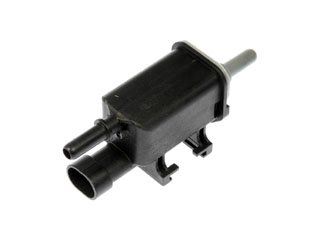
(OEM #12597567 (Superseded by 12690512))— This valve gets stuck open or closed from constant use, causing a leak or a blockage in the system. It is located on the intake manifold and is relatively easy to replace.
Trusted brands: ACDelco, Dorman (P/N 911-030), Delphi
OEM price range: $30-$40
Aftermarket price range: $20-$35 - EVAP Canister Vent Solenoid Valve
(OEM #25932571)— Highly prone to failure from corrosion and debris due to its location under the rear of the car. A stuck or clogged vent valve is a very common cause of EVAP codes on the Cobalt.
Trusted brands: ACDelco, Dorman (P/N 911-070), Standard Motor Products (P/N CVS85)
OEM price range: $40-$60
Aftermarket price range: $25-$45
Related Codes That Often Appear With This One
- P0442 — P0442 indicates a small EVAP leak. You might see this code along with P0440 if the system has multiple issues or if the computer is in the process of narrowing down the fault. The causes are identical to P0440, just the leak size is smaller.
- P0455 — P0455 indicates a large EVAP leak. It is very similar to P0440 and often points to the same causes, like a missing gas cap or a completely failed purge or vent valve.
- P0449 — This code specifically points to a fault in the EVAP Vent Solenoid Control Circuit. If you see P0449, the problem is almost certainly the vent solenoid or its wiring, which is a very common cause for the general P0440 code on these vehicles.
Technical Service Bulletins (TSBs) & Recalls
- 14728B - Special Coverage for cracked fuel tank inlet control valve on certain 2006-2008 models, which could cause fuel odor and leaks.
- 12191B - Special Coverage for cracked fuel pump module ports on certain 2006-2009 models, causing fuel leaks and odor.
Platform-Specific Known Issues
- Rusted Vent Solenoid Bracket: The metal bracket holding the vent solenoid to the chassis is notorious for rusting through and breaking. When this happens, the solenoid can hang by its hoses and wires, leading to damage. Replacement solenoids often come with a new bracket.
- Clogged Vent Solenoid Filter: The foam or fiber filter attached to the vent solenoid can become saturated with dust and road grime, effectively blocking the valve. This prevents the system from venting properly and can trigger a fault code. Some owners relocate the filter to a cleaner location, like higher up in the trunk.
- Filler Neck Rust (Less Common than on other GM cars): While a major issue on some other GM vehicles of the era, severe filler neck rust causing a P0440 is less frequently reported on Cobalts but is still possible, especially in heavily salted regions. A smoke test is the best way to confirm a leak in this area.
Mechanic-Grade Diagnostic Values
- EVAP Purge Solenoid Coil Resistance — expected: 15 to 40 Ohms. Failure: A reading of infinity (open circuit) or near zero (short circuit) indicates a failed coil.
- EVAP Vent Solenoid Coil Resistance — expected: Approximately 20 Ohms. Failure: An open circuit reading on a multimeter indicates a bad solenoid coil.
- Fuel Tank Pressure (FTP) Sensor Voltage (Key On, Engine Off, Gas Cap Off) — expected: Approximately 1.3V - 1.7V. Failure: Voltage is stuck high (e.g., near 4.8V) or low (e.g., near 0.2V) and does not change when the gas cap is removed, indicating a faulty sensor or wiring issue.
- EVAP Purge Solenoid Connector Voltage (Key On, Engine Off) — expected: One pin should have battery voltage (~12V). The other is a ground-side control from the ECM.. Failure: No voltage on the power pin points to a fuse or wiring issue. The control pin should show voltage that is modulated by the ECM when the engine is running and purge is commanded.
Scan Tool Commands That Help
- GM Tech2 / GDS2: EVAP Service Bay Test — This is a comprehensive, automated test that forces the vehicle's EVAP leak test procedure to run on demand, rather than waiting for the monitor to run during a normal drive cycle. It can confirm if a leak is present after a repair or help diagnose an intermittent issue.
- GM Tech2 or capable bidirectional scanner: EVAP Purge/Seal — This command manually closes the normally-open vent solenoid, sealing the EVAP system. This is a mandatory first step before performing a smoke test to ensure the system is closed and can be properly pressurized with smoke to find leaks.
- GM Tech2 or capable bidirectional scanner: EVAP Purge Solenoid Control — Allows the technician to command the purge solenoid open and closed (or by a percentage) while the engine is running. This helps verify the solenoid is responding to commands and allows for checking its effect on fuel trims and engine vacuum.
Wiring & Ground Locations
- Engine Bay Ground (Driver's Side) — On the driver's side strut tower, behind the underhood fuse block.. A poor ground here can cause a variety of electrical issues for components controlled by the ECM, potentially affecting sensor readings and solenoid operation.
- Engine Bay Ground (Under Coolant Reservoir) — Located underneath the coolant reservoir; the reservoir must be removed for access.. This is a key ground point (G101) for the engine harness. Corrosion here is common and can lead to intermittent electrical faults for engine management systems, including EVAP components.
- Transmission Ground — A main ground strap that connects from the chassis to the transmission housing.. This is a primary ground for the entire powertrain. If corroded or loose, it can cause widespread, difficult-to-diagnose electrical problems, including erratic sensor data and improper solenoid function.
- EVAP Purge Solenoid Connector — On the driver's side of the engine, connected to the purge solenoid on the intake manifold.. The two pins are for 12V power and the ground-side control signal from the ECM. Verifying power and signal here is a key diagnostic step. The pigtail is a common replacement part if the connector is damaged.
- EVAP Vent Solenoid Connector — Under the rear of the car, near the charcoal canister, which is located just above the rear crossmember.. This connector is highly susceptible to corrosion from road salt and moisture. A bad connection here will set a circuit code like P0449 and prevent the vent solenoid from operating, leading to a general EVAP code like P0440.
Real Owner Repair Stories
- CobaltSS.net forum user (Chevrolet Cobalt SS) — Check Engine Light with codes P0449 and P0455.
❌ Tried (didn't work) Replacing the gas cap three times in two years.
✅ What actually fixed it The user's codes pointed specifically to the vent solenoid circuit (P0449) and a large leak (P0455). The discussion concluded the next logical step was to inspect the canister and solenoids located above the rear crossmember, as the gas cap was clearly not the issue. - YouTube repair video (2010 Chevrolet Cobalt 2.2L) — Check Engine Light with codes P0446 (Vent Restriction) and P0452 (FTP Sensor Low Voltage).
❌ Tried (didn't work) Initial thought was a bad vent solenoid due to the P0446 code.
✅ What actually fixed it The technician first checked the live data from the Fuel Tank Pressure (FTP) sensor and found it was reading an illogical value. A wiring check revealed a corroded wire at the sensor connector. Repairing the wire fixed both codes. This highlights that a bad FTP sensor or its circuit can cause other EVAP codes. - NHTSA ODI #10007823 — An owner reported that their engine light kept coming on with code P0440, yet multiple inspections failed to find anything wrong with the vehicle's evaporative emissions system.
"I Checked Everything" — The Actual Cause
- A common scenario where a smoke test shows no leaks is a faulty Fuel Tank Pressure (FTP) sensor. The sensor provides incorrect pressure readings to the ECM, making the computer believe there is a leak when the system is actually sealed. Before replacing any parts, it's crucial to check the FTP sensor's live data on a scan tool with the gas cap off; the reading should be near atmospheric pressure (approx. 1.5V). If it shows a significant vacuum or pressure, the sensor itself or its wiring is likely the problem, not a physical leak.
- An intermittently sticking EVAP vent or purge solenoid can also cause a P0440 code while passing a smoke test. The smoke test is static, but the solenoid may only fail during specific operating conditions (vibration, temperature). If a smoke test is clean, using a bidirectional scan tool to cycle the solenoids hundreds of times while monitoring system pressure can sometimes reveal an intermittent failure.
OEM Part Supersession History
12597567→12690512, 12735397— Standard part consolidation and potential minor design or material updates by GM over time.
Heads up: The original part number 12597567 was used on a very wide range of GM vehicles, including the Cobalt. It has been superseded by several numbers, but they are all generally interchangeable for this application.10382105, 15750484, 22728634→25932571— Part consolidation and design updates for the EVAP Vent Solenoid.
Model Year Variations Within This Range
- 2005-2007 vs 2008-2010: While the core EVAP system components remained largely the same, minor updates were made during the 2008 model year refresh, including potential changes in wiring harness routing and connector types. The Fuel Tank Pressure sensor part number also differs for early vs. later models. For example, 16238399 is listed for 2005-2007 models, while 13502903 is listed for later years. Always verify the correct part number for your specific VIN.
Diagnostic Flowchart
Other Known Issues on This Vehicle
Issues unrelated to this code that are worth knowing about as an owner of this generation:
- Ignition Switch Failure / Recall 🔴 High — Extremely widespread, affecting millions of GM vehicles including all 2005-2010 Cobalts. A heavy keychain or jarring could cause the switch to move out of the 'Run' position, shutting off the engine and disabling airbags. (Ref: NHTSA Campaign 14V047000. This was a massive, high-profile recall.)
- Electric Power Steering (EPS) Motor Failure / Recall 🔴 High — Very common issue resulting in a sudden loss of power steering assist, making the vehicle difficult to steer at low speeds. It affected the entire 2005-2010 Cobalt model run. (Ref: NHTSA Campaign 10V073000. GM recalled vehicles to replace the EPS motor.)
- Corroding Fuel Lines 🟠 Medium — Common in rust-belt states, the metal fuel lines under the car are prone to rusting at their mounting points, leading to fuel leaks. NHTSA opened an investigation (PE 20-009) into this issue for 2008-2010 models. (Ref: NHTSA Investigation PE 20-009. Also related to Special Coverage 12191B for fuel pump module leaks.)
- Faulty Shifter Cable / Key Stuck in Ignition 🟡 Low — A broken shifter cable or failed shifter assembly can prevent the car from recognizing it is in Park, which in turn prevents the driver from removing the key from the ignition. This was a common annoyance. (Ref: NHTSA Campaign 09V073000 addresses a related issue with the shift cable adjustment clip.)
- Timing Chain Tensioner Wear (2.2L Ecotec) 🟠 Medium — The timing chain and tensioners on earlier Ecotec engines can wear prematurely, leading to a rattling noise on startup and, if ignored, could lead to the chain skipping a tooth or breaking, causing severe engine damage.
Used vs. New Parts: Buying Guide for This Vehicle
When a used part is the smart pick: For this vehicle, sourcing used parts is generally not recommended for the common EVAP system failure components. The solenoids (purge and vent) are wear items with internal seals and electronics that degrade over time. Rubber and plastic hoses become brittle with age and heat cycles. Given the low cost of new, quality aftermarket replacements, the risk of a used part failing soon after installation is not worth the minor cost savings.
Donor-vehicle mileage cap: roughly under 80000 miles for the part to have meaningful remaining life.
What to inspect on the donor part:
- If considering a used solenoid, inspect the electrical connector for any signs of corrosion (green or white powder).
- Check plastic housings for cracks or brittleness.
- For hoses, ensure they are still pliable and not hardened or cracked, especially at the ends.
OEM-only on this vehicle (don't cheap out):
- Gas Cap: While not strictly 'OEM-only', owners consistently report that cheap, non-OEM gas caps fail to seal properly and cause recurring EVAP codes. Using an ACDelco (GM's OEM brand) cap is strongly advised.
Aftermarket brands forum-validated for this vehicle:
- ACDelco (OEM)
- Standard Motor Products (SMP)
- Delphi
- Dorman (for their solenoid valves and hose repair kits)
Brands owners have reported issues with on this vehicle:
- No-name, unbranded parts from online marketplaces are a significant risk for EVAP components, as their sealing tolerances and material quality are often subpar, leading to repeat failures.
Real Owner Stories
Aggregated from forums and TSBs cited above. Mileages and costs reflect what owners reported in those sources.
2009 Chevrolet Cobalt SS LNF
Symptoms: Owner described a fuel line leak located near the rear frame of the vehicle.
What fixed it: Repair of the fuel line near the rear frame due to corrosion vulnerability.
Source hint: cobaltss.net - "Rear fuel line leak(09 LNF)"
2005-2010 Chevrolet Cobalt
Symptoms: The vent solenoid was hanging by its hoses and wires because the mounting bracket had failed.
What fixed it: Replacement of the vent solenoid using a kit that included a new mounting bracket.
Source hint: vehicle_specific_issues - Rusted Vent Solenoid Bracket
2005-2010 Chevrolet Cobalt
Symptoms: P0440 code triggered because the vent solenoid was blocked and unable to vent the system properly.
What fixed it: Cleaning or replacing the foam/fiber filter attached to the vent solenoid; some owners relocate the filter to the trunk to prevent future clogging.
Source hint: vehicle_specific_issues - Clogged Vent Solenoid Filter
Related OBD-II Codes
Frequently Asked Questions
I have a 2007 Chevrolet Cobalt and smell gas near the rear; is there a specific TSB for this?
Where is the EVAP purge solenoid located on my 2.2L Ecotec Cobalt engine?
My Cobalt's vent solenoid bracket is rusted through. Is this common?
Can I fix the P0440 code by just tightening my gas cap?
Why does my Cobalt struggle to start only after I fill up at the gas station?
Is the Pontiac G5 prone to the same P0440 issues as my Cobalt?
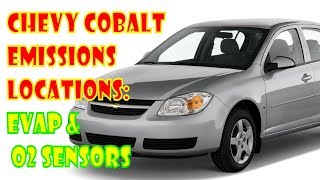
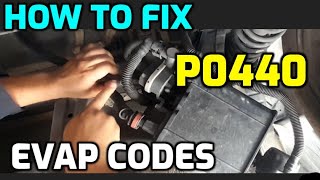
Helpful Videos

Used OEM Parts in Stock
New Aftermarket Parts Available


The information in this article is provided for general reference and educational purposes only. Vehicle specifications, procedures, and part compatibility can vary by production date, trim level, and region. Always consult your vehicle's factory service manual and verify part numbers before purchasing or performing repairs. Safety-critical components such as airbags, seat belts, and braking systems should be installed by a qualified professional.
- Chevrolet Cobalt:
- 🧭 Diagnostic Flowchart
- 🎬 Helpful Videos
- 🛍️ Shop This Part
- What's Unique About the 2005-2010 Chevrolet Cobalt
- Symptoms You May Notice
- Most Likely Causes
- Rare But Worth Checking
- Diagnosis Steps
- Parts You'll Likely Need
- Related Codes That Often Appear With This One
- Technical Service Bulletins (TSBs) & Recalls
- Platform-Specific Known Issues
- Mechanic-Grade Diagnostic Values
- Scan Tool Commands That Help
- Wiring & Ground Locations
- Real Owner Repair Stories
- "I Checked Everything" — The Actual Cause
- OEM Part Supersession History
- Model Year Variations Within This Range
- Other Known Issues on This Vehicle
- Used vs. New Parts: Buying Guide for This Vehicle
- Real Owner Stories
- 2009 Chevrolet Cobalt SS LNF
- 2005-2010 Chevrolet Cobalt
- 2005-2010 Chevrolet Cobalt
- Related OBD-II Codes
- Frequently Asked Questions
- 🎟️ Get 5% Off