

P0440 on 2004-2012 Chevrolet Colorado: EVAP System Malfunction Causes and Fixes
For a 2004-2012 Colorado, code P0440 usually points to a bad gas cap or a failed EVAP vent solenoid near the spare tire. Start by checking the gas cap for a tight seal. If the light returns, the vent solenoid is the next most likely culprit. This part is a known weak point on the platform.
- P0440 is a general EVAP system fault; it means there's a leak, but doesn't say where.
- Always start by checking the gas cap. Make sure it's tight and the seal is not cracked. This is the easiest and cheapest fix.
- The most likely part to fail on a 2004-2012 Colorado is the EVAP vent solenoid, located near the spare tire. If you also have a P0449 code, this part is almost certainly the problem.
- Symptoms like the truck being hard to start after getting gas strongly point to a faulty vent or purge solenoid.
- If the gas cap and vent solenoid are good, a smoke test is the best way to find the leak, which could be a cracked hose or canister.
What's Unique About the 2004-2012 Chevrolet Colorado
On the first-generation Chevrolet Colorado (2004-2012) and its platform mates (GMC Canyon, Hummer H3), the EVAP system's vent solenoid is a well-documented weak point. This valve, located under the truck bed near the charcoal canister and spare tire, is exposed to road grime, water, and salt, causing it to corrode and fail. Its failure is so common that it often triggers related codes like P0449 and can cause noticeable symptoms like difficulty starting immediately after refueling or the gas pump clicking off prematurely.
Symptoms You May Notice
- Check Engine Light is on
- A faint fuel smell, especially around the rear of the truck
- Difficulty starting the engine right after filling up with gas
- Fuel pump nozzle clicks off prematurely when refueling
- Replacing the purge valve in the engine bay when the more common failure is the vent valve at the rear of the truck.
- Replacing the fuel tank pressure sensor before performing a smoke test to confirm there are no physical leaks.
Most Likely Causes
- Loose or Worn Gas Cap 🔴 High Probability → Shop Fuel Tank Cap This is the most common cause for any EVAP code on any vehicle due to frequent use and seal degradation over time.
How to confirm: Ensure the cap clicks at least three times when tightened. Inspect the rubber O-ring on the cap for cracks, brittleness, or damage. Clean the sealing surface on the fuel filler neck.
Typical fix: Tighten the cap. If the seal is damaged or the cap is old, replace it with a new one.
Est. part cost: $15-$35 - Failed EVAP Vent Solenoid 🔴 High Probability → Shop Vapor Canister The solenoid is mounted under the truck by the spare tire, where it is exposed to water, dirt, and road salt, leading to corrosion and internal failure. This is the most common component failure for P0440 on this platform.
How to confirm: The presence of code P0449 almost guarantees the vent solenoid is the problem. A mechanic can command the valve open and closed with a scan tool to check for an audible click. It can also be removed and bench-tested with a 12V source to see if it actuates.
Typical fix: Replace the EVAP vent solenoid. The part is located on or next to the charcoal canister under the bed. Early models may require a jumper wire harness (e.g., GM part 19257603) when upgrading to the newer style solenoid. 🎬 Watch: Step-by-step walkthrough for replacing the vent solenoid.
Est. part cost: $30-$80 - Failed EVAP Purge Solenoid/Valve 🟡 Medium Probability → Shop Vapor Canister
How to confirm: This valve is located in the engine bay, typically on the intake manifold. It can be tested with a hand-held vacuum pump to see if it holds vacuum when closed (de-energized). A scan tool can also command it open and closed while monitoring system pressure.
Typical fix: Replace the purge solenoid.
Est. part cost: $25-$60 - Cracked or Disconnected EVAP Hoses ⚪ Low Probability Over time, the rubber and plastic lines can become brittle and crack, especially those exposed under the vehicle or near engine heat.
How to confirm: A visual inspection may reveal obvious cracks or disconnections. The most effective method is a smoke test, which forces smoke through the EVAP system to reveal the exact location of any leaks.
Typical fix: Replace the damaged section of hose.
Est. part cost: $10-$50
Rare But Worth Checking
- Cracked Charcoal Canister: → Shop Vapor Canister The canister body can be damaged by road debris or become brittle with age, causing a leak. This is usually found during a smoke test.
- Rusted Fuel Filler Neck: → Shop Fuel Filler Neck In regions with heavy road salt use, the metal pipe leading from the gas cap to the tank can rust through, creating a significant leak that mimics a bad gas cap. In some GM truck platforms, NHTSA ODI #10191706 and NHTSA ODI #10184336 describe a crack or small fracture where the fuel filler neck meets the fuel tank, causing fuel to leak and the P0440 code to set.
- Faulty Fuel Tank Pressure (FTP) Sensor: → Shop Fuel Tank The sensor can fail and send incorrect readings to the computer, triggering a P0440 code even if no leak exists. This is less common and usually accompanied by other sensor-specific codes.
Diagnosis Steps
- Check the gas cap. Remove it, inspect the seal for cracks, and reinstall it, ensuring it clicks several times. Clear the code and drive for a few days to see if it returns. NHTSA ODI #10247244 notes a case where replacing the gas cap did not solve a P0440 small EVAP leak.
- If the code returns, scan the vehicle again. Check for other codes like P0449, P0455, or P0442, which can help pinpoint the issue.
- Visually inspect the EVAP vent solenoid (by the spare tire) and the purge solenoid (in the engine bay) for obvious damage or corrosion. The vent solenoid area is prone to rust and dirt buildup.
- Inspect all visible EVAP hoses and lines running from the engine bay to the fuel tank for cracks, brittleness, or loose connections.
- If no visual faults are found, the most effective next step is to have a smoke test performed. This test will fill the EVAP system with a visible vapor, making even the smallest leaks easy to spot. NHTSA ODI #10192200 highlights a case where an initial inspection found nothing, but a smoke test was required to identify the fuel evaporation system problem.
- Based on the smoke test results, replace the leaking component. If no leaks are found, further electrical testing of the vent and purge solenoids and the fuel tank pressure sensor may be required. Check for relevant TSBs like 08-06-04-022 regarding potential wiring issues. 🎬 Watch: How to troubleshoot and fix common wiring harness faults.
Parts You'll Likely Need
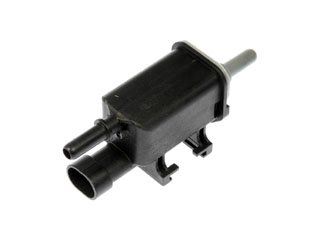
- EVAP Vapor Canister Vent Solenoid
(OEM #20907779)— This is the most common component to fail on this truck for this code, due to its exposed location under the vehicle. It often fails and gets stuck, causing a leak. Part number 20907779 is a common replacement that supersedes older numbers like 10386359.
Trusted brands: ACDelco (GM Genuine), Dorman (911-070)
OEM price range: $60-$90
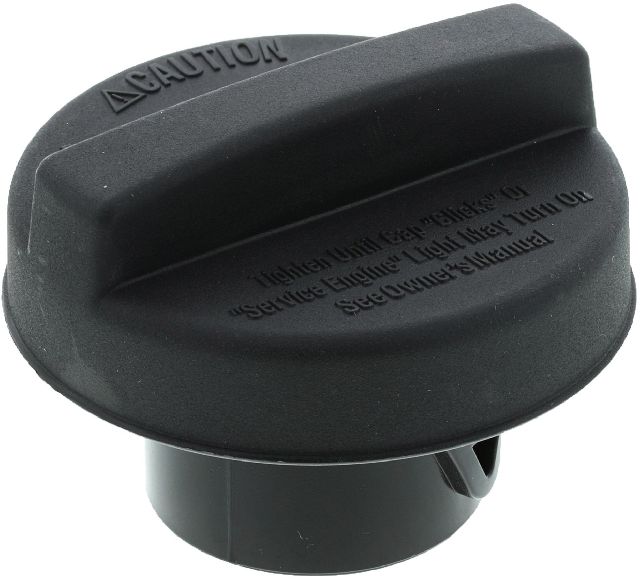
Aftermarket price range: $30-$50 - Gas Cap — A worn out or damaged gas cap seal is the simplest and a very common cause for all EVAP system codes.
Trusted brands: ACDelco, Stant
OEM price range: $20-$35
Aftermarket price range: $15-$25 - EVAP Vapor Canister Purge Solenoid
(OEM #12597567)— This valve, located on the engine, can stick open or closed, creating a leak or flow issue in the EVAP system.
Trusted brands: ACDelco, Bosch
OEM price range: $40-$60
Aftermarket price range: $25-$45
Related Codes That Often Appear With This One
- P0449 — This code specifically points to a fault in the EVAP Vent Solenoid circuit. If you see P0449 with P0440, the vent solenoid is almost certainly the cause.
- P0455 — Indicates a large EVAP leak. A stuck-open vent or purge solenoid, or a very bad gas cap seal can be large enough to trigger both the general P0440 and the specific P0455 code.
- P0442 — Indicates a small EVAP leak. A deteriorating hose or a minor seal failure might initially cause a P0442 before the leak worsens and triggers a general P0440 fault.
Technical Service Bulletins (TSBs) & Recalls
- TSB 08-06-04-022: While not specifically for P0440, this bulletin addresses potential chafing and shorts in wiring harnesses on various GM vehicles of the era. It's relevant if basic component swaps don't fix the code, suggesting a deeper electrical issue could be present.
Platform-Specific Known Issues
- Owner Experience: P0440 and P0449 Fixed with Vent Solenoid: A user on coloradofans.com with a 2007 Colorado reported receiving a P0449 code. After replacing the gas cap didn't solve the issue, they replaced the EVAP vent solenoid (Dorman part 911-070) located by the spare tire. The repair involved dropping the spare tire for access, removing one 13mm bolt holding the charcoal canister, and swapping the solenoid. This is a very common repair documented in forums and YouTube videos for this truck.
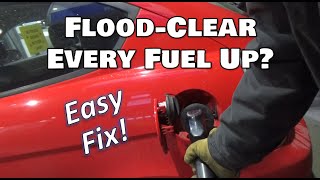
- Repair Story: Hard Starting After Fueling: Multiple owners on forums and in repair videos note that a primary symptom of a failing vent solenoid on the Colorado/Canyon is difficulty starting the engine immediately after refueling. This happens because a stuck-closed valve prevents air from entering the tank as fuel goes in, creating a vacuum that the purge system can't handle on startup. 🎬 See why a bad valve makes your truck hard to start. Replacing the vent solenoid resolves this symptom along with the P0440/P0449 codes.
Mechanic-Grade Diagnostic Values
- Fuel Tank Pressure (FTP) Sensor Voltage — expected: Approximately 1.5 Volts with the gas cap off (at atmospheric pressure).. Failure: A voltage that is significantly higher (e.g., over 2.5V) or lower with the cap off, or a value that does not change when vacuum is applied, suggests a faulty sensor.
- EVAP Vent/Purge Solenoid Coil Resistance — expected: 12 - 15 Ω (Ohms).. Failure: A reading of infinite resistance (open circuit) or very low resistance (short circuit) indicates a failed solenoid coil.
- FTP Sensor 5V Reference Signal — expected: Approximately 5.0 Volts (a reading of 4.81V was shown as good).. Failure: No voltage or significantly low voltage indicates a wiring problem or a fault in the PCM.
Scan Tool Commands That Help
- GM Tech2 / GDS2 (or equivalent like VCX Nano): EVAP Service Bay Test — Use this to force the vehicle's computer to run a full EVAP system self-test without performing a lengthy drive cycle. It commands the vent and purge solenoids and monitors the FTP sensor to verify system integrity. This is the professional way to confirm a fix or find a leak that only appears under specific test conditions.
- Advanced OBD-II Scanner: Vent Solenoid ON/OFF Command — Use this bidirectional control to manually close the vent solenoid. You should hear a click from the solenoid under the truck. This is a quick functional check to see if the solenoid is responding to commands before performing more complex tests.
- Advanced OBD-II Scanner: Purge Solenoid ON/OFF Command — Use this to manually open and close the purge solenoid in the engine bay. This helps verify its mechanical function and can be used with a vacuum gauge to check if it's sealing properly when commanded closed.
Wiring & Ground Locations
- EVAP Vent Solenoid Connector — On the EVAP vent solenoid, which is mounted to the charcoal canister above the spare tire.. This connector and its wiring are highly exposed to road spray, salt, and debris, leading to corrosion and wire damage that can cause P0440 and P0449 codes.
- G103 — Lower left side of the engine block.. This is a key engine ground point. The Powertrain Control Module (PCM), which controls the entire EVAP system, relies on clean grounds. A poor connection here can cause erratic behavior in sensors and solenoids.
- SP-105 / SP-106 (Splice Packs) — SP-105 is on the driver's side near the battery; SP-106 is on the passenger side behind the engine airbox.. These are major ground distribution points known to be poorly sealed from the factory. Corrosion in these splice packs causes numerous, hard-to-diagnose electrical problems, including issues with circuits controlled by the PCM like the fuel pump and EVAP system components.
- EVAP Purge Solenoid Connector — On the purge solenoid, located on the left side of the engine, below the intake manifold.. While less exposed than the vent solenoid, this connector can still suffer from heat-related degradation, causing intermittent connection issues.
Real Owner Repair Stories
- YouTube channel 'Bad Luck Garage' (2004-2012 Chevrolet Colorado/GMC Canyon) — Check Engine Light with code P0446 (Vent Control Circuit), and fuel nozzle constantly clicking off during fill-ups.
❌ Tried (didn't work) Checked the gas cap, which was sealing correctly.
✅ What actually fixed it Replacing the EVAP canister vent solenoid located by the charcoal canister fixed both the code and the refueling issue. The replacement part required the use of an included wiring adapter pigtail. - YouTube channel 'Auto Detour' (2006 Chevrolet Colorado from the Midwest ('Uncle Rusty')) — Check Engine Light with EVAP code P0449.
✅ What actually fixed it Replaced the EVAP canister vent solenoid. The video highlights the extreme rust on the vehicle, underscoring the role of environmental exposure in this part's failure. The repair required only a single 1/2 inch (or 13mm) bolt to be removed to drop the canister for access. - NHTSA ODI #10007823 — An owner reported that their engine light kept coming on with code P0440, yet despite diagnostic checks, no one could find anything wrong with the vehicle's evaporative emissions system.
OEM Part Supersession History
10386359 (and others)→20907779 (common replacement)— The original vent solenoid design was prone to failure from water and debris intrusion. The new design is more robust.
Heads up: The replacement solenoid (e.g., 20907779) uses a square electrical connector, while most original solenoids on 2004-2008 models used an oval connector. A jumper harness, GM part #19257603, is required to adapt the new part to the old vehicle harness. Many aftermarket kits include this adapter.
Model Year Variations Within This Range
- 2004-2008: These earlier models are almost certain to have the original 'oval' style EVAP vent solenoid connector from the factory. When replacing the vent solenoid, it is mandatory to also purchase the adapter harness (GM #19257603 or equivalent) to fit the new 'square' style connector on all modern replacement parts.
- 2009-2012: These later models may have the newer 'square' connector from the factory, but it is not guaranteed. It is wise to visually inspect the connector on the vehicle before ordering parts, but many technicians purchase the adapter harness just in case.
Diagnostic Flowchart
Other Known Issues on This Vehicle
Issues unrelated to this code that are worth knowing about as an owner of this generation:
- Engine Valve Seat Failure (I4 & I5 Engines) 🔴 High — Common on early models (approx. 2004-2007). Can cause misfires, rough idle, and a flashing check engine light. Often requires cylinder head replacement. (Ref: GM issued an extended warranty (7yr/100,000 miles) for affected vehicles, but it has since expired.)
- Blower Motor Resistor Failure 🟡 Low — Extremely common. Results in loss of some or all fan speeds for the HVAC system. The resistor is located under the passenger side dashboard and is a frequent DIY repair.
- PassLock Anti-Theft System Malfunction 🟠 Medium — Widespread issue where the vehicle's security system fails to recognize the key, resulting in a crank-no-start condition. Often requires a '10-minute relearn' procedure or component replacement.
- Faulty Fuel Level Sensor 🟠 Medium → Shop Fuel Tank Sending Unit — The sensor within the fuel tank can fail, causing an inaccurate or inoperative fuel gauge. This can lead to unexpectedly running out of fuel. The fix requires dropping the tank or lifting the bed to replace the fuel pump module.
- Fan Clutch Failure 🟠 Medium — The engine's cooling fan clutch can fail, leading to either excessive fan noise (stuck engaged) or potential overheating in traffic (stuck disengaged).
Used vs. New Parts: Buying Guide for This Vehicle
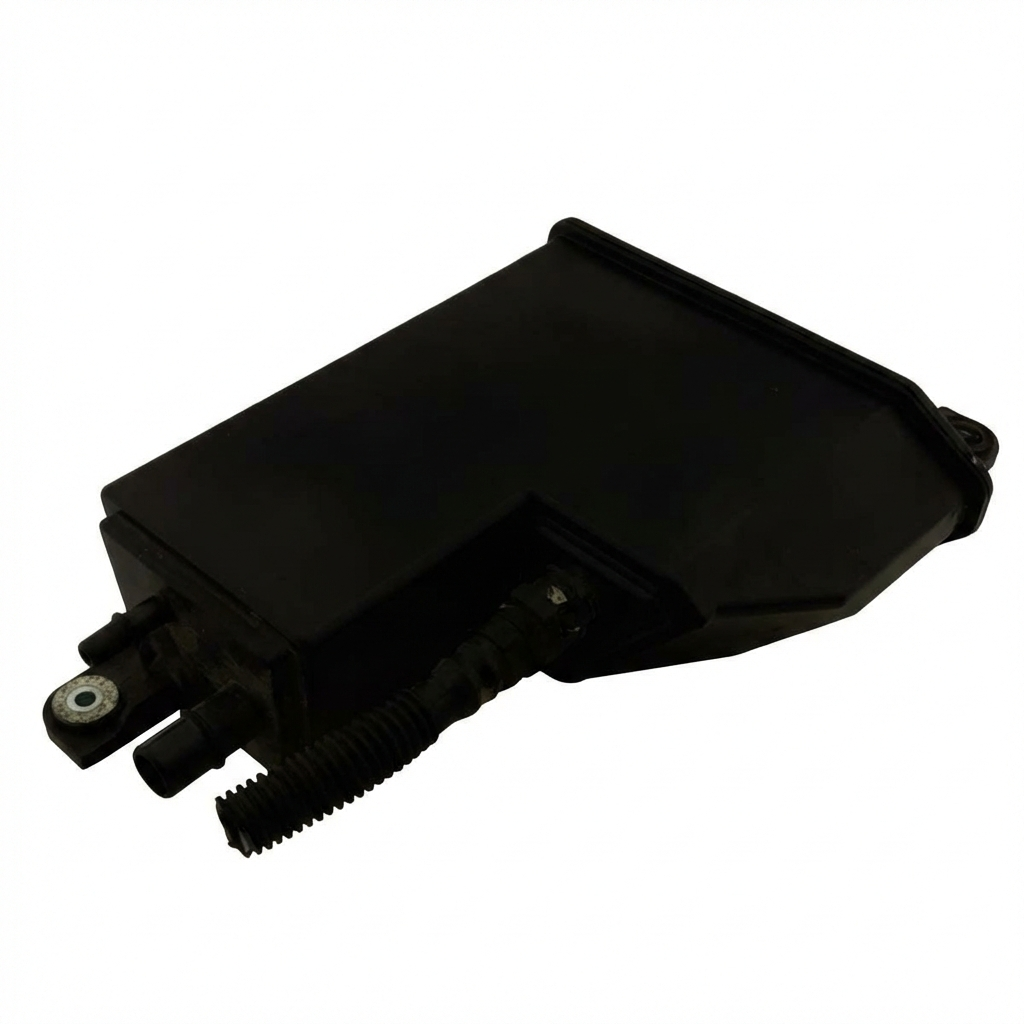
When a used part is the smart pick: A used charcoal canister can be a cost-effective option. The canister itself is a passive component that rarely fails unless it is physically cracked or has been saturated with liquid fuel from overfilling the tank.
Donor-vehicle mileage cap: roughly under 150000 miles for the part to have meaningful remaining life.
What to inspect on the donor part:
- Visually inspect the plastic housing for any cracks, especially around the hose nipples.
- Shake the canister; it should not rattle, which would indicate broken internal structures.
- Ensure it feels light and does not slosh, which would mean it's saturated with liquid fuel and is unusable.
OEM-only on this vehicle (don't cheap out):
- Gas Cap: While not strictly 'OEM-only', cheap aftermarket gas caps are a frequent cause of recurring EVAP codes due to poor sealing. Using an OEM (ACDelco) or a reputable brand like Stant is highly recommended.
- Fuel Tank Pressure (FTP) Sensor: For critical sensors, OEM parts often provide better accuracy and longevity compared to cheaper alternatives.
Aftermarket brands forum-validated for this vehicle:
- Dorman (specifically 911-070 for the vent solenoid) is widely used in DIY repairs with success.
- Standard Motor Products (SMP) has a good reputation for electrical components and sensors.
Real Owner Stories
Aggregated from forums and TSBs cited above. Mileages and costs reflect what owners reported in those sources.
2007 Chevrolet Colorado
Symptoms: The owner received a P0449 code and found that replacing the gas cap did not solve the issue.
What fixed it: Replaced the EVAP vent solenoid (Dorman part 911-070) located by the spare tire. The repair involved dropping the spare tire and removing one 13mm bolt holding the charcoal canister to swap the solenoid.
Source hint: coloradofans.com thread titled 'How to replace a vapor canister vent valve solenoid on a Chevy Colorado P0449 error'
2004-2012 Chevrolet Colorado
Symptoms: Difficulty starting the engine immediately after refueling the truck.
What fixed it: Replacing the vent solenoid resolved the hard-start symptom along with the P0440/P0449 codes.
Source hint: vehicle_specific_issues: Repair Story: Hard Starting After Fueling
Related OBD-II Codes
Frequently Asked Questions
Why does my 2004-2012 Chevrolet Colorado have trouble starting only after I fill it up with gas?
Where is the EVAP vent solenoid located on my Colorado, and why did it fail?
Does TSB 08-06-04-022 apply to my P0440 code?
Can I use a used charcoal canister from a salvage yard to fix my P0440?
Is there a specific part number I need when replacing the vent solenoid on my GMC Canyon or Chevy Colorado?
My gas pump nozzle keeps clicking off when I try to refuel my truck. Is this related to P0440?
Helpful Videos
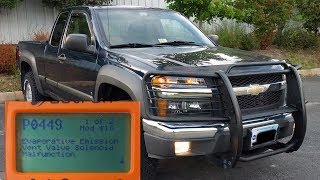
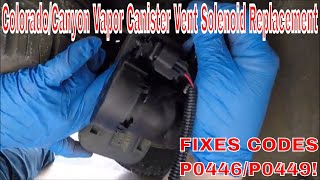
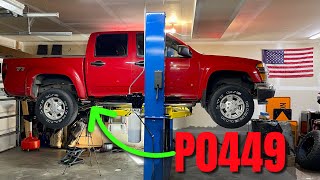
![FREE fix for p0446/p0449 [Chevy Colorado/ GMC Canyon Fuel System Issues]](https://img.youtube.com/vi/czvj2fkFzYQ/mqdefault.jpg)

Used OEM Parts in Stock
New Aftermarket Parts Available


The information in this article is provided for general reference and educational purposes only. Vehicle specifications, procedures, and part compatibility can vary by production date, trim level, and region. Always consult your vehicle's factory service manual and verify part numbers before purchasing or performing repairs. Safety-critical components such as airbags, seat belts, and braking systems should be installed by a qualified professional.
- Chevrolet Colorado:
- 🧭 Diagnostic Flowchart
- 🎬 Helpful Videos
- 🛍️ Shop This Part
- What's Unique About the 2004-2012 Chevrolet Colorado
- Symptoms You May Notice
- Most Likely Causes
- Rare But Worth Checking
- Diagnosis Steps
- Parts You'll Likely Need
- Related Codes That Often Appear With This One
- Technical Service Bulletins (TSBs) & Recalls
- Platform-Specific Known Issues
- Mechanic-Grade Diagnostic Values
- Scan Tool Commands That Help
- Wiring & Ground Locations
- Real Owner Repair Stories
- OEM Part Supersession History
- Model Year Variations Within This Range
- Other Known Issues on This Vehicle
- Used vs. New Parts: Buying Guide for This Vehicle
- Real Owner Stories
- 2007 Chevrolet Colorado
- 2004-2012 Chevrolet Colorado
- Related OBD-II Codes
- Frequently Asked Questions
- 🎟️ Get 5% Off