

P0440 on 2018-2024 Chevrolet Equinox: EVAP System Malfunction Causes and Fixes
For a 2018-2024 Equinox, code P0440 usually points to a faulty EVAP purge valve solenoid located on the engine. A loose or bad gas cap is the next most likely cause. The purge valve is a relatively inexpensive part (around $25-$60) and is easy to replace for most DIYers, often taking less than 30 minutes.
- P0440 indicates a general fault in the EVAP emissions system.
- The most common and easiest fix is to check and tighten the gas cap.
- The next most likely culprit on a 2018-2024 Equinox is a faulty EVAP purge valve located on the engine.
- The vehicle is safe to drive with this code, but it will not pass an emissions test.
- If a simple inspection of the gas cap and purge valve doesn't solve the issue, a smoke test is the best way to find the leak.
What's Unique About the 2018-2024 Chevrolet Equinox
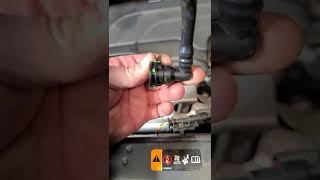
For the third-generation Chevrolet Equinox (2018-2024), while the EVAP system components are common across many GM vehicles, owner and technician reports frequently point towards the vapor canister purge valve (solenoid) as a primary failure point for EVAP-related codes. This part is located on the engine, making it more susceptible to heat and vibration, which can lead to premature failure. Unlike older GM trucks where the vent valve near the tank was the most common issue, on this platform, the engine-mounted purge valve should be one of the first components inspected after the gas cap. A video guide for the Equinox shows the purge valve is located just under the plastic engine cover, mounted on a simple bracket, confirming its accessibility.
Symptoms You May Notice
- Check Engine Light is on.
- A faint smell of fuel, particularly around the outside of the vehicle.
- Slight decrease in fuel efficiency.
- Vehicle will not pass an emissions inspection.
- Rough idle or difficulty starting, if the purge valve is stuck open.
- Replacing the O2 sensors. O2 sensors are not part of the EVAP system and will not cause a P0440 code.
- Replacing the charcoal canister when only the vent valve is bad. On many designs, the vent valve can be replaced separately from the more expensive canister.
Most Likely Causes
- Loose or Faulty Gas Cap 🔴 High Probability → Shop Fuel Tank Cap This is the most common cause for EVAP codes on all vehicles. The cap's seal can degrade over time or it may not have been tightened correctly after refueling. Some Equinox models are capless, and the spring-loaded door may not be sealing properly.
How to confirm: Ensure the gas cap is tightened until it clicks several times. Inspect the rubber O-ring on the cap for cracks, dirt, or signs of wear. 🎬 Watch: Two quick DIY methods to fix a P0440 code. For capless systems, inspect the filler neck for debris preventing a good seal.
Typical fix: Tighten the cap. If the seal is damaged, replace the gas cap. Clean the capless filler neck if needed.
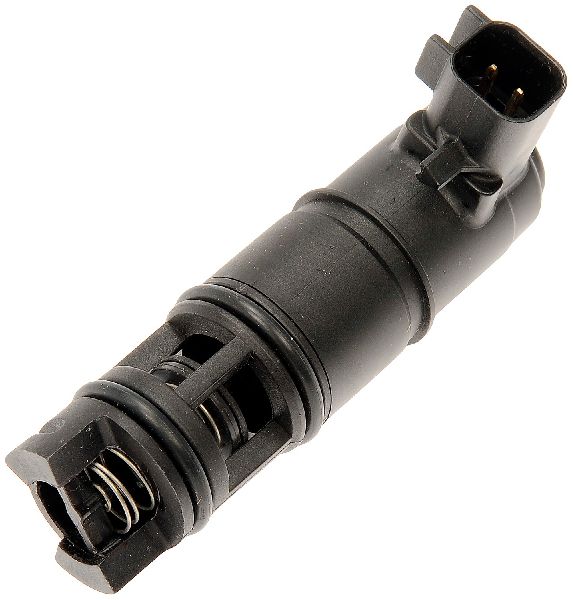
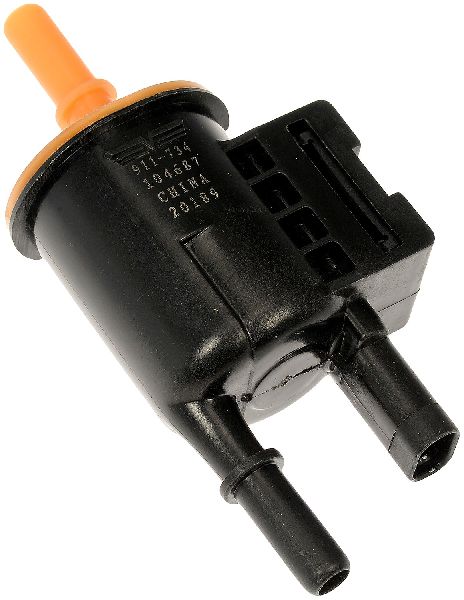
Est. part cost: $15-$40 - Faulty EVAP Purge Valve Solenoid 🔴 High Probability → Shop Vapor Canister This valve is located on the engine and is subjected to constant heat and vibration. It can become stuck open or closed, or develop an internal leak, which is a frequent failure point on many modern GM vehicles, including the Equinox and its platform mate, the GMC Terrain.
How to confirm: With the engine off, remove the purge valve and try to blow through it. If air passes through, the valve is stuck open and is faulty. With the engine running, you can sometimes feel for suction or a clicking sound from the valve. A more definitive test involves a handheld vacuum pump or using a scan tool to command the valve open and closed while monitoring flow.
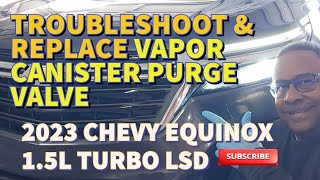
Typical fix: Replace the purge valve solenoid. It is typically mounted on the engine with two hoses and an electrical connector. On the 1.5L Equinox, it is located under the plastic engine cover and can be removed from its mounting bracket by wiggling and pulling. 🎬 Watch: Step-by-step purge valve replacement on the 1.5L engine.
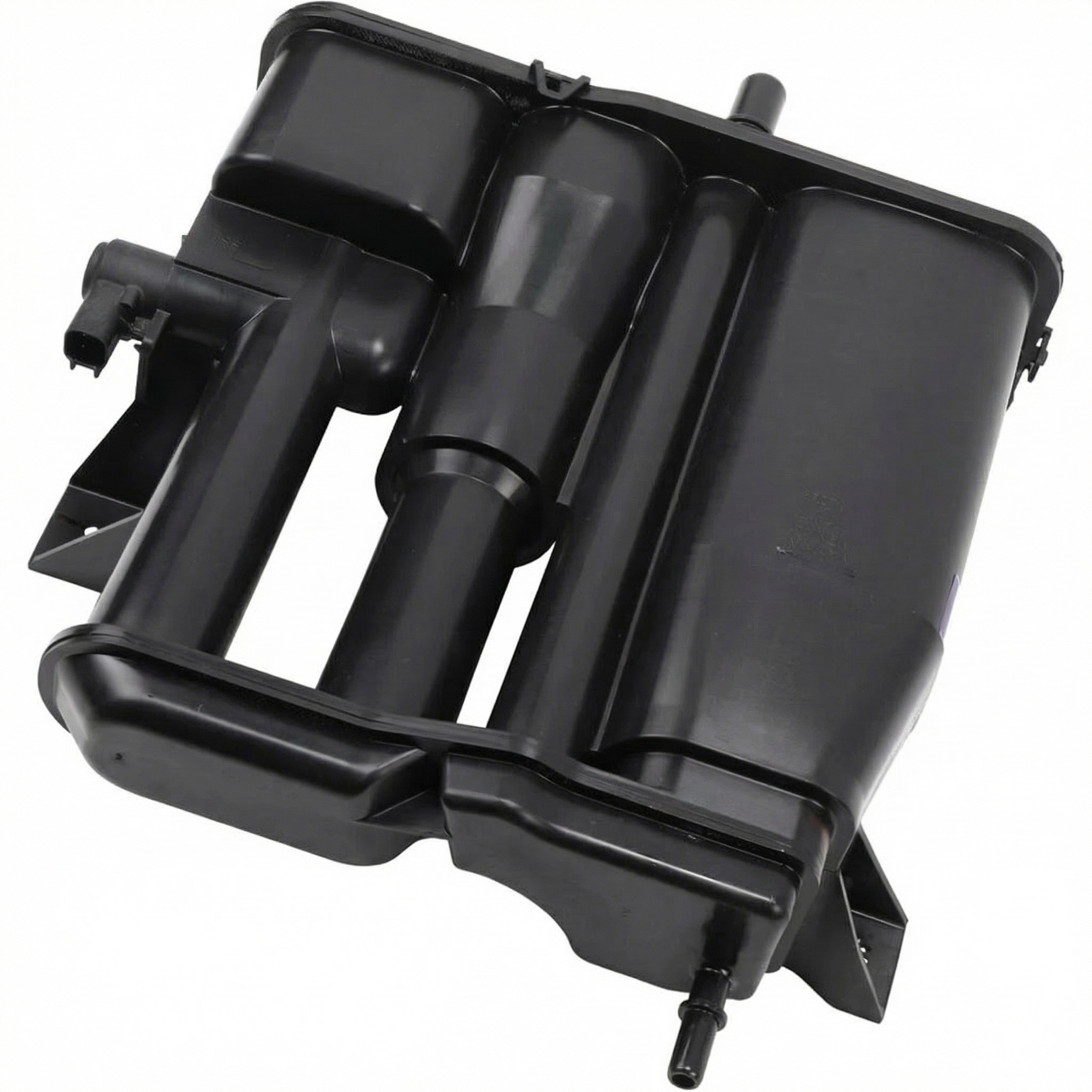
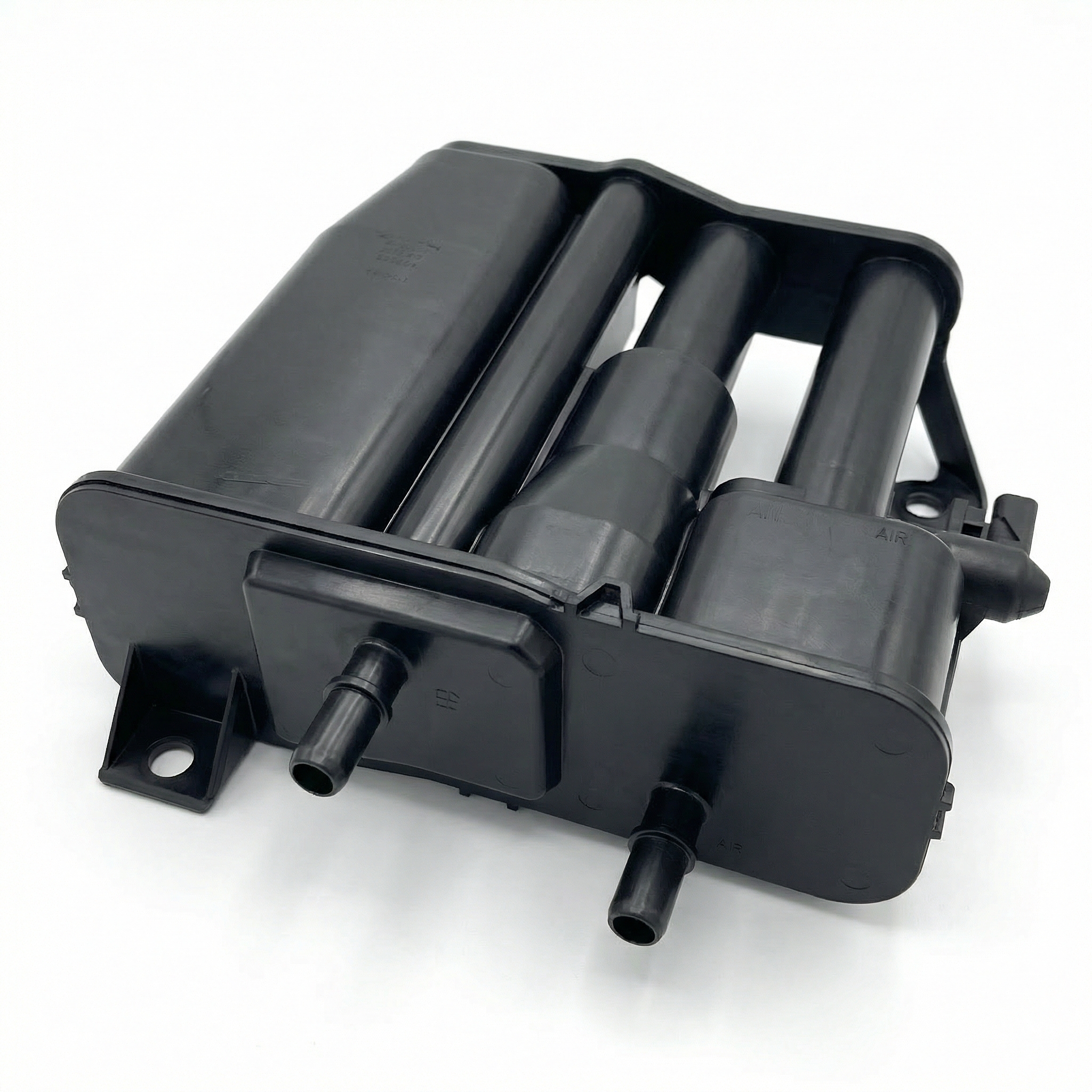
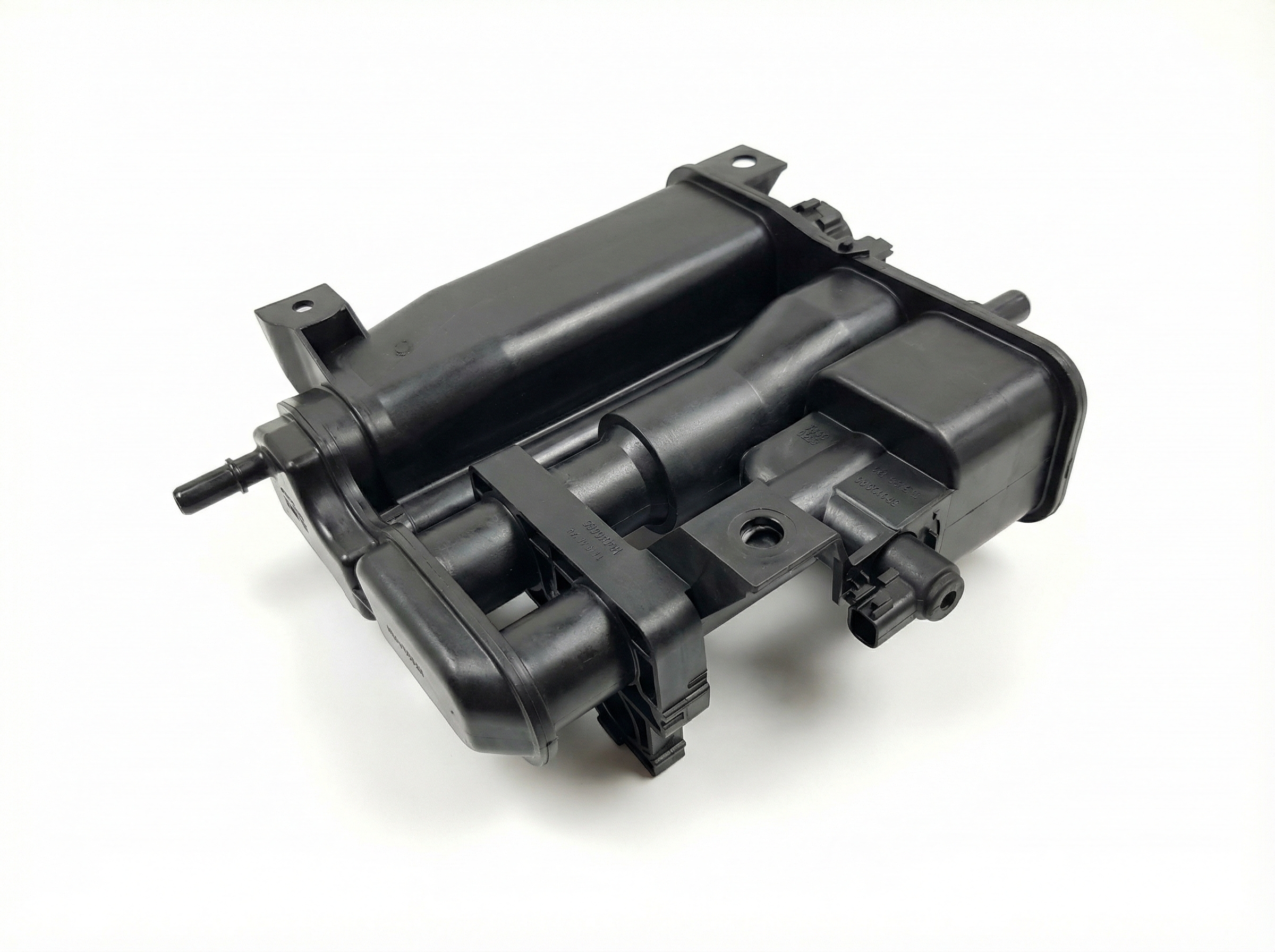
Est. part cost: $25-$60 - Faulty EVAP Vent Valve Solenoid 🟡 Medium Probability → Shop Vapor Canister This valve is located near the charcoal canister under the vehicle, making it susceptible to road debris, dirt, and moisture which can cause it to stick or fail. While a common issue on older GM trucks, it is less frequently the primary cause on this platform compared to the purge valve.
How to confirm: A scan tool can be used to command the valve closed during a system test. A visual inspection may reveal damage. Testing requires applying power to the solenoid to see if it actuates correctly.
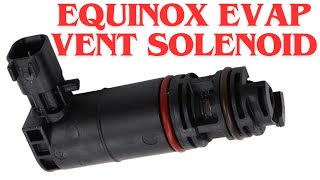
Typical fix: Replace the vent valve solenoid. It is often attached to or located near the charcoal canister. 🎬 See how to access and replace the under-car vent solenoid.
Est. part cost: $30-$75 - Cracked or Disconnected EVAP Hose ⚪ Low Probability Over time, rubber and plastic hoses can become brittle and crack, especially at connection points or bends. This is more common on older vehicles.
How to confirm: A visual inspection of all accessible EVAP lines between the fuel tank, charcoal canister, and engine may reveal obvious cracks. The most effective method is a smoke test, which forces smoke into the EVAP system to reveal the exact location of any leaks.
Typical fix: Replace the damaged section of hose or reconnect it if it has come loose.
Est. part cost: $10-$50
Rare But Worth Checking
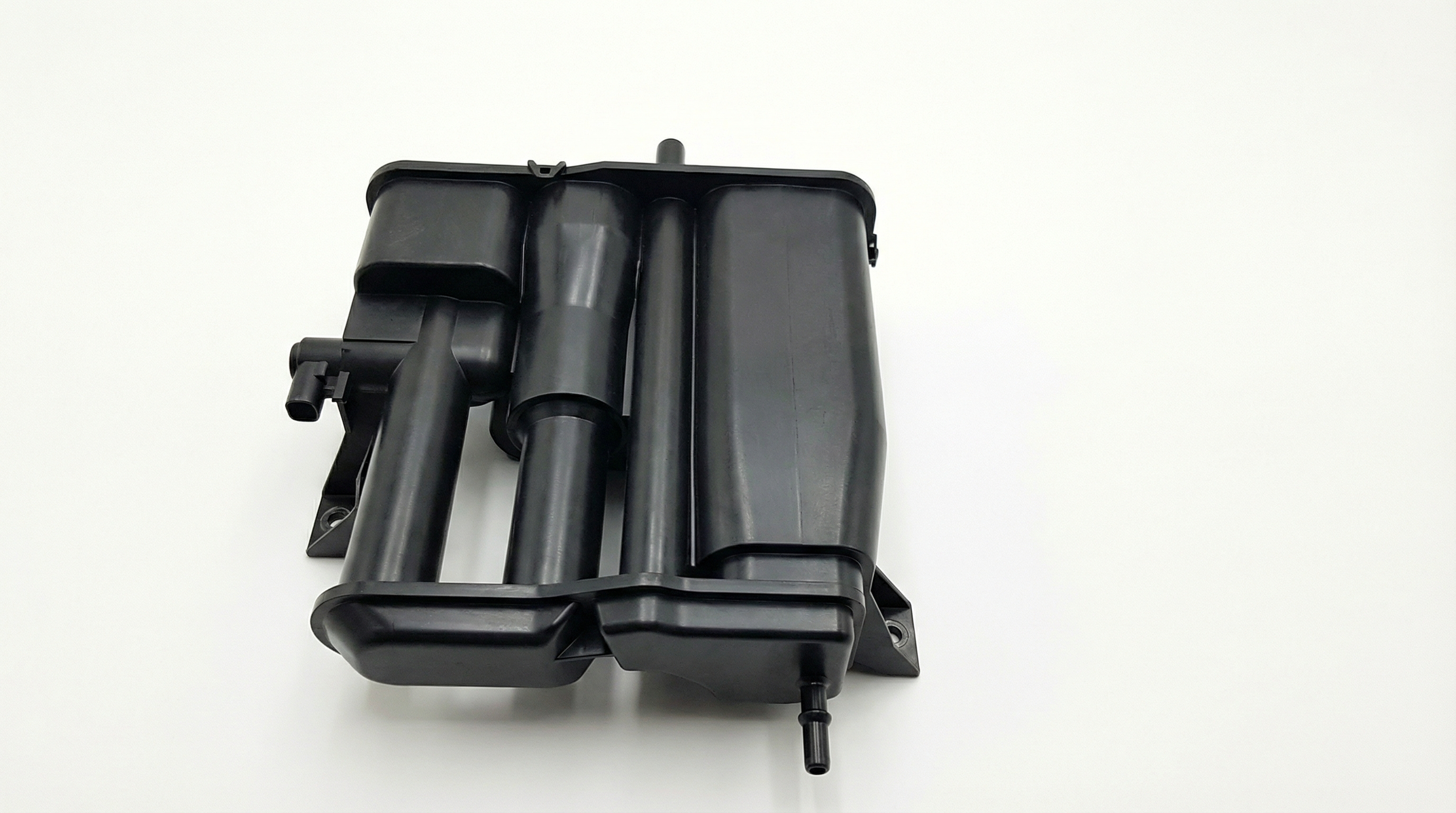
- Cracked Charcoal Canister: → Shop Vapor Canister The plastic housing of the canister can crack due to impact from road debris or age, creating a leak. This is less common than valve failure but should be considered if other components test good.
- Faulty Fuel Tank Pressure (FTP) Sensor: → Shop Fuel Tank The sensor that monitors EVAP system pressure can fail and send incorrect data to the ECM. This will often set a specific sensor code but can sometimes contribute to a general P0440.
Diagnosis Steps
- Check the Gas Cap: This is the simplest and most common fix. Remove the gas cap, inspect the seal for damage, and reinstall it, ensuring it clicks at least three times. For capless systems, inspect and clean the fuel filler opening. Clear the code and drive for a few days to see if it returns.
- Visual Inspection: Look over the EVAP hoses and lines that are visible in the engine bay and under the vehicle. Check for any obvious cracks, disconnections, or damage.
- Inspect the Purge Valve: Locate the EVAP purge valve on the engine. With the engine off, remove the valve and attempt to blow through it. If air passes, it is stuck open and must be replaced. This is a very common failure mode.
- Inspect the Vent Valve: Locate the vent valve near the charcoal canister under the vehicle. Check its electrical connector and hoses for damage. Testing this valve often requires a scan tool to command it closed or by applying voltage directly.
- Perform a Smoke Test: If the above steps do not reveal the issue, the most reliable way to find a leak is with a smoke machine. A mechanic will introduce pressurized smoke into the EVAP system and watch for where it escapes.
Parts You'll Likely Need
- Vapor Canister Purge Valve / Solenoid
(OEM #55593172)— This is a very common failure item on modern GM vehicles, including the Equinox. It gets stuck open or closed, causing a system malfunction.
Trusted brands: ACDelco, Dorman, Standard Motor Products
OEM price range: $40-$70
Aftermarket price range: $25-$50 - Fuel Filler Cap (Gas Cap)
(OEM #13519568)— The seal on the gas cap wears out over time, or the cap is simply not tightened properly, causing the system to fail its pressure test. This part number is for models equipped with a traditional cap.
Trusted brands: ACDelco, Gates, Stant
OEM price range: $25-$40
Aftermarket price range: $15-$25 - Vapor Canister Vent Valve / Solenoid
(OEM #84858239)— Located under the vehicle, this valve can fail due to exposure to dirt and moisture, causing it to stick open or closed.
Trusted brands: ACDelco, Dorman, Wells
OEM price range: $50-$90
Aftermarket price range: $30-$60
Related Codes That Often Appear With This One
- P0442 — Indicates a small leak. If the fault is intermittent or on the borderline between a general malfunction and a small leak, both codes could potentially be stored.
- P0455 — Indicates a large leak. This can appear with P0440 if a component like the purge valve is stuck wide open or the gas cap is missing entirely.
- P0449 — This code specifically points to a malfunction in the vent valve solenoid circuit, making the vent solenoid the primary suspect when seen with P0440.
- P0443 — Indicates a fault in the purge valve electrical circuit. If seen with P0440, it strongly suggests the purge valve or its wiring is the root cause.
Technical Service Bulletins (TSBs) & Recalls
- While no specific TSB for P0440 on this platform was found, GM has issued general EVAP system diagnostic bulletins like #00-06-04-011A that explain the system self-test procedure and warn against filling the fuel tank with the engine running, as it can interfere with the test and cause issues.
- TSB 23-NA-073 addresses various EVAP codes (P0442, P0446, P0455, P0449) and notes they can be caused by dust intrusion into the EVAP system, clogging the canister and vent solenoid, particularly on vehicles in dusty environments. The fix involves retrofitting an external filter to the vent hose.
Platform-Specific Known Issues
- Easy Purge Valve Access on 1.5L Engine: → Shop Vapor Canister On the common 1.5L Turbo engine, the purge valve (solenoid) is located directly under the plastic engine cover, mounted on a simple slide-off bracket. It is not bolted down, making replacement extremely easy for DIYers, often requiring no tools other than a Torx bit to remove the engine cover.
Mechanic-Grade Diagnostic Values
- Fuel Tank Pressure (FTP) Sensor Voltage (Key On, Engine Off, Gas Cap Removed) — expected: Approximately 1.3V to 1.7V. Failure: A voltage reading stuck low (e.g., 0.3V) or high (e.g., 5.0V) that does not change when the gas cap is removed points to a faulty sensor or wiring issue.
- EVAP Purge/Vent Solenoid Power Supply — expected: Battery Voltage (12V). Failure: The power wire at the solenoid connector should have battery voltage with the key in the ON position. The other wire is a ground controlled by the ECM. No voltage indicates a blown fuse or a wiring issue upstream.
- EVAP Purge/Vent Solenoid Resistance — expected: 15 to 30 Ohms (General GM Specification). Failure: A reading of infinite resistance (Open Loop) or 0 ohms (short) indicates a failed solenoid coil. Note: This is a general GM value, and specific values for the 2018+ Equinox parts are not available in public sources.
Scan Tool Commands That Help
- GDS2 (GM Techline Connect): EVAP Service Bay Test — This is a comprehensive, automated test that commands the purge and vent valves to seal the system, pulls a vacuum, and monitors for decay. It's the dealership-level method to confirm system integrity after a repair or when a leak is suspected but not obvious.
- GDS2 / High-End Bidirectional Scanner: EVAP Purge/Seal (Output Control) — This function allows a technician to manually command the EVAP Purge Solenoid and EVAP Vent Solenoid ON or OFF. This is used to isolate components, listen for an audible click from the solenoids to confirm mechanical function, and to seal the system for a manual smoke test.
Wiring & Ground Locations
- EVAP Component Power Fuse — In the underhood fuse block. For a 2018 model, the canister vent solenoid fuse is often F16. Always verify with your owner's manual or fuse block diagram.. A blown fuse will cut power to the vent or purge solenoid, causing a circuit code (like P0443 or P0449) and preventing the EVAP system from sealing, which can lead to a P0440.
- Engine Control Module (ECM) — Typically mounted on the left side of the engine compartment.. The ECM provides the switched ground signal that activates both the purge and vent solenoids. A wiring fault between the ECM and a solenoid can prevent it from operating correctly.
OEM Part Supersession History
12610560→55593172— Part number consolidation and potential design update for the Vapor Canister Purge Valve.
Diagnostic Flowchart
Other Known Issues on This Vehicle
Issues unrelated to this code that are worth knowing about as an owner of this generation:
- Intermittent 'Shift to Park' Message 🟠 Medium — Very common across 2018-2020 models. Prevents vehicle from shutting off, leading to a dead battery. (Ref: TSB 19-NA-206 outlines a fix involving a new microswitch and jumper harness, avoiding costly full shifter replacement.)
- Cracked Pistons on 1.5L Turbo Engine 🔴 High — A significant issue, particularly in 2018-2021 models, caused by low-speed pre-ignition (LSPI). Can lead to catastrophic engine failure. (Ref: No specific recall, but it's a widely documented problem. Using high-quality, dexos1 Gen 2 certified oil is critical for prevention.)
- Excessive Oil Consumption 🟠 Medium — Reported in both 1.5L and 2.0L engines, requiring owners to check oil levels frequently between changes. (Ref: GM has issued TSBs for dealers on how to address oil consumption issues.)
- Stalling or Loss of Power While Driving 🔴 High — Reported in some models, sometimes related to fuel pump issues or engine wiring harnesses, creating a significant safety risk. (Ref: Some fuel pump recalls have been issued for specific model years.)
- Timing Chain Stretch/Failure (2.0L LTG Engine) 🔴 High — The 2.0L Turbo engine can be prone to timing chain issues, often manifesting as a rattle on startup. Failure can cause severe engine damage. (Ref: TSB PI1482 addresses related engine noise, though not a full recall.)
Used vs. New Parts: Buying Guide for This Vehicle
When a used part is the smart pick: For this repair, buying used parts is generally not recommended. The primary failure components (purge and vent valves) are electro-mechanical solenoids that wear out over time and are exposed to harsh conditions (engine heat for the purge valve, road debris for the vent valve). New aftermarket parts are inexpensive (often $25-$60), readily available, and come with a warranty, making them a much smarter choice than a used part with unknown remaining life.
Donor-vehicle mileage cap: roughly under 40000 miles for the part to have meaningful remaining life.
What to inspect on the donor part:
- If buying a used valve is unavoidable, ensure there are no visible cracks in the plastic housing.
- Check that electrical connector pins are straight and free of corrosion.
- Verify the hose ports are not cracked or broken.
OEM-only on this vehicle (don't cheap out):
- While not strictly 'OEM-only', using an OEM ACDelco gas cap is highly recommended as some aftermarket caps have been reported to have sealing issues that cause EVAP codes to persist.
Aftermarket brands forum-validated for this vehicle:
- Dorman
- Standard Motor Products (SMP)
- Wells
Brands owners have reported issues with on this vehicle:
- No-name, unbranded parts from online marketplaces should be avoided, as their internal components may not meet the required flow and sealing specifications, leading to repeat failures.
Real Owner Stories
Aggregated from forums and TSBs cited above. Mileages and costs reflect what owners reported in those sources.
2012 GMC Terrain 3.6L V6
Symptoms: The owner replaced the purge valve to fix one code, but the P0440 code remained.
What fixed it: Replacing the gas cap after the purge valve replacement failed to clear the P0440.
Source hint: Reddit r/AskAMechanic: P0440 Advice Please (2012 GMC Terrain 3.6L V6 2WD)
Chevrolet Tahoe/Suburban
Symptoms: The owner observed a P0440 code and performed initial DIY checks.
What fixed it: The owner replaced the gas cap and had a smoke test performed, which confirmed no further leaks were present.
Source hint: Chevrolet Forum: Evap code p0440
Related OBD-II Codes
Frequently Asked Questions
I have a 1.5L Turbo Equinox; is the purge valve difficult to replace myself?
Does TSB 23-NA-073 apply to my Equinox if I drive in very dusty conditions?
My Equinox is capless; how do I check the 'gas cap' for a P0440 code?
Can I fill my Equinox while the engine is running?
Is the P0440 code related to the 'Shift to Park' message on my 2018 Equinox?
Helpful Videos
![How to Fix P0440 Engine Code in 3 Minutes [2 DIY Methods / Only $4.73]](https://img.youtube.com/vi/-kSpB9clrrs/mqdefault.jpg)
Used OEM Parts in Stock

New Aftermarket Parts Available

The information in this article is provided for general reference and educational purposes only. Vehicle specifications, procedures, and part compatibility can vary by production date, trim level, and region. Always consult your vehicle's factory service manual and verify part numbers before purchasing or performing repairs. Safety-critical components such as airbags, seat belts, and braking systems should be installed by a qualified professional.
- Chevrolet Equinox:
- 🧭 Diagnostic Flowchart
- 🎬 Helpful Videos
- 🛍️ Shop This Part
- What's Unique About the 2018-2024 Chevrolet Equinox
- Symptoms You May Notice
- Most Likely Causes
- Rare But Worth Checking
- Diagnosis Steps
- Parts You'll Likely Need
- Related Codes That Often Appear With This One
- Technical Service Bulletins (TSBs) & Recalls
- Platform-Specific Known Issues
- Mechanic-Grade Diagnostic Values
- Scan Tool Commands That Help
- Wiring & Ground Locations
- OEM Part Supersession History
- Other Known Issues on This Vehicle
- Used vs. New Parts: Buying Guide for This Vehicle
- Real Owner Stories
- 2012 GMC Terrain 3.6L V6
- Chevrolet Tahoe/Suburban
- Related OBD-II Codes
- Frequently Asked Questions
- 🎟️ Get 5% Off