

P0440 on 1995-2001 Chevrolet Lumina: EVAP System Malfunction Causes and Fixes
On a 1995-2001 Lumina, code P0440 is most often caused by a loose or faulty gas cap. If that's not it, the next most likely culprits are a failed EVAP purge solenoid on the engine or a bad vent solenoid near the gas tank. In rust-prone areas, a corroded fuel filler neck is also a very common cause. Expect to spend $10-$60 on parts for these common fixes.
- Always check the gas cap first. Make sure it's tight and the seal is in good condition. This solves the problem a surprising amount of the time.
- If the gas cap isn't the issue, the next most likely parts to fail are the EVAP purge solenoid (on the engine) and the EVAP vent solenoid (near the gas tank).
- This code will not stop you from driving the car, but it will cause you to fail an emissions test.
- Listen for unusual noises. A 'whoosh' when opening the gas cap or a 'thumping' from the rear of the car are strong clues that the vent solenoid is the problem.
- If simple checks don't reveal the problem, a smoke test performed by a mechanic is the fastest way to find small leaks in the system's hoses.
What's Unique About the 1995-2001 Chevrolet Lumina
For this generation of Chevrolet Lumina (and other GM W-body cars), the EVAP system components, particularly the solenoids and fuel filler neck, are known failure points. While P0440 is a general code, owners frequently trace it to either the easily accessible purge solenoid on the engine, the vent solenoid at the rear of the car, or a rusted fuel filler neck. Some owners report hearing a distinct 'thumping' or 'popping' from the fuel tank as it deforms under vacuum or pressure when the vent path is blocked, which is a strong clue pointing to a failed vent solenoid on this platform.
Symptoms You May Notice
- Check Engine Light is on
- A noticeable fuel smell around the vehicle.
- A 'whoosh' sound of air escaping when removing the gas cap, indicating pressure buildup from a faulty vent solenoid.
- A popping or thumping noise from the rear of the car, near the fuel tank, as the tank deforms under vacuum.
- Difficulty starting the engine immediately after refueling (symptom of a stuck-open purge solenoid).
- Slightly rough idle if the purge solenoid is stuck open, creating a vacuum leak.
- Replacing the oxygen sensors. O2 sensors are not related to the EVAP system.
- Replacing the fuel pump. While the fuel tank pressure sensor can be part of the fuel pump module, it is a less common failure than the gas cap or EVAP solenoids.
Most Likely Causes
- Loose, Damaged, or Incorrect Gas Cap 🔴 High Probability → Shop Fuel Tank Cap This is the most common cause for an EVAP code on any vehicle due to frequent use, wear on the seal, or user error. Aftermarket locking gas caps are noted to cause sealing issues.
How to confirm: Ensure the cap clicks at least three times when tightened. Inspect the rubber seal on the cap for cracks, stiffness, or damage. Check if you are using a proper OEM or equivalent cap. If the cap was loose, tightening it will not immediately turn off the light; the system must complete another self-test first.
Typical fix: Tighten the cap correctly. If the seal is bad or you have a non-compliant aftermarket cap, replace the gas cap.
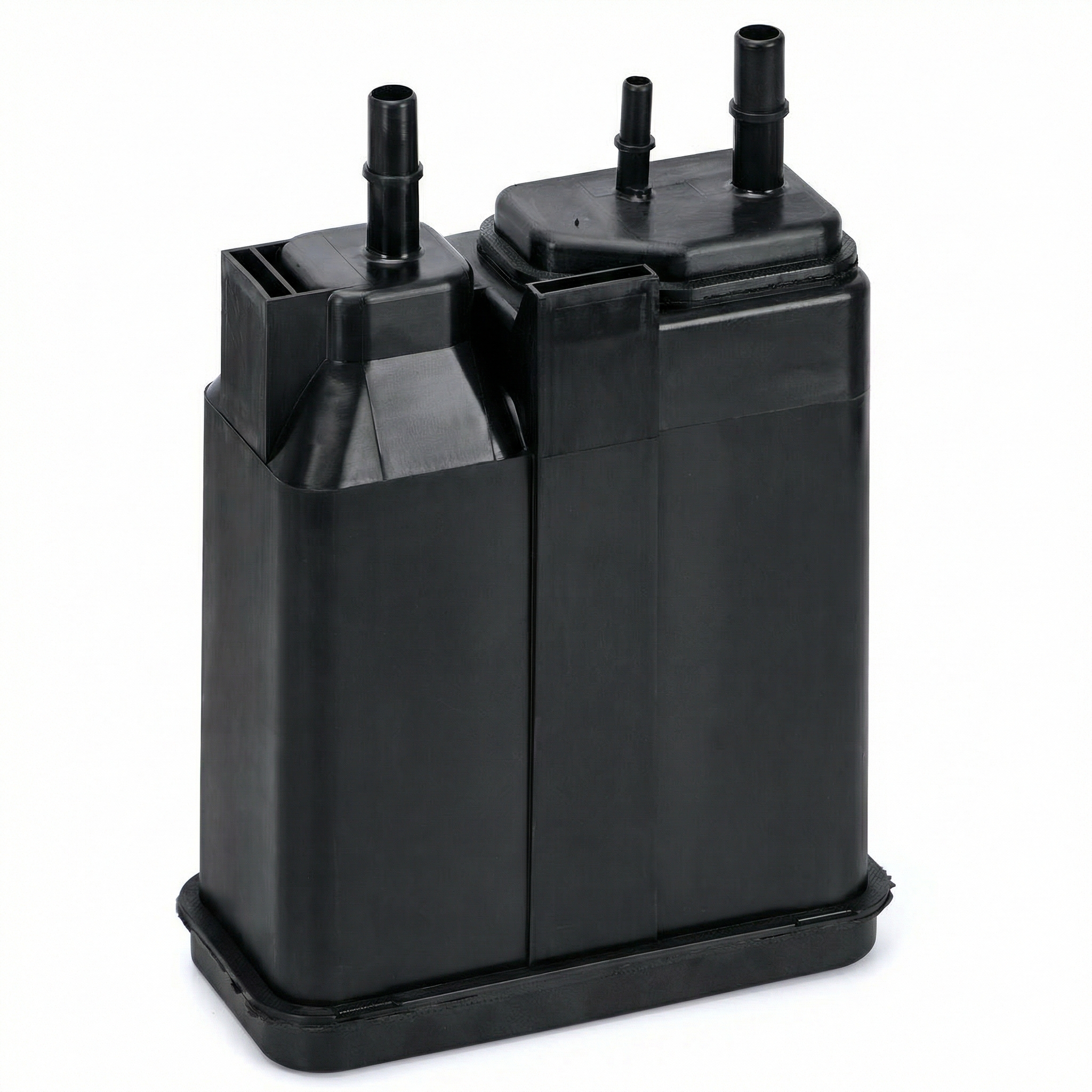
Est. part cost: $10-$25 - Failed EVAP Canister Purge Solenoid Valve 🟡 Medium Probability → Shop Vapor Canister This solenoid is a common failure item on GM vehicles of this era. It can get stuck open or closed, or leak internally.
How to confirm: The purge solenoid is located on the top front of the engine. With the engine off, disconnect the two hoses and electrical connector. Try to blow through the solenoid; no air should pass. If air passes, the valve is stuck open and bad. A related code, P1441, specifically points to a fault with this valve.
Typical fix: Replace the purge solenoid valve. It is typically held by a small bracket and is easy to access.
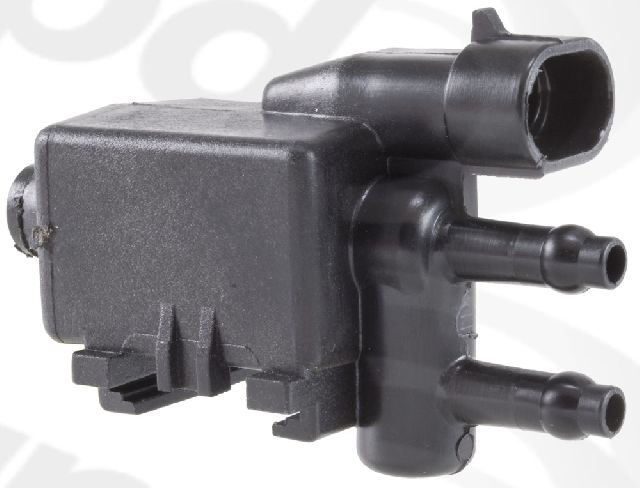
Est. part cost: $25-$50 - Failed EVAP Canister Vent Solenoid Valve 🟡 Medium Probability → Shop Vapor Canister Located at the rear of the car, this valve is exposed to road dirt and moisture, which can cause it to fail or stick closed. A failure here often causes pressure or vacuum buildup in the tank.
How to confirm: The vent solenoid is located near the charcoal canister, between the gas tank and spare tire well. A common symptom of failure is a loud 'whoosh' when opening the gas cap or a thumping noise from the tank. The valve is normally open and should close when commanded by a scan tool during a system test. A related code, P0446, often points directly to this valve.
Typical fix: Replace the vent solenoid valve. The part may require transferring the old mounting bracket.
Est. part cost: $30-$60 - Rusted Fuel Filler Neck 🟡 Medium Probability → Shop Fuel Filler Neck In areas where road salt is used, the metal filler neck where the gas cap attaches can rust through, creating a leak that prevents the cap from sealing properly. This is a very common issue on W-body cars like the Lumina.
How to confirm: Visually inspect the lip and surface of the filler neck where the gas cap seal makes contact. Look for bubbling paint, flaking rust, or pinholes. A smoke test is the most reliable way to confirm a leak here.
Typical fix: Replace the fuel filler neck. This is a more involved repair than the other common causes.
Est. part cost: $50-$100 - Cracked or Disconnected EVAP Hoses ⚪ Low Probability After many years, the plastic and rubber hoses in the EVAP system can become brittle and crack, especially at connection points or bends. A user on W-body.com noted the rubber lines near the canister were falling apart after 15 years.
How to confirm: Visually inspect all accessible EVAP lines running from the engine bay to the fuel tank area for obvious cracks, breaks, or loose connections. The most reliable method is to have a mechanic perform a smoke test, which forces smoke through the system to reveal the exact location of any leaks.
Typical fix: Replace the cracked section of hose or the entire hose assembly.
Est. part cost: $5-$30
Rare But Worth Checking
- Cracked Charcoal Canister: → Shop Vapor Canister The plastic housing of the charcoal canister itself can develop cracks from age or road debris. It's also possible for the charcoal inside to break down, sending black particles into the EVAP lines and clogging the solenoids.
- Faulty Fuel Tank Pressure Sensor: → Shop Fuel Tank The sensor that monitors the pressure in the EVAP system can fail and give false readings to the computer, triggering a P0440 code even if no leak exists. On these vehicles, it is typically located on top of the fuel tank as part of the fuel pump module.
- Chafed or Broken Wiring: A GM technical service bulletin for a similar platform (J-body) noted that the EVAP vent solenoid harness could be misrouted and chafe against other components, causing a broken wire and a P0440 code. A visual inspection of the harness near the vent solenoid is worthwhile.
Diagnosis Steps
- Read the code with an OBD-II scanner to confirm P0440 and check for any other related codes.
- Inspect the gas cap. Ensure it is tight and the seal is not cracked or worn. If in doubt, replace it as it's the most common and cheapest fix.
- Clear the code and drive for a few days to see if it returns. Some EVAP tests only run under specific conditions, such as the fuel tank being between 15% and 85% full.
- If the code returns, perform a close visual inspection of the fuel filler neck for rust, corrosion, or damage that would prevent a good seal.
- Listen for a 'whoosh' when opening the gas cap or a 'thumping' from the fuel tank area, which strongly points to a vent problem.
- Locate the EVAP purge solenoid on top of the engine. Visually inspect its hoses and electrical connector.
- Test the purge solenoid. With the engine off, disconnect it and try blowing through it. If air passes, it has failed and needs replacement.
- Inspect the EVAP vent solenoid and charcoal canister at the rear of the vehicle for any visible damage, cracks, or loose hoses.
- If no obvious issues are found, the most effective next step is a professional smoke test to find the exact source of the leak.
Parts You'll Likely Need
- Gas Cap
(OEM #GT231)— This is the most frequent cause of P0440 due to wear on the seal or not being tightened properly.
Trusted brands: ACDelco, Stant
OEM price range: $15-$30
Aftermarket price range: $10-$20 - EVAP Canister Purge Solenoid Valve
(OEM #ACDelco 214-641 (supercedes 1997211))— A very common failure point on this vehicle, located in an easy-to-access spot on the engine.
Trusted brands: ACDelco, Dorman, Standard Motor Products
OEM price range: $40-$75
Aftermarket price range: $25-$50 - EVAP Canister Vent Solenoid Valve
(OEM #ACDelco 214-2324 (example, verify by year))— This solenoid is exposed to the elements at the rear of the car and frequently fails, causing venting issues.
Trusted brands: ACDelco, Dorman
OEM price range: $50-$90
Aftermarket price range: $30-$60 - Fuel Filler Neck — A common source of leaks in salt-belt states due to rust perforation.
Trusted brands: Dorman, Spectra Premium, Lil-Blazer
OEM price range: Discontinued
Aftermarket price range: $50-$100
Related Codes That Often Appear With This One
- P1441 — This is a manufacturer-specific code for 'EVAP System Flow During Non-Purge', which almost always points directly to a faulty EVAP purge solenoid on the engine that is stuck open.
- P0446 — This code indicates a fault in the EVAP vent control circuit, pointing specifically to the vent solenoid or its wiring, located near the fuel tank.
- P0455 — Indicates a large EVAP leak was detected. This can be triggered by the same causes as P0440, such as a gas cap being left off completely or a large crack in a hose.
- P0442 — Indicates a small EVAP leak was detected. This often has the same root causes as P0440 (bad cap, rusted filler neck, failing solenoid) but is triggered by a smaller, harder-to-find leak.
Platform-Specific Known Issues
- Some owners report a loud popping or thumping sound from the fuel tank area, which is caused by the tank deforming under pressure or vacuum when the EVAP vent solenoid fails and cannot properly vent the system.
- A user on w-body.com with a '99 Lumina and P0440 found that after replacing the gas cap and vent solenoid, the code returned. The final fix was repairing leaky rubber boots on the purge valve itself.
Mechanic-Grade Diagnostic Values
- EVAP Purge Solenoid Coil Resistance — expected: 25-45 ohms. Failure: A reading of infinite resistance (open circuit) or near-zero resistance (short circuit).
- EVAP Vent Solenoid Coil Resistance — expected: ~20 ohms. Failure: An open circuit (infinite resistance) indicates a failed coil.
- Fuel Tank Pressure (FTP) Sensor Voltage (Key On, Engine Off, Gas Cap Off) — expected: 1.3V to 1.7V (at atmospheric pressure). Failure: A voltage stuck low (e.g., 0.2V) or high (e.g., 5V) indicates a faulty sensor or wiring issue.
Scan Tool Commands That Help
- GM Tech2: EVAP System Test (under Special Functions or Output Controls) — This is a critical diagnostic step after a visual inspection. The command allows the technician to manually close the EVAP vent solenoid and command the purge solenoid on/off to seal the system. By monitoring the Fuel Tank Pressure (FTP) sensor data, the technician can confirm if the system holds a vacuum, verifying the integrity of the seals, hoses, and solenoids. It's used to pinpoint whether the leak is real or if a component is failing to actuate.
Wiring & Ground Locations
- G401 — Under the vehicle, mounted to the left rear body mount or on the outer side of the left-hand frame rail, behind the rear tire.. This is a primary ground point for rear-mounted components, including the fuel pump module and the EVAP vent solenoid. A corroded or loose G401 can cause intermittent or total failure of the vent solenoid, leading to P0440 or P0446 codes.
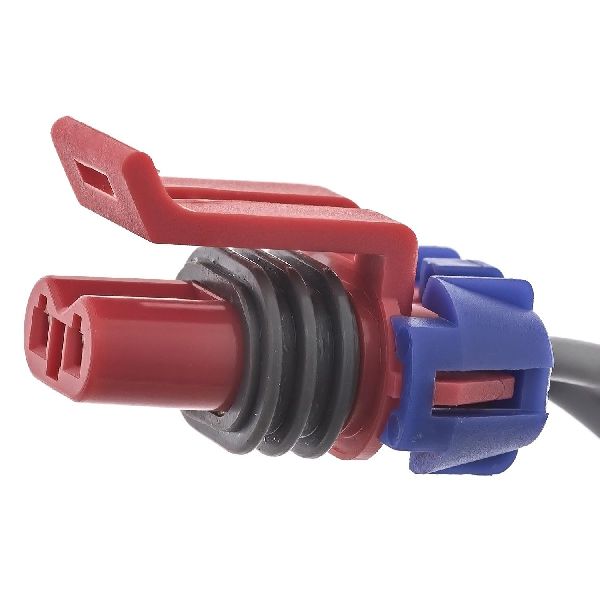
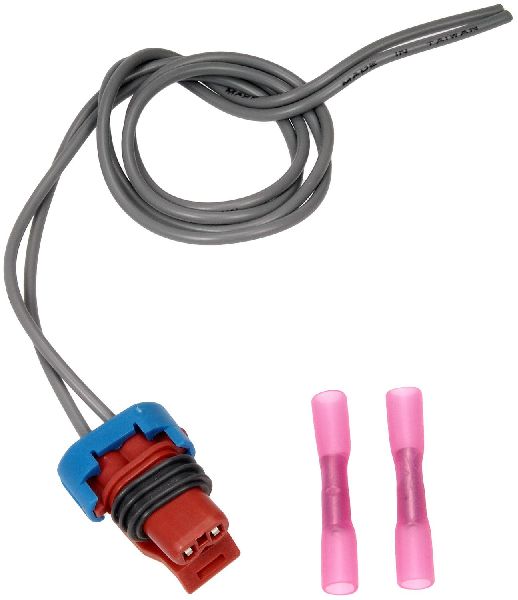
- EVAP Purge Solenoid Connector — On the purge solenoid, top front of the engine.. The control wire is a Dark Green/White wire leading to the PCM. A short to ground on this wire can hold the solenoid open and trigger a P1441 code, often seen with P0440.
- Fuel Tank Pressure Sensor Connector — On top of the fuel tank, part of the fuel pump module assembly.. This 3-wire connector provides the sensor with a 5V reference (Gray wire), a ground, and sends a signal back to the PCM (Dark Green wire). Damage to these wires can cause incorrect pressure readings, falsely triggering a P0440 code.
Real Owner Repair Stories
- ChevroletForum.com user (2000 Chevrolet Lumina) — Check Engine Light with code P0440.
❌ Tried (didn't work) Replacing the gas cap, Replacing the EVAP purge solenoid
✅ What actually fixed it The user performed a smoke test and discovered the fuel filler neck was completely rotted out where it meets the quarter panel, causing a large leak. Replacing the fuel filler neck resolved the code. - Reddit user r/MechanicAdvice (1997 Chevrolet Lumina) — P0440 code, loud 'whoosh' of air when opening gas cap, and a popping/thumping noise from the rear of the car while driving.
❌ Tried (didn't work) Initial inspection of gas cap
✅ What actually fixed it The symptoms strongly pointed to a blocked EVAP vent path. The problem was a failed EVAP vent solenoid that was stuck closed, causing pressure to build in the tank until it audibly deformed ('popped'). Replacing the vent solenoid fixed the issue. - NHTSA ODI #10247244 — An owner reported the service engine soon light came on twice over a 2-3 week period with code P0440. Replacing the gas cap did not solve the problem.
- NHTSA ODI #10007823 — A driver noted the engine light kept coming on with code P0440, yet initial diagnostic checks could not find anything wrong with the vehicle.
"I Checked Everything" — The Actual Cause
- A known scenario on GM vehicles of this era involves an intermittent EVAP vent solenoid. A technician may perform a smoke test when the vehicle is cold, and the solenoid may function correctly, leading to a 'No Leak Found' diagnosis. However, after the vehicle has been driven for a while and exhaust heat warms the solenoid, it can stick closed. This will cause the EVAP monitor to fail on the next drive cycle and re-trigger the P0440 code. The actual cause is a thermally-failing vent solenoid that was missed because it was only tested when cold.
Documented NHTSA Reports
- NHTSA ODI #10192200: A mechanic found code P0440 indicating an EVAP system problem; while the initial inspection found nothing, the leak was eventually identified upon performing a smoke test.
- NHTSA ODI #10191706: A report describes a crack where the fuel filler neck meets the fuel tank, which causes DTC P0440 to be set and fuel to leak from the tank.
- NHTSA ODI #10184336: An owner discovered a small fracture on the gas tank where the filler neck meets the tank after investigating a P0440 small EVAP leak code.
OEM Part Supersession History
GM 1997211→ACDelco 214-641— Part consolidation and design update over the vehicle's life.
Heads up: ACDelco 214-641 is the standard, direct-fit replacement for the EVAP Purge Solenoid on the engine. It has been cross-referenced to other GM numbers like 12573220 and 12581282.
Model Year Variations Within This Range
- 1995-1998 vs 1999-2001: The electrical connector for the EVAP vent solenoid (at the rear of the car) may differ. Some earlier models used a different style connector than later models, which used a more common weatherproof oval connector. When ordering a replacement vent solenoid, it is critical to visually match the connector on the old part or ensure the new part comes with an adapter pigtail if required.
Diagnostic Flowchart
Other Known Issues on This Vehicle
Issues unrelated to this code that are worth knowing about as an owner of this generation:
- Leaking Lower Intake Manifold (LIM) Gaskets 🔴 High — Extremely common on the 3.1L and 3.4L V6 engines, often failing between 60,000 and 120,000 miles. Can cause coolant to mix with oil, leading to engine damage. (Ref: Multiple TSBs were issued, and an updated metal-carrier gasket design is the recommended replacement.)
- Engine Fire Risk (3.8L V6 Only) 🔴 High — Affects 1998-1999 models with the 3.8L V6 engine. Oil can leak from the front valve cover gasket onto the hot exhaust manifold. (Ref: NHTSA Safety Recall #15V701 (originally issued in 2009 and expanded).)
- Failed Hydraulic Valve Lifters 🟠 Medium — Common on higher-mileage 3.1L and 3.4L V6 engines, causing a persistent ticking or tapping noise. Often exacerbated by coolant-contaminated oil from leaking intake gaskets.
- Transmission Failure (4T60-E/4T65-E) 🟠 Medium — The automatic transmissions can suffer from issues like failed pressure control solenoids (PCS), leading to harsh shifting and eventual failure. A common transmission code is P1870.
- Cooling System Damage from Dex-Cool 🟠 Medium — If the cooling system is allowed to run low, air entry can cause the Dex-Cool coolant to turn into a thick, damaging sludge that clogs the radiator and heater core.
Used vs. New Parts: Buying Guide for This Vehicle
When a used part is the smart pick: A used Fuel Filler Neck from a junkyard car that lived in a dry, rust-free climate (e.g., Southwestern US) can be a great option, as it will be an OEM part without the rust issues that cause the failure. A used Charcoal Canister is also a viable option if it is visually inspected for cracks and there is no evidence of charcoal pellets escaping.
Donor-vehicle mileage cap: roughly under 150000 miles for the part to have meaningful remaining life.
What to inspect on the donor part:
- For a filler neck, inspect the entire length for rust, especially at the cap sealing surface and where it passes through the body.
- For a charcoal canister, shake it to ensure it doesn't rattle excessively (which could mean broken internal charcoal). Check all ports for black dust, which indicates failure.
- Check the donor vehicle's location history if possible; parts from 'salt belt' states should be avoided for these components.
OEM-only on this vehicle (don't cheap out):
- While not strictly 'OEM-only', using an ACDelco (GM's OEM parts brand) or a reputable equivalent like Stant for the Gas Cap is highly recommended. Cheap, no-name gas caps are a frequent cause of recurring EVAP codes.
Aftermarket brands forum-validated for this vehicle:
- ACDelco (Professional line)
- Standard Motor Products (SMP)
- Delphi
- Stant (for gas caps)
Brands owners have reported issues with on this vehicle:
- While Dorman offers many of these parts and is often the only option for items like the filler neck, their electronic components like solenoids have mixed reviews. Some users report premature failure compared to OEM or other premium aftermarket brands. It's often considered a last resort if other brands are unavailable.
Real Owner Stories
Aggregated from forums and TSBs cited above. Mileages and costs reflect what owners reported in those sources.
1997 Chevrolet Lumina
Symptoms: Classic 'thumping' gas tank symptom along with a P0440 code.
What fixed it: Replacing aged rubber EVAP lines and checking the filler neck for rust.
Source hint: w-body.com: 97 lumina gas tank "thumping sound" p0440 code
1999 Chevrolet Lumina
Symptoms: The P0440 code returned even after replacing the gas cap and the vent solenoid.
What fixed it: Repairing leaky rubber boots on the purge valve itself.
Source hint: w-body.com: 99 lumina p0440
1998 Chevrolet Lumina — ~150000 miles
Symptoms: Difficulty finding the source of the leak on a high-mileage example.
What fixed it: A professional smoke test is recommended to find the exact source of the leak.
Source hint: CarKiller.com (Ask Scotty Community): Chevy Lumina PO440
Related OBD-II Codes
Frequently Asked Questions
Why does my 1997 Lumina make a thumping or popping sound from the gas tank area?
I tightened my gas cap on my 1998 Lumina, but the P0440 light is still on. Why?
Where is the purge solenoid located on my Chevrolet Lumina's engine?
Can a locking gas cap cause a P0440 code on my Lumina?
Is there a specific part of the Lumina's body that causes EVAP leaks in snowy climates?
How can I tell if my Lumina's purge solenoid is stuck open?
Used OEM Parts in Stock
New Aftermarket Parts Available


The information in this article is provided for general reference and educational purposes only. Vehicle specifications, procedures, and part compatibility can vary by production date, trim level, and region. Always consult your vehicle's factory service manual and verify part numbers before purchasing or performing repairs. Safety-critical components such as airbags, seat belts, and braking systems should be installed by a qualified professional.
- Chevrolet Lumina:
- 🧭 Diagnostic Flowchart
- 🛍️ Shop This Part
- What's Unique About the 1995-2001 Chevrolet Lumina
- Symptoms You May Notice
- Most Likely Causes
- Rare But Worth Checking
- Diagnosis Steps
- Parts You'll Likely Need
- Related Codes That Often Appear With This One
- Platform-Specific Known Issues
- Mechanic-Grade Diagnostic Values
- Scan Tool Commands That Help
- Wiring & Ground Locations
- Real Owner Repair Stories
- "I Checked Everything" — The Actual Cause
- Documented NHTSA Reports
- OEM Part Supersession History
- Model Year Variations Within This Range
- Other Known Issues on This Vehicle
- Used vs. New Parts: Buying Guide for This Vehicle
- Real Owner Stories
- 1997 Chevrolet Lumina
- 1999 Chevrolet Lumina
- 1998 Chevrolet Lumina — ~150000 miles
- Related OBD-II Codes
- Frequently Asked Questions
- 🎟️ Get 5% Off