

P0440 on 2017-2024 Chrysler Pacifica: EVAP System Malfunction Causes and Fixes
On a 2017-2024 Pacifica, code P0440 is most often caused by a faulty EVAP System Integrity Module (ESIM), also known as a leak detection pump. This is a common failure item that costs around $30-$80 for an aftermarket part and is a DIY-friendly repair located in the driver's side rear wheel well. If a smoke test shows no leaks, the ESIM is the primary suspect.
- P0440 on your Pacifica is a general EVAP system fault, most commonly caused by a failed EVAP System Integrity Module (ESIM), not a loose gas cap.
- If a professional smoke test finds no leaks, the ESIM (Part # 68241627AB) is almost certainly the part that needs to be replaced.
- The ESIM is located behind the driver's side rear wheel well liner and can be replaced by a DIYer with basic tools in about an hour.
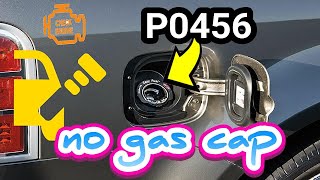
- Before buying parts, always check the capless fuel filler neck for debris that could be preventing a proper seal.
- This code will not stop you from driving the vehicle, but it will cause an automatic failure on an emissions test.
What's Unique About the 2017-2024 Chrysler Pacifica
Unlike many vehicles where a loose gas cap is the first suspect for EVAP codes, the Pacifica uses a capless fuel filler system, making that specific cause impossible. Instead, this platform and its relatives (Dodge Grand Caravan, Jeep Grand Cherokee) are known for a high failure rate of the EVAP System Integrity Module (ESIM), or leak detection pump. Owner and technician reports frequently point to this component as the primary culprit for P0440, often even when a smoke test shows no physical leaks in the system's hoses.
Symptoms You May Notice
- Check Engine Light is on.
- A faint smell of fuel may be noticeable around the vehicle.
- Remote start feature may be disabled.
- In some cases, especially if seen with a P0456 (small leak) code, you may experience a long crank or difficulty starting after the vehicle has been parked for a day or more.
- Replacing the purge valve when the ESIM is the actual problem. Since the ESIM is a known high-failure part on this platform, it should be considered a primary suspect if a smoke test passes.
- Assuming a leak exists when the ESIM has failed internally. An internal switch failure in the ESIM will cause the computer to report a leak even if the system is perfectly sealed.
Most Likely Causes
- Faulty EVAP System Integrity Module (ESIM) / Leak Detection Pump 🔴 High Probability → Shop Vapor Canister This component has a very high failure rate on many Chrysler/Dodge/Jeep products. The internal weighted switch fails, causing it to send an incorrect signal to the computer, reporting a leak when one does not exist.
How to confirm: If a thorough smoke test of the EVAP system reveals no leaks, the ESIM is the most likely cause. It can be removed and bench-tested by applying light vacuum to its port; a good switch will change its electrical state (e.g., from open to closed circuit), while a bad one will not.
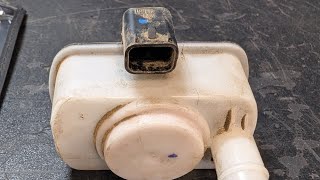
Typical fix: Replace the ESIM and its O-ring seal. It is located on the charcoal canister in the driver's side rear wheel well area. Access requires removing the wheel and part of the wheel well liner with 8mm and 10mm sockets. 🎬 Watch: Step-by-step walkthrough for replacing the leak detection unit. Lightly grease the new O-ring before installation.
Est. part cost: $30-$80 - Debris in Capless Fuel Filler Neck 🟡 Medium Probability → Shop Fuel Filler Neck The vehicle uses a spring-loaded door to seal the fuel system instead of a traditional cap. Dirt, dust, or spider webs can prevent this door from sealing completely, creating a leak that can trigger P0440 or P0455/P0456 codes.
How to confirm: Visually inspect the fuel filler opening for any debris. Use a clean rag and the funnel provided with the vehicle to gently work the flap and clean the sealing area.
Typical fix: Clean the fuel filler neck sealing surface. If the spring-loaded door is damaged or the seal is compromised, the entire filler neck assembly may need replacement.
Est. part cost: $0-$200 - Faulty EVAP Purge Valve (Solenoid) 🟡 Medium Probability → Shop Vapor Canister The purge valve is an electromechanical part that cycles frequently and can wear out, becoming stuck open or closed. A stuck-open valve creates a constant vacuum leak into the engine and is a common failure on the 3.6L Pentastar.
How to confirm: With the engine off, remove the valve (located on top of the engine) and attempt to blow through it; it should be closed and allow no air to pass. If air passes, it has failed. A hard start after refueling is also a strong indicator of a stuck-open purge valve.
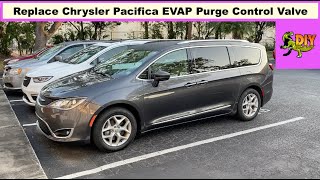
Typical fix: Replace the purge valve. It is located on the engine and is easily accessible. 🎬 See how to quickly replace the EVAP purge control valve.
Est. part cost: $20-$50 - Cracked or Disconnected EVAP Hose ⚪ Low Probability Rubber and plastic hoses can become brittle over time and crack, especially at connection points. A specific hose on the passenger side of the 3.6L Pentastar engine is known to crack on platform mates like the Jeep Grand Cherokee.
How to confirm: A smoke test is the most effective way to find a leak in an EVAP hose. A technician will fill the system with visible vapor and look for where it escapes. Visually inspect all accessible lines for obvious cracks or disconnections.
Typical fix: Replace the damaged section of hose or reconnect it securely.
Est. part cost: $5-$30
Rare But Worth Checking
- Cracked Charcoal Canister: → Shop Vapor Canister The plastic body of the charcoal canister can develop cracks from road debris or age, creating a leak. This is usually found during a smoke test.
- Faulty Fuel Tank Pressure Sensor: → Shop Fuel Tank This sensor reports pressure/vacuum inside the EVAP system to the computer. If it provides an inaccurate reading, it can trigger a P0440 code. On many modern Chryslers, this function is integrated into the ESIM, which acts as a switch-based pressure monitor.
- PCM Software Issue: TSB 18-001-19 REV. B was issued for some 2018 Pacificas to update the PCM software to improve diagnostics for certain EVAP codes like P0456, which often accompanies P0440.
Diagnosis Steps
- Scan for Codes: Use an OBD-II scanner to confirm P0440 and check for any other related codes like P0455, P0456, or P0441.
- Inspect Fuel Filler Neck: Open the fuel door and carefully inspect the capless filler neck for any dirt, debris, or damage that could prevent a proper seal. Clean as needed using the vehicle's supplied funnel to manipulate the flap.
- Inspect Purge Valve: Locate the purge valve on the engine. Check its electrical connector and the hoses attached to it for any visible cracks or damage. Test it by removing it and trying to blow through it; no air should pass.
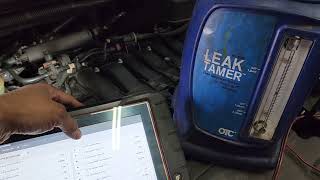
- Perform Smoke Test: This is the most reliable way to find a physical leak. Introduce smoke into the EVAP test port. Watch for smoke escaping from any hoses, the charcoal canister, or the fuel filler neck.
- Test the ESIM/Leak Detection Pump: If no leaks are found during the smoke test, the ESIM is the primary suspect. It is located behind the driver's side rear wheel well liner, attached to the charcoal canister. It can be removed (quarter-turn counter-clockwise) and bench-tested with a vacuum source to confirm failure. 🎬 Watch: Expert guide to testing and understanding the ESIM system.
- Replace the Faulty Component: Based on the test results, replace the part that has failed. If replacing the ESIM, also replace the O-ring seal and apply a small amount of grease to it.
Parts You'll Likely Need
- EVAP System Integrity Module (ESIM) / Leak Detection Pump
(OEM #68241627AB (supersedes 68241627AA))— This is the most common failure point for the P0440 code on the Chrysler Pacifica, often failing internally without any visible external leaks.
Trusted brands: Mopar, Dorman, Standard Motor Products, Wells
OEM price range: $260-$380
Aftermarket price range: $30-$80 - Vapor Canister Purge Valve
(OEM #04627694AB)— A common failure item in any EVAP system that can get stuck open or closed, causing various EVAP codes including P0440.
Trusted brands: Mopar, Dorman, Standard Motor Products
OEM price range: $40-$70
Aftermarket price range: $20-$50
Related Codes That Often Appear With This One
- P0456 — P0456 indicates a 'Very Small Leak'. P0440 is a general failure code, and P0456 often appears alongside it to specify the leak size the system believes it has detected. A failing ESIM is a common cause for this combination.
- P0455 — P0455 indicates a 'Large Leak'. Similar to P0456, this code may accompany P0440 to specify the nature of the fault. A user on pacificaforums.com reported getting P0455 after first having P0456, which was ultimately traced to a cracked emissions pump (ESIM).
- P0441 — P0441 indicates 'Incorrect Purge Flow'. This points more specifically to a problem with the purge valve or a blockage in the purge line, and can appear with the general P0440 code.
Technical Service Bulletins (TSBs) & Recalls
- TSB 18-001-19 REV. B: Involves a PCM software update for 2018 models to improve the diagnostic logic for certain EVAP system codes, including P0456, which is often seen with P0440.
Platform-Specific Known Issues
- ESIM Replacement Access: The ESIM is located in the driver's side rear wheel well, attached to the charcoal canister. To access it, you must remove the rear wheel and then remove several 8mm and 10mm screws/bolts to peel back the wheel well liner. The ESIM itself is removed with a quarter-turn counter-clockwise after depressing a locking tab.
Mechanic-Grade Diagnostic Values
- EVAP Purge Solenoid Coil Resistance — expected: Typically 15 to 30 Ohms, but vehicle-specific data should be confirmed.. Failure: A reading far outside the expected range, or an open/short circuit reading.
- EVAP Purge Solenoid Control Circuit Resistance (PCM to Solenoid) — expected: Below 5.0 Ohms.. Failure: Resistance higher than 5.0 Ohms indicates an open or high-resistance wire in the harness.
Scan Tool Commands That Help
- wiTECH or advanced aftermarket scanner: ESIM Force Monitor Test / Large Leak Test — This is a bidirectional test that forces the PCM to run the EVAP leak test on command. After replacing a component like the ESIM, running this test and seeing it pass confirms the repair without waiting for a full drive cycle.
- wiTECH or advanced aftermarket scanner: EVAP Purge Valve Control — This command allows you to manually open and close the purge valve. While monitoring fuel tank pressure, you can command the valve closed; if the system still shows a leak or incorrect flow, it helps confirm if the valve is stuck or if the issue is elsewhere.
Wiring & Ground Locations
- Rear Ground Strap — On the aft left-hand side of the undercarriage, attached to the frame near where a trailer hitch would be installed.. This is a chassis ground point in the vicinity of the charcoal canister and ESIM. While not directly for the EVAP system, poor grounding in this area can cause unpredictable behavior in nearby electronic components. It should be inspected for corrosion or damage, especially if other electrical issues are present.
- ESIM Connector — On the ESIM itself, which is attached to the charcoal canister behind the driver's side rear wheel well liner.. This electrical connector provides power and signal communication for the ESIM. Damage or corrosion here will prevent the EVAP self-test from running correctly, directly causing a P0440 code.
Real Owner Repair Stories
- Car Talk Community user (2017 Chrysler Pacifica, 90k-93k miles) — Check engine light with codes P0440 and P0456. After several months, developed a long crank/hard start after sitting for a couple of days.
❌ Tried (didn't work) A smoke test performed by a mechanic found no leaks., Resetting the code, which returned after a week or two.
✅ What actually fixed it The user was advised that if a smoke test passes and the code returns, the problem is likely the vapor pressure sensor (which is integrated into the ESIM on this platform). The thread implies this was the next step, aligning with the common ESIM failure pattern. - NHTSA ODI #11500645 — An owner reported that their vehicle was found to have codes P0440 and P456 (P0456) stored alongside several communication codes (U1110, U1120, U11BC) during an inspection of the electrical system.
"I Checked Everything" — The Actual Cause
- In a documented case for a 2017 Pacifica, a mechanic performed a smoke test which revealed no leaks, yet the P0440 and P0456 codes persisted and the vehicle developed a hard-start condition. This points to an internal failure of a component, most likely the ESIM, which reports a leak to the PCM even when the system is physically sealed.
OEM Part Supersession History
68241627AA→68241627AB— Standard part revision and update by the manufacturer.
Heads up: The new part number (68241627AB) is a direct replacement for the old one and should be used for repairs.
Model Year Variations Within This Range
- 2021-2024: The Pacifica received a major facelift for the 2021 model year, including revised exterior styling and a new Uconnect 5 infotainment system. While the core 3.6L engine and EVAP system components remained largely the same, wiring and module software could have minor differences.
- 2020-2024: All-Wheel Drive (AWD) became an option starting in the 2020 model year. This does not significantly change the EVAP system, as the key components (purge valve, canister, ESIM) are in the same locations for both FWD and AWD models.
Diagnostic Flowchart
Other Known Issues on This Vehicle
Issues unrelated to this code that are worth knowing about as an owner of this generation:
- 9-Speed Automatic Transmission Problems 🔴 High — Commonly reported in earlier model years (2017-2020). Issues include rough shifting, hesitation, lunging, and in some cases, premature failure. (Ref: Multiple TSBs exist, including 21-043-20 and 18-054-17, which involve software updates (reprogramming the TCM) to address shift quality. A recall (18V492) was issued for a small number of 2018 models for a welding defect.)
- Engine Stalling (Gas Models) 🔴 High — Primarily affected 2017 models, leading to a recall. A software glitch could cause the engine to shut off while driving. (Ref: Recall issued for over 160,000 2017 models to update the engine control software.)
- Engine Stalling (Hybrid Models) 🔴 High — Affects 2017-2023 Hybrid models. An internal transmission wiring connector can short circuit, causing an unexpected engine shutdown. (Ref: Recall 23V-010 (Chrysler #03A) was issued to update software to put the vehicle in limp mode instead of stalling. An extended warranty (D-23-07) covers the transmission for 10 years/unlimited miles for this issue.)
- Faulty Engine/Start-Stop (ESS) System 🟠 Medium — Extremely common across all model years. Owners report a "Stop/Start Unavailable" message on the dash. The root cause is almost always the failure of the small, secondary auxiliary battery (AUX14 AGM) that powers the system. (Ref: No recall, but it is a widely documented failure. Owners often replace the auxiliary battery every 1-3 years.)
- High-Voltage Battery Fire Risk (Hybrid Models) 🔴 High — Affects 2017-2018 Hybrid models. A defect in the high-voltage battery pack can cause a fire, even when the vehicle is parked and off. (Ref: Multiple recalls, including 22V-077 and 73B, have been issued. The remedy involves software updates and, in some cases, battery replacement. Owners were advised to park outside.)
Used vs. New Parts: Buying Guide for This Vehicle
When a used part is the smart pick: Used parts like the charcoal canister body or EVAP hoses can be a cost-effective choice if they are visually inspected for cracks and damage. These are generally robust plastic/rubber components that don't have electronic failure modes.
Donor-vehicle mileage cap: roughly under 80000 miles for the part to have meaningful remaining life.
What to inspect on the donor part:
- For a charcoal canister, ensure there are no physical cracks in the plastic housing.
- For hoses, check for flexibility and ensure there are no dry, brittle, or cracked sections, especially near fittings.
- Avoid parts from vehicles in salt-belt regions if possible, as corrosion can affect connectors and mounting hardware.
OEM-only on this vehicle (don't cheap out):
- While not strictly 'OEM-only', it is highly recommended to use a Mopar or a reputable aftermarket brand (Dorman, Standard Motor Products) for the ESIM. Cheap, unbranded electronic parts are a gamble and may fail prematurely or not function correctly.
Aftermarket brands forum-validated for this vehicle:
- Dorman (for ESIM and Purge Valve)
- Standard Motor Products (for ESIM and Purge Valve)
- Wells (for ESIM)
Brands owners have reported issues with on this vehicle:
- Unbranded, no-name electronic parts from online marketplaces should be avoided due to a high likelihood of out-of-box failure or incorrect operation.
Real Owner Stories
Aggregated from forums and TSBs cited above. Mileages and costs reflect what owners reported in those sources.
2017 Chrysler Pacifica 3.6L Pentastar V6
Symptoms: Check engine light on with codes P0456 and P0440.
What fixed it: Replacement of the leak detection unit (ESIM). The technician noted this component fails 90% of the time on this platform.
Cost: $30-$80
Source hint: 2017 Chrysler Pacifica EVAP leak codes P0456 and P0440 leak detection unit replacement (YouTube by 'Andres Mobile Mechanic')
Related OBD-II Codes
Frequently Asked Questions
Is there a software update for my 2018 Chrysler Pacifica that addresses EVAP codes?
Why is my Pacifica's remote start feature not working when the check engine light is on?
I have a 2017 Pacifica and it's stalling; is this related to the P0440 code?
Where is the leak detection pump located on the 2017-2024 Pacifica?
Can a dirty gas cap cause P0440 on this vehicle?
How can I test if the ESIM is actually bad before buying a new one?
Helpful Videos
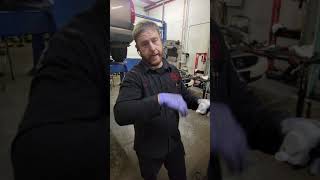
Used OEM Parts in Stock
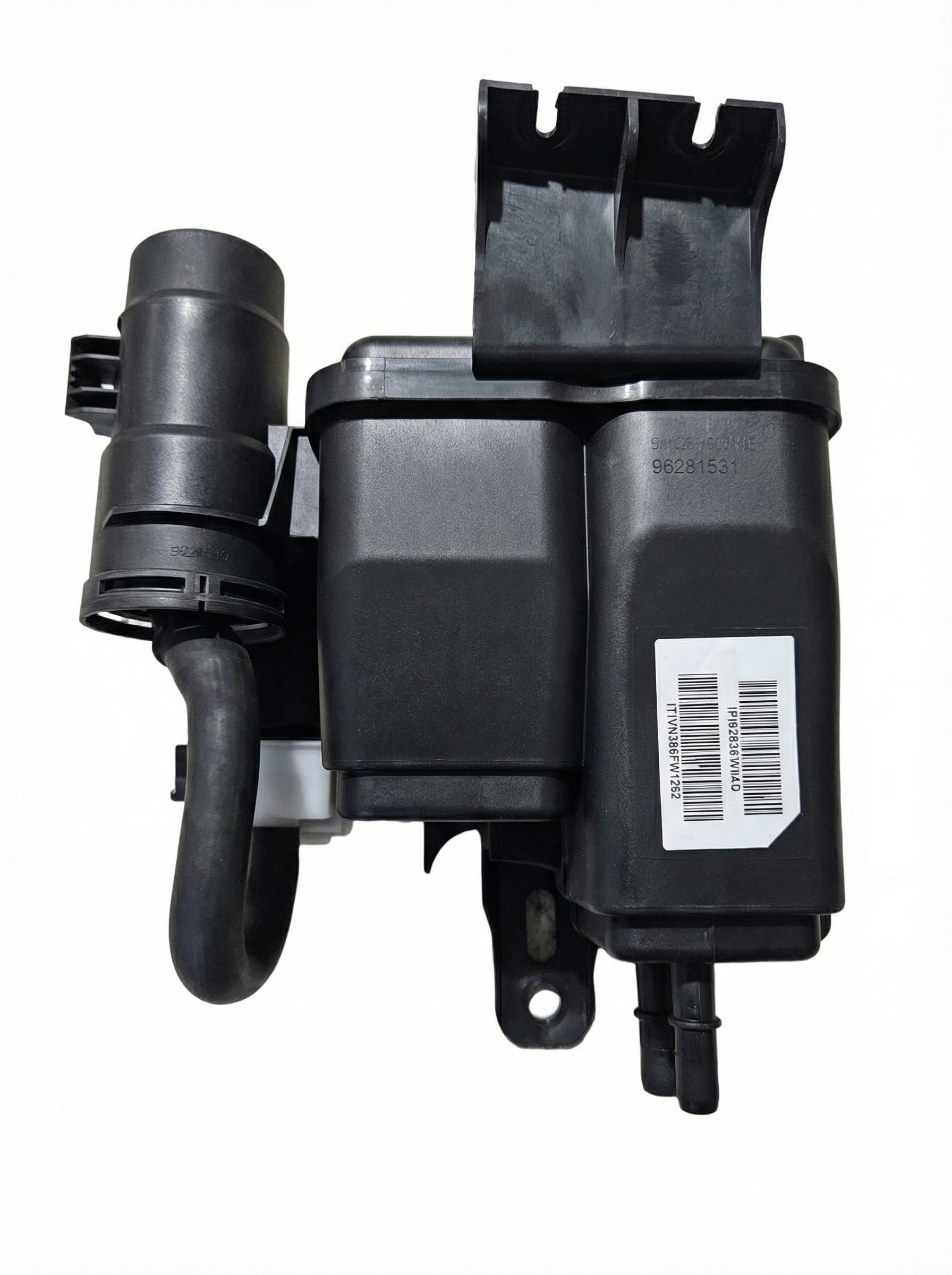
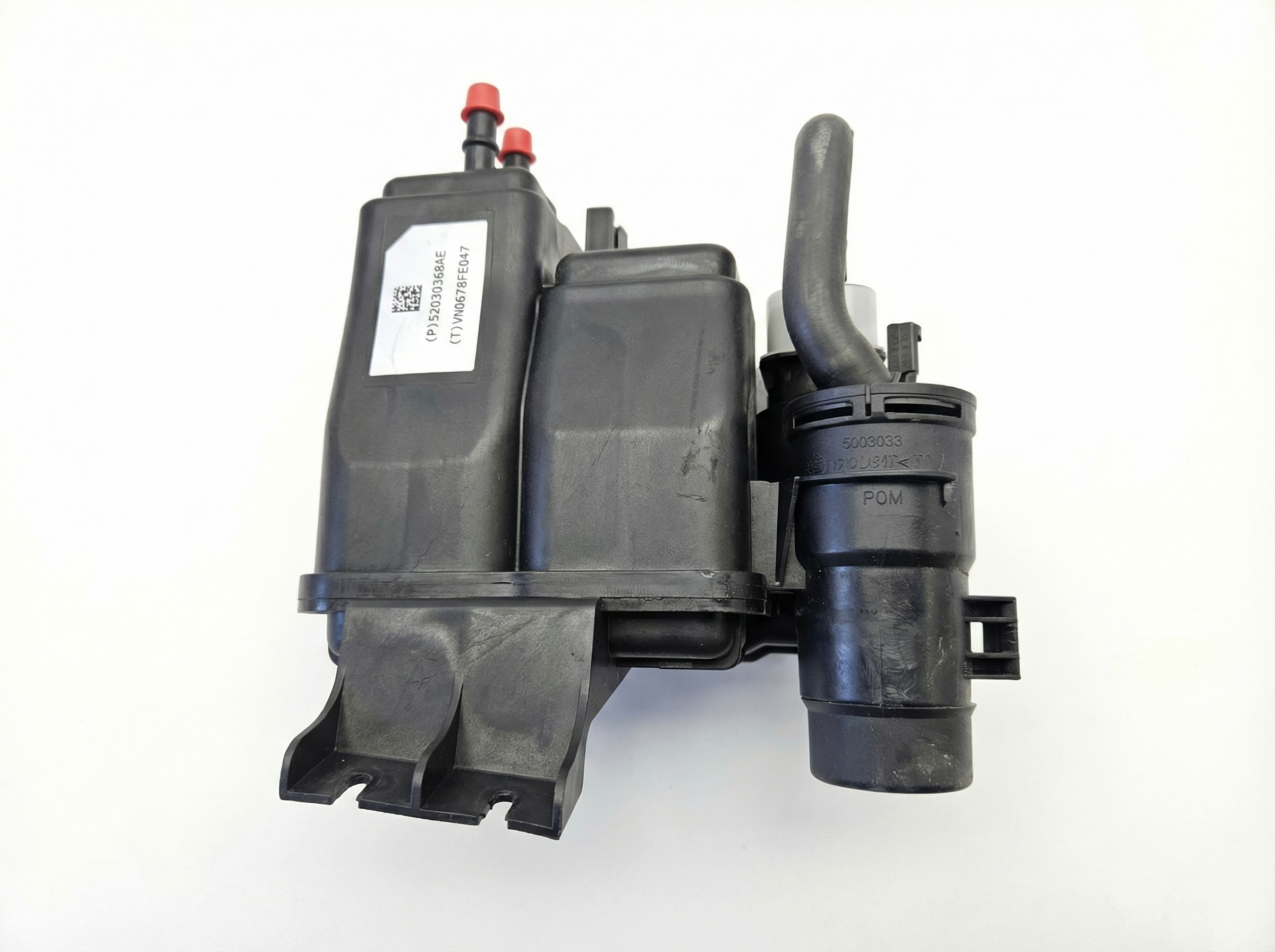
New Aftermarket Parts Available


The information in this article is provided for general reference and educational purposes only. Vehicle specifications, procedures, and part compatibility can vary by production date, trim level, and region. Always consult your vehicle's factory service manual and verify part numbers before purchasing or performing repairs. Safety-critical components such as airbags, seat belts, and braking systems should be installed by a qualified professional.
- Chrysler Pacifica:
- 🧭 Diagnostic Flowchart
- 🎬 Helpful Videos
- 🛍️ Shop This Part
- What's Unique About the 2017-2024 Chrysler Pacifica
- Symptoms You May Notice
- Most Likely Causes
- Rare But Worth Checking
- Diagnosis Steps
- Parts You'll Likely Need
- Related Codes That Often Appear With This One
- Technical Service Bulletins (TSBs) & Recalls
- Platform-Specific Known Issues
- Mechanic-Grade Diagnostic Values
- Scan Tool Commands That Help
- Wiring & Ground Locations
- Real Owner Repair Stories
- "I Checked Everything" — The Actual Cause
- OEM Part Supersession History
- Model Year Variations Within This Range
- Other Known Issues on This Vehicle
- Used vs. New Parts: Buying Guide for This Vehicle
- Real Owner Stories
- 2017 Chrysler Pacifica 3.6L Pentastar V6
- Related OBD-II Codes
- Frequently Asked Questions
- 🎟️ Get 5% Off