

P0440 on 2019-2022 Dodge Challenger: EVAP System Failure Causes & Fixes
For a 2019-2022 Dodge Challenger, P0440 is most often caused by a loose gas cap, a software issue fixed by a dealer PCM update (TSB #18-096-23), or a faulty EVAP purge valve. Start with the gas cap, then investigate the TSB before replacing parts like the purge valve or considering rarer causes like the ESIM switch.
- Always check the gas cap first. Make sure it's tight and the seal is intact before doing any other diagnostics.
- Be aware of TSB #1809623. A trip to the dealer for a simple, quick software update could fix the problem and save you from buying unnecessary parts.
- P0440 is a general code. If the gas cap and software update don't fix it, a smoke test is the most reliable way to find the physical leak.
- When replacing the gas cap, using an OEM Mopar part is strongly recommended to ensure a perfect seal.
What's Unique About the 2019-2022 Dodge CHALLENGER
A key issue for this specific Dodge Challenger range is a documented software problem. Technical Service Bulletin (TSB) #18-096-23, which applies to 2022 models with the 5.7L and 6.4L engines, indicates that the P0440 code (along with other EVAP codes) can be falsely triggered. The official fix is not a part replacement, but rather reprogramming the Powertrain Control Module (PCM) with updated software. This makes it crucial to consider a dealer visit for a software update before spending money on hardware. Additionally, another common but often overlooked failure point on modern Mopar vehicles is the Evaporative System Integrity Module (ESIM) or leak detection pump, which can fail internally even without a physical leak in the system.
Diagnostic Flowchart
Tap your situation to follow the diagnostic path that matches what you're seeing on this vehicle.
Symptoms You May Notice
- Check Engine Light is on
- A faint smell of fuel, particularly around the rear of the vehicle or after refueling.
- A 'gas cap' message may appear on the dashboard, even if the cap has been replaced.
- Replacing the expensive charcoal canister when the actual problem is a cheap, cracked hose or a faulty purge valve.
- Replacing multiple hardware components when the root cause is a software issue that requires a PCM reflash per TSB #18-096-23.
- Repeatedly replacing the gas cap when the issue is a faulty Evaporative System Integrity Module (ESIM) or a cracked hose.
Most Likely Causes
- Loose or Faulty Gas Cap 🔴 High Probability → Shop Fuel Tank Cap The gas cap is the most frequently handled part of the EVAP system, and its seal is critical for maintaining pressure. It's the most common cause for this code across all vehicles.
How to confirm: Ensure the cap is tightened until it clicks multiple times. Inspect the cap's rubber O-ring for cracks, stiffness, or damage. A new OEM cap is a cheap and effective diagnostic step.
Typical fix: Tighten or replace the gas cap. It is highly recommended to use an OEM Mopar cap, as aftermarket caps can sometimes fail to seal properly and continue to cause issues.
Est. part cost: $25-$40 - Powertrain Control Module (PCM) Software Glitch 🔴 High Probability Manufacturer TSB #18-096-23 directly states that this code can be set due to a software issue on 2022 models with 5.7L or 6.4L engines.
How to confirm: A Dodge dealership can check your vehicle's VIN to see if the software update from TSB #18-096-23 applies and has not yet been performed.
Typical fix: Reprogramming the PCM with the latest available software at a dealership. The process takes approximately 0.2-0.3 hours.
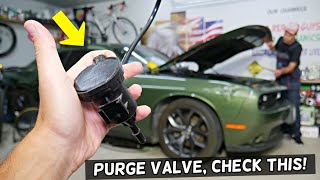
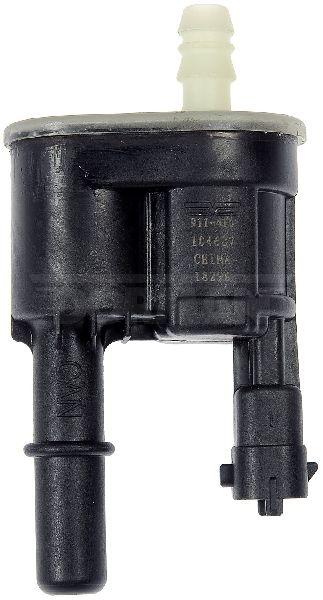
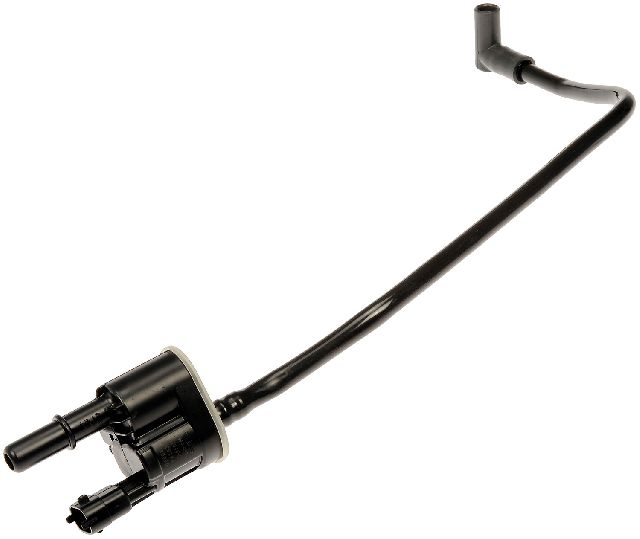
Est. part cost: $0-$200 - Faulty EVAP Purge Valve/Solenoid 🟡 Medium Probability → Shop Vapor Canister This valve cycles frequently and can get stuck open or closed over time, causing a flow issue in the EVAP system. A stuck-open valve can also lead to rough idling as unmetered air enters the intake.
How to confirm: The valve is located in the engine bay, on top of the engine under the cover. It can be tested by applying voltage to see if it clicks, or by removing it and trying to blow through it (it should be closed when unpowered). A shop can also command it open/closed with a scan tool.
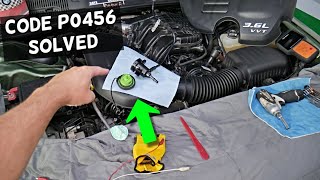
Typical fix: Replace the purge valve. This is a relatively simple DIY job involving disconnecting two hoses and an electrical connector. 🎬 Watch: How to locate and remove the purge control valve.
Est. part cost: $35-$75 - Cracked or Disconnected EVAP Hoses 🟡 Medium Probability Rubber and plastic hoses become brittle over time due to heat cycles and age, leading to cracks and leaks.
How to confirm: Visually inspect all accessible EVAP lines running from the gas tank to the charcoal canister and up to the engine bay. A smoke test is the most effective way to find small, hard-to-see leaks.
Typical fix: Replace the damaged section of hose or the entire line assembly.
Est. part cost: $10-$50
Rare But Worth Checking
- Faulty EVAP Canister Vent Valve: → Shop Vapor Canister This valve, often located near the charcoal canister, can fail and cause a system malfunction. It's less common than the purge valve but should be checked if other causes are ruled out.
- Leaking Charcoal Canister: → Shop Vapor Canister The plastic housing of the canister itself can develop cracks from age or road debris, causing a leak. A smoke test is the best way to confirm a leak in the canister body.
- Faulty Fuel Tank Pressure Sensor: → Shop Fuel Tank This sensor reports pressure data to the PCM. If it sends incorrect readings, the computer may falsely believe there is a leak, triggering the P0440 code.
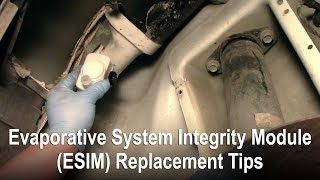
- Faulty Evaporative System Integrity Module (ESIM): → Shop Vapor Canister Also known as a Leak Detection Pump, this is a very common failure item on modern Chrysler/Dodge vehicles. The internal switch or seals can fail, causing it to report a leak when none exists. Owners on forums report replacing this part fixed their P0440 after the gas cap and purge valve did not. It is located on or near the charcoal canister and must be installed in the correct orientation to function. 🎬 See these helpful tips for replacing the ESIM unit.
Diagnosis Steps
- Read the code with an OBD-II scanner and check for any other accompanying codes.
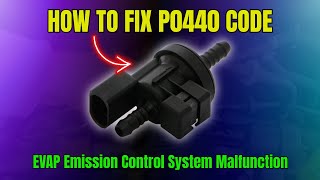
- Inspect the gas cap. Ensure it is tight and the seal is not cracked or worn. If in doubt, replace it with an OEM Mopar part, as this is the most common and cheapest fix. 🎬 Watch: A breakdown of common causes and fixes for P0440.
- Clear the codes and drive for a few days to see if the light returns. If it does, proceed to the next step.
- Contact a Dodge dealer with your VIN to check for open recalls and to see if TSB #18-096-23 (PCM Reprogramming) applies to your vehicle and has been performed.
- Visually inspect all accessible EVAP hoses in the engine bay and under the car near the fuel tank for obvious cracks, damage, or disconnections.
- Locate and test the EVAP purge valve in the engine bay. With the engine off, remove the valve and try to blow through it; it should be closed. Check for a clicking sound when applying 12V.
- If the leak source is still not found, perform a smoke test. This involves feeding low-pressure smoke into the EVAP system (usually via the purge valve hose) to pinpoint the exact location of any leaks from hoses, the canister, or valves.
- If a smoke test reveals no leaks, the Evaporative System Integrity Module (ESIM) near the charcoal canister is a strong suspect. It can be tested but is often replaced based on its high failure rate on these platforms.
- Based on the test results, replace the faulty component, which could be a hose, purge valve, ESIM, or the charcoal canister.
Parts You'll Likely Need
- Fuel Filler Cap (Gas Cap)
(OEM #52030389AB)— This is the most common cause of EVAP codes due to improper sealing. It's the first and cheapest part to check and replace. Note: Part number fitment appears to be primarily for models up to 2018/2019, so verify for your specific year.
Trusted brands: Mopar
OEM price range: $25-$40
Aftermarket price range: $15-$25 - EVAP Purge Valve (Solenoid)
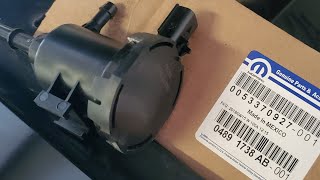
(OEM #4891738AD)— This valve is a common failure point that gets stuck open or closed, triggering a system malfunction code. It is located on top of the engine for easy access. The part number 4891738AD supersedes 4891738AB.
Trusted brands: Mopar, Dorman
OEM price range: $38-$55
Aftermarket price range: $30-$50 - Evaporative System Integrity Module (ESIM) — A very common failure on modern Dodge/Chrysler platforms that can trigger P0440 without an actual leak. It's a switch that confirms the system's ability to hold a vacuum. Often replaced after a smoke test shows no leaks.
Trusted brands: Mopar, Dorman
OEM price range: $40-$60
Aftermarket price range: $30-$50
Related Codes That Often Appear With This One
- P0455 — Indicates a large EVAP leak, often appears with the general P0440 code. Mentioned in TSB #18-096-23 and #18-074-22.
- P0456 — Indicates a small EVAP leak. This is a very common companion code to P0440. Mentioned in TSB #18-096-23 and #18-074-22.
- P0441 — Indicates incorrect purge flow, often related to a failing purge valve. Mentioned in TSB #18-096-23.
- P0452 — Indicates a problem with the fuel tank pressure sensor circuit. Mentioned in TSB #18-074-22.
- P0457 — Indicates a leak detected due to a loose or missing fuel cap. A Reddit user with a Challenger reported this code alongside P0440.
Technical Service Bulletins (TSBs) & Recalls
- Bulletin #18-096-23: Notes that P0440 (and other EVAP codes) can be caused by a software issue and that the fix is a PCM reflash.
- Bulletin #18-074-22: Lists P0440 as a potential DTC alongside other EVAP codes like P0452, P0455, and P0456.
Platform-Specific Known Issues
- TSB #18-096-23: A software issue in the Powertrain Control Module (PCM) can cause P0440, P0455, P0456, or P0441 codes to set on 2022 models with 5.7L or 6.4L engines. The fix is to reprogram the PCM with updated software, not replace parts.
- High failure rate of the Evaporative System Integrity Module (ESIM) / Leak Detection Pump. Owners often find this is the culprit after replacing the gas cap and purge valve to no avail.
Mechanic-Grade Diagnostic Values
- EVAP Purge Valve/Solenoid Coil Resistance — expected: Approximately 14.4 Ω.. Failure: A reading significantly higher or lower than the specification, or an open loop (infinite resistance), indicates a faulty coil.
- Fuel Tank Pressure (FTP) Sensor Voltage (Key On, Engine Off) — expected: Approximately 2.6 V with the system at atmospheric pressure (e.g., gas cap off).. Failure: A reading near 0V (e.g., 0.02V) indicates a fault in the sensor or its circuit.
- FTP Sensor 5V Reference — expected: 5.0 V at the sensor connector with the key on.. Failure: A lack of 5V indicates a wiring problem or an issue with the PCM.
Scan Tool Commands That Help
- wiTECH or advanced bidirectional scanner: EVAP System Test — This function commands the PCM to run its internal EVAP monitor. The PCM will close the vent valve and cycle the purge valve to create a vacuum, then monitor the FTP sensor to see if the vacuum holds. This is the most direct way to test the entire system's integrity electronically.
- wiTECH or advanced bidirectional scanner: Vent Valve/Solenoid Actuation — This command allows the technician to manually open and close the EVAP canister vent valve. It's used to confirm the valve is not stuck by listening for an audible click and to seal the system for a smoke test.
- wiTECH or advanced bidirectional scanner: Purge Valve/Solenoid Actuation — Allows for manual control of the purge valve to test its operation. A technician can command it open while blowing through it to confirm it's not stuck closed, or use it to introduce smoke into the system for leak testing.
Wiring & Ground Locations
- Engine Bay Fuse Box (Passenger Side) — Under the hood, on the passenger side of the engine compartment.. Contains multiple fuses (F31, F34, F35, F36) and a relay (R63) related to engine management and potentially the EVAP system. A blown fuse here can disable an EVAP component.
- Trunk Fuse Box — In the trunk, behind the carpet liner near the battery.. Contains relays (R29, possibly R14) that may be related to the EVAP system's power supply.
- PCM Connector C1, Pin 48 — At the Powertrain Control Module (PCM).. This is the specific pin for the Fuel Tank Pressure sensor signal wire (Brown/Blue wire on a 2020 model). It's a key test point to check if the sensor's signal is reaching the PCM.
- ESIM Location — Under the rear passenger side wheel well, attached to or near the charcoal canister.. This is the physical location of the frequently failing Evaporative System Integrity Module (ESIM). Access requires removing the wheel and wheel well liner.
Real Owner Repair Stories
- Reddit user on r/Challenger (Dodge Challenger (year not specified, but post is from ~2022)) — P0456 EVAP Small Leak code (often accompanies P0440).
❌ Tried (didn't work) Replacing the gas cap, Replacing the EVAP purge valve under the hood
✅ What actually fixed it Replacing the Evaporative System Integrity Module (ESIM), also called a leak detection pump, located under the rear passenger wheel well liner. The user noted the original was 'completely broken inside'. - DodgeForum.com user (2014 Challenger R/T 5.7L) — Strong raw gas smell, visible fuel leak after filling the tank.
❌ Tried (didn't work) Checking fuel pump seals under the back seat, Checking and re-securing the filler neck hose clamps
✅ What actually fixed it The user identified the leak was coming from the gas tank body itself, around the yellowish inlet valve where the fuel filler neck attaches, indicating a failed seal or crack in the tank inlet.
"I Checked Everything" — The Actual Cause
- In cases where a smoke test reveals no leaks, the Evaporative System Integrity Module (ESIM) is a primary suspect. A technician on a 2014 Challenger with P0456 found no leaks with a smoke machine but diagnosed a bad internal switch in the ESIM by testing its electrical continuity. The old switch was closed circuit with no pressure, while the new part was correctly open loop. This indicates the ESIM can fail electronically without having a physical leak, fooling a standard smoke test.
When the Usual Fixes Don't Work
- While the most common fixes for P0440 are the gas cap and purge valve, multiple owner accounts for the Challenger platform show these fixes failing to resolve the issue. The root cause in these documented cases was often an electronic failure of the Evaporative System Integrity Module (ESIM), a part that does not leak but whose internal switch fails. This highlights the importance of not just performing a smoke test for leaks, but also testing the electrical function of components if no leak is found.
OEM Part Supersession History
4891738AB→4891738AD— Revision of the EVAP Purge Valve.4861962AA, 4861962AB, 4861962AC, 4891685AA, 4891685AB→4861962AD— Multiple revisions of the Evaporative System Integrity Module (ESIM) have been consolidated into this newer part number.
Heads up: Using an older, superseded part may lead to premature failure. It is critical to use the latest revision for this high-failure-rate component.
Model Year Variations Within This Range
- 2022: A software issue in the Powertrain Control Module (PCM) can falsely trigger P0440 and other EVAP codes on models with the 5.7L or 6.4L engine. Per TSB #18-096-23, the official fix is a software update, not a hardware replacement.
Helpful Videos
Used OEM Parts in Stock

New Aftermarket Parts Available


The information in this article is provided for general reference and educational purposes only. Vehicle specifications, procedures, and part compatibility can vary by production date, trim level, and region. Always consult your vehicle's factory service manual and verify part numbers before purchasing or performing repairs. Safety-critical components such as airbags, seat belts, and braking systems should be installed by a qualified professional.
- Dodge CHALLENGER:
- 🧭 Diagnostic Flowchart
- 🎬 Helpful Videos
- 🛍️ Shop This Part
- What's Unique About the 2019-2022 Dodge CHALLENGER
- Symptoms You May Notice
- Most Likely Causes
- Rare But Worth Checking
- Diagnosis Steps
- Parts You'll Likely Need
- Related Codes That Often Appear With This One
- Technical Service Bulletins (TSBs) & Recalls
- Platform-Specific Known Issues
- Mechanic-Grade Diagnostic Values
- Scan Tool Commands That Help
- Wiring & Ground Locations
- Real Owner Repair Stories
- "I Checked Everything" — The Actual Cause
- When the Usual Fixes Don't Work
- OEM Part Supersession History
- Model Year Variations Within This Range
- 🎟️ Get 5% Off