

P0440 on 2013-2016 Dodge Dart 2.4L: EVAP System Malfunction Causes and Fixes
P0440 on a Dodge Dart indicates a general fault in the evaporative emissions (EVAP) system. The most common causes are a loose or faulty gas cap, a bad EVAP system integrity module (ESIM), or a failing purge valve. Start by checking the gas cap (Mopar Part No. 52129436AA); if that's not the issue, the ESIM (Mopar Part No. 04861961AD) is a frequent failure point on this platform and costs around $30-$60. Also, check for applicable software updates with a dealer, as TSBs exist for related EVAP cod
- P0440 means your Dart's EVAP system has a general fault, most often a leak.
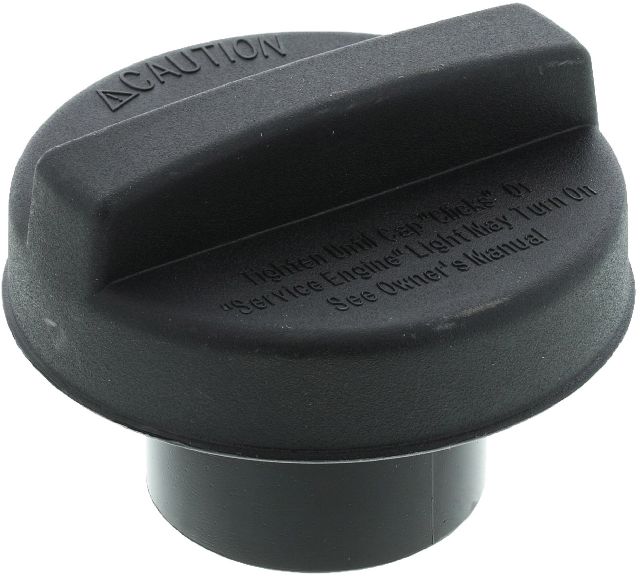
- Always check the gas cap first; ensure it's tight and the seal is intact. Use an OEM replacement if needed.
- On the 2013-2016 Dart, the Evaporative System Integrity Module (ESIM) is a very common failure point and should be the next suspect after the gas cap.
- Other causes include a bad purge valve or cracked hoses, which are best diagnosed with a smoke test.
- You can safely drive with this code, but you will not pass an emissions test until it is fixed.
What's Unique About the 2013-2016 Dodge Dart
While P0440 is a general code, the Dodge Dart and related Chrysler platforms have a known weakness in the Evaporative System Integrity Module (ESIM). This component, located on the charcoal canister, is responsible for testing the system's pressure and is a very common failure point that can cause P0440 and other related EVAP codes like P0456 and P0457. Owners often replace the gas cap and purge valve only to find the ESIM was the culprit all along. Additionally, for 2013-2015 models, Chrysler issued TSBs (#18-023-16 and #18-022-17) for a PCM software update that addresses several falsely-triggered EVAP codes, including P0456 and P0441, indicating software sensitivity is a known issue on this platform.
Symptoms You May Notice
- Check Engine Light is on
- A persistent fuel odor near the vehicle, especially after refueling.
- A "Loose Gas Cap" message on the dashboard, even if the cap is tight.
- Failure to pass a state emissions (smog) test.
- Difficulty starting the car immediately after refueling, which can point specifically to a stuck-open purge valve.
- Replacing the purge valve when the ESIM is the actual cause. Many owners and shops start with the purge valve, but on the Dart, the ESIM is a more frequent point of failure for general EVAP codes.
- Replacing any part before checking with a dealer for applicable software updates (TSBs), which can resolve false codes on 2013-2015 models.
Most Likely Causes
- Loose or Faulty Gas Cap 🔴 High Probability → Shop Fuel Tank Cap This is the most common cause for any EVAP code on any vehicle. The seal can wear out over time, preventing the system from holding pressure.
How to confirm: First, ensure the cap is tightened until it clicks. Inspect the rubber O-ring seal for cracks, stiffness, or damage. If the seal is compromised or the cap doesn't tighten properly, it's faulty.
Typical fix: Replace the gas cap. It is highly recommended to use an OEM Mopar part (Part No. 52129436AA, which supersedes 4885827aa), as aftermarket caps can sometimes fail to seal correctly.
Est. part cost: $15-$35 - Faulty EVAP System Integrity Module (ESIM) 🔴 High Probability → Shop Vapor Canister The ESIM is a known high-failure part on this platform. It's a pressure-checking switch on the charcoal canister that frequently malfunctions, leading to false leak codes.
How to confirm: Diagnosis can be difficult without a scan tool that can perform EVAP tests. However, given its high failure rate on the Dart, it's a prime suspect after the gas cap is ruled out. A mechanic can confirm with a smoke test or by testing the switch's function. Its location is on the vapor canister, typically behind the right-rear wheel well liner.
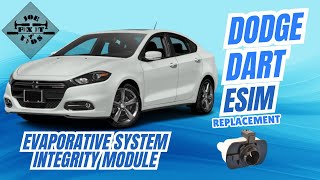
Typical fix: Replace the ESIM. The part twists into the canister and is secured by a tab. The Mopar part number is 04861961AD. 🎬 Watch: See how to replace the ESIM on your Dart.
Est. part cost: $30-$60 - Faulty EVAP Purge Valve/Solenoid 🟡 Medium Probability → Shop Vapor Canister The purge valve controls the flow of fuel vapors from the canister to the engine. It can get stuck open or closed, causing a system malfunction. A stuck-open valve is a common cause of hard starting after refueling.
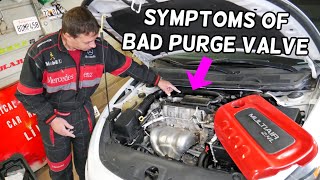
How to confirm: The purge valve is typically located in the engine bay, on the back of the engine. A mechanic can test it with a scan tool to command it open and closed while checking for vacuum flow. A simple DIY test is to remove the valve and try to blow through it; when unpowered, it should be closed and not allow air to pass.
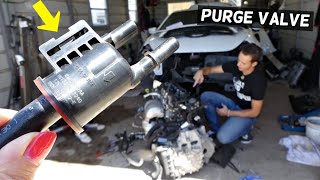
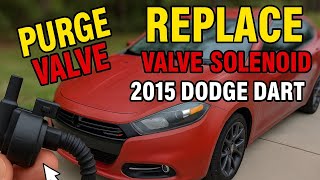
Typical fix: Replace the purge valve solenoid. It's usually an easy part to access in the engine bay, connected by two hoses and an electrical connector. The correct Mopar part number for the 2.4L engine is 04627182AA. 🎬 See this quick walkthrough for replacing the purge valve.
Est. part cost: $25-$50 - Cracked or Disconnected EVAP Hoses ⚪ Low Probability Over time, the rubber and plastic hoses in the EVAP system can become brittle and crack, especially in harsh climates.
How to confirm: A visual inspection may reveal obvious cracks or disconnections. However, small leaks are best found using a professional smoke machine, which fills the EVAP system with smoke to reveal the exact location of any leak.
Typical fix: Replace the damaged section of hose. This can range from a simple fix to a more complex repair depending on the hose's location.
Est. part cost: $10-$100
Rare But Worth Checking
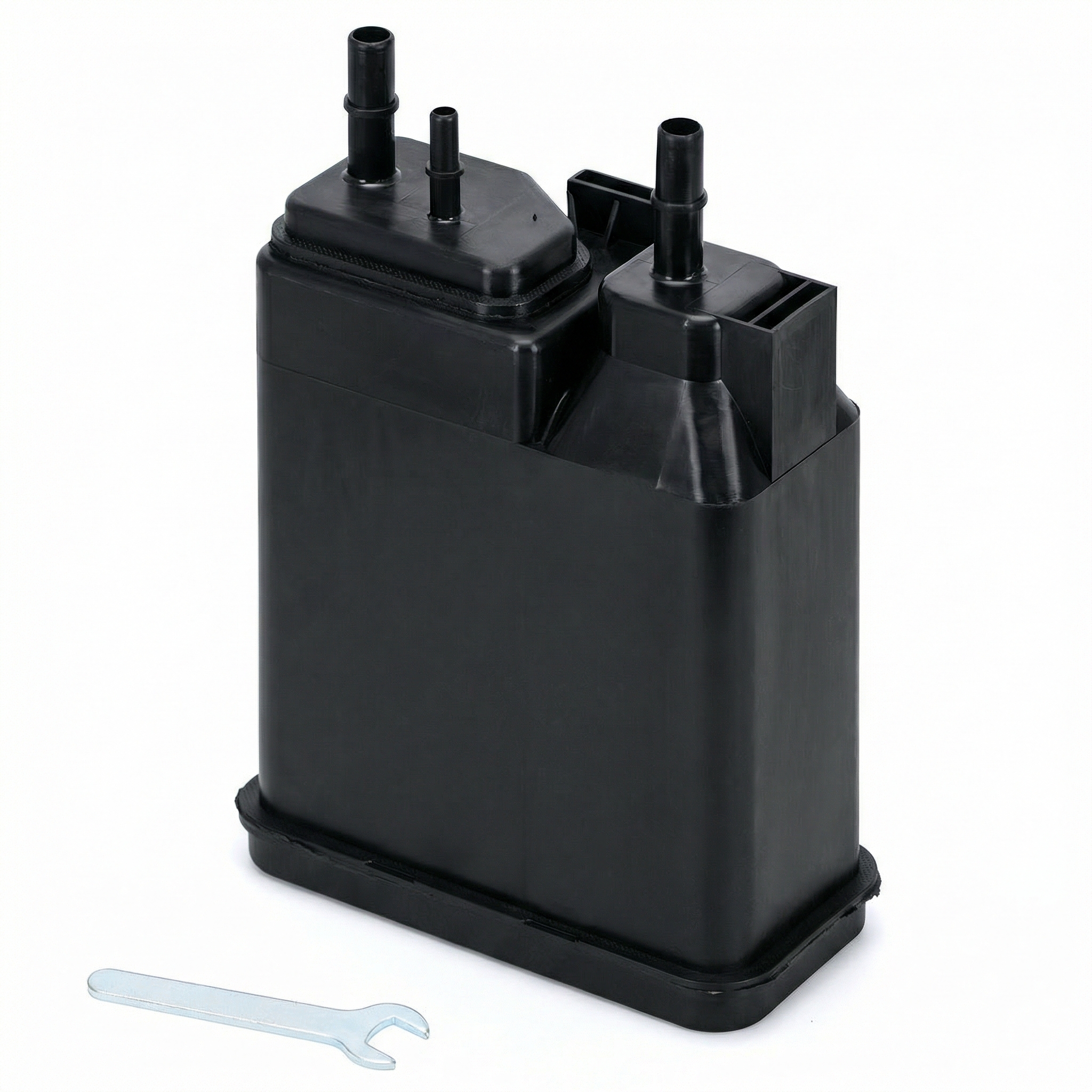
- Cracked Charcoal Canister: → Shop Vapor Canister The canister itself can develop cracks, especially from road debris or impact. A smoke test is the definitive way to confirm a leak in the canister body.
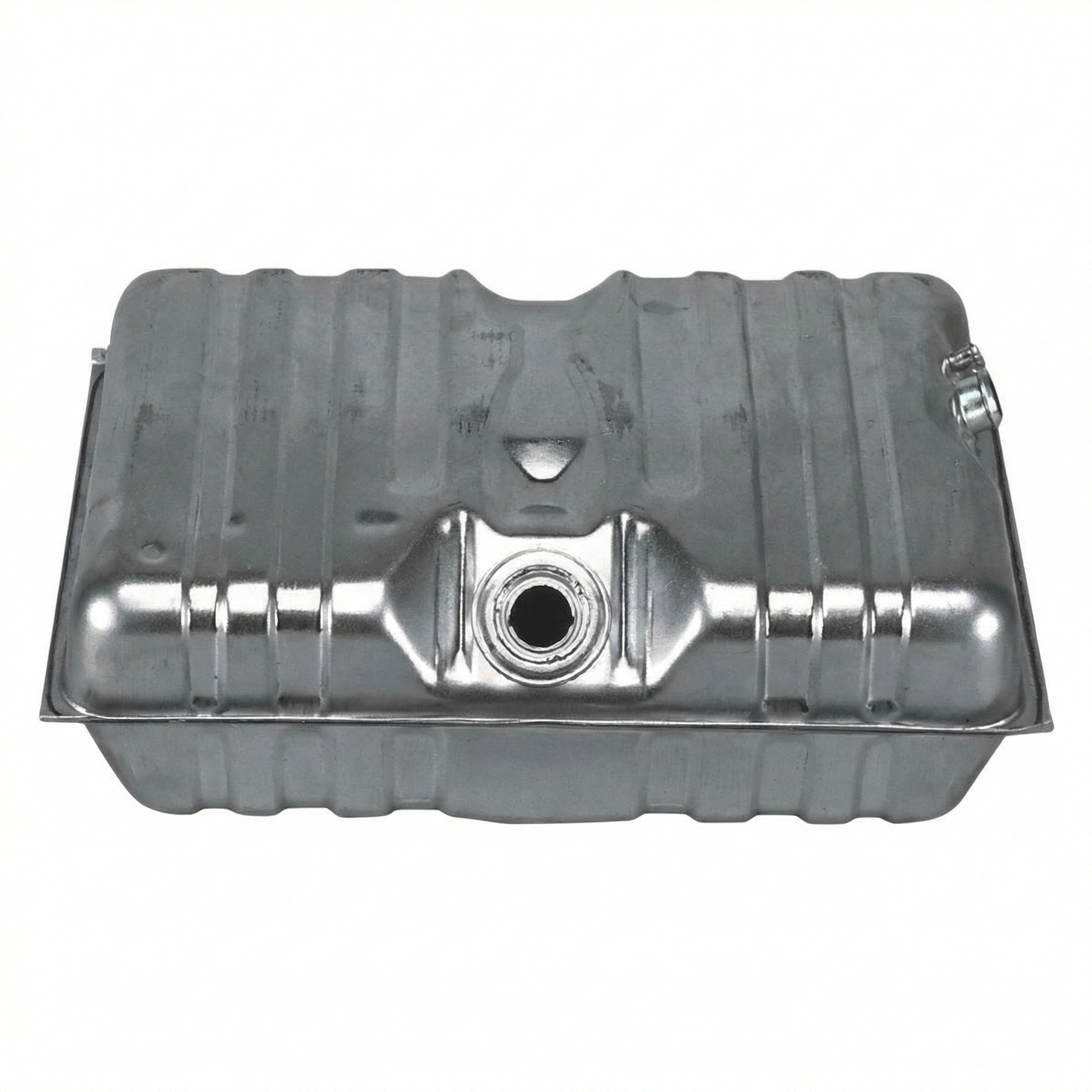
- Faulty Fuel Tank Pressure Sensor: → Shop Fuel Tank This sensor reports the pressure within the EVAP system to the computer. If it sends incorrect data, the computer may set a P0440 code even if there are no leaks. This is less common than other component failures.
- Outdated PCM Software: For 2013-2015 models, Chrysler issued TSBs 18-023-16 and 18-022-17. While not explicitly for P0440, they address related EVAP codes like P0456 (small leak) and P0441 (incorrect purge flow) by reprogramming the PCM. This indicates the factory software can be overly sensitive, making a software check with a dealer a valid diagnostic step.
Diagnosis Steps
- Check the Gas Cap: Remove, inspect the seal for damage, and retighten it until it clicks at least three times. Clear the code and drive for a few days to see if it returns.
- Check for TSBs (2013-2015 models): Call a Dodge dealership with your VIN. Ask if TSB 18-023-16 or 18-022-17 are open for your vehicle. A software update may be the required fix for false EVAP codes.
- Visual Inspection: Inspect all accessible EVAP hoses in the engine bay and under the car for obvious cracks, disconnections, or damage.
- Consider the ESIM: Given the high failure rate on the Dart, if the gas cap is good, the next logical step is to inspect or replace the Evaporative System Integrity Module (ESIM, Mopar P/N 04861961AD) located on the charcoal canister behind the right-rear wheel well.
- Test the Purge Valve: Locate the purge valve in the engine bay. With the engine running, you can sometimes feel for suction or use a scan tool to command it open and closed to verify operation. A hard start after refueling is a strong indicator this part has failed.
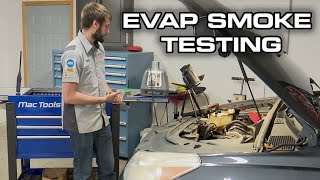
- Perform a Smoke Test: If the cause is still not found, the most effective diagnostic step is a smoke test. A machine injects vaporous smoke into the EVAP system, and any leaks will be visible as smoke escapes from the faulty component 🎬 Watch: How to perform a professional EVAP smoke test. (hose, canister, etc.).
Parts You'll Likely Need
- Gas Cap
(OEM #52129436AA)— This is the most frequent and cheapest fix for EVAP codes. The seal wears out, causing a pressure leak.
Trusted brands: Mopar, Stant
OEM price range: $25-$35
Aftermarket price range: $15-$25 - Evaporative System Integrity Module (ESIM)
(OEM #04861961AD)— A very common failure point on the 2013-2016 Dodge Dart that causes various EVAP codes, including P0440.
Trusted brands: Mopar, Dorman
OEM price range: $50-$70
Aftermarket price range: $30-$50 - Vapor Canister Purge Valve / Solenoid
(OEM #04627182AA)— This valve can stick open or closed, preventing the EVAP system from functioning correctly. It's a common failure item on many vehicles and a prime suspect if you have trouble starting the car after getting gas.
Trusted brands: Mopar, Bosch, Standard Motor Products
OEM price range: $40-$60
Aftermarket price range: $25-$45
Related Codes That Often Appear With This One
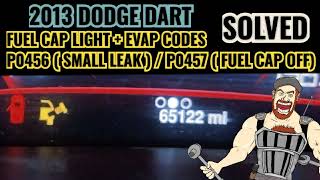
- P0456 — Indicates a 'Small EVAP Leak.' This code is very specific and often appears alongside or instead of the general P0440. On the Dart, it frequently points to a bad ESIM. This code is also explicitly mentioned as being fixed by a PCM software update in TSB 18-023-16.
- P0457 — Indicates an 'EVAP Leak Detected (Fuel Cap Loose/Off).' If this code appears, the gas cap is the primary suspect, but a faulty ESIM can also trigger it.
- P0441 — Indicates 'Incorrect Purge Flow.' This code points more directly to a problem with the purge valve or a blockage in the system, rather than a leak. It is also a key code addressed by TSBs 18-023-16 and 18-022-17.
Technical Service Bulletins (TSBs) & Recalls
- TSB 18-023-16 REV. C: For 2013-2015 Dodge Dart & 2015 Chrysler 200 with 2.4L engine. Involves a PCM reflash to address a list of potential DTCs, including P0456 (EVAP Small Leak) and P0441 (EVAP Purge System Performance), and also improves idle and acceleration characteristics.
- TSB 18-022-17 REV. A: Supersedes a previous TSB and applies to 2013-2015 Dodge Dart & 2015 Chrysler 200 with 2.4L engine. Involves a PCM reflash to address numerous potential DTCs, including P0456 and P0441, to fix false MIL illumination.
- Manufacturer TSB Bulletin #1809423: Notes that P0440, P0455, P0456, and P0441 may be set, requiring a PCM reprogram with the latest available software.
- Manufacturer TSB Bulletin #1807422: Indicates that technicians may find DTCs P0440, P0452, P0455, or P0456 set; if P0456 is present, it recommends using the wiTECH Small Leak Verification Test (SLVT).
Platform-Specific Known Issues
- Some 2013-2015 Darts with the 2.4L engine were subject to TSBs 18-023-16 and 18-022-17, which involved a software update for the Powertrain Control Module (PCM) to correct false P0456 and P0441 codes. While not directly for P0440, it highlights that software can be a factor in EVAP system faults and checking for an update is a valid diagnostic step.
Mechanic-Grade Diagnostic Values
- EVAP Purge Valve Solenoid Resistance — expected: 14 - 22 Ohms across the two pins.. Failure: A reading of infinite resistance (open circuit) or near-zero resistance (short circuit) indicates a failed solenoid coil.
- Fuel Tank Pressure (FTP) Sensor Voltage (Live Data) — expected: Approximately 2.5 volts or 0 inches of water (inH2O) with the gas cap removed (at atmospheric pressure).. Failure: A voltage that is stuck high or low and does not change when pressure or vacuum is applied indicates a faulty sensor or wiring issue.
- EVAP Purge Valve Connector Voltage — expected: Battery voltage (approx. 12V) on one of the two pins with Key On, Engine Off (KOEO).. Failure: No voltage suggests a blown fuse, a wiring issue, or a problem with the power supply from the TIPM/PCM.
Scan Tool Commands That Help
- wiTECH (Dealer Tool) or equivalent professional scanner: EVAP Leak Test — This is a forced, active test that seals the EVAP system and uses the Fuel Tank Pressure sensor to monitor for a pressure drop. It's more accurate than the passive test run by the vehicle and can confirm a leak when the cause isn't obvious.
- Professional bidirectional scanner: Purge Valve Control / Actuation — This command allows a technician to manually open and close the purge valve to check for mechanical function (listening for a click) and its effect on the system (e.g., watching for a change in fuel tank pressure or short-term fuel trims at idle).
Wiring & Ground Locations
- G104 — Lower left front of the engine block.. This is a primary engine block ground. While not exclusive to the EVAP system, a poor connection here can cause erratic behavior from the PCM and various sensors, potentially leading to false codes.
- G108 — On the right side of the engine compartment, on the front wheel well cover.. Wiring diagrams indicate the EVAP/Purge Solenoid is grounded at this location. Corrosion or a loose connection at G108 can cause the purge solenoid to fail to operate, triggering flow or malfunction codes.
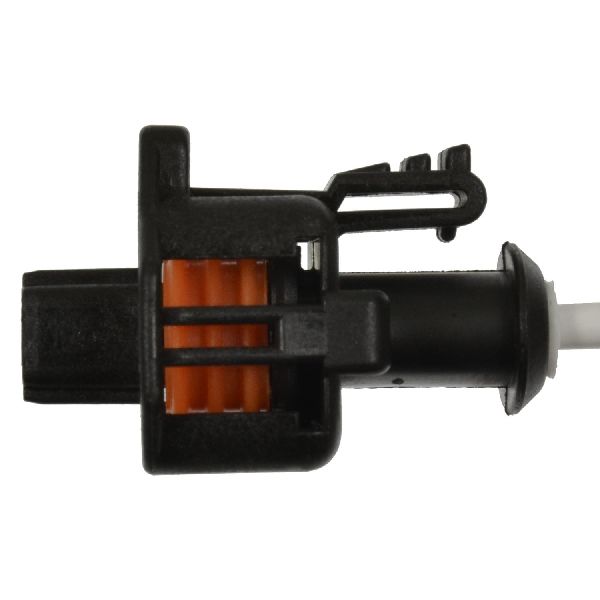
- Purge Solenoid Connector — On the purge solenoid, located at the back of the 2.4L engine.. This 2-pin connector provides power and control. Pin 2 should have battery voltage with the key on, and Pin 1 is the ground-side control wire from the PCM. Checking for voltage here is a key step in diagnosing a non-responsive purge valve.
- ESIM Connector — On the ESIM, located on the charcoal canister behind the right-rear wheel well liner.. This 3-pin connector provides the ESIM with a 5-volt reference, a ground, and returns a signal to the PCM. Damaged wiring or corrosion here can mimic a failed ESIM.
Real Owner Repair Stories
- Reddit user in r/dodgedart (Dodge Dart, year not specified) — Check engine light with EVAP codes, reappearing after a couple of drives.
❌ Tried (didn't work) Initial diagnosis was ongoing.
✅ What actually fixed it The user later updated their post stating the ESIM Module had failed. Replacing the $40 part resolved the check engine light. - YouTube video by 'Charles Revamp' (2015 Dodge Dart) — P0456 (Small EVAP Leak) code.
❌ Tried (didn't work) Replaced the gas cap., Replaced the purge valve solenoid.
✅ What actually fixed it Replacing the Evaporative System Integrity Module (ESIM) finally resolved the code. The video documents the replacement process. - Reddit user in r/dodgedart (2015 Dodge Dart SXT 2.4L Manual, 58,000 miles) — P0440, P0457, P0441 codes appeared 3 days after a dealership recall service for the catalyst.
❌ Tried (didn't work) A smoke test performed prior to the codes returning found no issues., Replaced the gas cap with an aftermarket part from Autozone.
✅ What actually fixed it The thread did not have a final confirmed fix from the original poster, but other users strongly suggested the ESIM was the next logical part to replace, citing it as the fix for their identical symptoms.
Documented NHTSA Reports
- An owner reported in NHTSA ODI #11350522 that their check engine light came on with code P0440 thrown twice at 69,000 miles; they replaced the purge valve at their own cost but the issue persisted.
- NHTSA ODI #11455058 describes a check engine light for code P0440 (Evaporative Emission Systems) where the owner noted a potential recall conflict.
- In NHTSA ODI #10212134, an owner reported P0440 alongside P2074 and P0700, noting that the vehicle experienced significant hesitation and a loss of power while driving.
"I Checked Everything" — The Actual Cause
- In some cases, the P0440 code can persist even after a smoke test shows no leaks. A known failure mode for the ESIM on this platform is an internal mechanical or electrical fault, not just a leak. The switch can become sticky or fail to report its state (open/closed) correctly to the PCM, which triggers a system malfunction code without an actual physical leak that a smoke test would find.
OEM Part Supersession History
4861961AA, 4861961AB, 4861961AC→04861961AD— The ESIM has gone through several revisions. Later versions like 'AD' feature improved internal components and diaphragm materials to increase longevity and prevent the common failures that plagued earlier versions.
Heads up: All versions are physically interchangeable, but it is highly recommended to use the latest 'AD' revision for repair to prevent a repeat failure.
Model Year Variations Within This Range
- 2013-2015: These model years with the 2.4L engine may have overly sensitive PCM software that can falsely trigger EVAP codes like P0441 and P0456. TSBs #18-023-16 and #18-022-17 were issued to reprogram the PCM. A 2016 model is less likely to have this specific software issue.
Diagnostic Flowchart
Other Known Issues on This Vehicle
Issues unrelated to this code that are worth knowing about as an owner of this generation:
- Excessive Oil Consumption 🔴 High — Extremely common across all model years with the 2.4L Tigershark engine. Often reported as needing 1 quart of oil every 1,000-2,000 miles. (Ref: Subject of class-action lawsuit (Gizzarelli, et al., v. FCA US LLC). FCA issued software updates to mitigate the issue.)
- Transmission Problems (DDCT and Automatic) 🔴 High — Most prevalent in 2013-2014 models. The 1.4L Turbo's Dual Dry-Clutch Transmission (DDCT) was notoriously problematic. The 9-speed automatic paired with the 2.4L also had issues with harsh shifting, hesitation, and software glitches. (Ref: Recall R42 was issued for 2013-2015 Darts with the DDCT for a faulty transmission control module bracket that could cause the car to shift to neutral.)
- Engine Stalling / Hesitation 🟠 Medium — Frequently reported, especially on 2013-2014 models. Can be related to transmission issues, vacuum leaks, or software problems. (Ref: Multiple TSBs (e.g., 18-023-16) aimed to improve engine and idle stability through software updates.)
- Premature Battery Failure / Electrical Glitches 🟡 Low — Commonly reported on 2013 models, with owners sometimes replacing batteries annually. Can also manifest as Uconnect infotainment system freezes or other electronic gremlins.
- Thermostat Failure 🟡 Low — A common cause for the Check Engine light with code P0128, especially in colder climates.
Used vs. New Parts: Buying Guide for This Vehicle
When a used part is the smart pick: Used parts can be a cost-effective choice for non-electronic, non-wear components. A complete charcoal canister assembly from a low-mileage donor car can be a good value if it's not cracked and includes the hoses. EVAP lines and hoses are also acceptable to source used, provided they are inspected for brittleness and cracks.
Donor-vehicle mileage cap: roughly under 80000 miles for the part to have meaningful remaining life.
What to inspect on the donor part:
- For a charcoal canister, check for any physical cracks, especially around the mounting tabs and hose ports.
- For hoses, bend them to ensure the rubber is still pliable and doesn't show signs of dry rot or cracking.
- Avoid parts from vehicles in the salt belt, as corrosion can damage the canister and metal lines.
OEM-only on this vehicle (don't cheap out):
- Gas Cap: Aftermarket gas caps are notorious for causing EVAP codes due to improper sealing. Always use an OEM Mopar cap.
- Evaporative System Integrity Module (ESIM): Given the high failure rate and multiple part revisions, using a new OEM Mopar part (specifically P/N 04861961AD) is critical to ensure a lasting repair.
Aftermarket brands forum-validated for this vehicle:
- Bosch for Purge Valve/Solenoid
- Standard Motor Products (SMP) for Purge Valve/Solenoid and connectors.
Brands owners have reported issues with on this vehicle:
- Generic or unbranded gas caps.
- Lower-quality Dorman replacement parts for the ESIM have been reported by some owners to fail prematurely compared to the OEM Mopar part.
Real Owner Stories
Aggregated from forums and TSBs cited above. Mileages and costs reflect what owners reported in those sources.
2013-2015 Dodge Dart 2.4L
Symptoms: Owner experienced multiple EVAP codes including P0440, P0457, and P0441. A new gas cap and a smoke test did not immediately resolve the issue.
What fixed it: The context indicates this was a complex diagnostic case involving multiple codes where standard fixes were initially unsuccessful.
Source hint: Reddit /r/dodgedart - 'Help Wanted (EVAP Issue After Recall Completed)'
Related OBD-II Codes
Frequently Asked Questions
Which TSBs should I check for false EVAP codes on my 2013-2015 Dodge Dart 2.4L?
What is the specific Mopar part number for the gas cap on my Dart?
Why does my Dart have trouble starting only after I fill up the gas tank?
Where is the EVAP System Integrity Module (ESIM) located on this vehicle?
Is there a specific part number for the ESIM on the 2.4L Dart?
Could my P0440 code be related to the engine oil consumption issues on the 2.4L Tigershark?
Helpful Videos
Used OEM Parts in Stock

New Aftermarket Parts Available


The information in this article is provided for general reference and educational purposes only. Vehicle specifications, procedures, and part compatibility can vary by production date, trim level, and region. Always consult your vehicle's factory service manual and verify part numbers before purchasing or performing repairs. Safety-critical components such as airbags, seat belts, and braking systems should be installed by a qualified professional.
- Dodge Dart:
- 🧭 Diagnostic Flowchart
- 🎬 Helpful Videos
- 🛍️ Shop This Part
- What's Unique About the 2013-2016 Dodge Dart
- Symptoms You May Notice
- Most Likely Causes
- Rare But Worth Checking
- Diagnosis Steps
- Parts You'll Likely Need
- Related Codes That Often Appear With This One
- Technical Service Bulletins (TSBs) & Recalls
- Platform-Specific Known Issues
- Mechanic-Grade Diagnostic Values
- Scan Tool Commands That Help
- Wiring & Ground Locations
- Real Owner Repair Stories
- Documented NHTSA Reports
- "I Checked Everything" — The Actual Cause
- OEM Part Supersession History
- Model Year Variations Within This Range
- Other Known Issues on This Vehicle
- Used vs. New Parts: Buying Guide for This Vehicle
- Real Owner Stories
- 2013-2015 Dodge Dart 2.4L
- Related OBD-II Codes
- Frequently Asked Questions
- 🎟️ Get 5% Off