

P0440 on 2009-2020 Dodge Journey: EVAP System Malfunction Causes and Fixes
For a 2009-2020 Dodge Journey, code P0440 usually means there's a general fault in the EVAP system. The most common fixes are tightening or replacing the gas cap, followed by replacing the EVAP purge valve in the engine bay. A new gas cap costs about $15-$35, and a purge valve is around $25-$50.
- P0440 is a general EVAP system fault; it is safe to drive with this code, but you will fail an emissions test.
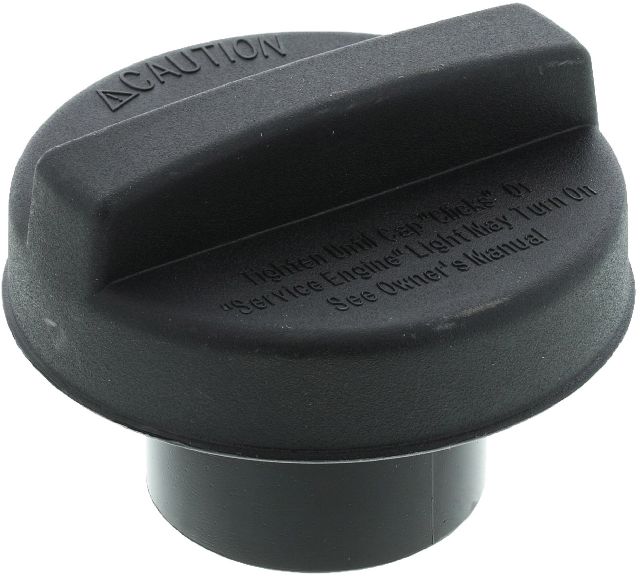
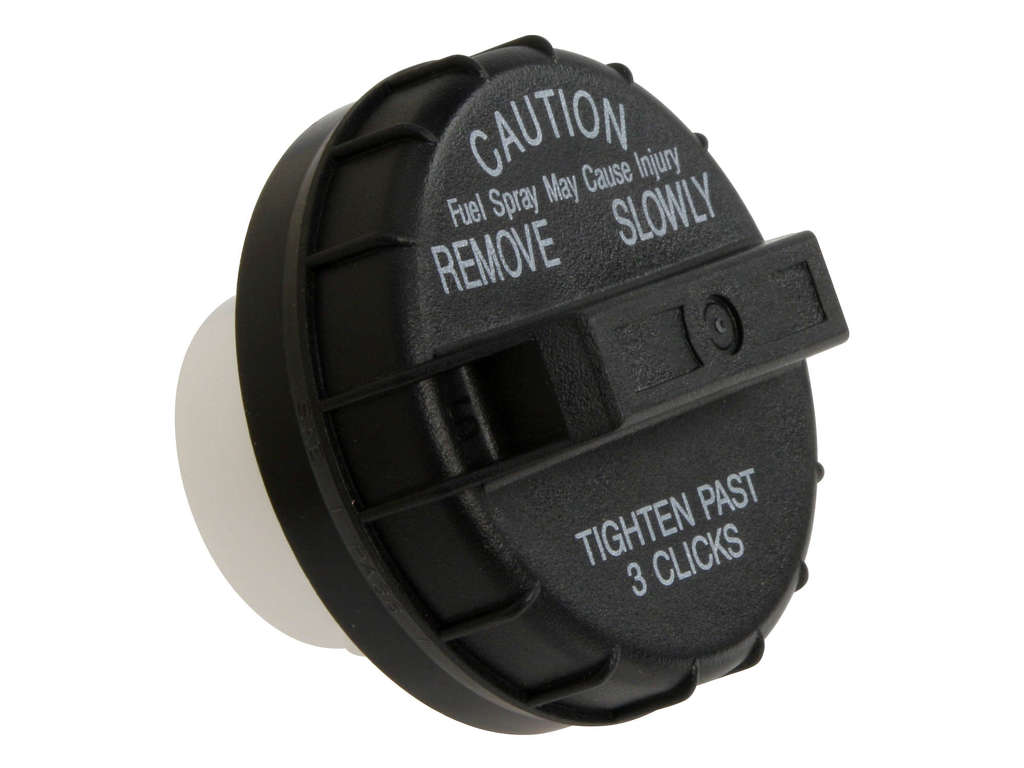
- Always start by checking the gas cap. Make sure it is tight and the seal is not cracked. Using an OEM Mopar cap for replacement is strongly advised.
- If the gas cap is not the issue, the next most likely culprits on a Dodge Journey are the EVAP purge valve in the engine bay or the ESIM switch on the charcoal canister.
- A smoke test is the most reliable way to find a physical leak in a hose or the canister if a visual inspection doesn't reveal the problem.
What's Unique About the 2009-2020 Dodge Journey
The Dodge Journey, like many Chrysler products from this era, uses an Evaporative System Integrity Module (ESIM) to test the EVAP system. This system is designed to be sealed when the vehicle is off, allowing the PCM to monitor for leaks by detecting if a natural vacuum holds overnight. While the gas cap is always the first suspect, this platform is particularly known for failures of two other components: the engine-bay-mounted purge valve solenoid and the ESIM itself, which is located on the charcoal canister near the fuel tank. Owners often find that replacing one of these two parts resolves the code after the gas cap has been ruled out. The ESIM contains a switch that is highly prone to failure, leading the computer to believe a leak exists when one does not.
Generation note: The Dodge Journey's single generation ran from 2009-2020, with a major facelift in 2011. The engines offered included the 2.4L I4, 3.5L V6 (pre-2011), and the 3.6L Pentastar V6 (2011-2019). The causes for P0440 are generally consistent across these years and engines, though the purge valve is noted as a very common failure on the 3.6L Pentastar. The EVAP system components, specifically the vapor canister, have different part numbers for pre-2011 and 2011-onward models, indicating a design change.
Symptoms You May Notice
- Check Engine Light is on
- A faint smell of fuel around the vehicle
- Remote start may be disabled
- Vehicle will fail an emissions inspection
- Engine hesitation or a sudden drop in power, as noted in some Chrysler platform reports like NHTSA ODI #10212134
- Replacing the charcoal canister when only the attached ESIM has failed. 🎬 See this walkthrough on finding EVAP leaks on a 2011 Journey. The ESIM is a separate, much cheaper part that can be replaced on its own.
Most Likely Causes
- Loose, Damaged, or Incorrect Gas Cap 🔴 High Probability → Shop Fuel Tank Cap The gas cap seal is a rubber component that degrades, cracks, or hardens over time, preventing a proper seal. This is the most common and easiest-to-fix cause for any EVAP code on any vehicle.
How to confirm: Remove the cap and inspect the rubber seal for cracks or damage. Ensure the cap clicks when tightened. Check the fuel filler neck for rust or debris that could prevent a seal.
Typical fix: Replace the gas cap. It is highly recommended to use an OEM Mopar cap, as many owners report aftermarket caps fail to provide a proper seal and do not resolve the code.
Est. part cost: $15-$35 - Faulty EVAP Purge Valve / Solenoid 🟡 Medium Probability → Shop Vapor Canister This valve is a very common failure item on Dodge/Chrysler platforms, including the Journey, especially those with the 3.6L Pentastar engine. It gets stuck open or closed, creating a leak path or preventing vapor flow, which the system detects during its self-test.
How to confirm: Locate the valve in the engine bay. With the engine off, disconnect the valve and try to blow air through it. If air passes, it is stuck open and must be replaced. You can also test for power and ground at the electrical connector with the engine running. The coil resistance should be between 28-36 ohms for the 2.4L engine. 🎬 Watch: How to diagnose the purge valve on a 2.4L engine.
Typical fix: Replace the purge valve solenoid. This is a relatively simple DIY job, often taking less than 30 minutes.
Est. part cost: $25-$50 - Cracked or Disconnected EVAP Hoses ⚪ Low Probability Hoses, especially rubber elbows and connectors, become brittle with age and exposure to heat and the elements, leading to cracks and leaks. This is more common on older models.
How to confirm: Visually inspect all accessible EVAP lines in the engine bay and under the vehicle for obvious cracks, breaks, or loose connections. A smoke test is the most effective way to find a leak that isn't visible. Pay close attention to the lines near the purge valve and the charcoal canister.
Typical fix: Replace the damaged section of hose or reconnect it securely.
Est. part cost: $5-$30 - Faulty EVAP System Integrity Module (ESIM) ⚪ Low Probability → Shop Vapor Canister Also known as a leak detection pump, this Chrysler-specific part is a known high-failure item. The internal switch or diaphragm can get stuck or fail, causing the computer to incorrectly believe there is a system leak, even when no physical leak is present.
How to confirm: The ESIM is located on the charcoal canister, usually near the spare tire. A definitive test requires a scan tool that can monitor the ESIM switch status. However, given its high failure rate and relatively low cost, it is often replaced as a likely culprit after the gas cap and purge valve are ruled out. The ESIM must be mounted vertically to function correctly. Be aware that a conventional smoke test can over-pressurize and damage the ESIM's internal diaphragm.
Typical fix: Replace the ESIM. It typically attaches to the canister with a quarter-turn twist.
Est. part cost: $30-$75
Rare But Worth Checking
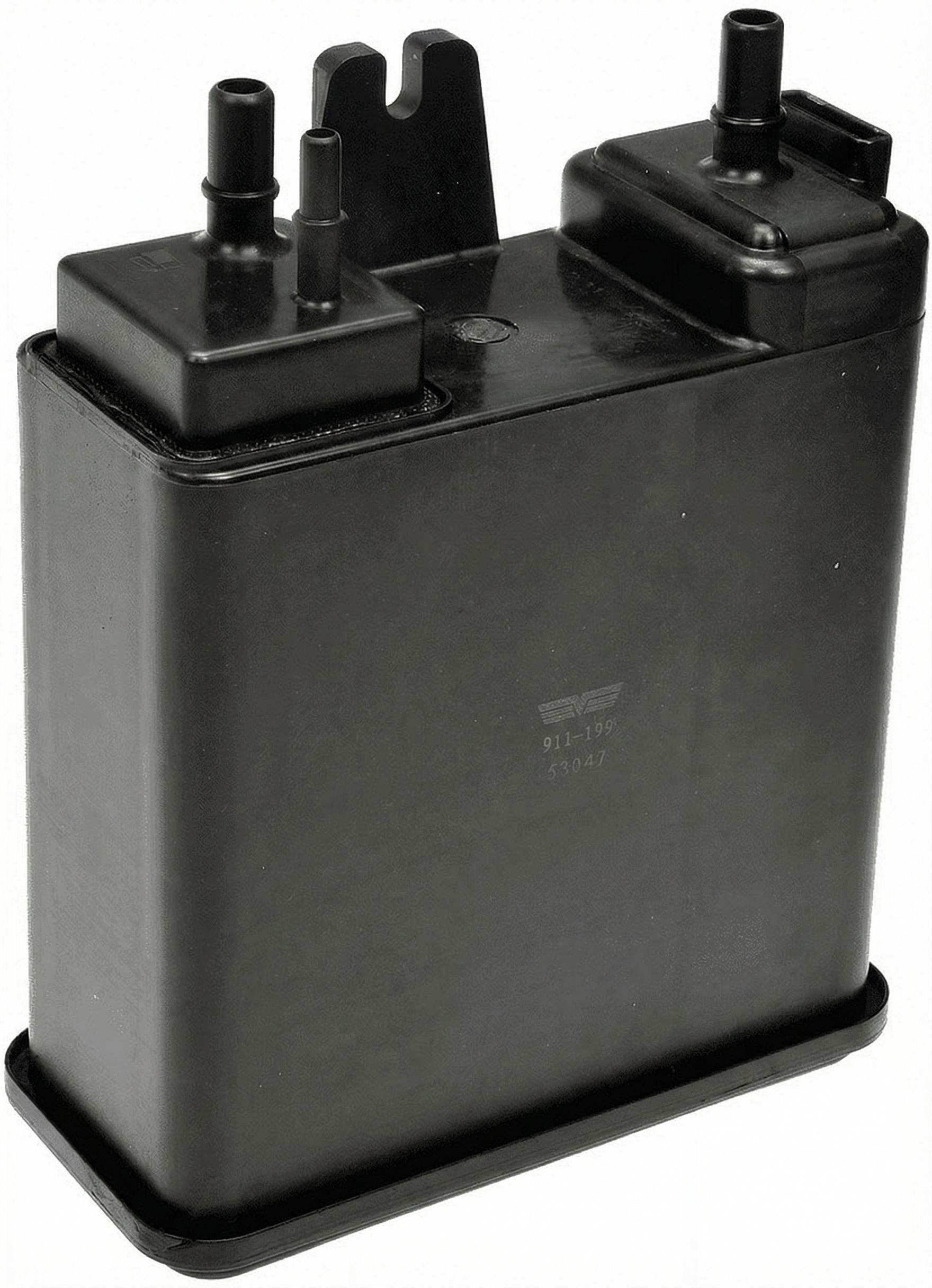
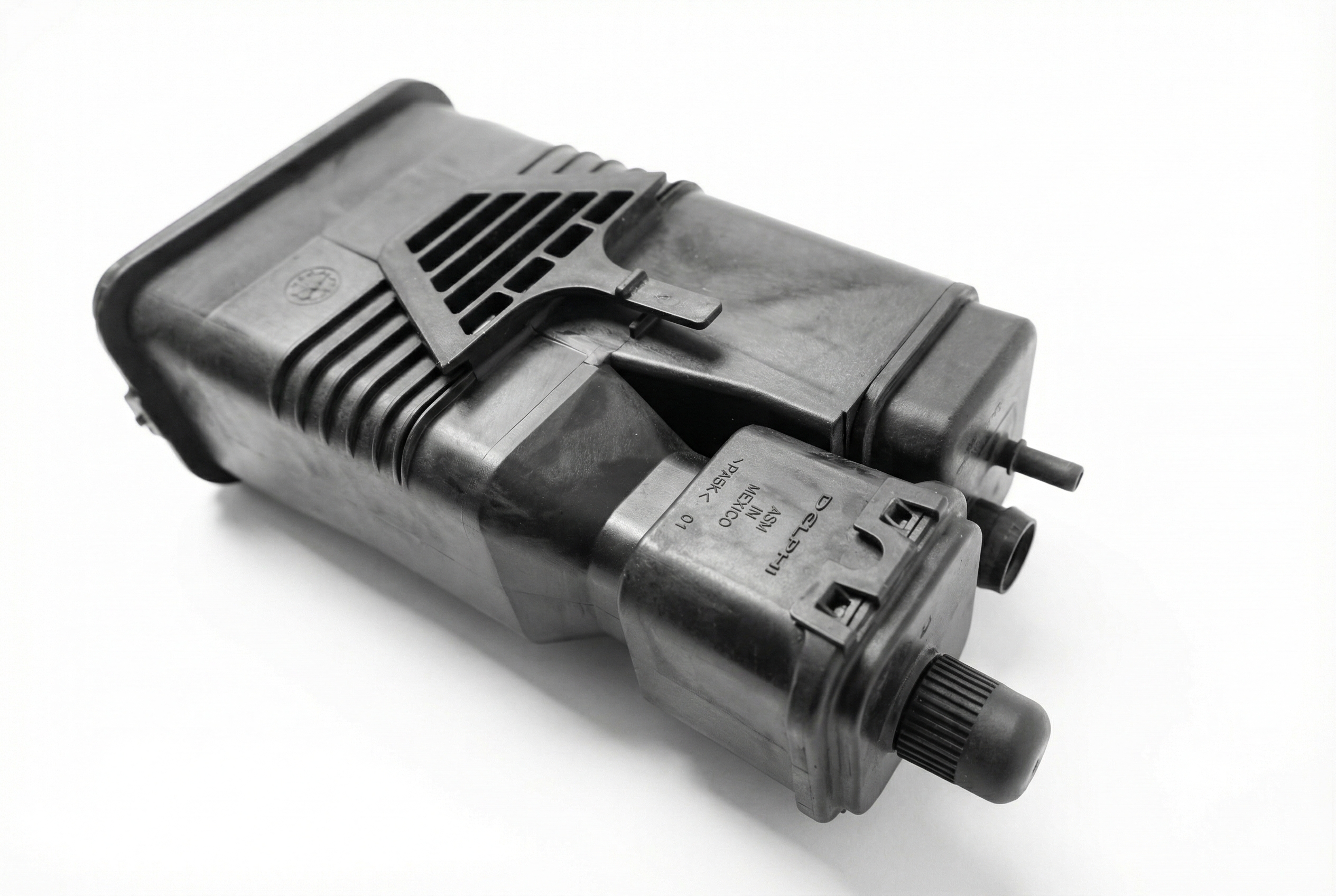
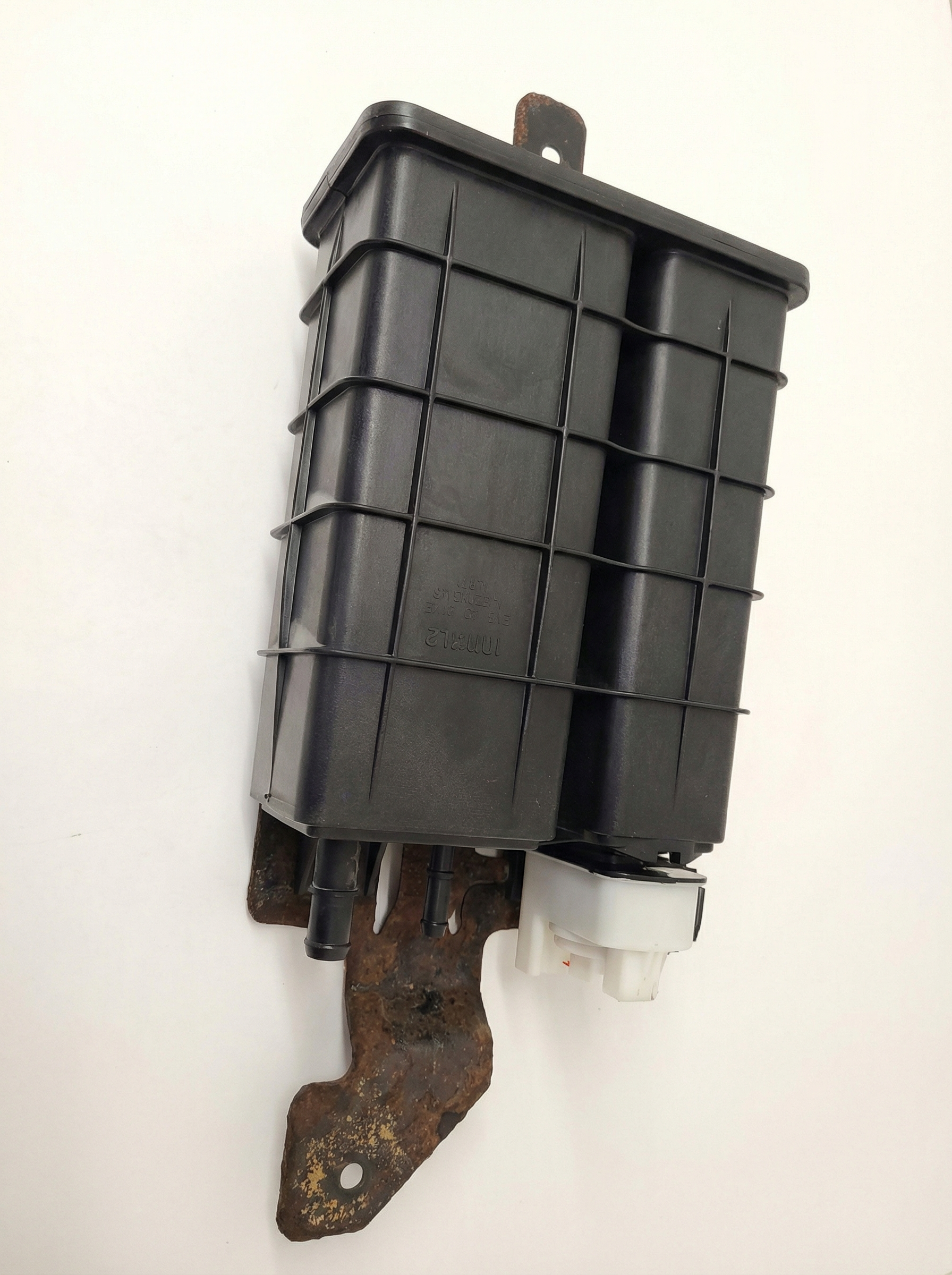
- Cracked Charcoal Canister: → Shop Vapor Canister The canister body can be damaged by road debris, causing a large leak. This is less common than component failure but should be checked if the vehicle has been driven on rough roads.
- Faulty Fuel Tank Pressure Sensor: → Shop Fuel Tank This sensor reports the pressure within the EVAP system to the computer. While it can fail and send incorrect data, it is much less common than leaks or valve failures.
- Corroded wiring or connectors: In regions with heavy road salt use, the wiring to the ESIM or purge valve can corrode, causing an open or short circuit that mimics a component failure. Key ground points for the EVAP system are G904 and G924 in the engine compartment.
- PCM Software Calibration: Manufacturer service bulletins, such as TSB #1809423 and TSB #1807422 for related Chrysler platforms, indicate that P0440 can sometimes be resolved by reprogramming the PCM with the latest available software.
Diagnosis Steps
- Read the code with an OBD-II scanner to confirm P0440 and check for any other related codes.
- Inspect the Gas Cap: Remove the gas cap. Check the seal for any cracks, stiffness, or damage. Ensure it is the correct type for the vehicle.
- Tighten or Replace Gas Cap: Reinstall the cap, making sure it clicks several times. If the seal is suspect, replace it with a new OEM Mopar cap. Clear the codes and drive for a few days to see if the light returns.
- Inspect the Purge Valve: Locate the EVAP purge valve in the engine bay. It will have two hoses and an electrical connector.
- Test the Purge Valve: With the engine off, disconnect the hoses and try to blow through the valve. If air passes through, it is stuck open and needs to be replaced.
- Visually Inspect Hoses: Check all visible EVAP hoses for obvious cracks, disconnections, or damage, particularly around the purge valve and charcoal canister.
- Inspect the ESIM: If the above steps do not resolve the issue, locate the ESIM on the charcoal canister under the rear of the vehicle (near the spare tire). Check for visible damage and ensure the electrical connector is clean and secure.
- Perform a Smoke Test: If the leak source is still not found, the most definitive method is to introduce smoke into the EVAP system using a smoke machine. Before testing, the fresh air hose to the ESIM filter must be pinched off. The smoke will exit from the location of the leak, making it easy to spot. CAUTION: Over-pressurizing the system with a smoke machine can damage the ESIM diaphragm. If DTC P0456 is also present, TSB #1807422 recommends using the wiTECH Small Leak Verification Test (SLVT).
Parts You'll Likely Need
- Fuel Tank Cap
(OEM #52124512AA)— This is the most frequent cause of P0440 due to a worn-out seal. Using an OEM cap is highly recommended as aftermarket versions often fail to seal correctly.
Trusted brands: Mopar, Stant
OEM price range: $25-$40
Aftermarket price range: $15-$30 - Vapor Canister Purge Valve / Solenoid
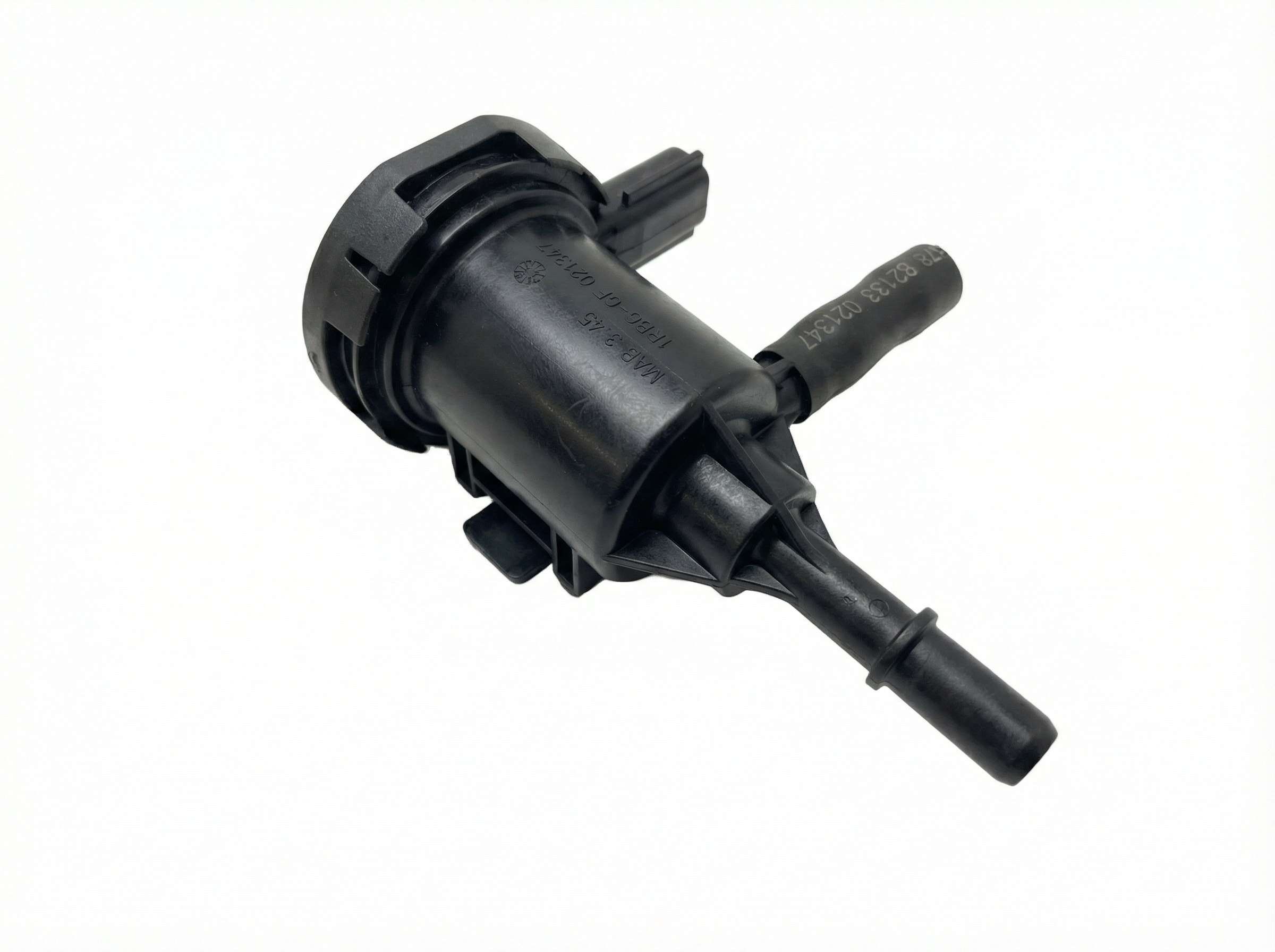
(OEM #04891731AA)— A very common failure point on the Dodge Journey, especially with the 3.6L engine. It gets stuck open, creating a leak path. This part number is widely used across many Chrysler, Dodge, and Jeep vehicles.
Trusted brands: Mopar, Dorman, Standard Motor Products
OEM price range: $40-$70
Aftermarket price range: $25-$50 - EVAP System Integrity Module (ESIM)
(OEM #04861959AD)— This is a known weak point on Dodge/Chrysler vehicles of this era. The internal switch fails, causing a false code when no physical leak exists. This part supersedes previous part numbers 4861959AA, 4861959AB, and 4861959AC.
Trusted brands: Mopar, Dorman
OEM price range: $50-$80
Aftermarket price range: $30-$60
Related Codes That Often Appear With This One
- P0455 — Indicates a large EVAP leak. A general fault like P0440 can be triggered alongside a more specific code identifying the leak size.
- P0456 — Indicates a small EVAP leak. This is a very common companion code, often pointing to a failing gas cap seal or a faulty ESIM.
- P0441 — Indicates incorrect purge flow, which points more directly to a problem with the purge valve itself.
- P0452 — EVAP Pressure Switch Stuck Closed. This code may appear alongside P0440 when the system integrity module or pressure sensor fails (Ref: TSB #1807422).
Platform-Specific Known Issues
- source — A user on Reddit with a Chrysler vehicle (which uses the same system) described the ESIM as a 'very high failure item' due to internal seals going bad. They noted that replacing the ESIM is 'super easy to do' and often resolves a persistent P0440 code after the gas cap and purge valve are checked.
- Forum discussion on P0440 causes: On DodgeForum.com, a user with a P0440 code checked hoses and replaced clamps but the code returned. This highlights that while visible hose checks are a good first step, they may not reveal the root cause, which could be a component failure like the purge valve or ESIM.
Mechanic-Grade Diagnostic Values
- EVAP Purge Valve Solenoid Coil Resistance (2.4L Engine) — expected: 28 - 36 Ω at 70°F (21°C). Failure: A reading of 0 ohms indicates a short, while an infinite (OL) reading indicates an open coil. A reading outside the specified range suggests a failing coil.
- EVAP Purge Solenoid Coil Resistance (General) — expected: 12 - 15 Ω. Failure: Readings significantly outside this range suggest a faulty solenoid coil.
Scan Tool Commands That Help
- wiTECH or other advanced bidirectional scanner: EVAP Purge Solenoid Actuation — To manually command the purge solenoid ON and OFF. With the engine off, you can listen for a click to confirm mechanical operation. With the engine running, you can verify it is pulling vacuum from the canister line. This helps isolate a faulty solenoid from a wiring or PCM issue.
- wiTECH or other advanced bidirectional scanner: EVAP System Test — This is a comprehensive electronic test. The scan tool commands the PCM to seal the EVAP system (by closing the vent valve/ESIM) and cycle the purge solenoid to create a vacuum. The tool then displays whether the system holds the vacuum according to the fuel tank pressure sensor, electronically verifying system integrity without a smoke machine.
- StarScan or wiTECH: Force ESIM Switch Monitor — This command forces the PCM to run the specific monitor that checks the ESIM switch's operation. It's used to confirm if the ESIM's internal switch is functioning correctly and communicating with the PCM, helping to diagnose a faulty ESIM without physical removal.
- wiTECH Small Leak Verification Test (SLVT): Specifically recommended by manufacturer TSB #1807422 to determine the source of leaks when P0456 is present alongside P0440.
Wiring & Ground Locations
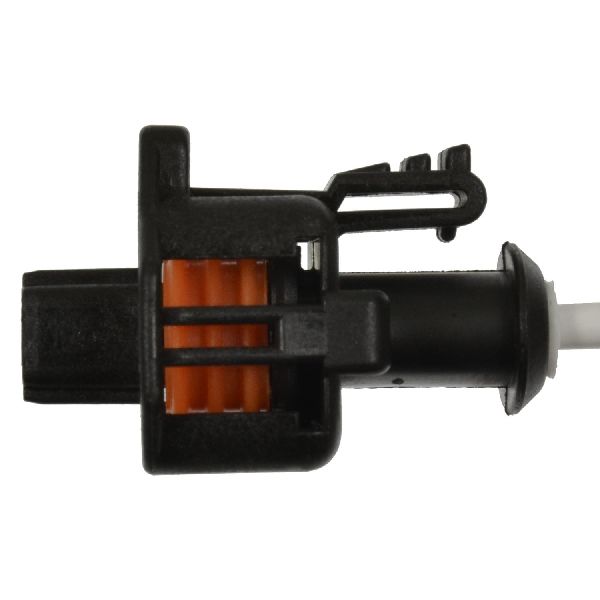
- Purge Valve Connector — On the purge valve itself. For the 2.4L engine, it's on top of the engine near the oil cap. For the 3.6L engine, it's on the rear of the engine near the intake manifold.. This 2-pin connector is the primary point for testing voltage, ground, and solenoid resistance. One pin receives voltage from the ASD relay, and the other is the control wire pulsed by the PCM.
- ESIM Connector — On the ESIM module, which is attached to the vapor canister located under the rear of the vehicle, often near the spare tire.. This connector provides power and ground to the ESIM. Corrosion or a poor connection here can prevent the ESIM from operating, causing the PCM to log a P0440.
- G904 / G924 — G904 is at the right rear of the engine compartment. G924 is at the lower right rear corner of the engine compartment.. These are primary ground distribution points for engine compartment components. A corroded or loose connection at these grounds can cause intermittent electrical issues for various sensors and solenoids, including those in the EVAP system.
Real Owner Repair Stories
- YouTube channel 'Uncle Mark's DIY Auto' (2009 Dodge Journey (pre-facelift)) — Check Engine Light with codes P0456 (Small Leak) and P0457 (Loose Gas Cap).
❌ Tried (didn't work) The owner likely tried tightening or replacing the gas cap first, as P0457 was present.
✅ What actually fixed it The ESIM (Evaporative System Integrity Module) was replaced. The video provides a detailed walkthrough of lowering the spare tire, accessing the vapor canister, and replacing the ESIM module, which resolved the codes. - YouTube channel '1 Turbo Snail' (2013 Dodge Journey 2.4L) — Check Engine Light with code P0441 (Incorrect Purge Flow).
❌ Tried (didn't work) Diagnosis pointed directly to the purge system.
✅ What actually fixed it The EVAP Purge Valve/Solenoid was replaced. The video shows the part is located directly on top of the 2.4L engine and is very easy to access and replace, fixing the issue. - NHTSA ODI #11350522 — An owner reported that at 69,000 miles, the check engine light came on and code P0440 was thrown twice. The owner replaced the purge valve to address the issue.
"I Checked Everything" — The Actual Cause
- A critical point for the Dodge Journey is that the ESIM can fail internally without causing an external leak that a smoke test would find. The internal switch can get stuck, causing the PCM to report a fault (P0440). Furthermore, technicians must be cautious, as applying excessive pressure with a smoke machine can rupture the ESIM's diaphragm, creating a leak where none existed before. In these cases, the system passes a smoke test (or is damaged by it), but the code persists until the electrically faulty ESIM is replaced.
OEM Part Supersession History
4861959AA, 4861959AB, 4861959AC→04861959AD— Part revision and improvement by the manufacturer to address failure rates.
Heads up: 04861959AD is the current, correct replacement for the earlier versions.4766519AC→4766519AD— Part revision for the vapor canister assembly.
Heads up: This part is for 2009-2010 models only.68056826AA through 68056826AF→68056826AG— Multiple part revisions for the vapor canister assembly.
Heads up: This part is for 2011-2020 models only.
Model Year Variations Within This Range
- 2009-2010 vs 2011-2020: The vapor canister assembly is different between the pre-facelift (2009-2010) and post-facelift (2011-2020) models, as evidenced by different Mopar part numbers. While the function is the same, the physical part may not be interchangeable.
- 2.4L vs 3.6L engines: The location of the EVAP purge valve is significantly different. On the 2.4L I4 engine, the purge valve is located on top of the engine cover, making it extremely easy to access. On the 3.6L V6 engine, it is located on the rear of the engine near the intake manifold, which is more difficult to reach.
Diagnostic Flowchart
Other Known Issues on This Vehicle
Issues unrelated to this code that are worth knowing about as an owner of this generation:
- Transmission Faults (62TE) 🔴 High — Common across the vehicle's lifespan, particularly with the V6 models. Issues include harsh shifting, slipping between gears, or sudden loss of power. A recall was issued for the transmission pump on some 2016 models. (Ref: Recall S44 for 2016 models)
- Uconnect Infotainment System Failures 🟠 Medium — Widespread complaints of the system freezing, being stuck on a loading screen, or Bluetooth connectivity failing intermittently. Often requires a hard reset (disconnecting the battery) or a replacement Bluetooth module.
- Premature Brake Wear 🟠 Medium — Owners frequently report faster-than-expected wear of brake pads and rotors, leading to increased maintenance costs.
- 3.6L Pentastar V6 Oil Filter Housing / Cooler Leaks 🟠 Medium — The integrated oil filter housing, made of plastic, is prone to cracking with age and heat cycles, causing significant oil leaks onto the top of the engine. This is a very common issue on the 3.6L engine across many Chrysler/Dodge/Jeep models. (Ref: TSB 09-008-15 (Related to diagnosing leaks in this area))
- Electrical and Starting Issues 🟠 Medium — Complaints include the vehicle not starting, issues with the key fob not being detected, and other random electrical gremlins. Problems are often traced to corroded battery terminals, a bad starter, or issues with the Totally Integrated Power Module (TIPM).
- 2.4L Engine Throttle Body Failure 🟡 Low — The throttle body on the 2.4L 4-cylinder engine is a known failure point, which can cause a rough idle, stalling, or specific throttle-related codes like P2110 or P2112.
Used vs. New Parts: Buying Guide for This Vehicle
When a used part is the smart pick: For major structural parts like the vapor canister body if it's cracked from physical damage and the donor vehicle is from a dry, salt-free climate. For electronic components like the purge valve and ESIM, new aftermarket parts are so affordable (often $25-$50) that buying used is generally not worth the risk or effort.
Donor-vehicle mileage cap: roughly under 80000 miles for the part to have meaningful remaining life.
What to inspect on the donor part:
- Check for excessive rust or corrosion on any metal brackets or connectors.
- Inspect plastic components for chalking, brittleness, or visible cracks.
- Ensure all hose connection points are intact and not broken.
- For any wiring, check for cuts, chafing, or previous repairs.
OEM-only on this vehicle (don't cheap out):
- Fuel Tank Cap - Strongly recommended to use an OEM Mopar cap. Forum and mechanic consensus is that many aftermarket caps do not seal correctly on this platform, leading to a recurring code.
Aftermarket brands forum-validated for this vehicle:
- Dorman
- Standard Motor Products (SMP)
Brands owners have reported issues with on this vehicle:
- No-name, unbranded gas caps from online marketplaces are frequently reported as failing to seal properly.
Real Owner Stories
Aggregated from forums and TSBs cited above. Mileages and costs reflect what owners reported in those sources.
Chrysler vehicle (Platform Mate)
Symptoms: Persistent P0440 code after checking the gas cap and purge valve.
What fixed it: Replacing the EVAP System Integrity Module (ESIM). The owner noted it is a high-failure item due to internal seals going bad and is a very easy DIY repair.
Source hint: Reddit r/MechanicAdvice thread 'check_engine_code_p0440_best_plan_for_this_safe/'
Dodge Journey
Symptoms: Check engine light with code P0440; owner attempted to check hoses and replace clamps but the code returned.
What fixed it: The source suggests that when visible hose checks fail, the root cause is typically a component failure like the purge valve or ESIM.
Source hint: DodgeForum.com discussion on P0440 causes
Dodge Durango (Platform Mate)
Symptoms: Check engine light with code P0440 Evaporative Emission Systems.
What fixed it: An owner noted that while a recall was issued for some vehicles, they had to investigate the P0440 code specifically as a general EVAP system failure.
Source hint: NHTSA ODI #11455058
Related OBD-II Codes
Frequently Asked Questions
Is there a specific gas cap I should use for my Dodge Journey to fix P0440?
Where is the EVAP System Integrity Module (ESIM) located on the Journey?
Can I use a smoke machine to find the leak on my 2009-2020 Dodge Journey?
Why does my remote start stop working when the Check Engine Light is on for P0440?
Are there specific engine-related failure points for the purge valve?
What are the electrical specifications for testing the purge valve on a 2.4L Journey?
Helpful Videos

![How to Fix P0440 Engine Code in 3 Minutes [2 DIY Methods / Only $4.73]](https://img.youtube.com/vi/-kSpB9clrrs/mqdefault.jpg)

Used OEM Parts in Stock
New Aftermarket Parts Available


The information in this article is provided for general reference and educational purposes only. Vehicle specifications, procedures, and part compatibility can vary by production date, trim level, and region. Always consult your vehicle's factory service manual and verify part numbers before purchasing or performing repairs. Safety-critical components such as airbags, seat belts, and braking systems should be installed by a qualified professional.
- Dodge Journey:
- 🧭 Diagnostic Flowchart
- 🎬 Helpful Videos
- 🛍️ Shop This Part
- What's Unique About the 2009-2020 Dodge Journey
- Symptoms You May Notice
- Most Likely Causes
- Rare But Worth Checking
- Diagnosis Steps
- Parts You'll Likely Need
- Related Codes That Often Appear With This One
- Platform-Specific Known Issues
- Mechanic-Grade Diagnostic Values
- Scan Tool Commands That Help
- Wiring & Ground Locations
- Real Owner Repair Stories
- "I Checked Everything" — The Actual Cause
- OEM Part Supersession History
- Model Year Variations Within This Range
- Other Known Issues on This Vehicle
- Used vs. New Parts: Buying Guide for This Vehicle
- Real Owner Stories
- Chrysler vehicle (Platform Mate)
- Dodge Journey
- Dodge Durango (Platform Mate)
- Related OBD-II Codes
- Frequently Asked Questions
- 🎟️ Get 5% Off