

P0440 on 2013-2019 Ford Escape: EVAP System Malfunction Causes and Fixes
For a 2013-2019 Ford Escape, code P0440 is most often caused by a faulty canister purge valve or a dirty/faulty capless fuel filler inlet. A replacement purge valve is typically $30-$90 and is a straightforward DIY replacement. Cleaning the fuel filler inlet is often a zero-cost fix.
- Start your diagnosis with the easiest and most common issues: check and clean the capless fuel filler inlet first.
- The canister purge valve is the most likely part to have failed. It is relatively inexpensive and easy to replace for a DIYer.
- Check for open recalls on your vehicle, as a specific recall (18S32) addresses a dangerous fault related to the purge valve.
- If simple checks don't find the problem, a smoke test is the best way to accurately locate the leak before buying more expensive parts.
- Do not ignore this code. While it may not cause immediate driving problems, it will prevent you from passing an emissions test and indicates a fuel vapor leak.
What's Unique About the 2013-2019 Ford Escape
The 2013-2019 Ford Escape uses a 'capless' fuel filler system, which introduces a unique failure point. Instead of a traditional gas cap, a spring-loaded door and seal are used. If this inlet gets dirty with dust or debris, or if the seal fails, it will cause an EVAP leak and trigger a P0440 code. Additionally, a critical recall (18S32) was issued for some Ford vehicles because a stuck-open canister purge valve could create enough vacuum to deform the plastic fuel tank, potentially leading to an engine stall. This makes checking the purge valve's function especially important on this platform.
Symptoms You May Notice
- Check Engine Light is on
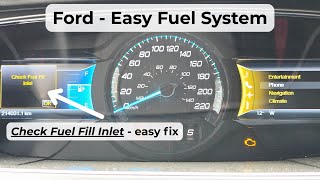
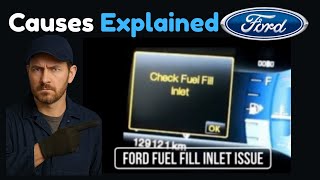
- A "Check Fuel Fill Inlet" message may appear on the dashboard.
- Faint smell of gasoline, especially around the rear of the vehicle or after refueling.
- Difficulty starting or rough running immediately after refueling (a classic sign of a stuck-open purge valve).
- Replacing the charcoal canister when the actual problem is a much cheaper and easier to replace purge valve or vent solenoid.
- Assuming a major leak exists when the issue is just a dirty capless fuel filler inlet that needs to be cleaned and exercised with the emergency funnel. 🎬 Watch: How to quickly fix the fuel inlet message yourself.
- Replacing other EVAP components before checking for the specific software update and potential tank/valve replacement covered under Ford Recall 18S32.
Most Likely Causes
- Faulty Canister Purge Valve (Vapor Management Valve) 🔴 High Probability → Shop Vapor Canister This is a very common failure point on many modern Fords. A related recall (18S32) highlights how a stuck-open valve can cause significant issues, including creating excessive vacuum that deforms the fuel tank. The valve gets saturated with fuel vapors and can get stuck open or closed over time.
How to confirm: Remove the valve from the engine bay. With the engine off, it should be closed. If you can blow air through it, it's stuck open and needs to be replaced. Another symptom is difficulty starting the vehicle right after getting gas.
Typical fix: Replace the canister purge valve. It is typically located on or near the engine's intake manifold. On the 2.0L EcoBoost, it's near the top of the engine and relatively easy to access after removing the engine cover. 🎬 Watch: A quick walkthrough of the purge valve replacement. The part often comes as an assembly with hoses.
Est. part cost: $30-$90 - Leaking/Dirty Capless Fuel Filler Inlet 🔴 High Probability The vehicle uses a capless system which can fail to seal if the spring-loaded door gets stuck with dust or debris, or if the seal is worn. This is a very common source for EVAP codes on these vehicles.
How to confirm: Visually inspect the fuel filler opening for debris. Use the white plastic funnel that came with the vehicle (usually stored with the jack) to insert and remove it from the inlet 10-20 times to exercise the flap and dislodge debris. A professional smoke test will definitively show a leak at the inlet if the cleaning doesn't work.
Typical fix: First, try cleaning the seal area with a rag and compressed air. Then, use the emergency fuel funnel to work the mechanism back and forth. Applying a small amount of silicone spray or even WD-40 to the flap mechanism can help restore proper sealing. If this fails, the entire fuel filler neck assembly may need replacement.
Est. part cost: $0-$15 for cleaning/lubricant, $150-$300 for a new filler neck assembly. - Cracked or Disconnected EVAP Hoses 🟡 Medium Probability Hoses become brittle with age and heat cycles. TSB 19-2171 for 2017-2019 models notes that loose or partially connected EVAP vapor lines at their quick-connect fittings can be a source of similar codes (P04F0/P144C), indicating these connections can be a weak spot.
How to confirm: Perform a visual inspection of all EVAP lines running from the fuel tank to the engine, paying close attention to the quick-connect points mentioned in TSB 19-2171. A professional smoke test is the most reliable method to pinpoint a small leak.
Typical fix: Replace the cracked or broken section of hose. Ensure all quick-connect fittings are fully seated by pushing on them until they click.
Est. part cost: $10-$50 - Faulty Canister Vent Solenoid ⚪ Low Probability → Shop Vapor Canister
How to confirm: The vent solenoid is normally open and is commanded closed by the PCM to seal the system for leak testing. It is usually located near the charcoal canister at the rear of the vehicle. It can be tested with a scan tool to command it closed while performing a smoke test. If it doesn't close or is stuck, it needs replacement.
Typical fix: Replace the canister vent solenoid.
Est. part cost: $40-$80
Rare But Worth Checking
- Cracked Charcoal Canister: → Shop Vapor Canister The canister itself can crack from road debris impact or age, creating a large leak. This is usually found during a smoke test.
- Leaking Fuel Tank or Fuel Tank Pressure Sensor: → Shop Fuel Tank A faulty fuel tank pressure sensor can send incorrect data, causing the computer to think there is a leak when there isn't one. A physical leak in the tank itself is rare but possible.
Diagnosis Steps
- Check for a 'Check Fuel Fill Inlet' message. If present, or even if not, locate the emergency fuel funnel (usually with the spare tire tools), and insert/remove it from the fuel filler neck 10-20 times to clean and reset the sealing flap.
- Visually inspect all accessible EVAP hoses and lines for obvious cracks, damage, or disconnections. Pay special attention to the quick-connect fittings.
- Check for any applicable recalls, particularly Ford recall 18S32 related to the canister purge valve and PCM software. A Ford dealer can check your VIN for free.
- Test the canister purge valve. It is located in the engine bay. Remove it and try to blow through it; if air passes, it is stuck open and faulty. A key symptom of a stuck-open valve is a rough idle or stalling immediately after refueling. 🎬 See this step-by-step fix for stalling and P1450 codes.
- If no obvious faults are found, perform a smoke test on the EVAP system. This involves feeding pressurized smoke into the system's service port and looking for where it escapes. This is the most effective way to find hairline cracks in hoses, the filler neck, or the canister.
- If a leak is present, replace the faulty component (hose, valve, filler neck, etc.).
- After repairs, clear the code with an OBD-II scanner and drive the vehicle through several drive cycles to ensure the code does not return.
Parts You'll Likely Need
- Canister Purge Valve / Vapor Management Valve
(OEM #Motorcraft CX-2626 (For 2.5L), GV6Z-9D289-E (For 1.5L), F2GZ-9D289-A (For 2.0L). Part numbers can vary, always confirm with VIN.)— This is the most common failure point for P0440 on this vehicle. It can get stuck open or closed, causing a system malfunction.
Trusted brands: Motorcraft, Dorman, Standard Motor Products
OEM price range: $85-$120
Aftermarket price range: $30-$60 - Fuel Filler Neck Assembly — The capless inlet can fail to seal properly, requiring the replacement of the entire assembly if cleaning and lubrication do not work.
Trusted brands: Motorcraft, Dorman
OEM price range: $200-$300
Aftermarket price range: $150-$220
Related Codes That Often Appear With This One
- P0455 — P0455 indicates a 'Large EVAP Leak.' P0440 is a more general malfunction code, but they are often caused by the same components, such as a faulty purge valve or a bad fuel filler seal.
- P0456 — P0456 indicates a 'Small EVAP Leak.' If the leak is minor, this code might appear alongside or instead of P0440.
- P1450 — This code for 'Unable To Bleed Up Fuel Tank Vacuum' is specifically mentioned in documentation for recall 18S32 as a related DTC caused by a stuck canister purge valve.
- P144C / P04F0 — These codes are specifically mentioned in TSB 19-2171 for 2017-2019 Escapes and point to EVAP system issues, often caused by loose hose connections at the quick-connect fittings.
Technical Service Bulletins (TSBs) & Recalls
- 19-2171
Platform-Specific Known Issues
- Recall 18S32 / NHTSA 18V735: Addresses a powertrain control module (PCM) software issue that fails to detect a stuck-open canister purge valve. This can lead to excessive vacuum that deforms the plastic fuel tank, causing an erratic fuel gauge, and may lead to an engine stall. The fix involves a PCM software update and, if necessary, replacement of the purge valve and/or fuel tank.
- TSB 19-2171: While for codes P04F0/P144C, this bulletin for 2017-2019 models with EcoBoost engines points to loose EVAP vapor line quick-connect fittings as a known issue. This is a relevant diagnostic check for any EVAP code on this platform, as it highlights a potential leak source.
Mechanic-Grade Diagnostic Values
- Canister Purge Valve (CPV) coil resistance — expected: ~28 Ohms +/- 5%. Failure: A reading significantly outside this range indicates a faulty coil.
- Canister Vent Solenoid (CVS) coil resistance — expected: 20-40 Ohms (generic value). Failure: A reading far outside this range suggests the solenoid is bad.
- Fuel Tank Pressure (FTP) sensor voltage, Key On Engine Off (system vented) — expected: ~2.6 to 2.65 Volts. Failure: A voltage that is stuck high or low, or does not change when pressure/vacuum is applied, indicates a faulty sensor or wiring issue.
- EVAP system leak test target vacuum — expected: ~ -8.0 inches of water (-8.0 in-H2O). Failure: Failure to achieve this vacuum level during a self-test may set a P0455 (gross leak) code.
Hidden / Shadow Codes Worth Checking
- Mode $06, Test ID (TID) and Component ID (CID): This is not a specific code, but a diagnostic mode that provides raw test data from the PCM's self-tests. For the EVAP system, it can show the results of the leak test (e.g., pressure decay value) which can be more specific than a general P0440. A failing value on a specific TID/CID can point to whether the system failed the large leak, small leak, or purge flow portion of the test. (see via A professional scan tool or advanced DIY software like FORScan is required to access and interpret Mode $06 data.)
Scan Tool Commands That Help
- Ford IDS (Integrated Diagnostic System) or FORScan: Powertrain > DataLogger > EVAP System Manual Test — This function allows a technician to manually command the Canister Purge Valve and Canister Vent Solenoid on/off while monitoring the Fuel Tank Pressure sensor. It is the most direct way to confirm if the solenoids are working electrically and sealing mechanically, and to verify the pressure sensor is responding correctly without waiting for a full drive cycle for the PCM's automatic test to run.
Wiring & Ground Locations
- EVAP Canister Vent Valve — Under the right rear of the vehicle, near the charcoal canister assembly.. This is the location of the vent solenoid. Wiring in this area is exposed to road debris and moisture, and should be inspected for damage or corrosion if the solenoid is suspected to be faulty.
- G104 — Located on the top rear of the transmission.. This is a major ground point for the engine control system. A poor connection here could cause erratic behavior in various sensors and solenoids, including those in the EVAP system.
- S120 (2.5L Engine) — A splice in the engine control wiring assembly, near the breakout to the EVAP purge valve.. A corroded or failed splice at this point could cut power or signal to the purge valve, causing it to malfunction and trigger a code.
- Fuel Tank Pressure (FTP) Sensor — Mounted on the EVAP charcoal canister assembly, near the rear of the vehicle.. The sensor's location means its connector and wiring are susceptible to under-vehicle damage. A fault here can send incorrect leak data to the PCM.
"I Checked Everything" — The Actual Cause
- An intermittent electrical failure in the canister purge valve or vent solenoid. The component may test fine when cold (passing a resistance test) and seal properly during a smoke test, but fail electrically when it reaches operating temperature, causing the code to set during a drive. Diagnosis requires monitoring the component with a scan tool during a drive cycle or testing it when hot.
- A faulty Fuel Tank Pressure (FTP) sensor that is sending incorrect voltage readings to the PCM. The system may be perfectly sealed (passing a smoke test), but if the sensor falsely reports a pressure drop, the PCM will interpret it as a leak and set a P0440. This is diagnosed by comparing the sensor's live data to a known-good pressure/vacuum gauge.
OEM Part Supersession History
F2GZ-9D289-A→F2GZ-9D289-B— Part revision for improved reliability or manufacturing process change.
Heads up: Applies to the 2.0L EcoBoost engine. The new part is a direct replacement.7U5Z-9F945-E→9U5Z-9F945-C— Part revision for the canister vent solenoid.
Heads up: This is the vent solenoid located near the canister, not the purge valve in the engine bay. The new part is a direct replacement.
Model Year Variations Within This Range
- 2013-2016 vs 2017-2019: The primary small EcoBoost engine changed from the 1.6L (2013-2016) to the 1.5L (2017-2019). This results in different part numbers for the canister purge valve and its associated hoses. For example, GV6Z-9D289-E is for the 1.5L engine. Always verify the correct part for the specific engine and model year.
- 2013-2019: While the engines may be the same, part numbers for the purge valve assembly can differ. For example, the purge valve for the 2.0L EcoBoost is F2GZ-9D289-A/B, while the 2.5L i-VCT uses a different part (CX-2626). It is critical to confirm the part number by VIN.
Diagnostic Flowchart
Other Known Issues on This Vehicle
Issues unrelated to this code that are worth knowing about as an owner of this generation:
- Coolant Intrusion (1.5L & 1.6L EcoBoost) 🔴 High — Common between 60,000-100,000 miles. A design flaw allows coolant to leak into cylinders, often requiring engine replacement. (Ref: Ford Customer Satisfaction Program 21B10 extended warranty coverage for some models. TSB 20-2100 also addresses this.)
- Coolant Intrusion (2.0L EcoBoost) 🟠 Medium — Less common than the smaller engines, but a known issue where coolant can enter cylinders, leading to misfires and engine failure. (Ref: TSB 19-2208 addresses this issue, recommending a long block replacement.)
- Transmission Shift Cable Bushing Failure 🔴 High — Widespread across the entire generation. The bushing degrades, causing the shifter cable to detach from the transmission. This can lead to the vehicle not being in the gear selected by the driver, creating a rollaway risk. (Ref: Ford Recall 22S43 / NHTSA 22V413000.)
- Transfer Case Failure (AWD Models) 🟠 Medium — A notable number of owners report failure of the AWD transfer case, often manifesting as a grinding or whining noise.
- Engine Overheating (1.6L EcoBoost) 🔴 High — Affects early models (2013-2014). Can lead to cracked cylinder heads and risk of fire. (Ref: Ford Recall 13S12.)
Used vs. New Parts: Buying Guide for This Vehicle
When a used part is the smart pick: For purely mechanical and non-wear items, used parts can be a good option. A fuel filler neck assembly from a low-mileage vehicle in a dry climate can offer significant savings. The charcoal canister itself, if visually inspected for cracks and confirmed to not be saturated with fuel, can also be a viable used part.
Donor-vehicle mileage cap: roughly under 60000 miles for the part to have meaningful remaining life.
What to inspect on the donor part:
- For filler necks, check for any rust or corrosion on the sealing surface and ensure the spring-loaded flap moves freely.
- For hoses, inspect for any signs of dry rot, cracking, or swelling, especially at the ends.
- For electrical components, inspect connectors for corrosion, bent pins, or broken locking tabs.
- Source parts from vehicles in dry, salt-free climates to minimize corrosion and plastic degradation.
OEM-only on this vehicle (don't cheap out):
- Canister Purge Valve (Vapor Management Valve): Due to the critical nature of Ford Recall 18S32, where a faulty valve can cause fuel tank deformation, using a genuine Motorcraft part is strongly recommended. Some forum users have reported poor fitment of electrical connectors on aftermarket brands for this specific part.
Aftermarket brands forum-validated for this vehicle:
- Dorman
- Standard Motor Products (SMP)
Brands owners have reported issues with on this vehicle:
- Unnamed or 'white-box' brands from online marketplaces should be avoided for the canister purge valve due to the potential for incorrect operation that could lead to the serious issues outlined in Ford's recall.
Real Owner Stories
Aggregated from forums and TSBs cited above. Mileages and costs reflect what owners reported in those sources.
2013-2019 Ford Escape
Symptoms: A 'Check Fuel Fill Inlet' light appeared on the dashboard.
What fixed it: Used the emergency fuel funnel to repeatedly open and close the flap, which cleared out debris and restored the seal.
Source hint: Reddit r/fordescape thread about the 'Check Fuel Fill Inlet' light
2013-2019 Ford Escape
Symptoms: The vehicle experienced a rough idle specifically after filling the gas tank with fuel.
What fixed it: Replacement of the canister purge valve.
Source hint: fordescape.org forum threads regarding P0440
2012-2018 Ford Focus (Platform Mate)
Symptoms: Stuck-open purge valve leading to excessive vacuum and a deformed plastic fuel tank, along with an erratic fuel gauge.
What fixed it: PCM software update and replacement of the purge valve and fuel tank under Recall 18S32.
Source hint: Recall 18S32 / NHTSA 18V735
Related OBD-II Codes
Frequently Asked Questions
My 2013-2019 Ford Escape has a 'Check Fuel Fill Inlet' message. Do I need to replace parts immediately?
Is there a recall for the canister purge valve on my Ford Escape?
Why does my Escape struggle to start only after I fill up the gas tank?
Does TSB 19-2171 apply to my 2017-2019 Ford Escape?
How can I test if my purge valve is bad without a scan tool?
Can I use a lubricant on the capless fuel filler if it isn't sealing?
Helpful Videos


Used OEM Parts in Stock
New Aftermarket Parts Available


The information in this article is provided for general reference and educational purposes only. Vehicle specifications, procedures, and part compatibility can vary by production date, trim level, and region. Always consult your vehicle's factory service manual and verify part numbers before purchasing or performing repairs. Safety-critical components such as airbags, seat belts, and braking systems should be installed by a qualified professional.
- Ford Escape:
- 🧭 Diagnostic Flowchart
- 🎬 Helpful Videos
- 🛍️ Shop This Part
- What's Unique About the 2013-2019 Ford Escape
- Symptoms You May Notice
- Most Likely Causes
- Rare But Worth Checking
- Diagnosis Steps
- Parts You'll Likely Need
- Related Codes That Often Appear With This One
- Technical Service Bulletins (TSBs) & Recalls
- Platform-Specific Known Issues
- Mechanic-Grade Diagnostic Values
- Hidden / Shadow Codes Worth Checking
- Scan Tool Commands That Help
- Wiring & Ground Locations
- "I Checked Everything" — The Actual Cause
- OEM Part Supersession History
- Model Year Variations Within This Range
- Other Known Issues on This Vehicle
- Used vs. New Parts: Buying Guide for This Vehicle
- Real Owner Stories
- 2013-2019 Ford Escape
- 2013-2019 Ford Escape
- 2012-2018 Ford Focus (Platform Mate)
- Related OBD-II Codes
- Frequently Asked Questions
- 🎟️ Get 5% Off