

P0440 on 1998-2011 Ford Ranger: EVAP System Malfunction Causes and Fixes
For a 1998-2011 Ford Ranger, P0440 most often means you have a rusted-out fuel filler neck or a bad gas cap. These trucks are highly susceptible to filler neck rust in salt-belt states. Check the cap first as it's the cheapest fix, but thoroughly inspect the metal filler neck for rust holes, as this is a very common and well-documented issue.
- P0440 on a Ford Ranger means there's a general fault in the EVAP (emissions) system.
- Always check the gas cap first. Make sure it's tight and the seal isn't cracked.
- The most likely cause on this specific truck is a rusted-out fuel filler neck. Inspect it carefully for holes.
- Other common causes include a bad purge valve (in the engine bay) or cracked vacuum hoses.
- A smoke test is the best way for a mechanic (or DIYer with the right tool) to find the exact source of the leak quickly.
What's Unique About the 1998-2011 Ford Ranger
On the Ford Ranger of this era, the P0440 code is very frequently caused by a part that fails due to environmental exposure: the fuel filler neck. Because these trucks were built for over a decade, many have been exposed to years of road salt and moisture, which causes the metal filler neck to rust through, creating a leak that the EVAP system immediately detects. While other causes are possible, the filler neck is a well-documented weak point for this specific platform, a fact corroborated in numerous owner forums.
Generation note: The 1998-2011 Ford Ranger belongs to a single generation in North America (third generation). While there were cosmetic facelifts (e.g., 2001, 2004, 2006), the underlying EVAP system architecture and its common failure points, particularly the fuel filler neck, are consistent across this entire year range.
Symptoms You May Notice
- Check Engine Light is on
- A faint smell of gasoline, especially around the rear of the truck or after refueling
- Failing an emissions inspection
- Potentially a slight decrease in fuel efficiency over time
- Replacing the charcoal canister when only a hose or the vent valve is bad.
- Replacing the purge valve without first checking for a rusted filler neck or bad gas cap, which are far more common failures on the Ranger.
Most Likely Causes
- Rusted or Cracked Fuel Filler Neck 🔴 High Probability → Shop Fuel Filler Neck The fuel filler neck is made of steel and is located in an area highly exposed to road salt and moisture kicked up by the rear wheels. Over time, it is very common for it to rust and develop pinholes or large cracks, causing an EVAP leak. This is the most notorious cause of P0440 on this platform.
How to confirm: Visually inspect the entire metal fuel filler neck, from behind the gas cap down to where it connects to the fuel tank. Look for rust, flaking metal, and obvious holes. A common failure spot is on the top side of the pipe, which can be hard to see without a mirror. A smoke test will definitively show a leak from this area.
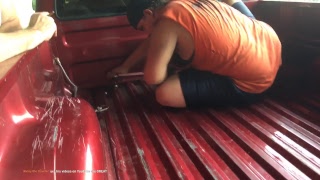
Typical fix: The fuel filler neck must be replaced. 🎬 Watch: Step-by-step guide to replacing your rusted fuel filler neck. This involves removing the old neck and connecting a new one with its associated hoses. Aftermarket parts are widely available.
Est. part cost: $50-$120 - Loose, Worn, or Incorrect Gas Cap 🔴 High Probability → Shop Fuel Tank Cap This is a common failure on all vehicles. The rubber O-ring on the cap dries out, cracks, and fails to create a proper seal, leading to a pressure leak detected by the PCM.
How to confirm: Ensure the gas cap is tightened until it clicks at least three times. Check the rubber seal on the cap for cracks, stiffness, or damage. If it looks worn, replacement is a cheap and easy first step before pursuing more complex diagnostics.
Typical fix: Tighten the cap or replace it with a new, OEM-spec cap.
Est. part cost: $10-$30 - Cracked or Disconnected EVAP Hoses 🟡 Medium Probability The rubber and plastic hoses in the EVAP system become brittle over time due to heat cycles and age, leading to cracks and leaks. The plastic connectors can also become brittle and fail.
How to confirm: Visually inspect all accessible EVAP lines in the engine bay and under the truck near the charcoal canister. A smoke test is the most effective way to find a small crack in a hose.
Typical fix: Replace the cracked section of hose or the entire hose assembly.
Est. part cost: $5-$50 - Faulty EVAP Canister Purge Valve 🟡 Medium Probability → Shop Vapor Canister
How to confirm: The purge valve is located in the engine bay, typically mounted on the firewall or inner fender, often near the battery. It can get stuck open or closed. It can be tested with a handheld vacuum pump to see if it holds vacuum when closed (de-energized). A scan tool can also command it to open and close to check for function.
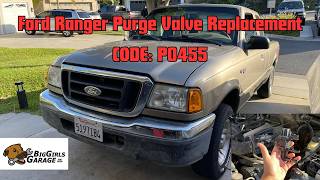
Typical fix: Replace the purge valve solenoid. 🎬 See how to quickly swap out a faulty purge valve.
Est. part cost: $30-$70 - Faulty EVAP Canister Vent Valve/Solenoid ⚪ Low Probability → Shop Vapor Canister Its location under the truck makes it susceptible to dirt, dust, and corrosion, which can cause it to stick open or fail electronically.
How to confirm: This valve is located on or near the charcoal canister under the truck bed, often above the spare tire. It can get stuck open or closed due to dirt and debris. It can be tested by applying 12V to see if the solenoid clicks and opens/closes the valve. A multimeter can be used to check for an open circuit in the solenoid's coil.
Typical fix: Replace the vent valve solenoid. Sometimes it is sold as an assembly with the charcoal canister.
Est. part cost: $40-$80
Rare But Worth Checking
- Cracked Charcoal Canister: → Shop Vapor Canister The plastic body of the canister itself can crack from age or impact from road debris, creating a leak. This is less common than component failure but worth checking if other causes are ruled out.
- Faulty Fuel Tank Pressure Sensor: → Shop Fuel Tank The sensor that detects the leak can fail and send incorrect data to the computer, triggering the code even without a leak. This is typically diagnosed after a smoke test finds no leaks.
Diagnosis Steps
- Check the Gas Cap: Ensure the cap is tight and the seal is not cracked or worn. If in doubt, a new cap is an inexpensive first step. Clear the code and drive to see if it returns.
- Visual Inspection: Thoroughly inspect the full length of the fuel filler neck for any signs of rust, holes, or wet spots. Use a mirror and flashlight to check the top and back sides. Also, inspect all visible EVAP hoses in the engine bay and under the truck for obvious cracks or disconnections.
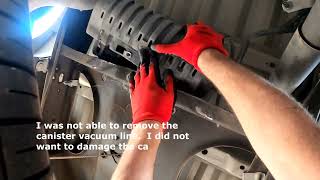
- Perform a Smoke Test: This is the most effective way to find a leak. A smoke machine is connected to the EVAP service port (often a green cap in the engine bay), and low-pressure smoke is forced through the system. Smoke will exit from any leak, making it easy to pinpoint the source, 🎬 Watch: How to perform a professional EVAP system smoke test. whether it's a hose, the filler neck, or a valve.
- Test Solenoids: If no leaks are found, test the purge and vent solenoids. The purge valve (in the engine bay) should be closed and hold vacuum when the engine is off. The vent valve (near the canister) can be tested for functionality using a scan tool to command it closed, or by applying direct 12V and listening for a click.
- Inspect Canister and Pressure Sensor: If all else fails, inspect the charcoal canister for any physical cracks or damage. A scan tool can be used to monitor the Fuel Tank Pressure (FTP) sensor to see if its readings are logical or stuck on a certain value.
Parts You'll Likely Need
- Fuel Filler Neck
(OEM #Varies significantly by year, bed style (Styleside/Flareside), and wheelbase. Example: F87Z-9034-NA. Always verify with VIN.)— This is the most common failure point on the 1998-2011 Ranger that leads to a P0440 code, due to its susceptibility to rust.
Trusted brands: Dorman (e.g., 577-913), Spectra Premium, Motorcraft
OEM price range: $100-$180
Aftermarket price range: $50-$120 - Gas Cap
(OEM #FC969 (Motorcraft example, verify))— A worn seal on the gas cap is a very common cause for EVAP leaks and is the cheapest and easiest part to replace first.
Trusted brands: Motorcraft, Stant
OEM price range: $20-$40
Aftermarket price range: $10-$25 - Canister Purge Valve / Solenoid
(OEM #9U5Z-9C915-H (example for later models, also CX2097, CX2626). Part numbers like PV213 are also used for specific engines. Verify by VIN.)— This valve cycles frequently and can wear out or get stuck, causing a leak or blockage in the EVAP system.
Trusted brands: Motorcraft, Bosch, Dorman, SKP
OEM price range: $50-$90
Aftermarket price range: $30-$70
Related Codes That Often Appear With This One
- P0455 (EVAP System Leak Detected - Gross Leak)
- P0456 (EVAP System Leak Detected - Very Small Leak)
- P0457 (EVAP System Leak Detected - Fuel Cap Loose/Off)
Platform-Specific Known Issues
- The fuel filler neck is highly prone to rusting through, especially in regions that use road salt in the winter. This is the first place to look after checking the gas cap. Owner forums like TheRangerStation.com and Reddit's /r/fordranger have numerous threads with pictures documenting this exact failure.
- The EVAP canister vent solenoid, located near the spare tire, can become clogged with dust and debris from unpaved roads, causing it to stick open and trigger a code.
Mechanic-Grade Diagnostic Values
- EVAP Canister Purge Valve Solenoid Resistance — expected: 30 to 38 ohms (for standard valve). Failure: A reading significantly outside this range indicates a faulty solenoid coil.
- EVAP Canister Vent Solenoid Resistance — expected: 48 to 65 ohms. Failure: A reading of 56.4 ohms was noted as acceptable in a forum post, but a reading far outside the 48-65 ohm range suggests a bad coil.
- Fuel Tank Pressure (FTP) Sensor Voltage (KOEO, atmospheric pressure) — expected: ~2.5V - 2.6V. Failure: A voltage that is stuck high (near 5V) or low (near 0V), or does not change when pressure is applied/released, indicates a faulty sensor or wiring issue.
- FTP Sensor Reference Voltage — expected: 5.0V. Failure: A reference voltage significantly lower than 5V (e.g., 3.5V) can indicate a problem with the PCM's voltage regulator, preventing the EVAP monitor from running correctly.
Scan Tool Commands That Help
- Ford IDS (Integrated Diagnostic System): EVAP System Test — This is a guided test that automatically seals the system and checks for large leaks. It's a primary step when using the factory scan tool.
- Ford IDS (or equivalent advanced scan tool): Output State Control (OSC) for Purge Valve & Vent Valve — Allows a technician to manually command the purge and vent valves on or off. This is critical for isolating a stuck valve or verifying its operation during a smoke test. For example, you can command the vent valve closed to seal the system for a smoke test.
Wiring & Ground Locations
- Main Engine-to-Chassis Grounds — Key locations include: a strap from the back of the engine block to the firewall (often near the wiper motor); a cable from the negative battery terminal to the radiator support; and the main battery ground to the frame rail near the starter motor.. A poor ground can cause intermittent or incorrect operation of the EVAP solenoids and sensors, leading to false codes. The PCM relies on solid ground references for all sensor readings and solenoid commands.
- FTP Sensor Connector — On top of the fuel tank. Access requires lowering the tank or removing the truck bed.. This connector is exposed to the elements and road debris. Corrosion or a loose connection here can cause incorrect FTP sensor readings (like P0452/P0453) or a general P0440. One owner found the fix was simply re-seating a pigtail connector on the frame rail leading to the tank.
- Purge Valve Connector — In the engine bay, attached to the purge valve solenoid, typically near the battery or on the firewall.. The purge valve receives a 12V signal with the key on, and the PCM controls the ground to activate it. Verifying 12V at the connector is a key step in diagnosing a non-responsive valve.
Real Owner Repair Stories
- TheRangerStation.com user 'glindy' (2000 Ford Ranger 4x4) — Check Engine Light with code P0453 (FTP Sensor High Input).
❌ Tried (didn't work) Replaced vapor management valve (purge valve), Replaced charcoal purge valve
✅ What actually fixed it After pulling the bed to access the top of the fuel tank, the owner found a pigtail connector on the frame rail that was not fully seated. After cleaning it with dielectric grease and ensuring a tight connection, the ground reading at the FTP sensor became correct and the code was resolved. - Ranger-Forums.com user (2006 Ford Ranger 2.3L) — Gas cap light flickering under acceleration, eventually setting a P0446 (Vent Control Circuit) code.
❌ Tried (didn't work) Replaced gas cap (twice, once with Motorcraft), Replaced filler hose, Repaired a gashed rubber line on the filler neck
✅ What actually fixed it The owner bench-tested the vent valve solenoid and found it clicked with 12V and had a resistance of 56.4 ohms, which seemed correct. The final diagnosis pointed towards a wiring issue or an intermittent fault in the vent valve itself despite passing the bench test, as all physical leak points had been addressed. The focus shifted from a leak to an electrical circuit fault as indicated by the P0446 code.
"I Checked Everything" — The Actual Cause
- In some cases, a smoke test may not reveal a leak, but the code persists. This often points to an intermittent electrical issue or a component that fails only under specific conditions. A common culprit is a faulty Fuel Tank Pressure (FTP) sensor that sends erroneous data, or a solenoid (purge or vent) that has a functional coil but is mechanically sticking intermittently. One owner fixed a P0453 code by cleaning and re-seating a connector on the frame rail after a smoke test would have likely shown no leaks.
Model Year Variations Within This Range
- 1998-2011: The fuel filler neck part number is highly specific and varies based on model year, wheelbase (e.g., 112", 118", 126"), and bed style (Styleside vs. Flareside). For example, a neck for a 1998 Regular Cab Flareside is different from a 2001 SuperCab Styleside. It is critical to verify the correct part number using the vehicle's VIN before ordering.
- 2001-2003: Some EVAP system components and their locations were updated during the 2001 facelift. For example, the purge valve design and mounting may differ slightly from earlier (1998-2000) models. While the overall function is the same, using a part from the wrong year range may result in fitment issues.
Diagnostic Flowchart
Other Known Issues on This Vehicle
Issues unrelated to this code that are worth knowing about as an owner of this generation:
- 4.0L SOHC V6 Timing Chain Cassette Failure 🔴 High — Common, especially on 1997-2004 models. Often presents as a 'rattle' on startup or deceleration. Failure can cause catastrophic engine damage as it is an interference engine. (Ref: Ford issued a TSB for 1999-2002 models regarding timing chain noise.)
- 5R44E/5R55E Automatic Transmission Problems 🔴 High — Widespread reports of hard shifting, slipping, delayed engagement (especially reverse), and flashing O/D light. Often caused by worn valve body bores or solenoid failure.
- Frame Rust at Rear Leaf Spring Hangers 🔴 High — Very common in the Rust Belt. The frame rots where the front hanger for the rear leaf spring attaches, which can lead to the spring detaching from the frame. Repair sections are widely available.
- Cracked Plastic Thermostat Housing (4.0L V6) 🟠 Medium — The OEM plastic housing is prone to warping and cracking, causing coolant leaks. Many owners replace it with a more durable aluminum aftermarket version.
- HVAC Blend Door Actuator Failure 🟡 Low — Common failure causing an inability to change temperature output (stuck on hot or cold) or vent position. Often signaled by a clicking sound from behind the dashboard.
- Camshaft Synchronizer Chirp (3.0L V6) 🟡 Low — The camshaft position sensor synchronizer can run dry and produce a loud, persistent 'chirp' or 'squeak' from the engine bay. While not immediately damaging, it indicates the part is failing.
Used vs. New Parts: Buying Guide for This Vehicle
When a used part is the smart pick: A used fuel filler neck can be a smart buy if sourced from a donor vehicle in a dry, salt-free climate (e.g., Arizona, California). Since the primary failure mode is rust, a rust-free used part has significant life remaining and offers substantial cost savings over a new OEM part.
Donor-vehicle mileage cap: roughly under 150000 miles for the part to have meaningful remaining life.
What to inspect on the donor part:
- For a fuel filler neck, inspect the entire length for any surface rust, especially around bends and mounting brackets. Flex it slightly to check for hidden cracks.
- Check that the gas cap sealing surface is smooth and free of pitting.
- For electrical components like solenoids, ensure the plastic housing isn't cracked and the connector pins are clean and straight.
OEM-only on this vehicle (don't cheap out):
- Gas Cap: While aftermarket caps work, many forum users report that only a genuine Motorcraft gas cap will provide a reliable, long-term seal and prevent recurring EVAP codes.
Aftermarket brands forum-validated for this vehicle:
- Dorman: Widely cited as a reliable source for fuel filler necks and EVAP solenoids.
- Spectra Premium: A well-regarded alternative for fuel filler necks.
- Motorcraft: The OEM choice, offering the best guarantee of fit and function for all components.
Brands owners have reported issues with on this vehicle:
- No-name, ultra-cheap gas caps and sensors from online marketplaces are frequently reported to fail quickly or be dead-on-arrival.
Real Owner Stories
Aggregated from forums and TSBs cited above. Mileages and costs reflect what owners reported in those sources.
Ford Ranger
Symptoms: The fuel filler neck was found to have rust and pinholes on the top side of the pipe, which was difficult to see without a mirror.
What fixed it: Replacement of the rusted fuel filler neck and associated hoses.
Cost: $50-$120
Source hint: Vehicle_specific_issues citing TheRangerStation.com and Reddit's /r/fordranger
Ford Ranger
Symptoms: The EVAP canister vent solenoid became stuck open due to being clogged with dust and debris from driving on unpaved roads.
What fixed it: Replacement of the vent valve solenoid (sometimes sold as an assembly with the charcoal canister).
Cost: $40-$80
Source hint: Vehicle_specific_issues and Ranger-Forums.com
Ford Ranger
Symptoms: Check engine light for P0440; inspection showed the rubber O-ring on the gas cap was dried out and cracked.
What fixed it: Replacing the gas cap with a new, OEM-spec cap.
Cost: $10-$30
Source hint: Common_causes and Ford-Trucks.com user accounts
Related OBD-II Codes
Frequently Asked Questions
I smell gas near the back of my truck after filling up; is this related to P0440?
Where is the EVAP canister vent solenoid located on my Ranger?
Is there a specific TSB for the timing chain rattle on my 4.0L V6 Ranger?
Can I use an aftermarket fuel filler neck to fix this code?
Where should I look for the purge valve in the engine bay?
Does the Mazda B-Series have the same P0440 issues as the Ranger?
Helpful Videos
Used OEM Parts in Stock
New Aftermarket Parts Available


The information in this article is provided for general reference and educational purposes only. Vehicle specifications, procedures, and part compatibility can vary by production date, trim level, and region. Always consult your vehicle's factory service manual and verify part numbers before purchasing or performing repairs. Safety-critical components such as airbags, seat belts, and braking systems should be installed by a qualified professional.
- Ford Ranger:
- 🧭 Diagnostic Flowchart
- 🎬 Helpful Videos
- 🛍️ Shop This Part
- What's Unique About the 1998-2011 Ford Ranger
- Symptoms You May Notice
- Most Likely Causes
- Rare But Worth Checking
- Diagnosis Steps
- Parts You'll Likely Need
- Related Codes That Often Appear With This One
- Platform-Specific Known Issues
- Mechanic-Grade Diagnostic Values
- Scan Tool Commands That Help
- Wiring & Ground Locations
- Real Owner Repair Stories
- "I Checked Everything" — The Actual Cause
- Model Year Variations Within This Range
- Other Known Issues on This Vehicle
- Used vs. New Parts: Buying Guide for This Vehicle
- Real Owner Stories
- Ford Ranger
- Ford Ranger
- Ford Ranger
- Related OBD-II Codes
- Frequently Asked Questions
- 🎟️ Get 5% Off