

P0440 on 2003-2007 Honda Accord: EVAP System Malfunction Causes and Fixes
For a 2003-2007 Honda Accord, the P0440 code is most often caused by a loose or faulty gas cap. If a new, OEM-quality cap doesn't fix it, the next most likely culprits are the EVAP purge valve or vent solenoid. A new gas cap costs around $20-$40.
- Always check your gas cap first. Make sure it's tight and the seal isn't cracked. This solves the problem a significant amount of the time.
- If the gas cap isn't the issue, the EVAP purge valve (in the engine bay) and the vent valve (on the charcoal canister) are the next most likely parts to have failed.
- You can safely drive with the P0440 code, but you won't be able to pass an emissions test until it's fixed.
- A smoke test is the most effective way to find a leak if the cause isn't an obvious component like the gas cap or a bad valve.
What's Unique About the 2003-2007 Honda Accord
While P0440 is a generic code, the 7th generation Honda Accord has a common failure pattern. Owners frequently resolve this code by addressing one of three main areas: the gas cap, the purge valve solenoid located in the engine bay, or the vent valve solenoid attached to the charcoal canister near the fuel tank. It is highly recommended to use an OEM (Original Equipment Manufacturer) gas cap if replacement is needed, as some aftermarket caps are known to cause sealing issues on these vehicles. Forum users on DriveAccord.net and Honda-Tech.com consistently report that non-OEM caps fail to resolve the issue or cause it to return shortly after.
Symptoms You May Notice
- Check Engine Light is on.
- A faint smell of fuel, particularly around the outside of the car.
- Vehicle will not pass an emissions inspection.
- A slight decrease in fuel efficiency over time.
- Replacing the charcoal canister when only the vent valve solenoid attached to it has failed.
- Assuming a major leak exists without first checking for a loose or faulty gas cap, which is the most common cause.
- Replacing other EVAP components before confirming the use of a genuine OEM gas cap, as aftermarket caps are a known issue.
Most Likely Causes
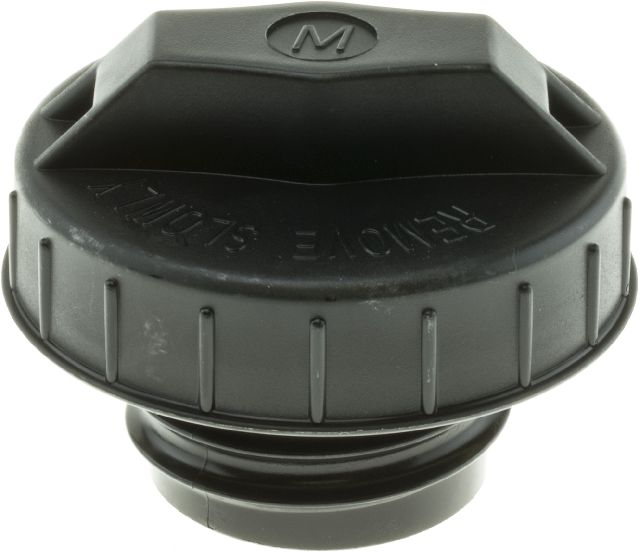
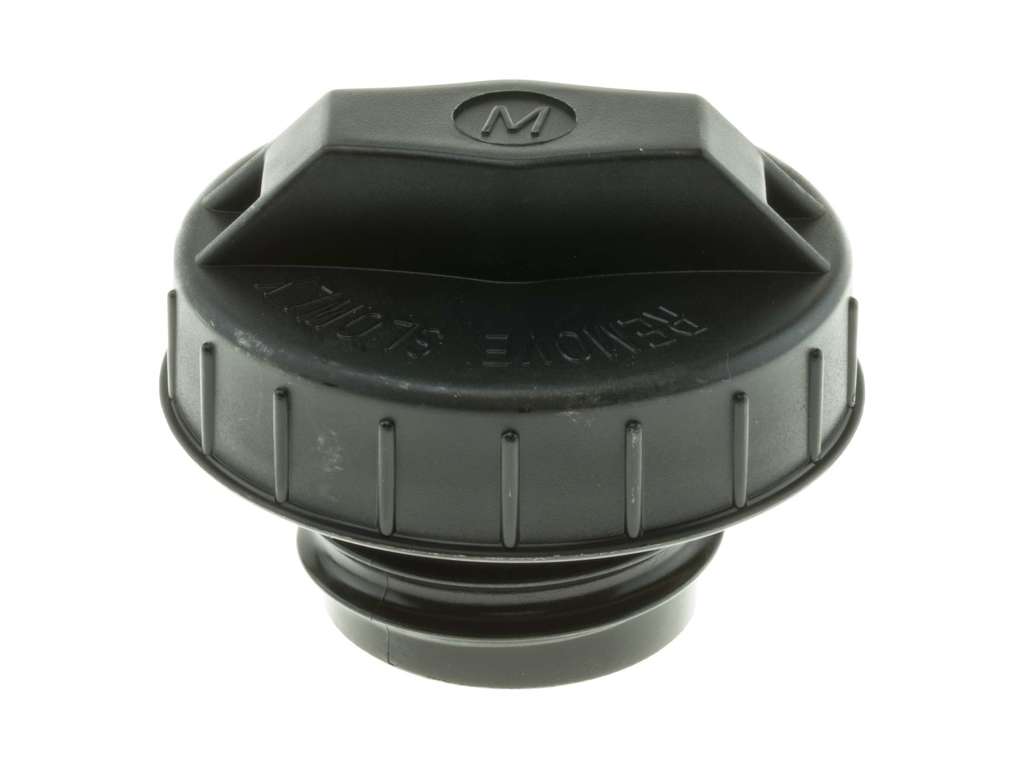
- Loose, Damaged, or Incorrect Gas Cap 🔴 High Probability → Shop Fuel Tank Cap The gas cap seal is a simple rubber part that degrades over time, leading to pressure loss. It's the most common and simple failure point in any EVAP system.
How to confirm: Ensure the cap is tightened until it clicks. Inspect the rubber O-ring seal for cracks, stiffness, or damage. If the seal is compromised or the cap's threads are worn, it needs replacement.
Typical fix: Tighten the cap. If the code returns or the cap is visibly bad, replace it. It is strongly recommended to use a genuine Honda OEM part to ensure a perfect seal. Aftermarket caps are a frequent source of repeat codes for this model.
Est. part cost: $20-$40 - Faulty EVAP Purge Control Solenoid Valve 🟡 Medium Probability → Shop Vapor Canister This solenoid, which controls the flow of vapors from the canister to the engine, can get stuck open or closed over time, which is a common failure on many vehicles, including Hondas.
How to confirm: The valve is located in the engine bay, on the driver's side near the top of the engine. A mechanic can command it open and closed with a scan tool while listening for a click. It can also be removed (held by two 10mm nuts) and tested for function and its ability to hold a vacuum.
Typical fix: Replace the purge control solenoid valve. The entire bracket assembly is typically removed to make swapping the valve easier.
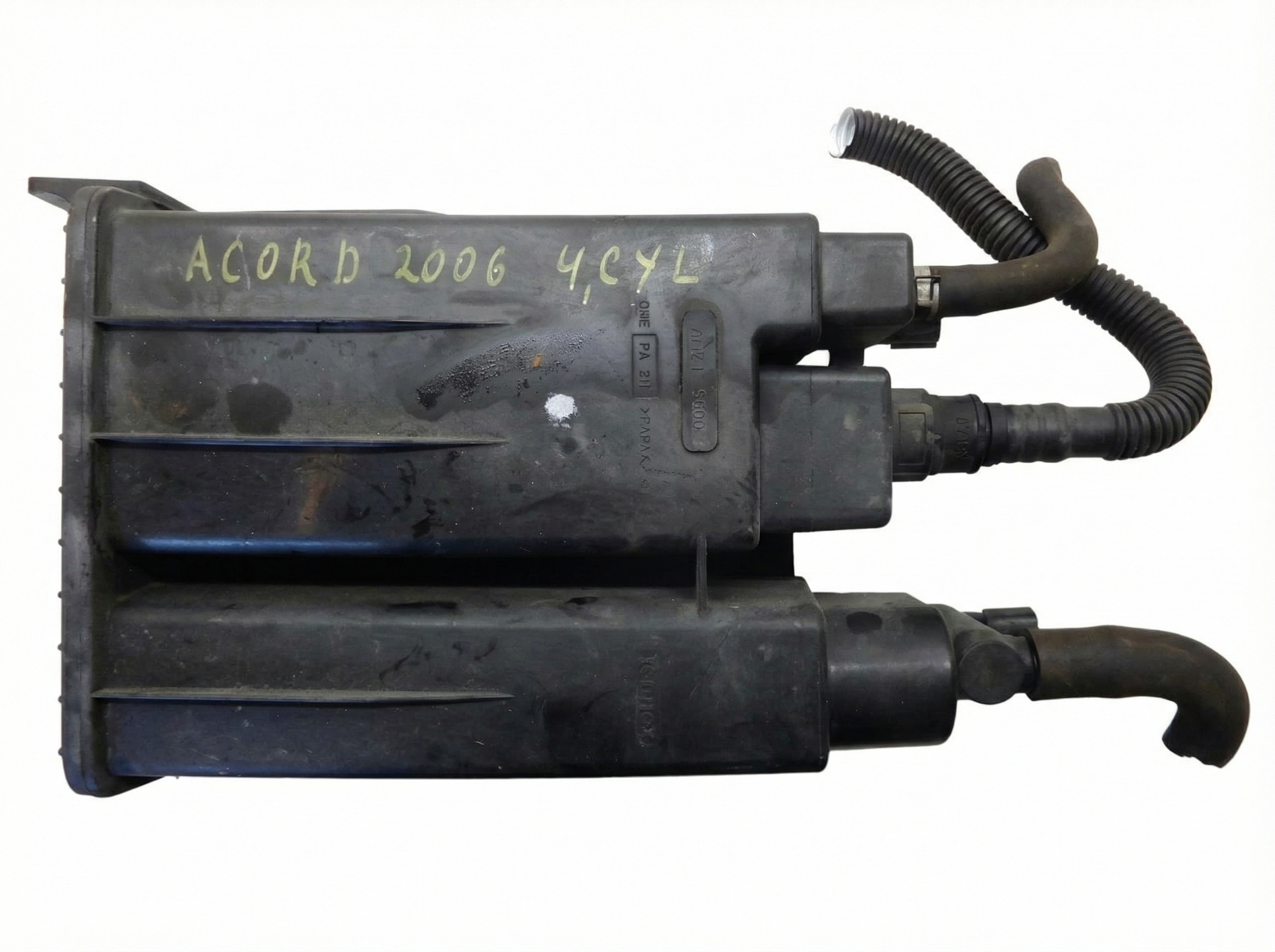
Est. part cost: $40-$100 - Faulty EVAP Canister Vent Valve/Solenoid 🟡 Medium Probability → Shop Vapor Canister This valve, located on or near the charcoal canister at the rear of the vehicle, allows fresh air into the system during testing. It can get stuck open or closed, especially due to exposure to road debris and moisture.
How to confirm: The valve is located under the rear of the car, in front of the fuel tank, attached to the vapor canister. A mechanic can use a bidirectional scan tool to command the valve closed and see if it seals the system. A visual inspection may reveal cracks or damage. The valve can be tested with a direct power source to see if it actuates.
Typical fix: Replace the canister vent valve solenoid. It is often removed with a quarter-turn from the canister body.
Est. part cost: $70-$160 - Cracked or Disconnected EVAP Hoses ⚪ Low Probability The rubber and plastic hoses that connect the fuel tank, charcoal canister, and purge valve can become brittle and crack with age and heat exposure.
How to confirm: A visual inspection may reveal obvious cracks or disconnected lines. The most effective method is a professional smoke test, which forces smoke into the EVAP system to reveal the exact location of any small leaks.
Typical fix: Replace the specific section of cracked or broken hose.
Est. part cost: $10-$50
Rare But Worth Checking
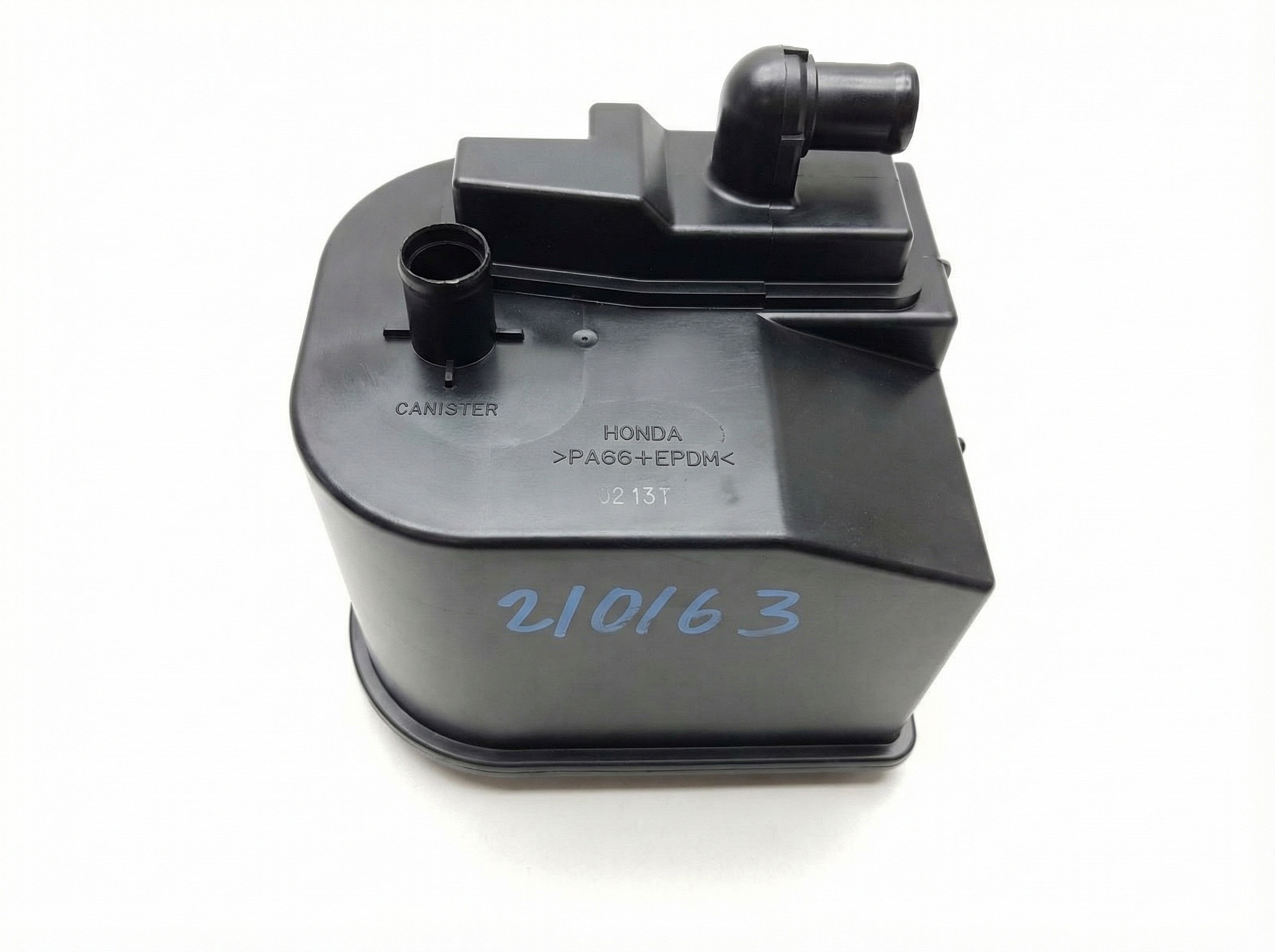
- Cracked Charcoal Canister: → Shop Vapor Canister The canister itself can develop cracks from road debris impact or age, creating a leak. This is less common than a valve failure but should be checked if a smoke test indicates a leak from the canister body itself.
- Faulty Fuel Tank Pressure (FTP) Sensor: → Shop Fuel Tank The sensor that monitors system pressure can fail and send incorrect data to the computer, making it think there is a leak when there isn't one.
Diagnosis Steps
- Check the gas cap. Ensure it is tight and clicks when closed. Inspect the seal for any cracks or damage. If in doubt, replace it with an OEM cap (Part No. 17670-SJA-013 or 17670-SHJ-A02), clear the code, and drive for a few days.
- If the code returns, perform a thorough visual inspection of all accessible EVAP hoses in the engine bay and around the fuel tank area for obvious cracks, disconnections, or damage.
- Locate the EVAP purge solenoid in the engine bay on the driver's side. With the engine running, you can sometimes feel for suction or listen for a clicking sound when it's commanded on by a scan tool.
- Locate the EVAP vent solenoid on or near the charcoal canister under the rear of the car. Inspect it and its wiring for damage. It is often black plastic and attached directly to the larger black canister.
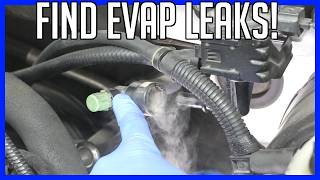
- If no obvious issues are found, the most reliable next step is to have a smoke test performed. This test fills the EVAP system with a harmless, visible smoke, making even the smallest leaks easy to spot. 🎬 Watch: How to find and diagnose EVAP leaks with a smoke test.
- Based on the smoke test results, replace the leaking component, which could be a hose, valve, canister, or tank seal.
Parts You'll Likely Need
- Fuel Cap
(OEM #17670-SJA-013 (supersedes 17670-SHJ-A02, 17670-SDA-A02))— This is the most frequent cause of P0440. The seal wears out over time, causing a pressure leak. Using a genuine Honda part is critical for this model.
Trusted brands: Genuine Honda
OEM price range: $25-$40
Aftermarket price range: $15-$25 - Vapor Canister Purge Valve / Solenoid
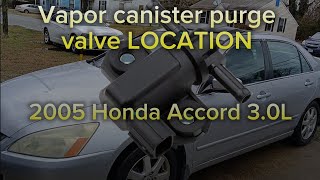
(OEM #36162-RAA-A01)— A very common failure point. This valve gets stuck open or closed, preventing the EVAP system from functioning correctly. It is located in the engine bay. 🎬 See this video to quickly locate the purge valve on your Accord.
Trusted brands: Genuine Honda, Dorman, Standard Motor Products
OEM price range: $150-$200
Aftermarket price range: $40-$100 - Vapor Canister Vent Shut Valve / Solenoid
(OEM #17311-SDC-L02)— Located near the fuel tank, this valve is exposed to the elements and can fail, getting stuck open and causing a leak code. It replaces the earlier part number 17311-SDC-L01.
Trusted brands: Genuine Honda, Dorman, SKP
OEM price range: $200-$260
Aftermarket price range: $70-$160
Related Codes That Often Appear With This One
- P0441 — P0441 indicates incorrect purge flow. If the purge valve is stuck, it can cause both a general system malfunction (P0440) and an incorrect flow code.
- P0455 — P0455 indicates a large leak was detected. P0440 is a more general malfunction code, but they often point to the same set of problems, like a missing gas cap or a stuck-open vent valve.
- P0442 — P0442 indicates a small leak was detected. This can be an earlier warning for the same issues that cause P0440, such as a deteriorating gas cap seal or a small crack in a hose.
Platform-Specific Known Issues
- Aftermarket Gas Cap Incompatibility: → Shop Fuel Tank Cap Numerous owner reports on forums like DriveAccord.net confirm that aftermarket gas caps, even those listed as compatible, often fail to create a proper seal on the 7th generation Accord's filler neck, leading to a persistent P0440 code. The fix is almost always to purchase a genuine Honda OEM cap.
- Vent Solenoid Location and Replacement: The vent solenoid (17311-SDC-L02) is mounted directly to the charcoal canister, which is located under the car, just forward of the rear axle. It can be replaced independently of the canister by giving it a quarter-turn to release it from its housing.
Mechanic-Grade Diagnostic Values
- EVAP Canister Purge Valve Solenoid Resistance — expected: 25 to 55 Ohms. Failure: A reading significantly outside this range, such as in the kilo-ohm (kΩ) or mega-ohm (MΩ) range, indicates a failed coil.
- EVAP Purge Solenoid Connector Voltage (Key On, Engine Off) — expected: One pin should have battery voltage (approx. 12V).. Failure: No voltage on the power feed pin indicates a wiring or fuse issue. The other pin is the control wire from the PCM; its voltage should drop to near 0V when the PCM commands the valve open via a scan tool.
- Fuel Tank Pressure (FTP) Sensor Voltage — expected: Typically around 1.5V with the gas cap off (atmospheric pressure), but can range from 1.3V to 1.7V. During a system self-test, the voltage should change as vacuum is applied.. Failure: A reading stuck at 0V or 5V suggests a faulty sensor or a wiring short/open. If the voltage doesn't change during a system test, the sensor may be bad.
Scan Tool Commands That Help
- Honda HDS or professional bidirectional scanner: EVAP System Functional Test — This is an automated test that commands the purge and vent valves to seal the system and monitors the FTP sensor to check for a leak. It's the factory-level method to confirm a leak exists before starting a manual search.
- Honda HDS or professional bidirectional scanner: EVAP Vent Valve ON/OFF — The vent valve is normally open. To perform a smoke test or manually test the system's ability to hold pressure, a technician must command the valve CLOSED (ON) to seal the system. If the valve doesn't respond (no click) or fails to seal, the valve or its circuit is faulty.
- Honda HDS or professional bidirectional scanner: EVAP Purge Valve Duty Cycle Control — Allows a technician to manually open the purge valve by a specific percentage (e.g., 10%, 50%, 100%) to test its function and listen for a click. This confirms if the PCM can control the valve and if the valve responds mechanically.
Wiring & Ground Locations
- G101 — For the 2.4L engine, it is located at the top middle of the engine. For the 3.0L V6, it is on the left side of the engine. It serves as a primary ground for the engine harness, which includes the ECU and various sensors.. A poor ground at G101 can cause erratic behavior from sensors and solenoids controlled by the ECU, including the EVAP purge valve and FTP sensor, potentially leading to false codes or component malfunction.
- Under-Dash Fuse/Relay Box — Located behind the left kick panel, inside the cabin.. This box contains fuses that may supply power to components within the EVAP system. A blown fuse could disable a valve or sensor, triggering a fault code.
- Under-Hood Fuse/Relay Box — On the left rear corner of the engine compartment, forward of the strut tower.. Contains main fuses and relays that provide power to various engine systems, including potentially the ECU and related emissions components.
Real Owner Repair Stories
- YouTube video by 'T's Garage' (Honda Accord (generation not specified, but EVAP components are similar)) — P0440 check engine light.
❌ Tried (didn't work) Checked all other EVAP components.
✅ What actually fixed it The owner dropped the gas tank and found a small crack on the seal for the fuel tank vent valve, which is located on top of the fuel tank. Replacing this seal and valve assembly resolved the code after driving 400 miles. - YouTube video by 'Earle's Classic Cars' (2003-2007 Honda Accord V6 with 254,000+ miles) — Check fuel cap message, followed by CEL codes P0456 (very small leak) and P0496 (incorrect purge flow).
❌ Tried (didn't work) Replaced fuel tank pressure sensor., Replaced purge valve., Replaced various vacuum hoses.
✅ What actually fixed it A smoke test revealed a leak from the intake air boot (the large hose between the air filter box and the throttle body). The hose was not sealed correctly, creating a vacuum leak that the EVAP system diagnostics interpreted as an EVAP leak. Reseating the intake boot properly was the final fix.
"I Checked Everything" — The Actual Cause
- In some cases, a P0440 code can be triggered by a faulty Fuel Tank Pressure (FTP) sensor. The system passes a smoke test because there is no physical leak, but the sensor provides incorrect readings to the ECU, making it believe a leak is present.
- A failing ECU driver for an EVAP component (like the purge or vent solenoid) can set a P0440. The component and wiring may test fine, but the ECU itself is incapable of properly controlling or monitoring the circuit.
OEM Part Supersession History
17311-SDC-L01→17311-SDC-L02— Standard part revision by the manufacturer for improved reliability or manufacturing process.
Heads up: The parts are interchangeable. 17311-SDC-L02 is the correct current replacement for the original L01 valve.17670-SDA-A02→17670-SHJ-A02, then 17670-SJA-013— Standard part revision and consolidation across multiple Honda models.
Diagnostic Flowchart
Other Known Issues on This Vehicle
Issues unrelated to this code that are worth knowing about as an owner of this generation:
- Automatic Transmission Failure (especially V6) 🔴 High — Very common on 2003-2004 V6 models. Less frequent but still present on later models and 4-cylinders. Can occur before 100,000 miles. (Ref: Honda had a warranty extension and recall for early models to install an oil jet kit, but many failures still occurred.)
- Power Steering Hose Leak (V6 Models) 🔴 High — Widespread enough to trigger a major safety recall for all 2003-2007 Accord V6 models. (Ref: NHTSA Action Number: PE12012, Honda Recall 12V460000. The hose can leak fluid onto the hot catalytic converter, posing a fire risk.)
- Radio / HVAC Backlight and Unit Failure 🟡 Low — Extremely common across all model years. The circuit board for the radio and climate control unit is known to fail, causing loss of backlighting, display, or sound.
- Excessive Oil Consumption (2.4L I4) 🟠 Medium — A significant number of owners report consuming 1 quart of oil every 1,000-3,000 miles, often starting around 70,000-100,000 miles. The issue is often attributed to piston oil control rings. (Ref: No official recall, but Honda acknowledged the issue in some cases and offered cost-sharing for repairs for some owners who performed oil consumption tests at dealerships.)
Used vs. New Parts: Buying Guide for This Vehicle
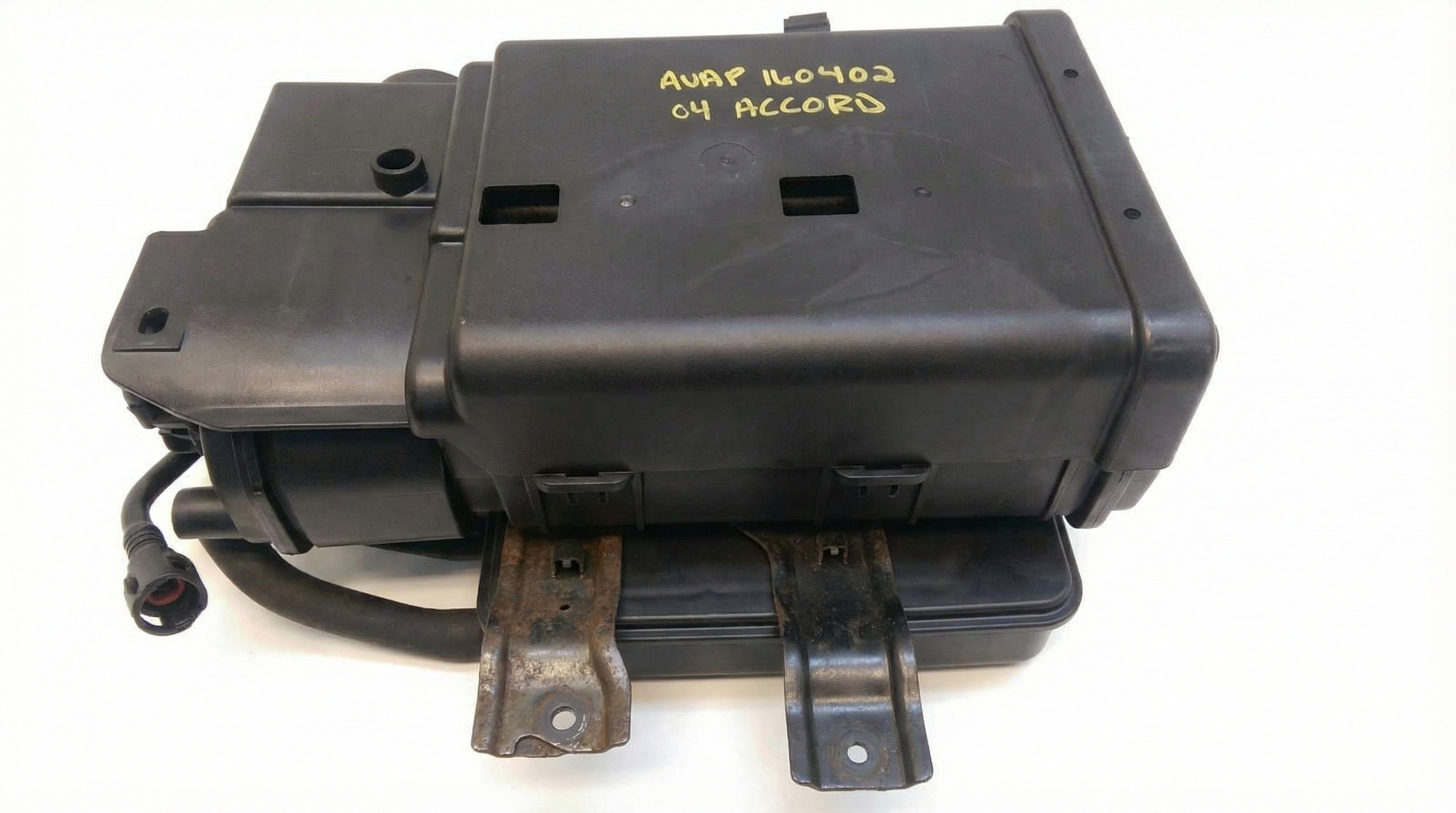
When a used part is the smart pick: Used parts can be a cost-effective option for larger, less failure-prone components like the charcoal canister body (if cracked) or mounting brackets. A complete used canister assembly from a low-mileage donor can also be cheaper than a new vent solenoid alone.
Donor-vehicle mileage cap: roughly under 100000 miles for the part to have meaningful remaining life.
What to inspect on the donor part:
- Check for a donor vehicle from a dry, salt-free climate to minimize rust and corrosion on the under-car vent solenoid and canister.
- Visually inspect plastic components like the canister body and hose connectors for any visible cracks or brittleness.
- If possible, ask for the VIN of the donor car to verify it didn't have its own history of EVAP codes.
OEM-only on this vehicle (don't cheap out):
- Fuel Cap: This is the most critical part to buy new and from the OEM (Honda). Aftermarket caps are notoriously problematic on this model and are a common cause of repeat failures.
- Sensors (FTP Sensor): While some aftermarket sensors work, the Fuel Tank Pressure sensor is crucial for the system's self-test. Using a used sensor is risky as its age and condition are unknown. An OEM or high-quality OE-equivalent (like NTK) new part is recommended for reliability.
Aftermarket brands forum-validated for this vehicle:
- Standard Motor Products (SMP)
- Dorman (often a viable, lower-cost alternative for solenoids)
- NTK (for sensors)
Brands owners have reported issues with on this vehicle:
- No-name, unbranded parts from online marketplaces, especially for the gas cap and electronic sensors.
Real Owner Stories
Aggregated from forums and TSBs cited above. Mileages and costs reflect what owners reported in those sources.
2003-2007 Honda Accord
Symptoms: Persistent P0440 code despite replacing the gas cap with one from a local parts store.
What fixed it: Purchasing and installing a genuine Honda OEM gas cap to ensure a proper seal on the filler neck.
Source hint: DriveAccord.net forum discussions regarding 7th generation Accord EVAP codes
2003 Honda Accord EX — ~85000 miles
Symptoms: Check engine light and general maintenance concerns; owner also noted the car was burning oil significantly.
What fixed it: General engine maintenance and addressing codes encountered by owners of this generation.
Source hint: honda-tech.com thread titled '2003 Accord EX - Burning Oil like crazy'
Related OBD-II Codes
Frequently Asked Questions
Can I use an aftermarket gas cap from a local auto parts store to fix my P0440 code?
Where is the EVAP purge control solenoid located on my 2003-2007 Accord?
I'm also seeing a recall for a power steering hose on my V6 Accord; is that related to the EVAP system?
How do I replace the vent solenoid on the charcoal canister?
Is there a specific test to find a leak if the gas cap isn't the problem?
Does the 2.4L 4-cylinder engine share EVAP parts with any other vehicles?
Helpful Videos
Used OEM Parts in Stock
New Aftermarket Parts Available


The information in this article is provided for general reference and educational purposes only. Vehicle specifications, procedures, and part compatibility can vary by production date, trim level, and region. Always consult your vehicle's factory service manual and verify part numbers before purchasing or performing repairs. Safety-critical components such as airbags, seat belts, and braking systems should be installed by a qualified professional.
- Honda Accord:
- 🧭 Diagnostic Flowchart
- 🎬 Helpful Videos
- 🛍️ Shop This Part
- What's Unique About the 2003-2007 Honda Accord
- Symptoms You May Notice
- Most Likely Causes
- Rare But Worth Checking
- Diagnosis Steps
- Parts You'll Likely Need
- Related Codes That Often Appear With This One
- Platform-Specific Known Issues
- Mechanic-Grade Diagnostic Values
- Scan Tool Commands That Help
- Wiring & Ground Locations
- Real Owner Repair Stories
- "I Checked Everything" — The Actual Cause
- OEM Part Supersession History
- Other Known Issues on This Vehicle
- Used vs. New Parts: Buying Guide for This Vehicle
- Real Owner Stories
- 2003-2007 Honda Accord
- 2003 Honda Accord EX — ~85000 miles
- Related OBD-II Codes
- Frequently Asked Questions
- 🎟️ Get 5% Off