

P0440 on 2001-2006 Hyundai Elantra: EVAP System Malfunction Causes and Fixes
For a 2001-2006 Hyundai Elantra, code P0440 usually points to a general EVAP system leak. The most common fixes are replacing a faulty canister close valve or a cracked charcoal canister that has disintegrated internally. This internal failure releases charcoal pellets that clog the system, causing the gas pump to shut off repeatedly when fueling. Start by checking the gas cap, but expect to inspect the valves and canister at the rear of the car.
- P0440 on a 2001-2006 Elantra indicates a general EVAP system fault, not a specific part failure.
- Before buying any parts, check that the gas cap is tight and its seal is intact.
- The most likely culprits on this specific car are the canister close valve and the charcoal canister, located at the rear of the vehicle near the driver's side rear wheel.
- If you find black charcoal pellets in the EVAP hoses, the canister has failed and must be replaced, and the lines must be cleaned out.
- A professional smoke test is the fastest way to accurately diagnose the location of a leak if it is not visually obvious.
What's Unique About the 2001-2006 Hyundai Elantra
On the 2001-2006 (XD generation) Elantra, the EVAP components, particularly the charcoal canister and the canister close valve, are common failure points. The charcoal canister can physically break down, sending small black carbon pellets throughout the system, which can clog valves and hoses. This often leads to difficulty filling the fuel tank in addition to the check engine light. While a loose gas cap is a universal cause for EVAP codes, on this specific Elantra, issues with the canister assembly are more frequent and well-documented in owner forums and repair videos.
Symptoms You May Notice
- Check Engine Light is on
- A faint smell of fuel, especially around the rear of the car near the fuel tank.
- Difficulty filling the gas tank (the pump clicks off repeatedly and will not take fuel easily). 🎬 Watch: Troubleshooting why your Elantra is hard to fill with gas.
- Slight decrease in fuel economy
- Rough idle or hard starting, particularly after refueling (less common).
- Replacing the purge valve in the engine bay first, when the issue is more commonly with the canister close valve or the charcoal canister at the rear of the vehicle.
- Replacing the gas cap without inspecting the fuel filler neck sealing surface for rust, which would prevent even a new cap from sealing.
Most Likely Causes
- Faulty Canister Close Valve (CCV) 🔴 High Probability → Shop Vapor Canister The valve, located near the charcoal canister at the rear of the car, can get stuck open or closed, or become clogged with charcoal debris from a failing canister. This is a very common failure point on this platform.
How to confirm: Locate the valve on or near the charcoal canister in the left-rear of the vehicle, just behind the driver's side rear wheel. Test the valve's solenoid for proper electrical resistance and function. A smoke test is the most effective way to see if the valve is leaking when it should be closed. You can also attempt to actuate it with a capable scan tool and listen for a click.
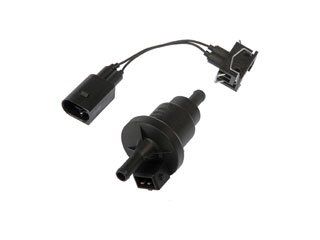
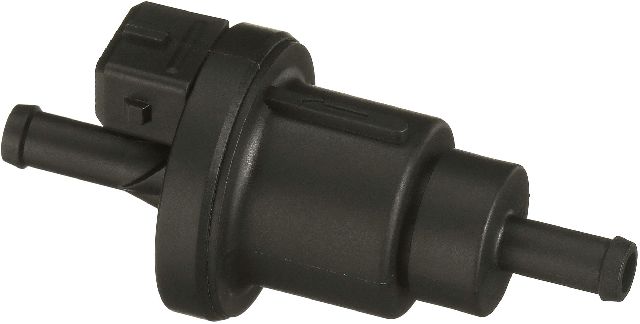
Typical fix: Replace the canister close valve. 🎬 See this step-by-step guide to replacing the vent valve. It is often replaced along with the charcoal canister if there is evidence of carbon debris. The part is sometimes called a Canister Vent Valve.
Est. part cost: $30-$70 - Cracked or Leaking Charcoal Canister 🔴 High Probability → Shop Vapor Canister The plastic housing of the canister can become brittle and crack over time, but the more common issue is internal failure, where the activated charcoal breaks down into small pellets that are released into the EVAP lines. This is a widely reported problem for this generation Elantra.
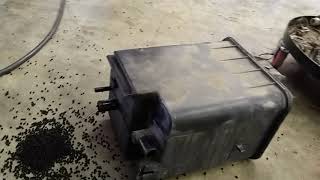
How to confirm: Visually inspect the canister (located in the left-rear wheel well area) for cracks. Disconnect a hose from the canister and tap it to see if any small black pellets fall out. If they do, the canister has failed internally and must be replaced.
Typical fix: Replace the charcoal canister. If pellets have been released, it is critical to blow out all connected EVAP lines with compressed air to prevent the new components from being clogged.
Est. part cost: $100-$180 - Loose or Faulty Gas Cap 🟡 Medium Probability → Shop Fuel Tank Cap This is a common cause on all vehicles. The cap's seal can wear out, preventing the system from holding pressure during its self-test.
How to confirm: Ensure the gas cap is tightened until it clicks. Inspect the rubber O-ring seal for cracks, stiffness, or damage. A visual inspection of the seal is key.
Typical fix: Tighten the cap. If the seal is bad, replace the gas cap with a new OEM or equivalent part. This is the cheapest and easiest first step.
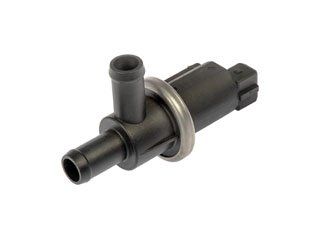
Est. part cost: $15-$30 - Faulty Canister Purge Valve (CPV) ⚪ Low Probability → Shop Vapor Canister This valve is located in the engine bay and can stick open or closed. While it can fail, it is less common for the general P0440 code on this model than the rear components.
How to confirm: With the engine running, disconnect the vacuum hose from the valve. There should be no vacuum felt at idle. You can also test the solenoid's operation with a scan tool or by applying 12v power and ground.
Typical fix: Replace the purge valve (also called Purge Control Solenoid Valve or PCSV).
Est. part cost: $30-$60 - Cracked or Disconnected EVAP Hoses ⚪ Low Probability Rubber hoses become brittle with age and can crack, especially the lines running to and from the canister and fuel tank.
How to confirm: Visually inspect all accessible EVAP lines for obvious cracks or disconnections. A smoke test is the definitive method to find small, hard-to-see leaks.
Typical fix: Replace the damaged section of hose.
Est. part cost: $10-$20
Rare But Worth Checking
- Leaking Fuel Filler Neck: → Shop Fuel Filler Neck Rust can perforate the metal tube that leads from the gas cap to the tank, or rust on the sealing surface can prevent the gas cap from sealing properly. This is more common in regions that use road salt. A user with a 2006 Elantra noted this issue.
- Faulty Fuel Tank Pressure Sensor: → Shop Fuel Tank The sensor itself can fail, sending incorrect data to the computer and tricking it into setting a P0440 code even if there is no leak. This is an uncommon but possible cause.
Diagnosis Steps
- Check the Gas Cap: Ensure it is tight and the seal is not cracked or worn. Clear the code and drive to see if it returns. Also, inspect the metal lip of the fuel filler neck for rust or debris that could prevent a good seal.
- Visual Inspection: Look under the car in the driver's side rear wheel well area. Inspect the black plastic charcoal canister and the attached valves and hoses for any obvious cracks, damage, or loose connections.
- Check for Charcoal Debris: This is a key step for this vehicle. Disconnect one of the larger hoses from the charcoal canister and tap it to see if any small black pellets fall out. If they do, the canister has failed and needs replacement, and all EVAP lines must be cleaned out.
- Inspect the Canister Close Valve (CCV): This valve is mounted on or very near the charcoal canister. Check its electrical connector for corrosion. It is a normally open valve that closes when the system runs its test. It is often clogged by debris from a failed canister.
- Inspect the Purge Valve (Engine Bay): Locate the purge valve in the engine compartment. It is a small solenoid with two hoses and an electrical connector. Check for ticking sounds while the engine is running (this is normal operation). A valve that is stuck open will create a vacuum leak.
- Perform a Smoke Test: This is the most effective way to find leaks. A mechanic will pump low-pressure smoke into the EVAP system (usually through a service port). Smoke will exit from any cracks in hoses, the canister, the filler neck, or from a faulty valve, pinpointing the leak's location.
Parts You'll Likely Need
- Canister Close Valve / Vent Valve
(OEM #28910-22040 (Verify by VIN))— This valve is a frequent failure point, either sticking or getting clogged by debris from a failing canister.
Trusted brands: Genuine Hyundai, Dorman 911-800, Standard Motor Products VS160
OEM price range: $60-$90
Aftermarket price range: $30-$70 - Charcoal Canister
(OEM #31420-2D511 (supersedes 31420-2D501, verify by VIN))— The canister can crack or break down internally, causing a leak and contaminating other EVAP components with charcoal pellets.
Trusted brands: Genuine Hyundai, Spectra Premium, Dorman
OEM price range: $280-$320
Aftermarket price range: $100-$180 - Gas Cap
(OEM #31010-3L600 (Verify by VIN))— A worn-out seal on the gas cap is a simple but very common cause for all EVAP leak codes.
Trusted brands: Genuine Hyundai, Stant
OEM price range: $25-$40
Aftermarket price range: $15-$30
Related Codes That Often Appear With This One
- P0455 — P0455 indicates a 'Gross Leak Detected'. If the charcoal canister is cracked or the close valve is stuck wide open, the system sees it as a large leak, often triggering both codes.
- P0441 — P0441 indicates 'Incorrect Purge Flow'. This can be caused by a failing canister that has sent debris into the purge valve, or a faulty purge valve itself.
- P0446 — P0446 indicates a 'Vent Control Circuit Malfunction'. This code is often seen alongside P0440 when the canister close valve is clogged with charcoal pellets or has failed electrically.
Platform-Specific Known Issues
- A known issue on this platform is the internal failure of the charcoal canister, which releases carbon beads that clog the canister close valve and EVAP lines, leading to fueling issues and multiple EVAP codes.
Mechanic-Grade Diagnostic Values
- Canister Close Valve (CCV) resistance — expected: 23 - 26 Ohms at 20°C (68°F). Failure: A reading significantly outside this range, or an open circuit (infinite resistance), indicates a failed solenoid coil.
- Purge Control Solenoid Valve (PCSV) resistance — expected: 22 - 29 Ohms at -20°C to 20°C (-4°F to 68°F). Failure: Resistance outside the specified range suggests an internal fault in the valve's solenoid.
- Fuel Tank Pressure Sensor (FTPS) output voltage — expected: Approximately 2.5V with the gas cap off (at atmospheric pressure). Voltage should decrease as vacuum is applied and increase with pressure.. Failure: Voltage that is stuck at 0V, 5V, or does not change when pressure/vacuum is applied indicates a faulty sensor or wiring issue.
Scan Tool Commands That Help
- Hyundai GDS (Global Diagnostic System): EVAP Leakage Test — This is a dealer-level function that forces the complete EVAP self-test to run on command. It closes the Canister Close Valve, opens the Purge Valve to draw a vacuum, and monitors the Fuel Tank Pressure Sensor to verify the system can seal and hold vacuum. This is invaluable for confirming a repair without needing to perform a full drive cycle.
- Hyundai GDS (or capable professional scan tool): Actuation Test for CCV and PCSV — This allows the technician to command the Canister Close Valve and Purge Control Solenoid Valve on and off independently. It's used to confirm if the valves are responding to the ECU's command (you should hear a click) and to isolate them during a smoke test.
Wiring & Ground Locations
- G12 — Behind the center of the dash.. While not directly controlling the EVAP system, this is a primary ground for the instrument cluster. A poor ground at G12 could cause erratic behavior of dash lights, including the Check Engine Light, potentially confusing the diagnosis if other electrical symptoms are present.
- EVAP Component Harness — Runs along the underbody from the engine bay to the rear of the vehicle, near the fuel tank.. The wiring for the Canister Close Valve and Fuel Tank Pressure Sensor is routed along the chassis. In areas with road salt, this harness is susceptible to corrosion and physical damage, which can cause an open or short in the circuit, mimicking a failed component. A visual inspection of the harness, especially near the rear axle, is warranted.
Real Owner Repair Stories
- Hyundai-Forums user (2001-2006 Elantra (specific year not mentioned)) — Persistent P0440 code after replacing the Canister Close Valve.
❌ Tried (didn't work) Replacing the Canister Close Valve (CCV)
✅ What actually fixed it The user performed a smoke test that revealed a very small leak. The source was a hairline crack in the plastic nipple on the charcoal canister where one of the smaller vacuum hoses attaches. The canister had not failed internally (no charcoal pellets), but the housing itself was compromised. Replacing the entire charcoal canister assembly resolved the code. - Mechanic forum discussion (2005 Hyundai Elantra) — Intermittent P0440 and P0446 codes.
❌ Tried (didn't work) Testing the Canister Close Valve (CCV) off the vehicle, where it passed resistance and actuation tests.
✅ What actually fixed it The technician found that wiggling the electrical connector to the CCV would cause the fault to appear and disappear on the scan tool. Close inspection revealed green corrosion inside the female pins of the harness-side connector. The valve was fine, but the poor connection prevented it from operating correctly. Cleaning the connector pins and applying dielectric grease provided a permanent fix.
"I Checked Everything" — The Actual Cause
- A P0440 can be set even if a smoke test passes, if the Fuel Tank Pressure Sensor (FTPS) is faulty. The sensor may send erratic voltage signals to the ECU, making it believe a leak exists when the physical system is perfectly sealed. This is confirmed by monitoring the FTPS voltage on a scan tool with the gas cap off (should be ~2.5V) and watching for irrational voltage drift after the cap is sealed. If the voltage drifts without any actual pressure change, the sensor is likely the culprit.
OEM Part Supersession History
31420-2D501→31420-2D511— The original charcoal canister part number was superseded. While not officially stated by Hyundai, it is widely believed in the mechanic community that the updated part features improved internal baffling or materials to prevent the breakdown of the charcoal medium, which was the primary failure mode of the original part.
Diagnostic Flowchart
Other Known Issues on This Vehicle
Issues unrelated to this code that are worth knowing about as an owner of this generation:
- Automatic Transmission Hard Shifting / Sensor Failure 🟠 Medium — Common issue, often appears after 80,000 miles. Owners report harsh shifts, getting stuck in one gear, or hesitation. (Ref: While no specific recall covers this for all years, the problem is widely documented. Often caused by failed input/output speed sensors, a relatively inexpensive fix.)
- Front Lower Control Arm Corrosion 🔴 High — Common in regions with road salt ('Salt Belt'). Corrosion can lead to perforation and potential fracture of the control arm. (Ref: Recall 09V125000 (NHTSA Campaign ID) was issued for 2001-2003 models in specific states for this exact issue.)
- Air Bag System Faults 🟠 Medium — Several recalls were issued for various air bag system problems across different model years. (Ref: Recalls include issues with the Air Bag Control Module connector being susceptible to liquid spills (2001 models) and side impact air bag wiring harness issues (2001-2002 models).)
- Premature Engine Mount Wear 🟡 Low — Owners report noticeable engine vibration at idle or clunking noises during acceleration, often occurring after 100,000 km.
Used vs. New Parts: Buying Guide for This Vehicle
When a used part is the smart pick: For this repair, using used parts is generally not recommended for the core components. The charcoal canister and valves are known high-failure items. A used part may have limited remaining life or the same defect as the part being replaced. A structural part like a rust-free fuel filler neck could be a reasonable used purchase.
Donor-vehicle mileage cap: roughly under 60000 miles for the part to have meaningful remaining life.
What to inspect on the donor part:
- For a charcoal canister: Shake it vigorously; there should be absolutely no rattling sound, which would indicate broken internal charcoal.
- Inspect all plastic hose nipples for any signs of hairline cracks or brittleness.
- Check the date code on the part if visible; a newer part is always preferable.
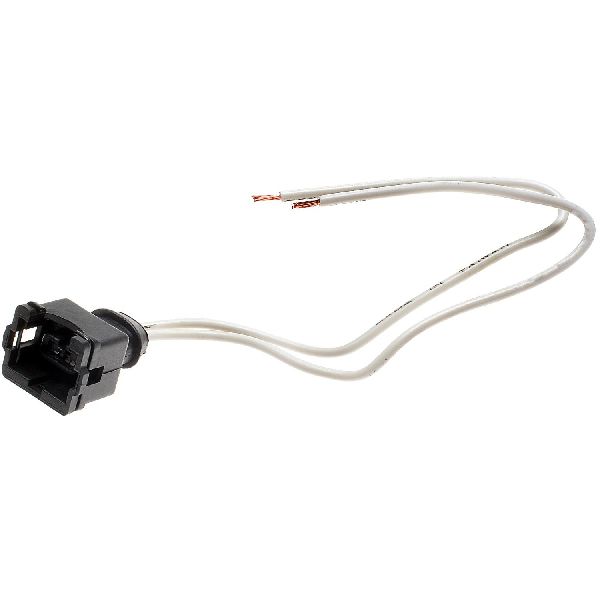
- For valves: Ensure electrical pins are clean, straight, and free of any corrosion.
OEM-only on this vehicle (don't cheap out):
- Gas Cap: Aftermarket gas caps are notoriously inconsistent in providing the precise seal required by the EVAP system. Given the low cost, a Genuine Hyundai cap is the safest choice to eliminate it as a variable.
Aftermarket brands forum-validated for this vehicle:
- Dorman (for valves and canister): Widely available and often includes necessary hardware or pigtails for updated connector designs.
- Spectra Premium (for canister): A common and generally reliable aftermarket alternative to the more expensive OEM part.
Brands owners have reported issues with on this vehicle:
- Unbranded, no-name parts from online marketplaces should be avoided. While tempting due to low cost, they often have poor quality control and can fail quickly, leading to a repeat repair.
Real Owner Stories
Aggregated from forums and TSBs cited above. Mileages and costs reflect what owners reported in those sources.
2001 Hyundai Elantra
Symptoms: Hard to fill gas and P0440 code present.
What fixed it: The charcoal canister had disintegrated, releasing pellets and clogging the vent valve. The fix involved addressing the failed canister and clogged valve.
Source hint: YouTube - 'Hyundai Elantra Hard To Fill Gas P0440' by The Car Doctor Channel
2006 Hyundai Elantra
Symptoms: Owner observed rust on the fuel filler neck.
What fixed it: Cleaning rust on the fuel filler neck to ensure a proper seal for the gas cap.
Source hint: Reddit r/Cartalk - 'Cleaning rust on fuel filler neck'
2001-2006 Hyundai Elantra — ~80000 miles
Symptoms: Harsh shifts, getting stuck in one gear, or hesitation.
What fixed it: Replacement of failed input/output speed sensors.
Source hint: known_issues - Automatic Transmission Hard Shifting / Sensor Failure
Related OBD-II Codes
Frequently Asked Questions
Why does the gas pump click off repeatedly when I try to fill my 2001-2006 Elantra?
Where is the Canister Close Valve located on my Elantra?
Is there a recall for the suspension issues mentioned in the known issues section?
Can I just replace the gas cap to fix a P0440 code?
What should I do if I find black pellets in my EVAP lines?
Does the Kia Spectra share these same EVAP problems?
Helpful Videos
Used OEM Parts in Stock

New Aftermarket Parts Available


The information in this article is provided for general reference and educational purposes only. Vehicle specifications, procedures, and part compatibility can vary by production date, trim level, and region. Always consult your vehicle's factory service manual and verify part numbers before purchasing or performing repairs. Safety-critical components such as airbags, seat belts, and braking systems should be installed by a qualified professional.
- Hyundai Elantra:
- 🧭 Diagnostic Flowchart
- 🎬 Helpful Videos
- 🛍️ Shop This Part
- What's Unique About the 2001-2006 Hyundai Elantra
- Symptoms You May Notice
- Most Likely Causes
- Rare But Worth Checking
- Diagnosis Steps
- Parts You'll Likely Need
- Related Codes That Often Appear With This One
- Platform-Specific Known Issues
- Mechanic-Grade Diagnostic Values
- Scan Tool Commands That Help
- Wiring & Ground Locations
- Real Owner Repair Stories
- "I Checked Everything" — The Actual Cause
- OEM Part Supersession History
- Other Known Issues on This Vehicle
- Used vs. New Parts: Buying Guide for This Vehicle
- Real Owner Stories
- 2001 Hyundai Elantra
- 2006 Hyundai Elantra
- 2001-2006 Hyundai Elantra — ~80000 miles
- Related OBD-II Codes
- Frequently Asked Questions
- 🎟️ Get 5% Off